Our readers keep the lights on and my smoothie glass nicely filled. As an Amazon Associate, I earn from qualifying purchases.
The path to analog photography shouldn’t require a second mortgage. The hunt for an affordable entry point is the single biggest hurdle for new shooters, and the used market is flooded with overpriced relics and complicated SLRs that demand a steep learning curve. This guide cuts through the noise to find the genuine entry-level champions that deliver that film look without the financial sting.
I’m Mohammad Maruf — the founder and writer behind WellFizz. My research for this guide involved cross-referencing dozens of customer reports on build quality, light leak consistency, shutter reliability, and overall value to separate the truly fun budget cameras from the frustrating ones.
Whether you’re a total beginner or a seasoned shooter looking for a cheap daily carry, this roundup of the best cheapest film camera options will help you start shooting without breaking the bank.
How To Choose The Best Cheapest Film Camera
The key to landing a great deal on a film camera is understanding which compromises you are willing to make. The price drops steeply as you move away from modern autofocus SLRs and into the world of toy cameras and point-and-shoots. The features that matter most at this price point are format, lens quality, and ease of use.
Half Frame vs Full Frame vs Disposable
Half-frame cameras like the Kodak EKTAR H35 cut each 35mm frame in half, letting you squeeze 72 exposures from a standard 36-exposure roll. This dramatically lowers your per-shot cost. Full-frame point-and-shoots or SLRs use the entire negative area, giving you better image quality per frame but fewer shots per roll. Disposable cameras like the Fujifilm QuickSnap are the ultimate entry-level option, but they cannot be reloaded, so their long-term value is lower.
Lens Material and Build Quality
Cheap film cameras often use plastic lenses, which produce the soft, dreamy, light-leak-prone aesthetic that many lofi enthusiasts love. If you want sharper images, look for a camera with a glass lens, such as the Kodak EKTAR H35N. Renewed SLR cameras like the Canon Rebel 2000 offer genuine glass optics and autofocus, but their price is higher than a basic toy camera.
Light Leaks and Character
Many budget cameras are notorious for light leaks. Some users seal them with gaffer tape, while others embrace the unpredictable streaks of light as part of the charm. If you need a predictable, technically clean negative, invest in a refurbished SLR. If you want moody, character-filled photos, a Holga or a cheap plastic point-and-shoot is the perfect tool.
Quick Comparison
On smaller screens, swipe sideways to see the full table.
| Model | Category | Best For | Key Spec | Amazon |
|---|---|---|---|---|
| Kodak EKTAR H35 | Mid-Range | Maximizing shots per roll | Half frame (72 shots per 36exp roll) | Amazon |
| Kodak EKTAR H35N | Premium | Sharpness & creative effects | Coated glass lens + star filter | Amazon |
| TBC Transparent Camera | Mid-Range | Style and portability | 28mm wide lens + carabiner | Amazon |
| Holga 120N | Mid-Range | Medium format lofi photos | 60mm f/8 plastic lens, 120 film | Amazon |
| Fujifilm QuickSnap 4-Pack | Budget | Zero-commitment entry | Disposable, 27 exposures each | Amazon |
| Canon Rebel 2000 | Premium | Autofocus SLR precision | 7-point AF, EF lens mount | Amazon |
| Canon EOS Rebel G | Premium | Full manual controls | 3-point AF, 1/2000 sec shutter | Amazon |
In‑Depth Reviews
1. Kodak EKTAR H35 Half Frame Film Camera (Black, Bundle with 24exp Film)

The Kodak EKTAR H35 is the single best entry point for anyone wanting to shoot film on a tight budget. Its half-frame design is the standout feature — shooting a standard 24-exposure roll of Kodak Ultramax 400 yields roughly 48 frames, cutting your per-shot film cost in half. At this price, that math alone makes it a winner for beginners and casual shooters alike.
The camera itself is featherlight at just 200 grams and small enough to slip into any pocket. Operation is dead simple: point, compose, and press the shutter. The built-in flash is controlled by rotating a silver ring around the lens, making it easy to shoot indoors or at night. Reviewers consistently praise its ease of use and ability to produce quality photos without any technical fuss.
A common point raised in customer feedback is the need for good light — the camera can struggle in very bright or very dim conditions. But for everyday outdoor shooting and well-lit indoor scenes, the results have a pleasing, nostalgic character that makes it addictive to use. The bundle includes one roll of Ultramax 400 to get you started immediately.
Why it’s great
- Half-frame design doubles your shots per roll, saving significant film cost
- Extremely lightweight and pocketable at just 200 grams
- Incredibly beginner-friendly with point-and-shoot simplicity
Good to know
- Needs sufficient lighting for best results; struggles in very bright or dim conditions
- Included film may be Eastman Kodak or Kodak Alaris packaging depending on stock
2. Kodak EKTAR H35N Half Frame Film Camera (Striped Black)

The H35N is the upgraded sibling of the standard H35, adding a coated glass lens and a built-in star filter for light sources. The glass lens delivers noticeably sharper images with better contrast and less vignetting than the standard plastic-lens model. The star filter creates a subtle four-beam flare on bright points like streetlamps or Christmas lights, adding a creative touch without requiring any extra gear.
Beyond the optics, the H35N introduces a bulb function for long exposure photography. This allows you to capture light trails or night scenes, though you will need a tripod — the camera does include a tripod mount. The half-frame format is retained, so you still get 72 exposures from a 36-exposure roll. Reviewers highlight the significant build improvement and the more satisfying image quality compared to the cheaper H35.
The downsides are minor but real: the film advance mechanism feels stiff on some units, and the battery door is flimsy. The camera is still made of plastic and will eventually break with heavy abuse, as one firefighter reviewer noted after 12 assignments and 20 states.
Why it’s great
- Coated glass lens produces sharper, higher-contrast images than standard H35
- Built-in star filter adds creative light effects without accessories
- Bulb mode enables long exposure night photography
Good to know
- Film advance can feel stiff; battery door is flimsy
- No tripod, cable release, or film included in the box
3. To Be Continued (TBC) Reusable 35mm Film Camera – Transparent Design
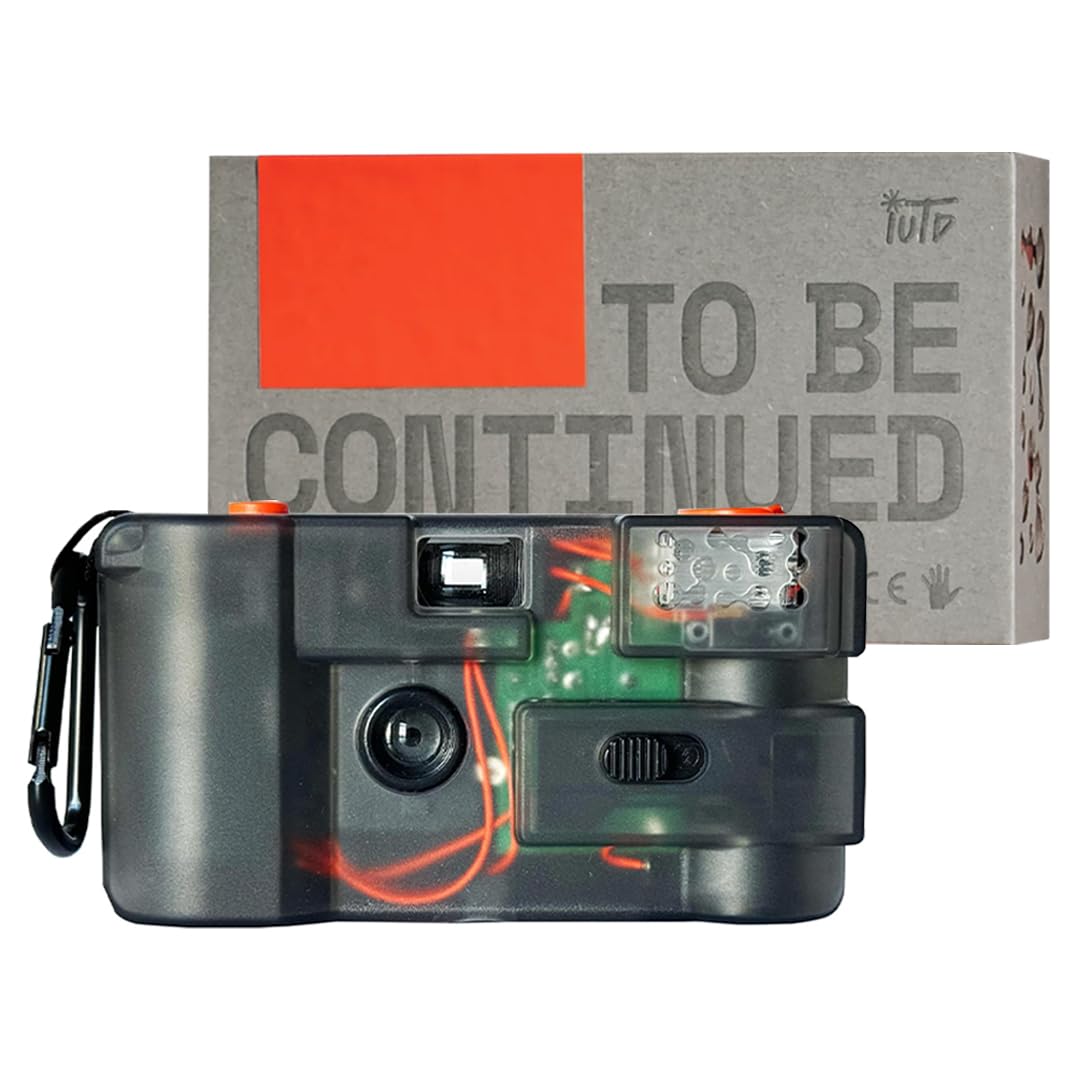
The TBC transparent camera is a design-forward reusable 35mm camera that shows off its inner mechanics through a fully clear shell. It uses a wide 28mm f/8 lens with a fixed 1/120s shutter speed, making it ideal for bright-day street photography and group shots. The built-in flash is impressively powerful, and reviewers recommend using it even in seemingly sufficient daylight to achieve the best results.
Portability is a key strength: the camera weighs 285 grams and includes a carabiner attachment so you can clip it to a belt, bag, or keychain. The packaging is deliberately designed in a clean analog-photography-inspired box, making it a ready-to-gift item. The camera supports ISO 100-400 film, with most users recommending 400 or 800 speed film for optimal performance.
A notable weakness is the rewind release button, which is made of plastic and feels fragile. One reviewer expressed doubt it would survive a backpacking trip. The camera also did not ship with the advertised color gels for some buyers. For the price, you are paying mostly for the unique transparent aesthetic and the ease of a simple point-and-shoot — the image quality is comparable to a disposable camera.
Why it’s great
- Stunning transparent design reveals internal mechanics
- Carabiner clip makes it a wearable, portable camera
- Powerful built-in flash for daylight fill and nighttime shots
Good to know
- Rewind release button is plastic and feels fragile
- Image quality is comparable to a disposable camera; not for pixel-peepers
4. Holga 120N Medium Format Film Camera (Black) with Ilford HP5 120 Film Bundle

The Holga 120N is the iconic toy camera that defined the lofi photography movement. It uses 120 medium format film with a 60mm f/8 plastic lens, delivering images that are soft, vignetted, and prone to light leaks — exactly the look that analog enthusiasts pay a premium to emulate with digital presets. The bundle includes one roll of Ilford HP5 120 black-and-white film and a microfiber cloth.
Camera operation requires some patience. The zone focusing system has only four distances, and you must estimate range manually. The shutter offers two speeds: 1/100 second and bulb. The aperture switches between f/8 and f/11 via a sliding switch. Reviewers celebrate its “crappy camera with awesome photo potential” character, noting that light leaks can be fixed with gaffer tape if desired. The camera also has a hot shoe and tripod mount for more controlled shooting.
The biggest catch is that the built-in flash is now effectively discontinued — the AA battery compartment and circuitry are no longer included. You can still use an external flash via the hot shoe, but it adds cost and complexity. The review feedback also mentions that the bundle sometimes arrives missing the film or cloth. For the price, this is the cheapest way to shoot medium format film, but you need to embrace the unpredictability.
Why it’s great
- Cheapest entry into medium format film photography
- Produces the classic Holga lofi look with soft vignettes and light leaks
- Bundle includes Ilford HP5 film and a microfiber cloth
Good to know
- Built-in flash is discontinued; no AA battery components included
- Zone focusing requires manual distance estimation
5. Fujifilm QuickSnap Flash 400 One Time Use 35mm Camera, 27 Exposures (4-Pack)
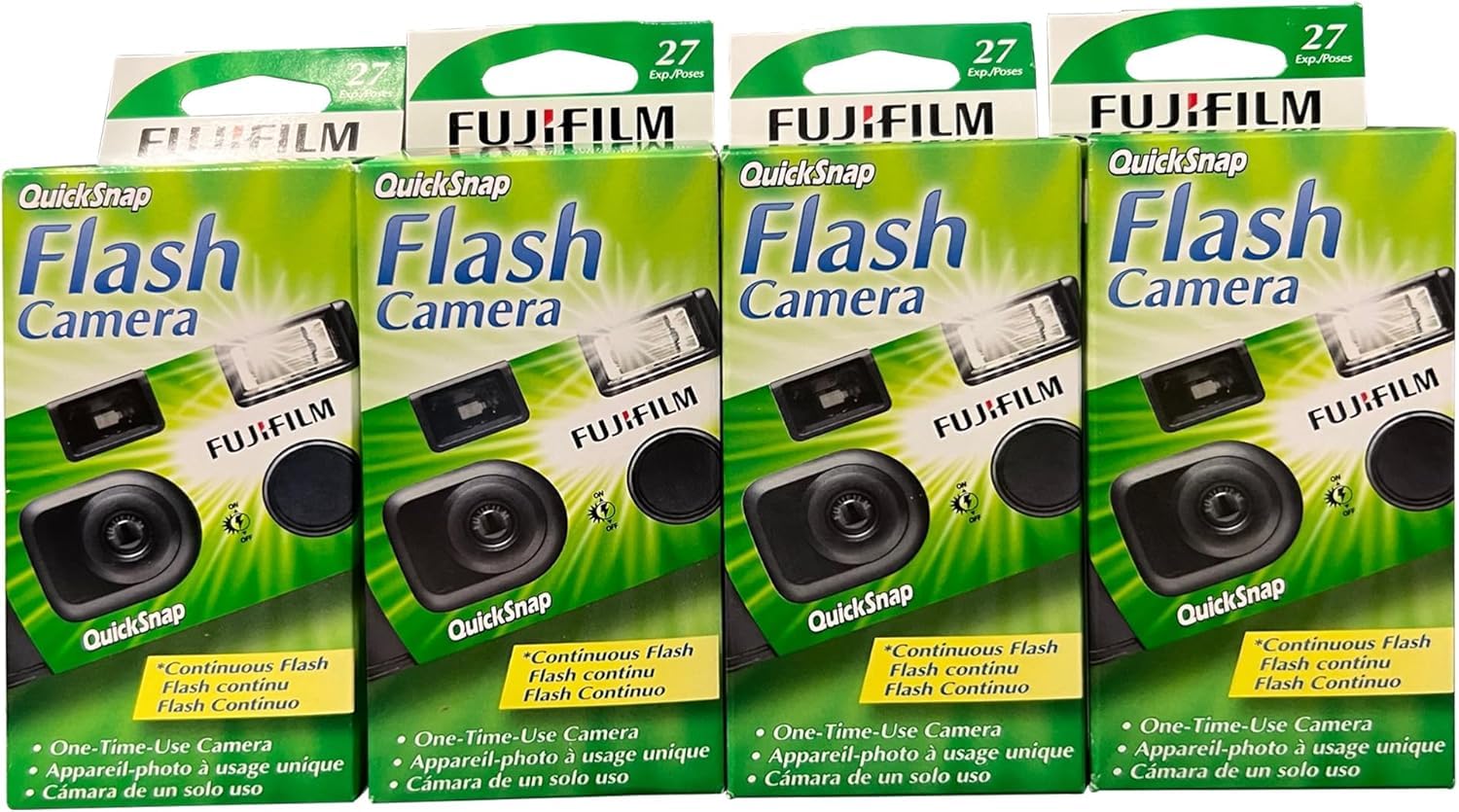
The Fujifilm QuickSnap Flash 400 is the classic disposable camera that needs no introduction. Each unit comes pre-loaded with Superia X-TRA 400 film for 27 exposures, and the four-pack gives you 108 total shots. The built-in flash has a 10-foot range and a manual on/off switch, making it versatile for both indoor parties and outdoor adventures.
These cameras are the definition of zero-commitment entry into film. There is no loading, no winding, no settings to worry about. The design is compact and durable — reviewers report they survive the bottom of beach bags and school backpacks without issue. Image quality is sharp for a disposable, with the 400-speed film handling a wide range of lighting conditions decently.
The main drawback is the per-unit cost. At this pack price, each camera costs significantly more per shot than a reusable option would. Several reviewers note they wish these were cheaper because they are so fun to use. The disposability also means you are generating plastic waste with each camera. For the long-term enthusiast, a reusable camera like the Kodak H35 is more economical over time.
Why it’s great
- No setup required; perfect for parties, events, and beginners
- Sharp image quality and reliable flash performance
- Durable enough to survive rough handling in bags
Good to know
- Higher cost per shot compared to a reusable camera
- Single-use nature creates plastic waste
6. Canon Rebel 2000 SLR Film Camera with Canon 28-80mm EF Auto Focus Lens (Renewed)
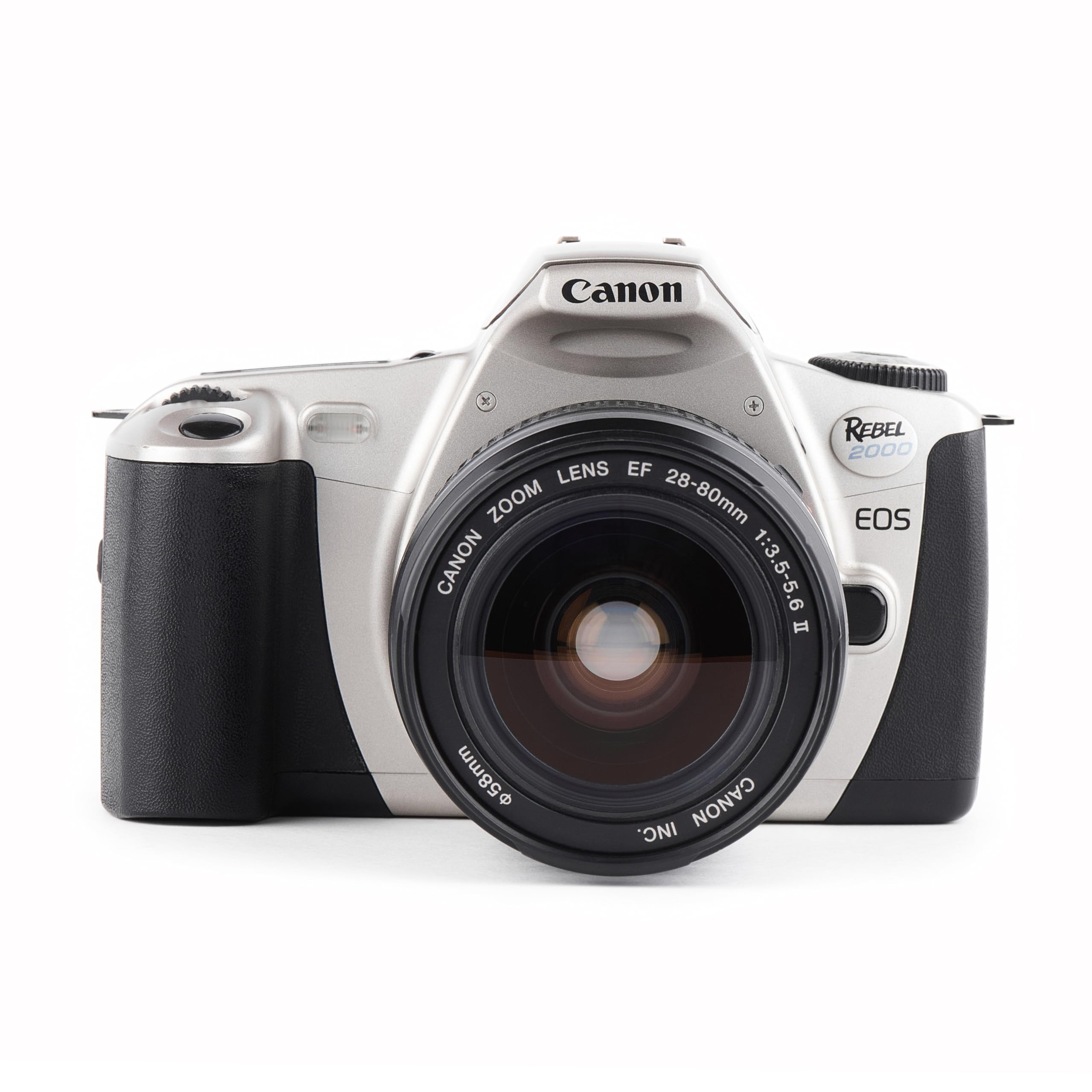
The Canon Rebel 2000 is a fully featured 35mm SLR with a 7-point autofocus system and compatibility with the entire Canon EF lens mount. This renewed model comes with a Canon 28-80mm EF auto focus zoom lens, giving you genuine optical zoom and sharp glass. The camera supports Program AE, aperture priority, shutter priority, and full manual modes, making it a legitimate tool for learning exposure control.
Build quality is excellent for the price point. The camera feels solid in the hands, and the autofocus is quick and accurate. Film transport is fully automatic — loading, advancing, and rewinding are handled by the internal motor. The built-in pop-up flash can serve as a fill flash or primary light source in low-light situations. Reviewers consistently mention how clean and functional the renewed units arrive, with one calling it their favorite Amazon purchase ever.
This is not a disposable or a toy camera — it is a serious SLR that requires some learning. The manual covers advanced functions like exposure compensation, AE lock, and autobracketing. A few reviewers noted issues with delivery delays and one reported a unit that would not power on. For the price, this is the cheapest way to get into true SLR film photography with autofocus and interchangeable lenses.
Why it’s great
- Genuine Canon 7-point autofocus system for accurate focusing
- Full exposure control: Program, Aperture Priority, Shutter Priority, Manual
- Interchangeable EF lens mount allows lens upgrades
Good to know
- No cables or accessories included; check condition upon arrival
- Delivery times can be long; some units have had power issues
7. Canon EOS Rebel G 35MM SLR Film SLR Camera Kit (Renewed)

The Canon EOS Rebel G (also known as the EOS 500 in Europe) is a compact, lightweight SLR that brings high-end features to an affordable price. It uses a Multi-BASIS AF sensor with three focusing points displayed in the viewfinder, and the camera can select the point automatically or let you choose manually. The shutter range spans 30 seconds to 1/2000 second, plus bulb mode, with X-sync at 1/90 second.
Exposure options are extensive: shutter priority, aperture priority, shiftable intelligent program AE, depth-of-field AE, program flash AE, and metered manual. The built-in flash retracts into the pentaprism hump and fires automatically in low light. The camera also supports autobracketing up to ±2 EV and allows up to 9 multiple exposures. It runs on two CR123A lithium batteries. Renewed units come with a zoom lens and are reported to arrive in near-mint condition.
The 1 fps continuous shooting speed is slow by modern standards, but more than adequate for deliberate film photography. The camera is praised for its intuitive operation and excellent build quality for a plastic-bodied SLR. One reviewer even landed a wedding photography gig after only a week of using it. The primary downside is the lack of included accessories like a strap or batteries, though most renewed units come with a strap.
Why it’s great
- Wide range of exposure modes including manual and depth-of-field AE
- 3-point autofocus with manual point selection
- Lightweight and compact for an SLR, easy to carry daily
Good to know
- Requires two CR123A batteries, not included
- 1 fps continuous shooting is slow for action photography
FAQ
Is a half-frame camera worth it for saving money on film?
Can I fix light leaks on a cheap film camera?
How many shots do I get from a disposable camera?
Final Thoughts: The Verdict
For most users, the cheapest film camera winner is the Kodak EKTAR H35 because its half-frame design nearly halves your ongoing film cost while remaining incredibly simple to use. If you want sharper images and creative features like a star filter and bulb mode, grab the Kodak EKTAR H35N. And for the authentic lofi medium format experience with zero concern for perfection, nothing beats the Holga 120N.

Mo Maruf
I created WellFizz to bridge the gap between vague wellness advice and actionable solutions. My mission is simple: to decode the research and give you practical tools you can actually use.
Beyond the data, I am a passionate traveler. I believe that stepping away from the screen to explore new environments is essential for mental clarity and physical vitality.