Our readers keep the lights on and my smoothie glass nicely filled. As an Amazon Associate, I earn from qualifying purchases.
Specs are compiled from manufacturer listings and verified buyer reviews and can change over time — please confirm the key details on the product page before buying.
A cheap WiFi router is a gamble. Pick the wrong one and you are stuck with constant buffering, dropouts during video calls, or a signal that dies two rooms away. The right one, however, quietly handles a household full of streaming, gaming, and smart devices without forcing you to pay a premium. This guide cuts through the noise to find the routers that actually deliver stable speed and solid coverage at a price that makes sense.
I’m Mohammad Maruf — the founder and writer behind WellFizz. This guide is built by comparing the manufacturers’ published specifications and the patterns across verified customer reviews, so you get each pick’s real strengths and trade-offs instead of marketing spin.
The best cheap WiFi routers share a few non-negotiable traits: a strong dual-band signal, reliable wired ports for your gaming console or PC, and security features that keep your network safe. Here is exactly what to look for in a cheap wifi router that will not let you down six months from now.
Our Picks at a Glance


How To Choose The Best Cheap WiFi Router
When you are shopping on a budget, every dollar counts, so you need to know which features will actually make a difference in your home. Here is what to zero in on.
Wi-Fi Generation: Wi-Fi 5 vs Wi-Fi 6
Wi-Fi 6 (802.11ax) is the newer standard, and it is a big deal even on a cheap router. It uses a technology called OFDMA that splits a single channel into smaller sub-channels, so your router can talk to multiple devices at once instead of making them wait in line. This cuts down lag noticeably when you have phones, laptops, smart bulbs, and a streaming TV all connected. A Wi-Fi 5 router (802.11ac) is still fine for a small home with just a few devices, but Wi-Fi 6 gives you more headroom for the same price range.
Ports: Why Gigabit Ethernet Matters
Do not overlook the ports on the back. A Gigabit Ethernet port (1000 Mbps) is the standard for wired connections to your gaming console, PC, or smart TV. If a router only has Fast Ethernet ports (100 Mbps), your wired devices are capped at a tenth of the speed your internet might provide. For any cheap WiFi router worth buying, look for at least one or two Gigabit LAN ports so your desktop or console gets the full speed your modem delivers.
Antennas and Beamforming
More antennas generally mean better coverage, but the quality matters too. Each antenna is rated in dBi — a higher dBi number means a stronger signal pushed in a specific direction. Beamforming is a feature that focuses the WiFi signal directly at your devices rather than blasting it out in every direction equally. This helps a budget router extend its range without needing extra hardware, making it a key feature for covering a whole home.
Quick Comparison
| Model | Best For | Data Transfer Rate | Coverage | Frequency | Amazon |
|---|---|---|---|---|---|
| Cudy WR1200★ Best Overall | Basic Reliable | 1.2 Gbps | 1100 sq. ft. | 5 GHz | Amazon |
| NETGEAR Nighthawk RAX30Also Great | Raw Speed | 2400 Mbps | 2000 sq. ft. | Dual-Band | Amazon |
| Amazon eero 6 | Whole-Home Mesh | 900 Mbps | 1500 sq. ft. | Dual-Band | Amazon |
| TP-Link Archer AX21 V5 | Value & Features | 1200 Mbps | Wide Coverage | 5 GHz | Amazon |
| NETGEAR R6700AX | Compact Power | 1800 Mbps | 1500 sq. ft. | 5 GHz | Amazon |
| TP-Link Archer AX10 | Wi-Fi 6 Upgrade | 1500 Mbps | Strong Coverage | 5 GHz | Amazon |
| Tenda AC8 | Budget Range | 1 Gbps | Home-wide | 2.4 GHz | Amazon |
In‑Depth Reviews
1. Cudy AC1200 Dual Band 4 Antennas Wi-Fi Router (WR1200)
The cheapest reliable router that still gives you WPA3 encryption and a VPN client.
The Cudy WR1200 hits the lowest price point in this list while still offering AC1200 dual-band performance — 867Mbps on 5GHz and 300Mbps on 2.4GHz. Its connectivity range is 1100 Square Feet, noticeably smaller than the NETGEAR RAX30’s 2000 Square Feet, so it is best for apartments or small homes.
It includes WPA3 encryption for the latest WiFi security and a WireGuard VPN client, features usually found on pricier routers. The four 5dBi high-gain antennas provide decent multi-directional coverage. One buyer’s main gripe is “the defaulting to 80MHz,” which creates noise in crowded apartment buildings. Setup is plug-and-play via web management, and it supports Router, Access Point, WISP, and Repeater modes. For a dorm room or a small office, this is a solid, no-frills workhorse.
Feature-Dense
- WPA3 security and WireGuard VPN client
- 1.2 Gbps data rate beats many rivals at this price
- Multiple operation modes (Router, AP, WISP, Repeater)
Small Range
- 1100 square foot range is the smallest here
- Defaults to 80MHz channel width, causing noise in dense areas
- Only Fast Ethernet ports (not full Gigabit on all)
Tiny Home Hero: Pick this if you live in an apartment or dorm and want WPA3 security and a VPN client for the lowest possible price.
Range Reality: Do not expect this to cover a whole house — it is built for a single room or small floor plan.
2. NETGEAR Nighthawk WiFi 6 Router (RAX30)
The budget router that pushes speeds fast enough to rival gear twice its price.
If raw speed is your priority for streaming 4K video and gaming, the RAX30 delivers a data transfer rate of 2400 Megabits Per Second — at 2400 Megabits Per Second versus the Amazon eero 6’s 900 Megabits Per Second. It covers up to 2000 Square Feet, so a medium-sized house gets solid signal edge-to-edge. Buyers report that both the RAX50 and this RAX30 “deliver 200+ Mbps on 5GHz, excellent range in 2,000 sq ft house,” and several owners kept the RAX30 for its smaller footprint.
It is a renewed (refurbished) unit, which keeps the price low while still packing Wi-Fi 6 technology. The four 1G Ethernet ports let you wire up your console, PC, and streaming player without fighting for bandwidth. One reviewer noted it “found them all very quickly” when their previous provider’s router failed to handshake with cross-platform devices. The trade-off is the 20-device limit, so if your smart home is packed with bulbs, locks, and plugs, you may hit the ceiling.
Fast-Lane Advantage
- 2400 Mbps data transfer rate — the fastest in this lineup
- Covers 2000 square feet, beating most rivals here
- Five-stream Wi-Fi 6 for smoother simultaneous streaming
The Catch
- 20-device limit may feel tight for heavy smart homes
- Renewed unit, so condition varies
- No multi-gig WAN port for future ISP speeds
Speed Champion: Grab this one if you want the fastest possible connection for gaming and streaming without spending premium money.
Watch For: If you have more than 20 gadgets online, you will need to look at a mesh system instead.
3. Amazon eero 6 Mesh WiFi Router

The router that makes dead spots a thing of the past with easy mesh expansion.
The eero 6 takes a different approach than a traditional single router. It uses TrueMesh technology to intelligently route traffic, so you can stream 4K video without buffering. It covers up to 1500 sq. ft. from the start and supports internet plans up to 900 Mbps. Unlike the NETGEAR RAX30 with its 20-device limit, the eero handles 75+ connected devices, making it the better pick for a gadget-heavy household.
Setup is dead simple through the eero app, and a built-in Zigbee smart home hub means you can connect compatible Alexa devices without buying separate hubs. One buyer mentioned that it “replaces rented ISP router, saving /month” and that it paid for itself in about six months. The downside is the data transfer rate — at 900 Megabits Per Second, it is slower than the RAX30’s 2400 Mbps, so if you have a multi-gig internet plan, you are leaving speed on the table.
Whole-Home Ease: Pick this if you want a set-and-forget mesh system that grows with you and handles dozens of devices without a hiccup.
The Limit: Its 900 Mbps cap means gigabit internet users will not get full wired speed from this single unit.
4. TP-Link AX1800 WiFi 6 Router (Archer AX21 V5)

A jam-packed feature set at a price that undercuts most Wi-Fi 6 competitors.
The Archer AX21 V5 delivers a total bandwidth of 1.8 Gbps (up to 1200 Mbps on the 5 GHz band and up to 574 Mbps on the 2.4 GHz band). That puts it ahead of the NETGEAR R6700AX in raw throughput for a similar price. It uses OFDMA technology to communicate with multiple devices at once, which dramatically reduces lag when your whole family is online. A reviewer coming from Wi-Fi 4 called it an “excellent upgrade” with great range and a well-designed admin interface.
It also supports both Open VPN Server and PPTP VPN Server, a rare find at this level. The four high-gain antennas and a front-end module (FEM) chipset push the signal reliably through walls. Buyers do warn to skip the Tether phone app for setup — the web interface works flawlessly. One owner said it “handles 32 devices easily,” so it is ready for a busy home.
Feature-Rich
- 1.8 Gbps total bandwidth with Wi-Fi 6
- Built-in VPN server support
- Excellent range with 4 antennas and FEM chipset
Setup Quirk
- Tether mobile app is buggy; use the web interface
- Design is somewhat bulky and uninspired
- No 6 GHz band (standard for Wi-Fi 6, not 6E)
Smart Shopper’s Pick: Get this if you want Wi-Fi 6, a VPN server, and strong range without stretching your budget.
Warning: Do not use the phone app for initial setup — plug in via Ethernet and use a browser.
5. NETGEAR WiFi 6 Router 4-Stream (R6700AX)
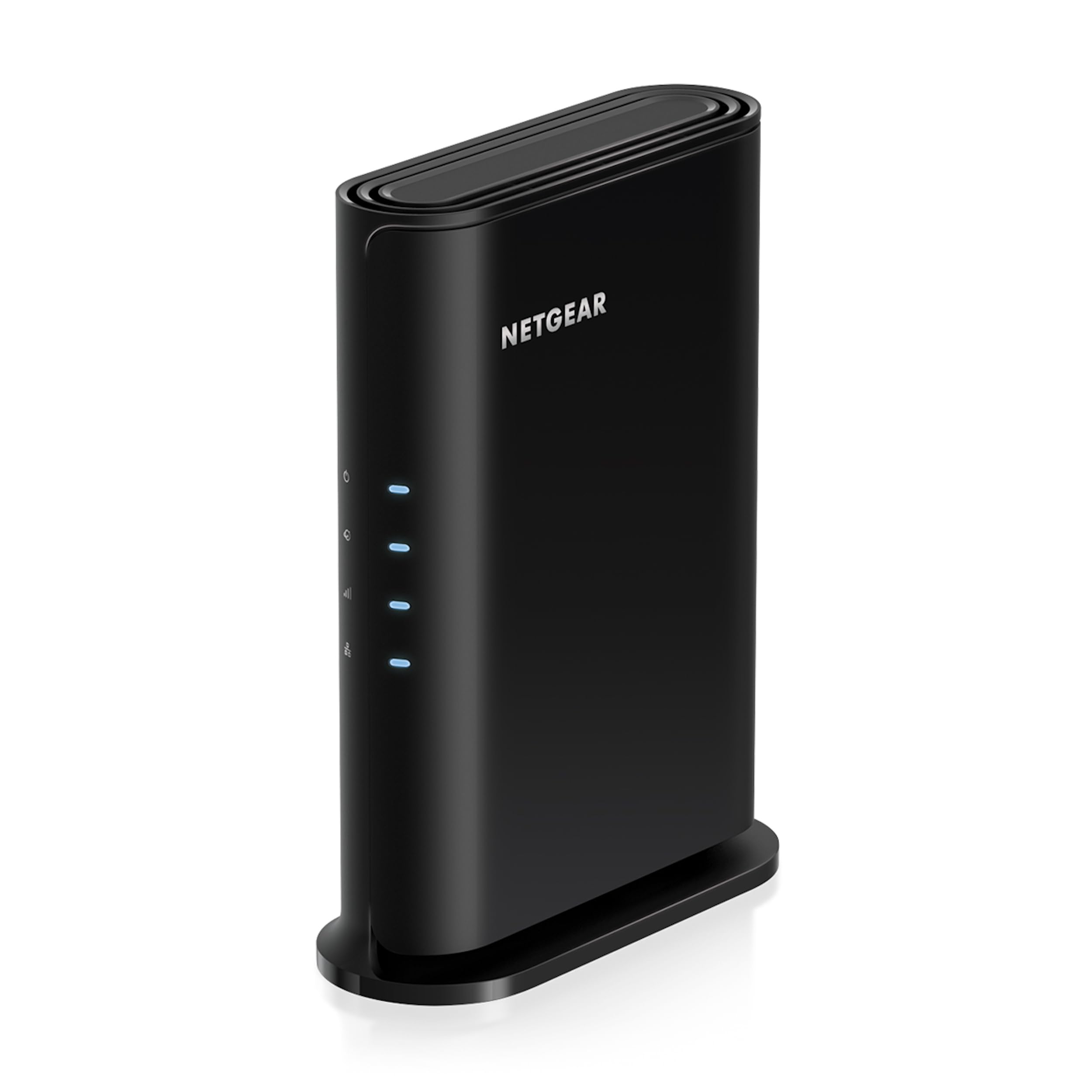
Tiny footprint, big Wi-Fi 6 speed, and a setup that holds your hand the whole way.
The R6700AX packs AX1800 wireless speed (up to 1.8 Gbps) into a compact chassis that does not hog your shelf space. It covers up to 1500 sq. ft. and handles 20 devices, making it a direct competitor to the eero 6 for small homes. One reviewer on a 1 Gbps plan measured 934.74 Mbps down after setup, which is excellent real-world performance. The free Nighthawk app walks you through every step, and owners mention the app provides “precise troubleshooting guidance” if something goes wrong.
It uses WPA3 encryption and automatic firmware updates to keep your network secure without any subscription fees — though NETGEAR Armor is available as a 30-day free trial if you want extra protection. The four Gigabit Ethernet LAN ports give you plenty of wired options. A minor frustration: some users found the setup process “mandatory with app and ~30 steps,” though once running, it stays stable for months at a time.
Space-Saver: Choose this for a clean, compact router that delivers genuine 1.8 Gbps speeds and a guided setup perfect for non-techies.
Setup Friction: Be prepared for an app-driven installation that some found unnecessarily long.
6. TP-Link Wifi 6 AX1500 Smart WiFi Router (Archer AX10)

The cheapest way to jump to Wi-Fi 6 without sacrificing real-world speed.
The Archer AX10 is a renewed router that brings Wi-Fi 6 (OFDMA and 1024-QAM) to a very low price point. It offers a data transfer rate of 1500 Megabits Per Second on the 5 GHz band and 300 Mbps on the 2.4 GHz band. A 1.5 GHz tri-core processor keeps everything smooth even when multiple devices are active. One owner reported using a refurbished unit as an access point and seeing their wireless speed jump from 50/150 Mbps to “500-800 Mbps on 1 Gbps fiber” — a massive real-world improvement.
It uses Beamforming technology to focus the signal directly at your devices, which helps cut through interference in a crowded home. The TP-Link Tether app makes setup fast, and it is backward compatible with all older Wi-Fi standards. Customers note that the refurbished unit needed a factory reset and firmware update first, but once done, it ran “fast, quiet, cool.” The catch is that at 1500 Mbps, it is noticeably slower than the RAX30’s 2400 Mbps, so power users may feel capped.
Entry-Level Wi-Fi 6
- Tri-core 1.5 GHz processor for smooth multi-device handling
- OFDMA reduces lag for gaming and streaming
- Extremely low price for Wi-Fi 6 technology
Refurb Caveats
- May require factory reset and firmware update from the start
- AX1500 speed is lower than AX1800 or AX2400 rivals
- Renewed condition means cosmetic wear possible
Wi-Fi 6 on a Shoestring: Buy this if you want the efficiency of Wi-Fi 6 for streaming and browsing but cannot justify spending more.
Keep In Mind: Expect to spend an extra 15 minutes on initial setup to update firmware.
7. Tenda AC1200 Gigabit WiFi Router (AC8)

Four massive antennas push a signal deep into a large home for a very small price.
The Tenda AC8 is built around four powerful 6dBi antennas and Beamforming technology. The result is surprising range for its price. One customer observed it “covers ~80% of 5400 sq ft 2-level home from 2nd floor end,” which is impressive for a budget AC1200 router. It offers a data transfer rate of 1 Gigabits Per Second, slightly behind the Cudy WR1200’s 1.2 Gigabits Per Second, but the extra antenna gain makes up for it in coverage.
It has three Gigabit WAN/LAN ports for wired connections and supports AP Mode if you want to turn a wired connection into a wireless network. The Tenda WiFi app handles setup and includes parental controls to schedule internet access for kids. A few buyers hit a device limit — the router claims 35 devices, but real-world testing shows it tops out around 20 devices before dropping connections. It is best for a home with a handful of phones and laptops rather than a huge IoT setup.
Big-Home Budget Pick: Get this if your main problem is a weak signal in a large house and you only need to connect about 15-20 devices.
Device Cap: Do not buy if you plan to connect more than 20 smart gadgets — it will struggle to keep them all online.
Understanding the Specs
Data Transfer Rate (Mbps / Gbps)
This number tells you the maximum theoretical speed your router can push over WiFi. In real life, you will get less due to walls and interference, but a higher number gives you more headroom. A router rated at 2400 Mbps, like the NETGEAR RAX30, can handle multiple 4K streams and online gaming at the same time, while a 900 Mbps router like the eero 6 is fine for streaming but may bottleneck if you have a gigabit internet plan.
Coverage (Square Feet)
This is the manufacturer’s estimate of how large an open area the router can cover with a strong signal. A 2000 sq. ft. router like the RAX30 can reach across a medium home. Remember that walls, floors, and large appliances cut this range significantly. If you have a 2500 sq. ft. two-story home, a single router may leave dead spots — that is when mesh systems like the eero 6 shine, since you can add extra units.
FAQ
Will a cheap WiFi router work with my existing modem?
What is the difference between AC1200 and AX1500 in budget routers?
Do cheap routers support parental controls?
Can I use a cheap WiFi router as a Wi-Fi extender?
What does beamforming do on a cheap router?
How many devices can a budget router handle?
Do I need a Wi-Fi 6 router if my devices are older?
What is the difference between a modem and a router?
Final Thoughts: The Verdict
Across the board, the cheap wifi router winner is the NETGEAR Nighthawk RAX30 because it delivers the highest data transfer rate at 2400 Mbps and the widest coverage at 2000 sq. ft., beating every other pick for speed. If you want whole-home mesh coverage that handles 75+ devices, grab the Amazon eero 6. And for the absolute best value with Wi-Fi 6 and a built-in VPN server, the TP-Link Archer AX21 V5 is tough to beat.
How We Picked
We do not accept paid placement. Every pick is matched to a real buyer and a real use-case; we do not hands-on test units.
Sources & Methodology
Specifications: manufacturer listings and product documentation. Review insights: verified customer reviews, as of July 2026. Pricing: not shown on this page (it changes often); check the current price via the retailer link.
As an Amazon Associate, WellFizz earns from qualifying purchases. This does not affect which products we feature.
Related Guides

Mo Maruf
I created WellFizz to bridge the gap between vague wellness advice and actionable solutions. My mission is simple: to decode the research and give you practical tools you can actually use.
Beyond the data, I am a passionate traveler. I believe that stepping away from the screen to explore new environments is essential for mental clarity and physical vitality.