Our readers keep the lights on and my smoothie glass nicely filled. As an Amazon Associate, I earn from qualifying purchases.
Walking into the sunset with your dog, a street performer in a new city, or the first bite of a homemade recipe—you want to capture the moment, not fight your gear. The wrong budget camera delivers grainy low-light, shaky pans, and audio that sounds like it was recorded in a wind tunnel. A sharp, affordable vlogging camera should get out of your way and let the story lead.
I’m Mohammad Maruf — the founder and writer behind WellFizz. I pore over sensor specs, stabilization algorithms, and real-world audio performance to separate marketing hype from genuine value in the sub- camera space.
You deserve gear that makes you look forward to editing, not dreading it. That starts with choosing the right cheap vlogging camera that prioritizes image stabilization, usable 4K, and a mic input over fancy megapixel counts it can’t deliver.
How To Choose The Best Cheap Vlogging Camera
The race to the bottom on price cuts corners on the three things that matter most for a talking-head or walking vlog: stabilization, low-light capability, and audio fidelity. Here is how to spot where a manufacturer saved money and whether that trade-off is acceptable for your style of shooting.
Sensor Size and Low-Light Performance
An entry-level action camera might pack 4K on paper, but its tiny 1/2.3-inch sensor chokes the moment the sun dips. A 1-inch CMOS sensor—found on the SJCAM C400 and the DJI Osmo Pocket 3—captures up to four times more light, giving you usable footage indoors and at dusk without excessive noise. If you tend to vlog in coffee shops or on evening walks, prioritize the sensor size over the frame rate.
Stabilization: Mechanical vs. Electronic
Electronic image stabilization (EIS) crops into the frame to soften bumps, which works for minor hand jitters but falls apart during a brisk walk or run. A 3-axis mechanical gimbal, like the one inside the Xtra Muse or DJI Osmo Pocket 3, physically counter-rotates the camera to keep the horizon level even while jogging. For handheld vlogging, spend your budget on a camera with a built-in gimbal before you spend on lenses or high bitrate codecs.
Audio Input and Wind Protection
Nothing screams “cheap camera” louder than distorted wind noise covering your voice. A 3.5mm external microphone jack allows you to attach a lapel mic and instantly upgrade your audio to professional clarity. Cameras without this port lock you into the onboard mic, which typically lacks a deadcat windscreen. Models like the Sony ZV-1F include a directional three-capsule mic with a supplied windscreen—a massive step up from a pinhole mono mic.
Quick Comparison
On smaller screens, swipe sideways to see the full table.
| Model | Category | Best For | Key Spec | Amazon |
|---|---|---|---|---|
| DJI Osmo Pocket 3 | Gimbal Camera | Walking vlogs, travel | 1″ CMOS, 3-axis mech. gimbal | Amazon |
| Canon PowerShot V10 | Compact Vlog Cam | Pocket-ready, casual vlog | 1″ CMOS, built-in stand | Amazon |
| SJCAM C400 | Action Camera | Adventure, hands-free | 6‑axis EIS, 7‑hour battery | Amazon |
| Xtra Muse | Gimbal Camera | Budget gimbal alternative | 1″ CMOS, 3‑axis gimbal | Amazon |
| Insta360 GO Ultra | Wearable Cam | First‑person POV | 53g, 1/1.28″ sensor, IPX8 | Amazon |
| Sony ZV-1F | Point & Shoot | Beginner creators, YouTube | 20mm lens, Eye AF | Amazon |
| Canon EOS Rebel T7 | DSLR Kit | Learning photography + vlog | 24.1MP APS-C, dual lenses | Amazon |
| Sony ZV-1 | Premium Compact | Pro color science, streaming | 24‑70mm f/1.8‑2.8 zoom | Amazon |
| Panasonic LUMIX S5IIX | Mirrorless Kit | Cinematic full‑frame | 24.2MP FF, ProRes, 5.8K | Amazon |
In‑Depth Reviews
1. DJI Osmo Pocket 3
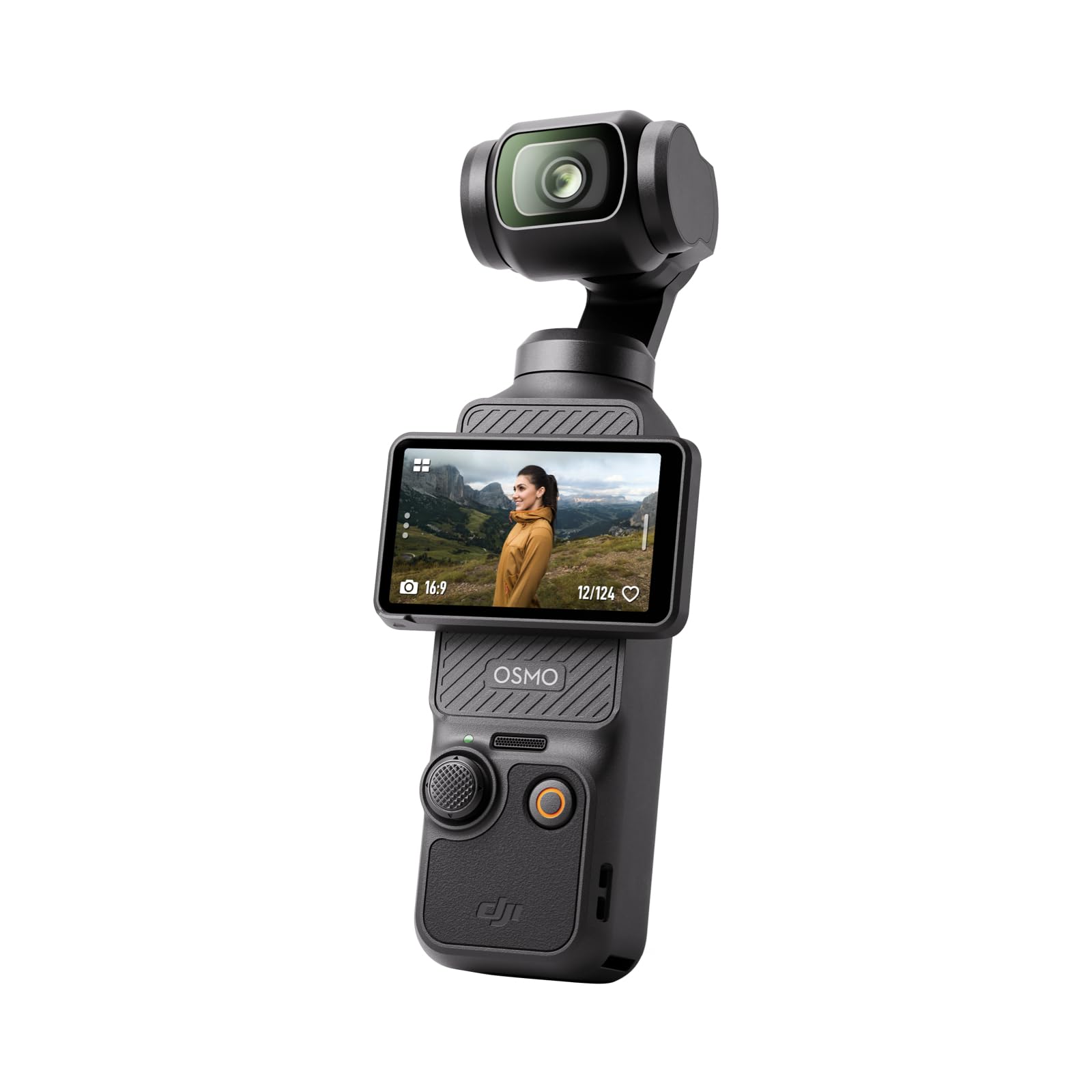
The DJI Osmo Pocket 3 sets the benchmark for pocketable vlogging under . Its 1-inch CMOS sensor captures 4K footage at 120fps with genuine low-light reach—the same sensor class found in cameras costing twice as much. The built-in 3-axis mechanical gimbal eliminates the jello-effect crop of electronic stabilization, keeping your horizon locked even while jogging or walking down stairs.
ActiveTrack 6.0 locks onto your face and stays center-frame whether you spin, dance, or set the camera on a tripod and walk around. The rotating 2-inch touchscreen switches between horizontal and vertical framing in one thumb motion, a godsend for creators who repurpose content for both YouTube and TikTok. Battery life hits roughly 166 minutes, and fast USB-C charging tops it up in under an hour.
Audio is handled by built-in stereo mics, but the real upgrade path is the DJI Mic 2 direct connection via OsmoAudio—no dongles, no syncing. The protective cover and 1/4-inch tripod mount are included, though the charging brick is not. For pure stabilization and image quality, this is the compact powerhouse that makes every other budget camera justify its existence.
Why it’s great
- Mechanical 3‑axis gimbal kills walking shake
- 1‑inch sensor delivers clean 4K at dusk
- ActiveTrack 6.0 stays locked on moving subjects
Good to know
- No included charger brick
- 1300 mAh battery demands midday top‑off for all‑day shoots
2. Canon PowerShot V10

The Canon PowerShot V10 is the rare vlog camera that truly fits in a jeans coin pocket. Its 1-inch back-illuminated CMOS sensor and fixed 19mm wide-angle lens (35mm equivalent) let you hold the camera at arm’s length and still have your entire face plus a generous slice of background in frame. The retractable front-facing screen flips up for self-recording, and the built-in stand folds from both the front and back for desk or tabletop shooting.
Three image stabilization modes—Off, On, and Enhanced—are available after the 1.2.0 firmware update, and the Enhanced mode does an admirable job smoothing out casual walking. The highlight here is the triple stereo microphone array: two main mics capture width, and a third center channel cancels wind noise. The supplied foam windscreen is genuinely usable outdoors, a rarity at this price point.
Battery life split among users, with some reporting decent runtime for a day of clips and others calling it short, so carrying a USB-C power bank is wise. There is no mechanical zoom while recording—you must use digital zoom, which degrades quality. For spontaneous, grab-and-go vlogging with zero setup, the V10 is uniquely compact and ready.
Why it’s great
- Pocket‑friendly size with built‑in stand
- 1‑inch sensor for better low‑light than typical action cams
- Triple mic array with windscreen works outdoors
Good to know
- No optical zoom—digital zoom reduces 4K quality
- Battery capacity varies; a power bank is recommended
3. Xtra Muse

The Xtra Muse directly challenges the DJI Osmo Pocket 3 with a near-identical spec sheet at a lower entry point. It pairs a 1-inch CMOS sensor with a genuine 3-axis mechanical gimbal—not software-only stabilization—to deliver smooth 4K footage up to 120fps. The 2-inch touchscreen rotates for horizontal or vertical composition, and the Master Follow mode keeps your face centered as you move through a scene.
10-bit X-Log color depth captures up to one billion colors, giving you real latitude in post-production for grading sunsets or indoor warmth without banding. The autofocus is snappy and its face/object tracking is reliable, matching the responsiveness of cameras twice its price. Battery life hovers around 161 minutes, which can be extended by connecting an external USB power pack through the USB-C PD port.
The carrying bag, wrist strap, and 1/4-inch threaded handle are all included ready to mount on a tripod. Some users reported that DJI Pocket 3 accessories are cross-compatible, including the DJI Mic 2 transmitter after a recent firmware update. If you want the fluidity of a gimbal camera but need to keep more cash for a memory card and spare battery, this is the smartest value swing.
Why it’s great
- True 3‑axis mechanical gimbal for smooth walking shots
- 10‑bit X‑Log color for professional grading
- DJI Mic 2 compatible after firmware update
Good to know
- Battery life of ~2.5 hours needs midday charging
- No built‑in storage; requires a microSD card
4. SJCAM C400
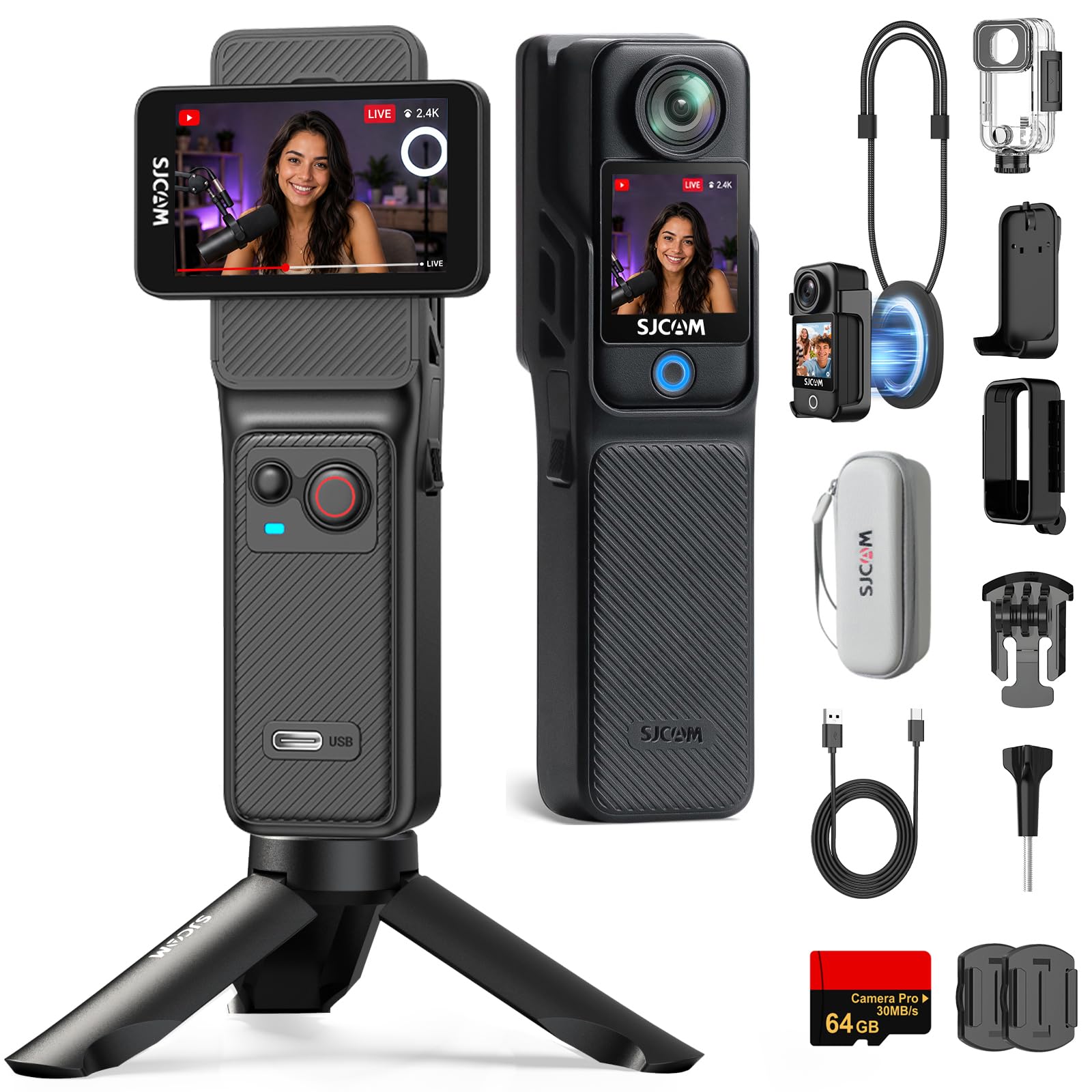
The SJCAM C400 is built for the creator who does not want to worry about battery life while hiking or livestreaming. Its headline feature is a 7-hour continuous recording time from a single charge—enough to capture an entire day trip without reaching for a power bank. The 154-degree distortion-free wide-angle lens and f/2.0 aperture give you an immersive field of view with a soft defocus effect for background separation.
Six-axis electronic image stabilization (EIS) includes horizon correction, so even if the camera tilts during mountain biking or a trail run, the footage rights itself. A 5G WiFi module allows instant 4K file transfers to a phone for social uploads, and the included 64GB memory card means you can start recording out of the box. The magnetic clip system lets you mount it on a chest strap, helmet, or backpack strap for hands-free POV.
Video quality is 4K at 30fps, and while a handful of users reported that the 4K detail is softer than premium action cameras, the 2K footage holds up well for typical vlog use. The compact design weighs 189 grams and the 2.29-inch touchscreen responds well even with gloves. For endurance-focused vloggers who want one camera that lasts the entire day, the C400 delivers absurd battery life.
Why it’s great
- Incredible 7‑hour battery for all‑day recording
- 6‑axis EIS with horizon correction stabilizes action shots
- 64GB memory card included—no extra purchase needed
Good to know
- 4K/30fps quality is softer than some brand‑name action cams at 2K
- Storage card is hidden in the carrying case zipper compartment
5. Insta360 GO Ultra
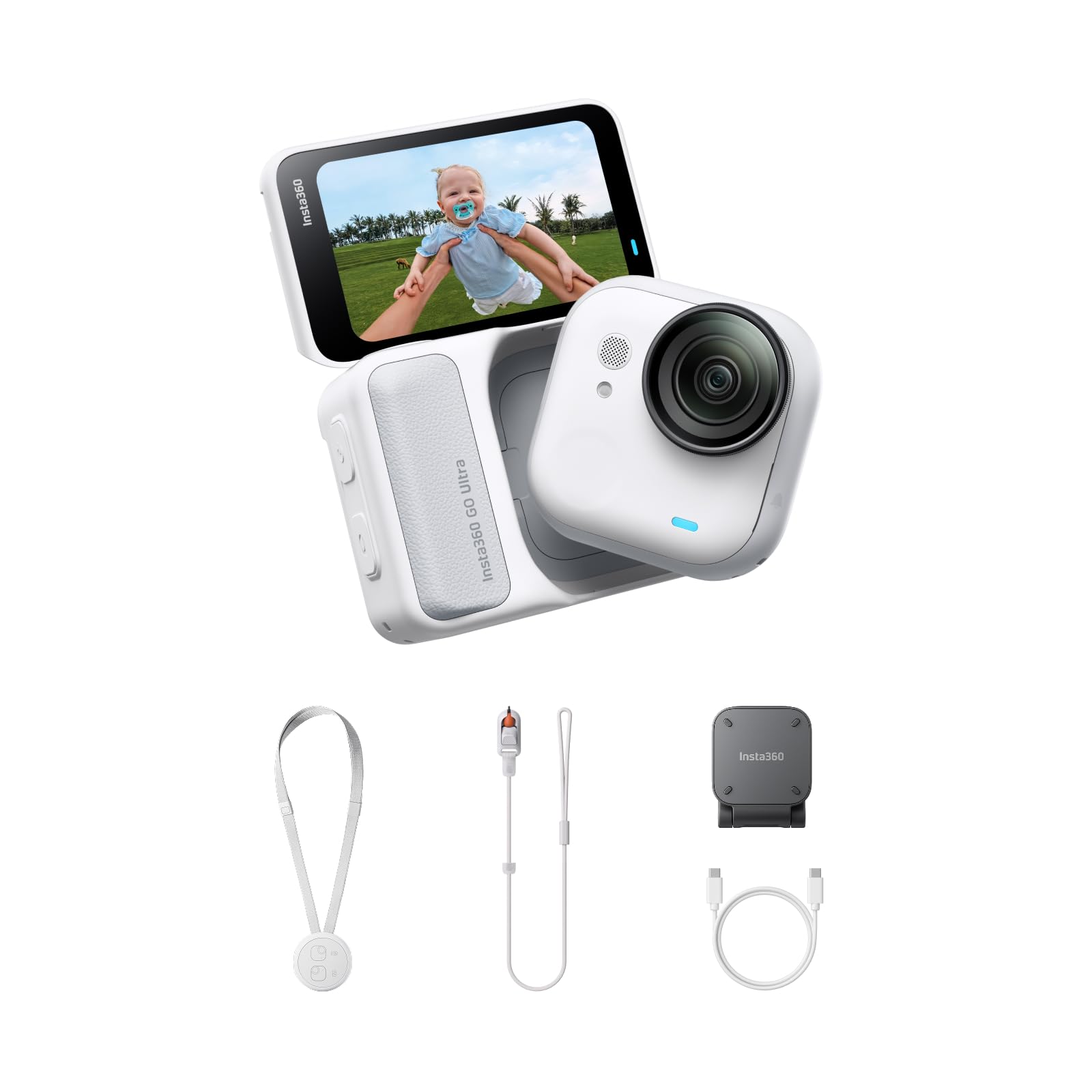
The Insta360 GO Ultra is the lightest 4K wearable camera on this list at just 53 grams—lighter than a typical watch. It relies on magnetic mounting: clip the camera to a baseball cap visor, wear the Magnet Pendant around your neck, or stick it to any ferrous surface for a true first-person perspective that leaves your hands completely free. The 1/1.28-inch sensor paired with a 5nm AI chip and PureVideo Mode delivers surprisingly capable low-light footage for a camera this small.
Three levels of FlowState Stabilization plus 360-degree Horizon Lock keep your footage level even during cycling, running, or diving up to 33 feet (10 meters) without a housing—IPX8 certified. The Action Pod extends total runtime to 200 minutes, and a 12-minute charge gets you from 0 to 80 percent, drastically reducing downtime between clips. The AI-powered auto-editing feature finds highlights and cuts them into a finished video with transitions and music in one tap.
The built-in microphone captures clear audio, and with a firmware update, the GO Ultra can connect directly to DJI Mic 2 transmitters for wireless voice pickup. The only catch is that a microSD card is sold separately, and the magnetic pendant can lose its grip on very thick winter jackets. For creators who want to record a bike commute, a rock climb, or a cooking session completely hands-free, this is the most liberating form factor available.
Why it’s great
- 53‑gram wearable with magnetic clip—truly hands‑free
- IPX8 to 33 ft for underwater vlogging
- AI auto‑editing saves hours of post‑production
Good to know
- No included microSD card
- Magnetic pendant can detach from very thick jackets
6. Sony ZV-1F

The Sony ZV-1F is designed specifically for the first-time creator who wants Sony’s legendary color science and autofocus without the complexity of interchangeable lenses. The fixed 20mm ultra-wide lens (35mm equivalent) captures your face plus the entire room at arm’s length, making it ideal for bedroom vloggers and travel diaries. The side-articulating touchscreen flips forward for self-framing, and the large red record button leaves zero doubt about when you are rolling.
Eye-AF and real-time tracking keep the focus locked on your eyes even as you move props or products into the frame—a feature often reserved for Sony’s bodies. The directional 3-capsule microphone with its included deadcat windscreen captures clear voice audio while suppressing room echo and wind rumble. F2 to F3.0 aperture gives you defocused background bokeh with a simple button press, instantly adding depth to talking-head shots.
There is no optical zoom; the entire lens system is fixed, so you cannot pull the shot tighter without moving the camera. The electronic stabilization is effective for static or slow pans but shows wobble during active walking. Battery life is moderate—many users carry a spare NP-BX1 battery or a USB-C power bank. For social media creators who want Sony’s look and autofocus at the lowest entry price, the ZV-1F is a focused tool that nails the basics.
Why it’s great
- Eye‑AF autofocus tracks eyes reliably—like a larger Alpha body
- 20mm ultra‑wide lens fits face and background in selfie mode
- Directional mic with windscreen captures clean outdoor audio
Good to know
- Fixed lens—no optical zoom while recording
- Electronic stabilization is weak during active walking
7. Canon EOS Rebel T7 DSLR Kit

The Canon EOS Rebel T7 kit is the traditional entry point for creators who want to learn photography fundamentals while shooting Full HD 1080p vlogs. The 24.1-megapixel APS-C CMOS sensor delivers the depth and dynamic range that a 1/2.3-inch action camera cannot touch, and the two included lenses—18-55mm and 75-300mm—cover everything from wide selfie shots to telephoto close-ups of distant subjects. The optical viewfinder with 95 percent coverage is a classic DSLR experience for building framing discipline.
Dual Pixel CMOS AF (a Canon innovation that made live-view autofocus usable) with eye detection AF gives you smooth focus transitions when you move your hands toward the lens to show a product. Video is capped at Full HD 1080p, so this is not a 4K vlogging tool, but the large sensor and interchangeable lens mount let you achieve a blurred background look with the 75-300mm at 300mm and f/5.6 that no budget compact can match.
The 9-point AF system is dated by 2025 standards, and the 75-300mm lens is known for softness at the long end and weak low-light performance. No SD card is included, and the camera is notably heavier than a compact or action camera. For a young creator learning photography seriously or a family wanting one versatile camera for photos and YouTube, the Rebel T7 is a proven, cheap classroom.
Why it’s great
- 24.1MP APS‑C sensor for true DSLR image depth
- Two‑lens kit covers 18mm wide to 300mm telephoto
- Dual Pixel AF provides smooth live‑view focus
Good to know
- Video capped at 1080p—no 4K
- 9‑point AF system is dated compared to modern mirrorless
8. Sony ZV-1

The Sony ZV-1 is the camera that defined the modern one-inch vlog compact. Its 20.1-megapixel stacked Exmor RS sensor with a fast ZEISS Vario-Sonnar T lens (24-70mm equivalent, f/1.8-2.8) gives you genuine optical zoom range while maintaining a bright aperture—the only camera on this list that lets you zoom in optically without switching lenses. The fast Hybrid Autofocus with Real-Time Eye AF locks onto eyes with Sony’s characteristic ferocity, even as you turn your head or hold up an object.
The side flip-out 3-inch touchscreen and Product Showcase Setting make it trivial to transition from a talking-head shot to a close-up. The built-in directional mic with a supplied windscreen captures good audio, plus a standard 3.5mm mic jack enables a professional lavalier setup without adapters. 4K HDR video with HLG and S-Log3/2 color profiles gives you advanced grading options that budget cameras typically omit.
Battery life is the primary limitation—about 45 to 60 minutes of continuous recording—and the camera is small enough to feel cramped for larger hands. Digital-only image stabilization reduces the frame size and still shows residual shake during walking. It is not a gimbal camera, but for a static desk vlog or talking head with optical zoom, the ZV-1 remains the reference standard for color and autofocus in a pocket body.
Why it’s great
- Optical 24‑70mm f/1.8‑2.8 zoom—unique among one‑inch compacts
- S‑Log and HLG for professional color grading
- Product Showcase Setting transitions face to object seamlessly
Good to know
- Continuous battery life around 45‑60 minutes
- Digital stabilization crops frame and still shows walking shake
9. Panasonic LUMIX S5IIX
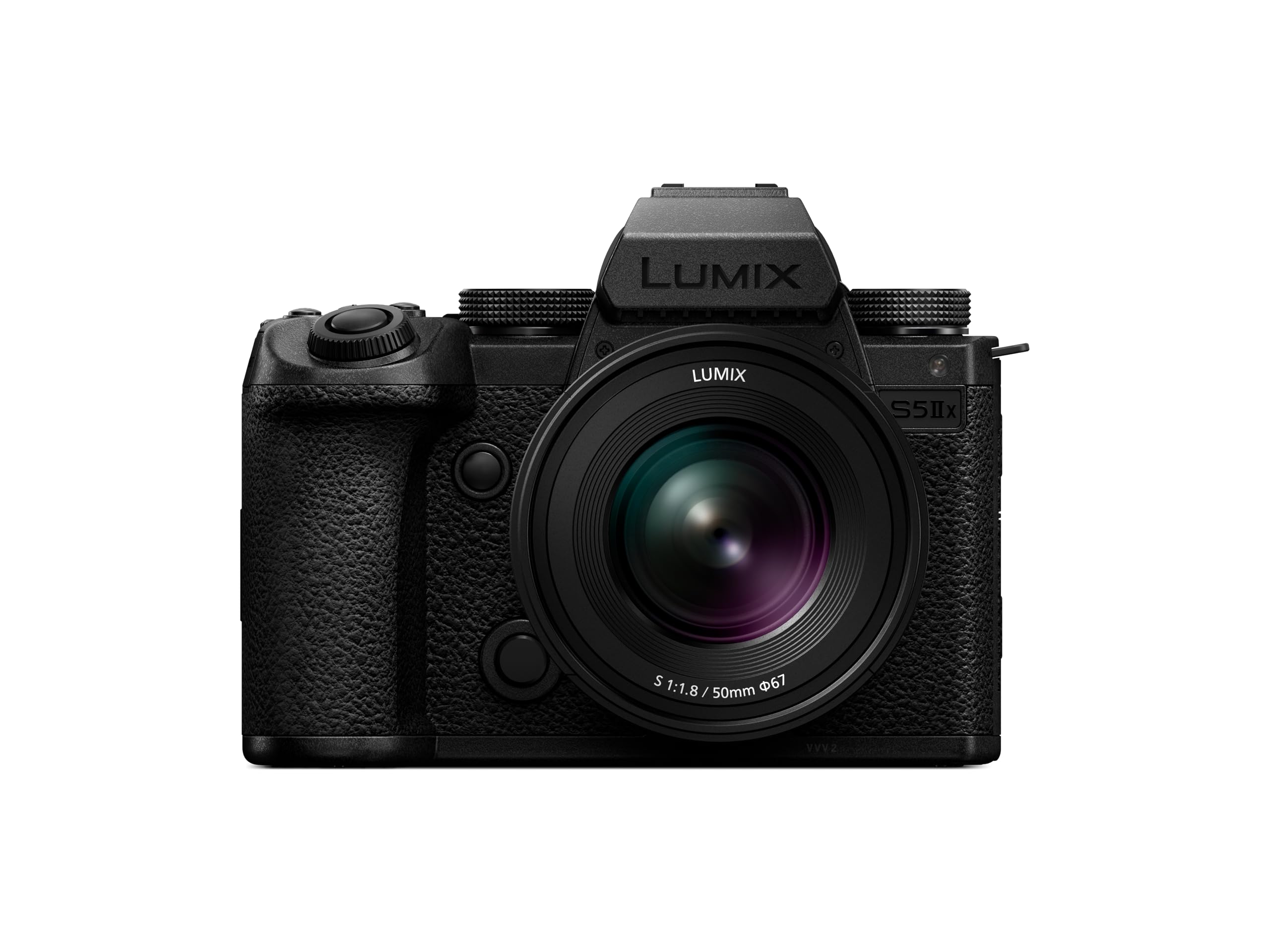
The Panasonic LUMIX S5IIX is the outlier in a “cheap” camera roundup, but it defines the ceiling of what a vlogging camera can do when you eliminate the word “budget” from the conversation. A 24.2-megapixel full-frame sensor with Phase Hybrid AF records 5.8K ProRes internally and unlimited 4K without overheating—thanks to a built-in cooling fan that makes the camera dense but never throttles. The included 20-60mm (f/3.5-5.6) and 50mm f/1.8 primes give you a standard zoom plus a fast prime for shallow-depth bokeh in one purchase.
Active I.S. stabilization is Panasonic’s best, effectively smoothing walking shots without the heavy crop of lesser systems. The 14+ stop V-Log/V-Gamut capture and 10-bit color depth provide the grading latitude seen in cinema cameras, while the wired and wireless IP streaming capability makes it a live-production tool out of the box. The L-mount ecosystem is growing, and the 779-point Phase Detection autofocus finally brings Panasonic competitive with Sony and Canon on speed and reliability.
At this price level, there is no excuse for a spinning DSLR mirror or a tiny battery—the S5IIX delivers both excellent battery life and a grip that fits a full hand. The downside is that the 20-60mm kit lens is not fast, and the reported firmware issue that removed the Ethernet live-stream feature for some users requires careful research before purchase. If your vlogging ambitions extend to client work, multicam production, or cinema-level color, this body plus two lenses make the S5IIX the clear value king in full-frame video.
Why it’s great
- Full‑frame 24.2MP sensor with 5.8K ProRes internal recording
- Built‑in cooling fan enables unlimited recording without overheating
- Active I.S. smooths walking footage better than most compacts
Good to know
- Firmware update reportedly removed Ethernet streaming feature for some
- 20‑60mm kit lens is slow—consider a fast prime immediately
FAQ
Can a cheap vlogging camera shoot usable 4K footage indoors?
What does “3-axis mechanical gimbal” mean for my vlogging experience?
Do I need an external microphone for a cheap vlogging camera?
Why do some cheap vlogging cameras overheat after 15 minutes of 4K recording?
Can I use a cheap vlogging camera as a webcam for Zoom or live streaming?
Final Thoughts: The Verdict
For most users, the cheap vlogging camera winner is the DJI Osmo Pocket 3 because it delivers a 1-inch sensor, a 3-axis mechanical gimbal, and reliable ActiveTrack 6.0 in a genuinely pocketable body—a combination no other camera at this price matches. If you want the same gimbal smoothness for less cash, grab the Xtra Muse. And for a hands-free first-person perspective that barely weighs 53 grams, nothing beats the Insta360 GO Ultra.

Mo Maruf
I created WellFizz to bridge the gap between vague wellness advice and actionable solutions. My mission is simple: to decode the research and give you practical tools you can actually use.
Beyond the data, I am a passionate traveler. I believe that stepping away from the screen to explore new environments is essential for mental clarity and physical vitality.