Our readers keep the lights on and my smoothie glass nicely filled. As an Amazon Associate, I earn from qualifying purchases.
Specs are compiled from manufacturer listings and verified buyer reviews and can change over time — please confirm the key details on the product page before buying.
You used to have to choose between a cheap TV and smooth gaming motion, but that trade-off is gone. Today’s budget-friendly TVs give you native high refresh rates, strong contrast, and gamer-friendly software while staying affordable. This guide finds the models that actually deliver 120Hz or faster gameplay, low input lag, and a picture that still looks great for movies and shows — all well under the usual premium price point.
I’m Mohammad Maruf — the founder and writer behind WellFizz. This guide is built by comparing the manufacturers’ published specifications and the patterns across verified customer reviews, so you get each pick’s real strengths and trade-offs instead of marketing spin.
You want a cheap TV for gaming that gives you smooth frame rates, responsive controls, and decent HDR while staying affordable — so here are the best cheap tvs for gaming in 2025.
Our Picks at a Glance

How To Choose The Best Cheap TV For Gaming
Finding a bargain gaming TV is about knowing which specs actually affect your gameplay and which are just marketing fluff. Here are the three things you need to get right.
Prioritize a Native 120Hz or 144Hz Panel
A “motion rate” of 480 or 600 is not the same as a native high-refresh panel. The native refresh rate — measured in Hertz (Hz) — is the actual number of times the screen updates every second. For console gaming, 120Hz is the standard. For PC gaming, 144Hz gives you a smoother, more responsive experience. A native 144Hz panel future-proofs you for both, and that is what every pick here offers.
Check for HDMI 2.1 and VRR Support
HDMI 2.1 (a newer, faster connection port) is the cable that carries the signal from your console or PC. It has enough bandwidth to handle 4K resolution at 120Hz. Variable Refresh Rate (VRR) — often marketed as AMD FreeSync or HDMI Forum VRR — lets the TV match its refresh rate to the frame rate of your game. This eliminates screen tearing (where the picture looks split in half horizontally) without adding lag.
Look for Panel Tech That Boosts Contrast
At this budget, you have two main technologies: QLED (Quantum Dot LED) and Mini-LED. QLED uses tiny nanocrystals called quantum dots to produce brighter, more accurate colors. Mini-LED uses thousands of tiny backlight LEDs to control brightness in specific zones, giving you deeper blacks and less haloing around bright objects — a huge win for horror games and dark movie scenes.
Quick Comparison
| Model | Best For | Native Refresh | Backlight Type | Smart Platform | Amazon |
|---|---|---|---|---|---|
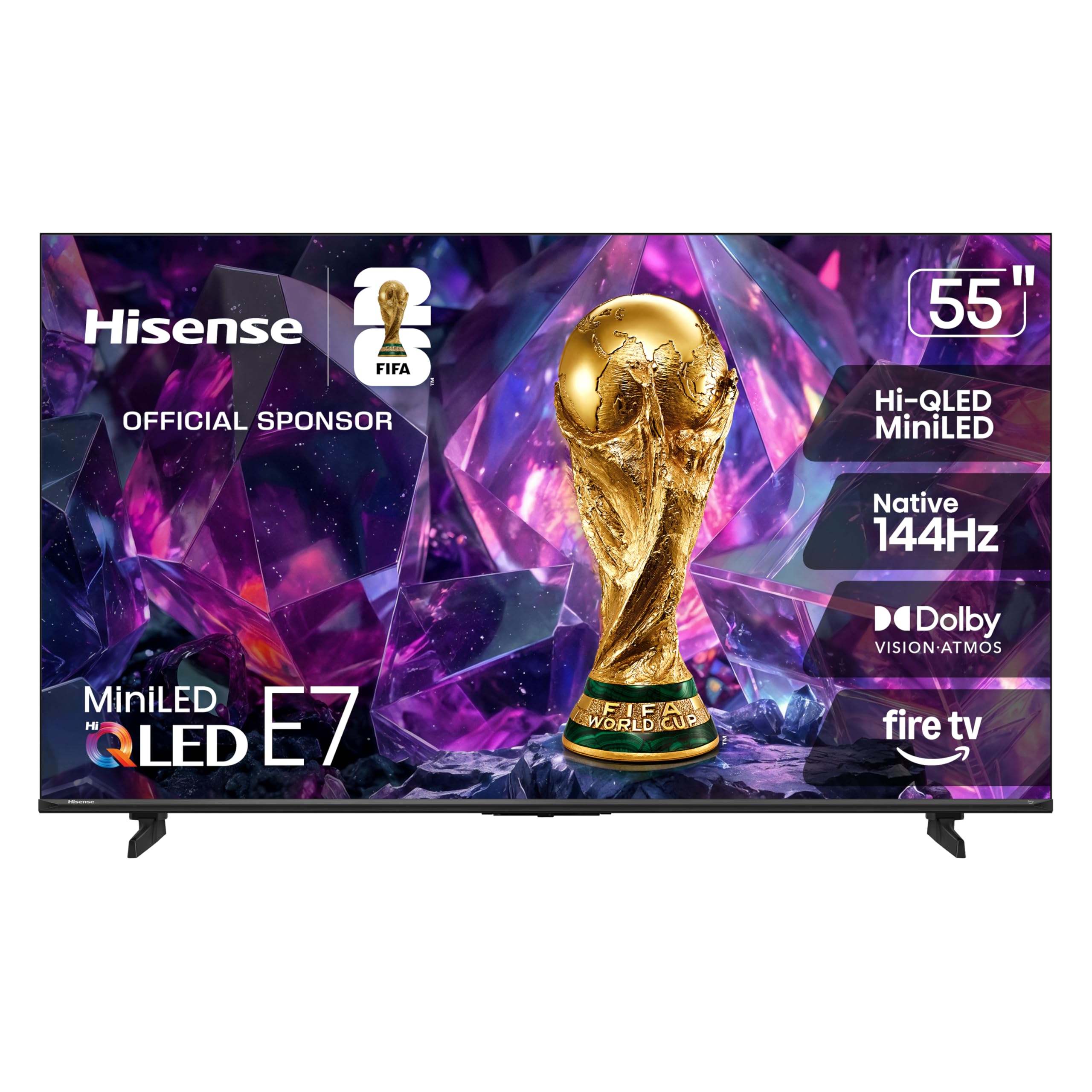
| Hisense 55″ E7 Series★ Best Overall | The overall value king with sharp Mini-LED | 144Hz | Mini-LED | Fire TV | Amazon |
| TCL 55″ T7Top Performer | The QLED powerhouse with polished software | 120Hz | QLED | Google TV | Amazon |
| Hisense 55″ U6 Series | The brightest panel with a built-in subwoofer | 144Hz | Mini-LED | Fire TV | Amazon |
| TCL 55″ QM64L Series | The advanced Mini-LED with TCL’s Halo Control | 144Hz | QD-Mini LED | Fire TV | Amazon |
| Roku Pro Series 55″ | The easiest smart platform and 120Hz gaming | 120Hz | Mini-LED | Roku TV | Amazon |
In‑Depth Reviews
1. Hisense 55″ E7 Cinema Series Hi-QLED Mini-LED (55E7SF)
The entry-level Mini-LED that brings high-end contrast and a native 144Hz panel to a budget price.
Buyers call it “unbeatable for the money” because the Hi-QLED Mini-LED backlight uses thousands of precision light zones for deep shadows and bright highlights . Buyers report “excellent picture quality with sharp image, deep contrast, bright colors, and smooth 144Hz motion” — exactly what you want for both competitive shooters and cinematic single-player games. The Dolby Vision IQ (a smarter HDR format that adjusts to room lighting) and Dolby Atmos audio (object-based surround sound) round it out for movie nights.
The AI Picture system analyzes content scene by scene and tweaks brightness, contrast, and color in real time, which means you rarely have to dive into settings. The Fire TV platform is snappy, and the 4K upscaler does a solid job cleaning up lower-resolution streams. It is a crowd favorite for a reason — the thing everyone raves about is the picture quality, and it holds a strong score from owners who have put it through its paces.
What Wins Owners Over
- Native 144Hz panel makes fast motion look smooth and blur-free in games and live sports
- Mini-LED backlight gives you deep blacks and bright highlights without haloing
- Includes Dolby Vision IQ, HDR10+ Adaptive, and Dolby Atmos for a full cinematic package
- Easy Fire TV setup with quick app switching that owners find responsive
The Honest Caveats
- Packaging feels less secure than premium brands — a few units arrive with minor cosmetic issues
- The plastic stand pieces feel a bit cheap compared to the metal build of pricier models
- One owner experienced persistent Wi-Fi disconnection and software crashes, though this appears rare
Reach for this one if: you want the best balance of Mini-LED contrast and 144Hz gaming performance at a price that undercuts the big names by a wide margin.
Think twice if: you prefer a Google TV interface over Fire TV, or you need the absolute most polished build quality from the start — the TCL T7 below feels more refined in hand.
2. TCL 55″ T7 4K QLED Google TV (55T7)
A QLED screen with Google TV that balances stunning color and 144Hz fluidity without the Mini-LED price tag.
If you care about color accuracy and a clean, no-fuss software experience, this TCL steps up as a serious contender. The QLED (Quantum Dot LED) panel covers nearly the entire DCI-P3 color space — the industry standard for Hollywood films — which means deep reds, lush greens, and vibrant blues that really pop. Owners describe the picture as “stunning” and note that “75” TV, excellent for gaming on console/PC” with zero lag or blur on fast-paced titles like Crimson Desert and Ghost of Yotei on PS5.
The TCL AIPQ Pro Processor (a dedicated chip that tune color, contrast, and clarity in real time) helps deliver a 4K HDR experience that owners mention rivals sets costing “hundreds less.” The Google TV interface brings together all your streaming apps in one place with built-in Chromecast and Apple AirPlay 2, so you can cast from any device. The Motion Rate 480 with MEMC frame insertion (a technology that inserts extra frames to reduce motion blur) keeps fast sports and racing games looking crisp.
Stands out for: the QLED color volume — buyers consistently praise the “balancing brightness and contrast” — and the snappy Google TV interface that avoids bloatware.
One real wrinkle: a few PC users report the TV doesn’t wake properly from power save when using it as a monitor, requiring an HDMI unplug and re-plug. For a sofa-based console gamer, this is a non-issue.
Ideal if: you want Google TV’s clean layout and rich QLED colors for HDR gaming and streaming, and you don’t need Mini-LED-level black levels.
Better to skip if: you plan to use the TV primarily as a PC monitor — the Hisense E7 above has fewer wake-from-sleep complaints for that use case.
3. Hisense 55″ U6 Series Mini-LED 4K (55U65QF)
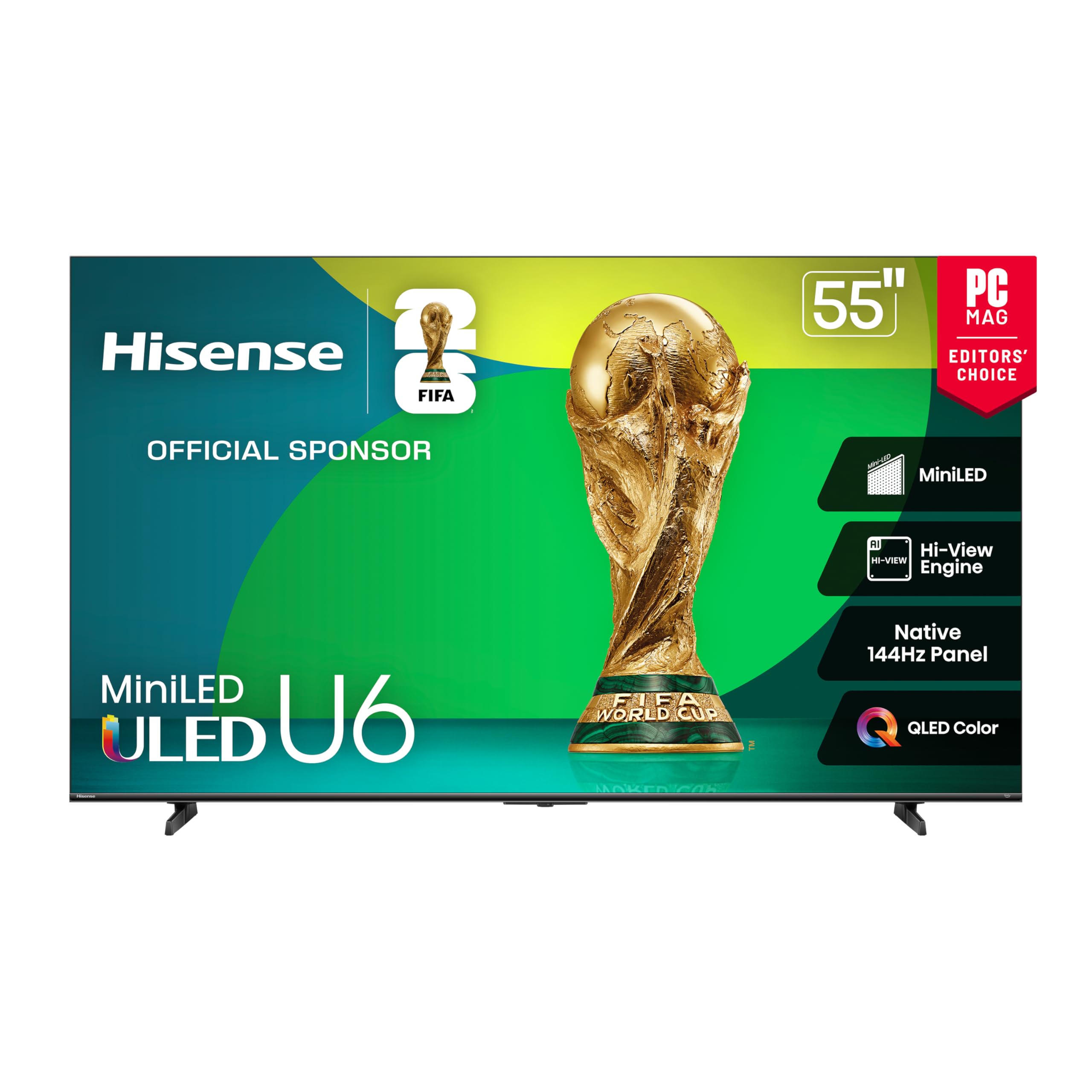
The one with up to 1000 nits peak brightness and a built-in subwoofer that shakes the room.
This is the brightest panel on the list by a wide margin. With up to 1000 nits of peak brightness and up to 600 local dimming zones (areas of the screen that can go dark independently), the U6 delivers HDR highlights that genuinely look explosive — think sun glinting off a car hood in a racing game or muzzle flashes in a dark room. Owners say “colors really pop” and that the Mini-LED makes it “better than older, pricier” Hisense sets. The native 144Hz panel with AMD FreeSync Premium (a variable refresh rate technology that syncs the screen with your graphics card to eliminate stutter) covers a 48Hz to 144Hz range, making it smooth across every frame rate.
The built-in subwoofer is the secret weapon here. It delivers deep, rumbling bass without needing an external soundbar — the reviews page sums it up: “best sound of any TV I’ve ever owned.” The Hi-View AI Engine (AI-powered picture processing) handles scene-by-scene tuning, and the Total HDR Solution covers every format including Dolby Vision IQ, HDR10+ Adaptive, and HLG. The downside? Only 2 of the 4 HDMI ports support the full HDMI 2.1 spec at 144Hz, so you will need to pick your primary console carefully if you have more than one.
Why It Shines
- Up to 1000 nits peak brightness makes HDR content and games look spectacular in any lighting
- 600 local dimming zones give you deep black levels and sharp contrast without halos
- Built-in subwoofer and Dolby Atmos provide rich audio without extra gear
- 144Hz Game Mode Pro with AMD FreeSync Premium for smooth, tear-free gaming
Trade-Offs to Know
- Only two of the four HDMI ports are HDMI 2.1 capable at 144Hz
- Viewing angles are a bit narrow — colors wash out if you sit off to the side
- Reliability feedback is mixed, with some units reportedly failing after a few months
Grab this for: the brightest, most dynamic HDR picture in this price range and the built-in subwoofer that saves you from buying a soundbar.
Look elsewhere if: you need all four HDMI ports to run at 144Hz, or you are wary of the reliability reports — the TCL T7 above has a stronger track record in that department.
4. TCL 55″ QM64L Series Mini LED QLED (55QM64L)
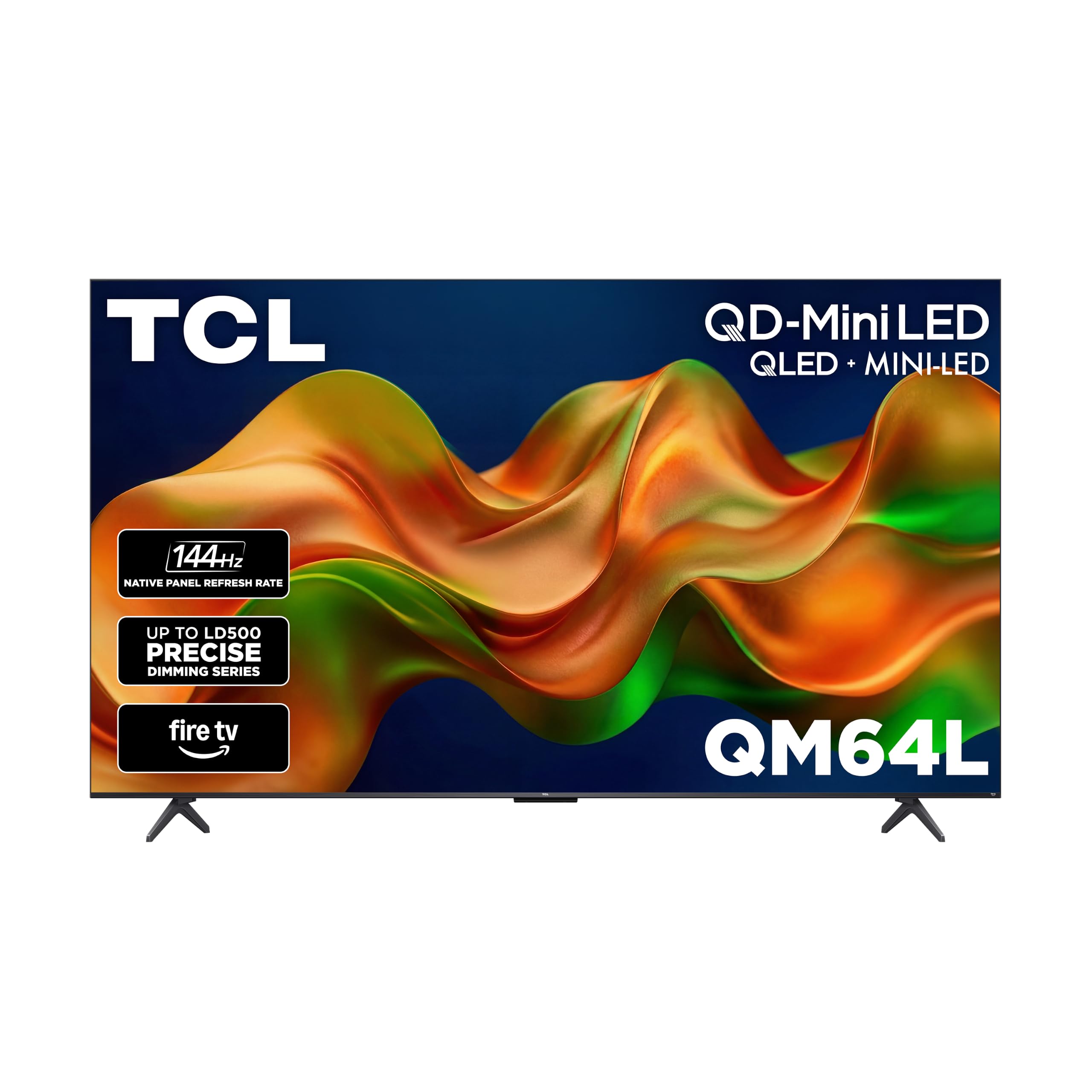
TCL’s Halo Control system uses a Super High Energy LED Microchip and 23-bit Backlight Controller to eliminate halos around bright objects.
This is the newest and most technically ambitious panel on the list. The QD-Mini LED (Quantum Dot Mini LED) combines the brightness of quantum dots with the precision control of a Mini-LED backlight, all governed by TCL’s Halo Control System — a suite that includes a Super High Energy LED Microchip, Condensed Micro Lens, and a 23-bit Backlight Controller. Customers note a “sharp, vibrant picture with excellent color and contrast” that competes with pricier models. The High Contrast HVA Panel (Vertical Alignment panel with high native contrast) keeps blacks deep even in bright rooms.
The Enhanced QLED panel uses alloy-structured quantum crystals for richer color volume. The 144Hz native refresh rate with Game Mode makes shooting and driving games feel exceptionally responsive. The Fire TV platform with the Alexa+ voice remote handles everything from live camera feeds to lighting. Reviewers point out it is “lightweight” and comes with a “helpful backlit remote.” However, performance feedback is mixed — while many find it responsive, a single report of the TV “shutting down after two minutes” on pause and slow app loading appears in the reviews, so this is a pick for early adopters.
Best suited for: the buyer who wants the absolute latest Mini-LED technology with the highest claimed lifespan and the TCL Halo Control System for halo-free images.
Heads up: this is a new model with fewer reviews than the others — a few shoppers say software glitches, so buying from a retailer with a good return policy is wise.
Step up to this one if: you want the most advanced backlight control and longest-rated panel life, and you are comfortable with a newer release.
Stay with a safer bet if: you prefer a more established model with thousands of reviews — the Hisense E7 at the top is the proven workhorse.
5. Roku Pro Series 55″ 4K QLED TV
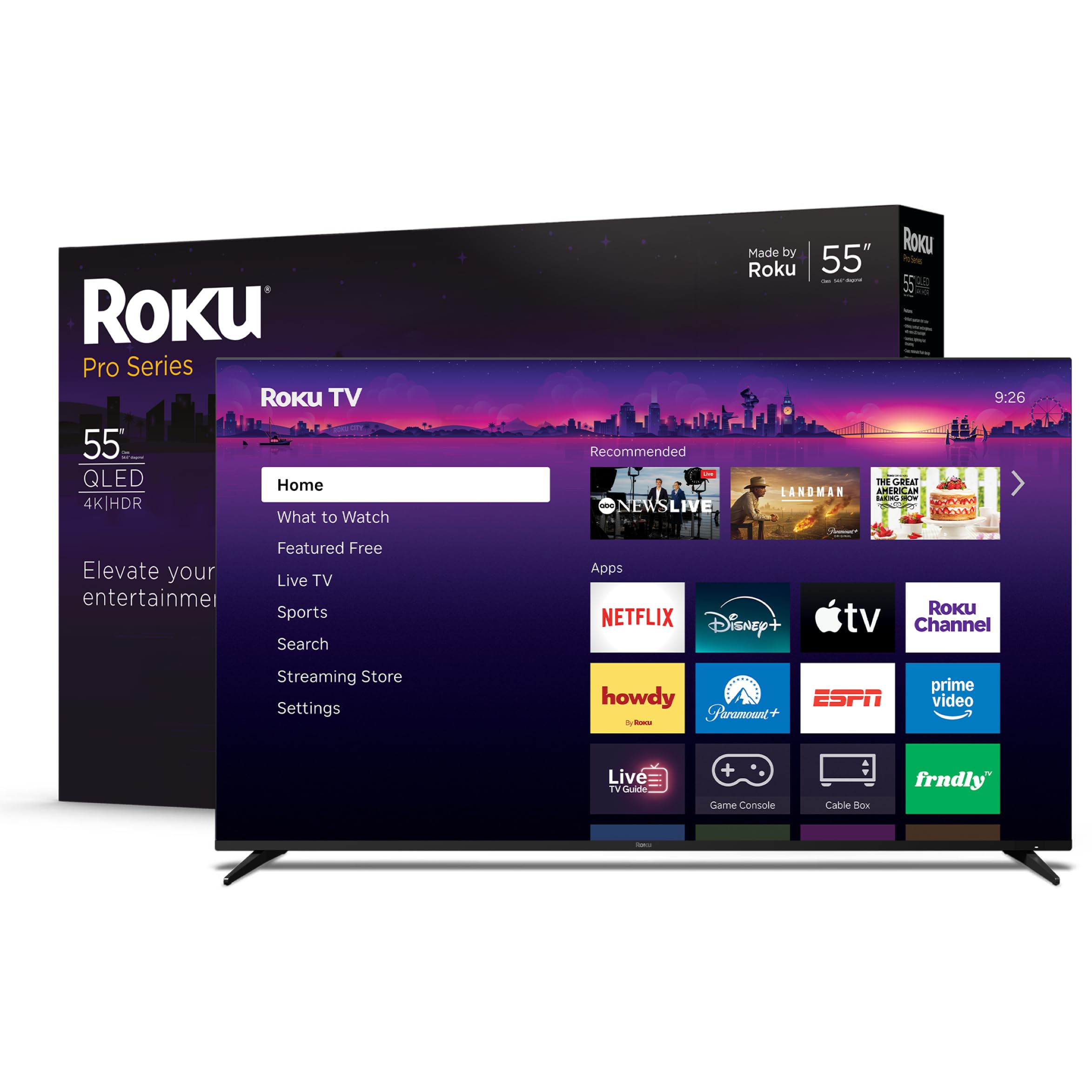
The 120Hz Mini-LED with Dolby Vision IQ and the cleanest, fastest smart TV platform you will use.
Roku finally entered the premium budget space, and the result is a TV that owners call “maybe the best TV system I have ever purchased.” The 120Hz refresh rate is paired with a Mini-LED backlit QLED panel that delivers “rich, accurate hues” and “razor-sharp details” through thousands of Mini-LEDs. The Roku Smart Picture Max (AI-powered picture optimization) cleans up incoming signals and automatically refines color and sharpness scene by scene. For gaming, the Automatic Game Mode with FreeSync Premium Pro, ALLM (Auto Low Latency Mode), and VRR (Variable Refresh Rate) gives you tear-free action as soon as you press start.
The side-firing speakers with Dolby Atmos create surprisingly rich room-filling sound without a soundbar. The backlit Roku Voice Remote Pro is rechargeable and includes hands-free voice controls. Owners highlight the “easy setup, flawless operation from the start,” and the Backdrops app that makes the TV look like a picture frame when idle. One owner did report brown spots and audio sync issues on a 75″ unit after three weeks, which is note for quality control, but the vast majority of feedback across hundreds of ratings is overwhelmingly positive about the picture and platform experience.
The Big Wins
- Roku OS is widely considered the simplest, fastest, and most user-friendly smart platform available
- 120Hz refresh rate with FreeSync Premium Pro and VRR for smooth, tear-free gaming
- Side-firing Dolby Atmos speakers deliver strong immersion without external audio gear
- Rechargeable, backlit Roku Voice Remote Pro is a premium-feeling accessory
Things to Keep in Mind
- 120Hz is one step below the 144Hz panels on the other picks — fine for consoles, a hair less for high-end PC gaming
- A very small number of owners have reported display issues like brown spots, suggesting possible quality variance
- The remote requires precise aiming at the TV, which can be finicky
Choose this if: you value a dead-simple, lag-free smart TV interface above all else, and 120Hz is enough for your PS5 or Xbox Series X.
skip it if: you are a PC gamer who wants native 144Hz for competitive titles — the Hisense or TCL 144Hz panels above are a better fit.
Understanding the Specs
Native 144Hz vs 120Hz Panel
The native refresh rate is the hard limit of how many frames per second (fps) the TV can display. A 120Hz panel maxes out at 120 fps, which is great for console gaming. A 144Hz panel can handle up to 144 fps, giving PC gamers a smoother experience and a small but tangible edge in fast-paced shooter or racing titles. Both are leaps ahead of a standard 60Hz TV, but 144Hz is the future-proof choice.
Mini-LED vs QLED Backlight
Think of the backlight as the engine for your picture. QLED (Quantum Dot LED) uses a layer of tiny nanocrystals to boost color brightness and volume — you get rich, vibrant colors. Mini-LED takes a different approach: it uses thousands of tiny LED lights behind the screen to control brightness in specific zones. This gives you much deeper black levels because dark parts of the screen can stay truly dark while bright parts stay bright, reducing the “halo” effect around objects.
FAQ
What is the difference between native 144Hz and a motion rate of 480?
Do I need HDMI 2.1 for 4K gaming at 120Hz?
Can I use a cheap gaming TV as a PC monitor?
What is VRR (Variable Refresh Rate) and why does it matter?
How important is Dolby Vision IQ for gaming?
Will a 120Hz TV be smooth enough for competitive shooters?
Does a built-in subwoofer replace a soundbar?
How long do QLED and Mini-LED panels typically last?
Final Thoughts: The Verdict
If you want one dependable pick, the best cheap tv for gaming is the Hisense 55″ E7 Cinema Series because it delivers a native 144Hz panel, Mini-LED contrast, and Dolby Vision IQ at a price that undercuts the competition — all backed by a strong owner consensus on picture quality. If rich QLED color and a clean Google TV interface matter more to you, grab the TCL 55″ T7. And for the simplest, fastest smart TV experience with solid 120Hz gaming, the Roku Pro Series 55″ is the one to reach for.
How We Picked
We do not accept paid placement. Every pick is matched to a real buyer and a real use-case; we do not hands-on test units.
Sources & Methodology
Specifications: manufacturer listings and product documentation. Review insights: verified customer reviews, as of July 2026. Pricing: not shown on this page (it changes often); check the current price via the retailer link.
As an Amazon Associate, WellFizz earns from qualifying purchases. This does not affect which products we feature.
Related Guides

Mo Maruf
I created WellFizz to bridge the gap between vague wellness advice and actionable solutions. My mission is simple: to decode the research and give you practical tools you can actually use.
Beyond the data, I am a passionate traveler. I believe that stepping away from the screen to explore new environments is essential for mental clarity and physical vitality.