Our readers keep the lights on and my smoothie glass nicely filled. As an Amazon Associate, I earn from qualifying purchases.
Specs are compiled from manufacturer listings and verified buyer reviews and can change over time — please confirm the key details on the product page before buying.
Spending three figures on bindings feels wrong when you are just getting started, building a second setup, or keeping the budget in check. The challenge is finding bindings that maintain edge hold and cold-weather durability without a premium price. This guide highlights bindings that deliver reliable performance without exceeding a modest budget.
I’m Mohammad Maruf — the founder and writer behind WellFizz. This guide is built by comparing the manufacturers’ published specifications and the patterns across verified customer reviews, so you get each pick’s real strengths and trade-offs instead of marketing spin.
The list ahead covers everything from a lightweight pick that pairs perfectly with starter boards to a rear-entry model that skips the usual premium tax. If you are shopping for the cheap snowboard bindings that genuinely reward your choice without forcing you to compromise on the mountain, this is where you start.
Our Picks at a Glance

How To Choose The Best Cheap Snowboard Bindings
Avoid grabbing the cheapest set without checking key specs. A better approach is to evaluate flex rating, ratchet quality, and mounting compatibility. Here is what to prioritize when the budget is tight.
Flex Rating and Rider Skill Level
A soft flex (around a 3 to 4 out of 10) is forgiving for beginners because it absorbs bumps and allows easier turns. Stiffer bindings respond faster but punish sloppy technique. Most affordable bindings are labeled beginner to intermediate for good reason — they lean softer, which is exactly what a new rider needs to build confidence without fighting the gear.
Straps and Ratchets
A cheap binding lives or dies by its ratchet system. A jammed buckle or slipping strap can end your run early. Look for molded straps and anti-shock materials that hold up in cold weather. Aluminum or reinforced ratchets are signs the manufacturer did not cut every corner.
Mounting Disc Compatibility
Most boards use a standard 4×4 insert pattern, but some use the Burton Channel system. Before you buy, confirm the binding’s disc works with your board. A universal disc that fits both patterns gives you the freedom to swap boards later without buying new bindings.
Material and Weight
Polycarbonate and composite bindings keep the price down and the weight manageable, but they do not absorb chatter as well as pricier carbon or aluminum models. If you are hiking up terrain or carrying your board often, every pound matters — a sub-4-pound binding is noticeably easier on your bag strap and your legs.
Quick Comparison
| Model | Best For | Weight | Skill Level | Closure Type | Amazon |
|---|---|---|---|---|---|
| Rossignol Battle★ Best Overall | First-time setup value | 5.1 lbs | Beginner | Buckle | Amazon |
| Union Flite ProLightest Pick | Lightweight starter pairing | 3.76 lbs | Beginner-Intermediate | Buckle | Amazon |
| 5th Element Summit Stealth | Versatile all-mountain value | — | Beginner to Intermediate | Buckle | Amazon |
| System MTN | Fast rear-entry convenience | 4.85 lbs (2.2 kg) | Expert | Step In | Amazon |
| Burton Freestyle Re:Flex | Burton board pairing with a warranty | 6 lbs | Intermediate | Buckle | Amazon |
In‑Depth Reviews
1. Rossignol Battle – Snowboard Binding for Men and Women
A beginner binding from a brand with over a century of alpine expertise that does not punish your wallet.
The defining move here is the MainFrame highback — a rigid spine wrapped with built-in flex zones that deliver strong heel-side response while allowing smooth lateral movement across the mountain. That means when you lean back on an edge, the binding answers without feeling like a plank strapped to your boot. The Baselight buckles are made from anti-shock nylon, so getting in and out stays fast even when the temperature drops. Buyers report taking these to Colorado in 10-degree weather with zero freeze-up issues on the straps.
Underfoot, the dual-zone Puffy Pad footbeds use thermoformed EVA (a foam that absorbs impact and vibration) to cushion every landing. That is the difference between feeling chatter all the way to your knees and riding comfortably all day. Weight comes in at 5.1 pounds. The trade-off is a stiffer, more responsive feel for an all-mountain binding priced well below what Rossignol typically commands. The 3D-molded One Shot straps wrap securely around your boot for a precise connection that enhances control across varied terrain.
Quality is what owners praise most — 14 people highlight it. Value for money follows with 9 callouts. The mixed note is durability: a handful of owners mention breakage within the first few uses, though the overwhelming majority describe these as solid upgrades from rental gear. The crowd favorite — 4.4 stars across 160+ owners — lands squarely in the “perfect for a first setup” camp. One parent summed it up: “I got these for my son’s first set up. Rossi bindings go under, I couldn’t pass up the deal.”
What Wins Riders Over
- Rigid MainFrame highback makes heel-side turns responsive and predictable — the exact feel a beginner needs to build confidence.
- Anti-shock nylon buckles perform in freezing temps, so you are not wrestling with frozen straps on a 10-degree day.
- Thermoformed EVA footbeds absorb chatter and vibration, keeping your feet comfortable longer than the price suggests.
The Realistic Trade-Offs
- At 5.1 pounds, you feel the extra mass if you carry your board often.
- Durability has split opinions; a few owners mention breakage within the first three uses, so inspect hardware before each session.
- This is a beginner binding through and through — intermediate riders wanting more stiffness for steep terrain will outgrow it fast.
Who It Serves: The first-time buyer building a complete setup who wants a proven alpine brand and responsive heel-side control without spending beyond a modest budget.
Who Should Think Twice: Riders who plan to push into advanced terrain quickly — the mixed durability notes and beginner-friendly flex mean you may replace these within one season.
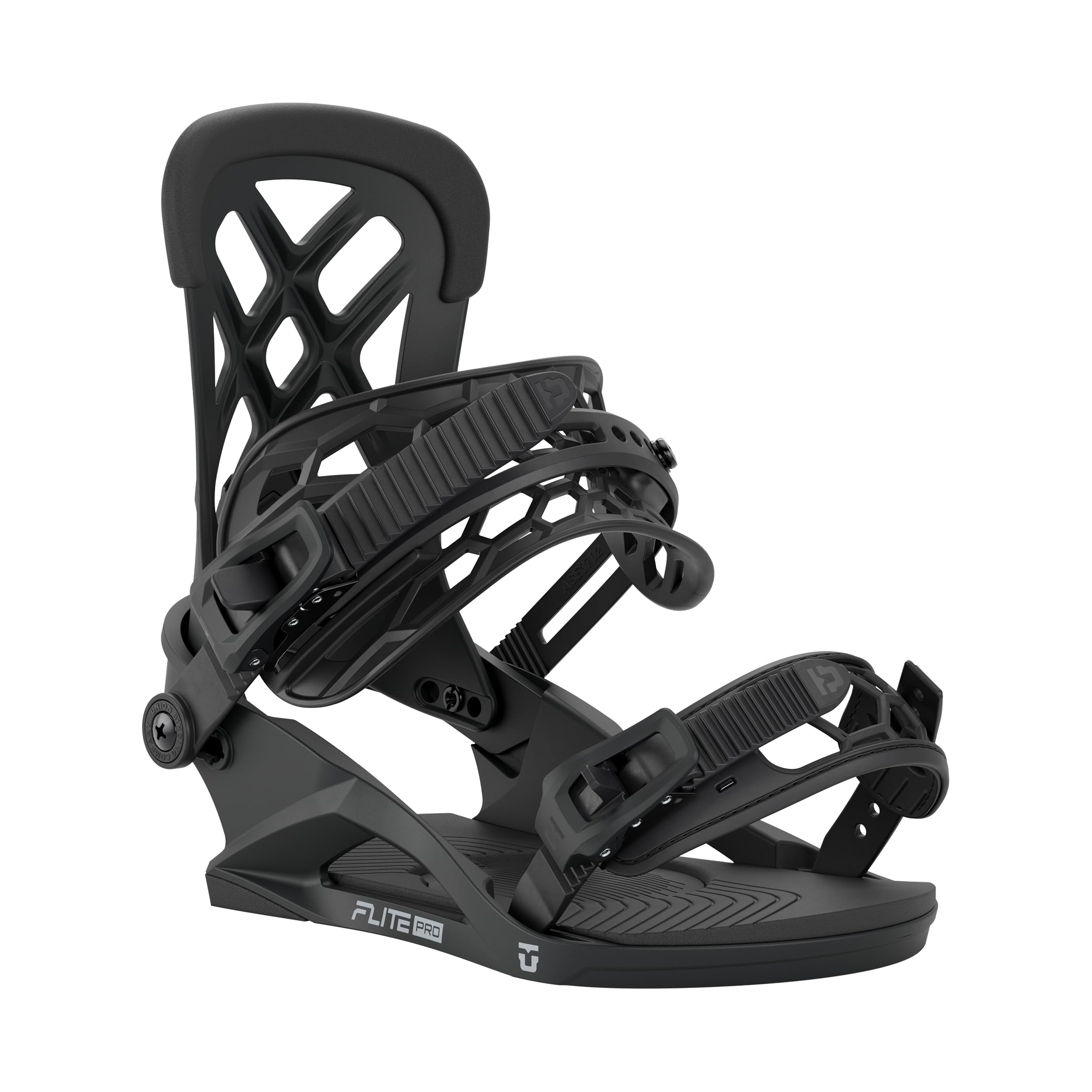
2. Union Flite Pro Men’s Snowboard Bindings
The featherweight that climbs without wheezing — 3.76 pounds and ready to pair with a starter board.
Union built the Flite Pro around the idea that a budget binding should not feel heavy on your boots or your bag. Weighing 3.76 pounds versus the Rossignol Battle at 5.1 pounds, the roughly 1.4-pound difference is felt on every hike and every chairlift carry. The aluminum heelcup adds durability where it counts without piling on weight, and the binding uses EVA (a lightweight foam) in strategic spots to keep things plush underfoot. Customers note these fit perfectly with a Burton Smalls size 7K boot, so sizing is reliable across brands.
The flex skews soft — owners describe it as a 4 out of 10, which is forgiving for beginners learning to carve or ride through uneven snow. Soft flex also means these pair naturally with a mid-flex board if you want a consistent feel across your setup. The ratchets and straps are straightforward: smooth to engage, easy to install, and compatible with all mounting systems, so you do not have to worry about whether they fit your board’s insert pattern. One owner who switched from rental gear noted they are “very light and well made” and found installation simple.
Quality leads the praise with 15 callouts, and value for money is close behind at 11 mentions. The top negative thread is the toe strap: a few reviewers point out the strap snapping off after moderate use. Durability overall is mixed — 7 people mention it, with some calling the bindings very durable and others pointing to the strap as a weak point. This is the bindings’ honest limit: for, you get a lightweight, forgiving ride that is perfect for learning, but the plastic baseplate and strap hardware are not built for aggressive riding or heavy park abuse. If progression means steeps and hard carves by mid-season, you may feel the flex hold you back.
Why It Earns Its Spot: The 3.76-pound weight makes these notably light, and the aluminum heelcup gives them a durability anchor that many sub- bindings skip entirely.
The One Caveat: The plastic baseplate and occasional strap-snap reports mean these are best for the first half of your snowboarding journey, not for riders who charge hard all season.
Reach For These If: You want a lightweight binding that makes carrying your board easier and pairs naturally with a forgiving starter setup for learning the basics.
Consider the Swap If: You plan to ride blacks and technical steeps within a season — the soft flex and plastic baseplate may leave you wanting more response and long-term durability.
3. 5th Element Summit Stealth Adult Snowboard Bindings
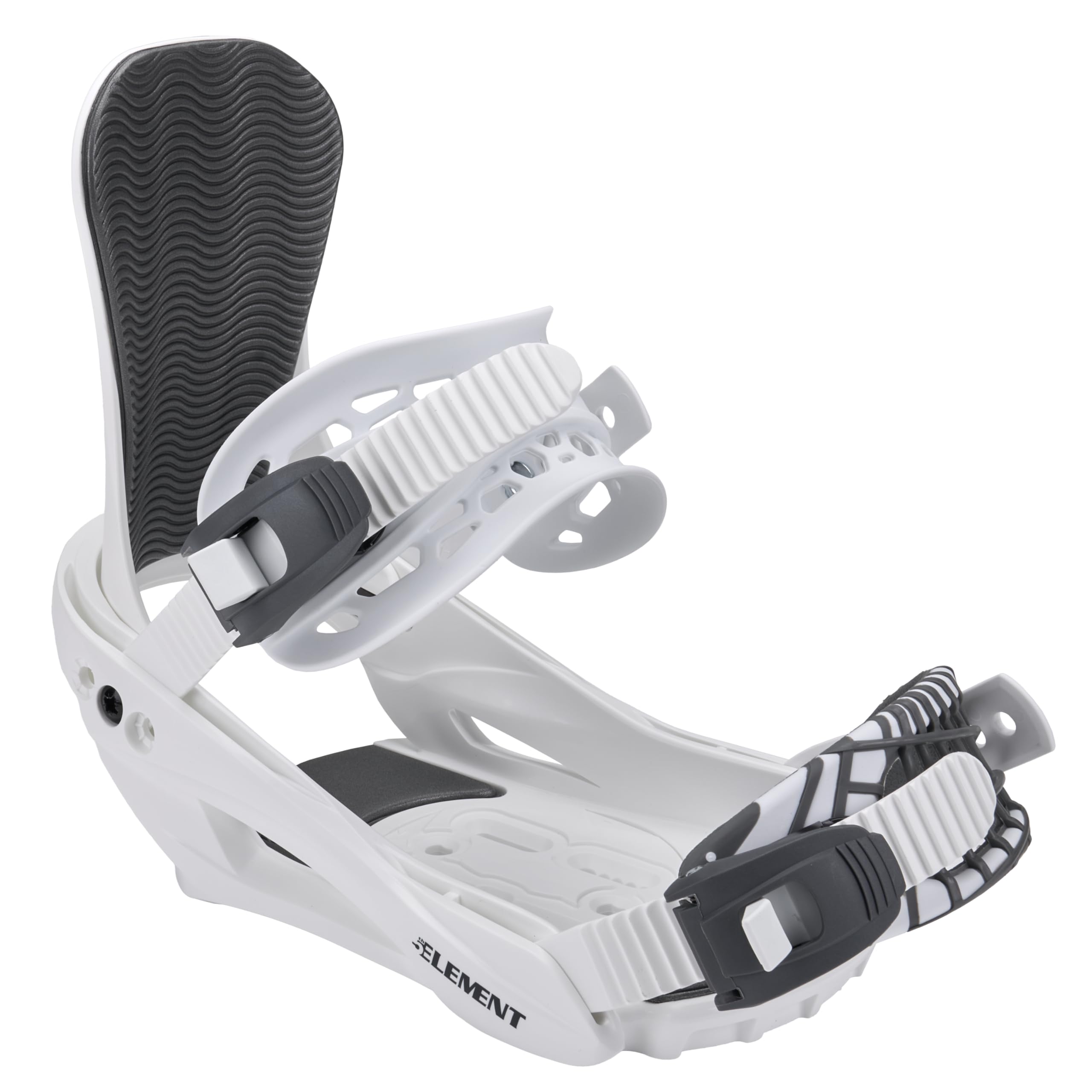
The binding that lets you dial in your stance angles for powder or park without spending over.
The Summit Stealth is built around a universal binding mounting disc that fits standard 4×4 patterns, so you can customize your stance angles for whatever the day brings — wide for powder float or ducked out for park spins. The binding comes with reinforced toe caps and aluminum buckle ratchet straps that connect your boot securely to the frame, which improves carving precision and keeps you locked in on variable snow. The Medium-Large size fits men’s boot sizes 7 through 10, and an XL option covers sizes 10 through 13. Set up is straightforward: shoppers say their teenage kids installed these with no help, so you will not need a shop visit.
Quality earns the most praise, with 22 callouts, and value for money follows at 13 mentions — the highest value-for-money count in this lineup. The binding is also backed by a 2-year warranty against manufacturer’s defects, which is unusual at this price point. Comfort and appearance both get positive nods: 7 owners highlight comfort, and 6 call out the clean white-and-gray look. On the honest side, durability draws mixed feedback with 18 mentions. While most find the bindings sturdy, a vocal minority report breakage — one owner noted a bolt popped after roughly 5 days of riding. That same owner conceded “for a budget board it’s cool,” which frames the trade-off: these are built for the price, and occasional hardware failure is part of the bargain. The 4.3-star average across nearly 300 ratings confirms most owners are happy, but the mixed durability count means you should check bolts and moving parts before every trip.
The Big Advantage: The universal mounting disc and 2-year warranty give you stance flexibility and manufacturer protection that few bindings at this price offer.
The Honest Limit: The hardware — bolts and straps — is the weakest link; treating the binding gently and inspecting fasteners regularly is part of ownership here.
Grab These For: A new or replacement board where you want to customize your stance angles on a budget, or for a teenager whose gear needs to be easy to install and forgiving.
Look Closer If: You plan to ride aggressively or rely on a binding for a full season without any maintenance — the few owner reports of bolt failure suggest regular checks are mandatory.
4. System MTN Men’s Rear Entry Flow Style Snowboard Bindings

The rear-entry binding that provides fast in-and-out without the usual premium price tag.
These are built differently from every other binding on this list. Instead of traditional straps, the System MTN uses a rear-entry step-in design — you push your boot in from the back and lock down a single mechanism. Buyers report fast entry, which is a standout on cold mornings or when you are lapping the park and do not want to sit down every run. The multi-directional baseplate is fully compatible with all boards, including the Burton Channel EST system, so you are not locked into one brand. Sizing runs Large (US 9-11) and XL (US 11-14).
Full EVA padding on the hi-back and high-density dampening on the footbed absorb shock and reduce foot fatigue — an owner specifically called out less fatigue compared to their previous bindings. The 3D molded ankle strap uses polyurethane for a comfortable but instant response when you lean into a turn. Ease of use is the standout stat here: 62 owners highlight it, far more than any other aspect on any product in this list. Quality and value follow with 33 and 23 mentions respectively. The honest picture on durability is mixed: 23 owners have notes, and while many find the bindings solid (one noted surviving three years before a strap broke), others report issues with the adjustment strap detaching in deep snow. These are rated for expert skill level, but the reality is the rear-entry mechanism prioritizes convenience over the bomb-proof feel of a premium traditional binding — they work great in the park and on groomers, but struggle in slush and powder where the strap design can let snow in.
Speed and Comfort Highlights
- Rear entry provides fast binding — you barely stop moving to get strapped in.
- Full EVA padding on the hi-back reduces fatigue, letting you ride longer without your boots feeling clamped.
- Compatible with Burton Channel and all standard mounting patterns, so it works with almost any board.
Where You Feel the Trade-Off
- The adjustment strap can detach in deep powder or slush — not ideal for backcountry or heavy snow days.
- Slightly heavier than traditional bindings; you notice the extra mass when carrying your board.
- Strap adjustments on the slope are harder than a standard buckle — you need to find a flat spot to dial them in.
Best For: Park riders or anyone who values fast entry and exit above all else, especially on cold days or when you are strapping in repeatedly.
Not Ideal For: Backcountry riders or anyone who rides deep powder regularly — the rear-entry mechanism can let snow in, and the adjustment strap is vulnerable.
5. Burton Men’s Freestyle Re:Flex Snowboard Bindings

A Burton pair that rides nearly identical to the pricier Missions but lands at a fraction of the cost.
Burton’s Freestyle Re:Flex is the dark-horse value play for riders who want the brand’s engineering without the premium price. The defining feature is the Re:Flex mounting system, which uses a single-component baseplate construction that cuts weight and dramatically improves board flex — so the board bends naturally under your feet instead of fighting a stiff baseplate. The MicroFLAD lever system lets you set your forward lean angle with a small sliding plate, giving you precise control over how aggressively the binding tips you forward. The Smooth Glide buckles are durable and easy to secure, and the Reactstrap ankle strap wraps instantly around any boot shape for an ultra-responsive feel. Owners who have ridden Burton Missions for years report these feel “basically the same” — a strong endorsement given the Mission’s reputation as a reliable all-rounder.
The Supergrip Capstrap wraps over the toe box for a fully injected hold that reduces waste and keeps the strap from shifting. Underfoot, the Re:Flex FullBED Cushioning System provides full coverage padding that minimizes fatigue by absorbing shock across the whole footbed. This binding also comes with a lifetime warranty on the baseplate and a one-year warranty on straps and hi-backs, which is the strongest guarantee in this lineup. At 6 pounds, it is the heaviest here, but the trade-off is a bomb-proof polycarbonate construction that feels far more substantial than the plastic on most budget bindings. Weight aside, the crowning stat is the 4.6-star average — the highest score in this list — though the sample is smaller at around 37 ratings. Most callouts are glowing: “great binding for the price,” “really good value for the money.” The one honest negative note is a buyer who reported rust developing quickly and breakage, adding that it might hold up better if cleaned after every ride — a fair maintenance reminder for any binding at any price.
What Justifies the Spend
- The Re:Flex mounting system allows the board to flex naturally, giving you a more surfy, responsive feel without needing to drop.
- Lifetime baseplate warranty plus one-year strap and hi-back coverage — the best manufacturer guarantee in this roundup.
- Owners who have ridden Burton Missions say these ride “basically the same,” which means you get reliable performance at a significant discount.
The Honest Downsides
- At 6 pounds, these are the heaviest bindings on this list.
- Small (6-8) size is narrow; double-check your boot size against the fit chart because returns are a hassle if the binding is too tight.
- One reviewer noted rust developing quickly, which suggests you should dry these after wet days if you want the hardware to stay clean.
Reach For These When: You want Burton engineering and a lifetime warranty on a binding that feels closer to a model than a one, especially if you already ride a Burton board.
The Real Catch: The 6-pound weight is hard to ignore if you hike or carry your board frequently, and the limited size Small range means you need to confirm boot compatibility before buying.
Understanding the Specs
Flex Rating and Rider Progression
Flex describes how stiff or soft a binding feels when you press into it. A low number — around 3 or 4 out of 10 — means the binding is soft and forgiving, which helps beginners learn turns and absorb bumps without harsh feedback. A higher flex (6 or above) gives you instant response when you carve or land, but it punishes mistakes harder. Most budget bindings fall in the 3-to-5 range, which is exactly where a new rider wants to be. If you plan to progress fast, a slightly stiffer flex keeps the binding relevant longer without feeling sloppy at speed.
Baseplate Materials and Mounting Systems
Budget bindings use polycarbonate or composite baseplates to keep weight and cost low. These materials flex more than aluminum or carbon, which makes the ride feel softer and less precise when carving hard. The mounting disc is the piece that bolts into your board — a universal disc fits standard 4×4 patterns and the Burton Channel system, giving you freedom to swap boards. Check before you buy: a disc that only fits one pattern locks you into that brand’s ecosystem. For the money, a universal disc is the safest bet for a beginner who might upgrade their board later.
FAQ
Will these cheap bindings fit any snowboard brand?
How do I know which size binding fits my boot?
Are cheap snowboard bindings durable enough for a full season?
What does ‘beginner to intermediate’ mean in binding terms?
Should I buy bindings or a complete snowboard package?
Can I ride the park with budget bindings?
What is the difference between buckle bindings and rear-entry bindings?
How important is forward lean adjustment?
Final Thoughts: The Verdict
For most riders starting out, the cheap snowboard bindings pick is the Rossignol Battle because it delivers responsive heel-side control and all-mountain stability from a brand with deep alpine experience at a price that leaves room for a good board and boots. If you value a lightweight carry and an easy forgiving flex to learn on, the Union Flite Pro shaves over a pound off your setup. For the rider who hates sitting down to strap in, the System MTN rear-entry model cuts your binding time dramatically without charging a premium. Choose the binding whose strongest spec matches your riding style.
How We Picked
We do not accept paid placement. Every pick is matched to a real buyer and a real use-case; we do not hands-on test units.
Sources & Methodology
Specifications: manufacturer listings and product documentation. Review insights: verified customer reviews, as of July 2026. Pricing: not shown on this page (it changes often); check the current price via the retailer link.
As an Amazon Associate, WellFizz earns from qualifying purchases. This does not affect which products we feature.
Related Guides

Mo Maruf
I created WellFizz to bridge the gap between vague wellness advice and actionable solutions. My mission is simple: to decode the research and give you practical tools you can actually use.
Beyond the data, I am a passionate traveler. I believe that stepping away from the screen to explore new environments is essential for mental clarity and physical vitality.