Our readers keep the lights on and my smoothie glass nicely filled. As an Amazon Associate, I earn from qualifying purchases.
Short throw projectors are the ultimate space-saving hack—placing them mere feet from a wall yields a massive 100-inch image while dodging the shadows and glare of standard long-throw models. The catch is that most buyers assume “budget” means accepting a dim, fuzzy, or noisy picture, but the latest generation of affordable short throw models has quietly closed that gap. If you want a cinema-sized screen in a cramped apartment, a gaming rig in a dorm, or a portable outdoor theater without mounting hardware, the challenge is finding a unit that balances brightness, resolution, and smart features without breaking the bank.
I’m Mohammad Maruf — the founder and writer behind WellFizz. I’ve spent weeks analyzing throw ratios, ANSI lumen claims, lamp life, and connectivity standards to separate genuine value from marketing hype in this specific price-sensitive slot.
After scouring the market, I’ve identified the models that deliver real short throw performance at entry-level prices. This guide will help you cut through the noise and pick the best cheap short throw projector for your actual living room, game night, or backyard setup.
How To Choose The Best Cheap Short Throw Projector
Buying a budget short throw projector means trading off a few premium luxuries while still demanding a sharp, bright image from a close distance. The key is knowing which specs directly impact your viewing experience and which ones are marketing fluff. Focus on the factors below to avoid a disappointing purchase.
Throw Ratio — The Single Most Critical Number
A short throw projector’s defining spec is its throw ratio, which measures the distance from the lens to the screen divided by the image width. A ratio of 0.5 means you get a 100-inch image from just 4.4 feet away. Anything above 0.8 is still a standard “short throw,” but a true “ultra-short throw” (UST) sits below 0.3 and can sit inches from the wall. For budget buyers, a 0.6 to 0.8 ratio is common and still frees up your living room from ceiling mounts and long cable runs.
Brightness — Don’t Trust the Hype Numbers
Budget projectors frequently inflate their lumen ratings. A genuine 3,000 ANSI lumens is bright enough for a lamp-lit room, while a cheap LCD model advertising “8,000 lumens” is often using a deceptive video lumen count. For a budget short throw, look for at least 2,000 genuine ANSI lumens if you watch with some ambient light. Below that, plan on a dark room. Always cross-check real user reviews for brightness complaints—especially for daytime or dusk outdoor use.
Native Resolution vs. Supported Resolution
Many entry-level projectors claim “4K support,” which means they can accept a 4K signal but will downscale it to their native 1080p (or even lower) panel. For a cheap short throw, native 1080p (1920 x 1080) is the sweet spot—it delivers crisp text and detail without the cost of a true 4K DLP chip. Avoid any model with a native resolution below 720p unless you only plan to watch low-resolution video content on a small screen.
Lamp Life and Light Source
Budget short throw projectors typically use either a traditional UHP lamp (2,000–6,000 hours), an LED engine (20,000–30,000 hours), or a laser source (20,000–30,000 hours). Lamp models are cheaper up front but require bulb replacements that can negate the initial savings. Even at the budget end, LED and laser models offer a longer lifespan and better color consistency. Check if the replacement bulb cost is readily available—some cheap lamps become unrepairable once the bulb dies.
Connectivity and Smart Features
Built-in streaming (Google TV, Android TV, or licensed app stores) saves you the cost of an external stick. However, many budget units only offer screen mirroring or Chromecast without native app stores. For a cheap short throw, ensure it has at least one HDMI 2.0 port, a USB port for media playback, and 2-way Bluetooth if you plan to connect external speakers. Auto keystone and auto focus are huge time-savers—manual lens adjustments on a close-mounted projector can be a hassle.
Quick Comparison
On smaller screens, swipe sideways to see the full table.
| Model | Category | Best For | Key Spec | Amazon |
|---|---|---|---|---|
| BenQ TH671ST | Premium | Gaming & Home Cinema | 3000 ANSI / 100″ @ 5 ft | Amazon |
| WiMiUS G2 | Mid-Range | All-in-One Streaming | 1100 ANSI / 1.2:1 Throw | Amazon |
| Samsung Freestyle 2nd Gen | Premium | Portability & Style | 230 ANSI / Auto Leveling | Amazon |
| ViewSonic PS502X | Mid-Range | Golf Sim & Meetings | 4000 ANSI / 0.6 Throw | Amazon |
| ViewSonic PA503HD | Mid-Range | Bright Room Viewing | 4000 ANSI / 1080p Native | Amazon |
| Optoma ML1080UST | Premium | Ultra Compact UST | 650 ISO / 10″ Throw | Amazon |
| Optoma GT2000HDR | Premium | Laser Bright Gaming | 3500 ANSI / 0.5 Throw | Amazon |
| Goiaey Upgrade GO2 | Budget | Outdoor & Party Use | 4500 Vid Lm / 1:1 Throw | Amazon |
| BenQ X500i | Premium | True 4K Gaming | 2200 ANSI / 0.69 Throw | Amazon |
| Epson LS800 | Premium | Home Theater Replacement | 4000 ANSI / UST | Amazon |
| Hisense PX3-PRO | Premium | Ultimate Color Accuracy | 3000 ANSI / Triple Laser | Amazon |
In‑Depth Reviews
1. BenQ TH671ST

The BenQ TH671ST remains the gold standard for budget-conscious buyers who want a true short throw without sacrificing brightness. Its 3,000 ANSI lumens and native 1080p resolution deliver a clean, detailed 100-inch image from just 5 feet away, making it ideal for small living rooms, gaming dens, or golf simulators. The DLP engine with a 10,000:1 contrast ratio provides decent black levels for its class, and the 92% Rec. 709 color accuracy is noticeably better than generic LCD alternatives at similar price points.
Gaming performance is where this projector truly shines—low input lag and a 120Hz refresh rate keep fast-paced shooters and sports titles fluid without noticeable blur. The built-in 10W speaker is adequate for casual viewing but lacks bass; pairing it with a soundbar via the audio-out jack is recommended. The short throw also means you can place it on a coffee table rather than ceiling-mounting it, which simplifies setup in apartments.
One trade-off is the lamp life: at around 4,000 hours in normal mode (up to 8,000 in SmartEco), you will eventually need a replacement bulb. However, the 3-year warranty and robust build quality justify the slightly higher entry cost over lesser-known brands. For a reliable, long-term investment in a compact short throw, the TH671ST is the pick.
Why it’s great
- Genuine 3,000 ANSI lumens for ambient-light viewing
- 100-inch image from only 5 feet—true short throw
- Low input lag for console gaming
- Proven reliability with a 3-year warranty
Good to know
- Lamp replacement needed every few years
- Built-in speaker lacks bass; needs external audio
- No integrated smart TV platform
2. WiMiUS G2 Official Google TV Projector
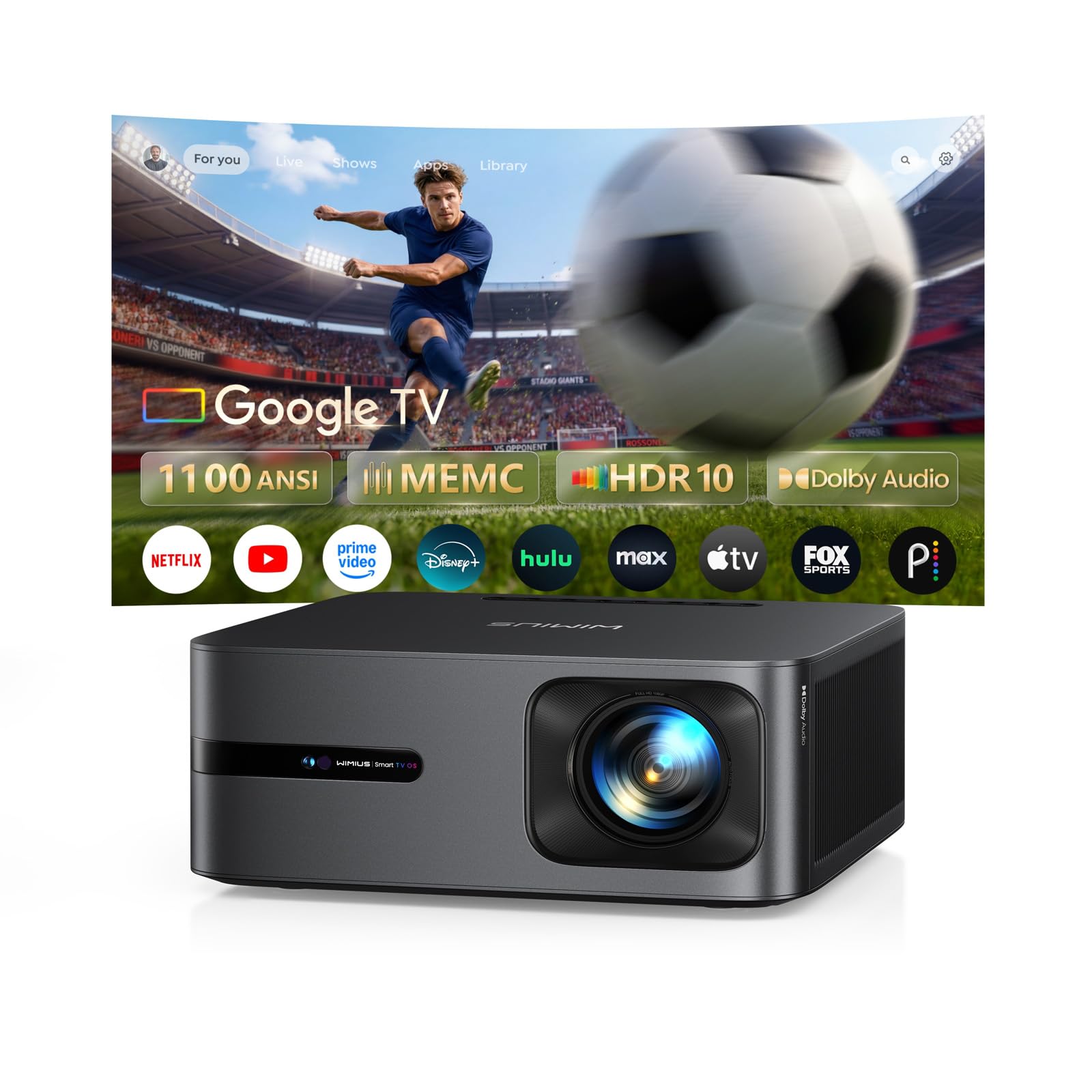
The WiMiUS G2 punches above its price bracket by integrating Google TV 14.0 directly into the projector—no external streaming stick required. Its 1,100 genuine ANSI lumens (with MEMC motion smoothing and HDR10 support) deliver a vibrant 1080p image that holds up well in rooms with drawn curtains. The auto-focus and auto-keystone system is genuinely responsive, making this a nearly hassle-free setup for anyone new to projectors.
Dual 15W Dolby Audio speakers provide room-filling sound that outperforms most built-in projector speakers in this range, though purists will still want a separate sound system. The 2-way Bluetooth 5.2 lets you use the projector as a standalone speaker, which is a nice bonus for casual listening. The short throw ratio is a standard 1.2:1—not ultra-short, but it still enables a 100-inch image from about 8 feet, which is comfortable for typical living rooms.
The downsides are the usual budget-compromise territory: the fan is audible, especially in brighter modes, and the black levels are good but not deep—fine for mixed-use content but not a dedicated cinema room. For buyers who prioritize an all-in-one smart experience and decent brightness without paying triple digits for a premium brand, the G2 is a compelling choice.
Why it’s great
- Official Google TV 14.0—no external stick needed
- MEMC makes sports and fast action smoother
- 30W Dolby Audio speaker system
- Very responsive auto-focus and keystone
Good to know
- Not ultra-short throw; needs about 8 ft for 100″
- Fan noise is noticeable in quiet scenes
- Black levels struggle in pitch-dark rooms
3. Samsung The Freestyle 2nd Gen

The Samsung Freestyle 2nd Gen is less about brute brightness and more about convenience, portability, and design flair. Its 230 ANSI lumens are modest, but the DLP engine delivers sharp 1080p detail, and the auto leveling, auto focus, and auto keystone work flawlessly every time you move it. You can tilt the cradle 180 degrees and project onto a ceiling for bedtime viewing—a unique capability that standard short throws cannot match.
Built-in Samsung Smart TV (Tizen) covers all major streaming apps, and the Gaming Hub pulls in cloud gaming services without needing a console. The 360-degree speaker is surprisingly clear for its size, though it lacks low-end punch. USB-C power means you can run it from a compatible portable battery, making it genuinely wireless for outdoor trips.
The brightness limitation is real—this is strictly a dark-room or dusk-outdoor projector. At its retail price, it competes with far brighter options, but the software ecosystem and build quality are superior. If you value style, quick deployment, and a tiny footprint over lumen counts, this is the one to grab during a sale.
Why it’s great
- Exceptionally portable with a rotating 180° stand
- Auto leveling makes setup effortless anywhere
- Integrated Samsung Smart TV and Gaming Hub
- USB-C powered for portable battery use
Good to know
- Only 230 lumens—needs a dark room
- Audio quality is thin; external speaker recommended
- Premium price for the brightness level
4. ViewSonic PS502X

The ViewSonic PS502X is a no-nonsense business-class short throw that has found a second life in golf simulators and home gaming setups. Its 4,000 ANSI lumens are genuinely bright enough to cut through garage or living room lighting, and the 0.6 throw ratio produces a 100-inch image from just 13 feet (or even larger from a shorter distance with the digital zoom). The XGA (1024×768) resolution is the main compromise—text and fine details are less sharp than a 1080p panel, but for video, fast-moving sports, and simulator graphics, it is perfectly serviceable.
SuperColor technology provides a wide color gamut that looks natural out of the box, and the auto keystone simplifies angle adjustments. The lamp-rated 15,000:1 contrast ratio helps with readability in presentation mode but falls short of home-theater black levels. The fan is loud enough to notice, especially in quiet moments, but it is a familiar trait of high-lumen lamp projectors.
The lack of a smart platform means you will need an external streaming device, and the 1.3x optical zoom range is limited—positioning is less flexible than with a lens-shift model. Still, for anyone building a golf simulator or needing a very bright, short-throw image for a controlled environment, the PS502X offers unbeatable value at its price point.
Why it’s great
- 4,000 ANSI lumens—extremely bright for a budget unit
- 0.6 throw ratio is a true short throw
- Great for golf simulators and bright rooms
- SuperColor delivers accurate out-of-box color
Good to know
- XGA resolution—not full HD
- Fan noise is on the louder side
- No built-in streaming or smart OS
5. ViewSonic PA503HD
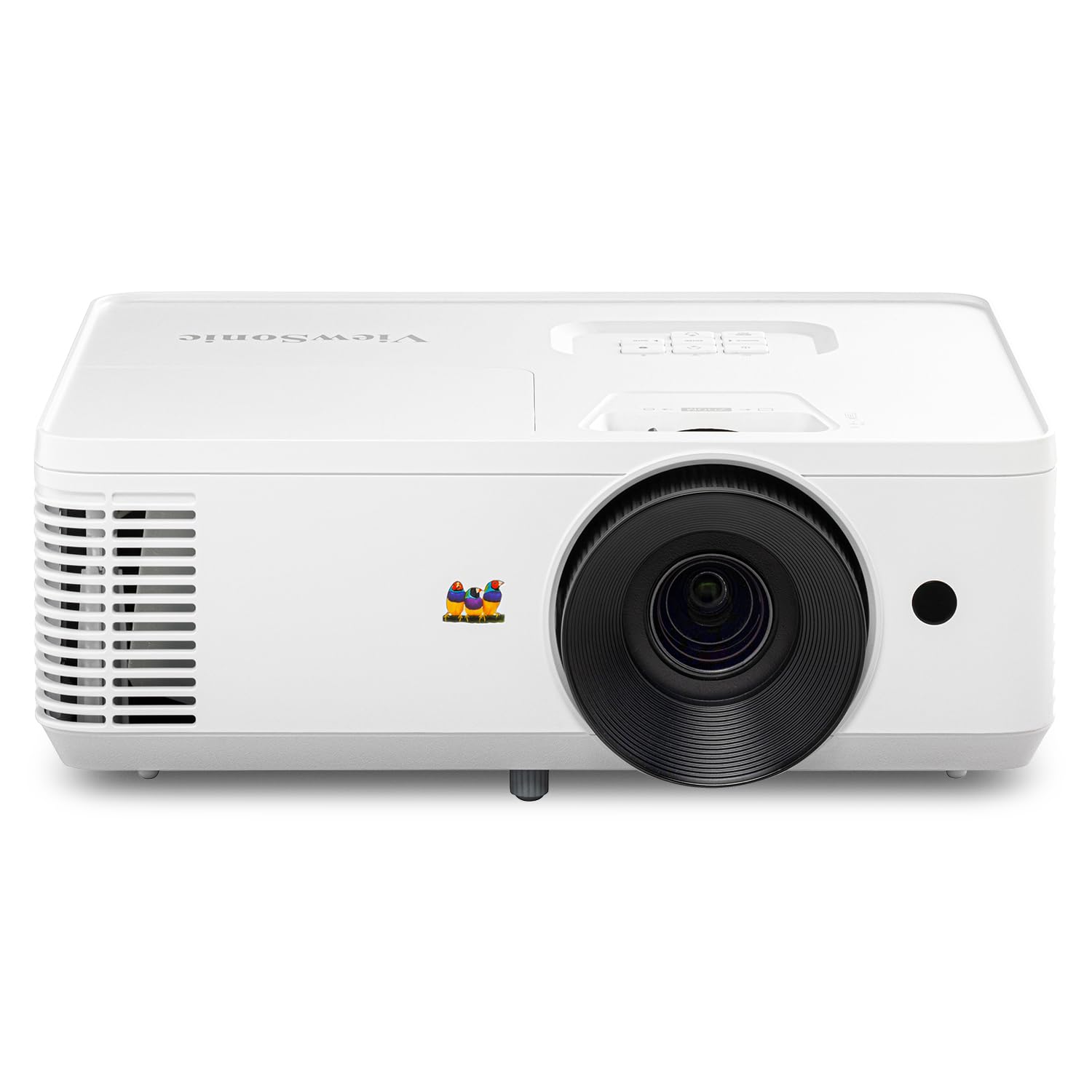
The ViewSonic PA503HD upgrades the formula with full 1080p native resolution while maintaining the same 4,000 ANSI lumen brightness that made the PS502X a favorite. This combination is rare at the budget end of the short throw market—most sub-600-dollar projectors either compromise on resolution or brightness. The 22,000:1 dynamic contrast ratio gives noticeably deeper blacks than its XGA sibling, making it a better fit for movie nights.
For gamers, the 16ms input lag at 120Hz is respectable for casual play, and the 1.1x optical zoom plus vertical keystone offer some installation flexibility. The lens-based system is a DLP lamp rated at 4,000 hours in normal mode, so bulb replacements will eventually be needed, but ViewSonic’s replacement bulbs are widely available and affordable. The color accuracy is solid for the price, with SuperColor providing vivid skin tones and nature scenes.
On the downside, the manual keystone and tilt adjustments feel a bit flimsy, and the single 10W speaker is underwhelming—expect to use external audio. The 1.4-1.6 throw ratio is not ultra-short; you need about 10.8 feet for a 100-inch image, which is a standard throw (though still short enough for most home theater layouts). For a bright, sharp 1080p image without bells and whistles, the PA503HD is a reliable workhorse.
Why it’s great
- Full 1080p resolution with 4,000 ANSI lumens
- Excellent color and contrast for a lamp projector
- Low input lag for console gaming
- Widely available replacement bulbs
Good to know
- Not ultra-short throw; needs about 10.8 ft for 100″
- Built-in speaker is weak
- Keystone and tilt adjustments feel cheap
6. Optoma ML1080UST Photon Go
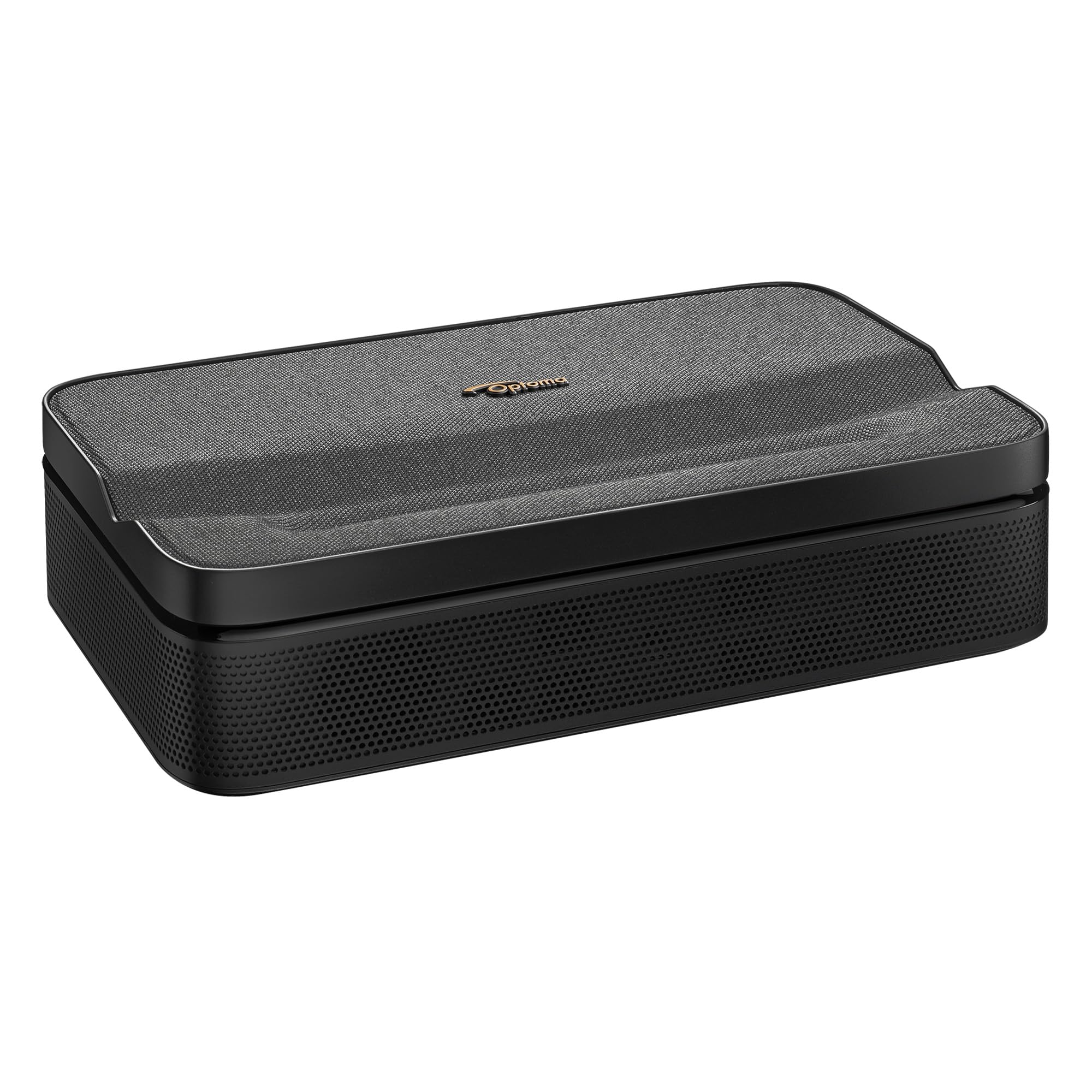
The Optoma ML1080UST is one of the few true ultra-short-throw projectors available at a mid-range price, projecting a 100-inch image from just 10 inches off the wall. Its triple laser RGB light engine produces a massive 2,500,000:1 contrast ratio with vibrant, saturated colors that look significantly more lifelike than the single-laser or LED competition. The 650 ISO lumens (roughly 1,000 LED lumens) are enough for a dark room or controlled lighting, but not for daytime living rooms.
Built-in Google TV handles all streaming without a dongle, and the 20W stereo speakers with Dolby Audio deliver punchy sound for the size. The 1.5-hour built-in battery is handy for moving the projector from room to room or for a quick outdoor movie session without hunting for an outlet. The auto keystone and autofocus system are accurate and fast.
The most noticeable limitation is brightness—in any room with windows open, the image will look washed out. Additionally, the laser light source is fixed; when the unit reaches end of life (about 20,000 hours), it cannot be serviced. For a small apartment, bedroom, or outdoor trip where darkness is guaranteed, the ML1080UST is a delightfully compact way to get a huge image from a tiny footprint.
Why it’s great
- True 10-inch ultra-short throw from a tiny chassis
- Triple laser RGB produces incredible color
- Built-in Google TV and 1.5-hour battery
- 2,500,000:1 contrast ratio
Good to know
- 650 lumens—strictly a dark-room projector
- Laser engine is not user-serviceable
- Not bright enough for sports with lights on
7. Optoma GT2000HDR

The Optoma GT2000HDR is a laser-based short throw designed for gamers and simulator enthusiasts who want high brightness without the maintenance of a lamp. Its 3,500 lumens and 300,000:1 contrast ratio deliver clear, punchy HDR content even with some ambient light in the room, and the laser engine ensures consistent brightness across its 20,000+ hour lifespan. The 0.5 throw ratio produces a large image from a short distance—ideal for a golf simulator in a garage or a gaming corner in a small apartment.
Input lag is low enough for responsive console gaming, and the 1080p DLP chip handles fast motion without smearing. The compact form factor (7.5 lbs) and external power supply make it easy to move between rooms. The built-in 15W speaker is surprisingly usable for a laser projector, though it still benefits from external audio for a dedicated theater setup.
The biggest frustration reported by owners is the remote control, which requires close-range operation and frequent button pressing. The menu system also times out quickly, which can be annoying during setup. For those who can look past the remote quirks, this is one of the most reliable and bright short throws at its price tier.
Why it’s great
- 3,500 lumens—bright enough for ambient light
- Laser light source with 20,000+ hour lifespan
- 0.5 throw ratio for tight spaces
- Excellent for golf simulators and gaming
Good to know
- Remote control has short range and requires hard presses
- Menu timeout can interrupt setup
- No smart TV software included
8. Goiaey Upgrade GO2
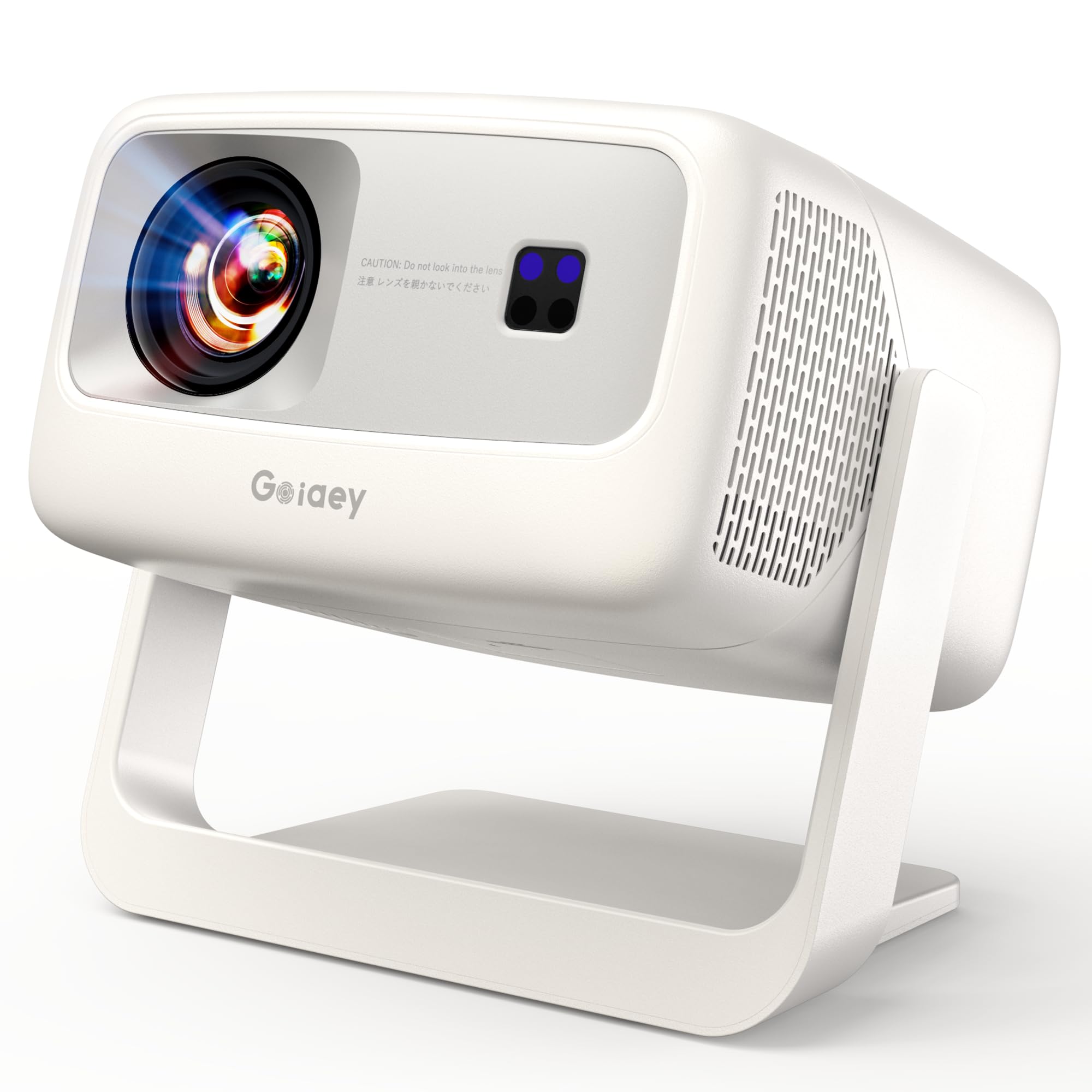
The Goiaey Upgrade GO2 is a budget-friendly marvel that sacrifices nothing on connectivity and convenience. Its 1:1 throw ratio projects a 100-inch image from just 8 feet—much closer than standard portables—making it effectively a short throw for most living rooms. The native 1080p panel with HDR10 support and a 50,000:1 contrast ratio produces a clean, vibrant image in low-light conditions, and the AI-powered auto focus and keystone system works reliably.
Built-in Chromecast, WiFi 6, and two-way Bluetooth 5.2 ensure lag-free streaming and flexible audio options. The 65W 360-degree SRS HiFi speaker is remarkably loud and clear for a projector of this size, though the fan becomes audible at higher brightness levels. The 50W speaker is a stand-alone Bluetooth speaker when not projecting, adding utility beyond movie time.
The main trade-off is brightness: at 4,500 video lumens (not ANSI certified), it is perfectly adequate for a dark room but less convincing with overhead lights on. The sealed-engine design promises 100,000 hours of LED life, which is impressive on paper, but the brand’s long-term support is unproven compared to the established names. Still, for under three hundred dollars, the GO2 offers an incredible range of features and surprising short throw performance.
Why it’s great
- 1:1 throw ratio—100″ from 8 ft
- WiFi 6, Bluetooth 5.2, and Chromecast built-in
- 65W 360-degree speaker is impressively loud
- AI auto focus and keystone work well
Good to know
- Brightness not ANSI certified; best in dark rooms
- Fan noise noticeable in quiet scenes
- Brand reliability less proven than major competitors
9. BenQ X500i

The BenQ X500i is the first truly short throw 4K projector to dip below the four-figure mark while still delivering genuine UHD resolution via its 4LED engine. Its 2,200 ANSI lumens are paired with a 0.69 throw ratio, so you get a 100-inch 4K image from about 6.5 feet—perfect for small rooms where a ceiling mount is undesirable. The 4ms response time at 1080p/240Hz and 16ms at 4K/60Hz make it one of the fastest gaming projectors available, supporting HDMI 2.1 features like Auto Game Mode.
Android TV is built in, and the 10W TreVolo speaker system offers dedicated game sound modes (FPS, RPG, Cinema) that genuinely enhance immersion. The HDR-PRO engine handles HDR10 content with wide color coverage, and the 4LED light source is rated for 30,000 hours—essentially a decade of normal use without a bulb change. The lens-based autofocus is precise and fast.
On the downside, the XPR actuator creates a high-pitched whirring noise that some users find distracting, and the 10W speakers are underwhelming for a unit at this price (external audio is strongly advised). The lack of HDMI 2.1 bandwidth for 4K/120Hz (it maxes out at 4K/60Hz) may disappoint competitive gamers with the latest consoles. Still, for a true 4K short throw that balances resolution and motion clarity, the X500i sets a new budget benchmark.
Why it’s great
- True 4K UHD with 4LED light engine
- 4ms response time at 240Hz for gaming
- 0.69 throw ratio—100″ from 6.5 ft
- 30,000-hour laser-free LED lifespan
Good to know
- XPR actuator can produce a faint high-pitched whine
- Speakers are weak; external audio almost required
- No HDMI 2.1 for 4K/120Hz
10. Epson EpiqVision Ultra LS800 (Renewed)

The renewed Epson LS800 is a beast of an ultra-short-throw that can replace a 120-inch TV in your living room. Its 3-chip 3LCD design with 4,000 lumens produces a stunningly bright, color-accurate image that works even with some ambient light—a rarity among UST projectors. The 4K PRO-UHD resolution (with pixel-shifting) delivers sharp detail on a 150-inch screen, and the 2,500,000:1 dynamic contrast ratio ensures rich blacks for a 3LCD system.
The built-in Yamaha 2.1-channel speaker system is genuinely good—it delivers clear dialogue and enough bass for casual viewing without a soundbar. Android TV provides the smart interface, and the ultra-short throw allows you to place the LS800 directly on a TV stand, inches from the wall. The setup process is straightforward, and the motorized lens shift makes alignment painless.
Being a Renewed product is the main caveat: condition can vary, and the lack of a full manufacturer warranty from Amazon Renewed is a risk. The unit is also large and heavy (over 28 lbs), so it is not portable. The input lag is around 50ms—fine for movies and casual gaming but noticeable for competitive play. For anyone willing to buy refurbished, the LS800 offers a premium home theater experience at a fraction of the new price.
Why it’s great
- 4,000 lumens—bright enough for daytime living rooms
- 3LCD delivers accurate, vibrant colors
- Yamaha 2.1 speakers are excellent for built-in audio
- True ultra-short-throw placement
Good to know
- Renewed product—condition and warranty may vary
- Large and heavy (28+ lbs)
- Input lag is higher than DLP competition
11. Hisense PX3-PRO

The Hisense PX3-PRO is the ultimate color-accurate UST for those who refuse to compromise on image quality. Its triple-laser light engine (LPU TriChroma) covers 110% of the BT.2020 color gamut, producing colors that look hyper-realistic—this is the closest you can get to a professional-grade RGB laser setup without spending on dedicated cinema projectors. With 3,000 lumens and AI-powered algorithms, the HDR performance is exceptional, handling Dolby Vision, IMAX Enhanced, and HDR10+ content with ease.
The built-in Harman Kardon sound system is impressive, with clear vocal reproduction and punchy bass that rivals many soundbars. Google TV is fast and responsive, and the ultra-short throw means you can push the projector back against the wall for a 150-inch image. The 4K AI upscaler cleans up low-res content effectively, and the 240Hz refresh rate with low latency makes it viable for console gaming.
The price is the obvious barrier—this is a premium unit that pushes well beyond what most “cheap” buyers would consider. The automatic keystone is also notably finicky, requiring a phone photo to manually calibrate. But if you have the budget and demand the best color accuracy available in a consumer UST, the PX3-PRO sets the standard. For everyone else, it remains a benchmark to measure other options against.
Why it’s great
- Triple laser engine with 110% BT.2020 coverage
- Dolby Vision, IMAX Enhanced, and HDR10+ support
- Excellent built-in Harman Kardon speakers
- 4K AI upscaler cleans up lower-res content
Good to know
- Very expensive—not truly “budget”
- Automatic keystone requires manual phone calibration
- Large physical footprint on a media console
FAQ
Can I use a cheap short throw projector for gaming with a PS5 or Xbox Series X?
Do I need a special ALR screen for a short throw projector?
How much room do I need between the projector and the wall for a 100-inch image?
Are lamp-based short throw projectors still worth buying in 2024?
Final Thoughts: The Verdict
For most users, the best cheap short throw projector winner is the BenQ TH671ST because it combines genuine 3,000 ANSI brightness, a true short throw (100″ from 5 ft), and low input lag for gaming—all in a reliable, well-supported package. If you want an all-in-one smart projector with Google TV and MEMC-enhanced sports viewing, grab the WiMiUS G2. And for a portable ultra-short throw you can set up inches from the wall in a small apartment, nothing beats the Optoma ML1080UST at its price point.

Mo Maruf
I created WellFizz to bridge the gap between vague wellness advice and actionable solutions. My mission is simple: to decode the research and give you practical tools you can actually use.
Beyond the data, I am a passionate traveler. I believe that stepping away from the screen to explore new environments is essential for mental clarity and physical vitality.