Our readers keep the lights on and my smoothie glass nicely filled. As an Amazon Associate, I earn from qualifying purchases.
Specs are compiled from manufacturer listings and verified buyer reviews and can change over time — please confirm the key details on the product page before buying.
If your foot rolls inward too much when you run, you don’t just need a cushioned shoe—you need a stability shoe that actively corrects that motion without feeling like a block of wood on your foot. The best cheap running shoes for overpronation do exactly that: they guide your stride with firmer foam and a wider base, all while staying under a price that won’t make you wince. This guide breaks down seven value-priced models that actually deliver real support where it counts.
I’m Mohammad Maruf — the founder and writer behind WellFizz. This guide is built by comparing the manufacturers’ published specifications and the patterns across verified customer reviews, so you get each pick’s real strengths and trade-offs instead of marketing spin.
The shoes here range from proven favorites to newer designs, but every one is built specifically for overpronation. We focused on stability and motion-control models from Saucony, ASICS, New Balance, Brooks, and Hoka to find the most reliable cheap running shoes for overpronation you can buy right now.
Our Picks at a Glance

How To Choose The Best Cheap Running Shoes For Overpronation
Finding a cheap stability shoe that actually works means looking past the price tag and focusing on a few specific design traits. Here is what separates a real overpronation fix from a shoe that just looks supportive.
Look for a dual-density midsole or a support frame
The most important feature is a firmer post of foam on the inside edge of the shoe (the medial side) or a plastic frame that wraps the heel. Brands call this “GuideRail,” “H-Frame,” “medial post,” or “CenterPath Technology,” but the job is the same: it slows your foot from rolling too far inward. A shoe without one of these structures will not fix overpronation.
Check the heel drop for your stride pattern
Heel drop is the height difference between the heel and the forefoot, measured in millimeters. A 12mm drop pushes you to land on your heel first, which many overpronators do naturally. An 8mm drop encourages a more midfoot landing. Both work for stability shoes, but picking the wrong one can make your gait feel forced. Stick close to what your old pair had.
Weight matters more than you think
Stability shoes are heavier than neutral shoes because of the extra support posts and denser foam. A men’s stability shoe often weighs 10.6 oz or more. That is fine for daily training and long runs, but if you plan to race a 5K, a lighter stability shoe like the ASICS GT-1000 14 at 9.3 oz makes a real difference.
Quick Comparison
| Model | Best For | Weight | Heel Drop | Support Type | Amazon |
|---|---|---|---|---|---|
| Saucony Guide 17★ Best Overall | Wide-foot stability & all-day walking | 1.5 lbs | — | New-era frame | Amazon |
| Brooks Adrenaline GTS 23Also Great | Rugged all-weather training | 10.9 oz | 12 mm | GuideRails holistic support | Amazon |
| Saucony Omni 21 | High-mileage durability | 2.43 lbs | — | Dual-density PWRRUN | Amazon |
| ASICS GT-1000 14 | Cross-country & light racing | 9.3 oz | 8 mm | Guidance Line medial support | Amazon |
| Saucony Hurricane 24 | Max cushioned long runs | 10.6 oz | 6 mm | CenterPath Technology | Amazon |
| New Balance Vongo V6 | Plantar fasciitis support | 2.1 lbs | — | Medial zone Fresh Foam X | Amazon |
| Hoka Gaviota 5 | Standing all day on hard floors | 3 lbs | — | H-Frame midsole support | Amazon |
In‑Depth Reviews
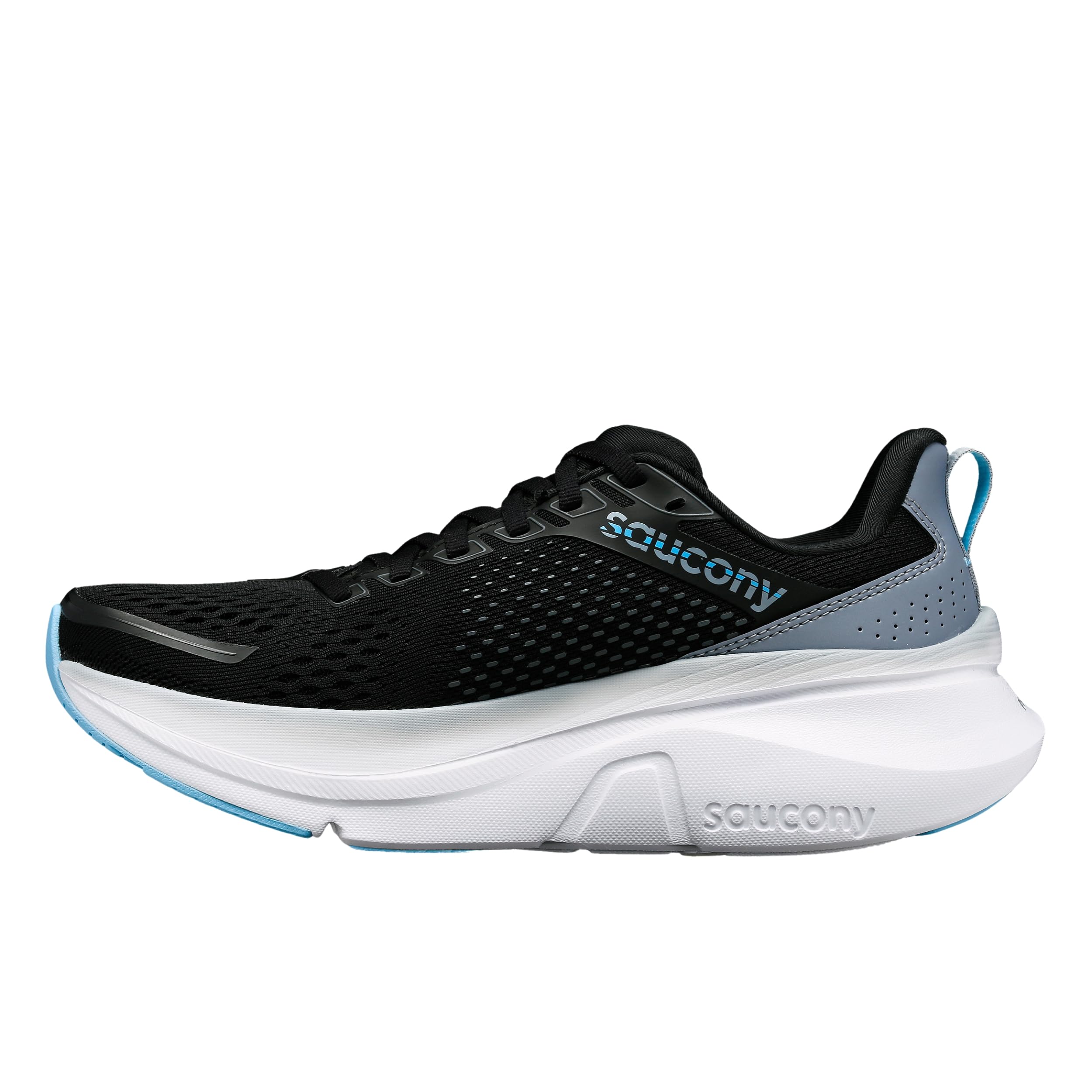
1. Saucony Women’s Guide 17
The lightest women’s stability shoe that feels barely there while still guiding your foot.
The Guide 17 weighs just 1.5 pounds, which is 0.93 pounds lighter than the Saucony Omni 21 — a 62% weight gap that you feel immediately when picking them up. Saucony redesigned this version with a wider platform at the heel, giving more surface area to resist your foot rolling inward. The new-era stability design packs comfort-first protection into a slim package, which makes it a strong pick for walking as much as light jogging.
One buyer shared a powerful real-world review: “After a brain injury my gait has been somewhat unsteady… this shoe is outstanding. The extra cushion is great but the wider platform at the heel is magical.” Other owners praise the roomy toe box and note they “fit perfectly” even for wider feet. At this price point in the mid-range tier, you get genuine stability engineering without the bulk of a premium trainer like the Hoka Gaviota 5.
Why it wins
- Very light at 1.5 lbs — easy for travel or long wear
- Wider heel platform improves balance
- Roomy toe box suits bunions or wide feet
Trade-off
- Less midsole foam than max-cushion options like the Hurricane 24
Ideal for: women who want a lightweight stability shoe that doubles as a daily walker.
Not the best for: high-mileage runners who need extreme cushion depth.
2. Brooks Men’s Adrenaline GTS 23 Supportive Running Shoe
The gold standard of stability that keeps your foot in line without fighting the shoe.
Your foot stays stable without a hard post digging into your arch, thanks to GuideRails (a pair of firm plastic rails on the sides of the heel) that prevent rolling inward or outward. The 12mm heel drop (the height difference between heel and forefoot) encourages a heel-first landing, which matches how most overpronators naturally run. At 10.9 oz / 309g, it sits in the middle for a stability shoe — heavier than a racing flat but light enough for a long Sunday run.
Buyers report that they have run half marathons in these and keep coming back, with one reviewer noting “I have run 9 half marathons… every time I’ve gone back to the Brooks Adrenaline.” The knit upper breathes well in dry weather, though a few owners mention the mesh is too drafty for winter snow that melts through. The APMA seal means the American Podiatric Medical Association has accepted it, a detail buyers with flat feet or plantar fasciitis appreciate.
Unlike the Hoka Gaviota 5, which weighs 3 lbs and uses a chunky H-Frame block, the Brooks feels more nimble for actual running. With 995 ratings holding a 4.6-star average, this is the most vetted shoe on the list. Pick it if you want a stable daily trainer that has been proven over years of iterations.
Why it leads
- GuideRails system works naturally at all paces
- Highest ratings count of any shoe here (995)
- 12mm drop fits heel-strikers perfectly
One real limit
- Mesh upper can feel cold in snow
Your best bet if: you want a stability shoe that handles speed work and 20-mile runs without feeling stiff.
One thing to know: the fit runs snug for a few buyers in the toe box, but breaking them in solves it.
3. Saucony Men’s Hurricane 24 Sneaker
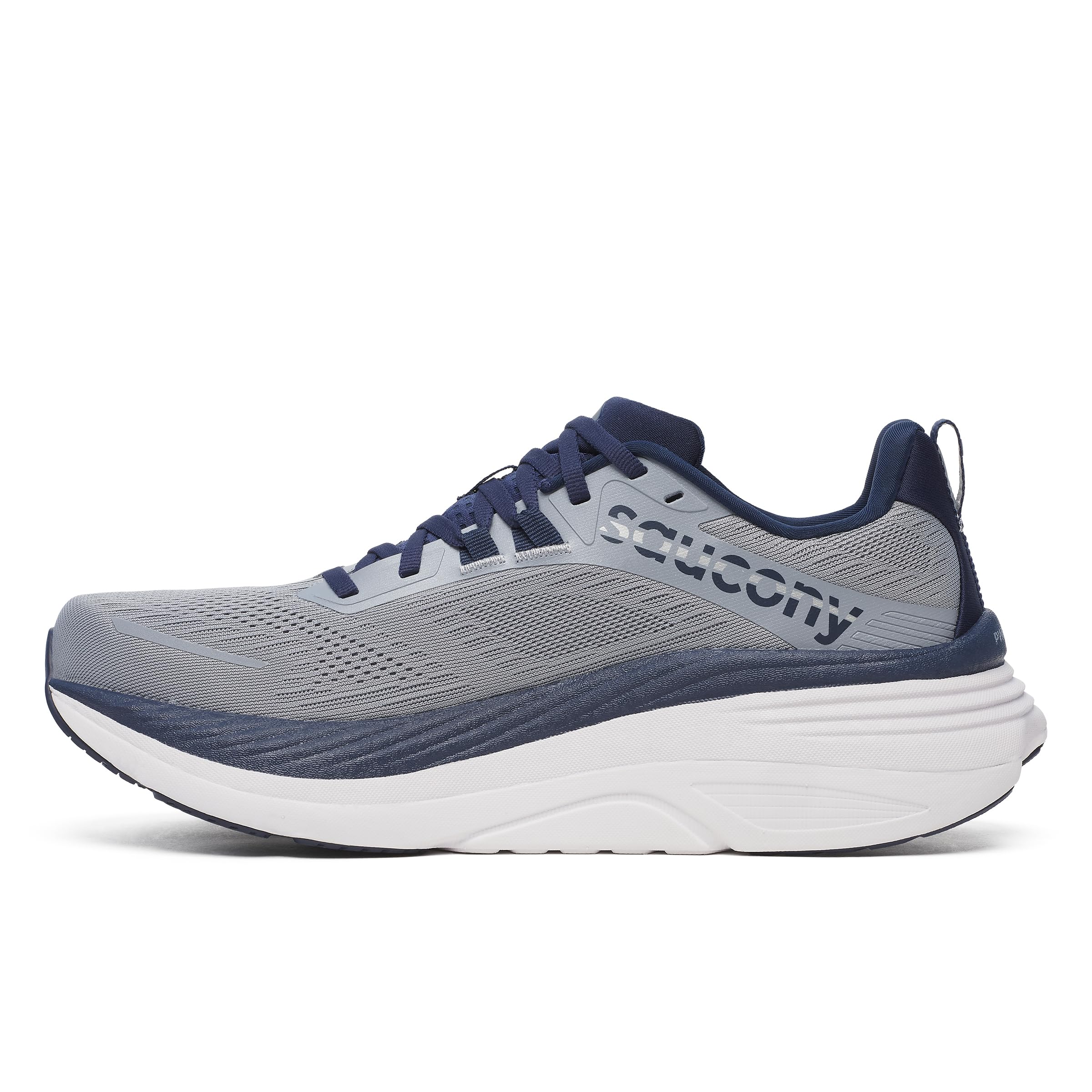
Plush protection that wraps your foot in foam without swallowing it whole.
The Hurricane 24 uses two foams at once: a bouncy PWRRUN PB layer near your foot and a firmer PWRRUN frame around the outside to guide your stride. Saucony calls this “CenterPath Technology” — essentially a bathtub-like foam cradle that keeps your foot from collapsing inward. The 6mm offset (a low drop) spreads impact more evenly across the foot, which makes this a good pick if you land midfoot rather than on your heel.
At 10.6 oz / 302g, it is slightly lighter than the Brooks Adrenaline (10.9 oz) but carries more total cushioning — higher sidewalls and broader ground contact give it a max-cushion feel. Owners mention it “holds up for about a year, solid” and one reviewer calls it “best running shoe for men on the market,” saying they “haven’t found anything better” after trying Hoka and ASICS. The trade-off is a short break-in period: a few owners say it feels stiff and clunky for the first few miles until the foams loosen up.
Best qualities
- Dual-layer foam absorbs high mileage fatigue
- 6mm drop suits midfoot strikers
- Roomy forefoot and toe box
Heads up
- Needs 10-15 miles to break in fully
Reach for this if: you want a max-cushion stability shoe that still feels protective and guided, not mushy.
Look elsewhere if: you need a shoe that feels fast straight from the start.
4. ASICS Men’s GT-1000 14 Running Shoes
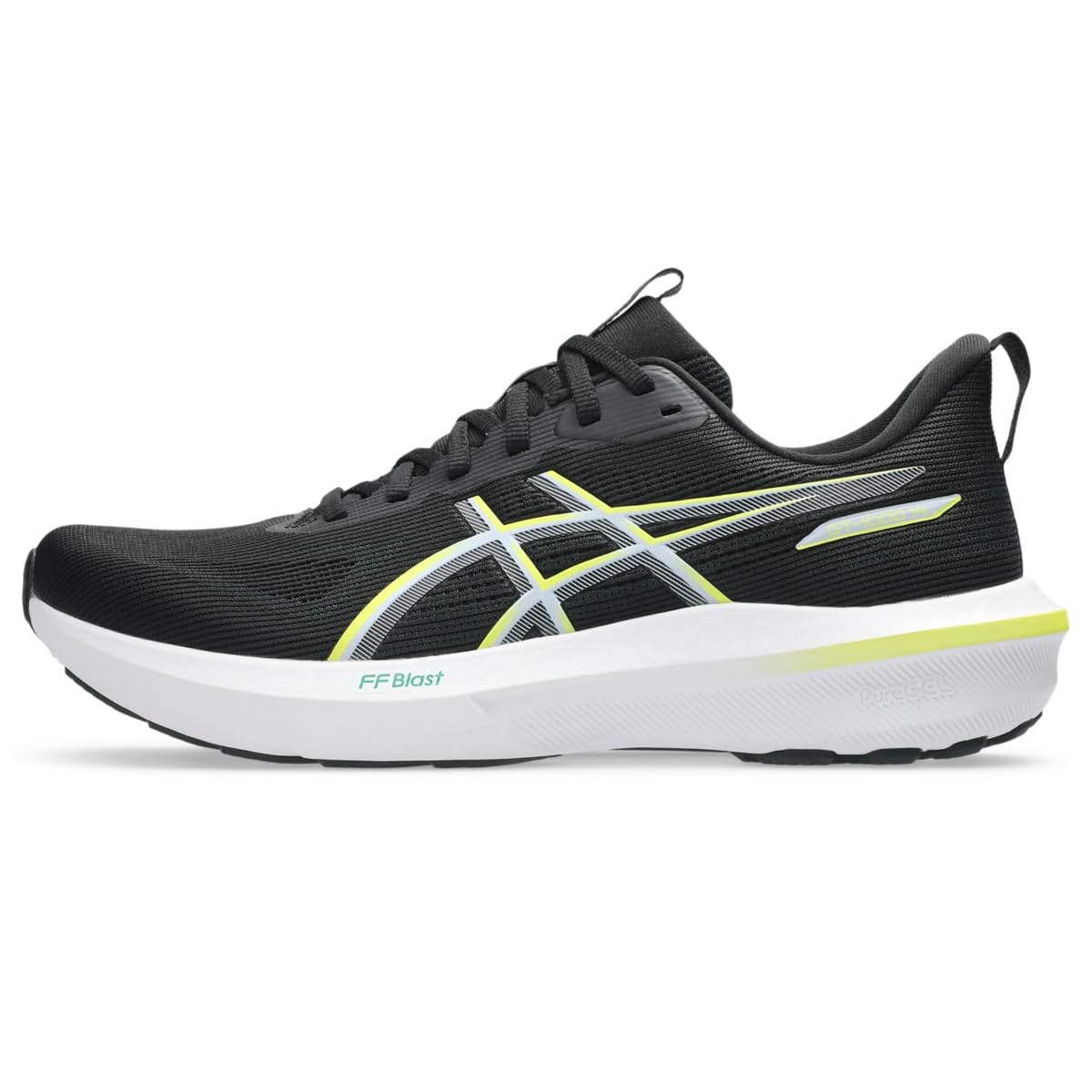
A featherlight stability shoe that does not feel like a stability shoe.
The GT-1000 14 weighs only 9.3 oz (265g), making it the lightest stability shoe on this list — nearly 1.5 oz lighter than the Saucony Hurricane 24. ASICS uses a Guidance Line flex groove and a structured medial post to handle overpronation, but the overall feel is much more neutral than a traditional stability brick. The 8mm drop (34.5mm rear / 26.5mm forefoot) is a middle ground that works for both heel strikers and midfoot runners.
Customers note “my son runs cross-country and track” with overpronation and “he absolutely loves them” because the support does not feel restrictive. Another buyer who switched from the GT-2000 after 15 years says “the GT-1000 seems more cushioned than the GT-2000” and at a lower price, calling it a better value. With 8 mm of drop and a roomy toe box at 12.44 x 6.3 x 4.75 inches, it is a full 0.44 inches larger than the Saucony Guide 17 in overall dimensions, giving more wiggle room up front.
Why it stands out
- Lightest stability shoe here at 9.3 oz
- As-cushioned feel as the more expensive GT-2000
- Great for young runners and first-time stability buyers
The catch
- Less medial post reinforcement than a max-support shoe like the Hurricane
Grab this for: daily training, cross-country, or walking when you want stability without the bulk.
skip it if: you need heavy-duty motion control for severe overpronation.
5. New Balance Men’s Fresh Foam X Vongo V6

Soft foam meets firm guidance — a podiatrist-recommended blend for unhappy feet.
The Vongo V6 sits on Fresh Foam X, New Balance’s softest midsole compound, but adds a firmer medial zone (the inner arch area) to resist overpronation without a rigid plastic post. This makes it one of the plushest stability shoes on the market — closer to a neutral cushioned ride with gentle guidance rather than an aggressive correction. At 2.1 lbs it is noticeably heavier than the Saucony Guide 17 (1.5 lbs) but the weight translates to generous foam volume underfoot.
Reviewers point out that podiatrists recommend this model for severe plantar fasciitis: “my orthopedic surgeon ALSO recommended this brand, it was on top of the list for them.” Another reviewer with wide feet and high arches says the shoe works well with custom orthotics and the standard inserts. The 12.7 x 7.9 x 4.5 inch package dimensions show a wider build than the ASICS GT-1000 14, which helps if you need extra width. A minor downside: a few owners say the heel slides out if you do not tie the laces tight.
Standout features
- Plush Fresh Foam X feels softer than most stability midsoles
- Accepted by the APMA / podiatrist-recommended
- Roomy enough for custom orthotics
Watch out for
- Heel slippage for some foot shapes without tight lacing
Choose this if: your feet hurt from mild overpronation and you want a very cushioned, doctor-friendly shoe.
Look elsewhere if: you need maximum stability for severe rolling — the guidance is gentle here.
6. Saucony Women’s Omni 21 Running Shoes
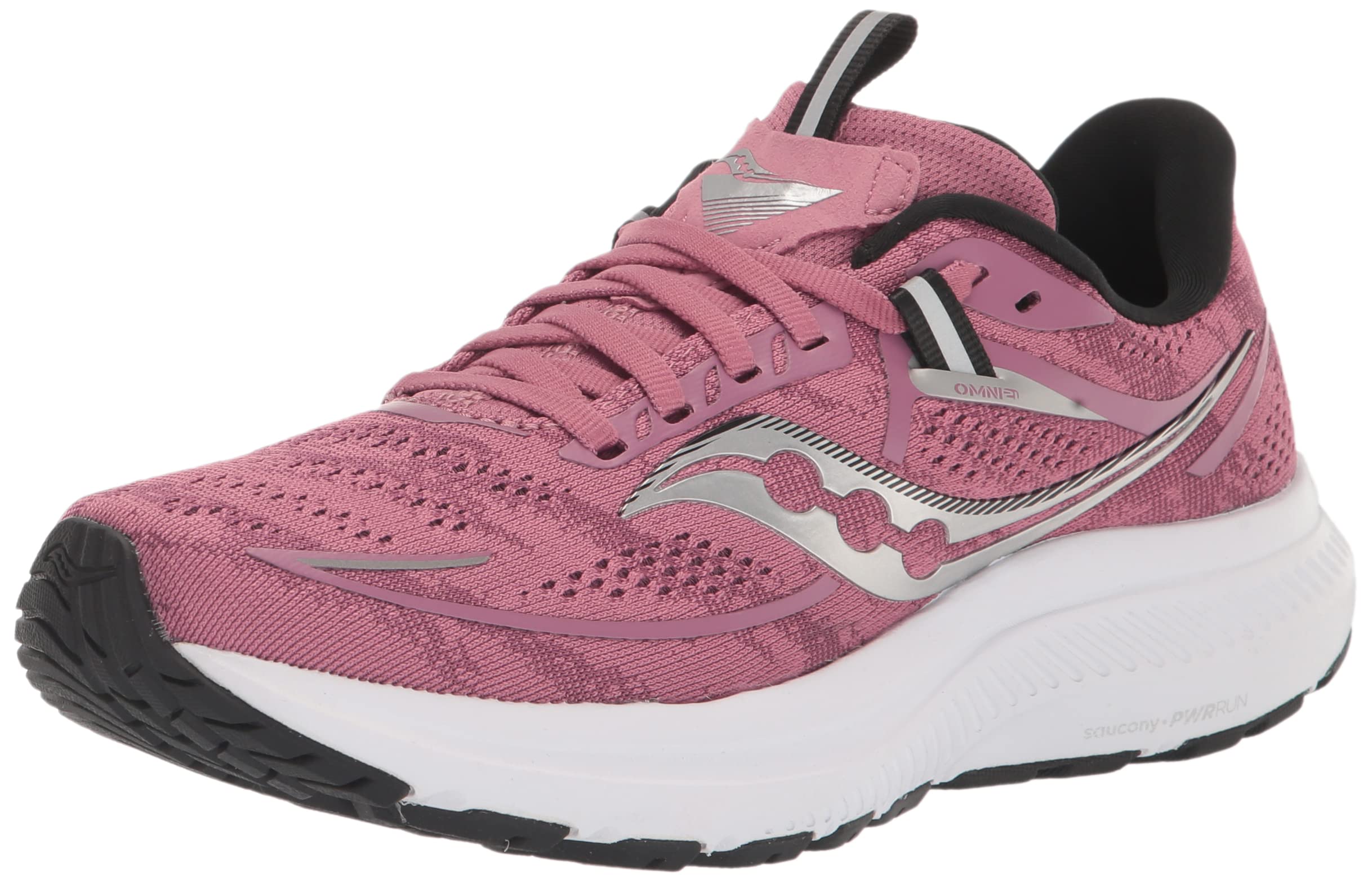
A solid, durable stability shoe built to handle hundreds of miles without breaking apart.
Overpronation is controlled by dual-density PWRRUN foam — two different firmness layers stacked together, with the denser layer on the inner side. It is heavier than the Guide 17 at 2.43 pounds, but that extra weight comes from a more sturdy outsole and high-quality upper materials. Shoppers say “its exceptional durability is evident in the sturdy outsole and high-quality upper materials, designed to withstand many miles on the road.”
The adaptive upper stretches to fit a wider foot, and reviewers mention a “roomy toe box which is a must if you have bunions.” The memory foam footbed feels cushy for all-day wear, with one buyer saying “I can stay on my feet at work all day and barely know I’m wearing shoes.” At the budget-friendly end of the list, it delivers a premium build quality that holds up when cheaper shoes would blow out at the toe seam.
Where it shines
- Very durable outsole and upper materials
- Dual-density foam gives clear pronation support
- Memory foam footbed works for standing all day
The compromise
- At 2.43 lbs, it is the heaviest women’s stability shoe here
Best for: women who prioritize durability over weight and want a shoe that lasts through repeated daily wear.
pass on it if: you need a light shoe for speed or travel — the Omni 21 is a tank, not a feather.
7. Hoka Mens Gaviota 5
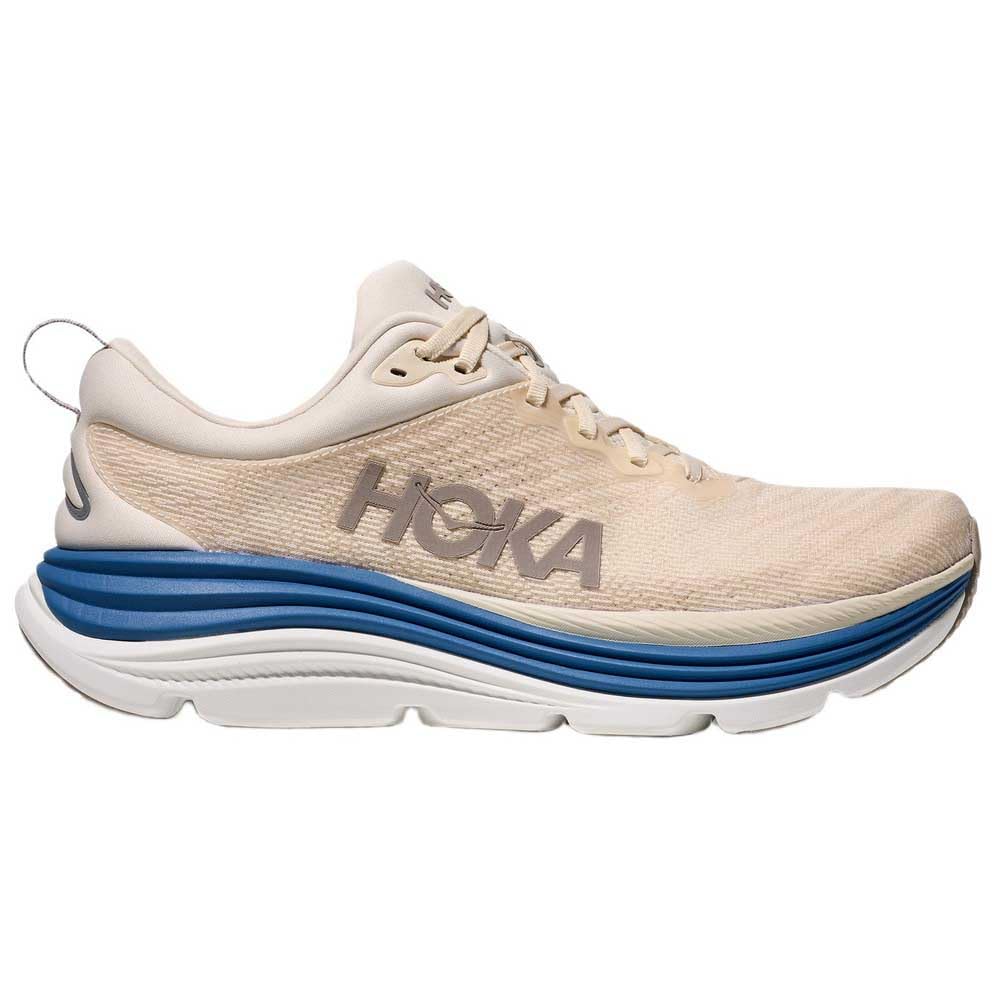
The max-cushion stability shoe that makes a concrete floor feel like a track.
Hoka’s Gaviota 5 uses an H-Frame (a plastic exoskeleton-like frame embedded in the midsole) that wraps around the heel and extends forward to resist overpronation while letting a soft slab of foam act as the main cushion. This is the same Bondi-level cushioning found in Hoka’s most plush neutral shoes, but here it is paired with inherently stable geometry and a Durabrasion rubber outsole for grip. Weighing 3 lbs, it is the heaviest shoe on this list by nearly a full pound compared to the New Balance Vongo V6.
One 80-year-old buyer who works seven-hour days on concrete floors says “I don’t think I could tolerate a lesser shoe and still get through my shift.” Another buyer with chronically flat feet calls them “comfortable with great arch support” and able to walk a dog without pain. The reinforced toe area and roomy toe box help prevent the wear-through hole that plagues other brands. At a premium price in the mid-to-high range, they offer the most cushion-stack in this guide.
Why it’s worth it
- Maximum foam volume and H-Frame support
- Reinforced toe prevents blowouts
- Works as a work shoe for standing on hard floors
The real weight
- Heaviest shoe in the comparison at 3 lbs
- Less nimble for running speed work
Make this your pick if: you stand or walk on hard surfaces all day and need the most cushion possible combined with serious pronation control.
Not for: runners chasing personal records — the weight kills turnover at higher speeds.
Understanding the Specs
Heel Drop (Offset)
This is the height difference, in millimeters, between the heel cushion and the forefoot cushion. A 12mm drop encourages heel-first landing, while a lower drop like 6mm or 8mm spreads the landing more evenly across your foot. Overpronators who heel strike (most of them) often feel more natural with 10mm to 12mm, but a lower drop can reduce knee stress if you are transitioning to a forefoot or midfoot strike. The ASICS GT-1000 14 has an 8mm drop, and the Brooks Adrenaline GTS 23 has a 12mm drop — both work, just for different stride patterns.
Weight (oz or lbs)
Stability shoes weigh more than neutral shoes because of the extra support posts and denser foams. A light stability shoe like the ASICS GT-1000 14 at 9.3 oz (265g) will feel faster and less tiring over miles, but a heavier shoe like the Hoka Gaviota 5 at 3 lbs will give you maximum cushion and protection. If you plan to wear the shoe for walking or standing all day, weight matters less. If you are training for a 10K or half-marathon, every ounce affects your energy return.
FAQ
What does overpronation mean exactly?
Can I wear stability shoes if I have neutral pronation?
How long do cheap stability shoes last before breaking down?
What is the difference between stability and motion control shoes?
Will these shoes fit my custom orthotics?
Is a 12mm heel drop better for overpronation than an 8mm drop?
Can I walk in stability running shoes every day?
Why are some stability shoes heavier than others?
How do I know if a shoe is truly designed for overpronation?
Final Thoughts: The Verdict
For most runners and walkers, the best cheap running shoes for overpronation winner is the Brooks Adrenaline GTS 23 because it combines proven GuideRails support with a 12mm drop that fits the natural stride of most overpronators, all backed by nearly 1,000 positive ratings. If you want a lighter, more nimble ride for cross-country or daily training, grab the ASICS GT-1000 14. And for maximum plushness on hard surfaces with serious pronation control, the Hoka Gaviota 5 offers Bondi-level cushioning without sacrificing stability.
How We Picked
We do not accept paid placement. Every pick is matched to a real buyer and a real use-case; we do not hands-on test units.
Sources & Methodology
Specifications: manufacturer listings and product documentation. Review insights: verified customer reviews, as of July 2026. Pricing: not shown on this page (it changes often); check the current price via the retailer link.
As an Amazon Associate, WellFizz earns from qualifying purchases. This does not affect which products we feature.
Related Guides

Mo Maruf
I created WellFizz to bridge the gap between vague wellness advice and actionable solutions. My mission is simple: to decode the research and give you practical tools you can actually use.
Beyond the data, I am a passionate traveler. I believe that stepping away from the screen to explore new environments is essential for mental clarity and physical vitality.