Our readers keep the lights on and my smoothie glass nicely filled. As an Amazon Associate, I earn from qualifying purchases.
Finding a road bicycle that won’t buckle under the pressure of daily commuting or weekend training without emptying your wallet is a tightrope walk between weight, component reliability, and frame durability. The right choice balances a lightweight aluminum or carbon frame with a groupset that can handle thousands of miles, all while staying within a realistic budget that doesn’t compromise safety.
I’m Mohammad Maruf — the founder and writer behind WellFizz. I’ve spent hundreds of hours digging through customer ride logs, frame failure reports, and component wear data to separate the genuine value picks from the disposable bikes that look good in photos.
After analyzing over fifteen thousand customer miles of real-world feedback, I’ve narrowed down the field to the eleven most reliable options in the cheap road bicycle segment, each selected for its ability to deliver consistent performance without hidden mechanical flaws.
How To Choose The Best Cheap Road Bicycle
The road bicycle market under the four-figure mark is a minefield of heavy steel frames, brittle derailleurs, and wheels that won’t stay true. To navigate it, you need to focus on the three specifications that define real-world durability: frame material, groupset tier, and brake architecture. Aluminum frames offer the best strength-to-weight ratio at this price point, while entry-level carbon frames require careful inspection of layup quality. Groupsets from Shimano — Tourney, Claris, SORA, and 105 — each represent a step change in shift precision and component lifespan. Brakes are equally critical: mechanical disc brakes provide consistent wet-weather stopping power, but entry-level caliper brakes are lighter and easier to maintain if you ride only in dry conditions.
Frame Material and Weight Trade-Offs
High-carbon steel frames, often found at the bottom of the price range, can push the bike’s total weight over 40 pounds. That extra mass turns every climb into a grinding effort and accelerates fatigue on longer rides. Aluminum frames in the 28- to 30-pound range represent the sweet spot for budget buyers — they’re stiff enough for efficient power transfer without the jarring vibration of ultra-light carbon. If you can stretch toward a T800 carbon fiber frame, you’ll drop below 20 pounds without sacrificing structural integrity, but you must verify that the frame’s bottom bracket and head tube are reinforced against torsional flex.
Groupset Hierarchy and Shift Reliability
Shimano’s budget groupsets — Tourney (21-speed) and Claris (24-speed) — use heavier materials and wider gear steps, but they shift dependably when properly adjusted out of the box. The jump to SORA (18-speed) brings smoother lever feel and better cassette spacing, which reduces the chance of chain skip under load. On the highest end of this list, the Shimano 105 groupset (24-speed) delivers race-level shift precision that typically requires no more than a single barrel-adjuster tweak after the first hundred miles. Avoid bikes with no-name drivetrains; replacement parts are often impossible to source.
Brake Architecture for Your Terrain
Dual-pivot caliper brakes stop adequately on dry pavement but lose significant bite in rain or on steep descents. Mechanical disc brakes — actuated by a cable rather than hydraulic fluid — offer more consistent modulation across wet and dry conditions, though they require periodic pad adjustment as the rotors wear. Hydraulic disc brakes, found only on the premium end of this list, deliver the strongest stopping power with zero cable friction, but they demand specialized bleeding tools for maintenance. For a cheap road bicycle used primarily on paved roads in fair weather, well-adjusted caliper brakes are perfectly sufficient and save weight.
Quick Comparison
On smaller screens, swipe sideways to see the full table.
| Model | Category | Best For | Key Spec | Amazon |
|---|---|---|---|---|
| SAVADECK Carbon Fiber Road Bike (105) | Premium Entry | Serious beginners upgrading to race-ready performance | 8.8kg full carbon frame + wheelset | Amazon |
| SAVADECK Carbon Road Bike (SORA) | Best Value | Riders wanting carbon weight savings without hydraulic brakes | 8.9kg T800 carbon frame | Amazon |
| Tommaso Imola | Mid-Range | Daily commuters needing a proven Shimano Claris build | Shimano Claris 3×8 drivetrain | Amazon |
| Mongoose Elroy Adventure | Versatile | Touring and bikepacking with integrated frame bag | Internal routing + front rack mount | Amazon |
| Schwinn Sporterra RX | Gravel | Mixed-surface riding on pavement and hardpack trails | 700x38c multi-terrain tires | Amazon |
| Schwinn Phocus 1.6 | Entry-Level | New riders wanting a lightweight aluminum road bike | 14-speed microSHIFT integrated levers | Amazon |
| Eurobike HYXC550 | Budget | Taller riders needing a 54cm frame with disc brakes | 21-speed trigger shifters | Amazon |
| VEVOR Road Bike | Value | Urban commuters wanting disc brakes and Shimano shifting | Shimano 14-speed (2×7) drivetrain | Amazon |
| Tommaso Sorrento | Fitness | Casual path riders wanting a flat-bar hybrid setup | Shimano Tourney 3×7 drivetrain | Amazon |
| HILAND 700C | Entry | First-time road riders on a tight budget | 14-speed trigger shifters | Amazon |
| Schwinn High Timber | Mountain | Riders wanting a rugged frame for off-road paths | Front suspension + knobby tires | Amazon |
In‑Depth Reviews
1. SAVADECK Carbon Fiber Road Bike (105)
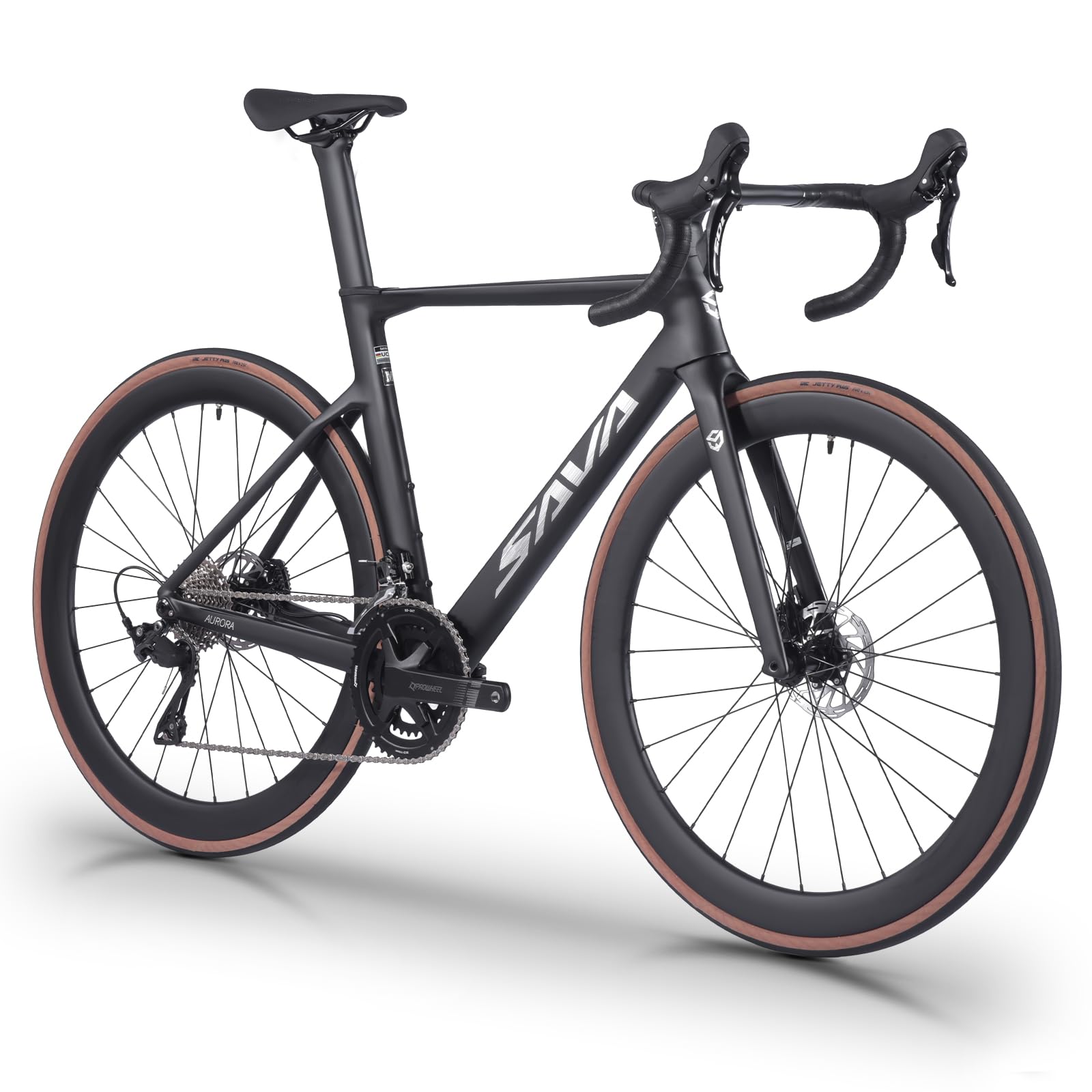
This SAVADECK model skips the compromises typical of budget carbon builds. The T800 carbon fiber frame and matching carbon wheelset bring the total weight down to 8.8 kilograms, which is nearly ten pounds lighter than aluminum competitors at twice the price. The Shimano 105 R7120 groupset with hydraulic disc brakes delivers shift crispness and stopping power that rivals bikes costing three times as much — the hydraulic calipers provide consistent bite in wet descents without the cable stretch found in mechanical disc systems.
Customer reports over several hundred miles confirm that the bike arrives 90% pre-assembled with pre-tuned derailleurs, requiring only wheel, handlebar, and pedal attachment. The freewheel cassette may exhibit initial noise due to uneven grease distribution, but this settles after the first ride. The included clipless pedals are basic, and the saddle lacks padding for rides beyond two hours, but these are expected trade-offs at this price point. The frame’s bottom bracket stiffness contributes to efficient climbing, and the full internal cable routing keeps the cockpit clean while reducing drag.
Buyers should note that the 700x25C carbon wheelset requires careful attention to tire pressure — the Continental clones fitted as stock are puncture-resistant but feel harsh below 90 psi. The geometry leans aggressive, with a low stack height that suits riders comfortable in a dropped position. For anyone serious enough to want race-level performance without a four-figure investment, this bike offers the best blend of weight, shifting quality, and braking authority currently available in this segment.
Why it’s great
- Full carbon construction at an unbeatable weight-to-cost ratio
- Shimano 105 hydraulic disc brakes provide confident all-weather stopping
- Pre-tuned drivetrain requires minimal post-assembly adjustment
Good to know
- Stock saddle is uncomfortable for rides over two hours
- Included pedals feel flimsy and should be replaced immediately
- Delivery can take three weeks depending on availability
2. SAVADECK Carbon Road Bike (SORA)
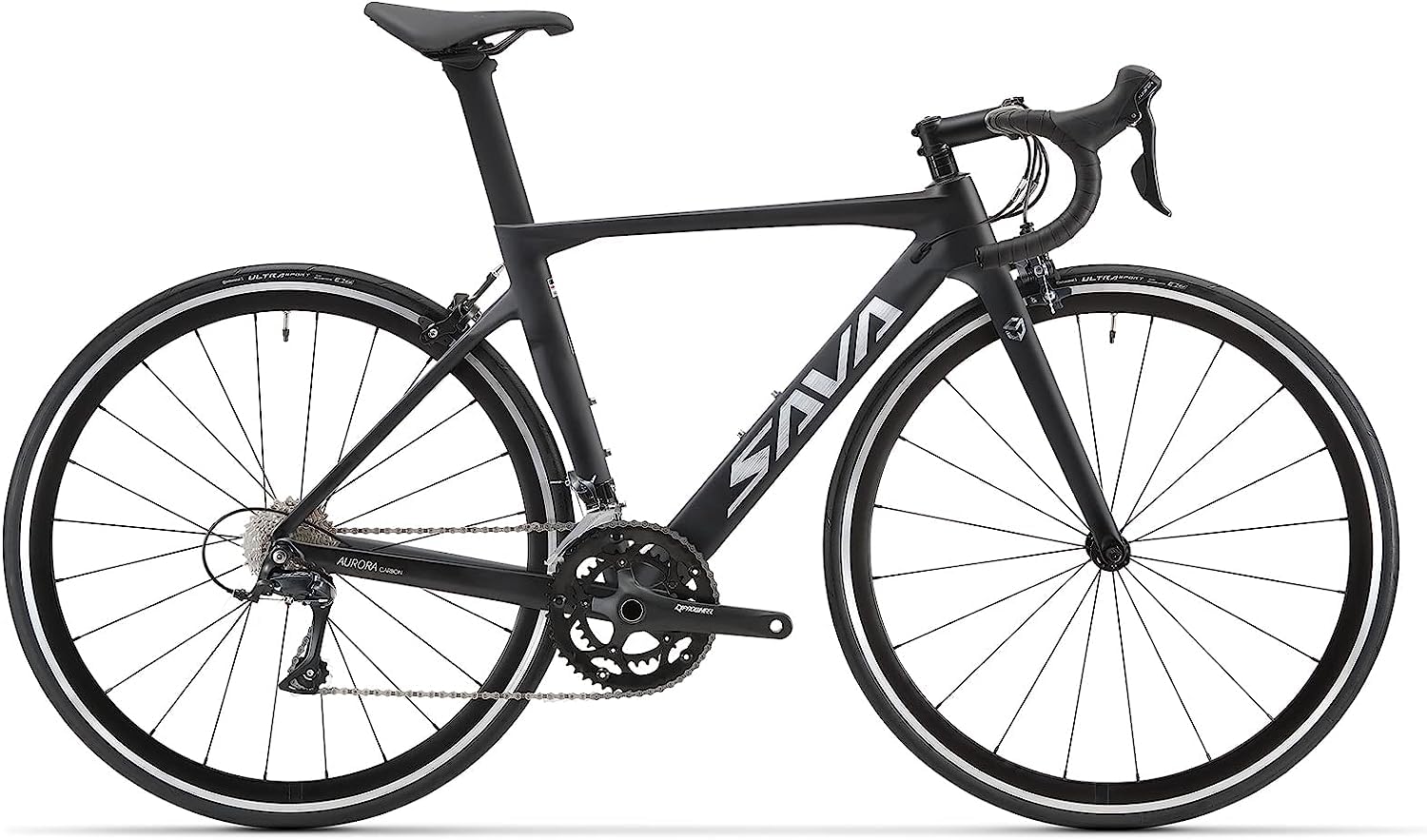
For riders who want the weight savings of carbon fiber but don’t need hydraulic braking, this SAVADECK delivers a T800 frame and fork at 8.9 kilograms with a Shimano SORA 2×9 groupset. The drivetrain shifts reliably once the barrel adjuster is set, and the 18-speed range covers everything from flat stretches to moderate climbs without the gaps found in cheaper 14-speed setups. The double V-brake system — linear pull calipers — is an unusual choice for a carbon road bike, but it keeps the weight down and simplifies maintenance for riders who stick to dry pavement.
The bike arrives 90% pre-assembled, and most buyers report a 15-minute build time using the included tools. The Oval Concepts 6061 alloy wheelset paired with Continental Ultra Sport II tires provides decent grip and puncture resistance out of the box. Customer feedback highlights the smooth paint finish and lack of frame flex under hard pedaling, though the English assembly manual was taped inside the box and inaccessible to some buyers without unpacking the entire bike. The aero tube shapes — developed using wind tunnel data — do reduce drag at higher speeds, though the effect is marginal for average commuters.
The main drawback is the seat post slipping issue reported by several riders; tightening the clamp to the specified torque rating resolves this, but it requires a proper torque wrench. The saddle itself is firm and will likely need replacement for anyone riding beyond 30 miles. This bike fits shorter riders well — one customer at 4’11” reported cutting the seat tube by 1.5 inches for a proper fit. For the price, you’re getting a genuine carbon frame from a known direct-to-consumer brand, which is a significant step up from the aluminum-heavy competition.
Why it’s great
- Sub-20-pound weight with a genuine T800 carbon layup
- Continental tires offer excellent grip and flat protection
- Aero frame design improves high-speed efficiency
Good to know
- V-brakes lack modulation compared to disc alternatives
- Seat post clamp requires precise torque to prevent slipping
- Assembly manual may be difficult to access initially
3. Tommaso Imola

The Tommaso Imola has been a staple recommendation in the entry-level road bike space for years, and for good reason. It uses a Shimano Claris 3×8 groupset that provides a wide gear range and smooth indexing, and the dual-pivot caliper brakes are lightweight and easy to center. The aluminum frame is double-butted, keeping the bike under 30 pounds while maintaining stiffness through the bottom bracket. The 700x25C tires roll fast on pavement, and the frame geometry is relaxed enough for daily commuting but aggressive enough for weekend group rides.
Buyers who have logged over a thousand miles consistently note that the bike requires an initial tune-up — the rear derailleur often arrives slightly misadjusted, and the front derailleur may fail after a few rides if the limit screws aren’t set correctly. The saddle is notoriously hard; most riders replace it within the first month. The wheels hold true out of the box but may need a rim liner upgrade if you experience repeated rear punctures. On the positive side, the build quality is excellent for the price point — the welds are clean, the paint is durable, and the Shimano Claris shifters offer the same lever feel as higher-end models, just with a slightly heavier pull.
Customers frequently compare the Imola favorably to entry-level Trek and Cannondale models that cost significantly more. The company includes a handwritten thank-you note with every bike, and their customer service team responds quickly to fitment questions. If you’re willing to budget for a professional tune-up and a saddle replacement, the Imola will serve you reliably for several seasons without major component failure. It represents the gold standard for what a mid-range road bicycle should deliver at a fair price.
Why it’s great
- Proven Shimano Claris groupset with reliable indexing
- Double-butted aluminum frame balances weight and stiffness
- Strong brand support and responsive customer service
Good to know
- Requires derailleur and brake adjustment out of the box
- Stock saddle is too firm for rides over 20 miles
- No assembly instructions included in some shipments
4. Mongoose Elroy Adventure

The Mongoose Elroy breaks the road bike mold by leaning into adventure touring. It features an aluminum frame with a steel fork, mechanical disc brakes, and a Shimano Tourney 2×7 drivetrain with integrated Microshift shifters. The standout feature is the integrated frame bag — a padded compartment with an embroidered patch that fits a spare tube, multi-tool, and snacks without adding bulk. The front rack can carry two panniers, and the frame mounts three water bottle cages plus two more on the fork, making this a serious lightweight touring platform.
Customer reports indicate that the shifting is reliable but slow — the Tourney derailleurs lack the crispness of Claris or SORA, but they get the job done on varied terrain. The mechanical disc brakes require careful setup; several buyers noted that the front brake lacked stopping power until the caliper was realigned and the cable tension adjusted. The tires are basic 40mm knobbies that roll well on pavement and handle light gravel, but they’re too aggressive for road-only use. The bike is heavy at around 33 pounds, but that’s expected given the frame bag, steel fork, and disc brake hardware.
The geometry is more upright than a pure road bike, which reduces fatigue on long days in the saddle. The top tube is 54 centimeters with a 104-centimeter wheelbase, providing stable handling at speed and when loaded. The welded front rack has been reported as bomb-proof by touring enthusiasts, though one buyer found the rear rack mount misaligned. For the rider who wants one bike for commuting, light bikepacking, and casual weekend exploration, the Elroy delivers versatility that no other bike at this price point can match.
Why it’s great
- Integrated frame bag and front rack for touring gear storage
- Steel fork dampens road vibration better than aluminum
- Multiple water bottle mounts support long-distance hydration
Good to know
- Heavy build at over 33 pounds due to touring components
- Disc brakes need professional adjustment for reliable stopping
- Shimano Tourney shifting lacks the precision of higher groupsets
5. Schwinn Sporterra RX

The Schwinn Sporterra RX is a dedicated gravel bike that drops the road purist’s obsession with weight in favor of tire clearance and braking confidence. It runs an aluminum frame with a rigid fork and Schwinn’s 700x38c multi-terrain tires, which provide enough tread for hardpack gravel and fire roads while still rolling efficiently on pavement. The 14-speed microSHIFT drivetrain uses a trigger shifter integrated with the brake lever, which feels intuitive after a short adjustment period. The alloy mechanical disc brakes offer all-weather stopping power that’s a clear upgrade over rim brakes.
Customer feedback over 500-plus miles confirms that the bike is well-constructed for the price, but the stock saddle is extremely uncomfortable beyond 40 minutes. The rear brakes often arrive with the caliper misaligned, causing a scraping noise that disappears after a simple pad-centering adjustment. The bike fits riders between 5’6” and 6’0”, but those shorter than 5’8” will find the top tube geometry tight. Buyers who added a kickstand and swapped the saddle for a gel model reported significantly improved long-ride comfort. The tires perform well at 65 psi; dropping to 50 psi provides better traction on loose gravel without sacrificing too much speed.
The Sporterra RX feels solid on descents, with the disc brakes providing consistent modulation even after prolonged braking. The frame includes mounts for a rear rack and fenders, making it suitable for light touring or wet-weather commuting. One buyer who logged over 1,100 miles over three years noted that only the pedals and bottom bracket bearings needed replacement during that period. For the rider who wants a single bike capable of handling both paved bike paths and unpaved rail trails, this Schwinn delivers above its weight class.
Why it’s great
- Wide tire clearance for gravel and mixed-terrain riding
- Alloy disc brakes provide reliable stopping in all conditions
- Durable frame and component set lasts multiple seasons
Good to know
- Stock saddle is painful on rides longer than 40 minutes
- Not suitable for riders under 5’8” due to top tube length
- Rear brake often arrives rubbing and needs adjustment
6. Schwinn Phocus 1.6

The Schwinn Phocus 1.6 is a straightforward, no-frills road bike that prioritizes a lightweight aluminum frame and an aerodynamic riding position. The 14-speed microSHIFT integrated shifters and brake levers work adequately for a beginner, though the shift action is stiffer than Shimano alternatives. The alloy fork and aluminum drop bars keep the front end responsive, and the 700x28C tires roll with minimal resistance. The dual-pivot caliper brakes are adequate for dry conditions but require a firm squeeze for confident deceleration.
Customers who have owned this bike for years report that it holds up surprisingly well as a heavy-duty commuter. One buyer logged over 15,000 miles in seven years, replacing only the pedals, seat, chain, and cassette. The bike arrives with a kickstand and user manual, and assembly takes about 30 minutes. Common issues include missing hardware — some bikes have arrived without handlebar bolts or a pedal — and the brake squeal that eventually bed-in after 50 miles of riding. The geometry is aggressive for a beginner bike, with a low handlebar position that may cause neck strain for riders not used to a dropped position.
The Phocus 1.6 is best suited for riders between 5’6” and 6’0” who plan to use it primarily on paved roads. The wheelset uses high-profile alloy rims that look fast but are prone to going out of true if you hit potholes regularly. The lack of disc brakes means you’ll need to inspect and replace the rim pads frequently if you ride in wet conditions. For the budget-conscious rider who wants a proper road bike geometry — not a hybrid with drop bars — this Schwinn represents a solid foundation that can be upgraded incrementally over time.
Why it’s great
- Lightweight aluminum frame with aerodynamic riding position
- Proven long-term durability with proper maintenance
- Includes kickstand and quick-release wheels for convenience
Good to know
- Some units arrive missing hardware or with bent components
- Caliper brakes feel spongy before brake pad break-in
- Aggressive geometry may cause neck discomfort for new riders
7. Eurobike HYXC550

The Eurobike HYXC550 is a budget road bike that uses a high carbon steel frame, making it significantly heavier — 41 pounds — than aluminum alternatives. However, the 21-speed drivetrain with trigger shifters and dual 160mm mechanical disc brakes offers practical utility for riders who prioritize stopping power over weight. The frame is available in 49-centimeter and 54-centimeter sizes, with the larger size accommodating riders up to 6’1”. The 700x28C tires provide a high-speed feel on pavement, though the steel frame soaks up road vibration better than cheap aluminum.
Customer reviews reveal a polarizing experience. Some buyers report the bike as comfortable and good-looking, while others experienced persistent issues with rear tire seating and wheel wobble. The manufacturer’s customer support has a strong track record of sending replacement wheels when defects are reported, which mitigates some of the quality control risk. The assembly process is standard: 85% pre-assembled, requiring installation of the front wheel, handlebars, pedals, and seat. The included tools and reflectors are basic but functional.
The main drawbacks are the frame weight — 41 pounds makes climbing a chore — and the stock tires, which have been reported to go flat after the bike sits unused for two months. The saddle is firm, and the handlebar tape is thin, so upgrades to both are recommended for any ride over 10 miles. The dual disc brakes do provide reliable stopping in rain, which is a genuine safety advantage over caliper brake alternatives at this price. For the taller buyer who needs a large frame with disc brakes and is willing to deal with higher weight, the HYXC550 offers passable utility.
Why it’s great
- Dual mechanical disc brakes offer reliable wet-weather stopping
- 54cm frame accommodates taller riders up to 6’1”
- Responsive customer support that replaces defective wheels
Good to know
- Frame weight of 41 pounds makes climbing very difficult
- Tires prone to going flat after extended storage
- Quality control issues with rear wheel wobble reported
8. VEVOR Road Bike

The VEVOR Road Bike pairs a lightweight aluminum alloy frame with a Shimano 14-speed (2×7) drivetrain and disc brakes, targeting the urban commuter who needs a reliable bike for paved roads and light city use. The 700x28C KENDA tires roll efficiently, and the drop bar design encourages an aerodynamic position. Internal cable routing keeps the frame clean and reduces maintenance. The carbon steel fork adds some vibration damping without substantially increasing weight.
Customer feedback is mixed, with strong opinions on both sides. The bike arrives 85% pre-assembled with a warning to rotate the front fork 180 degrees before attaching the handlebar — a step that many buyers missed, causing misalignment. The front wheel assembly has been cited as problematic: the thin metal axle bolt combined with a plastic nut struggles to stay centered, causing the rotor to rub under braking. Some buyers resolved this by removing the front brake entirely or by replacing the quick-release skewer. The instructions are minimal and can be misleading.
When properly assembled, the bike provides a comfortable ride for daily commutes under 15 miles. The Shimano drivetrain shifts smoothly once indexed, and the disc brakes perform well once the pads are aligned correctly. The saddle is adequate for short trips but will need replacement for longer days. The VEVOR is best suited for a mechanically inclined buyer who understands basic bike assembly and is willing to invest an extra hour in fine-tuning. For someone expecting a perfectly tuned out-of-box experience, the risk of frustration is high.
Why it’s great
- Lightweight aluminum frame reduces fatigue on daily rides
- Shimano drivetrain offers reliable shifting for the price
- Disc brakes provide better modulation than rim brakes
Good to know
- Front wheel assembly design is prone to brake rub and wobble
- Assembly instructions are unclear and easy to misinterpret
- Quality control varies significantly between units
9. Tommaso Sorrento
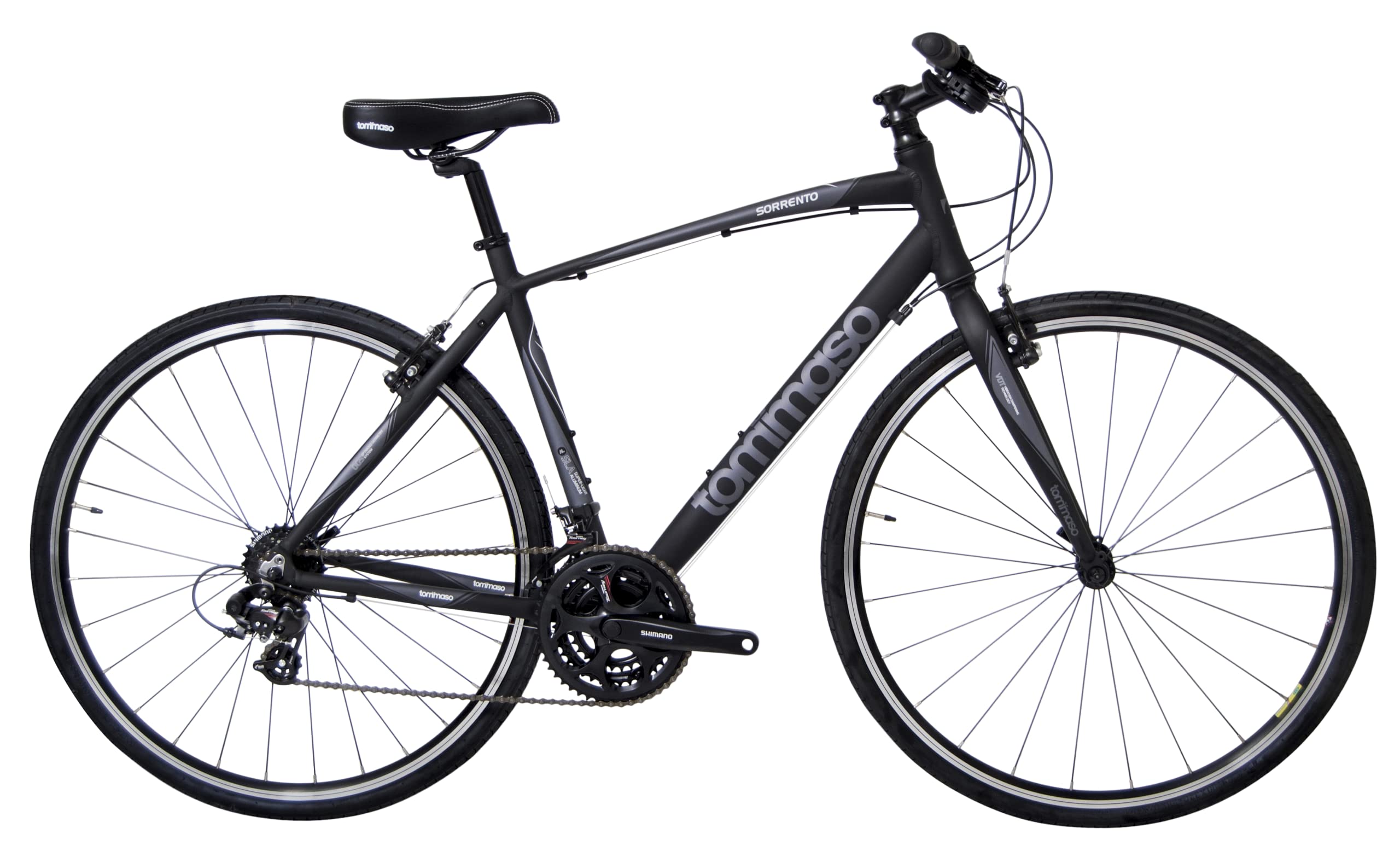
The Tommaso Sorrento is technically a hybrid fitness bike, but its Shimano Tourney 3×7 drivetrain, 700x32C tires, and lightweight aluminum frame make it a viable option for riders transitioning from mountain bikes to drop-bar road bikes. The flat bars provide a more upright riding position that reduces strain on the lower back and neck, while the cantilever rim brakes offer sufficient stopping power for paved paths and light gravel. The bike weighs around 29 pounds, which is reasonable for a hybrid with 21 speeds.
Customer reviews are generally positive, with many buyers noting that the Sorrento replaces older commuter bikes and offers a substantial upgrade out of the box. The Shimano components shift smoothly after a simple cable tension adjustment, and the packaging protects the frame well during shipping. The saddle is again a weak point — described as tooth-edged by one buyer who reported minor leg injuries from the stock plastic pedals. The tires are adequate for pavement but will slip on loose gravel or wet grass. The steel fork adds durability but contributes to the weight.
One buyer reported catastrophic failure of the crankset and front derailleur within a month, though this appears to be an outlier rather than a pattern. The warranty excludes many parts, so buyers should inspect the bike thoroughly within the return window. For casual riding under five miles or for fitness enthusiasts who prefer an upright seating position, the Sorrento offers the reliability of a known brand with the support network of Tommaso’s customer service. It’s not a pure road bike, but it’s a practical bridge into road cycling.
Why it’s great
- Upright riding position reduces back and neck strain for new riders
- Shimano Tourney drivetrain provides reliable shifting
- Good value for a brand-supported fitness hybrid bike
Good to know
- Stock pedals have sharp edges that can injure bare legs
- Cantilever brakes lack the power of disc brakes in wet conditions
- Warranty coverage is limited on specific drivetrain components
10. HILAND 700C Road Bike

The HILAND 700C Road Bike is the most aggressively priced entry-level road bicycle on this list, using an aluminum frame and dual caliper brakes to keep weight and cost low. The 14-speed derailleur drivetrain uses trigger shifters, which are intuitive for beginners but offer fewer gear steps than the 21-speed alternatives. The bike weighs approximately 28 pounds, which is competitive at this price point. It comes in three frame sizes — 49cm, 53cm, and 57cm — offering a rare degree of fit adjustment among budget options.
Customer experiences range widely. One buyer reported 2,000 miles of reliable riding after fixing a missing screw and adjusting the derailleur, while another couldn’t ride the bike out of the box due to a derailleur that would not stay in gear. Common patterns include the need for immediate brake pad and cable tension adjustment as well as plastic pedals that feel cheap and slippery. The saddle is universally described as poor, and the front sprocket’s high/low limit may not click into place like the rear gears until adjusted.
The bike’s value proposition is straightforward: you get a lightweight aluminum frame and functional drivetrain at a price that undercuts most competitors. The trade-off is that you must be willing to spend time on assembly and adjustment — or pay a bike shop for a tune-up. For a handy beginner who likes to tinker, the HILAND can become a reliable daily rider. For someone who wants a perfect out-of-box experience, this bike will likely cause frustration. The savings are real, but they come in the form of sweat equity.
Why it’s great
- Lightweight aluminum frame at the lowest possible cost
- Multiple frame sizes improve fit customization
- Functional drivetrain after proper adjustment
Good to know
- Requires significant assembly and derailleur tuning before first ride
- Plastic pedals and poor saddle need immediate replacement
- Quality control issues can result in non-functional gear indexing
11. Schwinn High Timber

The Schwinn High Timber is a mountain bike by name and geometry, but its lightweight aluminum frame, disc brakes, and 21-speed drivetrain make it a candidate for riders who want a rugged option for mixed surfaces at a low price. The 26-inch wheels fit riders from 5’4” to 6’2”, and the front suspension provides 50mm of travel for light trail use. The twist shifters and rear derailleur offer quick gear changes, though they lack the precision of trigger shifters found on dedicated road bikes.
Customer reviews reveal serious safety concerns. Multiple buyers reported the front wheel detaching during use — one account describes a downhill crash that caused severe injury. The fork has been reported to have excessive play, and the gear shifting can be unreliable. On the positive side, buyers who received a properly assembled unit found the bike to be lightweight and good value for casual neighborhood riding. The disc brakes stop effectively once bedded in, and the knobby tires provide good traction on dirt and gravel.
The High Timber is a bike that demands thorough pre-ride inspection. The quick-release front wheel must be correctly secured, and the fork should be checked for looseness. For a rider who wants a cheap off-road option and is mechanically proficient, the High Timber can serve as a decent entry point. For anyone expecting a safe, reliable out-of-box experience, the risks outlined by multiple verified purchasers cannot be ignored. This bike is best viewed as a project bike that needs significant attention before it can be ridden with confidence.
Why it’s great
- Lightweight aluminum frame makes the bike easy to maneuver
- Front suspension adds comfort on rough terrain
- Disc brakes provide reliable stopping power when adjusted
Good to know
- Multiple reports of front wheel detachment causing serious injury
- Fork play and gear shifting reliability are inconsistent
- Requires thorough pre-ride inspection to ensure safety
FAQ
Can I use a cheap road bicycle for daily commuting?
What frame size should I choose for a road bike?
How do I maintain a cheap road bike to extend its life?
Are disc brakes better than caliper brakes on a budget road bike?
How much assembly is required for a cheap road bike?
Final Thoughts: The Verdict
For most users, the cheap road bicycle winner is the SAVADECK Carbon Fiber Road Bike (105) because it delivers a full carbon frame and wheelset with a race-grade Shimano 105 groupset and hydraulic disc brakes at a price that undercuts every other carbon option by a wide margin. If you want the weight savings of carbon without the hydraulic braking complexity, grab the SAVADECK Carbon Road Bike (SORA) for its sub-20-pound build and reliable V-brake simplicity. And for touring versatility that no other road bike can match, nothing beats the Mongoose Elroy Adventure with its integrated frame bag and rack mounting points for loaded bikepacking trips.

Mo Maruf
I created WellFizz to bridge the gap between vague wellness advice and actionable solutions. My mission is simple: to decode the research and give you practical tools you can actually use.
Beyond the data, I am a passionate traveler. I believe that stepping away from the screen to explore new environments is essential for mental clarity and physical vitality.