Our readers keep the lights on and my smoothie glass nicely filled. As an Amazon Associate, I earn from qualifying purchases.
Specs are compiled from manufacturer listings and verified buyer reviews and can change over time — please confirm the key details on the product page before buying.
You want the rich, vibrant colors of a QLED (Quantum Dot LED) screen, but you need to keep costs down. The good news is you don’t have to choose between great picture and a fair price anymore—the real challenge is picking the right model from a sea of similar-sounding options.
I’m Mohammad Maruf — the founder and writer behind WellFizz. This guide is built by comparing the manufacturers’ published specifications and the patterns across verified customer reviews, so you get each pick’s real strengths and trade-offs instead of marketing spin.
The cheap qled tv that works best for most people is the 65-inch Roku Plus Series. It gives you mini-LED backlighting (thousands of tiny LEDs that light the screen in zones for deep blacks) and a dead-simple Roku OS at a price that undercuts similar sets. If you need silky-smooth motion for gaming or sports, pick the TCL T7 Series with its 144Hz panel.
Quick Picks
- Roku Smart TV – 65-Inch Plus Series Mini-LED — Best Overall
- TCL Amazon Exclusive 65 Inch Class T7 Series — Gaming Beast
- Roku Smart TV – 55-Inch Pro Series — Premium Compact
- Amazon Ember 55″ QLED Series with Fire TV — Smart Hub
How To Choose The Best Cheap QLED TV
Finding a great TV for less is about knowing where to sacrifice and where to hold the line. Here is what to focus on so you don’t end up with a dim, sluggish set.
Backlighting Technology: Standard vs Mini-LED
A standard QLED TV uses edge-lit LEDs, which can lead to cloudy blacks in dark scenes. A step up is mini-LED backlighting, which uses thousands of tiny LEDs to light the screen in zones—you get deeper blacks, brighter highlights, and better contrast for the money. This is the single biggest upgrade you can get on a budget QLED.
Refresh Rate: 60Hz vs 120Hz
Most cheap QLED TVs stick to a 60Hz refresh rate, which means the screen refreshes the image 60 times per second. That is fine for movies and regular shows. If you plan to connect a gaming console or watch live sports, a 120Hz panel makes motion look much smoother and reduces blur. It is worth the extra cost if fast action is on your menu.
Smart Platform: Roku, Fire TV, or Google TV
Your TV’s operating system controls how fast apps load, how easy it is to search for content, and how well the remote works. Roku is known for its simple, clutter-free menus. Fire TV is great if you live in the Amazon ecosystem, and Google TV offers deep integration with Google services. Pick the one that matches how you already watch TV.
Quick Comparison
| Model | Best For | Screen Size | Refresh Rate | Backlight Tech | Amazon |
|---|---|---|---|---|---|
| Roku Plus Series 65″ | All-around value | 65 Inches | 60Hz | Mini-LED | Amazon |
| TCL T7 Series 65″ | Gaming & sports | 65 Inches | 144Hz | QLED | Amazon |
| Roku Pro Series 55″ | Premium picture | 55 Inches | 120Hz | Mini-LED | Amazon |
| Amazon Ember 55″ QLED | Smart home integration | 55 Inches | 60Hz | QLED | Amazon |
In‑Depth Reviews
1. Roku Smart TV – 65-Inch Plus Series Mini-LED
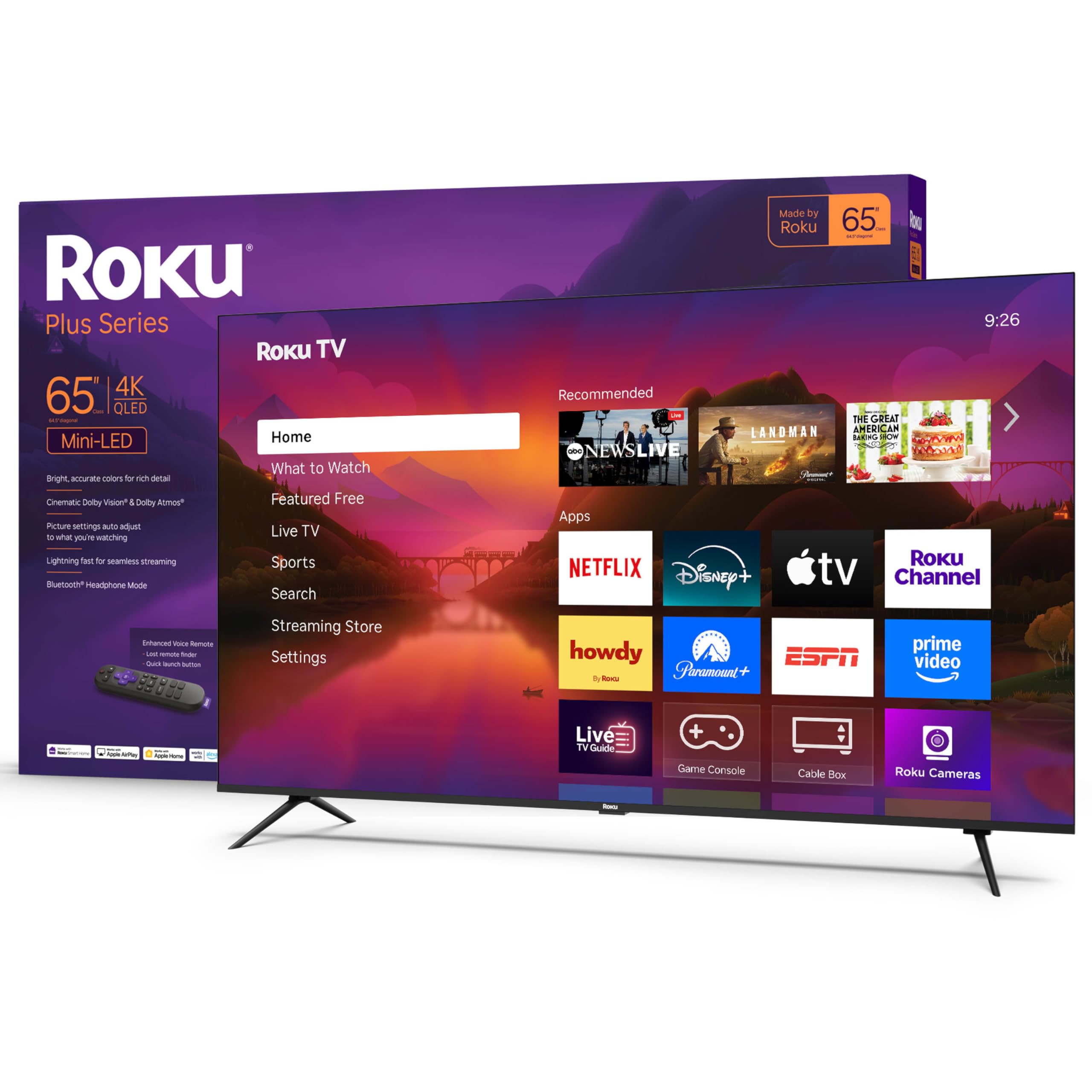
The 65-inch Roku Plus delivers mini-LED performance that punches well above its budget price — deeper blacks and punchier colors than standard QLED sets like the Amazon Ember.
You get deep blacks and vibrant colors from the mini-LED backlighting (a technology that lights the screen in tiny zones for superior contrast), on a 65-inch 4K QLED screen, plus Dolby Vision technology for vivid highlights. Buyers report this television has excellent contrast and sound that has depth, with several calling the picture quality “great” and noting it is worth spending the extra money over the cheaper Roku Select Series for the better picture and build quality. The Roku OS is intuitive and snappy, making it easy to find your apps and free content from 500+ channels.
The enhanced voice remote includes a lost remote finder, a feature you will appreciate if the remote disappears into the couch cushions. For gamers, it includes Variable Refresh Rate (VRR) and a Game Mode, so action stays smooth. One common note from reviewers: the built-in sound is good, but pairing a soundbar takes it to the next level. Unlike the smaller Roku Pro Series below, this 65-inch model uses Dolby Audio with a built-in subwoofer rather than side-firing speakers, giving it a fuller sound for a home theater setup without needing external speakers right away.
The Strengths
- Mini-LED backlighting delivers deep blacks and punchy colors for the price
- Roku OS is simple, fast, and gets regular updates
- Enhanced voice remote with lost remote finder is genuinely useful
The Trade-offs
- 60Hz refresh rate—fine for movies, not ideal for competitive gaming
- Basic settings menu lacks advanced picture tweaks
Reach for this if: You want the biggest, brightest picture for your money and prefer a dead-simple, ad-free smart platform.
Look elsewhere if: You need a 120Hz or higher refresh rate for serious console or PC gaming. The TCL T7 below is better for that.
2. TCL Amazon Exclusive 65 Inch Class T7 Series
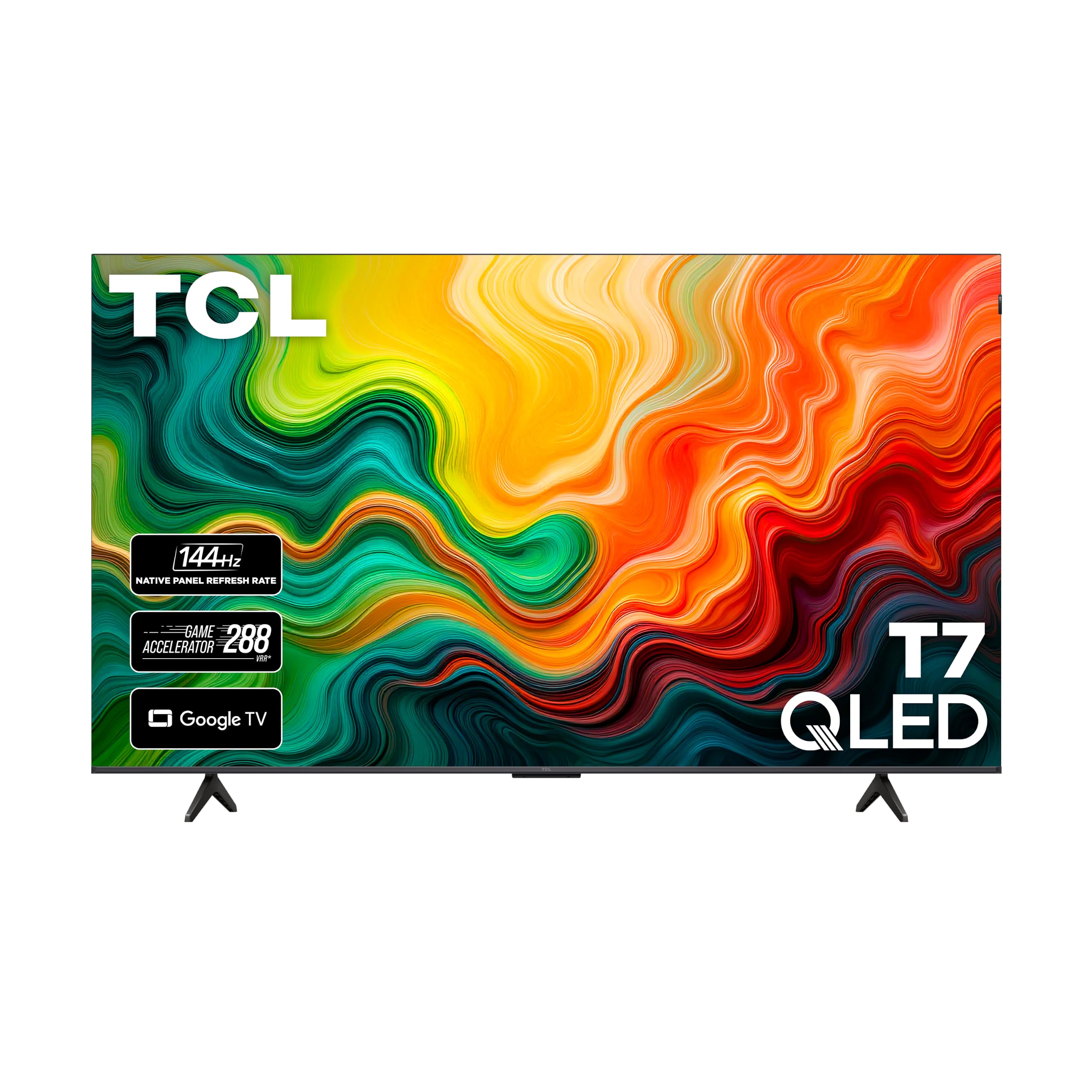
A blistering 144Hz panel makes the T7 a serious contender for gamers on a budget — at 144Hz versus the 60Hz Roku Plus Series.
This 65-inch QLED HDR television is built for speed. The native 144Hz refresh rate means you see every frame of fast-paced games and sports without motion blur—something the standard 60Hz sets simply cannot do. It uses a TCL AIPQ Pro Processor that intelligently tune color, contrast, and clarity, and the 4K QLED Quantum Dot technology covers nearly the entire DCI-P3 color space, so reds, greens, and blues look richly saturated. One reviewer who owns the set summed it up simply: “I absolutely LOVE my TCL 75T7,” praising the sharp, smooth picture when gaming on a PS5 or PC.
It runs on Google TV, which puts your apps and live channels front and center, and includes built-in Chromecast and Apple AirPlay 2 for casting from any device. The FullView 360 bezel-less design with height-adjustable feet makes it easy to fit a soundbar underneath. The catch is that while the picture shines in dim rooms, owners mention there is noticeable glare in brighter rooms—so if your seating area faces a window, plan to control the light. The 60Hz Roku Plus Series is a better choice for a bright, sunlit living room because of its higher brightness mini-LED panel, while the T7 is the clear winner for motion clarity.
The Perks
- 144Hz refresh rate delivers ultra-smooth gaming and sports motion
- Bezel-less design with adjustable feet fits soundbars neatly
- Google TV interface is responsive and feature-rich
The Downsides
- Noticeable screen glare in bright rooms with direct light
- Requires internet connection to Google during initial setup before you can use HDMI inputs
Grab it for: Console or PC gaming, live sports, or anyone who prioritizes silky-smooth motion over raw brightness.
skip it if: Your TV sits in a very bright, sunlit room where glare will be a daily annoyance. The Roku Plus handles bright rooms better.
3. Roku Smart TV – 55-Inch Pro Series
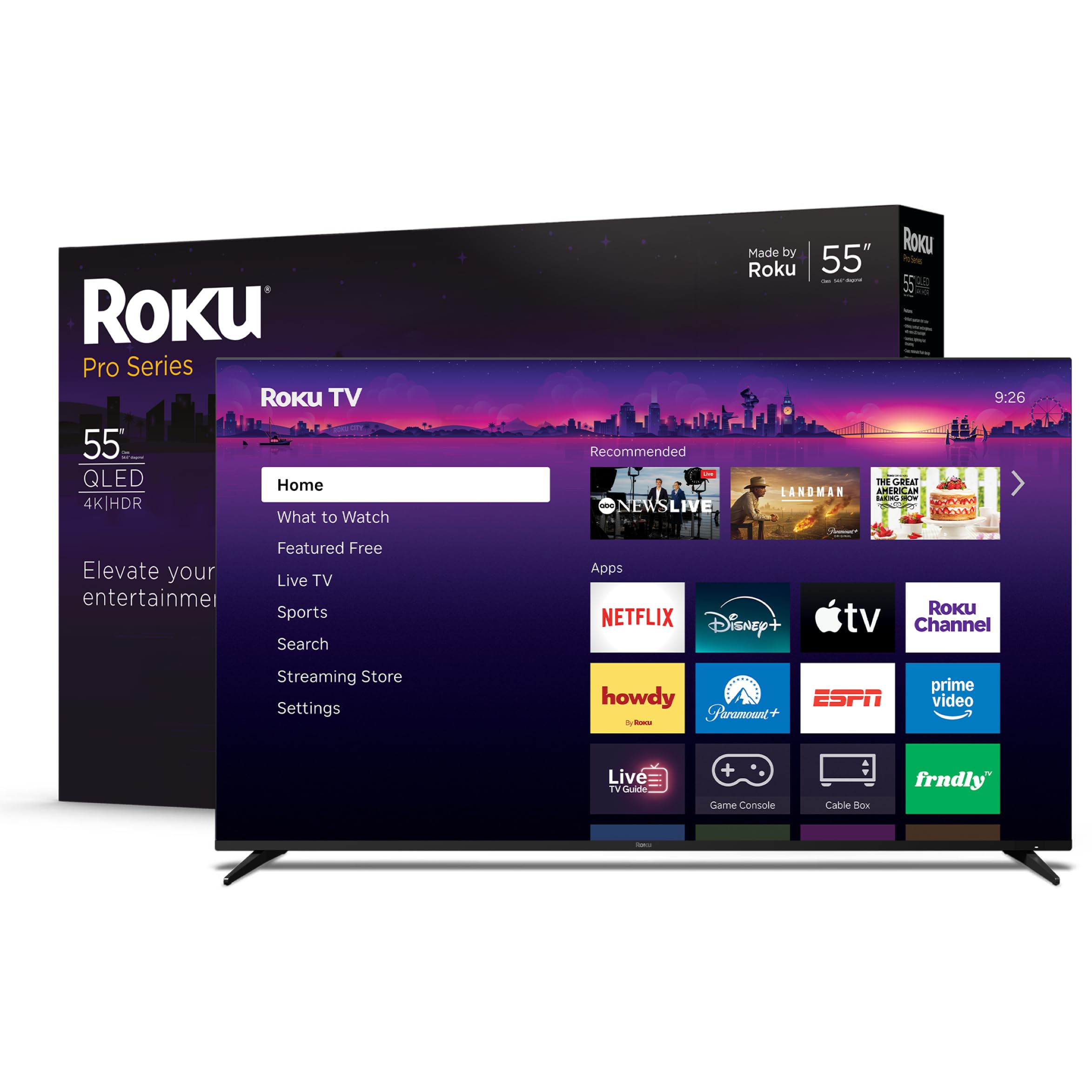
The 55-inch Roku Pro brings high-end features like 120Hz and mini-LED into a more compact, affordable package — and its side-firing speakers beat the built-in sound of the TCL T7.
This television packs two premium upgrades into a 55-inch screen: a 120Hz refresh rate for smooth action, and mini-LED backlighting for deep blacks and bright highlights. It includes Dolby Vision IQ, which adjusts the picture based on the ambient light in your room, so it looks good whether you watch during the day or at night. The standout feature is the side-firing speakers with Dolby Atmos, which create a genuinely rich soundstage—customers note the built-in audio has excellent bass and clarity, with some calling it better than a basic soundbar. The Roku Pro remote is backlit and rechargeable, a nice touch for late-night viewing.
One reviewer who compared it directly to the Samsung The Frame found the Roku Pro superior in sound quality, with comparable picture quality, a simpler art mode, and a slimmer profile. For gamers, it supports FreeSync Premium Pro, ALLM (Auto Low Latency Mode), and VRR (Variable Refresh Rate), making it a strong choice for tear-free gaming even though it is a 55-inch set. Keep in mind these features are on the Plus Series above only as standard VRR without FreeSync, so the Pro is the better pick if gaming performance matters to you, even at the smaller screen size.
Two standouts: The 120Hz refresh rate and Dolby Atmos side-firing speakers are rare in this price range, delivering a noticeably punchier sound than the other picks here.
One honest note: A small number of owners have reported audio sync issues and rare screen defects after a few weeks—extended warranty is worth considering.
Best for: Someone who wants a premium 55-inch experience with great built-in sound and smooth gaming motion, without paying for a larger screen they don’t need.
Not for: Buyers who need a 65-inch screen or who prefer a simpler OS without the paid subscription requirements of some services.
4. Amazon Ember 55″ QLED Series with Fire TV
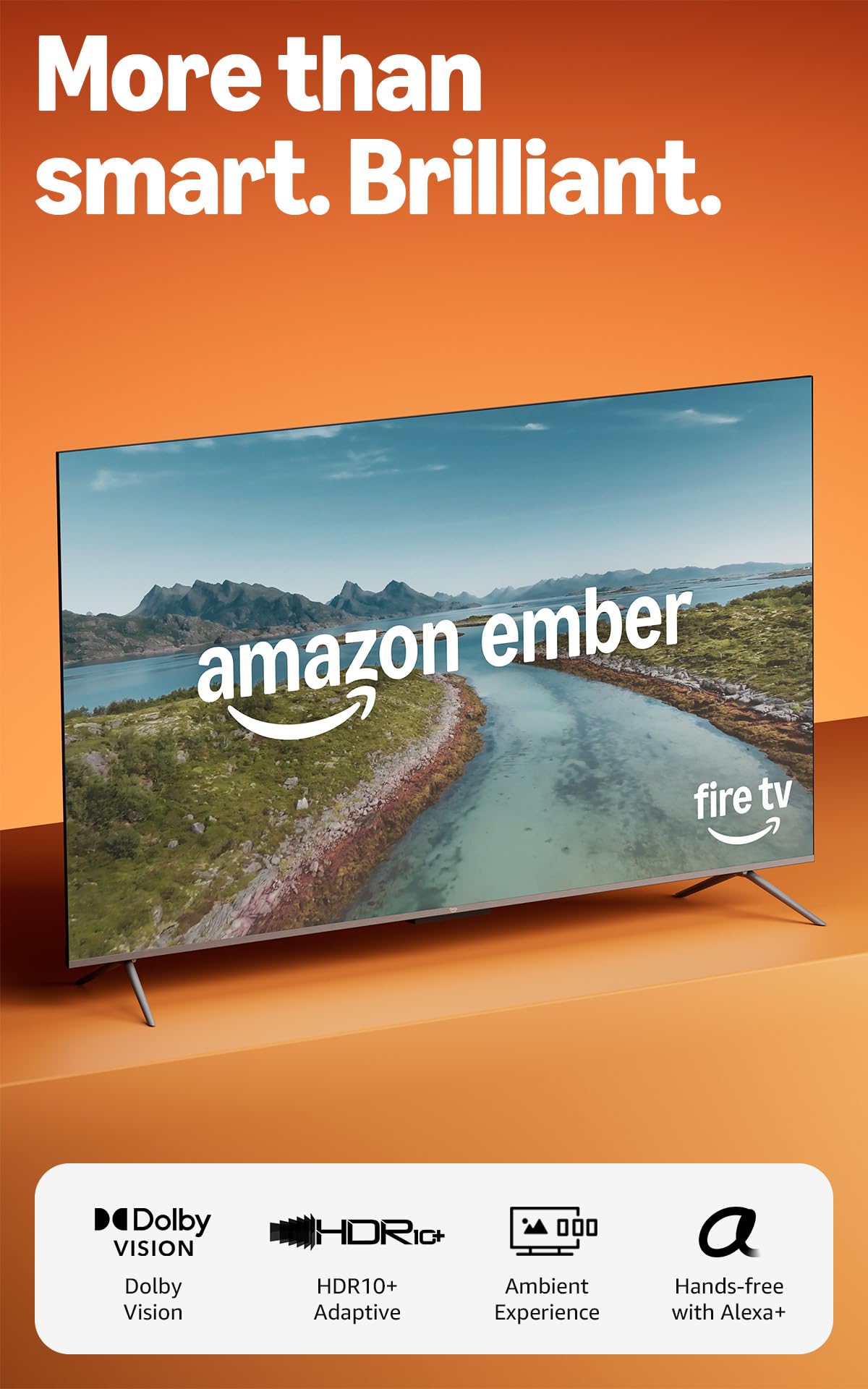
The Amazon Ember puts a feature-packed Fire TV experience into a 4K QLED display at an entry-level price, but buyer complaints about freezing make the Roku Plus a safer bet.
This 55-inch QLED smart TV gives you the full Amazon ecosystem: the new Fire TV experience with Alexa+ lets you talk naturally to find shows, control smart home devices, or dive into topics hands-free, even with the screen off. It supports Dolby Vision and HDR10+ Adaptive for picture quality that adapts to the light in the room, and full-array local dimming to improve contrast. The quad-core processor and Wi-Fi 6 connectivity make apps load fast, and the Omnisense technology wakes the TV when you walk in the room, a neat feature for a living room centerpiece.
The catch here is the consensus among buyers about its real value. One reviewer called it a “decent TV at sale price, not worth paid,” with reports that both the 55-inch and 65-inch models can freeze and require an unplug reset. The audio also lacks depth without a soundbar, and some users experience menu lag on the Fire TV interface. This pick makes sense only if you catch it at a steep discount—the Roku Plus Series is a more reliable all-around set for a similar budget, with fewer user complaints about reliability and a smoother operating system.
The Appeal
- Deep Alexa+ integration for hands-free voice control and smart home management
- Wi-Fi 6 and fast quad-core processor for snappy app loading
- Full-array local dimming improves black levels for a budget set
The Risks
- Reliability concerns: some units freeze and need to be unplugged
- Audio is underwhelming without a separate soundbar
- Only worth the price when bought at a significant sale discount
Only buy this if: You deeply rely on Alexa for your smart home and can find it at a steep sale price.
Skip it: If you want a dependable daily driver without worrying about system freezes or audio issues. Stick with the Roku Plus Series instead.
Understanding the Specs
QLED vs Mini-LED
QLED (Quantum Dot LED) is a screen technology that uses tiny nanocrystals (quantum dots) to produce brighter, more saturated colors than a standard LED TV. Mini-LED is not a different screen type—it is a better backlight system behind the QLED panel. Instead of a few dozen large LEDs, mini-LED uses thousands of tiny ones arranged in zones, so dark parts of the picture actually stay dark while bright parts stay bright. This delivers much better contrast, which is why the Roku Plus Series and Roku Pro Series look noticeably richer than the standard QLED Amazon Ember in a dim room.
Refresh Rate: What you really see
The refresh rate (measured in Hz) tells you how many times per second the screen redraws the image. Standard TVs are 60Hz, which is perfectly fine for watching movies, news, and streaming shows. At 120Hz or 144Hz, motion looks much smoother—fast camera pans and quick sports plays stay clear instead of blurring together. For gaming, a high refresh rate also reduces input lag (the delay between pressing a button and seeing it on screen), which is why the TCL T7 and Roku Pro Series are the better picks for console or PC use. The catch is that streaming services rarely broadcast above 60 frames per second, so for 90% of content, 60Hz is all you need.
FAQ
Will a cheap QLED TV last as long as a premium model?
Is QLED better than OLED for a cheap TV?
Which TV is better for a bright living room?
Can I use a cheap QLED as a computer monitor?
How much should I spend on a cheap QLED TV?
Is the Roku Pro Series 55-inch good for gaming?
Why does one review say the Amazon Ember is not worth full price?
Will a QLED TV work with my existing sound system?
What is the difference between Roku Plus and Roku Pro Series?
Final Thoughts: The Verdict
For most people, the cheap qled tv winner is the Roku 65-Inch Plus Series because it delivers mini-LED contrast and a simple, fast smart platform at a price that undercuts the competition. If you want silky-smooth gaming motion, grab the TCL T7 Series 65-Inch for its 144Hz panel and vibrant QLED color. And for a premium 55-inch setup with outstanding built-in sound and 120Hz performance, the standout is the Roku Pro Series 55-Inch.
How We Picked
We do not accept paid placement. Every pick is matched to a real buyer and a real use-case; we do not hands-on test units.
Sources & Methodology
Specifications: manufacturer listings and product documentation. Review insights: verified customer reviews, as of July 2026. Pricing: not shown on this page (it changes often); check the current price via the retailer link.
As an Amazon Associate, WellFizz earns from qualifying purchases. This does not affect which products we feature.
Related Guides

Mo Maruf
I created WellFizz to bridge the gap between vague wellness advice and actionable solutions. My mission is simple: to decode the research and give you practical tools you can actually use.
Beyond the data, I am a passionate traveler. I believe that stepping away from the screen to explore new environments is essential for mental clarity and physical vitality.