Our readers keep the lights on and my smoothie glass nicely filled. As an Amazon Associate, I earn from qualifying purchases.
The hunt for an affordable film camera often ends in frustration — overpriced thrift-store relics, finicky vintage gear, or disposable cameras that vanish after one event. A cheap point-and-shoot should deliver the tactile, analog experience without breaking your budget or requiring a photography degree to operate.
I’m Mohammad Maruf — the founder and writer behind WellFizz. I’ve spent countless hours analyzing the specifications, customer feedback, and real-world performance of the most accessible film cameras on the market to isolate the few that actually deliver value.
Whether you want double the shots per roll or a transparent body that shows the inner mechanics, this guide cuts through the noise to reveal the cheap point and shoot film camera that fits your creative style and everyday carry needs.
How To Choose The Best Cheap Point And Shoot Film Camera
Before you click “add to cart,” consider three factors that separate a genuinely fun camera from a frustrating paperweight: frame format, lens quality, and exposure flexibility. Each one directly affects how many pictures you get per roll and how those images actually look.
Frame Format: Half-Frame vs. Standard 35mm
A half-frame camera exposes only half the standard 35mm negative area per shot, effectively doubling your exposures per roll — a 24-exposure roll becomes 48 shots, and a 36-exposure roll yields 72. This cuts per-shot film cost roughly in half, making it ideal for beginners and budget-conscious shooters. Standard full-frame cameras give you larger negatives with more detail per image but fewer total shots per roll.
Lens Construction: Plastic vs. Coated Glass
Plastic lenses produce the dreamy, soft, vignette-heavy look associated with toy cameras like the Holga. Coated glass lenses, found on premium models like the Kodak EKTAR H35N, deliver sharper contrast, better color separation, and reduced flare. If you want crisp images with character, seek a glass element. If you prefer lo-fi aesthetics, plastic can actually work in your favor.
Built-In Features: Flash, Bulb Mode, and Filters
An automatic flash is critical for indoor and low-light shooting. Bulb mode enables long exposures for light trails and night scenes — a rare feature at this price tier. Built-in filters (star, classic, retro) let you experiment without post-processing. Every extra feature adds weight and complexity, so match the feature set to your typical shooting environment: daylight, parties, or artistic night photography.
Quick Comparison
On smaller screens, swipe sideways to see the full table.
| Model | Category | Best For | Key Spec | Amazon |
|---|---|---|---|---|
| Kodak EKTAR H35N | Premium | Sharp half-frame with star filter | Coated glass lens, bulb mode | Amazon |
| Kodak EKTAR H35 | Mid-Range | Entry-level half-frame value | 72 shots per 36-exp roll | Amazon |
| to Be Continued (TBC) 35mm | Mid-Range | Transparent body, wearable design | 28mm wide lens, carabiner | Amazon |
| Holga 120N | Mid-Range | Medium-format toy camera creativity | 60mm plastic lens, 120 film | Amazon |
| LENSY Screen Free Digital | Premium | Digital alternative with film feel | 8MP, 4 built-in filters | Amazon |
| Ilford XP2 Super Single Use | Budget | Black-and-white disposable, 2-pack | 27 exposures each, built-in flash | Amazon |
| Fujifilm QuickSnap Flash 400 | Budget | Reliable disposable, 4-pack value | Superia X-TRA 400 film, 27 exp. | Amazon |
In‑Depth Reviews
1. Kodak EKTAR H35N Half Frame Film Camera

The H35N elevates the half-frame concept by swapping the standard plastic lens for a coated glass element. This single change produces noticeably sharper images with better contrast and reduced chromatic aberration compared to its predecessor, the H35. The built-in star filter adds a four-beam flare to light sources — subtle enough for everyday use but noticeable in night or party shots.
Bulb mode unlocks long exposures for light trails and low-light creativity, a feature almost unheard of at this tier. The tripod hole keeps the camera steady during those longer captures. At 110 grams, it’s lighter than many phones and fits easily in a jacket pocket.
Some users report the film advance wheel feels slightly stiff and the battery door is flimsy. The half-frame format demands you hold the camera vertically to produce horizontal photos — a minor ergonomic shift that takes a roll or two to internalize. For the sharpest affordable half-frame experience with creative extras, this is the clear winner.
Why it’s great
- Coated glass lens delivers sharp contrast and minimal vignetting
- Bulb mode and star filter add creative night-photography capability
Good to know
- Film advance wheel can feel stiff on early rolls
- Battery door is plastic and somewhat fragile
2. Kodak EKTAR H35 Half Frame Film Camera

The original EKTAR H35 remains the most cost-effective entry point into half-frame shooting. By exposing only half the negative area per shot, a standard 36-exposure roll yields 72 images — effectively halving your film cost per frame. This makes it the best option for beginners who want to practice composition without burning through expensive rolls.
Weighing just 200 grams with a pocket-friendly 4.33 x 1.77 x 2.56-inch body, it’s genuinely forgettable in a bag until you need it. The built-in flash activates by rotating the silver ring around the lens, a simple mechanical switch that eliminates menu-diving. Daylight results are solid; indoor shots with flash are usable and carry that nostalgic point-and-shoot character.
The plastic lens produces softer images than the H35N’s glass element, and there is no bulb mode or star filter. For pure value — maximum exposures per dollar spent on film — the H35 still leads. If you want sharper optics and creative controls, step up to the H35N.
Why it’s great
- Doubles exposures per roll (36 → 72) for serious film savings
- Extremely lightweight and simple mechanical flash control
Good to know
- Plastic lens produces softer images than glass alternatives
- No bulb mode or long-exposure capability
3. to Be Continued (TBC) Reusable 35mm Film Camera
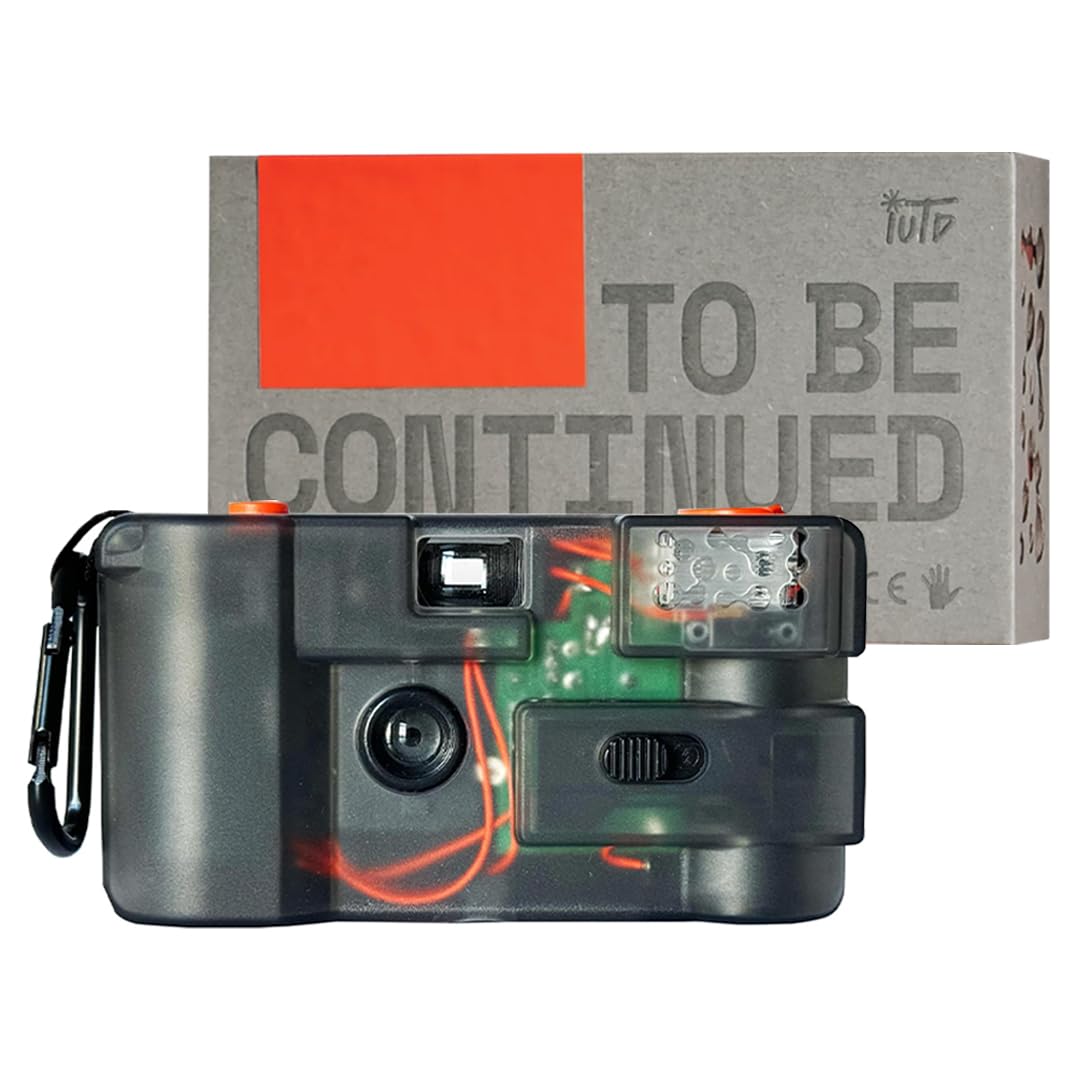
The TBC camera is the only option here with a fully transparent housing that reveals the film canister and winding mechanism — a conversation starter and visual delight for anyone nostalgic about analog gear. The 28mm wide lens captures a broader field of view than the standard 35mm found on most point-and-shoots, making it excellent for landscapes, group shots, and street photography.
A built-in carabiner lets you clip the camera to a belt loop, bag, or keychain so it’s always within reach. The 1/120s shutter speed is fixed but adequate for well-lit scenes, and the automatic flash works reliably indoors. Weighing 285 grams, it’s slightly heavier than the KODAK half-frames but still pocket-portable.
The film rewind button is sensitive — users report accidentally triggering mid-roll if you’re not careful. The build quality, while visually striking, feels more like a durable disposable than a rugged reusable. For creators who prioritize aesthetics and wide-angle framing over razor-sharp optics, this transparent camera delivers personality that no other model on this list offers.
Why it’s great
- Wide 28mm lens captures more scene than standard point-and-shoots
- Transparent housing and carabiner make it a wearable accessory
Good to know
- Rewind release button is fragile and sensitive to accidental presses
- Build feels more like a premium disposable than a rugged reusable
4. Holga 120N Medium Format Film Camera Bundle

The Holga 120N is not for anyone seeking sharp, predictable photos. Its 60mm plastic f/8 lens delivers heavy vignetting, light leaks, and soft focus — exactly the lo-fi aesthetic that has made the Holga a cult favorite among lomographers and fine-art photographers. The bundle includes one roll of Kodak TX 120 black-and-white film and a microfiber cloth, so you can start shooting immediately.
The zone-focusing system (1 person, 3 people, mountain) and two aperture settings (f/8 and f/11) represent the entire exposure control set. Shutter speeds are limited to 1/100 second and bulb. This simplicity forces you to slow down and think about composition manually. The hot shoe and tripod mount add flexibility for flash or long-exposure experiments on 120 film.
Build quality is notoriously inconsistent — some units arrive with missing battery prongs for the flash or winding mechanisms that fail to advance film. You are gambling on quality control. If you win, you get unpredictable, artistic 6×4.5cm or 6x6cm negatives that no digital filter can perfectly replicate. If you lose, you get a paperweight. Approach the Holga as an artistic tool, not a reliable daily shooter.
Why it’s great
- Unique medium-format image character with heavy vignetting and light leaks
- Includes Kodak TX 120 film and cloth for immediate use
Good to know
- Inconsistent quality control; some units arrive with mechanical defects
- Requires manual zone focusing and bulb exposure knowledge
5. LENSY Screen Free Digital Camera
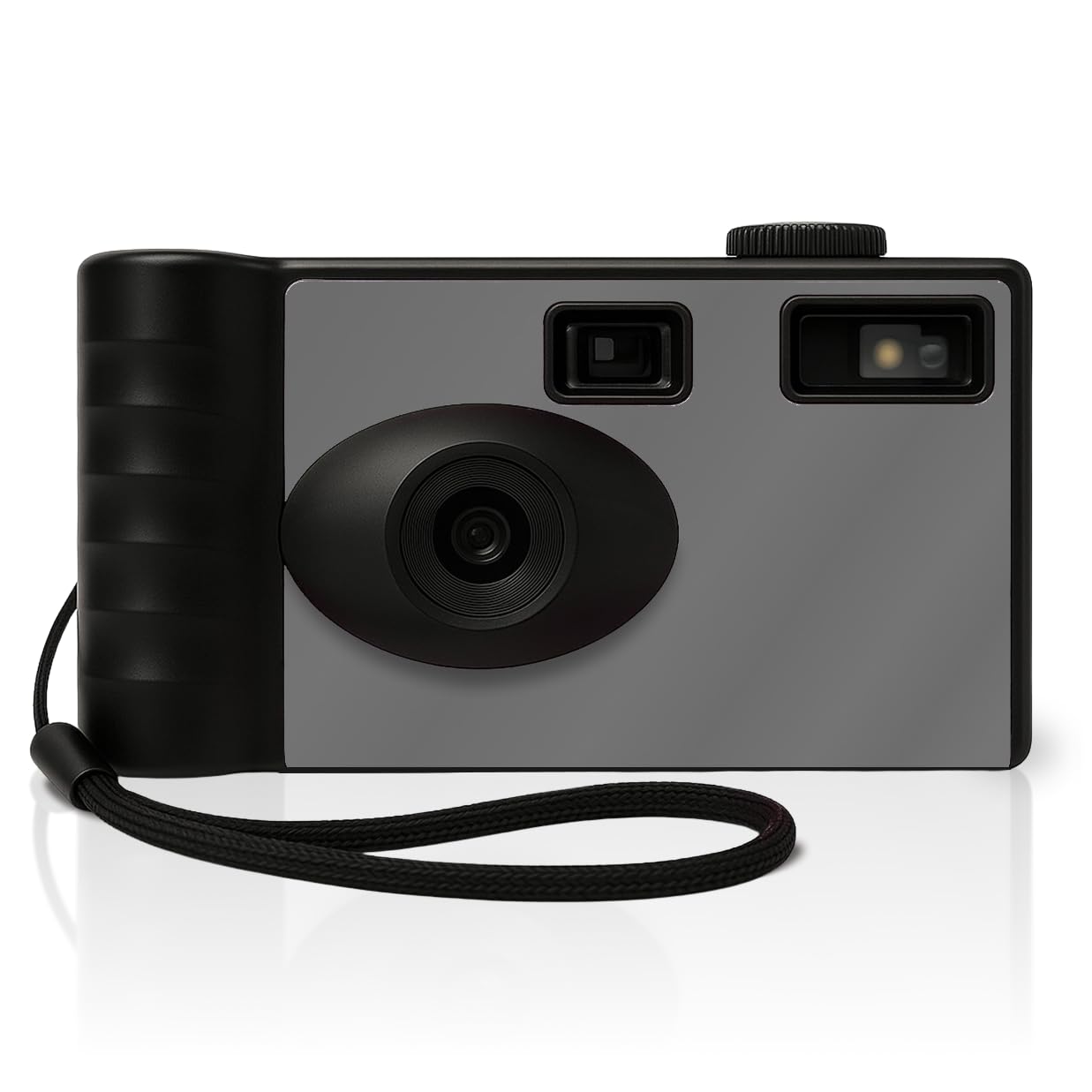
The LENSY Screen Free Digital Camera bridges the gap between analog nostalgia and digital convenience. Its 8-megapixel sensor captures images that mimic the look of a disposable camera, but you can transfer them instantly via USB-C — no development costs, no scanning. Four built-in filters (Classic, Retro, Analog, Black & White) let you tweak the aesthetic before you press the shutter.
A 4GB microSD card stores roughly 2,000 photos, and the absence of a rear screen forces you to be intentional about each shot — much like film. The automatic flash toggle is easy to switch on the fly, and the camera weighs less than half a pound. At roughly the same price as a two-pack of disposable cameras, this reusable digital body pays for itself after a few outings.
The loud electronic “ding” and shutter sound cannot be disabled, which may be annoying in quiet settings. The sticker finish is prone to peeling. For parents who want their kids to experience intentional photography without recurring film costs, or for anyone who wants the film workflow without the chemistry, the LENSY delivers a practical compromise.
Why it’s great
- Zero recurring film or development costs; stores 2,000 photos per SD card
- USB-C transfer and four built-in filters for instant creative control
Good to know
- Loud, non-disablable shutter sound may bother some users
- Decorative sticker finish can peel off with regular use
6. Ilford XP2 Super Single Use Camera with Flash (2-Pack)

Ilford’s XP2 Super is a single-use camera pre-loaded with 27 exposures of the acclaimed XP2 Super black-and-white film, which can be developed in standard C-41 color chemistry — meaning your local lab can process it without special equipment. This makes it the most accessible entry into monochrome film photography for anyone curious about black-and-white but unwilling to commit to a reusable body.
The built-in flash ensures you can shoot indoors or at night, and the automatic exposure system adjusts for the film’s ISO 400 sensitivity. The 2-pack gives you 54 total frames, enough to experiment with shadow and texture across different lighting conditions. The compact body is identical in form to standard disposable cameras.
Reviews are mixed on mechanical reliability — some units fail to wind or advance film. Crucially, do not take the film to a drugstore for development; multiple users report ruined negatives due to improper handling. Find a dedicated photo lab or mail-order service that specializes in film processing. For the price of two lattes you get a pure black-and-white analog experience without owning a camera body.
Why it’s great
- Uses professional Ilford XP2 Super film with C-41 processing compatibility
- Two cameras with flash for immediate black-and-white shooting
Good to know
- Some units suffer from mechanical winding failures
- Requires a dedicated film lab for development — avoid drugstore processing
7. Fujifilm QuickSnap Flash 400 One Time Use 35mm Camera (4-Pack)
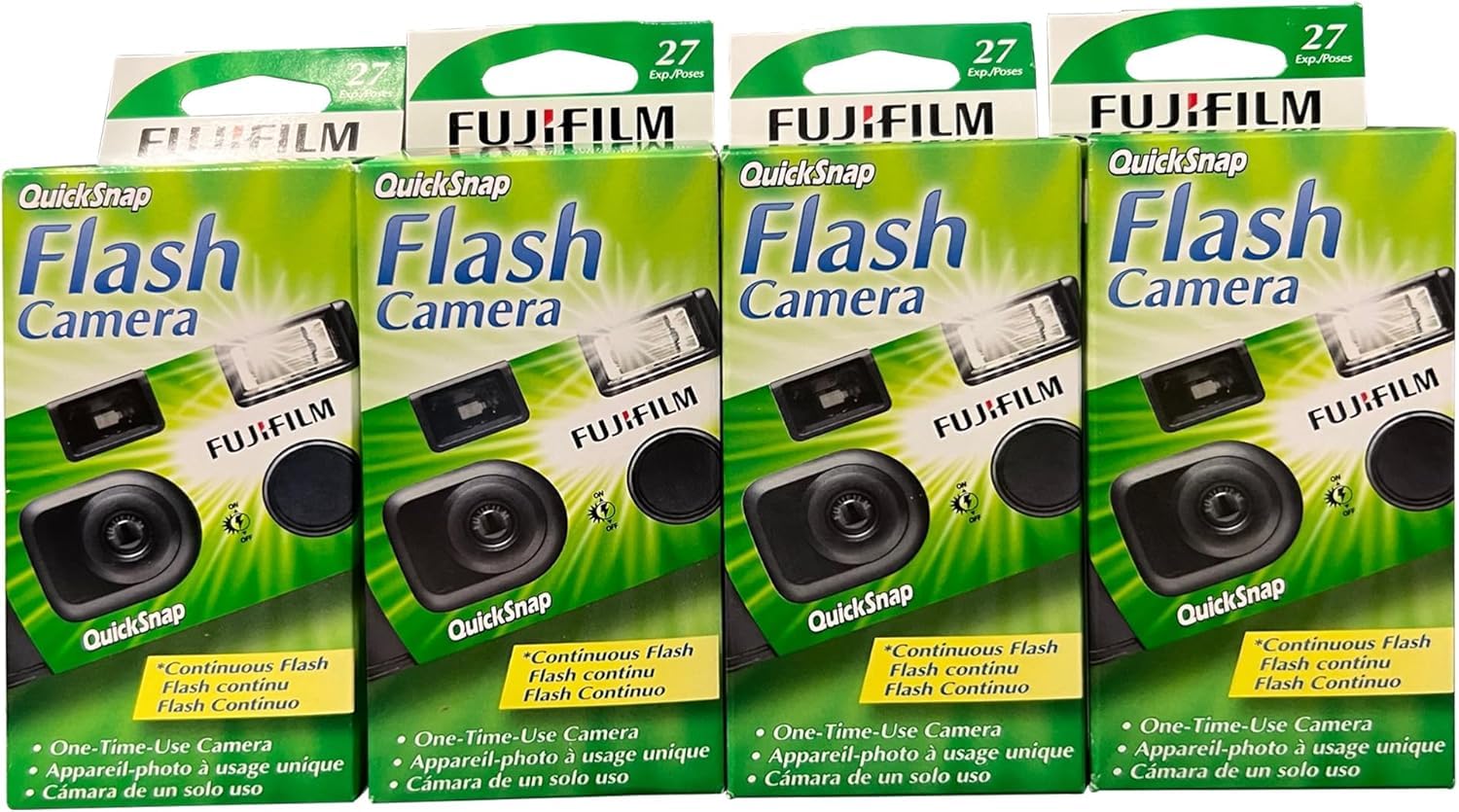
The Fujifilm QuickSnap Flash 400 is the most widely recognized disposable camera on the market, pre-loaded with Fujifilm Superia X-TRA 400 color negative film. Each of the four cameras yields 27 exposures with a built-in flash that has an effective range of about 10 feet — perfect for parties, weddings, road trips, or any event where you want guests to capture candid moments without worrying about expensive gear.
The manual flash on/off switch gives you control over when to use it, and the compact 5 x 2.5 x 1.75-inch body slips into a pocket or clutch easily. Superia X-TRA 400 produces warm, slightly saturated colors with fine grain, delivering the nostalgic look that has fueled the disposable camera revival. The 4-pack covers a wedding reception or a weekend trip with friends.
These are single-use — you cannot reload them. At a per-camera cost that adds up quickly with frequent use, they are best reserved for special occasions rather than daily practice. The plastic lens is fixed-focus, so subjects closer than 3 feet will appear soft. For a no-fuss, everybody-can-use-it party tool, the QuickSnap remains the gold standard.
Why it’s great
- Loaded with high-quality Superia X-TRA 400 film known for warm color rendering
- 4 cameras in one pack — ideal for events, weddings, and group outings
Good to know
- Single-use design creates recurring waste and higher long-term cost
- Fixed-focus plastic lens struggles with subjects closer than 3 feet
FAQ
What does half-frame mean on a film camera?
Which is better for beginners: a reusable point and shoot or a disposable camera?
Can I use any 35mm film in these cheap point and shoot cameras?
What does the star filter on the Kodak EKTAR H35N do?
Final Thoughts: The Verdict
For most users, the cheap point and shoot film camera winner is the Kodak EKTAR H35N because its coated glass lens, bulb mode, and star filter deliver the sharpest half-frame images with creative features absent from the rest of the field. If you want the best cost-per-shot value and don’t need the extras, grab the Kodak EKTAR H35. And for a wearable conversation piece with a wide 28mm lens, nothing beats the TBC Transparent Camera.

Mo Maruf
I created WellFizz to bridge the gap between vague wellness advice and actionable solutions. My mission is simple: to decode the research and give you practical tools you can actually use.
Beyond the data, I am a passionate traveler. I believe that stepping away from the screen to explore new environments is essential for mental clarity and physical vitality.