Our readers keep the lights on and my smoothie glass nicely filled. As an Amazon Associate, I earn from qualifying purchases.
Specs are compiled from manufacturer listings and verified buyer reviews and can change over time — please confirm the key details on the product page before buying.
Finding a capable mirrorless camera that does not destroy your budget means knowing exactly which trade-offs to accept and which to reject.
I’m Mohammad Maruf — the founder and writer behind WellFizz. This guide is built by comparing the manufacturers’ published specifications and the patterns across verified customer reviews, so you get each pick’s real strengths and trade-offs instead of marketing spin.
Whether you are shooting your first portrait, filming a vlog, or just want a smarter step up from a phone camera, the right cheap mirrorless camera gives you interchangeable lenses, bigger sensors, and real creative control for a price that does not sting.
Quick Picks
- Canon EOS R100 Mirrorless Camera RF-S18-45mm F4.5-6.3 IS STM Lens Kit — Best Overall
- Panasonic LUMIX G100 4K Mirrorless Camera with 12-32mm Lens — Video Creator
- Canon EOS M50 Mirrorless Camera Kit with EF-M15-45mm (Renewed) — Budget Hybrid
- OM SYSTEM Olympus E-M10 Mark IV Silver Micro Four Thirds Camera with 14-42mm EZ Lens — Stabilization Champ
- Panasonic LUMIX G85 4K Digital Camera with 12-60mm Power O.I.S. Lens — Weather-Sealed Workhorse
- Sony Alpha ZV-E10 APS-C Interchangeable Lens Mirrorless Vlog Camera Kit — Vlogger’s Choice
- Canon EOS RP Full-Frame Mirrorless Camera with RF24-105mm F4-7.1 IS STM Lens — Full-Frame Entry
- Sony Alpha a6400 Mirrorless Camera with E PZ 16-50mm f/3.5-5.6 OSS II Lens — Speed Demon
- FUJIFILM X-T30 III Mirrorless Camera Body with XC13-33mm Lens Kit, Silver — Style & Color
How To Choose The Best Cheap Mirrorless Camera
The biggest mistake first-time buyers make is chasing the highest megapixel count while ignoring the sensor size and autofocus system that actually determine whether your photos look sharp or soft. A cheap mirrorless camera with a larger APS-C sensor will almost always produce better, cleaner images than one with a smaller sensor and more megapixels, especially when light gets low.
Sensor Size: The Real Image Quality Decider
Mirrorless cameras in this price range come with either an APS-C sensor (larger, found in most Canon and Sony models) or a Micro Four Thirds sensor (smaller, found in Panasonic and OM SYSTEM cameras). The larger APS-C sensor captures more light, which gives you better low-light performance and more natural background blur — that creamy out-of-focus look behind your subject. A Micro Four Thirds sensor is still a huge step up from any smartphone, but you will notice more noise in dim indoor or evening shots compared to an equivalently priced APS-C camera.
Autofocus: How Many Points and What Type
Autofocus points are the small sensors on the camera’s imaging chip that lock onto your subject. More points means the camera can track movement across a wider area of the frame. A camera with 425 phase-detection points (like the Sony Alpha models) will track a running child or a pet much more reliably than a camera with 49 contrast-detection points (like the Panasonic G85). For still portraits and landscapes, even 121 points are plenty — but for action or video, aim for at least 143 phase-detection points and look for face or eye tracking features.
Video Recording Limits That Catch You Off Guard
Many cheap mirrorless cameras impose a 20-minute or 30-minute recording limit on 4K video — the Panasonic G100, for instance, stops filming after 20 minutes, according to buyers. This is a carryover from older EU tariff classifications and still appears on many entry-level models. If you plan to record long speeches, interviews, or events, check the product specs for “continuous recording time” or look for a model that does not impose a hard cut-off.
The Kit Lens Trap
The lens that comes in the box is often the weakest link. Buyers of the Canon EOS M50 report that the kit lens is weak in low light, and buyers of the Panasonic G100 note the kit lens is kind of dark. Budget for a fast prime lens (a lens that does not zoom, with a wide aperture like f/1.7 or f/1.8) if you want usable photos indoors without flash — a cheap 22mm or 25mm prime transforms most entry-level cameras.
Quick Comparison
On smaller screens, swipe sideways to see the full table.
| Model | Best For | Sensor | Autofocus Points | Video Resolution | Amazon |
|---|---|---|---|---|---|
| Canon EOS R100 | Absolute beginner stills | 24.1MP APS-C | 143 | 4K up to 24 fps | Amazon |
| Panasonic LUMIX G100 | Vlogging with audio | 20MP Micro Four Thirds | 205 | 4K | Amazon |
| Canon EOS M50 | Budget hybrid photo/video | 24.1MP APS-C | 143 | 4K UHD 24p | Amazon |
| OM SYSTEM E-M10 Mark IV | Stabilized everyday carry | 20MP Micro Four Thirds | 121 | 4K | Amazon |
| Panasonic LUMIX G85 | Weather-sealed video work | 16MP Micro Four Thirds | 49 | 4K QFHD | Amazon |
| Sony Alpha ZV-E10 | Vlogging and streaming | 24.2MP APS-C | 425 | 4K oversampled from 6K | Amazon |
| Canon EOS RP | Full-frame on a budget | 26.2MP Full-Frame | — | 4K UHD 2160p | Amazon |
| Sony Alpha a6400 | Action and sports | 24.2MP APS-C | 425 | 4K oversampled | Amazon |
| FUJIFILM X-T30 III | Stylish travel companion | 26.1MP APS-C | Face/Eye Detection | 4K | Amazon |
In‑Depth Reviews
1. Canon EOS R100 Mirrorless Camera RF-S18-45mm F4.5-6.3 IS STM Lens Kit

The lightest EOS R body that puts a 24.1MP APS-C sensor in your hands for under modest outlay.
The Canon EOS R100 gives you the core benefit of the whole EOS R system — that 24.1 Megapixel CMOS (APS-C) sensor — in the smallest and lightest body Canon makes for this mount. That means you get the same image clarity and natural bokeh (the blur behind your subject) that higher-end R-series cameras produce, but in a body that buyers describe as compact, lightweight, and easy to handle for heavy day use. The DIGIC 8 image processor handles 4K video at up to 24 fps, and the Dual Pixel CMOS AF covers 143 zones with human face and eye detect AF — so the camera locks onto faces without hunting.
Buyers report that the fast continuous shooting captures action well, with one noting it caught archery at 1/4000, and that the beginner-friendly GUI with custom quick menus makes the learning curve gentle. The catch is that no charger is included — you will need a separate LP-E17 charger — and the kit lens, while versatile at 18-45mm, is not a low-light star. Still, for the price of entry into the Canon RF lens system, this is a hard starting point to beat.
Why it earns the top spot
- Smallest and lightest EOS R body for easy everyday carry
- Dual Pixel CMOS AF with 143 zones and face/eye detect for reliable autofocus
- Superb image quality from 24.1MP APS-C sensor with natural bokeh
- 6.5 fps continuous shooting catches fast action
Honest trade-offs
- No charger included in the box — requires separate purchase
- Kit lens struggles in low light; upgrade to a prime lens recommended
- 4K video limited to 24 fps, not ideal for smooth motion video
Who it fits: First-time mirrorless buyers who want the best image quality for the money and plan to grow into the Canon RF lens system.
Who might want more: Video creators who need smooth 4K at 30 fps or higher — the 24 fps cap here is a real limit for vlogging.
2. Panasonic LUMIX G100 4K Mirrorless Camera with 12-32mm Lens

A featherlight Micro Four Thirds body with a built-in tracking microphone that follows the action.
The Panasonic LUMIX G100 is built for creators who care about sound as much as picture. Its high-performance microphone with tracking audio auto-adjusts to record clearly in different environments — inside, outside, in crowds, or one-on-one — and the camera itself is lightweight enough for one-handed recording. The Micro Four Thirds system is compatible with all LUMIX lenses, and the 12-32mm kit lens covers wide-angle to standard views.
Buyers confirm the video quality is excellent with vibrant colors and crisp details, and that the flippable screen and user-friendly interface make it a strong choice for vlogging. The real-world catch: the camera auto-stops filming after 20 minutes, and the battery lasts roughly 5 hours — plus it charges only when off, so you cannot film while plugged in. Several buyers also note the kit lens is kind of dark and recommend pairing it with a 25mm f/1.7 lens for better low-light performance.
Sound-first advantage
- Built-in microphone with tracking audio auto-adjusts to your environment
- 205 autofocus points — notably more than many similarly-priced rivals
- Compact and lightweight body designed for one-handed recording
- smooth smartphone upload for quick sharing
Recording reality
- Hard 20-minute video recording limit stops longer takes
- Cannot film while charging; only charges when powered off
- Kit lens is dark in low light; budget for a prime lens upgrade
Reach for this if: You are a vlogger or content creator who prioritizes good audio and needs a camera that does not weigh you down.
Look elsewhere if: You need to record long events or interviews — the 20-minute limit is a non-negotiable blocker for continuous shooting.
3. Canon EOS M50 Mirrorless Camera Kit with EF-M15-45mm (Renewed)

A refurbished Canon that packs 24.1 megapixels, an OLED viewfinder, and 4K into a compact body.
It features a built-in OLED electronic viewfinder with Touch and Drag AF, so you can compose shots and shift focus by swiping on the screen while looking through the finder. The 4K UHD 24p and HD 120p for slow motion give video creators some flexibility, and the compressed raw format keeps file sizes manageable while retaining editing flexibility.
Reviewers praise the great image quality, ease of use, and excellent auto mode, noting that the Canon colors are great straight out of camera. The honest feedback is that ISO above 3200 is poor — images get noisy — and the kit lens is weak in low light, but buyers consistently say a cheap 22mm prime lens solves this problem. The 4K video has cropping and tracking issues, and the body is not weather-sealed, so treat it gently in damp conditions.
What stands out
- 24.1MP APS-C sensor delivers sharp, detailed stills with great Canon color science
- Built-in OLED EVF with touch-and-drag AF for comfortable composing
- HD 120p slow-motion recording adds creative flexibility
- Excellent auto mode for beginners learning the ropes
What holds it back
- ISO above 3200 produces noticeable noise in dim conditions
- Kit lens is weak in low light; budget for a 22mm prime
- 4K video has a crop factor and tracking issues
- No weather sealing — avoid rain or dust
Perfect for: Beginner photographers who want a good viewfinder experience and great still-image quality, and are willing to buy one extra prime lens.
skip it if: You need clean high-ISO performance for indoor sports or concerts, or if weather sealing matters for outdoor shooting.
4. OM SYSTEM Olympus E-M10 Mark IV Silver Micro Four Thirds Camera with 14-42mm EZ Lens

A retro-styled body that wraps a 20MP sensor and 5-axis stabilization into a nearly pocketable kit.
The OM SYSTEM E-M10 Mark IV packs a 20 MP Live MOS sensor into a compact, well-made body that several owners mention fits in a jacket pocket when paired with the 14-42mm EZ pancake zoom lens. The headline feature here is the In-Body 5-Axis Image Stabilization, capable of 4.5 shutter speed steps of compensation — meaning you can take sharp handheld photos at much slower shutter speeds than usual. Buyers confirm the stabilization is effective for 1-second handheld shots, which is exceptional for this price range. The flip-down monitor with dedicated selfie mode automatically activates when the screen is tilted down, making this a natural pick for self-portraits and group shots.
Reviewers describe it as small, easy to use, and almost pocketable, with scene/art modes and in-camera panorama stitching that make it beginner-friendly. The kit lens is decent for casual use, and buying an OM System 12-45mm f/4 PRO lens improves sharpness but adds weight. No external charger is included, and the app and Wi-Fi are slow, according to buyers.
Its strong suit
- In-body 5-axis stabilization for 4.5 stops of compensation — sharp handheld shots in dim light
- Compact, well-made body that buyers call almost pocketable with the pancake lens
- Flip-down monitor with automatic selfie mode for vloggers and group selfies
- 20MP sensor delivers great image quality for the price
Areas to watch
- Only 121 autofocus points — less effective for tracking fast action than rivals
- No external charger; battery charges only in-camera via micro USB (not USB-C)
- App and Wi-Fi connection is slow for transferring photos
Ideal if: You shoot mostly still subjects, travel light, and want the best stabilization you can get without spending a fortune.
Consider something else if: You need to track fast-moving kids or pets — the 121-point AF system will frustrate you compared to the G100’s 205 points.
5. Panasonic LUMIX G85 4K Digital Camera with 12-60mm Power O.I.S. Lens

A magnesium-alloy body with weather seals and class-leading dual stabilization for shooting in any conditions.
The Panasonic LUMIX G85 stands out among cheap mirrorless cameras for its build quality: a magnesium alloy construction with weather sealing that customers note feels rugged and reliable. The 16 megapixel Micro Four Thirds sensor has no low-pass filter, giving a near 10 percent boost in fine detail resolving power over standard 16MP sensors. The dual image stabilization — in-body 5-axis plus the lens-based Power O.I.S. — works together for both photos and 4K video, producing clear handheld shots even in low light. The 12-60mm kit lens covers a useful wide-to-telephoto range, and the 3-inch tilt-and-touch LCD flips to useful angles.
Buyers are effusive: they call it the price/performance king of entry/mid-level mirrorless cameras, praising the intuitive controls, reliable low-light autofocus, and outstanding IBIS (in-body image stabilization). The compromises are real: the 16MP sensor offers less resolution than the 24.1MP Canon EOS M50, so fine detail in stills is noticeably lower, and the battery life is poor — you will want spares. The autofocus, at 49 points, is the smallest count in this lineup, and reviewers point out sluggish autofocus in low light and 4K video. No headphone jack for audio monitoring.
Built to last
- Magnesium alloy body with full weather sealing — use it in light rain or dusty conditions
- Dual I.S. (in-body + lens) delivers outstanding handheld stabilization for photos and video
- 12-60mm kit lens covers a versatile zoom range from wide to telephoto
- Intuitive ergonomics and clear OLED viewfinder praised by reviewers
Performance limits
- 16MP sensor lags behind 24.1MP APS-C rivals for still-image detail
- 49 autofocus points — the fewest in this list — struggles with fast action
- Poor battery life; budget for extra batteries
- No headphone jack for video audio monitoring
Best for: Outdoor shooters who need a tough, weather-sealed body and prioritize video stabilization over maximum still resolution.
Not ideal for: Photographers who want high-resolution stills for printing or cropping — the 16MP sensor will leave you wanting more detail than the Canon M50 delivers.
6. Sony Alpha ZV-E10 APS-C Interchangeable Lens Mirrorless Vlog Camera Kit
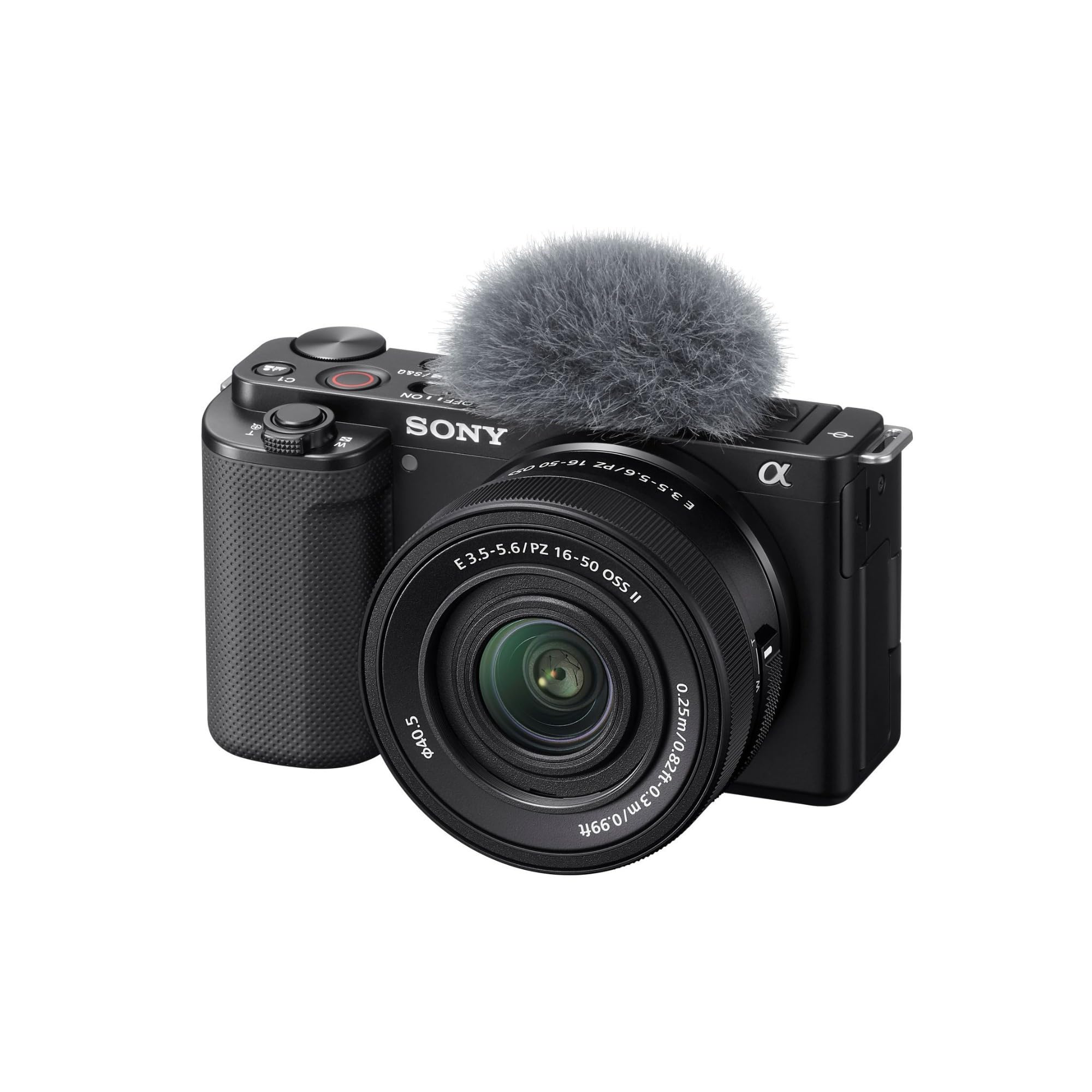
A video-first APS-C camera with 425 phase-detection points that tracks faces and objects instantly.
The Sony Alpha ZV-E10 is a dedicated vlogging tool that shares its 24.2MP APS-C Exmor CMOS sensor with Sony’s higher-end a6000 series, but adds video-specific features like a Product Showcase Setting that transitions focus from your face to an object you hold up — perfect for unboxing or product reviews. The Background Defocus button instantly toggles between a blurred-background effect and a sharp one, and the 4K video is oversampled from 6K with full pixel readout and no pixel binning, which means sharper, more detailed footage than typical 4K. With 425 phase-detection autofocus points, the ZV-E10 tracks subjects across the entire frame with the same speed as Sony’s much more expensive models — a 0.02-second lock time that buyers praise as easy.
Buyers call it a great versatile camera with lots of versatility in the presets, easy to get started, and note the kit lens is also amazing for included glass. The trade-off for this price is that the body lacks a built-in flash (only a hotshoe), and the kit lens, while decent, is not exceptional in low light. Live streaming requires just a single USB cable with no extra hardware — a nice bonus for creators who broadcast to social media.
Video-first features
- 425 phase-detection AF points for instant, reliable face and object tracking
- 4K oversampled from 6K — sharper video than typical 4K without pixel binning
- Product Showcase Setting and Background Defocus button designed for creators
- Easy USB live streaming without extra hardware
No-flash compromise
- No built-in flash — relies on the hotshoe for external flash only
- Kit lens, while good, is not a low-light performer
- Battery life is adequate for short sessions but bring spares for extended video
Buy it for: Vlogging, live streaming, and content creation where fast autofocus and 4K video quality are the priority over stills.
Choose a different body if: You shoot mostly still photography without regard to video — you are paying a premium for vlogging features you may not use.
7. Canon EOS RP Full-Frame Mirrorless Camera with RF24-105mm F4-7.1 IS STM Lens

The cheapest way to get a full-frame sensor — and the low-light and depth-of-field benefits that come with it.
The Canon EOS RP is the most affordable full-frame mirrorless camera on the market, and that full-frame sensor (larger than APS-C) delivers noticeably better low-light performance, more natural background blur, and finer detail than any APS-C or Micro Four Thirds camera at this price. The bundled RF24-105mm F4-7.1 IS STM lens offers Optical Image Stabilization at up to 5 stops of shake correction, and the versatile 24-105mm zoom range covers wide landscapes to portrait-length telephoto. The compact, lightweight body makes it easy to carry for traveling and vlogging, and buyers who upgraded from Canon DSLRs report the electronic viewfinder and flip screen are excellent.
Buyers describe it as a fantastic way to get into full frame while staying affordable, noting that photos have more depth and fine detail than APS-C alternatives, and that the face-detection AF works well for video. The kit lens is good value but edges are soft — sharpest at f/8+ — and this is not a camera for fast sports or birds-in-flight. The 4K video has limitations (pixel binning, crop), and the battery is fine for a day out if you carry one spare, according to owners.
Full-frame payoff
- Full-frame sensor for superior low-light performance and shallower depth of field
- 24-105mm kit lens with 5-stop optical stabilization covers wide to telephoto
- Compact and lightweight for a full-frame body — easy travel companion
- Excellent face-detection autofocus for video and portraits
Kit lens reality
- Kit lens shows soft edges — sharpest results require stopping down to f/8 or beyond
- 4K video uses pixel binning with crop; not as sharp as APS-C rivals
- Not designed for fast action or wildlife photography
- Battery life is adequate but not exceptional; carry a spare
Who it serves: Enthusiasts who want the look of full-frame images — the depth, the low-light clarity, the background separation — but cannot justify spending two or three times more.
Who it disappoints: Video creators expecting clean 4K or action shooters needing fast burst rates — the RP is a stills-first full-frame gateway, not a sports or cinema body.
8. Sony Alpha a6400 Mirrorless Camera with E PZ 16-50mm f/3.5-5.6 OSS II Lens

A 0.02-second autofocus lock and 11 fps continuous shooting that gives you speed on a budget.
The Sony Alpha a6400 is built for speed. Its 24.2MP APS-C Exmor sensor with a front-end LSI (a dedicated processing chip) delivers lightning-fast autofocus at 0.02 seconds with Real-Time AF and object tracking, and with 425 phase-detection points, it locks onto subjects anywhere in the frame almost instantly. You can shoot up to 11 fps continuous shooting at full 24.2MP RAW resolution with AF and AE tracking — meaning that running child, leaping dog, or fast-moving athlete stays sharp frame after frame. The 4K movie recording uses 2.4x oversampling with full pixel readout and no pixel binning, so your video looks crisp and detailed.
Buyers describe the quality of images and videos as amazing, with one mentioning they compared this to the Canon GX7 and found the a6400 much better quality. The battery life is described as okay for photos, but buyers recommend multiple batteries for video. The kit lens (E PZ 16-50mm f/3.5-5.6 OSS II) is decent but the same plastic-bodied zoom that many owners swap for a sharper prime. The 180-degree tiltable 3-inch touchscreen helps for self-recording, but the screen flips up behind the hotshoe, which can block an external mic.
Speed advantage
- 0.02-second autofocus lock with Real-Time AF and object tracking
- 11 fps burst shooting with full AF/AE tracking — best speed in this price tier
- 425 phase-detection points for reliable subject tracking across the frame
- 4K video with 2.4x oversampling for sharp, detailed footage
Ergonomic quibbles
- Screen flips up behind the hotshoe — blocks a top-mounted external microphone
- Kit lens is mediocre; budget for a better lens to unlock the sensor’s potential
- Battery life is adequate for photos but insufficient for extended video work
It is your pick if: You photograph fast action — sports, pets, kids — and need the fastest autofocus and burst rate available at this price.
Consider another if: You are a vlogger who wants to use an external microphone — the screen placement behind the hotshoe creates an awkward interference.
9. FUJIFILM X-T30 III Mirrorless Camera Body with XC13-33mm Lens Kit, Silver
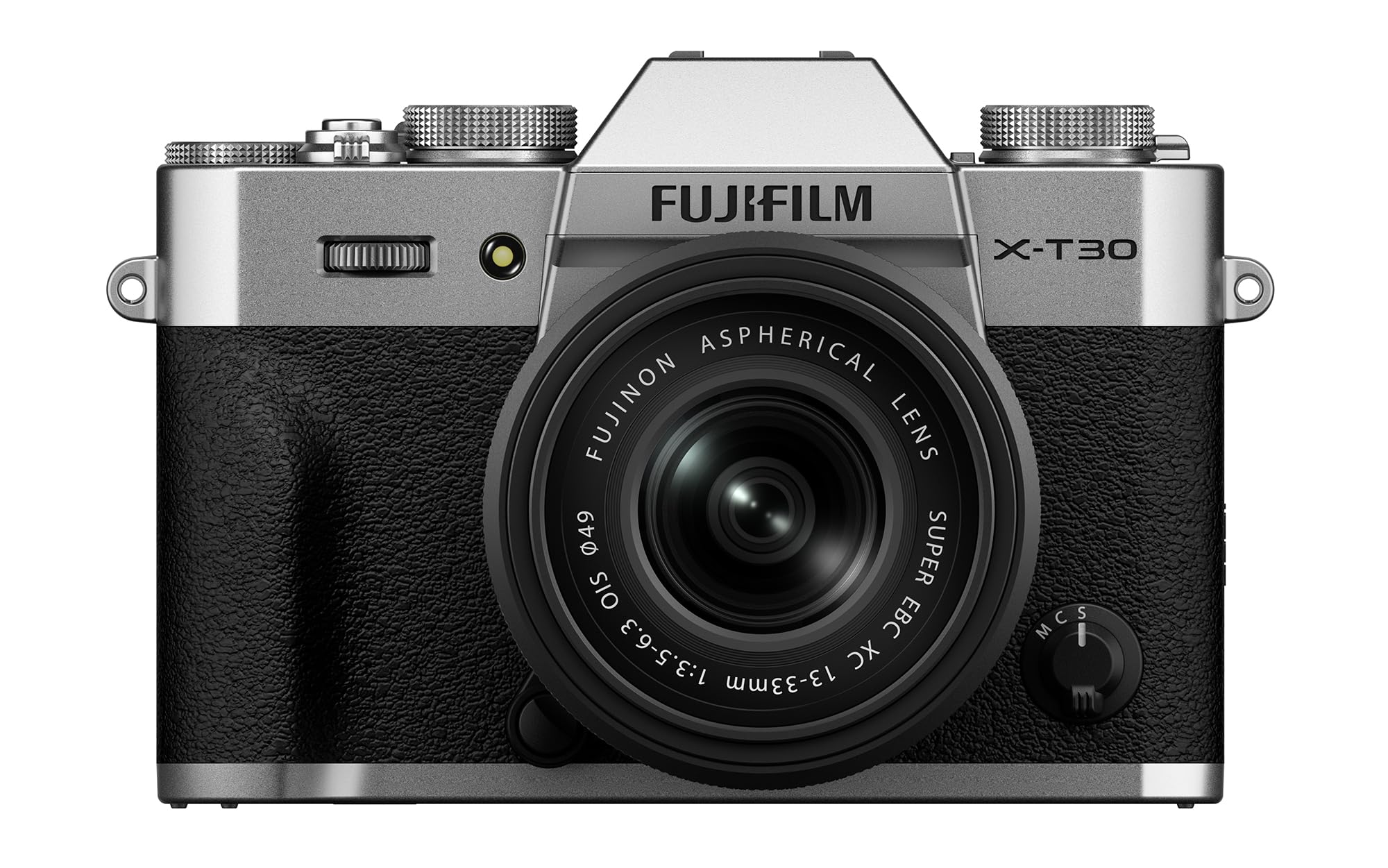
A compact silver body that gives you 20 film simulations and AI-powered autofocus in a retro package.
The FUJIFILM X-T30 III offers something no other camera on this list can: 20 built-in Film Simulations that let you dial in a specific look — like Astia for soft, natural skin tones or Velvia for vivid landscapes — without needing to edit a single photo afterward. The 26.1MP APS-C sensor is paired with AI-powered subject detection autofocus that recognizes and tracks faces, eyes, animals, and even vehicles, so your focus stays sharp without manual intervention. The camera body is remarkably compact with a timeless design, and the new FUJINON XC13-33mmF3.5-6.3 OIS kit lens adds optical stabilization for steady handheld shots.
Buyers rave about the excellent image quality and beautiful colors/skin tones straight out of camera, calling it amazing for family photos and travel. The big catch is that the X-T30 III has no in-body image stabilization — it relies entirely on the lens stabilization — and the kit lens is slow in low light at f/3.5-6.3. There is no included charger, the battery drains quickly (buyers strongly recommend backups), and the camera has a major learning curve for beginners despite its Auto mode.
Color science magic
- 20 built-in Film Simulations produce gorgeous, ready-to-share colors without editing
- AI-powered subject detection AF tracks faces, eyes, animals, and vehicles
- Beautiful compact retro design in silver that stands out from black plastic bodies
- 13-33mm kit lens starts wider than most kit lenses for better landscape framing
Missing stabilization
- No in-body image stabilization — handheld shots in low light risk blur
- Kit lens is slow in low light; upgrade to a faster prime is almost necessary
- Battery drains quickly — buyers strongly recommend carrying multiple spares
- No charger included in the box; substantial learning curve for total beginners
Reach for it if: You love getting great-looking photos straight out of camera without editing — the film simulations are genuinely a creative superpower.
Look elsewhere if: You shoot a lot of indoor or evening handheld shots — the lack of IBIS and the slow kit lens mean you will struggle in dim conditions without a tripod or fast prime.
Understanding the Specs
Sensor Size: APS-C vs Micro Four Thirds
The sensor is the light-capturing chip inside the camera. A larger APS-C sensor (found in Canon, Sony, and Fujifilm models) collects more light per pixel than a smaller Micro Four Thirds sensor (found in Panasonic and OM SYSTEM models). This means APS-C cameras generally produce cleaner photos in dim light and can create a softer, more blurred background behind your subject — a look most photographers want. Micro Four Thirds cameras are still far better than any phone, and they allow for smaller, lighter bodies and lenses, but you will see more image noise in evening or indoor shots. The specific sensor resolution in megapixels (16MP vs 20MP vs 24.1MP vs 26.1MP) determines how much fine detail you can capture and how large you can print — more megapixels also gives you more room to crop a photo without losing sharpness.
Autofocus Points: What They Mean for You
Autofocus (AF) points are the tiny focus sensors spread across the camera’s imaging area. More AF points means the camera can detect and lock focus on a moving subject across a wider portion of the frame. Basic cameras might have 49 contrast-detection points (the Panasonic G85), which work fine for still subjects but will struggle to keep a running child or pet in focus. Higher-end cheap mirrorless cameras have 425 phase-detection points (the Sony ZV-E10 and a6400), which cover almost the entire frame and track movement smoothly. In between, 121 to 205 points (like the OM SYSTEM E-M10 Mark IV or Panasonic G100) give a good balance for general photography. For this category, look for at least 143 phase-detection points and face or eye tracking if you photograph people.
FAQ
Is a used or renewed cheap mirrorless camera worth buying?
What is the 20-minute video recording limit and which models have it?
Which sensor size is better for low-light photography: APS-C or Micro Four Thirds?
Do I need to buy extra lenses right away?
What does in-body image stabilization (IBIS) do and do I need it?
Which cheap mirrorless camera has the best autofocus for tracking moving subjects?
Can I use my existing Canon or Nikon DSLR lenses on these cameras?
How many megapixels do I actually need?
Why do some cameras have a crop in 4K video mode?
What is the typical battery life of a cheap mirrorless camera and how do I manage it?
Can I use these cameras as a webcam for streaming or video calls?
Final Thoughts: The Verdict
For most people, the cheap mirrorless camera winner is the Canon EOS R100 because it delivers the best combination of 24.1MP APS-C image quality, reliable Dual Pixel autofocus, and the smallest EOS R body — all at a price that leaves room for better glass. If you want the best autofocus speed for tracking action, grab the Sony Alpha a6400 with its 425-point AF and 11 fps burst rate. And for beautiful colors straight out of camera with no editing required, the standout is the FUJIFILM X-T30 III and its 20 film simulations.
How We Picked
We do not accept paid placement, and we did not hands-on test every unit. Instead, we match each pick to a real buyer and use-case by comparing the manufacturers’ published specifications against the patterns in verified customer reviews — so you get each pick’s real strengths and trade-offs instead of marketing copy.
Sources & Methodology
Specifications: manufacturer listings and product documentation. Review insights: verified customer reviews, as of July 2026. Pricing: not shown on this page (it changes often); check the current price via the retailer link.
As an Amazon Associate, WellFizz earns from qualifying purchases. This does not affect which products we feature.

Mo Maruf
I created WellFizz to bridge the gap between vague wellness advice and actionable solutions. My mission is simple: to decode the research and give you practical tools you can actually use.
Beyond the data, I am a passionate traveler. I believe that stepping away from the screen to explore new environments is essential for mental clarity and physical vitality.