Our readers keep the lights on and my smoothie glass nicely filled. As an Amazon Associate, I earn from qualifying purchases.
That hollow echo of a headset mic or the dull hum of a cheap desktop mic ruins callouts, clutches, and streaming moments. A dedicated microphone specifically for gaming solves this by focusing on your voice and rejecting the room noise that costs you the round. The right budget-friendly model delivers clear, crisp audio that makes your teammates actually hear you, not the mechanical keyboard or the fan in the background.
I’m Mohammad Maruf — the founder and writer behind WellFizz. I’ve spent countless hours analyzing technical specifications, reading real user feedback, and comparing the audio performance of dozens of gaming microphones to find the ones that deliver real value without forcing you to spend a ton.
This guide cuts through the marketing noise and focuses on the models that actually work for competitive play, casual chatting, and streaming. Read on to find my top picks for a cheap microphone for gaming that won’t let you down in the heat of battle.
How To Choose The Best Cheap Microphone For Gaming
Choosing a gaming microphone at a lower price point means knowing where to focus your attention. You want clear vocal reproduction and effective noise rejection, not a bunch of flashy features that compromise the core job.
Pickup Pattern: Cardioid vs. Supercardioid
The pickup pattern determines what sound the microphone captures. A cardioid pattern, shaped like a heart, primarily picks up sound from the front and rejects noise from the sides and rear. This is ideal for a desktop setup where your keyboard and mouse sit to the sides. A supercardioid pattern is even tighter, focusing more directly on your voice and rejecting more ambient room noise, which is better for louder environments.
Capsule Type: Condenser vs. Dynamic
Condenser microphones are more sensitive and capture a broader range of frequencies. This can make your voice sound vibrant and detailed, but they also pick up more background noise. Dynamic microphones are less sensitive, require you to be closer to the mic, and are much better at rejecting ambient noise like computer fans and air conditioning. For a budget gaming mic in a standard room, a dynamic mic can be the smarter choice.
Critical Features: Mute, Monitoring, and Mounting
Look for a dedicated mute button, ideally a tap-to-mute sensor, so you can silence yourself instantly without fumbling in a game menu. Zero-latency monitoring via a 3.5mm headphone jack lets you hear yourself in real-time, helping you avoid shouting. A flexible boom arm is essential for placing the mic at mouth level, away from desk vibrations, which dramatically improves sound quality compared to a wobbly desktop stand.
Quick Comparison
On smaller screens, swipe sideways to see the full table.
| Model | Category | Best For | Key Spec | Amazon |
|---|---|---|---|---|
| Razer Seiren V3 Mini | Condenser | Compact, clean desk setup | Supercardioid pattern | Amazon |
| HyperX SoloCast 2 | Condenser | High-res 96kHz recording | 24-bit / 96kHz sampling | Amazon |
| ZealSound Podcast Mic | Condenser | Best all-in-one starter kit | Boom arm + tripod included | Amazon |
| TONOR TD510 Air S H+ | Dynamic | AI noise cancellation | XLR + USB outputs | Amazon |
| MAONO PD100X | Dynamic | Software-customizable audio | 24-bit / 48kHz sampling | Amazon |
In‑Depth Reviews
1. Razer Seiren V3 Mini

The Razer Seiren V3 Mini packs a premium-feeling condenser capsule into an ultra-compact design that takes up virtually no desk space. Its supercardioid pickup pattern is tighter than a standard cardioid, which gives it a significant edge in suppressing distracting side noise from typing and mouse clicks. The custom capsule captures excellent detail at higher frequencies, making your voice sound clear and present in Discord or OBS, even if you are not projecting.
This mic is built for simplicity. The tap-to-mute sensor on top is incredibly intuitive—a single tap mutes your audio and the LED indicator changes color so you can see your status at a glance without looking away from the action. The built-in shock absorber effectively dampens vibrations from accidental desk bumps, a common annoyance with budget setups. Its plug-and-play USB-C connection means you are ready to go in seconds, and the Razer Synapse software offers deeper control over sample rates and volume mixes if you want to tweak the sound further.
The main trade-off here is a lack of onboard controls for sensitivity or volume. The included stand is tiltable but fairly short, so a boom arm is a smart upgrade for positioning. For a gamer who wants a sleek, compact mic with a premium feel and a professional mute feature, the Seiren V3 Mini is the gold standard in this price bracket.
Why it’s great
- Excellent voice clarity and detail
- Instant tap-to-mute with clear LED status
- Ultra-compact, space-saving design
Good to know
- No onboard gain or volume knobs
- Short stand; a boom arm is recommended
2. HyperX SoloCast 2
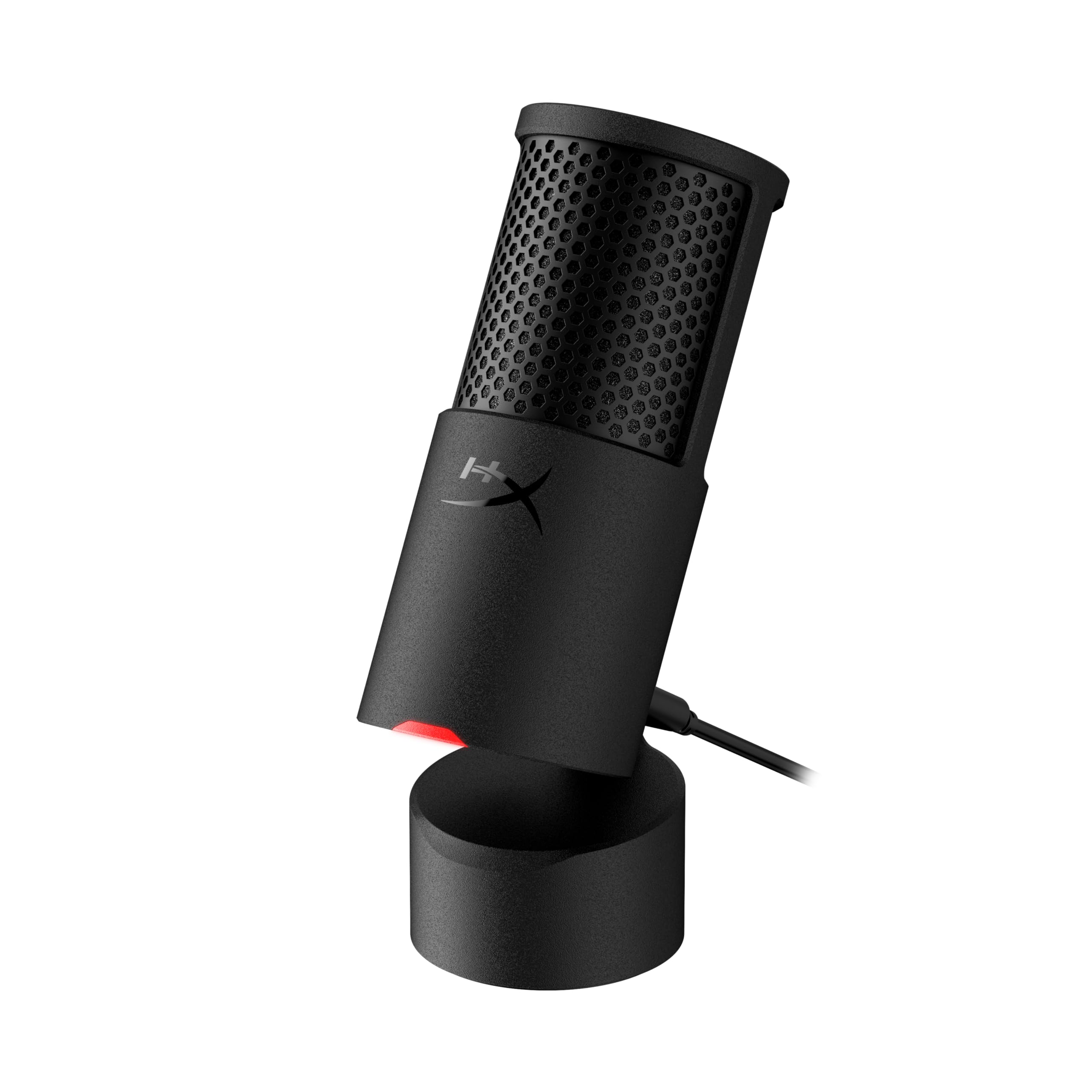
The HyperX SoloCast 2 brings studio-grade recording specs to the budget category with its 24-bit depth and 96kHz sampling rate, a spec usually reserved for much pricier mics. This translates to noticeably richer, more detailed audio that handles the dynamic range of a heated gaming session without distortion. The included internal shock mount and foam pop filter work together to suppress handling noise and plosive sounds, giving you a polished broadcast-ready signal straight out of the box.
Its compact, tiltable stand has a weighted base that keeps it planted on your desk, and the built-in 3/8” and 5/8” threads make attaching a boom arm effortless. The tap-to-mute sensor, with its red LED indicator, is responsive and easy to use mid-session. The plug-and-play USB-C connection works instantly with PC, and the optional HyperX NGENUITY software allows you to apply high-pass, low-pass, and voice enhancement filters, storing the settings directly on the mic for consistent sound.
The one notable design quirk is that the USB-C port on the lower back can feel a bit insecure, potentially disconnecting during desk movement. This isn’t a problem if you mount it on a boom arm and secure the cable. For the gamer who values audio fidelity and wants room to customize their sound signature, the SoloCast 2 is a remarkable value.
Why it’s great
- Excellent 24-bit / 96kHz audio quality
- Built-in pop filter and shock mount
- Customizable audio filters via NGENUITY software
Good to know
- USB-C port placement can be loose on desktop
- No onboard gain control
3. ZealSound Podcast Microphone

The ZealSound Podcast Microphone is the ultimate starter bundle for anyone getting into PC gaming or streaming because it comes with everything you actually need: a 30.8-inch scissor boom arm, a foldable tripod stand, a shock mount, and a pop filter. This alone provides a superior positioning advantage over most budget mics, letting you place the cardioid capsule at mouth level and away from desk vibrations for a much cleaner signal. The 96kHz sampling rate captures enough vocal detail for crystal-clear Discord calls and Twitch streams.
This mic excels in user-friendly features. The bottom-mounted gain knob is textured and grippy, letting you adjust levels mid-game without fumbling. The one-touch mute button activates a bright red RGB indicator, clearly showing when you are hot or cold to avoid embarrassing moments. Zero-latency monitoring via the 3.5mm headphone jack is a fantastic inclusion at this price point, enabling you to hear your own voice in real-time to pace your callouts and prevent shouting. The RGB lighting with multiple color modes adds visual flair to your setup.
The trade-off is that the build quality is predominantly ABS plastic, which feels a bit less substantial than the all-metal alternatives. The included boom arm is functional but has some reports of the clamp needing careful tightening. For a gamer on a strict budget who wants a complete, ready-to-go setup that sounds great out of the box, the ZealSound is the best value.
Why it’s great
- Complete kit: boom arm, tripod, shock mount, pop filter
- Zero-latency monitoring for real-time feedback
- Bottom-mounted gain knob is easy to adjust
Good to know
- Mainly plastic construction
- Boom arm clamp needs careful setup
4. TONOR TD510 Air S H+
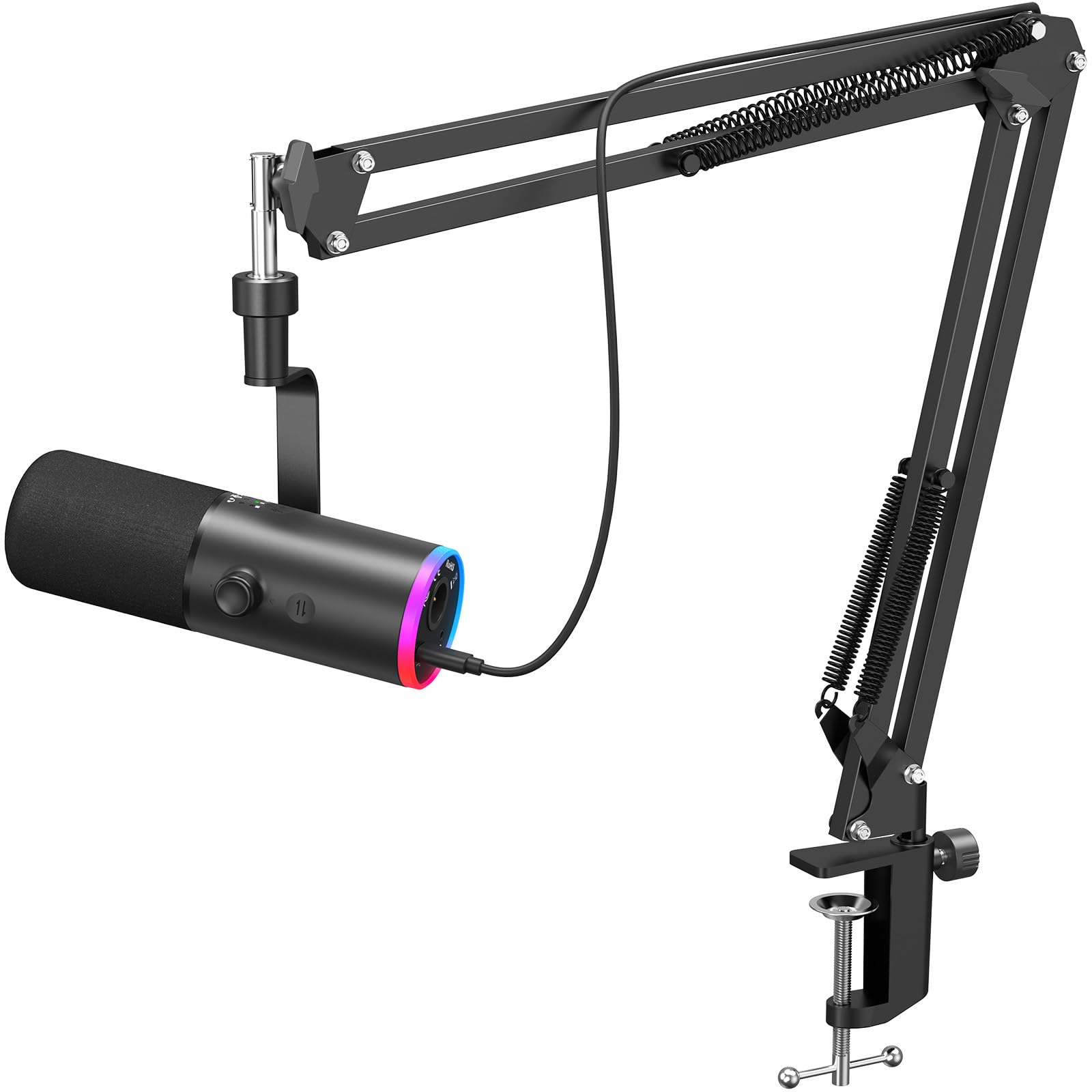
The TONOR TD510 Air S H+ takes a different approach by using a dynamic microphone capsule. This is a deliberate design for gamers in noisy environments. Unlike a sensitive condenser, the dynamic capsule is less responsive to ambient room noise like air conditioning or a rumbling PC, and it requires you to be closer to the microphone. The result is a very focused, intimate vocal sound that cuts through background chaos, making it excellent for competitive callouts in loud spaces.
Its standout feature is the triple AI noise cancellation, which uses software processing to further strip away extraneous noise. The dual USB and XLR outputs future-proof your setup, allowing you to upgrade to a mixer or audio interface later. The mic also has controllable RGB lighting to match your gaming aesthetic, and a 3.5mm headphone jack for monitoring. The included boom arm is sturdy, though some users note the arm itself is a bit bulky and needs correct positioning for optimal sound.
While the AI noise cancellation is impressive, the physical mute button and hardware controls have a basic feel. The dynamic nature means you will need to stay close to the mic for consistent levels, which is something to consider if you tend to lean back. For the gamer who prioritizes background noise rejection above all else and sees an XLR upgrade in their future, the TD510 is a compelling choice.
Why it’s great
- AI noise cancellation is very effective
- Dynamic capsule rejects ambient room noise
- USB and XLR connectivity for future upgrades
Good to know
- Requires close proximity to the mic
- Boom arm is a bit bulky
5. MAONO PD100X

The MAONO PD100X is a dynamic microphone that focuses on delivering detailed, warm audio through its custom cardioid capsule. With a 24-bit/48kHz sampling rate, it claims to improve sound details by 50% over comparable 16-bit mics, and real-world use confirms its clear, room-filling vocal quality. The double noise cancellation, a combination of the dynamic mic core and a self-developed algorithm, is adjustable through MAONO’s software, letting you dial in the exact level of ambient rejection needed for your room.
Its dual USB/XLR connectivity offers versatility for beginners and serious creators. The USB connection is truly plug-and-play for gaming and chatting, while the XLR option allows for integration with a professional audio interface. The exclusive customizable RGB lighting, with 3 modes and 8 colors, can be controlled via the onboard button or the MaonoLink software, adding a personalized aesthetic. The 2-in-1 smart knob lets you control gain or monitoring volume, and the tap-to-mute feature is responsive and reliable.
It is worth noting that the XLR connection disables the RGB lights, mute button, and headphone monitoring. This is a typical trade-off at this price point. Also, while the software offers deep control, some users find the interface less polished than major competitors. For the gamer or streamer who wants granular control over their sound profile and loves custom lighting, the PD100X is a strong entry-level option with room to grow.
Why it’s great
- Adjustable noise cancellation via software
- Versatile USB and XLR connectivity
- Detailed, warm vocal sound
Good to know
- XLR mode disables mute and RGB
- Software interface is basic
FAQ
Will a cheap USB gaming mic sound better than my headset mic?
Is a dynamic mic or a condenser mic better for gaming?
Do I need a boom arm for a cheap gaming microphone?
Final Thoughts: The Verdict
For most users, the cheap microphone for gaming winner is the Razer Seiren V3 Mini because it delivers incredible voice clarity and a seamless tap-to-mute experience in a tiny footprint that fits any desk. If you want studio-grade recording specs and room to customize your sound with software, grab the HyperX SoloCast 2. And for a complete, ready-to-go bundle that includes a boom arm and zero-latency monitoring without any extra purchases, nothing beats the ZealSound Podcast Microphone.

Mo Maruf
I created WellFizz to bridge the gap between vague wellness advice and actionable solutions. My mission is simple: to decode the research and give you practical tools you can actually use.
Beyond the data, I am a passionate traveler. I believe that stepping away from the screen to explore new environments is essential for mental clarity and physical vitality.