Our readers keep the lights on and my smoothie glass nicely filled. As an Amazon Associate, I earn from qualifying purchases.
WiFi dead zones are a modern household frustration — spots where video calls drop, streaming buffers endlessly, and gaming lag ruins the match. A mesh WiFi system solves this by replacing a single router with multiple nodes that blanket your home in a strong, unified signal. The trick is finding a system that delivers reliable performance without breaking the bank.
I’m Mohammad Maruf — the founder and writer behind WellFizz. After spending dozens of hours digging into technical specs, reading hundreds of user reviews, and analyzing the real-world performance of the most popular affordable mesh WiFi systems on the market, I’ve narrowed down the options to the ones that actually deliver.
Every system on this list has been evaluated for speed, coverage, reliability, and ease of setup to help you find the best cheap mesh wifi for your home and your budget.
How To Choose The Best Cheap Mesh WiFi
Selecting an affordable mesh WiFi system requires a balance of coverage, speed, and future-proofing. You don’t need to spend a fortune to eliminate dead zones, but you do need to understand which specs matter for your home.
WiFi Generation: WiFi 5, WiFi 6, or WiFi 7?
Most budget-friendly systems now use WiFi 6, which offers faster speeds, better efficiency with multiple devices, and improved battery life for connected gadgets compared to older WiFi 5. WiFi 7 is the newest standard but commands a premium. For the vast majority of homes with internet plans under 1 Gbps, a quality WiFi 6 mesh system provides all the performance you need.
Coverage and Node Count
Manufacturers often quote maximum square footage, but real-world coverage depends on wall materials, floor plans, and interference. A 2-pack system is typically enough for 2,500–3,500 square feet, while a 3-pack can handle 4,500–6,000 square feet. Look for systems with a dedicated backhaul band or wired Ethernet backhaul support for the most stable performance across nodes.
Ports and Connectivity
Every node should have at least one Gigabit Ethernet port to connect wired devices like game consoles, smart TVs, or desktop PCs. Systems with two or more Gigabit ports per node offer greater flexibility, especially if you plan to use wired backhaul to connect nodes directly to your router for maximum speed.
Quick Comparison
On smaller screens, swipe sideways to see the full table.
| Model | Category | Best For | Key Spec | Amazon |
|---|---|---|---|---|
| TP-Link Deco X55 (2-Pack) | Mid-Range | High-speed WiFi 6 with more ports | AX3000, 3 Gigabit ports per node | Amazon |
| Google WiFi (3-Pack) | Mid-Range | Simple, reliable whole-home WiFi 5 | AC1200, 4,500 sq. ft. coverage | Amazon |
| Amazon eero 6 (3-Pack) | Mid-Range | Alexa integration and Zigbee hub | WiFi 6, up to 500 Mbps internet | Amazon |
| TP-Link Deco X15 (2-Pack) | Budget | Entry-level WiFi 6 at a low cost | AX1500, 2 Gigabit ports per node | Amazon |
| Tenda Nova MX12 (3-Pack) | Budget | Massive coverage for large homes | AX3000, 7,000 sq. ft. coverage | Amazon |
| Linksys Atlas MX2000 (2-Pack) | Mid-Range | Stable mesh with smart roaming | AX3000, 4,000 sq. ft. coverage | Amazon |
| NETGEAR Nighthawk MK72 | Mid-Range | Nighthawk performance in a mesh kit | AX3000, 3,000 sq. ft. coverage | Amazon |
| Tenda BE5100 ME6 Pro (3-Pack) | Premium | WiFi 7 performance with 2.5G port | BE5100, 6,600 sq. ft., 2.5G port | Amazon |
| NETGEAR Orbi 770 (RBE773) | Premium | Ultimate tri-band WiFi 7 speed | Tri-Band WiFi 7, 11 Gbps, 8,000 sq. ft. | Amazon |
In‑Depth Reviews
1. TP-Link Deco X55 (2-Pack)

The Deco X55 strikes an ideal balance for most homes — WiFi 6 AX3000 speeds, coverage up to 4,500 square feet, and three Gigabit Ethernet ports on each node. This extra port count means you can wire a game console, smart TV, or desktop directly to any unit, which is a rare find in this price tier. The AI-driven mesh technology intelligently optimizes the network for your home’s layout, and the Deco app makes setup and management straightforward.
Real-world performance is impressive. Users report significant speed improvements, with one reviewer noting their son’s download speed doubled to 535 Mbps after replacing an older system. Another user in a 4,000-square-foot home saw their wife’s PC speed triple to 145 Mbps, with no buffering on three streaming TVs simultaneously. The system handles up to 150 devices, making it suitable for homes packed with smart gadgets.
TP-Link’s HomeShield provides basic security features including network scanning, parental controls, and QoS at no extra cost. The system is also compatible with all major internet service providers, though a modem is required for most connections. For the price, the X55 offers the best combination of speed, port flexibility, and future-ready WiFi 6 technology.
Why it’s great
- Three Gigabit LAN ports per node for wired devices
- AI-driven mesh optimizes performance automatically
- Supports up to 150 connected devices
Good to know
- Some users report a solar gateway connection issue requiring 2.4 GHz band
- No tri-band backhaul; relies on wired backhaul for best performance
2. Google WiFi (3-Pack)

The original Google WiFi system remains a benchmark for simplicity and reliability, especially for those who don’t need the absolute latest WiFi standard. This 3-pack covers up to 4,500 square feet with AC1200 dual-band WiFi, and Network Assist technology automatically steers devices to the clearest channel and fastest band. Setup is famously easy via the Google Home app, and the system integrates seamlessly with Google’s ecosystem.
Long-term user reports are overwhelmingly positive. One reviewer reported consistent strong signal throughout their home and yards over 18 months, outperforming a previous Linksys system. Another user with thick walls and aluminum siding found that two units provided solid coverage for their 1,200-square-foot home, with only the garage requiring a PowerLine adapter. Speeds routinely matched or exceeded their paid internet plan.
The trade-off with Google WiFi is that it uses WiFi 5 technology, so its maximum speed per node is lower than newer WiFi 6 systems. Advanced users may also miss features like VLAN support or extensive manual controls. However, for straightforward whole-home coverage that just works without fuss, this system is still a top contender among affordable options.
Why it’s great
- Exceptionally easy setup via the Google Home app
- Proven long-term reliability over years of use
- Network Assist automatically optimizes channel/band selection
Good to know
- Only one Gigabit Ethernet port per node
- WiFi 5 limits maximum speed compared to newer standards
3. Amazon eero 6 (3-Pack)

The eero 6 is Amazon’s answer to whole-home WiFi, and it stands out for its built-in Zigbee smart home hub, which lets you connect and control compatible smart devices directly through Alexa — no separate hub required. This 3-pack covers up to 4,500 square feet and supports internet plans up to 500 Mbps, making it an excellent choice for homes already invested in the Amazon ecosystem.
Users highlight the straightforward setup process via the eero app and the system’s ability to eliminate dead zones. One reviewer in a 6,000-square-foot home reported full coverage with the base unit plus two extenders, even reaching an outdoor camera in the garage. Another noted that the system pays for itself within six months compared to renting a router from their ISP. The seamless roaming ensures devices stay connected without dropping or needing to switch networks.
The eero 6 is compatible with all major ISPs and receives automatic updates to keep the network secure. The main limitation is that it caps out at 500 Mbps, so it’s not ideal for gigabit internet plans. But for homes with typical broadband speeds, this system delivers reliable, easy-to-manage mesh WiFi with the added bonus of smart home integration.
Why it’s great
- Built-in Zigbee hub for easy Alexa smart home control
- Very easy setup with the eero app
- Automatic firmware updates enhance security and performance
Good to know
- Limited to internet plans up to 500 Mbps
- Only two Ethernet ports on the main router unit
4. TP-Link Deco X15 (2-Pack)

The Deco X15 is the most affordable WiFi 6 mesh system that still delivers real performance. With AX1500 speeds (1,201 Mbps on 5 GHz, 300 Mbps on 2.4 GHz) and coverage up to 3,900 square feet from just two units, it’s an ideal entry point for homes tired of WiFi dead zones. Each node includes two Gigabit Ethernet ports, enabling wired backhaul for maximum stability.
User feedback is strong. One reviewer in a two-story house with signal-blocking obstacles solved all their WiFi issues using wired backhaul via coax adapters. Another in a smaller 1,100-square-foot home reported full coverage from just a single unit in the kitchen. The AI-powered roaming technology helps devices stay on the best node as you move around the house, and the Deco app makes setup a breeze.
The X15 also includes basic HomeShield security features at no extra cost. However, one reviewer noted that TP-Link discontinued firmware updates for this model shortly after their purchase, which is worth considering for long-term security. Still, for the price, this system gets you into the WiFi 6 mesh game with solid coverage and wired backhaul support.
Why it’s great
- Lowest cost entry to WiFi 6 mesh networking
- Two Gigabit ports per node for wired devices/backhaul
- AI-powered roaming for seamless device switching
Good to know
- Firmware updates reportedly discontinued for this model
- AX1500 speeds are lower than faster WiFi 6 options
5. Tenda Nova MX12 (3-Pack)
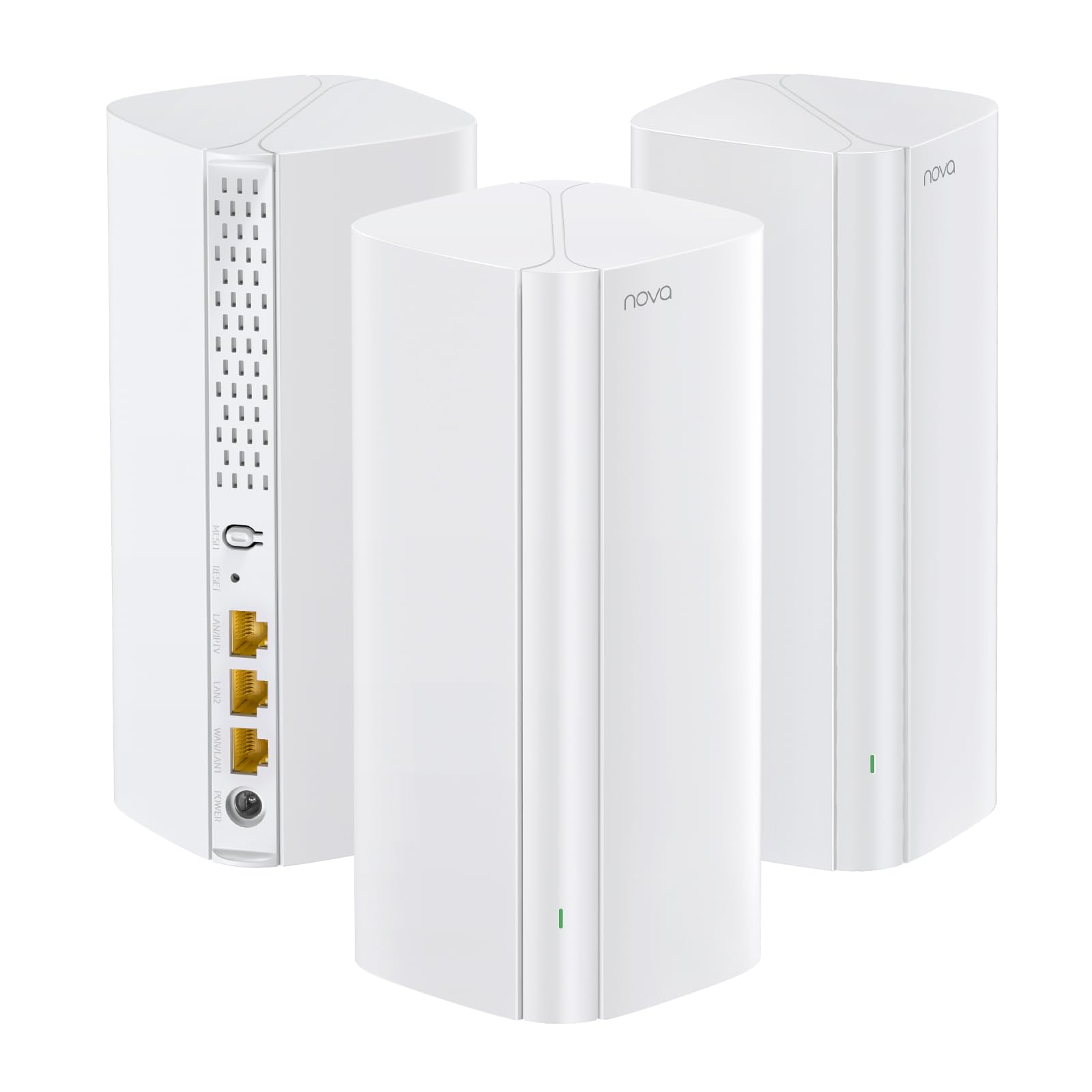
The Tenda Nova MX12 delivers the most square footage per dollar of any system on this list. This 3-pack covers up to 7,000 square feet with AX3000 dual-band WiFi 6, making it a strong contender for larger homes, open floor plans, or properties with challenging layouts. The system supports up to 160+ devices using MU-MIMO and OFDMA technology, and each node features two Gigabit Ethernet ports.
Users report strong, consistent signals across multiple levels and even outdoors. One reviewer achieved full bars and great speed across a big, two-floor house and into the backyard. Another noted the intuitive web GUI and app interface, praising the value for the money. Setup can be done via the app or browser without needing to create an account, which privacy-conscious users will appreciate.
There are some significant caveats. A reviewer reported that Ethernet backhaul did not function properly in their setup, and customer support was unresponsive. Another user had a defective unit that was replaced by Tenda through Amazon after some delay. The quality control and support experience seem inconsistent, so be prepared for potential troubleshooting. If you get a working unit, the coverage-to-price ratio is unmatched.
Why it’s great
- Enormous 7,000 sq. ft. coverage from a 3-pack
- Supports 160+ devices with MU-MIMO and OFDMA
- Browser-based setup available without required account
Good to know
- Ethernet backhaul may not work reliably in some setups
- Inconsistent customer support and quality control
6. Linksys Atlas MX2000 (2-Pack)

The Linksys Atlas MX2000 uses a Qualcomm chipset to deliver stable WiFi 6 performance with intelligent mesh technology that dynamically maximizes speed. This 2-pack covers up to 4,000 square feet and supports 50+ devices, making it well-suited for medium-to-large homes. Each node features two Gigabit Ethernet ports, and the system supports seamless roaming for smooth transitions between points.
Reviews highlight the system’s excellent range and reliability once it’s set up. One user reported blazing fast coverage from their sidewalk to the waterfront after upgrading from an older Linksys system. Another mentioned that the auto firmware updates are a major plus for keeping the network secure without manual intervention. Setup via the Linksys app is generally straightforward, though some users encountered an initial app setup bug that required a manual reset procedure.
The Atlas MX2000 includes parental controls and a separate guest network feature for added privacy. One minor drawback is that some users had to reconnect smart devices after switching to the new mesh network, even when using the same SSID and password. Overall, this is a solid mid-range system with strong performance and good security features out of the box.
Why it’s great
- Qualcomm chipset delivers excellent stability and low latency
- Automatic firmware updates for hassle-free security
- Strong range that extends to yard and outdoor areas
Good to know
- Initial app setup may require a manual reset procedure
- Some smart devices need to be reconnected after migration
7. NETGEAR Nighthawk MK72

The Nighthawk MK72 brings NETGEAR’s gaming-centric pedigree into the mesh world, offering AX3000 WiFi 6 speeds and coverage up to 3,000 square feet from a router and one satellite. It includes a 30-day trial of NETGEAR Armor software, which provides automatic security for all connected devices and a VPN for added privacy. The Nighthawk app makes setup and management straightforward.
Users generally praise the system for eliminating dead zones and providing strong, fast connections for 4K streaming and gaming. One reviewer noted that range extenders failed to reach their garage cameras, but the Nighthawk mesh handled it perfectly. However, some users experienced significant issues. One reported random WiFi disconnections across all devices after two months of flawless operation, which persisted despite extensive troubleshooting.
Setup can be frustrating for some, particularly if your modem requires bridge mode configuration. Another reviewer noted that WPA3 security is enabled by default, which may cause older devices to fail to connect until they are replaced. The system’s long-term reliability appears to be a mixed bag, so it may not be the best choice for users who want a completely set-it-and-forget-it experience.
Why it’s great
- NETGEAR Armor provides real-time security and VPN
- Strong performance for gaming and 4K streaming
- Easy app-based setup for most users
Good to know
- Some units experience random disconnections after a few months
- Setup may require modem bridge config knowledge
- WPA3 can cause compatibility issues with older devices
8. Tenda BE5100 ME6 Pro (3-Pack)
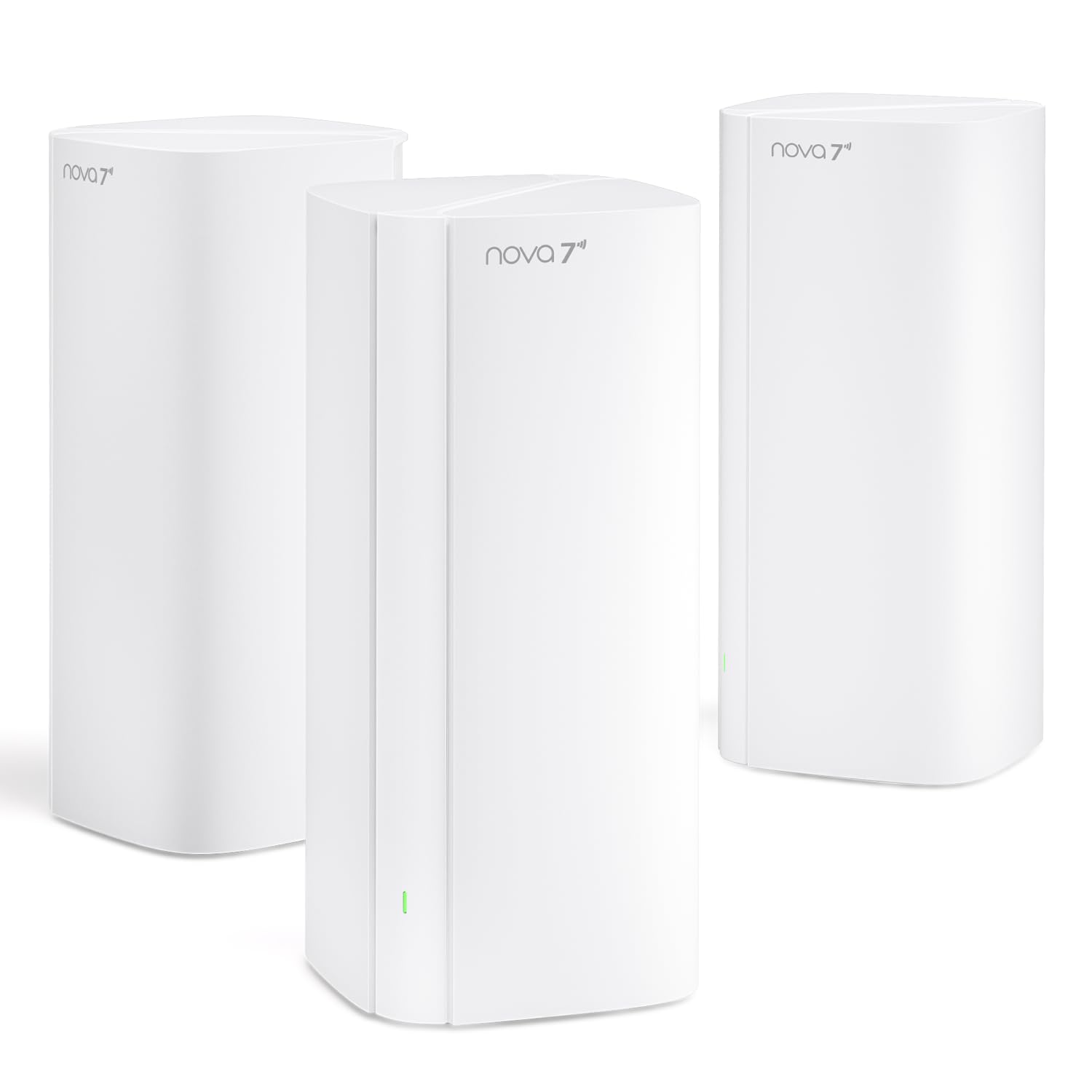
The Tenda ME6 Pro is one of the most affordable ways to get WiFi 7 technology in your home. This 3-pack covers up to 6,600 square feet with dual-band speeds up to 5,011 Mbps — nearly 60% faster than WiFi 6 in ideal conditions. It features a 2.5G auto-sensing WAN/LAN port for high-speed broadband or NAS connections, plus Multi-Link Operation (MLO) that combines bands for lower latency and better throughput.
Users upgrading from older mesh systems notice a significant improvement. One reviewer moved from a Tenda Nova MW6 and reported getting 600–800 Mbps on a 900 Mbps plan, with simple setup and smooth roaming. Another user with a large, old house solved their Wi-Fi calling issues by replacing three individual routers with the ME6 Pro mesh. The system handles 160+ devices thanks to MU-MIMO and OFDMA.
The biggest concern with this system is customer support. Multiple reviewers report a complete lack of response from Tenda when they encountered issues. One user was unable to get the system working after a month and was past the return window. If you’re comfortable with self-troubleshooting, the hardware is impressive for the price, but the support risk is real.
Why it’s great
- First WiFi 7 mesh at a budget-friendly price point
- 2.5G port for multi-gig internet or wired backhaul
- MLO reduces latency for gaming and streaming
Good to know
- Customer support is reportedly unresponsive
- Setup issues may be difficult to resolve without help
9. NETGEAR Orbi 770 (RBE773)

For buyers who want absolute top-tier performance and have the budget to match, the Orbi 770 is the strongest system on this list. It uses tri-band WiFi 7 with a dedicated backhaul band, delivering speeds up to 11 Gbps and coverage up to 8,000 square feet for up to 100 devices. The router and two satellites each feature 2.5 Gigabit Ethernet ports, making this a true multi-gig mesh system.
User reviews are overwhelmingly positive. One reviewer with over 105 devices reported the system handled everything perfectly, including outdoor devices. Another praised the rock-solid stability after replacing an erratic ISP router, noting predictable speeds in every corner of the house. Setup is easy via the Orbi app, and the 360° antenna design ensures strong coverage regardless of home layout.
The Orbi 770 is considerably more expensive than every other system here, but it’s the only one offering true tri-band WiFi 7 with a dedicated backhaul. This means no speed loss between nodes, even during heavy use. If you have a multi-gig internet plan, a very large home, or a high device count, the Orbi 770 is the most future-proof option available — though it’s far from the cheapest mesh WiFi system.
Why it’s great
- Tri-band WiFi 7 with dedicated backhaul for full-speed mesh
- Massive 8,000 sq. ft. coverage with 100-device support
- 2.5G Ethernet ports for multi-gig wired connections
Good to know
- Highest price point by a wide margin
- Wired backhaul may be unstable over older Cat5e cable
- Limited advanced features for the premium price
FAQ
What is the difference between a mesh WiFi system and a traditional router plus extender?
Can I use a cheap mesh WiFi system with a gigabit internet plan?
How many mesh nodes do I actually need for my home?
Is wired Ethernet backhaul worth the extra effort with a budget mesh system?
Final Thoughts: The Verdict
For most users, the best cheap mesh wifi winner is the TP-Link Deco X55 2-Pack because it delivers true AX3000 WiFi 6 speeds, three Gigabit Ethernet ports per node for wired backhaul and devices, and reliable AI-driven mesh optimization — all at a price that undercuts much of the competition. If you want the ultimate in simplicity and proven long-term reliability, grab the Google WiFi 3-Pack. And for massive coverage on an even tighter budget, nothing beats the Tenda Nova MX12 3-Pack for sheer square footage per dollar.

Mo Maruf
I created WellFizz to bridge the gap between vague wellness advice and actionable solutions. My mission is simple: to decode the research and give you practical tools you can actually use.
Beyond the data, I am a passionate traveler. I believe that stepping away from the screen to explore new environments is essential for mental clarity and physical vitality.