Our readers keep the lights on and my smoothie glass nicely filled. As an Amazon Associate, I earn from qualifying purchases.
The high price tag on prescription hearing aids locks out millions of people who simply need a conversation with their grandchild or to hear the TV without blasting the volume. The market is now flooded with affordable amplification devices, but separating a genuine hearing solution from a cheap squeal-box requires more than looking at the price. You need to understand channel count, feedback suppression, and fit, because a device that whistles every time you chew is useless no matter how little it costs.
I’m Mohammad Maruf — the founder and writer behind WellFizz. Over the last few years, I’ve analyzed dozens of affordable hearing amplifiers, cross-referencing technical datasheets with real-world user experiences to pinpoint the devices that actually deliver on their promise of clear sound.
Whether you are helping a parent or yourself, this guide cuts through the marketing noise to reveal the best cheap hearing aids that provide genuine speech clarity and comfort without forcing you to spend a month’s rent.
How To Choose The Best Cheap Hearing Aids
Selecting a budget-friendly hearing aid is a balancing act between cost and core performance. Here are the critical factors to consider before adding a device to your cart.
Channel Count & Digital Signal Processing
A hearing aid’s digital channels function like equalizer bands, allowing the device to amplify specific frequencies without boosting background noise across the board. More channels generally mean finer control over speech clarity in noisy environments. Look for a minimum of 8 to 16 channels in an affordable device; single-channel amplifiers are just loudness boosters that amplify everything, including the hum of a refrigerator.
Feedback Suppression (The Whistle Test)
The high-pitched squeal, or feedback, happens when sound from the speaker leaks out of the ear canal and is re-amplified by the microphone. A good cheap hearing aid uses digital feedback cancellation algorithms to stop this. Physical fit is also crucial: the device must sit deep enough in the canal with the correct ear tip size to create an acoustic seal. A device that offers multiple ear tip sizes is a non-negotiable feature.
Battery Type and Runtime
Traditional disposable batteries (size 10, 13, or 312) can be a hassle for users with dexterity issues. Rechargeable models with a magnetic charging case are far more convenient for daily use. Look for a single charge that lasts at least 10–16 hours of continuous use, with the charging case providing extra top-ups for travel.
Fit, Comfort, and Invisibility
Comfort dictates how long the device stays in the ear. In-the-canal (ITC) and completely-in-canal (CIC) designs are smaller and less noticeable but can be harder to adjust. Behind-the-ear (BTE) models are generally easier to handle but more visible. The material matters too: medical-grade silicone reduces skin irritation during all-day wear.
Quick Comparison
On smaller screens, swipe sideways to see the full table.
| Model | Category | Best For | Key Spec | Amazon |
|---|---|---|---|---|
| Vivtone Xpure 2.0 | Premium | Bluetooth streaming & app tuning | 24 hours battery | Amazon |
| Flaygo 16-Channel | Mid-Range | Smart automatic noise reduction | 110+ hours case | Amazon |
| 3FP Z-129 | Mid-Range | Extended daily wear | 60 hours battery | Amazon |
| UWTLFCE OTC | Mid-Range | Discreet multi-mode switching | 16-channel digital | Amazon |
| JMTINA GM-951 | Value | Simplicity & long case power | 36 hours case | Amazon |
| FADLOG GM-313 | Value | Lightweight BTE comfort | 60 hours case | Amazon |
| Bigprot B0GZ2GDHP6 | Value | AI noise cancellation | 100+ hours case | Amazon |
In‑Depth Reviews
1. Vivtone Xpure 2.0

The Vivtone Xpure 2.0 breaks the mold of what a budget-tier device can do. It is a full OTC hearing aid with a Receiver-in-Canal (RIC) design that minimizes the distortion and feedback that plague cheaper amplifiers. The companion app lets you fine-tune frequency bands with an equalizer that rivals the customization of prescription models, allowing you to dial in clear speech compensation for high-frequency loss or a flat moderate loss profile.
Bluetooth connectivity is a genuine game-changer here. You can stream phone calls and music directly, making it a dual-purpose device for active users. The battery delivers a full day of use with a charge, and the case provides enough reserve power for a week of standby. Users with dexterity challenges will appreciate that the device and case charge in roughly two and a half hours.
While the price is higher than the rest of this list, it delivers prescription-level performance for a fraction of the cost. The learning curve with the app is worth the effort for anyone serious about regaining hearing fidelity. It is the one device in this roundup that has the potential to replace a costly audiologist visit.
Why it’s great
- RIC design provides natural sound with minimal distortion
- Bluetooth streaming for calls and music
- App-based equalizer for precise frequency tuning
Good to know
- Higher price point than basic amplifiers
- Requires a smartphone for full feature access
- Behind-the-ear style is more visible than CIC models
2. Flaygo 16-Channel Hearing Aids

The Flaygo model is engineered for users who want a true set-it-and-forget-it experience. The 16-channel digital chip uses adaptive filtering algorithms to isolate speech from background noise automatically. You do not need to tap a button to switch modes; the device continuously analyzes your acoustic environment and adjusts its processing in real time to enhance conversation clarity.
Battery performance is a standout feature here. The hearing aids themselves run for up to 16 hours per charge, but the portable charging case holds an additional 110+ hours of power. A digital display on the case shows the remaining charge level, so there is no guessing about when you need to plug in. The super-mini CIC design sits deep in the ear canal, making it one of the most discreet options available.
Comfort is addressed with an ergonomic curve and medical-grade silicone materials that reduce pressure points during all-day wear. The automatic feedback suppression system stops the whistle before it starts, provided you use the correct ear tip size. This is a compelling choice for someone with mild to moderate hearing loss who wants smart noise handling without touching a phone app.
Why it’s great
- Automatic noise reduction adapts to your environment
- Case holds over a week’s worth of extra charges
- Nearly invisible CIC design
Good to know
- No Bluetooth connectivity
- Auto mode may not suit all specific hearing loss profiles
- Some users may prefer manual volume control
3. 3FP Z-129 Rechargeable Digital
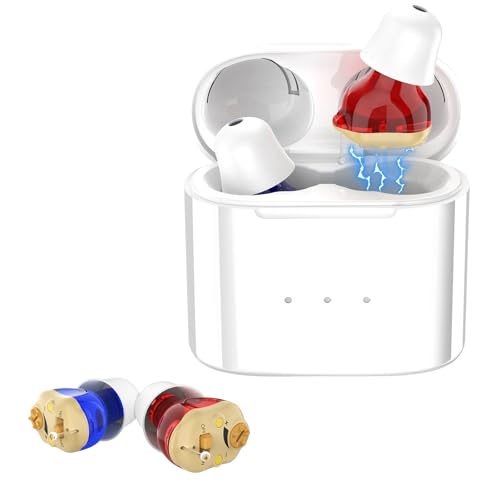
The 3FP Z-129 prioritizes extended wear and simplicity. Its nanoscale micro-design, measuring just 0.63 x 0.92 x 0.45 inches, fits deep in the ear canal and stays hidden during social interactions. Users report that the compact size is genuinely forgettable, making it suitable for users who are self-conscious about wearing a device.
Battery life is a major selling point: a full charge provides up to 60 hours of operation, putting it well ahead of many competitors that require nightly charging. The magnetic charging case supports fast top-ups, so even if you forget to charge overnight, a quick session during breakfast gets you through the day. The sound processing uses a digital chip that intelligently reduces ambient noise, though it operates with fewer channels than the Flaygo model above.
Ease of use is dialed in with an intuitive power switch and a rotary volume knob. This tactile control is ideal for elderly users who struggle with touch-sensitive buttons or app-based controls. The device is best suited for quiet-to-moderate noise environments like the living room or a small gathering, where it provides a natural, smoother conversation experience.
Why it’s great
- 60-hour battery life reduces charging anxiety
- Very small and discreet in-ear fit
- Simple rotary volume control for elderly users
Good to know
- Fewer digital channels than some competitors
- No dedicated multi-mode settings
- Must be turned on after inserting to avoid feedback
4. UWTLFCE OTC Hearing Aids
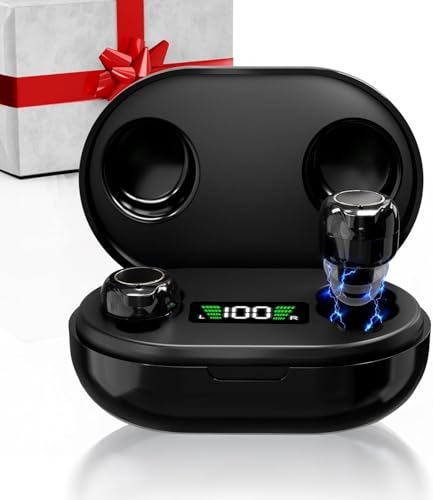
UWTLFCE brings medical-grade accountability with FDA registration, a feature that adds a layer of trust for buyers cautious about uncertified amplifiers. The device offers three distinct scene modes—General, Meeting, and Outdoor—that are cycled through with a simple double tap on the device. This lets you manually tailor the hearing aid’s behavior to your immediate surroundings.
The 16-channel digital processor handles noise reduction effectively, and the ultra-compact in-the-ear design weighs just 3 grams per unit. The included 8 pairs of ear tips help ensure a snug fit to prevent feedback and slippage. Battery life is solid at up to 20 hours per charge, and the charging case packs enough reserve for several additional full recharges.
The user experience is polished: the hearing aids automatically turn on when you remove them from the case and turn off when you place them back. This eliminates fumbling with tiny power buttons. While the sound quality is praised for clarity, some users note the lack of Bluetooth limits its functionality in a world of phone calls and media streaming.
Why it’s great
- FDA-registered for safety assurance
- Three dedicated listening modes for varying environments
- Auto on/off with charging case for convenience
Good to know
- No Bluetooth for phone calls or streaming
- Only 4 volume levels may not suit everyone
- Some users report a minor learning curve for mode switching
5. JMTINA GM-951
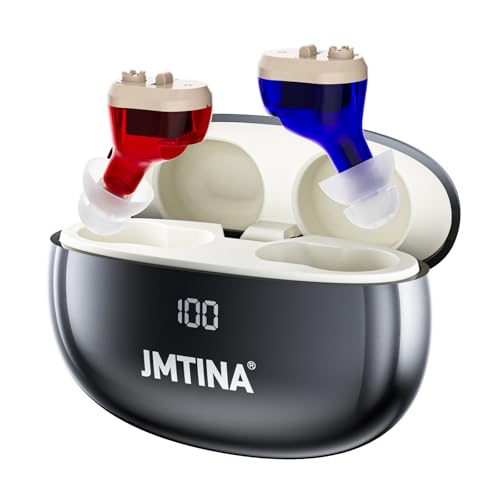
The JMTINA GM-951 strikes a solid balance between price and performance with a strong focus on basic usability. It is FDA registered and offers three customizable sound modes that you can cycle through to match your listening environment. The noise-canceling technology is effective for reducing low-level ambient hum in a home setting.
The charging case provides a total of 36 hours of use, which is adequate for daily wear with a charging routine every couple of days. The invisible CIC design is lightweight, weighing just over 3 ounces for the pair, and the gunmetal gray color helps the device blend with natural skin tones. Users report that comfort is good for all-day wear, and the set does not cause the pressure soreness associated with bulkier models.
Build quality is decent for the price point. The device lacks advanced feedback suppression algorithms, so achieving a silent fit depends heavily on selecting the correct ear tip size. If you get the seal right, it delivers clear sound amplification that has been described as life-altering by users who previously struggled with expensive, uncomfortable prescription units.
Why it’s great
- FDA registered for safety assurance
- Lightweight and discreet CIC design
- Three modes for different environments
Good to know
- Feedback suppression is less advanced than top picks
- 36-hour case is on the shorter side
- No Bluetooth or app connectivity
6. FADLOG GM-313
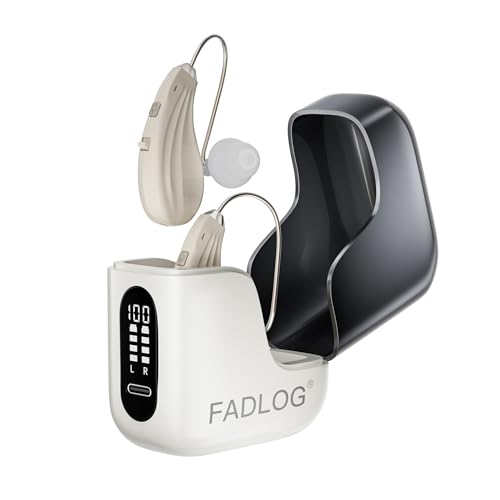
The FADLOG GM-313 takes a different approach with a behind-the-ear (BTE) form factor. BTE devices are generally easier to handle for users with arthritis or limited fine motor skills because the main body sits behind the ear, and a thin tube delivers sound into the ear canal. The GM-313 is lightweight and comes with multiple ear rubber sizes to ensure a comfortable, secure fit.
The charging case delivers an impressive 60 hours of total battery life, meaning you can go several days without thinking about a wall outlet. The three customizable modes allow you to switch between conversation settings, and the single-button controls are straightforward. The device includes color-coded left and right markers, which eliminates the confusion of guessing which aid goes in which ear.
While the BTE design is more visible than CIC models, it offers a more consistent fit and easier cleaning. The noise cancellation is adaptive and works well in moderately noisy environments like a family dinner. It may not match the speech clarity of higher-channel models in very chaotic settings, but for everyday use, it provides reliable amplification at a very accessible price.
Why it’s great
- BTE design is easier to handle and adjust
- 60-hour case reduces charging frequency
- Color-coded aids prevent mix-ups
Good to know
- BTE style is more visible to others
- Less advanced channel processing than CIC competitors
- No automatic mode switching
7. Bigprot B0GZ2GDHP6
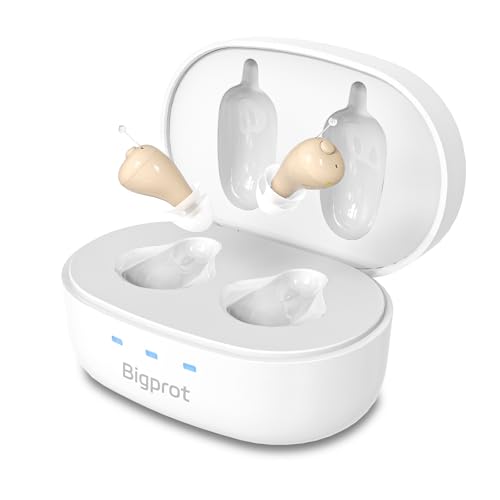
The Bigprot model enters the market with a focus on AI-powered noise cancellation and an extraordinary battery ecosystem. The device itself runs for up to 20 hours per charge, but the included charging case provides four additional full charges, totaling over 100 hours of backup power. This is the longest staying power on our list, ideal for travelers or seniors who dislike frequent charging routines.
The AI noise cancellation is driven by an upgraded smart chip that offers up to 38dB of maximum gain. In practical terms, this means the device can significantly boost speech volume while dynamically suppressing background chatter. The ergonomic, super-mini design uses medical-grade materials to ensure comfort, and the beige color helps the device remain inconspicuous.
Operation is simplified to a single button that handles power, volume, and pairing a phone call. There is no complex app to navigate, making it one of the most senior-friendly options here. Sound quality is described as clear and natural, though the AI processing can occasionally over-suppress certain ambient sounds that the user might want to hear, like a kettle whistle or a doorbell.
Why it’s great
- Over 100 hours of total battery with case
- AI-powered noise cancellation for dynamic environments
- Simple single-button controls
Good to know
- AI may over-filter some important sounds
- No multi-mode or frequency tuning options
- Limited color options (beige only)
FAQ
What’s the minimum channel count I should accept in a cheap hearing aid?
How do I stop my cheap hearing aid from whistling?
Are cheap hearing aids the same as prescription hearing aids?
Is FDA registration important for a budget hearing aid?
Can I use a cheap hearing aid for severe hearing loss?
Final Thoughts: The Verdict
For most users, the best cheap hearing aids winner is the Vivtone Xpure 2.0 because it delivers app-based tuning and Bluetooth streaming without the audiologist price tag. If you want automatic, fuss-free noise cancellation with a massive battery reserve, grab the Flaygo 16-Channel. And for the simplest, most discreet daily wear that lasts for days between charges, nothing beats the 3FP Z-129.

Mo Maruf
I created WellFizz to bridge the gap between vague wellness advice and actionable solutions. My mission is simple: to decode the research and give you practical tools you can actually use.
Beyond the data, I am a passionate traveler. I believe that stepping away from the screen to explore new environments is essential for mental clarity and physical vitality.