Our readers keep the lights on and my smoothie glass nicely filled. As an Amazon Associate, I earn from qualifying purchases.
Specs are compiled from manufacturer listings and verified buyer reviews and can change over time — please confirm the key details on the product page before buying.
HDR on a budget sounds like a contradiction — like asking for a sports car at a commuter price. But the panel technology has trickled down fast. What was a premium feature three years ago is now available for a few hundred dollars, as long as you know which spec trade-offs are smart and which ones are traps. This guide cuts through the noise to find the cheap HDR TVs that actually deliver visible contrast and color, not just a sticker on the box.
I’m Mohammad Maruf — the founder and writer behind WellFizz. This guide is built by comparing the manufacturers’ published specifications and the patterns across verified customer reviews, so you get each pick’s real strengths and trade-offs instead of marketing spin.
The goal here is simple: find best cheap hdr tv options that support real HDR formats like Dolby Vision and HDR10 without demanding a second mortgage from your wallet.
Our Picks at a Glance
How To Choose The Best Cheap HDR TV
HDR (High Dynamic Range) is about preserving detail in the brightest whites and the darkest blacks simultaneously. On a cheap TV, the limiting factor is almost always peak brightness. You need a panel that can get bright enough to make those specular highlights — like sunlight glinting off a helmet — pop. Look for sets with either QLED or Mini-LED backlighting. These technologies give you the brightness range to actually see HDR content as intended.
Formats Matter: Don’t Settle for Just HDR10
HDR10 is the basic standard, but Dolby Vision is the format used by most streaming services like Netflix and Disney+. It uses dynamic metadata to adjust brightness scene-by-scene. A cheap HDR TV that supports Dolby Vision alongside HDR10 and HLG gives you the widest compatibility and the best-looking picture for streaming content.
Refresh Rate vs. Motion Handling
Most budget TVs are 60Hz panels. That is fine for movies and most TV shows. If you plan to game or watch sports, look for motion-enhancement technology like MEMC (Motion Estimation, Motion Compensation) or a “Motion Xcelerator” mode. These features reduce blur during fast camera pans. Some newer models now offer 120Hz or even 144Hz native refresh rates for a competitive edge, but that is a premium feature even on budget lines.
Quick Comparison
| Model | Best For | Display Tech | HDR Support | Platform | Amazon |
|---|---|---|---|---|---|
| Roku 55″ Select Series★ Best Overall | Ease of Use / Value | QLED | HDR10 | Roku TV | Amazon |
| Hisense 55″ E7Best Value | Gaming / Motion Handling | Mini-LED | Dolby Vision IQ | Fire TV | Amazon |
| Samsung 55″ M70H | Mini-LED Brightness | Mini-LED | HDR10+ | Samsung Tizen | Amazon |
| Samsung 55″ U8000H | Reliable Brand / Free Content | LED | HDR10+ | Samsung Tizen | Amazon |
| Hisense 55″ E6 | Bottom-Barrel Budget | Hi-QLED | Dolby Vision | Fire TV | Amazon |
In-Depth Reviews
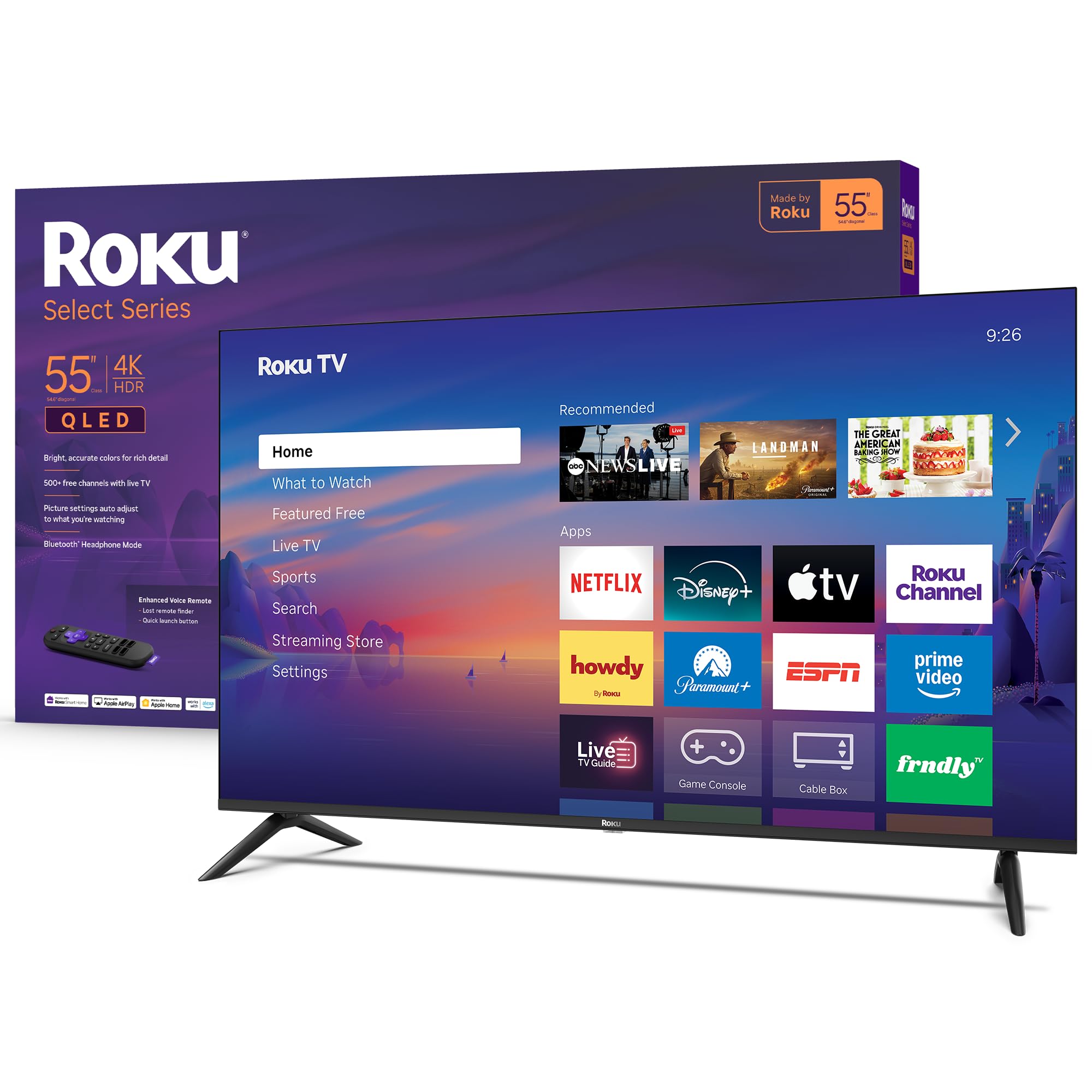
1. Roku 55-Inch Smart TV 2026 – Select Series, 4K QLED TV
The smart platform champ that finally has the QLED panel to match its legendary ease-of-use.
This is the crowd-pleaser for a reason. The 55-inch QLED screen, combined with HDR10 support, produces bright and accurate colors that genuinely make HDR content look noticeably better than a standard LED TV. What wins people over is how fast and simple the Roku interface is — it just works, without bloatware or lag. As buyers report, it “replaced a problematic Google TV” and is “much faster and more responsive.”
The catch here is format support. While the colors are vibrant, the HDR is limited to HDR10. It does not support Dolby Vision, which is the dynamic HDR format used by most major streaming services. For daily streaming of Netflix, Prime Video, and YouTube, the HDR10 picture is still excellent. But if you are an avid Dolby Vision fan, you might want to look further down this list. The clear, sharp picture and intuitive system make this the easiest recommendation for anyone who just wants a great TV without a learning curve.
Why it wins
- Blazing-fast Roku interface with no bloatware
- Vibrant QLED colors at a breakthrough price
- Easy setup praised by nearly every owner
The limitation
- Lacks Dolby Vision HDR support
- Average 60Hz panel for motion handling
Best for the household: This is the one to get if you want a reliable, snappy smart TV with great picture that anyone in the family can use immediately.
Think twice if: You need Dolby Vision for a dedicated home theater setup or a 120Hz+ panel for competitive gaming.
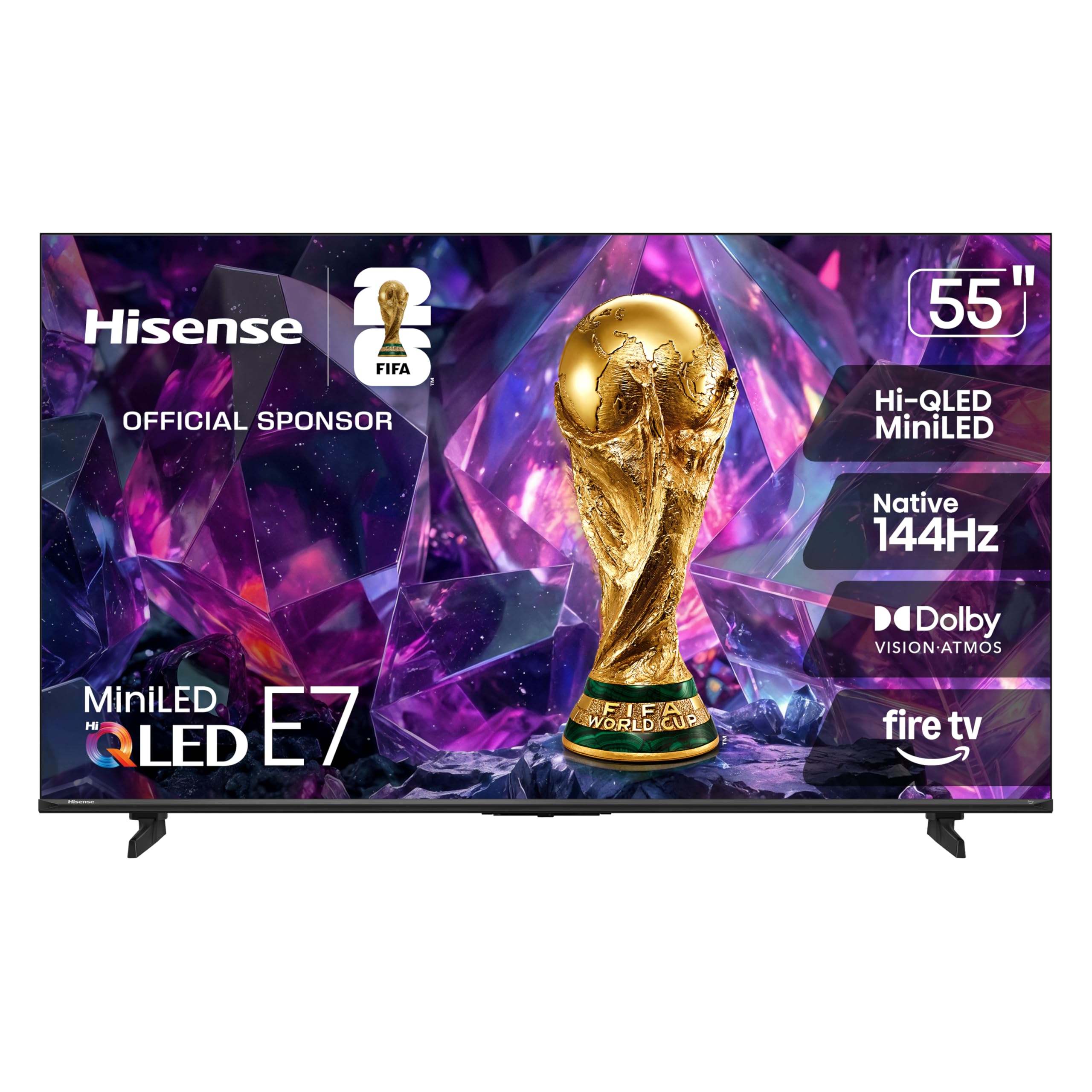
2. Hisense 55″ E7 Cinema Series Hi-QLED Mini-LED 4K UHD Smart Fire TV (55E7SF)
Mini-LED backlighting and a native 144Hz panel collide at a price that feels like a mistake.
This is the performance value king of the list. The Hi-QLED Mini-LED backlight uses thousands of precise light zones for deep contrast, making HDR content — supported by Dolby Vision IQ, HDR10+ Adaptive, and HLG — look genuinely cinematic. The real headline, however, is the native 144Hz Game Mode. This eliminates motion blur in fast-paced games and sports, a feature usually reserved for TVs costing twice as much. The AI Picture processing also adjusts brightness and contrast scene-by-scene automatically.
You get a lot of specs for the price, but the build quality has trade-offs. The stand feels cheap, and the packaging is flimsy, according to buyers. Some owners also report occasional Wi-Fi connectivity issues on the Fire TV OS (Amazon’s smart TV system), though most say it works flawlessly. If gaming or smooth sports action is your priority, this is the clear pick over the Roku above, even if the interface is slightly slower to boot up.
Gamer’s delight: The native 144Hz refresh rate is a genuine competitive advantage at this budget. It keeps fast camera pans and gameplay silky smooth without the blur you get on a standard 60Hz panel.
The honest caveat: The plastic stand and average build quality remind you this is a budget model. The panel itself is superb, but treat the physical unit with care during setup.
Reach for this if: You game on a console or PC and want the buttery motion of 144Hz without spending over a thousand dollars.
Look elsewhere if: A premium, weighty build and a perfectly stable Wi-Fi connection are your highest priorities.
3. Samsung 55-Inch Class Mini LED M70H Series Samsung Vision AI Companion Smart TV (55M70H)
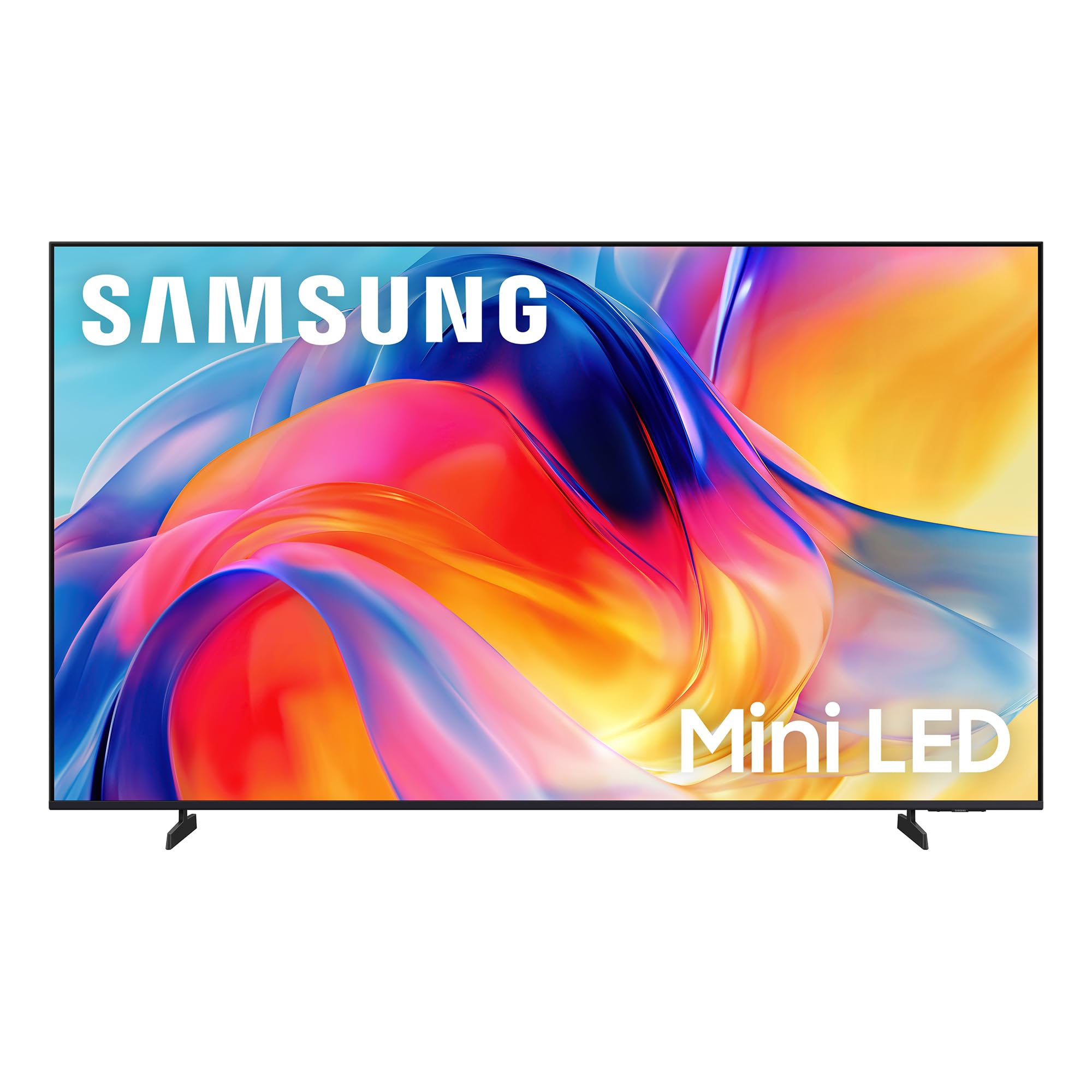
Samsung’s Mini-LED entry point delivers deeper blacks and richer colors than the U8000H below.
The step up from a standard LED to the Mini-LED M70H is immediately visible. The Pure Spectrum Color technology, powered by the Mini-LED precision, delivers one billion true-to-life colors and far deeper blacks than the standard U8000H. The Mini LED HDR produces brighter highlights, making HDR10+ content — the dynamic format Samsung supports — look punchy and dimensional. The Motion Xcelerator with DLG 120Hz also gives you smoother gaming visuals. The interface is snappy, and the Samsung Tizen platform offers a huge library of free content.
The main complaint here is directed at the remote control. Owners find it too minimalist and small, making it frustrating for older adults or those not comfortable with technology. The setup process is also described as slightly annoying, pushing users to sign up for a SmartThings account. Picture quality is the top positive aspect praised by dozens of owners. For a premium visual experience from a trusted brand, this Mini-LED set is a solid investment.
Visual highlights
- Mini-LED backlight for deep contrast and bright highlights
- Pure Spectrum Color delivers one billion colors
- DLG 120Hz for smoother gaming motion
Minor frustrations
- Small, minimalist remote is not user-friendly for everyone
- Setup process requires account creation
Best for picture purists: If you value deep blacks and bright highlights for movies and shows, the Mini-LED panel is the pick of the Samsung lineup here.
Consider the trade-off: The remote and setup process can be a hassle for less tech-savvy household members.
4. Samsung 55-Inch Class Crystal UHD U8000H Series Samsung Vision AI Smart TV (55U8000H)
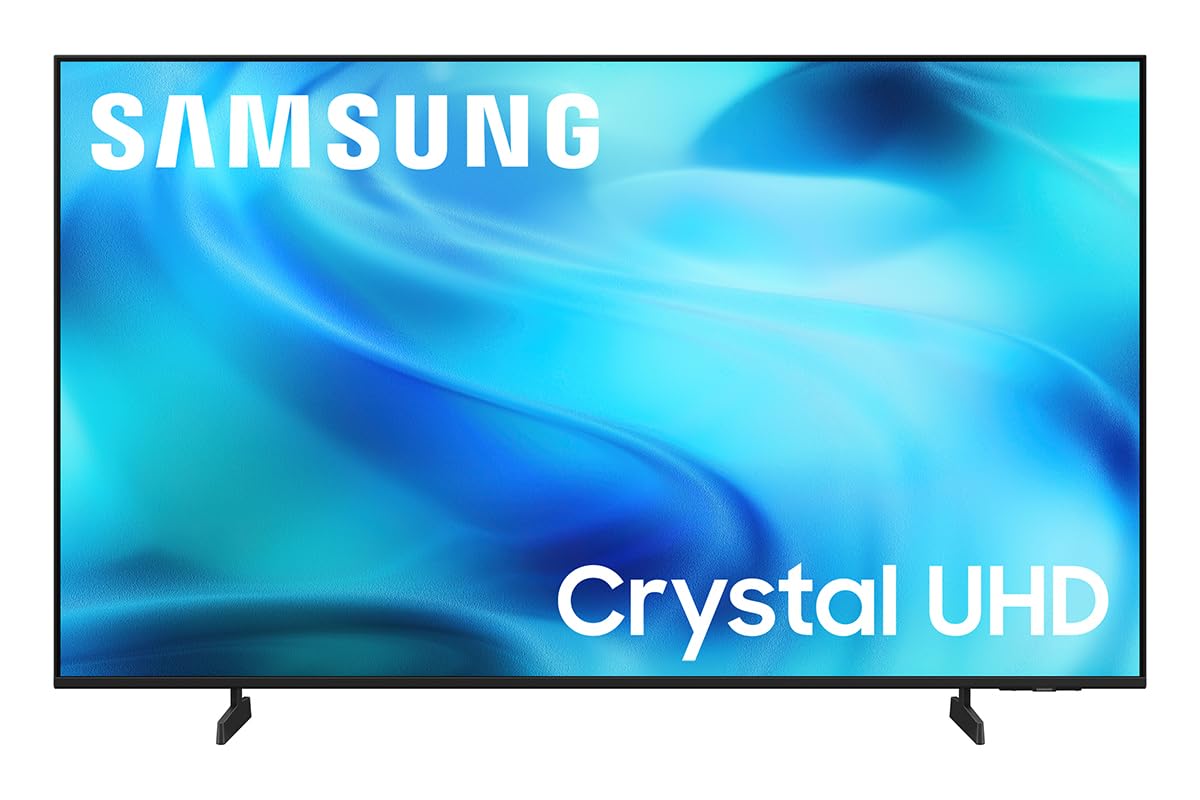
A reliable Samsung LED that gets the basics of HDR right with the most free content included.
For the buyer who trusts the Samsung name and wants a no-drama TV, the U8000H is a strong bet. The Crystal Processor 4K upscales lower-resolution content to near-4K quality effectively. It supports HDR10+, which is the dynamic HDR format that Samsung champions, providing better scene-by-scene brightness than basic HDR10. The Motion Xcelerator helps keep sports and movies clear. The standout feature here might be the free content — Samsung TV Plus offers over 2,700 free streaming channels, which is a nice bonus for cord-cutters.
The picture quality and overall quality are the two most-discussed positive aspects, with dozens of owners praising the set. However, the display technology is standard LED, not QLED or Mini-LED. This means it cannot achieve the same peak brightness levels as the other picks on this list for true HDR impact. The colors and contrast are excellent for the price, but the HDR effect is more subtle. If you want the absolute brightest HDR performance, the Mini-LED M70H above is the better Samsung choice.
Solid and simple: The setup is straightforward, and the interface is user-friendly. The Crystal Processor does a good job making standard content look sharper.
The brightness limit: Standard LED backlighting means HDR highlights are not as punchy as QLED or Mini-LED screens. It looks great, but the ‘wow’ factor of HDR is dialed back.
Ideal for the casual viewer: If you watch cable, YouTube, and some streaming and want a trusted brand that looks good, this is a safe buy.
Not for HDR enthusiasts: If you want the most dramatic HDR effect, look for a QLED or Mini-LED panel elsewhere on this list.
5. Hisense 55″ E6 Cinema Series Hi-QLED 4K UHD Smart Fire TV (55E6QF)
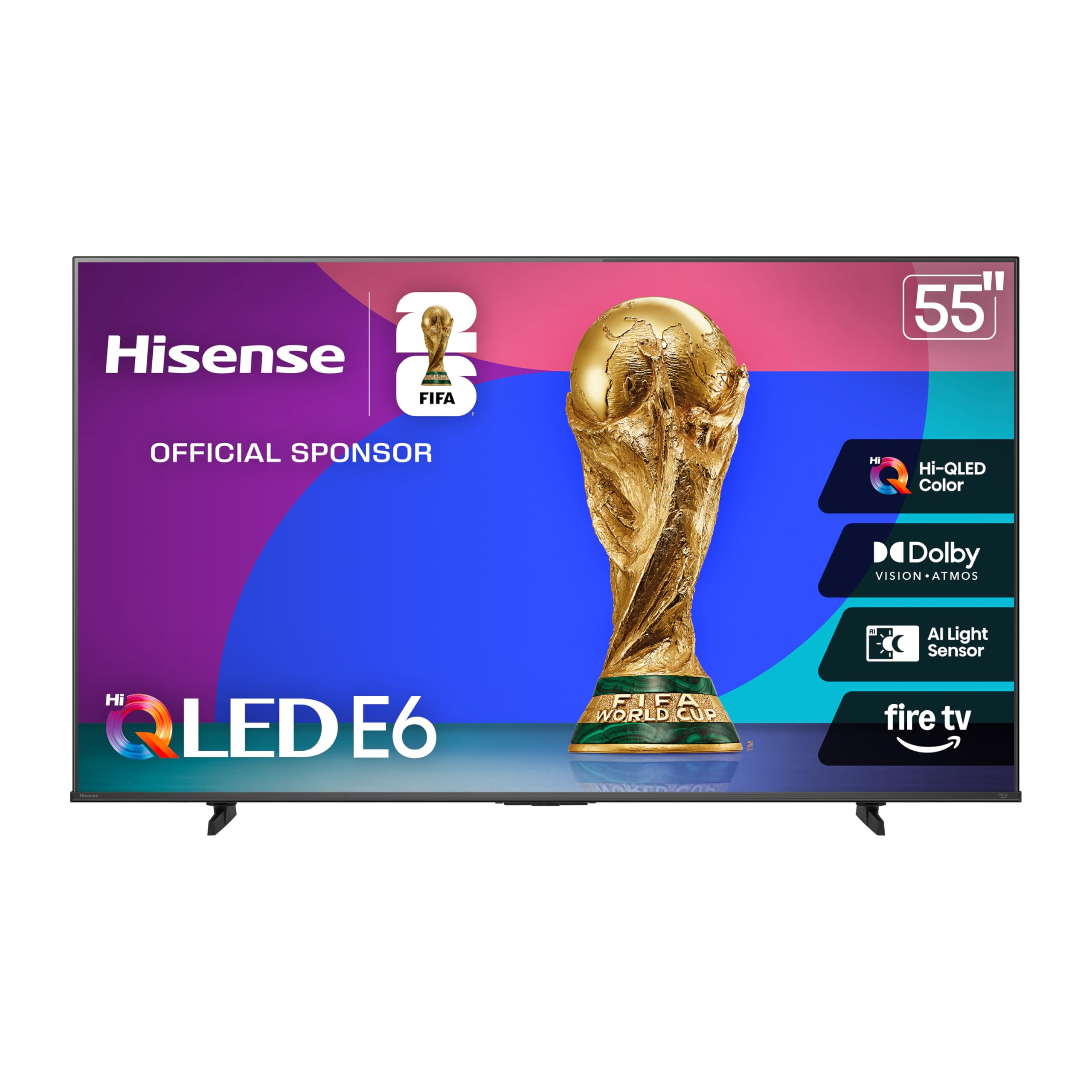
The absolute entry point for HDR with Dolby Vision that still looks like a real upgrade.
This is the cheapest way to get Dolby Vision HDR on a 55-inch screen. The Hi-QLED technology delivers rich, vibrant colors that are true-to-life. The Total HDR Solution supports Dolby Vision, HDR10+ Adaptive, HDR10, and HLG, ensuring compatibility with virtually any HDR content you throw at it. For the price, the picture is surprisingly sharp and clear, as owners mention it being “clearer than a 2021 Samsung 4K.” The AI Light Sensor also helps by automatically adjusting brightness based on your room’s light.
The reliability here is a mixed bag in reviews. While many customers note a flawless experience, a significant number note issues with the Fire TV OS being sluggish on boot (taking 30-60 seconds) and occasional random shut-offs or app crashes. The internal storage is also limited at 9.56 GB, which can fill up quickly. If you primarily plan to use an external streaming device like an Apple TV or gaming console, this is an incredible deal. As a standalone smart TV, the software stability is a compromise you should be aware of.
What it does well
- Supports Dolby Vision, HDR10+, and HLG for full HDR coverage
- Hi-QLED display for vibrant, true-to-life colors
- Excellent picture quality for the money
Where it falls short
- Fire TV OS can be sluggish and has limited internal storage
- Some reports of random shutdowns and app glitches
Best for budget builders: If you plan to use an Apple TV, Roku stick, or game console as your main interface, the panel quality is unbeatable for the price.
Skip if you want a fast smart TV: If the built-in software is your only way to stream, the E6’s software quirks might frustrate you over time.
Understanding the Specs
QLED vs Mini-LED vs Standard LED
The backlight technology determines how bright your TV can get. Standard LED uses a single backlight layer. QLED adds a quantum dot film between the backlight and the screen, which boosts color volume and brightness significantly for a lower cost. Mini-LED uses thousands of tiny LEDs instead of a few large ones, allowing for precise local dimming. This means deeper blacks and brighter highlights — the best option for HDR impact, found on the Samsung M70H and Hisense E7.
HDR Formats: HDR10, HDR10+, HLG, and Dolby Vision
Not all HDR is the same. HDR10 is the baseline standard and is used on almost everything. HDR10+ and Dolby Vision are “dynamic” formats. They analyze the picture and adjust brightness and color on a scene-by-scene (or even frame-by-frame) basis, making the image look more lifelike. Dolby Vision is the most common dynamic format on streaming services. HLG (Hybrid Log-Gamma) is a broadcast format used for live sports and TV channels.
FAQ
Do I need Dolby Vision for HDR to look good?
What is the most important spec for a cheap HDR TV?
Will a 60Hz TV be fine for gaming and sports?
Can I use these TVs as a computer monitor?
What is the difference between HDR10 and HDR10+?
What does “local dimming” mean on a cheap HDR TV?
Why does the Roku Select Series not support Dolby Vision?
Is the Fire TV platform on Hisense TVs slow?
How do I know if a cheap HDR TV is bright enough?
Final Thoughts: The Verdict
If you want one dependable pick, the cheap hdr tv winner is the Roku 55-Inch Select Series because it combines the best QLED picture quality in the budget bracket with the most user-friendly smart platform on the market. If you want the absolute best motion for gaming and pristine Dolby Vision HDR, grab the Hisense 55-inch E7, which punches far above its price class with a native 144Hz panel. And for the simplest, most reliable Samsung experience with plenty of free built-in content, the Samsung 55-inch U8000H is the one to reach for.
How We Picked
We do not accept paid placement. Every pick is matched to a real buyer and a real use-case; we do not hands-on test units.
Sources & Methodology
Specifications: manufacturer listings and product documentation. Review insights: verified customer reviews, as of July 2026. Pricing: not shown on this page (it changes often); check the current price via the retailer link.
As an Amazon Associate, WellFizz earns from qualifying purchases. This does not affect which products we feature.
Related Guides

Mo Maruf
I created WellFizz to bridge the gap between vague wellness advice and actionable solutions. My mission is simple: to decode the research and give you practical tools you can actually use.
Beyond the data, I am a passionate traveler. I believe that stepping away from the screen to explore new environments is essential for mental clarity and physical vitality.