Our readers keep the lights on and my smoothie glass nicely filled. As an Amazon Associate, I earn from qualifying purchases.
Ditching a phone mount for a dedicated cycling computer is the single best upgrade for any rider who wants reliable, glanceable data without draining their phone battery on every ride. The problem is that the market is flooded with models that promise accurate GPS and long battery life but deliver buggy syncing, slow satellite locks, or units that pop off on the first bumpy descent.
I’m Mohammad Maruf — the founder and writer behind WellFizz. I’ve spent hundreds of hours cross-referencing customer-test data, satellite lock times, and battery drain reports across dozens of models to find the units that actually deliver on their specs.
This guide breaks down the top contenders so you can confidently choose a cheap cycling computer that logs your rides accurately without costing a week’s worth of groceries.
How To Choose The Best Cheap Cycling Computer
Picking the right budget GPS computer comes down to understanding which corners were cut to hit the low price. You do not need turn-by-turn navigation or a color screen to get solid data, but you do need a reliable GPS chipset and stable Bluetooth syncing. Here are the two most important things to consider before you buy.
Satellite Systems and Lock Speed
Most cheap cycling computers rely on GPS alone, but the best budget models also support GLONASS, Galileo, Beidou, or QZSS. More satellites mean faster lock times and better accuracy in tree cover and near tall buildings. A model that locks in under thirty seconds is far more useful at a stoplight than one that takes two minutes to find your position.
Sensor Compatibility
Budget computers often support ANT+ sensors for heart rate, speed, and cadence, but not all of them support Bluetooth sensors. If you already own a Bluetooth chest strap or speed sensor, check the computer’s connectivity protocol. ANT+ is the standard for almost all power meters and cycling sensors, so a unit without ANT+ is severely limited for anyone who plans to train with data.
Quick Comparison
On smaller screens, swipe sideways to see the full table.
| Model | Category | Best For | Key Spec | Amazon |
|---|---|---|---|---|
| Magene C506 | Premium | Turn-by-turn navigation | Touchscreen / 24h battery | Amazon |
| Magene C506SE | Mid-Range | Color screen + route nav | Color display / 24h battery | Amazon |
| CYCPLUS M1 | Mid-Range | Longest runtime | 60-hour battery life | Amazon |
| iGPSPORT BSC100S | Value | Large screen + 5 satellites | 2.6″ display / 40h battery | Amazon |
| Coospo BC107 | Value | ANT+ power meter support | IP67 rating / 2.4″ screen | Amazon |
| XOSS G+ Gen2 | Budget | Entry-level GPS | 28-hour battery / IPX7 | Amazon |
| iGPSPORT BSC100S (Alt) | Budget | Simple data tracking | 40-hour battery / 2.6″ screen | Amazon |
In‑Depth Reviews
1. Magene C506 GPS Bike Computer
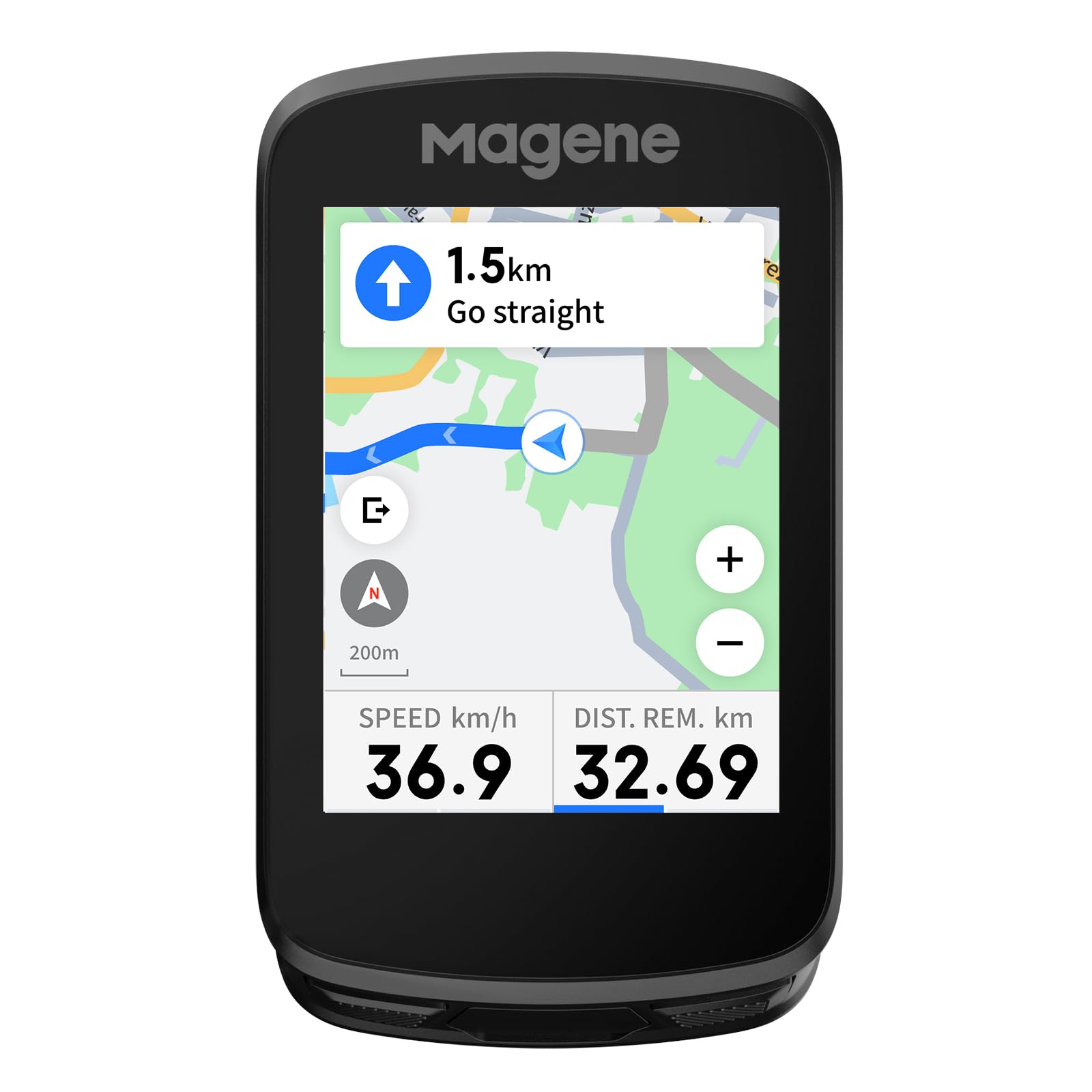
The Magene C506 sits at the top of this list because it brings a 2.4-inch touchscreen and real turn-by-turn navigation to a price point normally reserved for basic data loggers. The Airoha chipset acquires GPS in about five seconds, and the WiFi sync is noticeably faster than Bluetooth for uploading ride files. It supports nine types of connected devices including electronic shifting, radar tail lights, and smart trainers, which makes it a legitimate training tool despite its affordable tag.
Battery life is rated at 24 hours in endurance mode, and real-world tests confirm you can get through multi-day trips without charging. The screen’s ambient light sensor automatically adjusts brightness, and the bold fonts remain readable in direct sun. The only real setup headache is the map download process through the OnelapFit app, which users describe as slow and unintuitive, but the navigation itself is accurate with street names and off-course alerts.
For riders who want full navigation and a color screen without spending Garmin or Wahoo money, the C506 is the clear winner. It does miss a few high-end features like live Strava segments, but the core tracking, routing, and smart trainer support more than justify the investment.
Why it’s great
- Turn-by-turn navigation with street names
- WiFi sync is much faster than Bluetooth-only units
- Touchscreen is responsive and readable in sunlight
Good to know
- Map download process is slow and not intuitive
- OnelapFit app has translations that feel unpolished
2. Magene C506SE Wireless GPS Bike Computer

The C506SE drops the touchscreen of its bigger sibling but keeps the same 2.4-inch color display, route navigation with turning tips, and the same five-second GPS lock via the Airoha chipset. It is the most affordable way to get on-device navigation with a color screen, and the three-button interface is simple enough to operate with gloved hands on winter rides. OnelapFit app integration lets you create custom routes or upload GPX files for turn-by-turn guidance.
Battery life is rated at 24 hours, which is solid for a color unit at this price. It supports nine types of devices including smart trainers and electronic shifting groupsets. Indoor riders will appreciate the power target and resistance control features when connected to a smart trainer. Some users report that the initial pairing process can be finicky, and a few units have needed replacement due to connectivity issues, but the warranty support is generally responsive.
If you want turn-by-turn navigation and a color screen but do not need a touch interface, the C506SE is the smart buy. It lacks the ambient light sensor and smart notifications of the full C506, but the core navigation and data display are identical.
Why it’s great
- Color display with route navigation at a low price
- Five-second GPS lock is genuinely fast
- Smart trainer control for indoor training
Good to know
- Initial pairing can be temperamental
- Screen is not touch-enabled
3. CYCPLUS M1 GPS Wireless Bike Computer

The CYCPLUS M1 stands apart for one spec that matters more than any other for long-distance riders: a 1200mAh battery that delivers over 60 hours of continuous operation. A 2.9-inch FSTN LCD screen is the largest in this roundup, and the auto-backlight adjusts based on sunrise and sunset times rather than an ambient sensor, which means it works reliably without draining the battery unnecessarily.
It uses ANT+ for sensor connectivity, supporting heart rate, cadence, speed, and power meters. The GPS chipset is imported from Switzerland and offers solid accuracy on open roads, though it can drift by 5 to 10 percent in heavily wooded areas. The app syncing is slower than the competition, and some users report the GPS speed can fluctuate noticeably without averaging. The included silicone cover adds a layer of protection that most budget units lack entirely.
If your rides routinely stretch past six hours or you do not want to think about charging for a week, the M1 is the obvious choice. It does not have turn-by-turn navigation or a color screen, but the battery endurance and large display make it the best companion for ultra-distance and touring cyclists.
Why it’s great
- 60-hour battery life is best in class
- Large 2.9-inch screen is easy to read at speed
- Silicone cover provides shock protection
Good to know
- GPS accuracy degrades in dense tree cover
- App sync is noticeably slower than rivals
4. iGPSPORT BSC100S GPS Bike Computer
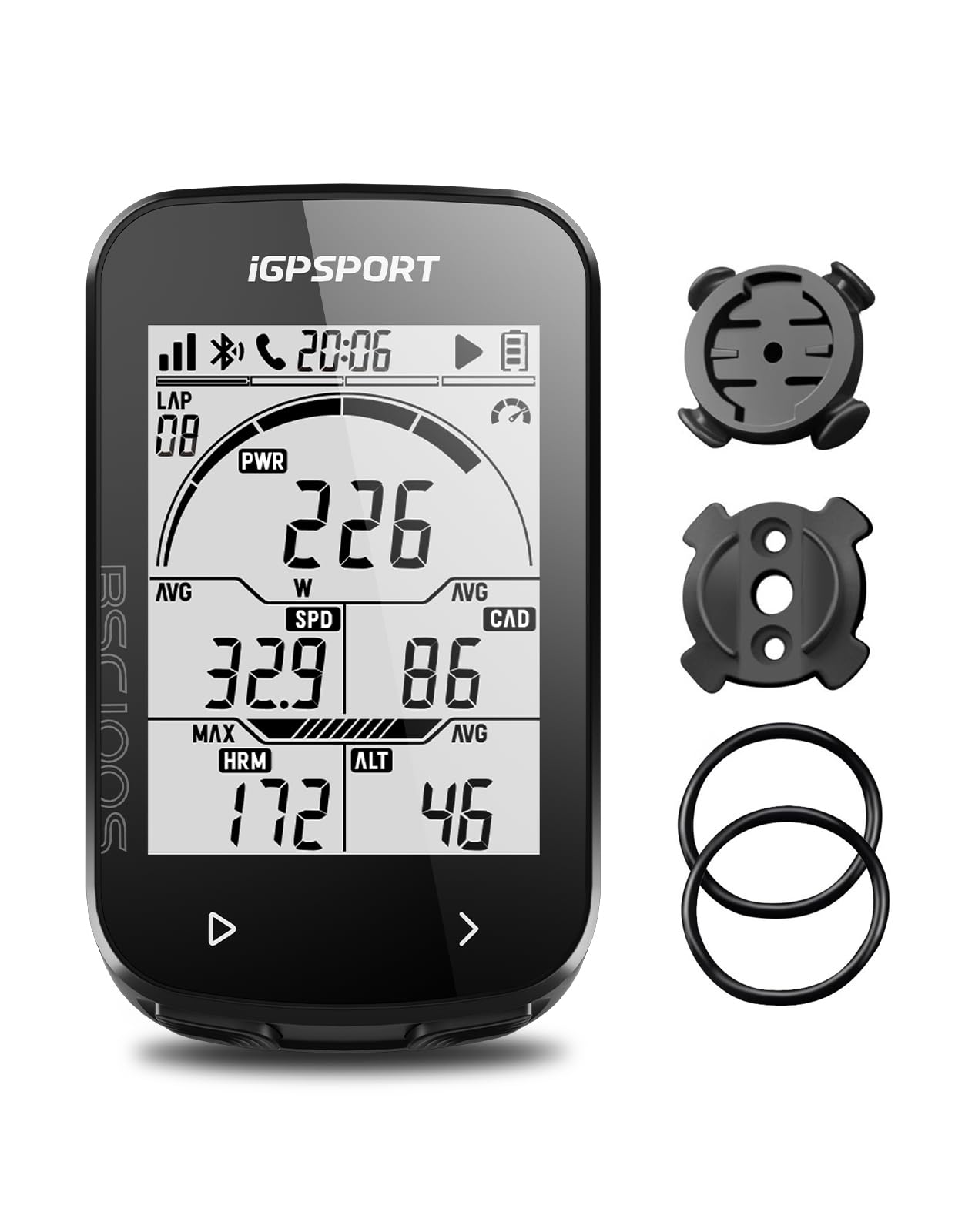
The iGPSPORT BSC100S is the most balanced cheap cycling computer in this comparison. A 2.6-inch anti-glare LCD supports five satellite systems for fast and accurate positioning, and the 40-hour battery life is enough for multiple long weekends without a charge. It connects via ANT+ and Bluetooth 5.0, which means it works with essentially every sensor on the market, including power meters and smart watches.
The BSC100S does not have onboard maps or turn-by-turn navigation, but it tracks over 40 data fields including grade, temperature, and cadence. The iGPSPORT app syncs easily with Strava and TrainingPeaks, and users consistently report reliable data uploads after the initial setup. A common frustration is the included rubber band mount, which feels cheap compared to the unit itself, but the computer uses a standard Garmin mount interface so replacements are easy to find.
For pure value — a large screen, excellent battery life, broad satellite support, and reliable sensor connectivity — the BSC100S is hard to beat. It is the best option for riders who want dependable GPS tracking without paying for features they will not use.
Why it’s great
- Five satellite systems for fast lock times
- 40-hour battery covers multi-day rides
- Standard Garmin-style mount interface
Good to know
- Included rubber band mount feels low quality
- No onboard navigation or mapping
5. Coospo BC107 Bike Computer Wireless GPS

The Coospo BC107 is a compact, rugged GPS computer that prioritizes ANT+ sensor compatibility over screen size or battery life. It pairs seamlessly with power meters, heart rate monitors, and speed sensors, making it a strong choice for riders who already have a sensor ecosystem. The IP67 rating means it is dust-tight and can survive submersion in water, which offers more weather protection than the IPX6 and IPX7 ratings common on other budget units.
The 2.4-inch LCD display is smaller than the iGPSPORT and CYCPLUS options, but it is bright and clear with solid contrast. The BC107 supports GPS and Beidou positioning, and users report accuracy within 1 percent of Garmin units after comparing data side by side. The CoospoRide app has had some recent issues with auto-syncing to Strava, requiring manual .fit file uploads, but the device itself has remained reliable for thousands of logged miles.
If ANT+ power meter compatibility is a non-negotiable requirement, the BC107 is the cheapest reliable option available. The smaller display and occasional app quirks are manageable tradeoffs for the sensor support and durable build.
Why it’s great
- Reliable ANT+ power meter and sensor support
- IP67 rating offers dust and full water protection
- GPS accuracy is close to premium units
Good to know
- Smaller 2.4-inch display
- CoospoRide app has Strava sync issues
6. XOSS G+ Gen2 GPS Bike Computer
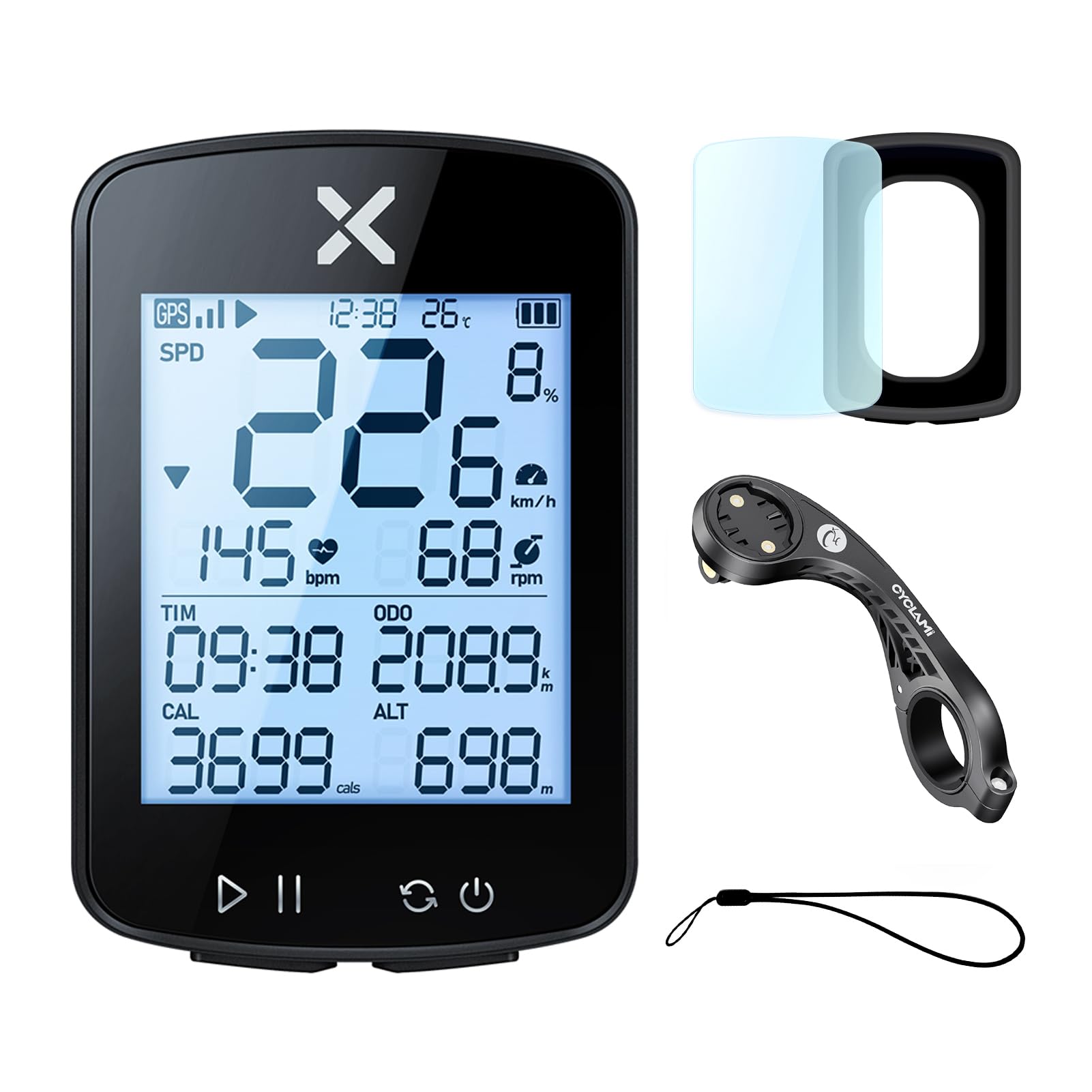
The XOSS G+ Gen2 is the entry point for riders who want GPS tracking without spending much. It supports GPS, Beidou, and QZSS satellite systems, and the 2.2-inch LCD screen includes an auto-backlight that adjusts based on sunrise and sunset times. The Type-C charging port is a welcome upgrade over micro-USB, and the 28-hour battery life is competitive for a unit at this price.
ANT+ compatibility allows connection to heart rate monitors, speed sensors, cadence sensors, and power meters. The XOSS app supports syncing to TrainingPeaks, which is a nice bonus for riders who track structured workouts. The most common complaint is that the included handlebar mount is not secure enough for rough terrain, with several users reporting that the unit popped off on bumpy descents. GPS lock times can also be slow on first use, especially in cloudy conditions or near buildings.
The G+ Gen2 is best suited for commuters and casual riders who want basic GPS data without investing in premium hardware. Plan to replace the mount with a third-party option if you ride on gravel or bumpy roads.
Why it’s great
- Very affordable GPS tracking with ANT+ sensors
- TrainingPeaks sync via the XOSS app
- Type-C charging is convenient
Good to know
- Included mount is not secure on rough terrain
- GPS lock can be slow on first use
7. iGPSPORT BSC100S (Alt Model)

This alternate listing of the iGPSPORT BSC100S offers the same core hardware as the main model but at a slightly different price point. It uses the same five-satellite positioning system, the same 2.6-inch anti-glare screen, and the same 40-hour battery. The primary differences are in the packaging and included accessories, so you get the same GPS performance and data accuracy regardless of which listing you buy.
Users report that this unit provides accurate speed, distance, and climbing data that syncs reliably with Strava after a few rides. Some initial tracking errors on ascent and total distance have been documented, but these typically resolve after the unit calibrates over multiple rides. The auto-backlight, auto-pause, and auto-lap functions reduce the need for button presses during a ride.
This is a solid choice if you find a better deal on this listing. It performs identically to the standard BSC100S and offers the same excellent battery life and wide satellite support at a rock-bottom entry point.
Why it’s great
- Same hardware as the main BSC100S for less
- Five satellite systems for reliable positioning
- Auto functions reduce ride interruptions
Good to know
- Initial climbing/distance data may need calibration
- No turn-by-turn navigation or mapping
FAQ
How accurate are the GPS sensors on cheap cycling computers?
Do I need a separate sensor for speed and cadence?
Can I use a cheap cycling computer without a smartphone?
Final Thoughts: The Verdict
For most users, the cheap cycling computer winner is the Magene C506 because it delivers full turn-by-turn navigation and a touchscreen at a price that undercuts every competitor with similar features. If you want a massive 60-hour battery for touring and ultra-endurance riding, grab the CYCPLUS M1. And for the best all-around value with a large screen and five-satellite GPS, nothing beats the iGPSPORT BSC100S.

Mo Maruf
I created WellFizz to bridge the gap between vague wellness advice and actionable solutions. My mission is simple: to decode the research and give you practical tools you can actually use.
Beyond the data, I am a passionate traveler. I believe that stepping away from the screen to explore new environments is essential for mental clarity and physical vitality.