Our readers keep the lights on and my smoothie glass nicely filled. As an Amazon Associate, I earn from qualifying purchases.
Finding a budget-friendly camera that delivers genuine photographic quality instead of disappointing, soft images used to mean accepting severe compromises on zoom reach, low-light performance, or autofocus reliability. The market is flooded with entry-level models that look capable on paper but frustrate you with slow burst rates, noisy sensors past ISO 800, and lenses that cannot pull in distant subjects without resorting to useless digital cropping.
I’m Mohammad Maruf — the founder and writer behind WellFizz. I have spent hundreds of hours cross-referencing sensor specifications, lens construction details, autofocus point layouts, real-world image samples, and verified buyer experiences to separate the few genuinely capable cheap cameras from the overcrowded shelf of also-rans.
This guide breaks down nine models spanning bridge superzooms, refurbished DSLRs, and modern mirrorless systems to help you confidently select the best cheap camera for photography that matches your specific creative needs.
How To Choose The Best Cheap Camera For Photography
In the under- camera space, the line between a capable tool and a frustrating purchase comes down to four hardware fundamentals. Here is how to navigate them.
Sensor Size and Type
The single biggest determinant of image quality, especially in dim light, is the physical size of the imaging sensor. A 1/2.3-inch sensor found in budget bridge cameras is small, which forces the camera to amplify the signal at higher ISOs, producing visible noise and lost detail. An APS-C sensor (roughly 23.5 x 15.6 mm) gathers significantly more light, delivering cleaner shadows, better dynamic range, and more realistic bokeh. Full-frame sensors (36 x 24 mm) are the gold standard for low-light and shallow depth of field, but they usually carry a premium price — unless you buy a refurbished or last-gen model like the Canon EOS RP.
Optical Zoom Range and Aperture
Never buy a camera for its digital zoom rating — digital zoom is simply cropping, which destroys resolution. What matters is the optical zoom ratio and the maximum aperture at the widest and longest end of the lens. A 52X or 60X optical zoom (as found on the Kodak PIXPRO or Panasonic Lumix FZ80) lets you fill the frame with a bird 100 feet away, but the aperture typically narrows to f/5.9 or f/8 at the tele end, which forces you to use higher ISOs or very fast shutter speeds. For portrait and general photography, a lens starting at f/3.5 (like the Nikon D3200 kit lens) is far more versatile indoors.
Autofocus Technology and Points
Contrast-detect autofocus (AF) is the slower, hunting-prone system found in many cheap point-and-shoots and older DSLRs. Phase-detect AF (PDAF) is much faster and tracks moving subjects more reliably. Mirrorless cameras with on-sensor phase-detect pixels, such as the Canon EOS R100 or Sony ZV-E10, offer a huge advantage for photographing toddlers, pets, and sports. The number of AF points (9 vs. 143 vs. 425) matters, but the real-world test is whether the camera can lock focus and track a subject moving across the frame without rapidly losing lock.
Optical Image Stabilization (OIS)
When shooting handheld at long zoom lengths or in low light, OIS is the difference between a sharp keeper and a blurry discard. In-body image stabilization (IBIS) is rare in cheap cameras, but lens-based optical stabilization — like that found in the Panasonic FZ80D (POWER O.I.S.) and the Kodak PIXPRO — compensates for hand shake effectively at the telephoto end. IBIS requires paying more for bodies like the Canon EOS R8, but it stabilizes any lens you mount, including vintage glass.
Quick Comparison
On smaller screens, swipe sideways to see the full table.
| Model | Category | Best For | Key Spec | Amazon |
|---|---|---|---|---|
| Canon EOS R8 | Full-Frame Mirrorless | Low-light mastery & hybrid content | 24.2MP Full-Frame / DIGIC X | Amazon |
| Canon EOS RP | Full-Frame Mirrorless | Entry-level full-frame stills | 26.2MP Full-Frame / RF Mount | Amazon |
| Sony ZV-E10 | APS-C Mirrorless | Vloggers & fast hybrid shooting | 24.2MP APS-C / 425 PDAF | Amazon |
| Canon EOS R100 | APS-C Mirrorless | Complete starter mirrorless bundle | 24.1MP APS-C / 143 AF Zones | Amazon |
| Nikon Z50 II | APS-C Mirrorless | Animal tracking & creative presets | 20.9MP APS-C / 231 PDAF | Amazon |
| Panasonic Lumix FZ80D | Bridge Superzoom | Wildlife & outdoor reach | 18.1MP / 60X Zoom / OIS | Amazon |
| Canon EOS Rebel T7 Bundle | DSLR Kit | Complete starter kit with extras | 24.1MP APS-C / 9 AF Points | Amazon |
| Nikon D3200 (Renewed) | Entry DSLR | Value-first DSLR learning platform | 24.2MP APS-C / 11 AF Points | Amazon |
| Kodak PIXPRO AZ528 | Bridge Superzoom | Maximum optical reach on a budget | 16MP BSI CMOS / 52X Zoom | Amazon |
In‑Depth Reviews
1. Canon EOS R8 Mirrorless Camera Body

The Canon EOS R8 is the lightest full-frame RF-mount camera Canon has ever built, and it leverages the same DIGIC X processor and Dual Pixel CMOS AF II autofocus found in the far more expensive R6 Mark II. The 24.2-megapixel full-frame sensor delivers exceptional dynamic range and noise control right up to ISO 6400, which is a night-and-day advantage over smaller-sensor cameras when shooting interiors, evening portraits, or cityscapes at dusk. Its uncropped 4K 60p video, oversampled from a 6K readout, also makes this a legitimate hybrid tool for content creators who do not want to compromise on lens depth-of-field control.
The autofocus system is the real standout here — 1,053 AF zones cover 100% of the frame, and the deep-learning detection reliably tracks people, animals, vehicles, and even aircraft and trains. At 40 frames per second with the electronic shutter (full autofocus tracking active), you can capture fleeting expressions and fast action with a keeper rate that rivals cameras twice its price. The 0.39-inch 2.36-million-dot OLED viewfinder with a 120 fps refresh rate makes composing in bright sunlight effortless.
The main sacrifices on the R8 are the single UHS-II SD card slot and the relatively small LP-E17 battery, which manages roughly 500 shots per charge. The camera also lacks in-body image stabilization, so you will want RF lenses with built-in IS for longer handheld shots. For studio, travel, and general photography where weight and image quality are the priorities, the R8 punches far above its class.
Why it’s great
- Full-frame sensor with DIGIC X processor for elite low-light image quality and noise handling up to ISO 6400.
- Deep-learning autofocus with 1,053 zones tracks people, animals, vehicles, and aircraft across the entire frame.
- Uncropped 4K 60p oversampled from 6K, with Canon Log 3 for professional color grading.
- Incredibly lightweight body (about 461 g) with a high-res OELD EVF at 120 fps refresh.
Good to know
- Single UHS-II SD card slot — no backup recording option.
- No in-body image stabilization; relies on lens-based IS for stable handheld footage.
- Battery life is average at roughly 500 shots per full charge with typical usage.
- 4K 60p recording may overheat after about 30 minutes in warm environments.
2. Canon EOS RP + RF24-105mm Lens

The Canon EOS RP is widely recognized as the cheapest gateway into a full-frame mirrorless system, and it continues to appeal to photographers who prioritize sensor performance over video-centric features. Its 26.2-megapixel full-frame sensor, paired with the DIGIC 8 processor, produces images with noticeably shallower depth of field and better high-ISO performance than any APS-C camera at its tier. The bundled RF 24-105mm f/4-7.1 IS STM lens is a competent travel zoom with 5-stop optical stabilization, making it effective for handheld daytime shooting and casual macro with its 0.5x magnification at the wide end.
The Dual Pixel CMOS AF (not the II version) provides smooth, quiet focusing for stills and 1080p video, and the vari-angle 3.0-inch 1.04-million-dot LCD touchscreen is useful for overhead shots and vlogging. At roughly 440 g for the body alone, the RP is one of the lightest full-frame bodies on the market, which is a genuine advantage for extended walking tours and event photography where gear fatigue is a concern. The 2.36-million-dot OLED electronic viewfinder is sharp and accurate for manual focus peaking.
The big caveat is the video mode — 4K is heavily cropped (1.6x) and limited to 24p, with a 29-minute record limit, so video-focused users should look elsewhere. The single SD slot and the older LP-E17 battery (which drains faster when using the EVF frequently) are additional compromises. For stills photographers, especially those shooting portraits, landscapes, and architectural work, the RP kit remains a compelling entry-level full-frame value.
Why it’s great
- Full-frame 26.2MP sensor for excellent shallow depth-of-field control and low-light image quality.
- Compact and lightweight body (440 g) ideal for travel and all-day carry.
- Bundled RF 24-105mm lens offers 5-stop optical stabilization and versatile zoom range.
- Vari-angle touchscreen and sharp OLED EVF for flexible composition.
Good to know
- 4K video mode is heavily cropped (1.6x) with a 29-minute record limit.
- Single UHS-II card slot and older LP-E17 battery with modest life.
- Kit lens is f/7.1 at the tele end, limiting low-light performance at 105mm.
- Autofocus is Dual Pixel, not the newer Dual Pixel II, so tracking is less tenacious than the R8 or R6 II.
3. Sony Alpha ZV-E10
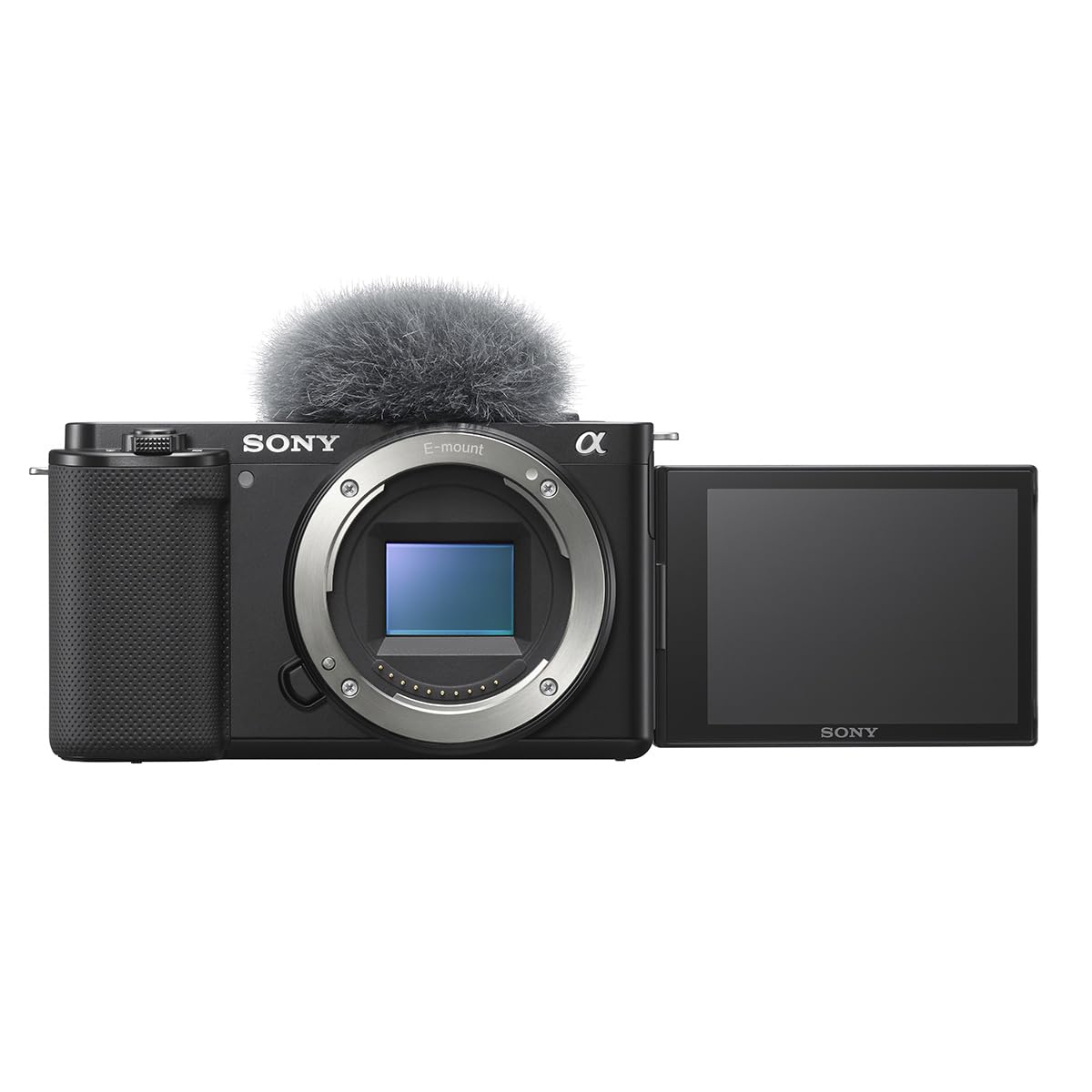
The Sony ZV-E10 may be marketed as a vlogging camera, but its 24.2-megapixel APS-C Exmor CMOS sensor and BIONZ X processor produce stills that rival much pricier mirrorless bodies. The 425 phase-detection autofocus points with Real-Time Eye AF for humans, animals, and birds is genuinely pro-grade — it locks onto eyes across the frame and maintains tracking even when subjects turn their heads. The 4K video is oversampled from a 6K readout with full pixel readout and no pixel binning, delivering detail that is sharp enough for professional-grade production.
For photographers, the ZV-E10 offers features like the Background Defocus button, which instantly toggles a wide aperture for shallow depth of field, and the Product Showcase Setting, which rapidly racks focus from your face to an object in frame — both useful for hybrid shooters who move fluidly between stills and video. The body is incredibly lightweight (about 343 g), and the flip-out vari-angle screen is ideal for self-portraits and low-angle compositions. The Sony E-mount also opens access to one of the largest lens ecosystems on the market, from affordable third-party primes to high-end G Master glass.
Two trade-offs to weigh: there is no in-body image stabilization, so handheld video at longer focal lengths will show shake, and the electronic viewfinder is absent, which makes bright-sun composition reliant on the rear LCD. The battery — Sony NP-FW50 — is adequate for a day of moderate shooting but will need spares for full-day outings. Despite these omissions, the ZV-E10 offers autofocus performance and image quality that undercuts nearly every other camera in its price band.
Why it’s great
- 425-point phase-detect autofocus with Real-Time Eye AF for humans, animals, and birds.
- 4K UHD video oversampled from a 6K readout with no pixel binning for high detail.
- Compact, lightweight body (343 g) with a fully articulated touchscreen for flexible shooting angles.
- Large Sony E-mount lens system with affordable native and third-party options.
Good to know
- No in-body image stabilization — handheld video requires stabilized E-mount lenses.
- Lacks an electronic viewfinder, which can be challenging in bright outdoor conditions.
- Battery life is moderate; expect to carry two spares for a full day of shooting.
- Rolling shutter is noticeable in fast-panning 4K clips; use a higher shutter speed to minimize.
4. Canon EOS R100 Premium Bundle (Renewed)

The Canon EOS R100 is the most affordable APS-C mirrorless camera in Canon’s RF-S lineup, and this renewed premium bundle multiplies its value by including a high-speed 128GB Extreme Pro SD card, a video microphone, an LED light, a telephoto lens set, a grip, filters, and professional video and photo editing software. With the 24.1-megapixel CMOS sensor and DIGIC 8 processor, the R100 produces clean, accurate images with pleasing color science that Canon is known for straight out of camera. The Dual Pixel CMOS AF covers 143 zones with reliable face detection, and the 6.5 fps burst rate is sufficient for portraits, street scenes, and slower action.
The bundled RF-S 18-45mm f/4.5-6.3 IS STM lens is a compact everyday zoom with optical stabilization, making it a solid walking-around lens for daytime photography. The 2.36-million-dot OLED EVF is unusually high-resolution for an entry-level camera, and the 3-inch 1.04-million-dot LCD screen is clear and touch-sensitive for menu navigation. The bundle also includes a Movavi professional software kit with five editing applications, which saves a beginner the cost of buying Lightroom or Premiere separately.
The limitations are the cropped 4K 24p video and the lack of a fully articulated screen (the LCD tilts only). The kit lens is slow at the tele end (f/6.3), so indoor natural-light portraits will push the ISO higher than you might prefer. However, as a complete starter system that includes nearly every accessory a new photographer needs, the R100 bundle is a no-fuss, ready-to-shoot solution.
Why it’s great
- Complete bundle includes 128GB Extreme SD card, microphone, LED light, telephoto lenses, tripod, and Movavi editing software.
- 24.1MP APS-C sensor with Canon Dual Pixel CMOS AF and 143-zone coverage for reliable focusing.
- High-res 2.36-million-dot OLED EVF for clear composition in all lighting.
- Very compact body — an ideal travel-friendly mirrorless system for beginners.
Good to know
- 4K video is cropped and limited to 24p; the LCD screen tilts but does not fully articulate.
- Kit zoom lens is slow (f/6.3 at 45mm), making indoor low-light photography challenging without a fast prime.
- The tripod in the bundle is basic and may not be stable enough for heavy telephoto lenses.
- Battery life is average; expect around 300-400 shots per charge.
5. Nikon Z50 II

Nikon’s Z50 II is a meaningful upgrade over the original Z50, inheriting the EXPEED 7 processor and subject-detection autofocus from the full-frame Z9. The 20.9-megapixel DX-format sensor strikes a balance between resolution and high-ISO noise — a 20MP APS-C sensor produces slightly cleaner shadows than a 24MP one at the same pixel pitch. The autofocus system is the highlight: it detects and tracks nine subject types including dogs, cats, birds, vehicles, and airplanes, with dedicated bird and airplane modes that tighten the AF algorithm for those specific shapes. In actual field use, this means the Z50 II can reliably lock focus on a fast-moving bird against a cluttered tree background where cheaper contrast-detect cameras would hunt endlessly.
The Picture Control button offers 31 built-in color and tone presets that you can preview and adjust in real time while shooting, which is a practical way to achieve a specific look — like a moody monochrome or a vibrant travel profile — without post-processing. The camera also supports Cloud Picture Controls via the Nikon Imaging Cloud, allowing you to download presets from other photographers. Video capability includes 4K UHD at 60p, 120p slow-motion in Full HD, and built-in electronic VR stabilization for handheld clips.
The Z50 II is heavier than competitors at about 540 g with the kit lens, and the battery life is modest given the power demands of the high-refresh EVF and continuous AF. The single UHS-I SD card slot is fine for photography but a bottleneck for video backup. If your primary interest is wildlife and action photography at a moderate budget, the autofocus intelligence here is class-leading.
Why it’s great
- Subject-detection autofocus with dedicated bird and airplane modes inherited from the Nikon Z9.
- 31 built-in Picture Control presets, plus downloadable presets via Nikon Imaging Cloud.
- EXPEED 7 processor delivers fast processing, reliable tracking, and clean high-ISO output.
- 4K 60p video with 120p slow-motion and electronic VR stabilization.
Good to know
- Single UHS-I SD card slot — slower write speeds and no media redundancy.
- Battery life is below average compared to competing mirrorless cameras at this price point.
- Body and kit lens weigh more than some APS-C rivals, especially the Z30 or Sony ZV-E10.
- No in-body image stabilization; relies on lens-based VR in Z-mount zooms.
6. Panasonic Lumix FZ80D

The Panasonic Lumix FZ80D is a bridge camera that packs a 60X optical zoom lens (20-1200mm equivalent) into a body that weighs just over 600 g — a reach that would cost several thousand dollars to replicate with an interchangeable lens setup. The 18.1-megapixel MOS sensor is small (1/2.3-inch), but Panasonic’s POWER O.I.S. stabilization does an impressive job of suppressing hand shake at the 1200mm telephoto end, which is where most superzoom cameras fall apart. For wildlife photography, hiking, and outdoor events where you cannot physically get closer, the FZ80D is a legitimate option that delivers sharp, usable images in good light.
The 4K Photo mode is a standout feature: it records 4K video at 30 fps and allows you to extract an 8-megapixel still from the clip, which is effectively a 30 fps burst without the mechanical shutter wear. The Post Focus feature lets you touch a point on the screen after capture to refocus, which is useful for macro work and product photography where precise focus placement is critical. The 2,360K-dot Live View Finder with 0.74x magnification is bright and free of glare, even in harsh midday sun.
The low-light performance is the main concession — the small sensor produces noticeable noise above ISO 800, so evening cityscapes and indoor sports without flash will disappoint. The interface is dense with menus and not as intuitively laid out as a Canon or Nikon. The battery drains faster when the stabilization is working hard at full zoom, so carry two spares for a full-day shoot. For its intended use — bright-light outdoor photography at extreme distances — the FZ80D is unmatched at this price.
Why it’s great
- 60X optical zoom (20-1200mm equivalent) provides unmatched telephoto reach for wildlife and sports.
- POWER O.I.S. stabilization keeps telephoto handheld shots remarkably steady.
- 4K Photo and Post Focus modes offer creative flexibility without needing a computer.
- Large, bright 2,360K-dot EVF with 0.74x magnification for clear composition in sunlight.
Good to know
- 1/2.3-inch sensor struggles above ISO 800; low-light image quality is grainy.
- Complex menu system can be overwhelming for absolute beginners.
- Battery life is short when using the zoom and stabilization heavily.
- No Wi-Fi or Bluetooth for wireless image transfer or remote control.
7. Canon EOS Rebel T7 DSLR Bundle
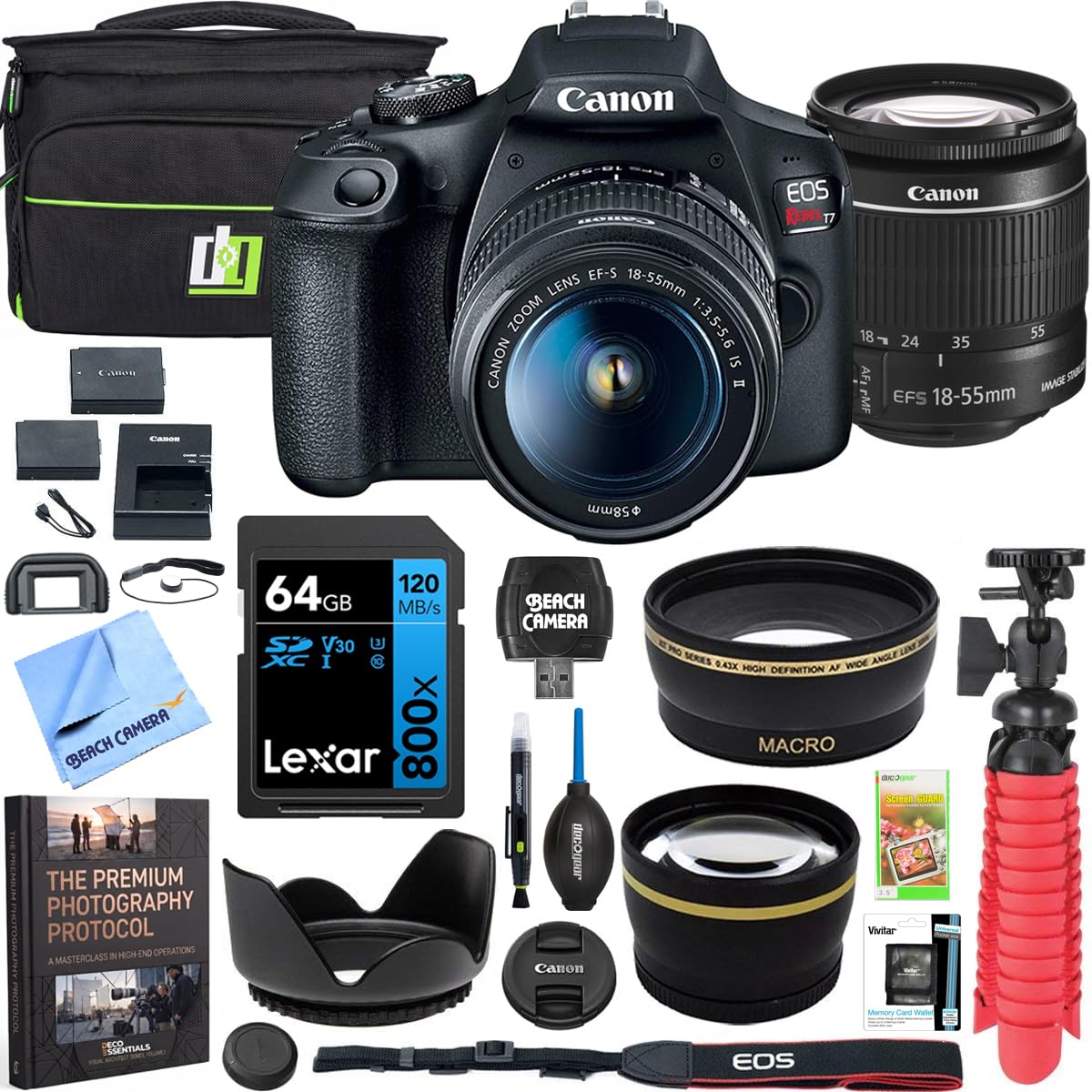
This Canon EOS Rebel T7 bundle is the classic all-in-one starter package that includes the camera and 18-55mm IS II lens, a Deco Gear medium camera bag, a spare LP-E10 battery, a 64GB Lexar SDXC card, a 60-inch tripod plus a 12-inch tabletop tripod, a cleaning kit, wide-angle and telephoto screw-on lenses, a lens hood, and a premium photography ebook. The 24.1-megapixel APS-C sensor and DIGIC 4+ processor deliver the same Canon color science found in cameras costing three times as much, producing vibrant JPEGs straight out of camera that need minimal editing. The 9-point AF system is simple and reliable for stationary subjects, and the optical viewfinder provides a clear, lag-free view of the scene.
The 18-55mm IS II kit lens includes optical stabilization, which helps reduce blur in dimly lit interiors and evening street shots. The bundled 58mm wide-angle and telephoto adapter lenses expand the creative range beyond the kit zoom, and the included Lexar 64GB card is a genuine high-speed card from a reputable brand. For someone who is buying their first DSLR and wants to immediately have a tripod, backup battery, carry bag, and cleaning tools rather than sourcing them separately, this bundle eliminates all the friction of getting started.
The T7 hardware itself has real limitations: the 9-point AF system is not suited for tracking fast-moving children or sports, and the 3 fps burst rate is slow. The 1080p video is limited to 30 fps with no 60p option. Some buyers in reviews noted the included tripod was swapped for a shorter model than advertised, and the battery drain on certain units was faster than expected. As a photography-focused stills camera for beginners shooting landscapes, portraits, and everyday scenes, this bundle is a solid entry point.
Why it’s great
- 24.1MP APS-C sensor with Canon’s proven JPEG color science for vibrant images straight out of camera.
- Extremely comprehensive bundle: two tripods, spare battery, 64GB card, bag, cleaning kit, and lens accessories.
- 18-55mm IS II lens with optical stabilization for steadier handheld shots in lower light.
- Optical viewfinder offers real-time, zero-lag composition — a tactile shooting experience.
Good to know
- 9-point autofocus system is outdated and struggles with moving subjects.
- Burst rate of 3 fps and only 1080p/30fps video — not suited for action or high-frame-rate video.
- Battery life reported as variable across units; some users experienced rapid drain.
- Included tripod may be shorter than advertised; check packaging carefully on delivery.
8. Nikon D3200 with 18-55mm (Renewed)
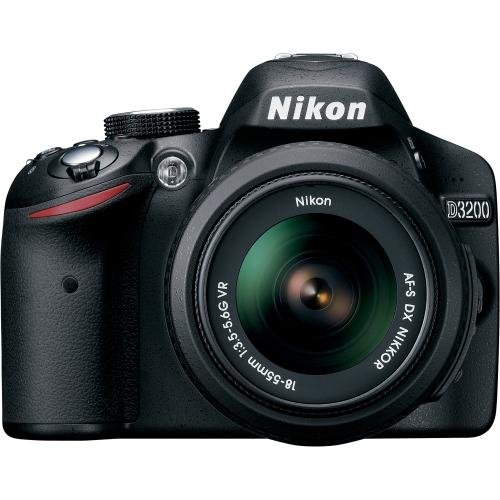
The Nikon D3200 is a legendary entry-level DSLR that kickstarted a generation of hobbyist photographers, and the renewed (manufacturer-refurbished) version with the 18-55mm AF-S DX kit lens delivers that same 24.2-megapixel DX-format sensor and EXPEED 3 processing engine at an astonishingly low entry cost. The sensor is still competitive with modern entry-level cameras — it resolves plenty of detail for sharp 24×36-inch prints, and the wide ISO range (100-6400, expandable to 12800) gives you flexibility in varied lighting. The guide mode, which walks new users through aperture, shutter speed, and ISO adjustments with visual cues, remains one of the best built-in tutorials ever included on a DSLR.
The 11-point autofocus system is contrast-detect, which means it is slower and less confident in low light than modern phase-detect mirrorless systems, but for stationary subjects in decent light it locks accurately. The 18-55mm f/3.5-5.6 lens is known for its sharp center resolution and decent color rendition, and the 3.0-inch 921k-dot LCD is clear for reviewing shots. The D3200 also records 1080p Full HD video at 30 fps with full-time autofocus, though AF during video is noisy and slow — plan on manual focusing for video clips. The battery life is genuinely excellent, often yielding over 500 shots per charge.
The main caveats are the lack of built-in Wi-Fi (you need an optional adapter for wireless transfer), the small 0.8x magnification optical viewfinder, and the fact that the renewed units may show minor cosmetic wear like rubbed-off button icons or lens wobbly fit on some copies. For a student, a parent documenting family life, or anyone wanting to learn photography fundamentals with a proper DSLR before upgrading, the D3200 at this price is an unbeatable educational tool.
Why it’s great
- 24.2MP DX-format sensor delivers detail and dynamic range that still holds its own against modern entry-level cameras.
- Guide mode teaches beginners about aperture, shutter speed, and ISO with practical examples.
- Excellent battery life — regularly achieves 500+ shots per charge in mixed use.
- AF-S 18-55mm kit lens is sharp in the center and offers optical stabilization for handheld shooting.
Good to know
- No built-in Wi-Fi, so transferring images requires a separate adapter or a card reader.
- 11-point contrast-detect AF is slow and noisy in low light, and does not track moving subjects well.
- Video autofocus is slow and loud; manual focus is recommended for video use.
- Renewed units may show cosmetic wear (scuffs, worn text); verify the shutter actuation count if possible.
9. Kodak PIXPRO Astro Zoom AZ528
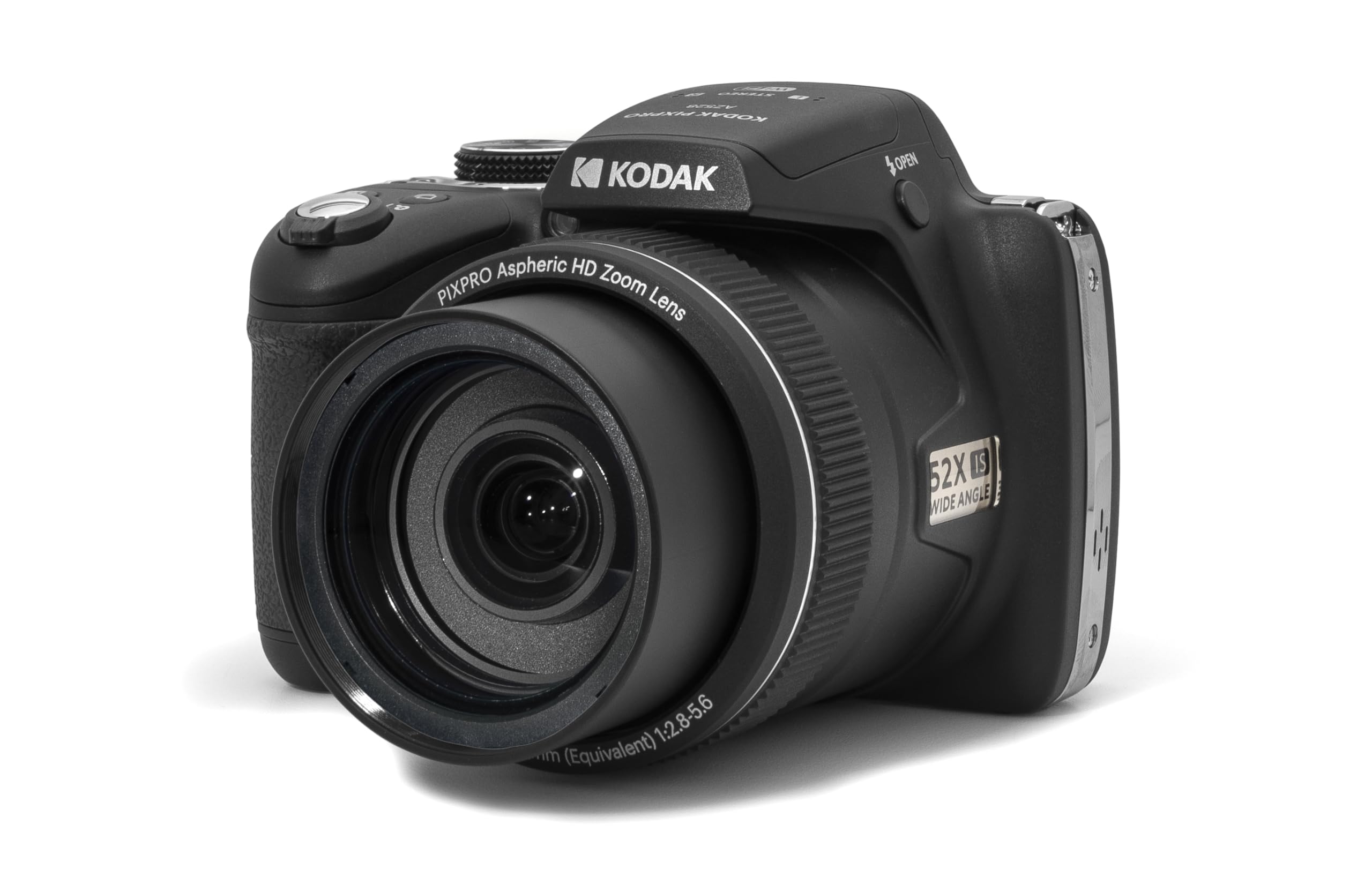
The Kodak PIXPRO AZ528 delivers a 52X optical zoom range (24-1248mm equivalent) at a price that undercuts almost every other superzoom on the market, making it a serious consideration for anyone whose primary need is reaching distant subjects without investing in expensive telephoto glass. The 16-megapixel BSI CMOS sensor is backside-illuminated, which improves light gathering compared to older front-illuminated sensors in the same class, and the built-in optical image stabilization helps keep long-telephoto shots steady enough for bird feeders, sports fields, and scenic overlooks. The 3-inch LCD screen is clear for composing and reviewing images in most lighting conditions.
Built-in Wi-Fi is a welcome feature at this price — it lets you transfer images directly to your smartphone for social sharing and also allows you to use your phone as a remote live viewfinder, which is useful for wildlife setups where you want to trigger the camera from a distance to avoid scaring subjects. The 6 fps burst mode is respectable for capturing sequences of moving subjects, and the 1080p Full HD video recording at 30 fps is adequate for casual travel clips and family events. The camera accepts SD, SDHC, and SDXC cards up to 512 GB, giving you ample storage for long shooting days.
The compromises are predictable at this price tier: the small sensor size produces noticeable noise beginning at ISO 400, so low-light and indoor photography will be grainy without flash. The autofocus is contrast-detect, and it hunts more than phase-detect systems when the subject lacks contrast or the zoom is at full reach. The body is mostly plastic and can scuff easily, and the battery life is shorter than the competition — several reviewers noted the need to recharge after a few hours of active zoom use. For outdoor, daylight shooting where zoom reach is the absolute priority and the budget cannot stretch further, the AZ528 is the clear choice.
Why it’s great
- 52X optical zoom (24-1248mm equivalent) provides extraordinary reach at a very low entry price.
- BSI CMOS sensor offers better low-light performance than older 1/2.3-inch sensors at this tier.
- Built-in Wi-Fi for wireless image transfers and smartphone remote control.
- 6 fps burst mode is useful for capturing action sequences in good light.
Good to know
- Small sensor produces visible noise above ISO 400 — avoid low-light shooting without flash.
- Contrast-detect autofocus hunts in low contrast and at full telephoto reach.
- Plastic body scuffs easily; battery life is limited during extended zoom sessions.
- Menu system is functional but not as polished as Canon or Nikon interfaces.
FAQ
Is a bridge camera with a 60X zoom better than a cheap DSLR for wildlife?
What does ‘renewed’ or ‘manufacturer refurbished’ mean for a camera?
How many AF points do I really need for everyday photography?
Is it worth buying a full-frame camera like the Canon EOS RP on a budget?
What memory card speed do I need for 4K video and fast bursts?
Final Thoughts: The Verdict
For most users, the best cheap camera for photography winner is the Canon EOS R8 because it delivers full-frame image quality, elite autofocus, and 4K 60p video in a lightweight body that outperforms everything else in its price range. If you want the lowest-cost path to full-frame shallow depth of field for portraits and travel, grab the Canon EOS RP bundle. And for maximum telephoto reach at the lowest entry price — ideal for birding and outdoor sports — nothing beats the Panasonic Lumix FZ80D.

Mo Maruf
I created WellFizz to bridge the gap between vague wellness advice and actionable solutions. My mission is simple: to decode the research and give you practical tools you can actually use.
Beyond the data, I am a passionate traveler. I believe that stepping away from the screen to explore new environments is essential for mental clarity and physical vitality.