Our readers keep the lights on and my smoothie glass nicely filled. As an Amazon Associate, I earn from qualifying purchases.
The biggest barrier to a great game night isn’t a bad rulebook—it’s the price tag. Too many promising boxes sit on shelves because the cost per play feels risky. The trick is knowing which ones deliver actual strategic depth or genuine social friction instead of a stack of forgettable prompts.
I’m Mohammad Maruf — the founder and writer behind WellFizz. I’ve spent hundreds of hours cross-referencing customer feedback, component quality reports, and rule complexity scores to separate the true value picks from the filler in this crowded category.
The best way to stock a shelf without draining your wallet is to focus on games that reward repeat plays and resist group burnout. That’s where this guide to the best cheap board games comes in, filtering out the gimmicks and spotlighting only the ones that earn their keep.
How To Choose The Best Cheap Board Games
A low price doesn’t automatically mean a good deal. The games that survive in the budget space earn their keep through high player counts, tight rulebooks, and components that don’t disintegrate after one shuffle. Here are the three factors that separate a smart buy from a shelf-sitter.
Player Count & Flexibility
The best budget games work for both a quiet couple and a rowdy group of eight. Games that cap at four players force you to exclude people or buy multiple copies. Look for products that list a wide range, ideally 2-12, so one box covers everything from a date night to a holiday gathering. This flexibility multiplies the value without adding any cost.
Replay Value vs. One-Shot Humor
Many cheap games rely on reading a deck of cards until the jokes feel stale. The durable ones add variable mechanics, scoring systems, or evolving objectives that change from round to round. Before buying, check whether the included components (dice, tokens, special cards) create enough combinatorial variety to keep the experience fresh after five, ten, or twenty plays. If the game is just a deck of prompts, it’s a rental, not an investment.
Component Quality & Portability
Budget games often cut corners on cardstock thickness, box durability, and print clarity. A game worth buying should have cards that survive repeated shuffling without curling, a box that closes securely for travel, and clear, readable text. Check that the box dimensions are small enough to toss in a backpack or carry-on. Games that fall apart or take up too much space defeat the purpose of buying cheap.
Quick Comparison
On smaller screens, swipe sideways to see the full table.
| Model | Category | Best For | Key Spec | Amazon |
|---|---|---|---|---|
| Runs in The Family | Party/Family | Multi-generational bonding | 15-min playtime, 200+ topics | Amazon |
| Twisted Cryptids | Strategy Card | Themed competitive play | 60-min play, 2-4 players | Amazon |
| Put A Finger Down | Party Icebreaker | Large group socializing | 400 cards, 2+ players | Amazon |
| Oh Crud Deluxe Edition | Trick-Taking/Dice | Family strategy nights | 45-min play, 2-12 players | Amazon |
| Cards Against Humanity | Adult Party | Mature humor gatherings | 600 cards, 4+ players | Amazon |
In-Depth Reviews
1. Runs in The Family

Runs in The Family earns the top spot because it solves the hardest problem in budget gaming: getting everyone from age eight to eighty to actually want to play. The core loop is elegant—draw a topic card, write down something that you think matches another player’s answer, and score points for syncing. No long rule explanations, no complicated setup, just immediate engagement. The 200+ topic cards cover enough ground that repeats don’t feel stale, and the dry-erase format means no paper waste between rounds.
What makes this game stand out in the budget tier is its deliberate design for multi-generational play. The prompts spark actual storytelling rather than forcing players to guess obscure trivia. Grandparents, parents, and kids all have an equal shot at winning because the game rewards shared experience, not specialized knowledge. It also travels exceptionally well—the box is thin enough to slide into a laptop bag, making it a natural pick for holidays, camping trips, or restaurant waiting times.
The estimated 15-minute playtime is honest and well-calibrated. You can blast through three rounds in under an hour without anyone checking their phone. Unlike party games that drag past their welcome, Runs in The Family respects its own clock. The only real consideration is the player cap of 2-5, which means larger gatherings might need to split into groups. For the price, this delivers more genuine connection and laughter per minute than any other option on the list.
Why it’s great
- Extremely easy to teach with zero downtime
- Prompts encourage genuine storytelling across generations
- Compact, travel-friendly box design
Good to know
- Limited to 5 players max in a single game
- Dry-erase markers need careful storage to avoid drying out
- Some topic cards may not apply to smaller families
2. Unstable Games Twisted Cryptids
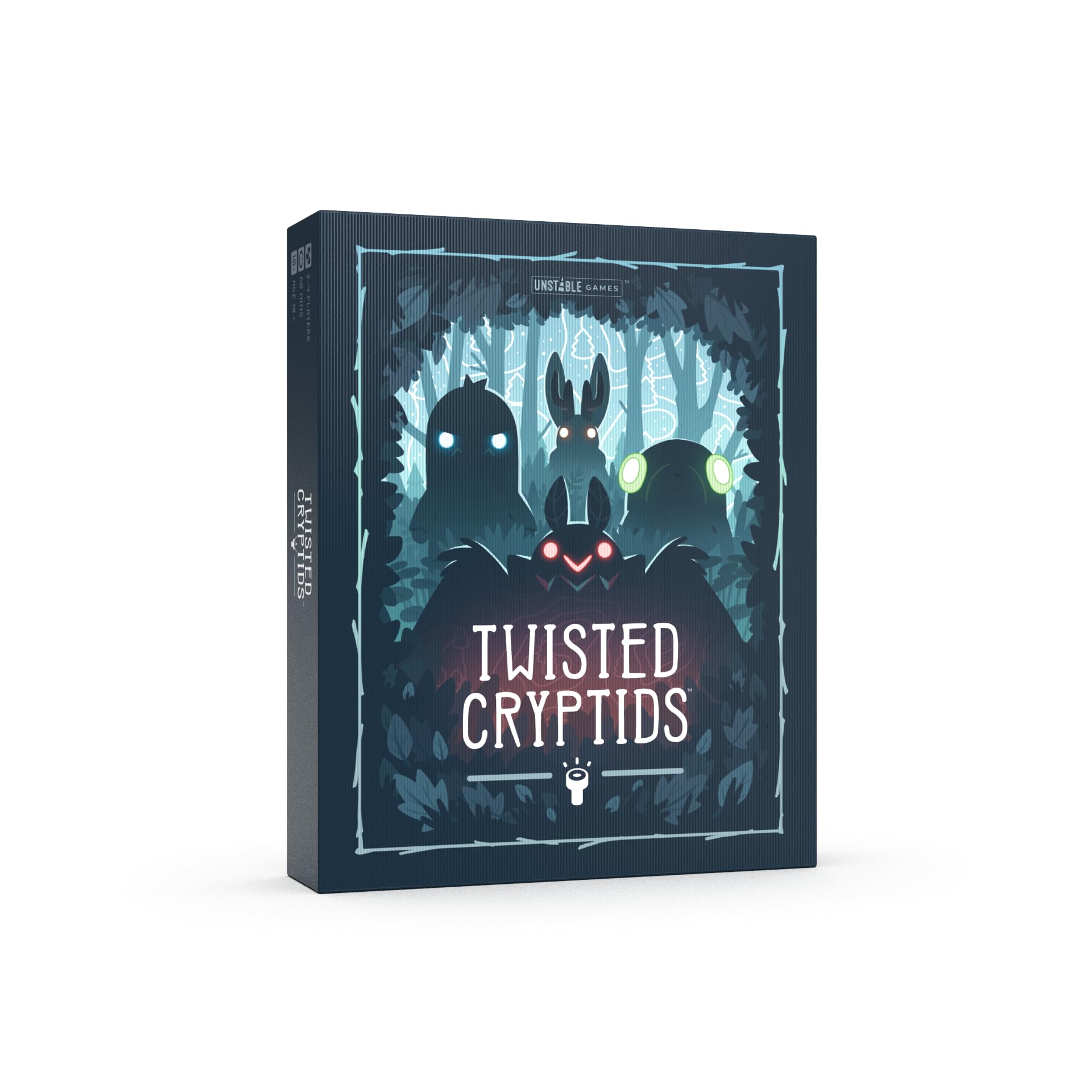
Twisted Cryptids brings genuine strategic weight to the budget category without requiring a PhD in rulebook interpretation. From the creators of Unstable Unicorns and Here to Slay, this title uses hidden trait cards and “take-that” mechanics to create competitive sessions that last about sixty minutes. The goal is to build your cryptid’s legend while sabotaging your opponents’ creatures using action cards and trait combos. The lenticular box art is a nice shelf-worthy touch, but the real star is the gameplay loop that stays tense until the final reveal.
The component quality punches above its price point. The tarot-sized cards feel substantial in hand, the cryptid meeples add tactile satisfaction, and the board art features the signature Unstable Games illustrative style that appeals to both teens and adults. The base game supports 2-4 players, and the availability of expansion packs (Cryptid Culture, Ness is More, Yeti or Not) means you can grow the experience without buying a whole new box. Customer feedback consistently notes that the instructions have a few rough edges on first read, but the game clicks quickly once you start playing.
This is the right pick for groups that want more than pure luck or pure social deduction. The hidden trait system rewards planning and reading the table, but the take-that cards keep things lively enough that analysis paralysis never sets in. Recommended for ages 10 and up, it fits comfortably into family game nights where kids want agency and adults want real decisions. The main caveat is the player cap—if you regularly host groups of five or more, you’ll need to rotate or buy expansions to increase capacity.
Why it’s great
- Genuine strategic depth with hidden trait system
- High-quality tarot-sized cards and meeples
- Expandable with themed packs for long-term variety
Good to know
- Rulebook has minor gaps that require a learning round
- Cards may scuff over time without sleeves
- Limited to 4 players in the base game
3. Put A Finger Down
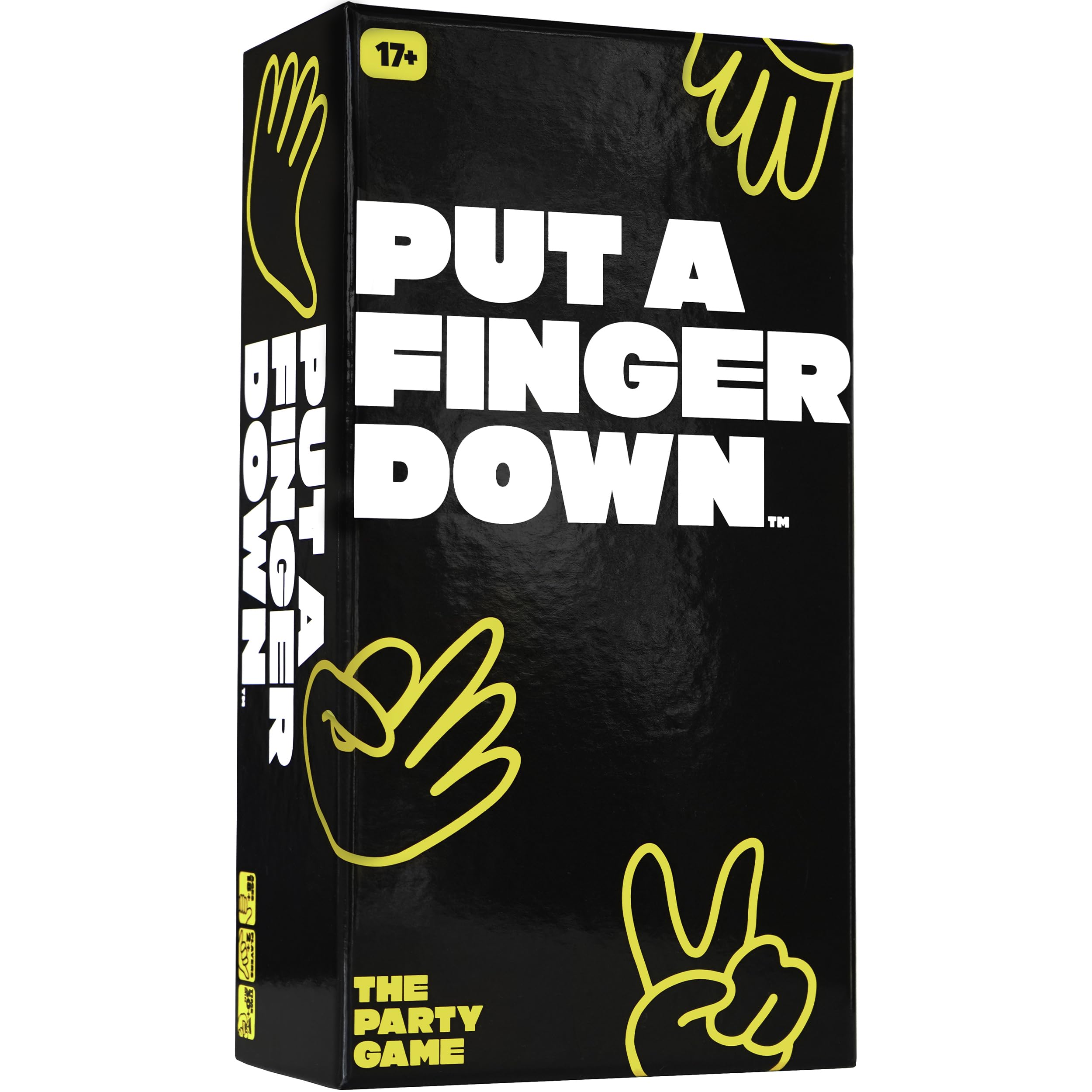
Put A Finger Down translates a viral social trend into a polished card game format that works equally well in person and over video calls. The rules are borderline frictionless: everyone starts with five fingers up, one player reads a card aloud, and you put a finger down if the statement applies to you. The twist comes from special cards that add penalties, surprise challenges, and unexpected prompts that keep energy high. With 400 cards in the box, even extended sessions won’t exhaust the content, and the included adult deck adds an optional raunchier layer for mature groups.
What separates this from typical icebreaker games is the balance between light-hearted prompts and genuinely revealing questions. Customer reviews consistently highlight how the game helps friends learn surprising things about each other, even after years of friendship. The lack of a player limit is a massive advantage for large gatherings, college dorms, or parties where you don’t want to split into teams. The box is compact enough to bring to a bar or picnic, and the 1.5-pound weight makes it easy to carry without feeling cheap.
The main limitation is that replay value depends heavily on the group. Once you’ve cycled through the 400 cards with the same friends, the novelty fades faster than a game with variable mechanics. The 17+ age rating on the standard deck is appropriate, as some prompts touch on adult themes. For mixed-age gatherings, the unrated cards work fine, but younger teens might find some prompts awkward. This is a pure social device—don’t expect strategic depth, but do expect guaranteed laughter for the first several sessions.
Why it’s great
- Zero player limit works for any group size
- Dual deck system (standard and adult) adds flexibility
- Extremely quick to teach and start playing
Good to know
- Replay value drops after exhausting the card pool
- Some prompts may feel repetitive across large groups
- 17+ rating restricts younger teen audiences
4. Oh Crud Deluxe Edition
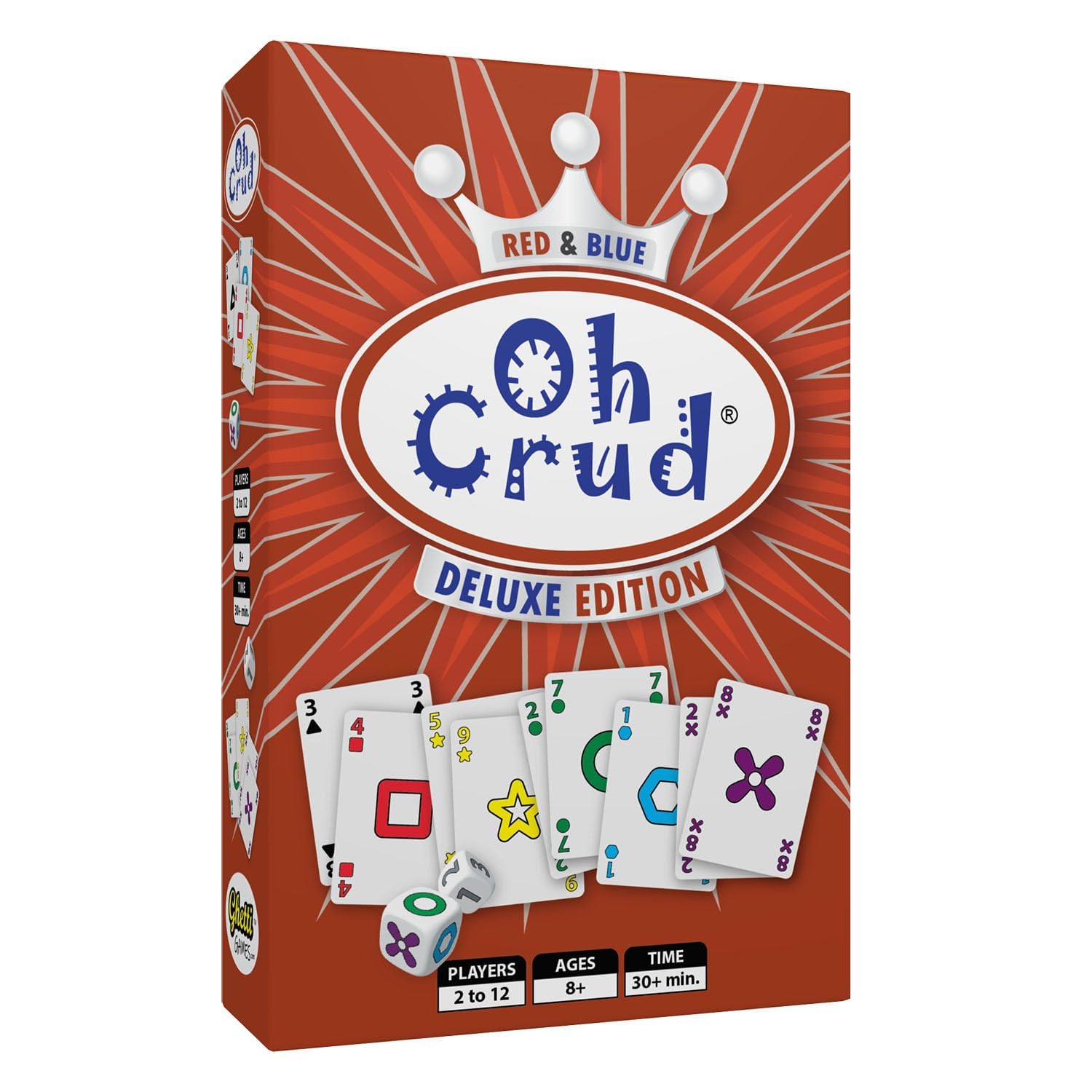
Oh Crud Deluxe Edition is a hybrid card-and-dice game that packs surprising mechanical variety into a small red-and-blue box. The premise is simple: take tricks and roll dice, but avoid accumulating “Crud” points that push your score toward the loss threshold. Each round introduces new twists through special action cards and the dice outcomes, so even though the core rules stay the same, the feel changes constantly. The included scorepad, quick reference cards, and QR-linked tutorial video make setup nearly instant, which matters a lot for family nights with mixed attention spans.
Where Oh Crud really wins is player count flexibility. Supporting 2 to 12 players out of the same box is rare at any price tier, and it eliminates the need to buy expansions just to include more people. The cards are thick and sturdy based on customer reports, and the dice have clean, easy-to-read faces that survive the inevitable table spills. The estimated 45-minute playtime hits a sweet spot—long enough to feel satisfying, short enough to fit multiple rounds in an evening. Families consistently report that ages 9 to 75 enjoy it equally, which is a strong signal for multi-generational value.
The learning curve is gentle but not trivial. Some groups report initial confusion during the first round as they internalize the round types and scoring, but the reference cards and tutorial video smooth this out. The game shines brightest with groups that enjoy light strategy and a bit of friendly sabotage. Pure luck-seekers might find the trick-taking element too deliberate, and hardcore strategists might find the dice too random. But as a mid-range compromise that fills 45 minutes with engaged laughter, it outperforms many games at twice the price.
Why it’s great
- Handles 2-12 players with no expansion needed
- Dice and card combination adds real mechanical variety
- Durable components built for frequent travel use
Good to know
- First round requires a learning period for some groups
- Pure luck players may find the trick-taking too slow
- Box is small but not pocket-sized for true travel
5. Cards Against Humanity

Cards Against Humanity has earned its place as the benchmark for adult party games by perfecting a simple formula: one judge reads a black card with a fill-in-the-blank prompt, and every other player submits their funniest white card response. The judge picks the best pairing, scores a point, and play rotates. Version 2.0 includes over 150 new cards for a total of 500 white and 100 black cards, providing enough raw material for many sessions before repeats become predictable. The included booklet of sensible and preposterous alternate rules extends longevity for groups that want to experiment.
The cultural footprint of this game means that most adults already know the tone: aggressively irreverent, darkly humorous, and absolutely not suitable for conservative gatherings or players under 18. The card stock is adequate but not premium—some users note a difference in feel between US-printed and China-printed batches over the years. The box is simple cardboard with a magnetic closure that holds up reasonably well to shelf storage. The true value here is in the writing quality of the cards themselves, which remain sharp and current thanks to periodic content refreshes from the publisher.
The biggest limitation is audience dependency. With the wrong group, the game falls flat or creates genuine discomfort. With the right group, it generates hours of memorably inappropriate laughter. Low replay value with the same fixed group is a known issue—once you’ve seen most of the card combinations, the surprise diminishes. This is best treated as a special-occasion game for mixed groups of new players rather than a weekly rotation staple. For its target demographic and price, it remains one of the most culturally significant cheap board games available, even if its appeal is deliberately narrow.
Why it’s great
- Huge 600-card deck ensures long-term variety
- Extremely simple rules taught in under 60 seconds
- Version 2.0 includes fresh content and alternate rules
Good to know
- Explicitly adult content—not for minors or conservative groups
- Replay value drops with the same recurring players
- Card quality is functional but not premium-grade
FAQ
How many plays should I expect from a cheap card game before it gets boring?
Can cheap board games have decent component quality or will they feel flimsy?
What is the minimum player count to justify buying a cheap board game?
Final Thoughts: The Verdict
For most users, the best cheap board games winner is the Runs in The Family because it delivers reliable, screen-free bonding across multiple generations without complicated rules or fragile components. If you want genuine strategic depth and expandable play, grab the Unstable Games Twisted Cryptids. And for parties with zero player cap and instant laughs, nothing beats the Put A Finger Down.

Mo Maruf
I created WellFizz to bridge the gap between vague wellness advice and actionable solutions. My mission is simple: to decode the research and give you practical tools you can actually use.
Beyond the data, I am a passionate traveler. I believe that stepping away from the screen to explore new environments is essential for mental clarity and physical vitality.