Our readers keep the lights on and my smoothie glass nicely filled. As an Amazon Associate, I earn from qualifying purchases.
Specs are compiled from manufacturer listings and verified buyer reviews and can change over time — please confirm the key details on the product page before buying.
You want a cheap Bluetooth speaker that delivers real bass, not just muddy rattle. The problem is that most budget models promise “pounding lows” but give you thin, tinny sound instead. I cut through the noise to find the three speakers that genuinely deliver low-end thump without making you wince — if you need an all-day party companion, a pocket-sized travel sidekick, or a loud outdoor rig that can handle a splash.
I’m Mohammad Maruf — the founder and writer behind WellFizz. This guide is built by comparing the manufacturers’ published specifications and the patterns across verified customer reviews, so you get each pick’s real strengths and trade-offs instead of marketing spin.
Every speaker here proves that big sound does not require a big budget — here are the best cheap bluetooth speakers with bass you can buy right now, chosen for their real-world low-end performance and lasting value.
Our Picks at a Glance
How To Choose The Best Cheap Bluetooth Speakers With Bass
Not all budget speakers handle low frequencies the same way. Some use a digital signal processor (a small computer inside the speaker that shapes the sound) to boost bass artificially, while others rely on a larger driver (the physical cone that moves air to create sound) or a dedicated bass port (a tube inside the cabinet that amplifies low-end resonance). Here is what to check before you click buy.
Battery Life vs. Bass Output
Powerful bass drains a battery faster than a neutral sound profile. A speaker that boasts 24 hours of playtime is likely tuned for moderate volume, while a compact 5-hour unit may punch harder per watt. Decide what matters more: all-day playback or short-but-chest-thumping sessions.
Waterproofing and Real-World Durability
An IPX7 rating means the speaker survives being submerged in up to one meter of water for 30 minutes. IP67 adds dust-proofing on top of that. IPX8 goes further — it can handle deeper or longer submersion. If you plan to take your speaker to the pool, beach, or shower, do not settle for anything less than IPX7. An occasional splash of rain does not need that, but a drop in the pool does.
Bluetooth Range and Stability
Range matters more than you think. A 20-meter Bluetooth connection lets you leave your phone on the picnic table while you walk to the grill. A 10-meter range is fine for a small apartment or a single room. Newer Bluetooth versions (like 5.4) also offer more stable connections and lower latency than older ones (like 5.0).
Size and Portability Trade-Offs
A large speaker with a 60-watt output will fill a yard with sound, but it weighs over a pound and takes up real backpack space. A palm-sized unit slips into a cup holder but cannot fill a large room. Pick the form factor that matches where you will actually use it most — kitchen counter, hiking trail, or campsite.
Quick Comparison
In‑Depth Reviews
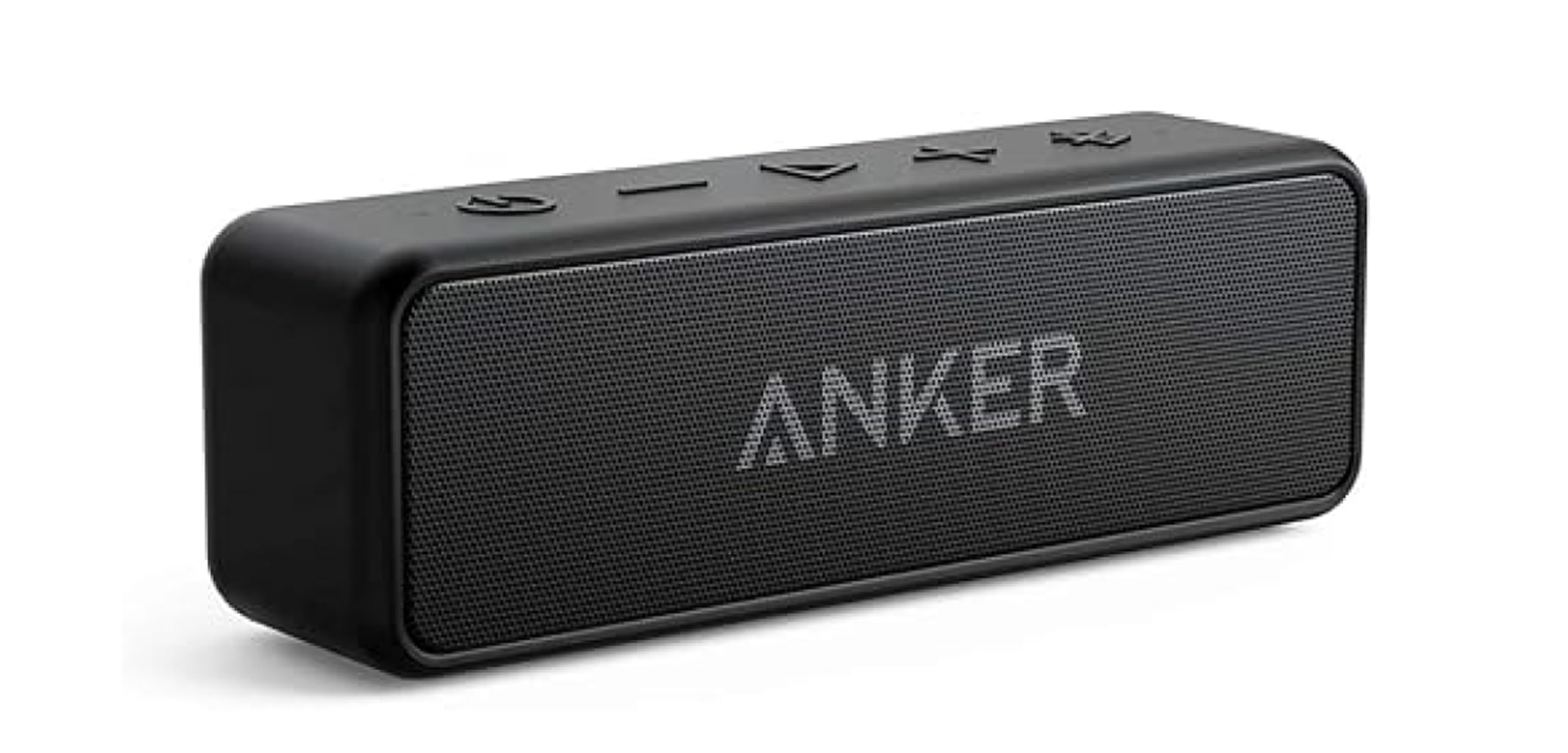
1. Anker Soundcore 2 Portable Bluetooth Speaker
The low-maintenance speaker that keeps playing all day without reaching for a charger.
The Anker Soundcore 2 is the stayer of the group. Its 5,200mAh lithium-ion battery delivers 24 hours of non-stop music — buyers report it lasts a full week of casual use on one charge. That is nearly five times the runtime of the JBL Go 3, making it the obvious choice if you want to pack for a weekend trip and never worry about finding an outlet. The 12-watt output, driven by dual neodymium drivers (magnets that help the speaker cone move more efficiently for clearer sound), pushes room-filling volume. Anker’s BassUp technology bumps the low-end frequencies, so kick drums and bass lines land with authority even at moderate volumes.
On the durability front, the IPX7 waterproof rating means it handles rain, splashes, and even a drop in a shallow puddle without issue — it survives 30 minutes submerged in up to a meter of water. The 20-meter Bluetooth range is double that of the JBL Go 3, so you can leave your phone on the patio table and walk across the yard or into the next room without the audio cutting out. Buyers consistently praise the sound quality — it is the most-discussed aspect among thousands of owners, followed closely by build quality and value for money.
The honest trade-off here is reliability over the long haul. While the vast majority of users rave about its performance, a small number report units that stopped working after several months. The recurring message is that this speaker is a fantastic value — many owners call it “outstanding value” — and pairing two units for stereo makes it even better.
What wins people over
- 24-hour battery life — a full day of playback without charging
- IPX7 waterproofing that shrugs off rain and splashes
- BassUp technology delivers noticeable low-end punch for the size
- 20-meter Bluetooth range lets you roam freely
- Compact design that is lightweight and easy to carry
The thing to know
- Long-term reliability is a mixed note — most work perfectly, some fail over time
- Volume at maximum can distort slightly on very bass-heavy tracks
Your best bet if… you need a speaker that lasts all day and handles the outdoors — the marathon runner of this list.
Think twice if… you need something truly pocket-sized or you are willing to trade battery life for a louder, more powerful max output.
2. Monster S620 Bluetooth Speaker
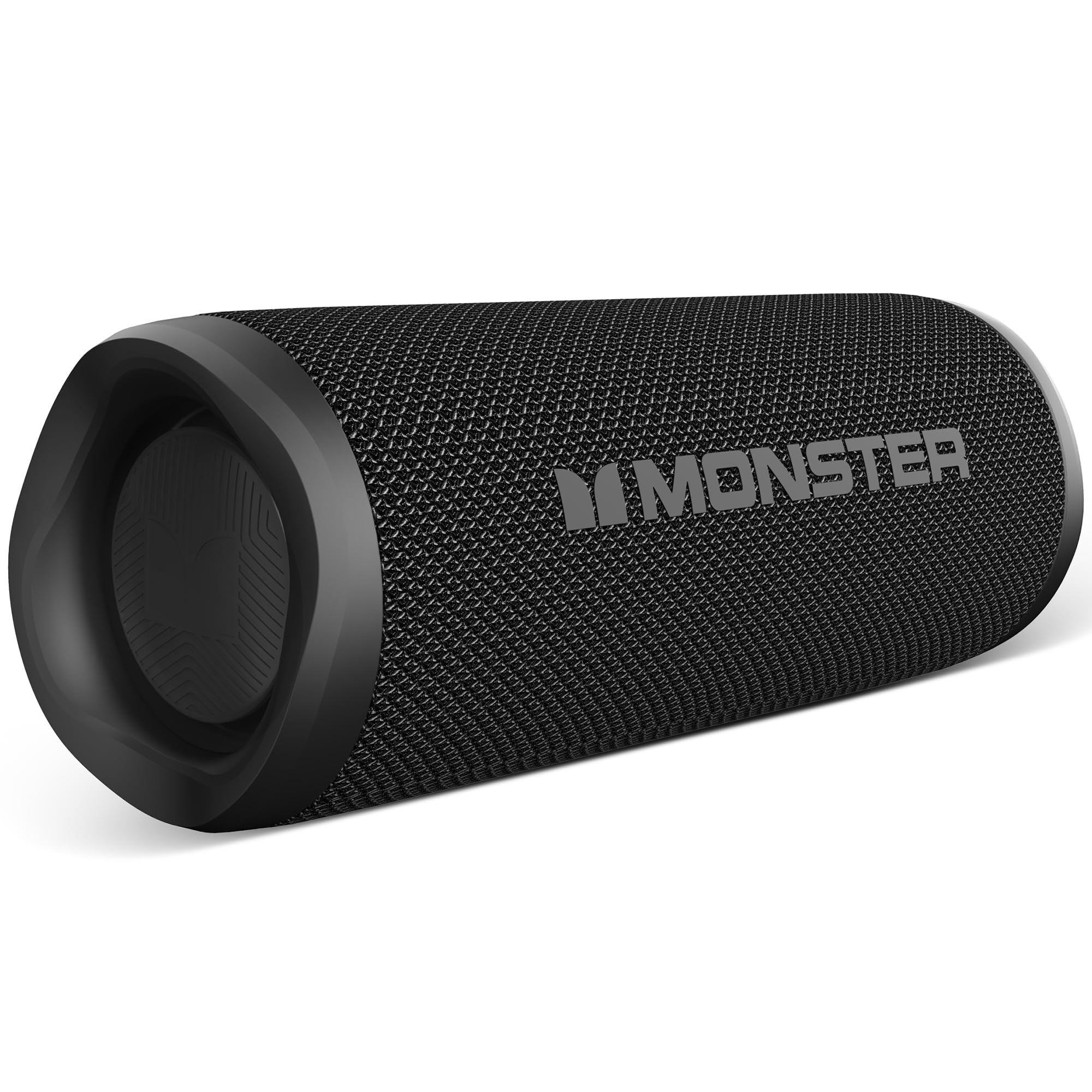
The bass cannon that turns a backyard barbecue into a block party.
The Monster S620 stands apart from the other two picks with sheer power. It delivers 60 watts of audio output — that is five times the wattage of the Anker Soundcore 2 and enough to fill a large yard or a poolside area without straining. The a neat extra here is the dual EQ modes: switch to indoor mode, and the speaker delivers rich, deep bass that buyers describe as hard-hitting; switch to outdoor mode, and it emphasizes dynamic treble for clearer vocals at a distance. This is the only speaker in this list that can pair two units for true wireless stereo (TWS) and hit a combined 120 watts, turning your setup into surround sound.
Build quality is the second most-praised feature after sound quality, according to owner feedback. The compact cylinder shape — 8.59 inches tall and weighing 1.62 pounds — slips into a backpack or fits in checked luggage, and the included lanyard lets you hang it from a bike or a tent hook. The IPX8 waterproof rating is one step higher than the Anker’s IPX7: it can be submerged deeper and for longer, so a drop in the pool is not a disaster. Bluetooth 5.4 is the newest version in this lineup, giving you a rock-solid connection with fast pairing and lower latency.
Battery life is not specified in the data, which means you should expect moderate runtime at higher volumes — especially with the 60-watt output working hard. Some owners note the battery life is mixed, which is the trade-off for this much power in a portable package. If you need all-day playback, the Anker is the better fit. If you want serious loudness and thumping bass for a party or outdoor gathering, the Monster is the one that gets the job done.
Power over endurance: 60W output with dedicated indoor/outdoor EQ modes that tailor the bass — indoor mode gives you the deep lows owners rave about, while outdoor mode keeps the sound clear across an open space.
The honest limit: The battery life does not match the Anker, so plan for shorter sessions at high volume — and the compact size means the bass can sound boxy at the very top end of the volume range.
Reach for this if… you need maximum volume and chest-thumping bass for outdoor parties, pool hangs, or camping with a crowd.
Look elsewhere if… you need all-day battery life from a single charge or want something small enough to pocket.
3. JBL Go 3 Portable Mini Bluetooth Speaker

The palm-sized speaker that disappears into your bag but refuses to sound like it.
The JBL Go 3 is the smallest and most portable entry here — and for its size, the bass is genuinely surprising. Buyers describe it as “clear audio with surprising bass for its size,” and the 40mm dynamic driver (the physical cone that moves air to create sound) manages to deliver punch that defies the compact frame. It weighs almost nothing and tucks into a jacket pocket, a cup holder, or the smallest pouch in your backpack. The IP67 waterproof and dustproof rating means it is fully sealed against both water and dirt — it can survive a dunk and a drop in the sand, making it ideal for the beach or a dusty trail.
The battery life is 5 hours on a single charge, and the charge time is also 5 hours. That is the Achilles heel here — compared to the Anker’s 24-hour run, the Go 3 needs much more frequent charging. The Bluetooth range is 10 meters, half of what the Anker offers, so your phone needs to stay closer. But for what it is — an ultra-portable speaker you toss into a day bag for a quick outing — the trade-off makes sense. The JBL signature sound is widely praised for being loud and clear, and the pair of owners who have had theirs for years report it still works perfectly, with one unit surviving an overnight thunderstorm outdoors.
The catch is straightforward: the JBL Go 3 is not an all-day speaker. It is built for short bursts — a beach afternoon, a shower session, a quick park hang. The bass is impressive for the size but it does not rival the Monster’s 60-watt output or the Anker’s BassUp depth. If you want something that slips into a pocket and still sounds great, this is the pick. If you need marathon playtime or room-shaking lows, look at the bigger options on this list.
Tiny but mighty: The defining spec is its size — the JBL Go 3 fits in your palm yet delivers punchy bass. The IP67 rating adds dust protection the other two do not offer.
The real-world limit: 5-hour battery life means daily charging if you listen a lot, and the 10-meter Bluetooth range keeps your phone close.
Perfect for… travelers, beach-goers, and anyone who wants great sound in the smallest possible package.
skip it if… you need a speaker that lasts through a full workday or party without plugging in.
Understanding the Specs
Waterproof Ratings (IPX7 vs IP67 vs IPX8)
The “IP” stands for Ingress Protection, followed by two numbers. The first digit (0-6) is dust protection — 6 means fully dust-tight, X means it was not tested for dust. The second digit (0-8) is water protection. IPX7 means the speaker can be submerged in up to one meter of water for 30 minutes. IP67 adds dust-tightness to that same water standard. IPX8 goes further, allowing deeper or longer submersion — typically 1.5 meters or more for 30 minutes. For poolside or rain, IPX7 is plenty. For the beach or dusty trails, IP67 is better. For full immersion in deeper water, IPX8 is the most sturdy.
Bass Technologies (BassUp vs EQ Modes)
Budget speakers cannot produce deep bass purely through their drivers — the physical cones are too small. Instead, they use digital tricks. Anker’s BassUp is a digital signal-processing algorithm that boosts low-end frequencies before they reach the driver, making kick drums and bass lines sound fuller. The Monster S620 uses two physical EQ modes: indoor mode tunes the speaker for deeper bass by adjusting the frequency response curve, while outdoor mode shifts toward high-end clarity to project across open spaces. Neither is a replacement for a dedicated subwoofer, but both make a noticeable difference at the price point.
Bluetooth Range and Version
Bluetooth range determines how far your phone can be from the speaker before the audio stutters or drops. A 10-meter range (about 33 feet) works fine in a single room or small apartment. A 20-meter range (about 66 feet) lets you leave your phone in the house while you sit in the yard. Newer Bluetooth versions (like 5.4 on the Monster S620) support more stable connections and lower audio latency than older versions (like 5.0 on the Anker). For casual listening, version differences matter less than range — go with the longer range if you plan to move around.
Battery Life Realities
A speaker’s advertised battery life is usually measured at moderate volume (around 50 percent) with the bass-enhancement features turned off or at default. Cranking the volume to maximum or using heavy bass-boosting modes can cut the runtime by 30-50 percent. The Anker Soundcore 2’s 24-hour rating is a real-world advantage — it means you can leave it on for a full day without thinking about it. The JBL Go 3’s 5-hour rating is honest but means you will charge it daily if you listen regularly. The Monster S620 does not publish its battery life in the data, so assume moderate runtime given its 60-watt output.
FAQ
Can I pair two cheap Bluetooth speakers for stereo sound?
Will an IPX7 speaker survive being dropped in the pool?
How long does the battery last on these budget speakers?
Which speaker has the most bass for the money?
Can I use these speakers for hands-free calls?
Is the JBL Go 3 loud enough for outdoor use?
How do I charge these speakers?
Which speaker is best for travel and portability?
Final Thoughts: The Verdict
For most people, the best cheap Bluetooth speaker with bass is the Anker Soundcore 2 because it combines strong bass, 24-hour battery life, and IPX7 waterproofing at a price that is tough to top. If you need full-party volume that can fill a yard, grab the Monster S620 for its 60-watt output and dual EQ modes. And for pocket-sized portability that still delivers surprising low-end punch, the JBL Go 3 is the one to reach for. Pick the one that matches your real-world use — all-day playback, party loudness, or grab-and-go convenience — and you will not be disappointed.
How We Picked
We do not accept paid placement. Every pick is matched to a real buyer and a real use-case; we do not hands-on test units.
Sources & Methodology
Specifications: manufacturer listings and product documentation. Review insights: verified customer reviews, as of July 2026. Pricing: not shown on this page (it changes often); check the current price via the retailer link.
As an Amazon Associate, WellFizz earns from qualifying purchases. This does not affect which products we feature.
Related Guides

Mo Maruf
I created WellFizz to bridge the gap between vague wellness advice and actionable solutions. My mission is simple: to decode the research and give you practical tools you can actually use.
Beyond the data, I am a passionate traveler. I believe that stepping away from the screen to explore new environments is essential for mental clarity and physical vitality.