Our readers keep the lights on and my smoothie glass nicely filled. As an Amazon Associate, I earn from qualifying purchases.
Finding a reliable first sewing machine on a tight budget often feels like a gamble between frustrating jams and poor stitch quality. You need a machine that threads easily, handles basic fabrics without chewing them up, and actually helps you learn rather than fight the hardware.
I’m Mohammad Maruf — the founder and writer behind WellFizz. I’ve spent hundreds of hours cross-referencing spec sheets, analyzing customer feedback on mechanical durability and stitch consistency, and filtering through the noise to find the true budget-friendly workhorses in the beginner sewing machine market.
Before you spend a dime, here is the complete WellFizz guide to the cheap beginner sewing machine that actually delivers on performance and long-term value.
How To Choose The Best Cheap Beginner Sewing Machine
Choosing a first sewing machine under a tight budget means prioritizing the features that prevent frustration. Beginners often overvalue stitch count and undervalue the bobbin system, frame material, and ease of threading. Focus on these three areas and you will avoid the common pitfalls that cause new sewists to quit.
Bobbin System: Drop-In vs. Front-Loading
A top drop-in bobbin with a clear cover is far more beginner-friendly than a front-loading vertical oscillating hook. Drop-in bobbins are easier to insert and let you see thread supply at a glance. Front-loading systems, while durable, require more precision to install correctly and are harder to troubleshoot when tension issues arise.
Frame Material: Metal Chassis vs. Plastic Body
A metal internal frame adds weight and stability, reducing vibration at higher speeds and helping the machine handle multiple fabric layers without skipping stitches. All-plastic bodies are lighter and cheaper, but they tend to flex under pressure, leading to inconsistent stitch quality over time.
Automatic Features That Actually Help
An automatic needle threader and a one-step buttonhole are the two features that save beginners the most time. Manual needle threading is a major cause of eye strain and frustration. A one-step buttonhole eliminates the guesswork of measuring and manually turning the fabric, delivering consistent results every time.
Quick Comparison
On smaller screens, swipe sideways to see the full table.
| Model | Category | Best For | Key Spec | Amazon |
|---|---|---|---|---|
| Brother XM3700 | Mechanical | Learning fundamentals | 37 built-in stitches / 5 feet | Amazon |
| Janome MOD-15 | Mechanical | Smooth straight stitching | 15 stitches / 5-piece feed dogs | Amazon |
| Brother SM1400 | Mechanical | Lightweight portability | 14 stitches / LED work area | Amazon |
| SINGER 4432 Heavy Duty | Mechanical | Thick fabrics & denim | 32 stitches / 1100 st/min | Amazon |
| MILLEPUNTI MKR45 | Mechanical | Auto needle threading | 25 stitches / 4 feet | Amazon |
| PooLin EOC02 | Computerized | Maximum stitch variety | 200 stitches / LCD screen | Amazon |
| Janome 2212 | Mechanical | Long-term reliability | 12 stitches / metal frame | Amazon |
| StitchMaster Pro 728 | Mechanical | Ultra-portable learning | 14 stitches / dual-speed | Amazon |
| SINGER 6800C | Computerized | Advanced features on budget | 586 apps / 10 feet | Amazon |
In‑Depth Reviews
1. Brother XM3700 Sewing Machine

The Brother XM3700 hits the sweet spot for beginners by pairing 37 built-in stitches with a jam-resistant drop-in top bobbin. That bobbin system alone eliminates one of the most common beginner headaches — tangled lower threads. The automatic needle threader works well once you get the hang of the lever position, and the free arm makes hemming sleeves and cuffs straightforward.
Weighing just over 12 pounds, this machine is light enough to store on a shelf but heavy enough to stay planted during medium-speed sewing. The included five presser feet cover the basics: zigzag, zipper, blind stitch, buttonhole, and button sewing. Users report smooth handling across cotton, felt, and even lightweight silk without tension fussing.
The reverse stitch lever placement takes a minute to locate — it sits on the side rather than the front — but after a few projects it becomes second nature. This is the most balanced all-around choice for someone who wants room to grow without leaving the budget zone.
Why it’s great
- High stitch count (37) for the price
- Jam-resistant drop-in bobbin is beginner-friendly
- Lightweight yet stable during use
Good to know
- Auto threader takes practice to master
- Reverse lever position takes getting used to
2. Janome MOD-15 Easy-to-Use Sewing Machine

The Janome MOD-15 delivers a noticeably smoother straight stitch than most machines in its tier, thanks to its five-piece feed dog system. That design grips the fabric more evenly during transport, reducing puckering on lightweight fabrics like cotton lawn and quilting cotton. The 15 stitches include a four-step buttonhole that, while not as fast as a one-step, gives you full control over buttonhole size.
Threading is straightforward with the printed guides on the machine, and the top-loading bobbin with a clear cover makes monitoring thread supply effortless. The adjustable stitch length and zigzag width give you fine control without diving into computer menus. At just under 12 pounds, it is slightly heavier than the Brother SM1400, which contributes to its vibration-free operation at moderate speeds.
Fleece and high-loft fabrics can generate lint that clogs the feed dogs, so regular cleaning with the included brush is essential. The 25-year limited warranty adds peace of mind that many budget machines lack.
Why it’s great
- Exceptional straight stitch quality for the price
- Five-piece feed dogs prevent fabric slipping
- Solid metal internal frame reduces vibration
Good to know
- Lint buildup on fleece requires regular cleaning
- Limited to 15 stitches — fewer decorative options
3. Brother SM1400 14-Stitch Sewing Machine

The Brother SM1400 is a no-nonsense mechanical machine built for hemming, alterations, and small projects. Its 14 stitches include a four-step auto-size buttonhole, and the brightly lit LED work area is a genuine advantage when working with dark fabrics or in low-light rooms. The machine is surprisingly quiet for its class — reviewers consistently note how little noise it makes compared to older budget models.
Weighing 12.8 pounds, it is stable enough for steady stitching yet easy to move between rooms. Threading is simple thanks to the color-coded guides, and the drop-in bobbin system is jam-resistant. Users report that YouTube tutorials fill in the gaps left by the sparse printed manual, which is a common trade-off at this price point.
The presser foot lift sits on the right side of the machine, which feels unusual if you are used to a rear lever. Some beginners also find the thread guide near the needle hard to access. But for pure alteration work — shortening curtains, hemming pants, replacing zippers — this machine performs reliably without unnecessary complexity.
Why it’s great
- Very quiet operation for a mechanical machine
- Bright LED lighting helps with fabric detail work
- Lightweight and easy to store
Good to know
- Printed manual is minimal; rely on video tutorials
- Foot lift on right side is an unusual placement
4. SINGER Heavy Duty 4432 Sewing Machine
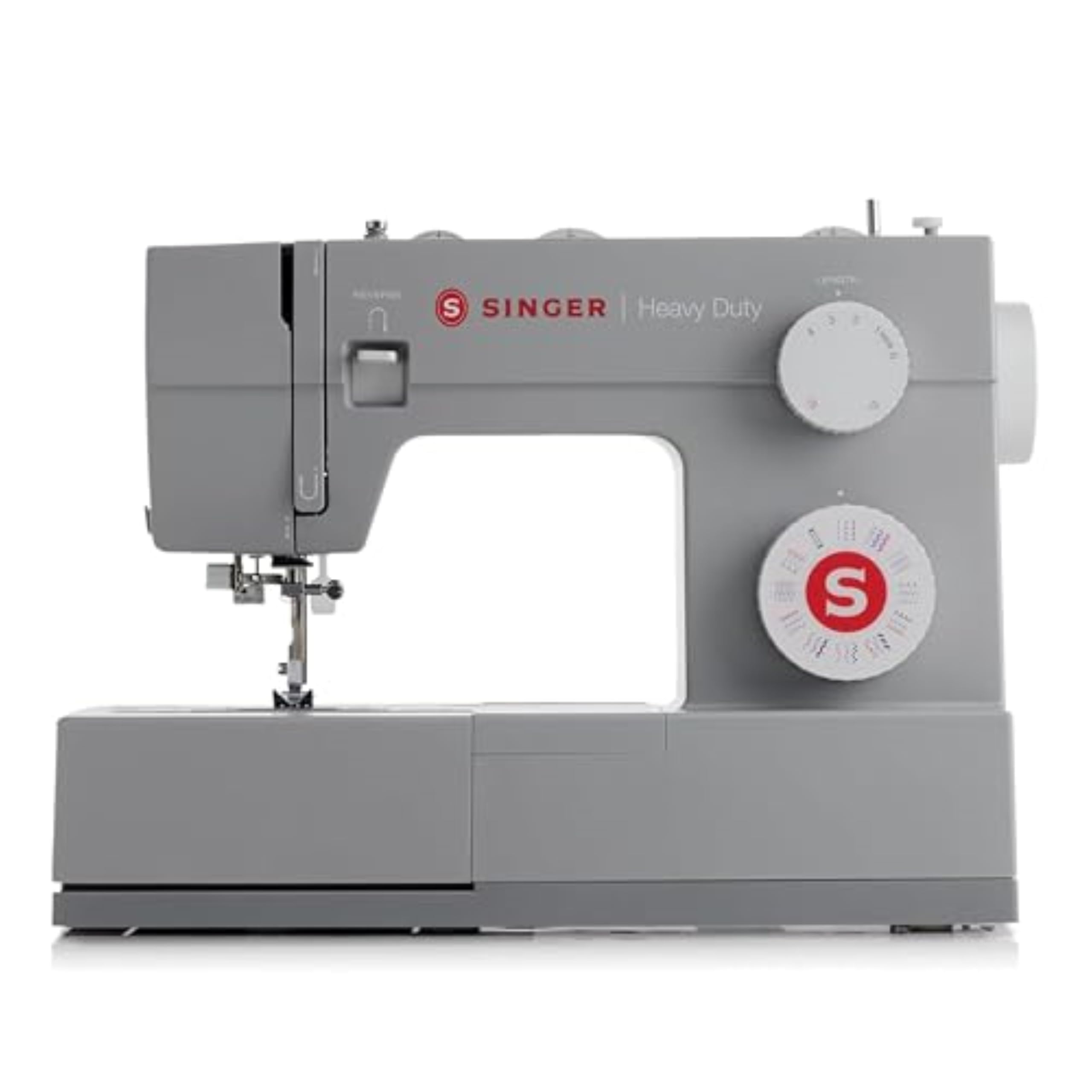
The SINGER 4432 is built for speed and power, with a motor 50 percent stronger than standard machines and a top speed of 1,100 stitches per minute. This makes it the go-to option if your projects involve denim, canvas, or multiple fabric layers. The heavy-duty metal frame keeps the machine stable at high speeds, and the 32 built-in stitches cover everything from basic straight stitching to decorative patterns.
The top drop-in bobbin with a clear cover is jam-proof and easy to monitor, and the one-step buttonhole foot delivers consistent results without manual measuring. A reverse lever reinforces seams with a simple push. Users with decades of sewing experience praise its durability — one reviewer reported their previous SINGER heavy-duty model lasting over 25 years.
The machine does not include a printed manual, which is frustrating at this price point. The needle threader mechanism can also be finicky, and the on/off switch is placed low on the side, making it awkward to reach. If you plan to sew through thick materials regularly, the 4432 is worth the extra investment over lighter entry-level machines.
Why it’s great
- Powerful motor handles denim and canvas easily
- High stitch speed for long seam projects
- Metal frame ensures long-term durability
Good to know
- No printed manual included
- On/off switch placement is awkward to reach
5. MILLEPUNTI MKR45 Beginner Sewing Machine
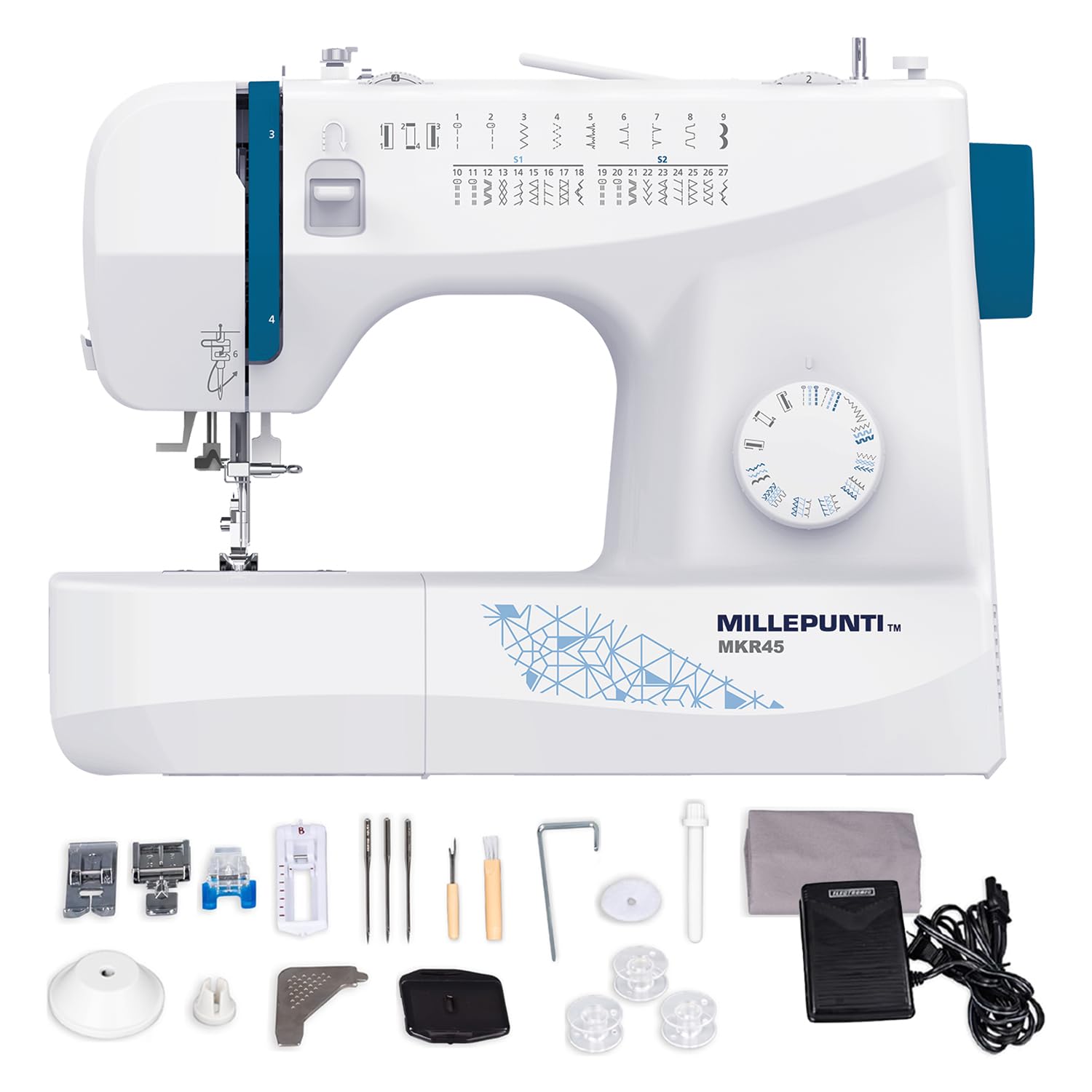
The MILLEPUNTI MKR45 is designed with accessibility in mind, featuring an automatic needle threader that works well even for users with limited eyesight or fine motor challenges. The 25 built-in stitches include utility, stretch, and decorative options, giving beginners room to experiment without overwhelming complexity. The free arm design makes cuff and sleeve hemming much easier than on a flatbed machine.
The included accessory kit is generous — four presser feet, three bobbins, a needle variety pack, seam ripper, quilting guide, and a dust cover. The machine handles a wide range of fabrics from delicate silk to heavier cotton twill, and users consistently note that it runs quietly. Setup out of the box is straightforward, with clear instructions guiding first-time users through threading and bobbin winding.
A small percentage of users report persistent thread breakage issues that could not be resolved through tension adjustments or rethreading. While these reports are not universal, they suggest some quality control variance. If you get a good unit, the MKR45 offers excellent value for someone prioritizing easy threading and stitch variety.
Why it’s great
- Automatic needle threader works exceptionally well
- Quiet operation across various fabric types
- Comprehensive accessory kit included
Good to know
- Intermittent thread breakage reports on some units
- Heavier than many competitors at nearly 15 pounds
6. PooLin EOC02 Computerized Sewing Machine
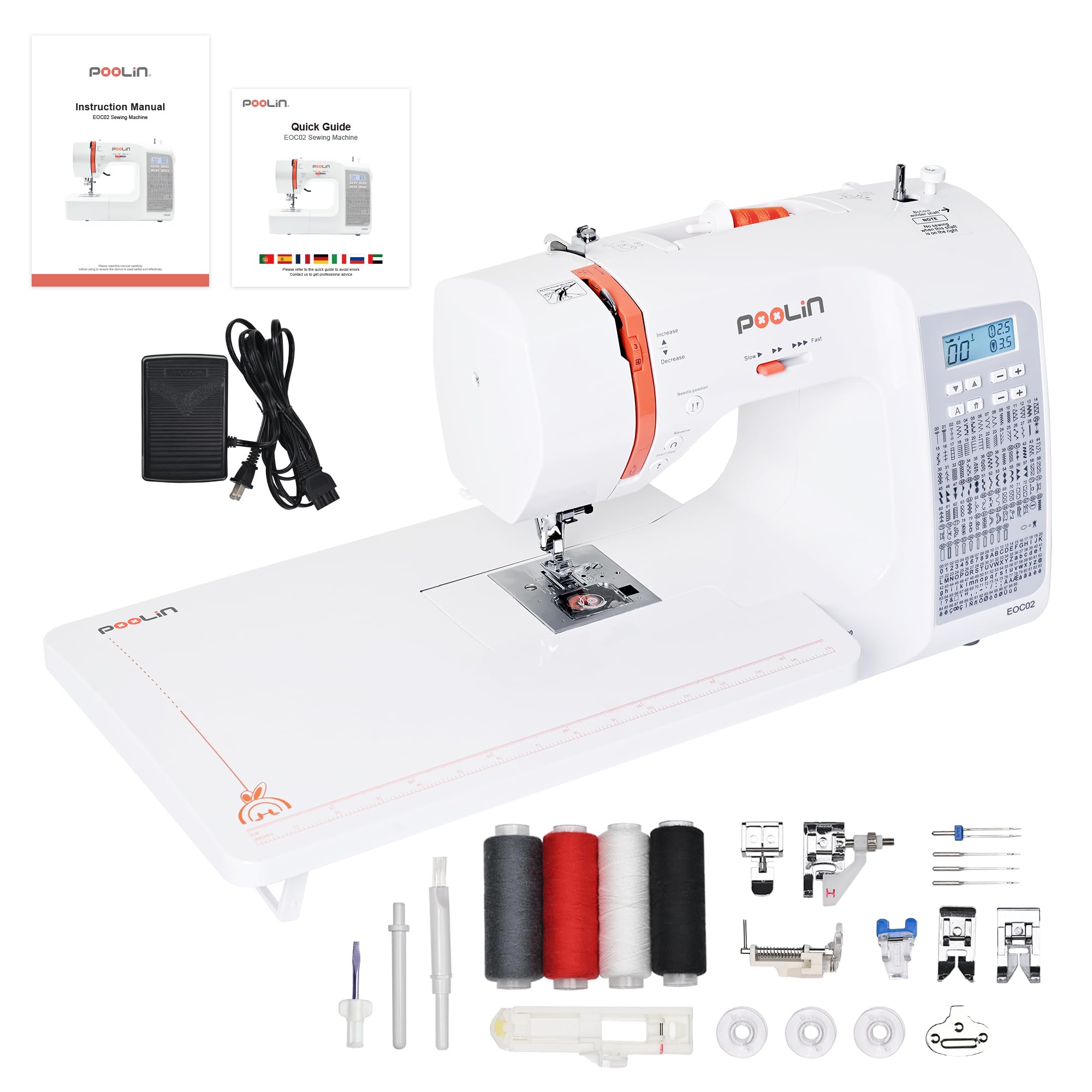
The PooLin EOC02 brings computerized convenience to the budget segment with 200 built-in stitches, including utility, decorative, and alphanumeric patterns. The LCD screen displays your selected stitch and settings, which simplifies pattern selection compared to mechanical dials. The speed control slider and start/stop button allow sewing without the foot pedal — a nice option for those who struggle with pedal coordination.
Seven presser feet cover zippers, buttons, blind hems, and satin stitching, and the extra-wide table provides generous workspace for quilting and larger projects. The automatic needle threader works reliably, and the one-click needle up/down button aids in pivoting and turning corners. Multiple users confirm the machine is quiet and produces even stitches on both lightweight and medium-weight fabrics.
The computerized nature means there is a learning curve for navigating stitch patterns and settings via the LCD interface. Customer support response time varies, though the manufacturer offers online tutorial groups. For sewists who want maximum stitch versatility without jumping to a premium computerized brand, the EOC02 is a compelling option.
Why it’s great
- 200 stitches including alphanumeric fonts
- Speed slider and start/stop button for pedal-free sewing
- Extra-wide table for quilting projects
Good to know
- Computerized interface has a learning curve
- Customer support response times are inconsistent
7. Janome 2212 Front-Loading Sewing Machine

The Janome 2212 is a mechanical machine that prioritizes durability over flashy features. Its front-loading vertical oscillating hook bobbin system is a traditional design that, once mastered, provides excellent tension control and consistent stitch quality. The metal internal frame and metal gears give it a heft (nearly 15 pounds) that absorbs vibration and helps it power through multiple layers of denim or fleece without hesitation.
The 12 built-in stitches include a four-step buttonhole, and the dial-based stitch length and zigzag width adjustments give precise manual control. The extra-high presser foot lift accommodates thicker materials, and the drop feed mechanism enables free-motion quilting. Users frequently mention that the machine sews so smoothly that it feels like a significant upgrade from cheaper plastic-bodied competitors.
The front-loading bobbin is less convenient than a top drop-in system — you have to remove the accessory storage to access it — and the reverse stitch requires holding a lever rather than a one-push button. Beginners who value long-term reliability over convenience will appreciate the 25-year warranty and the robust build quality.
Why it’s great
- Metal frame and gears offer exceptional durability
- Sews through multiple fabric layers easily
- 25-year limited warranty
Good to know
- Front-loading bobbin is less convenient than drop-in
- Only 12 stitches — limited decorative options
8. StitchMaster Pro Sewing Machine (Lastempa 728)
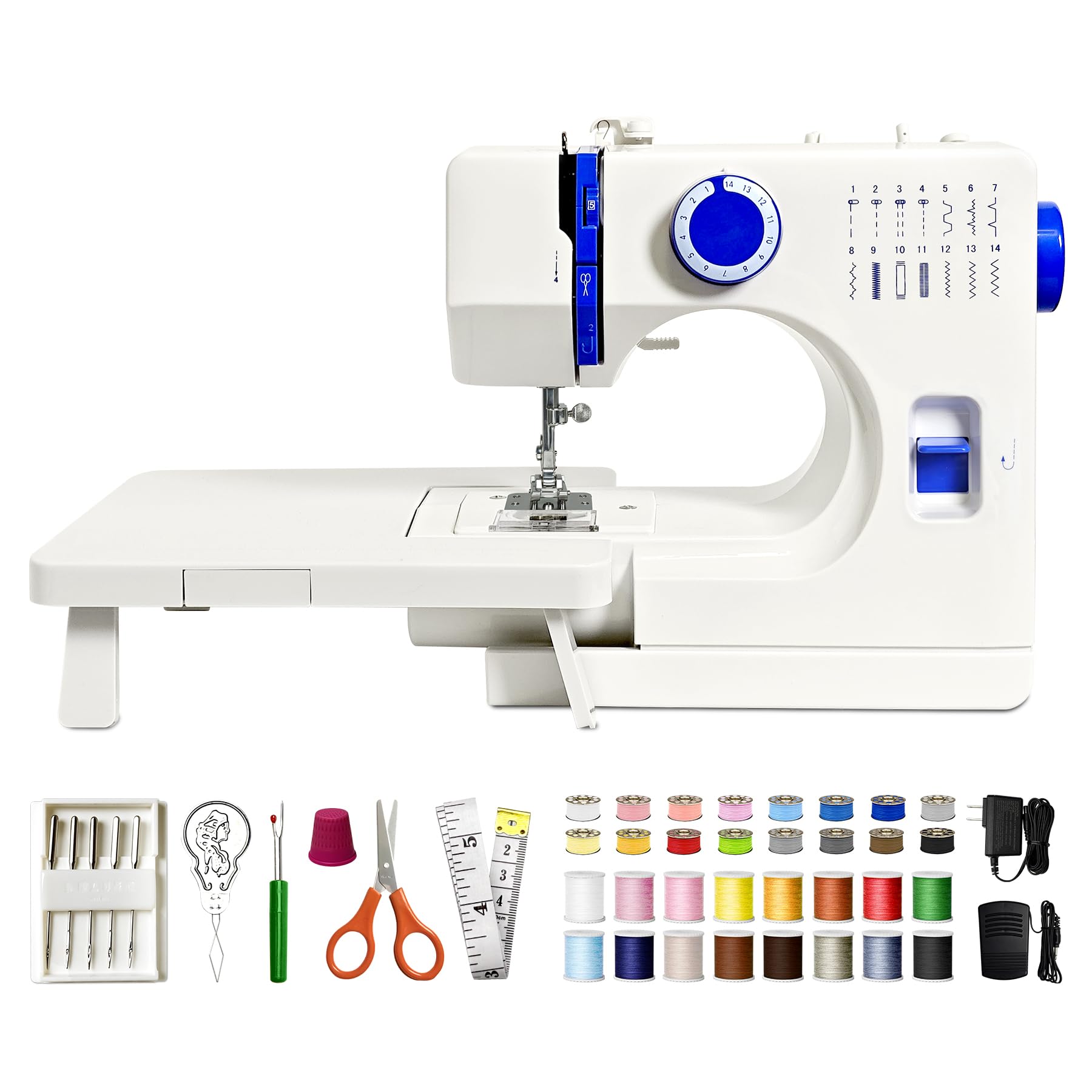
The StitchMaster Pro (Lastempa 728) is the lightest machine on this list at just 4.4 pounds, making it ideal for craft fairs, dorm rooms, or anyone with limited storage space. Despite its tiny footprint, it offers 14 stitches including straight, zigzag, and blindstitch, plus a dual-speed control that lets you switch between slow precision and faster stitching. The color-coded threading guides and automatic tension adjustment help beginners start sewing in minutes.
The machine is UL/ETL/CE certified and includes a 10-foot power cord for flexible workspace setup. The included starter kit is generous — 12 thread spools, six needles, scissors, measuring tape, and a seam ripper. Users appreciate the portable carrying case and the fact that the machine can run on either AC power or batteries, though battery life is limited.
The plastic internal components and lightweight construction mean it struggles with thick fabrics like denim and multiple layers. The spool pin recess is too small for standard spools, requiring an external thread stand for full-size thread. The foot pedal is also very small and light, sliding around on smooth floors. This machine works best for light mending, craft projects, and teaching children basic sewing.
Why it’s great
- Extremely lightweight and portable
- Generous starter accessory kit included
- Dual power option (AC or battery)
Good to know
- Struggles with thick fabrics like denim
- Spool pin cavity is too small for standard spools
9. SINGER Heavy Duty 6800C Computerized Sewing Machine

The SINGER 6800C is the most feature-rich machine on this list, with 586 stitch applications including decorative patterns and two built-in lettering fonts. The LCD screen displays stitch images, settings, and presser foot recommendations, making navigation intuitive even for beginners. The powerful motor delivers 1,100 stitches per minute with enhanced piercing power, easily handling denim, canvas, and leather.
The accessory package is the most comprehensive of any machine reviewed — ten presser feet including a walking foot and cording foot, four bobbins, and a soft cover. The built-in needle threader, thread cutter, and tie-off button automate the tedious parts of sewing. The drop feed feature allows free-motion quilting, and adjustable stitch length up to 6mm gives flexibility for basting or decorative work.
The 16.6-pound weight makes it less portable, and the included needles tend to dull faster than aftermarket alternatives. The computerized components add complexity that might overwhelm absolute beginners who just want to sew a straight line. But for someone who wants one machine that can grow with them from beginner projects to advanced garment construction, the 6800C offers unmatched versatility at this price point.
Why it’s great
- 586 stitch applications with alphanumeric fonts
- Ten included presser feet cover every task
- LCD screen with presser foot recommendations
Good to know
- Heavy at 16.6 pounds — not for frequent moving
- Included needles wear out quickly
FAQ
How many stitches do I really need as a beginner?
Is a computerized sewing machine better than a mechanical one for beginners?
Why does my budget sewing machine keep jamming?
Can a cheap sewing machine sew through denim or multiple fabric layers?
Final Thoughts: The Verdict
For most users, the cheap beginner sewing machine winner is the Brother XM3700 because it offers the best balance of stitch variety, ease of use, and reliable performance for the price. If you want the smoothest straight stitch and a metal frame for long-term durability, grab the Janome MOD-15. And for sewing through thick fabrics like denim without breaking the bank, nothing beats the SINGER Heavy Duty 4432.

Mo Maruf
I created WellFizz to bridge the gap between vague wellness advice and actionable solutions. My mission is simple: to decode the research and give you practical tools you can actually use.
Beyond the data, I am a passionate traveler. I believe that stepping away from the screen to explore new environments is essential for mental clarity and physical vitality.