Our readers keep the lights on and my smoothie glass nicely filled. As an Amazon Associate, I earn from qualifying purchases.
Pulling off a smooth 4K gaming experience without emptying your savings is the holy grail for any PC builder. The market is flooded with panels that either sacrifice resolution for refresh rate or inflate the price for a few extra features, making the search for a genuinely affordable high-resolution monitor a minefield of trade-offs.
I’m Mohammad Maruf — the founder and writer behind WellFizz. I’ve spent countless hours cross-referencing spec sheets, digging into panel technologies, and analyzing real-world performance data to separate the worthwhile contenders from the overhyped options in this competitive price segment.
This guide will walk you through the most compelling options for a cheap 4k monitor for gaming, helping you find a display that delivers crisp visuals and responsive gameplay without demanding a premium budget.
How To Choose The Best Cheap 4K Monitor For Gaming
Finding a monitor that delivers true 4K resolution without a debilitating price tag requires careful navigation of panel technologies, refresh rate capabilities, and connectivity options. You are essentially looking for the best possible compromise where visual fidelity meets smooth motion, a balance that demands you prioritize the specs that matter most for your gaming library.
Panel Technology: The Foundation of Your Image
Your choice between IPS, VA, and OLED is the single most impactful decision. IPS panels offer superior color accuracy and wide viewing angles, making them excellent for fast-paced titles where color consistency is key. VA panels excel in native contrast, delivering deeper blacks that enhance immersion in dark scenes, though they often suffer from slightly slower pixel response times. OLED technology, while usually more expensive, provides perfect blacks and near-instantaneous response times but can be more susceptible to burn-in over long-term static use.
Refresh Rate vs. Resolution: Know Your GPU
A 4K panel running at 60Hz is a significant upgrade over 1080p, but a 4K panel that can hit 120Hz or 160Hz transforms the gaming experience into something exceptionally fluid. The challenge lies in your graphics card’s ability to feed those frames. If you are running a mid-range GPU, a 60Hz 4K panel will feel smoother than a high-refresh-rate panel that your hardware can never fully utilize. Prioritize a display with adaptive sync technology to mitigate stutter and tearing when frame rates fluctuate.
Connectivity: Unlocking High Refresh Rates
Not all cables and ports are created equal. To achieve 4K at 120Hz or higher, you will need an HDMI 2.1 or DisplayPort 1.4 (with DSC) connection. Many budget monitors still ship with HDMI 2.0, which is limited to 4K at 60Hz. If you plan to use the monitor with a modern console or a high-end PC, ensure the ports on both the monitor and your device match the bandwidth requirements for your target resolution and refresh rate.
Quick Comparison
On smaller screens, swipe sideways to see the full table.
| Model | Category | Best For | Key Spec | Amazon |
|---|---|---|---|---|
| ASUS ROG Swift PG32UCDM | Premium | Ultimate HDR & Speed | 240Hz, QD-OLED | Amazon |
| MSI MPG 321URX QD-OLED | Premium | Competitive 240Hz Gaming | 240Hz, QD-OLED | Amazon |
| LG 32GX850A-B UltraGear | Premium | Glossy OLED Immersion | 165Hz, OLED, Glossy | Amazon |
| ASUS ROG Swift PG27UCDM | Premium | High-End Compact 4K | DP 2.1a, 240Hz, OLED | Amazon |
| ASUS ROG Strix XG32UCG | Mid-Range | Dual-Mode Flexibility | 4K 160Hz / FHD 320Hz | Amazon |
| Samsung Odyssey G7 G70F | Mid-Range | Fast IPS for Shooters | 4K 180Hz, Fast IPS | Amazon |
| ASUS ROG Strix XG27UCG | Mid-Range | Compact Dual Mode | 4K 160Hz / FHD 320Hz | Amazon |
| CRUA 32” Curved Gaming | Mid-Range | High Refesh Rate on Budget | 240Hz, VA, 1500R | Amazon |
| Dell 32 Plus S3225QS | Budget | All-Day Comfort & Value | 120Hz, VA, 1500:1 Contrast | Amazon |
| LG 32UR550K-B UltraFine | Budget | Entry-Level 4K Clarity | 60Hz, VA, HDR10 | Amazon |
In‑Depth Reviews
1. ASUS ROG Swift 32” 4K OLED Gaming Monitor (PG32UCDM)

The ASUS ROG Swift PG32UCDM is the gold standard for what a 4K gaming monitor should be, leveraging a third-generation QD-OLED panel to deliver a 240Hz refresh rate with a 0.03ms response time. Its custom heatsink and graphene film are specifically engineered to combat burn-in, a critical feature for longevity in a premium display. This panel covers 99% of the DCI-P3 color space, ensuring colors are both vibrant and accurate right out of the box.
In real-world gameplay, the PG32UCDM produces zero noticeable ghosting, and its HDR performance with VESA DisplayHDR 400 True Black compliance creates a dynamic range that makes shadows look truly black and highlights pop with intensity. The monitor’s full 80Gbps bandwidth on DisplayPort allows for seamless 4K at 240Hz without any compromise on color depth. It also includes a useful tripod socket for streamers who want to mount a camera directly above the screen.
The main consideration is the smooth, glossy screen finish, which enhances perceived clarity and contrast but can reflect bright room lighting. Text clarity on QD-OLED panels is also slightly less sharp than on a traditional IPS panel, though the trade-off for the visual fidelity in games is well worth it for most users.
Why it’s great
- Stunning QD-OLED image quality with near-infinite contrast.
- Effective burn-in mitigation with custom heatsink and graphene film.
- Incredible 240Hz refresh rate with 0.03ms response time.
Good to know
- Glossy screen is reflective in brightly lit rooms.
- Windows text clarity is not as sharp as IPS panels.
- High operating cost places it well above the budget tier.
2. MSI MPG 321URX QD-OLED

The MSI MPG 321URX QD-OLED is a direct competitor to the ASUS PG32UCDM, offering a 32-inch 4K QD-OLED panel with a blistering 240Hz refresh rate and a 0.03ms GtG response time. It is built for the gamer who demands the absolute best motion clarity and color performance without moving into the ultr-premium price bracket of some competitors. The panel covers 99% of the DCI-P3 gamut and is factory calibrated to a Delta E value of less than 2 for professional-grade color accuracy.
This monitor excels in dark, atmospheric games thanks to its VESA DisplayHDR True Black 400 certification, which delivers deep, inky blacks and bright, specular highlights. The KVM function and PiP/PbP modes are a massive productivity boost for anyone who works and games on the same setup, allowing you to control two devices with a single keyboard and mouse. The included 90W USB-C power delivery can charge a laptop while sharing the display.
The main drawback is its relatively chunky base which takes up significant desk space, and users have noted that the stand lacks the full range of ergonomic adjustment found on the competing ROG Swift models. Some users also report a very faint purple tint in certain lighting conditions, a known quirk of early QD-OLED panels, though it is generally only visible on a pure white screen.
Why it’s great
- Stunning HDR performance with true blacks.
- Useful KVM function for multi-device setups.
- Factory calibrated Delta E less than 2.
Good to know
- Stand has limited ergonomic adjustments.
- Can exhibit a slight purple tint on white screens.
- Premium pricing puts it out of the true budget range.
3. LG 32GX850A-B UltraGear
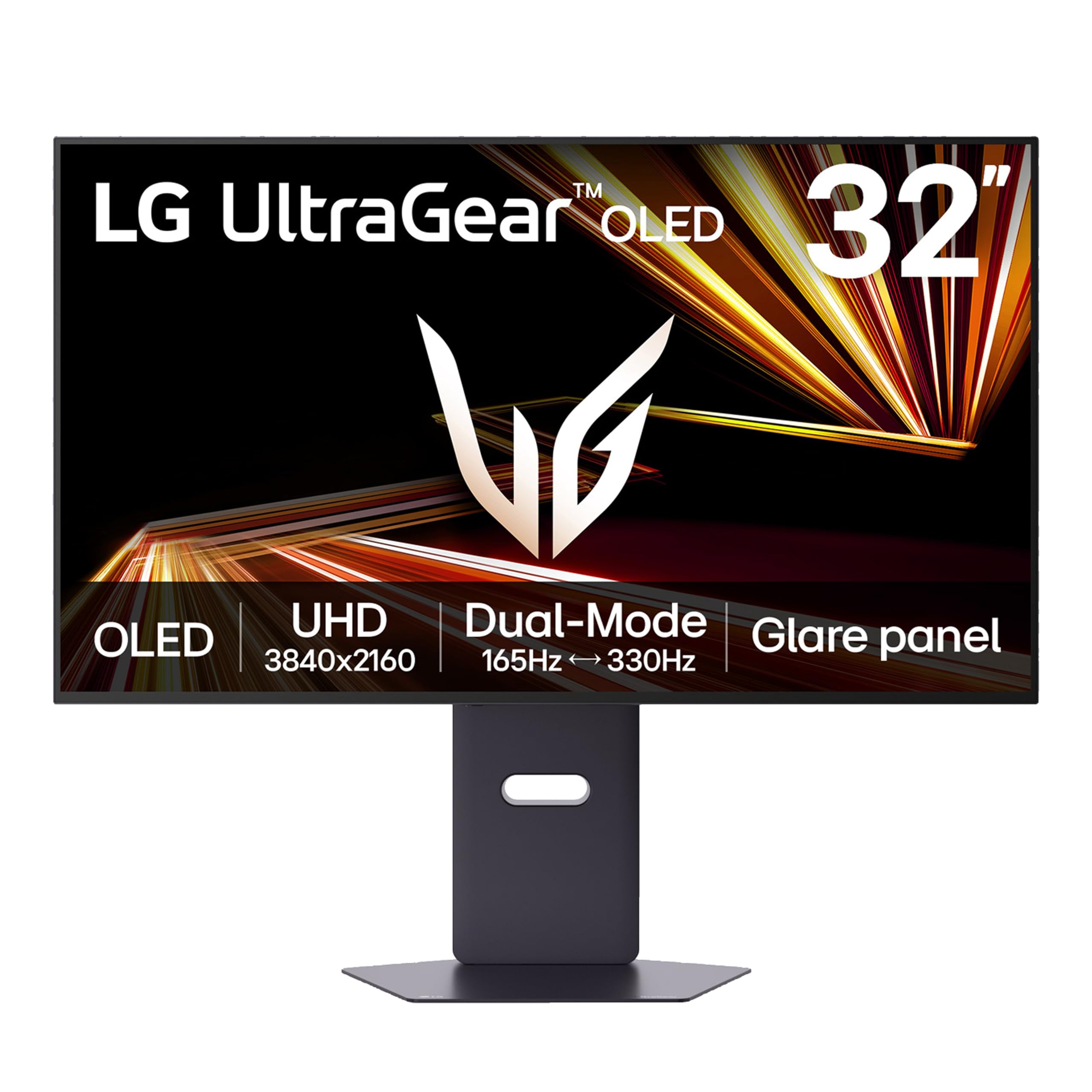
The LG 32GX850A-B UltraGear represents a unique entry in the 4K gaming space with its glossy OLED display, designed to maximize perceived contrast and vibrancy in a darker gaming environment. It features a dual-mode capability allowing you to switch between 4K at 165Hz and Full HD at 330Hz, ensuring you have the refresh rate headroom for competitive shooters. The Micro Lens Array+ technology pushes the brightness to 275 nits typical, a noticeable step up from previous LG OLED gaming panels.
In practice, the glossy finish eliminates the grainy anti-glare coating found on matte screens, making colors look incredibly rich and deep. The 0.03ms response time means motion is perfectly clear, with no ghosting or blur even in the most chaotic gaming moments. It is also VESA DisplayHDR True Black 400 certified, covering 98.5% of the DCI-P3 color gamut, which provides a stunning HDR experience for games and movies.
The glossy panel is highly reflective in rooms with direct light, making it a poor choice for bright, sunlit spaces. Some users also note that the text clarity is not as crisp as on an IPS panel, though this is a standard trait of OLED technology. The 165Hz refresh rate, while very fast, is lower than the 240Hz offered by the competing QD-OLED models.
Why it’s great
- Glossy OLED offers unrivaled vividness and depth.
- Dual mode (4K 165Hz / FHD 330Hz) for versatile gaming.
- Excellent HDR performance with TrueBlack 400.
Good to know
- Glossy screen is very reflective in bright environments.
- Text clarity is not as sharp as a high-end IPS panel.
- Peak refresh rate lags behind 240Hz competitors.
4. ASUS ROG Swift 27” 4K QD-OLED Gaming Monitor (PG27UCDM)

The ASUS ROG Swift PG27UCDM is a 27-inch 4K QD-OLED gaming monitor that packs the latest 4th-gen QD-OLED technology into a smaller, high-density form factor. It features a 240Hz refresh rate, a 0.03ms response time, and the critical inclusion of DisplayPort 2.1a UHBR20 with full 80Gbps bandwidth, which allows for uncompressed 4K at 240Hz without needing Display Stream Compression. It also has a built-in proximity sensor that automatically dims the screen when you step away to prevent burn-in.
This monitor delivers a pin-sharp image with improved text clarity over previous-gen OLEDs, thanks to the new sub-pixel layout. The HDR performance is exceptional, with VESA DisplayHDR 400 True Black compliance and 99% DCI-P3 coverage, providing deep blacks and brilliant highlights. The anti-flicker technology is also noticeably effective, reducing eye strain during long sessions.
The obvious hurdle is its premium price tag, which places it firmly in the high-end segment. It also lacks built-in speakers, which is a notable omission for a monitor at this price point. Furthermore, the ports are positioned facing downward on the back of the monitor, making cable management and plugging in devices a minor logistical challenge.
Why it’s great
- Full 80Gbps DP 2.1a bandwidth for uncompressed 4K 240Hz.
- Sharp text clarity with 4th-gen QD-OLED panel.
- Excellent anti-burn-in features including a proximity sensor.
Good to know
- Very high price point limits accessibility.
- No built-in speakers.
- Downward-facing ports can be tricky to access.
5. ASUS ROG Strix 32” 4K HDR Gaming Monitor (XG32UCG)
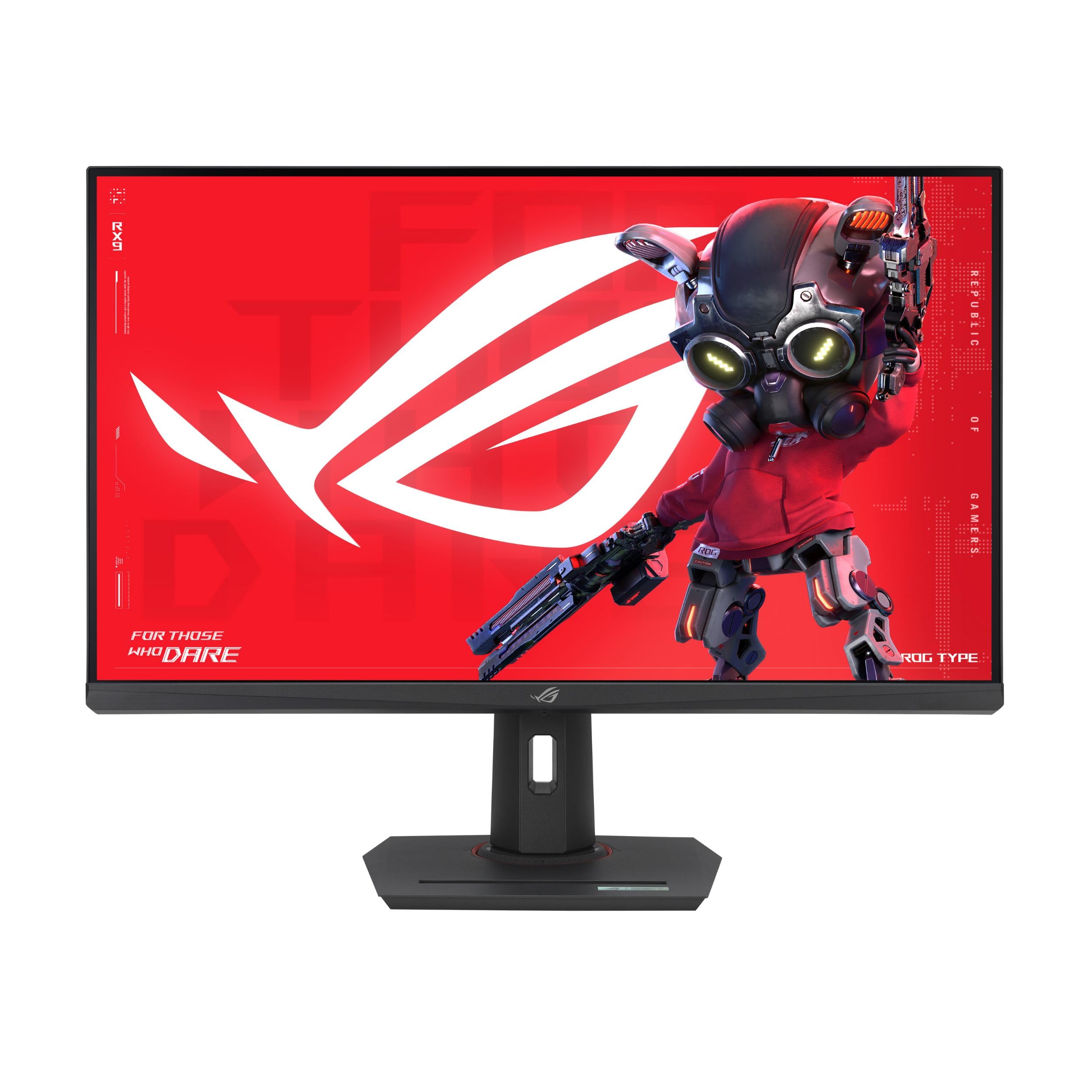
The ASUS ROG Strix XG32UCG is a versatile 32-inch Fast IPS monitor that offers a dual-mode feature, letting you toggle between a sharp 4K resolution at 160Hz and a high-speed 1080p resolution at 320Hz. This makes it one of the most flexible options for gamers who play both story-rich AAA titles and fast-paced competitive shooters. The Fast IPS panel ensures a response time as low as 0.3ms, keeping motion blur to a minimum.
The monitor supports Extreme Low Motion Blur Sync (ELMB SYNC), which can be used simultaneously with variable refresh rate technology to reduce ghosting and tearing. Its 130% sRGB and 95% DCI-P3 color gamut coverage guarantee vibrant and accurate colors out of the box. The inclusion of a USB-C port with DP Alt mode makes it easy to connect a modern laptop, creating a clutter-free setup.
While the IPS panel delivers excellent viewing angles, its static contrast ratio of 1,000:1 is typical for the technology, meaning blacks will appear more like dark greys compared to VA or OLED panels. It also lacks the deeper color volume of a QD-OLED panel, which is noticeable in HDR content.
Why it’s great
- Highly flexible 4K 160Hz / FHD 320Hz dual mode.
- Fast IPS panel with 0.3ms response time.
- USB-C with DP Alt mode for modern laptop connectivity.
Good to know
- IPS black levels are mediocre compared to VA or OLED.
- HDR performance is entry-level.
- 32-inch size may feel large for some competitive setups.
6. Samsung 27” Odyssey G7 G70F
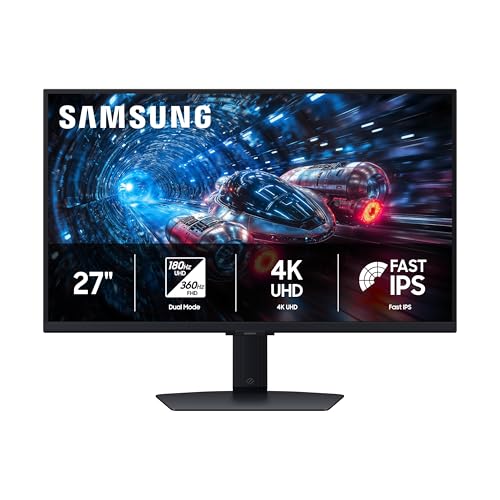
The Samsung Odyssey G7 G70F is a 27-inch 4K gaming monitor that punches above its weight class with a Fast IPS panel capable of a 180Hz refresh rate and a dual-mode feature that allows it to reach 360Hz in Full HD. This makes it an exceptional choice for gamers who want a single monitor that can handle both immersive 4K adventures and lightning-fast competitive play. It also features both NVIDIA G-Sync compatibility and AMD FreeSync Premium for tear-free gaming.
This monitor delivers crisp, consistent colors from any viewing angle, and the 1ms response time ensures low input lag. The HDR10 support provides brighter highlights and better shadow detail than a standard SDR monitor. The ergonomic stand is fully adjustable with tilt, height, swivel, and pivot, making it easy to find the perfect viewing position for long sessions.
A notable omission is the lack of built-in speakers, which means you will need external audio solutions. Some users also report that the monitor takes several seconds to wake up from sleep, which can be a minor nuisance in a multi-monitor setup. The contrast ratio of 1,000:1 is standard for IPS, so black levels are not as deep as on VA or OLED alternatives.
Why it’s great
- Fast 180Hz refresh rate with dual-mode enhancement.
- Fully ergonomic stand with height, swivel, and pivot.
- Works with both G-Sync and FreeSync Premium.
Good to know
- No built-in speakers.
- Slow wake-from-sleep behavior.
- Standard IPS contrast ratio.
7. ASUS ROG Strix 27” 4K HDR USB-C Gaming Monitor (XG27UCG)

The ASUS ROG Strix XG27UCG is the smaller sibling of the XG32UCG, offering the same versatile dual-mode technology in a 27-inch form factor that many competitive gamers prefer. It delivers a crisp 4K image at 160Hz or a lightning-fast 1080p at 320Hz, giving you the flexibility to prioritize visual fidelity or raw frame rate depending on the game. The Fast IPS panel ensures a 1ms response time, keeping motion blur to a minimum.
This monitor supports ELMB SYNC technology, which eliminates ghosting and tearing by working in tandem with the variable refresh rate. Its 95% DCI-P3 color gamut and advanced gray-scale tracking deliver smoother color gradation and better uniformity than many displays in its segment. The built-in USB-C port with DP Alt mode is a practical feature for connecting a laptop, reducing cable clutter.
The 27-inch screen size is excellent for pixel density, but the contrast ratio is a typical IPS 1,000:1, so blacks are not as deep as on VA or OLED panels. Some users also find that achieving the full 160Hz refresh rate requires a DisplayPort connection with DSC enabled on the source device.
Why it’s great
- Ideal 27-inch form factor for competitive gaming.
- ELMB SYNC for blur-free motion with VRR.
- Versatile dual-mode for high FPS or high resolution.
Good to know
- Standard IPS contrast ratio.
- Height-adjustable stand can be wobbly at full extension.
- Requires DSC for full 160Hz refresh rate.
8. CRUA 32” 4K Curved Gaming Monitor
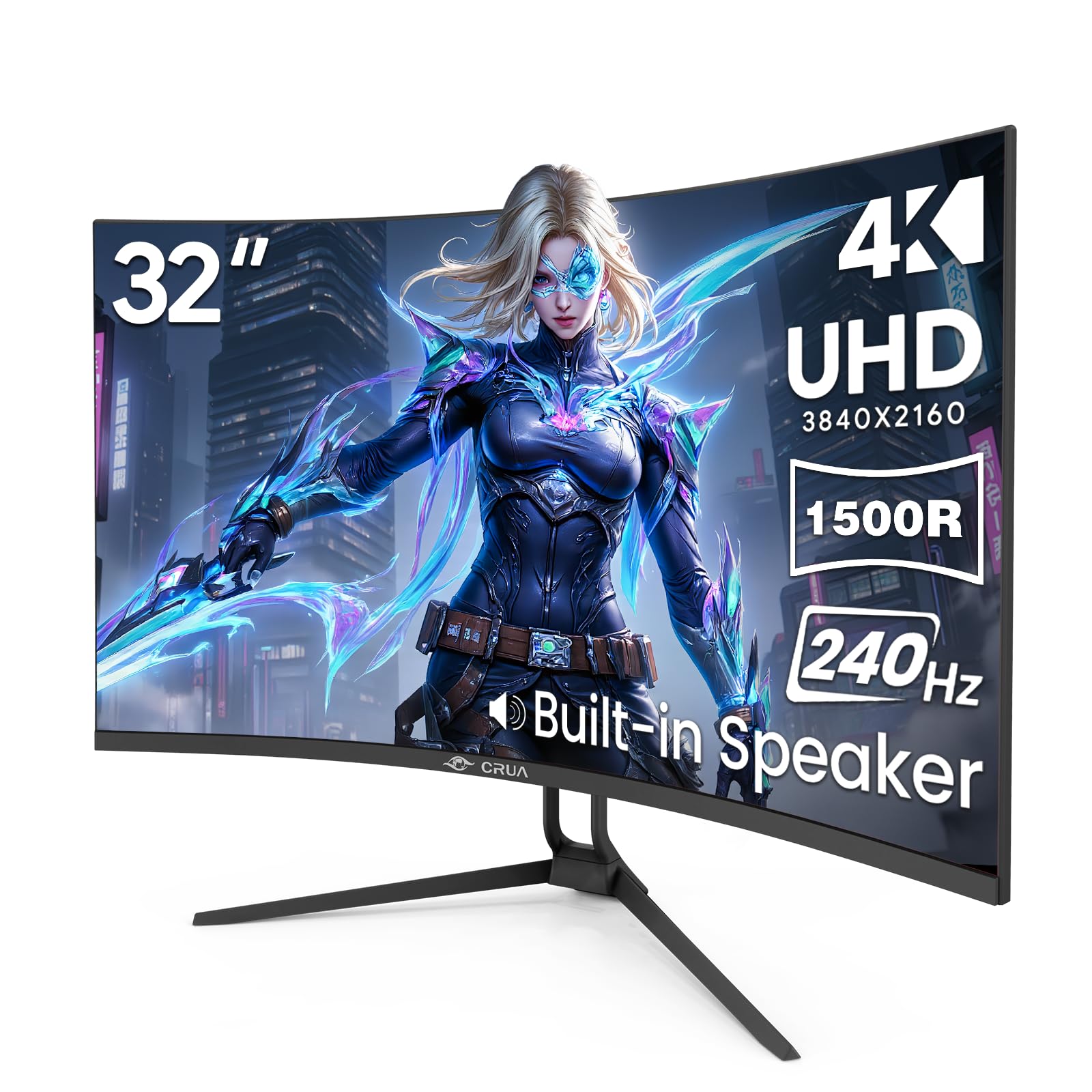
The CRUA 32” 4K Curved Gaming Monitor is an aggressive value proposition, offering a 240Hz refresh rate and 4K resolution on a 1500R curved VA panel at a price point that undercuts nearly every competitor. This makes it a compelling option for budget-conscious gamers who want high-refresh-rate 4K gaming without the typical premium. The VA panel provides a 3000:1 contrast ratio, delivering much deeper blacks and better shadow detail than any IPS monitor in this price range.
For multiplayer and fast-paced single-player games, the 240Hz refresh rate feels incredibly smooth, and the 1.07 billion colors (8-bit + FRC) with 120% sRGB coverage produce vibrant, saturated visuals. The monitor includes dual HDMI 2.1 ports and dual DP 1.4 inputs, allowing you to connect multiple devices and maintain high refresh rates. The built-in speakers are a convenient addition for casual audio, and the rear RGB lighting adds a touch of flair to a gaming setup.
The VA panel, while excellent for contrast, suffers from slower pixel response times than IPS, which can lead to noticeable black-level smearing in dark scenes during fast motion. The stand only offers tilt adjustment, lacking height and swivel, so VESA mounting is recommended for a proper ergonomic setup.
Why it’s great
- Exceptional price-to-performance ratio.
- 240Hz refresh rate and 3000:1 contrast for deep blacks.
- Includes HDMI 2.1 and DP 1.4 ports.
Good to know
- VA panel has slower pixel response, leading to black smearing.
- Stand is limited to tilt adjustment only.
- Color accuracy out of the box is not as good as IPS panels.
9. Dell 32 Plus 4K Monitor – S3225QS

The Dell 32 Plus S3225QS is the quintessential balanced choice for a cheap 4K monitor for gaming, offering a compelling mix of practical features, solid performance, and a price that undercuts most high-refresh competitors. It uses a 31.5-inch VA panel with a 1500:1 contrast ratio, providing deep blacks and good shadow detail that make it a pleasure for story-driven games and media consumption. The 120Hz refresh rate is a significant step up from standard 60Hz panels, offering noticeably smoother motion.
This monitor is engineered for all-day comfort, featuring ComfortView Plus technology that reduces harmful blue light emissions without washing out colors. The built-in speakers are surprisingly capable, offering more depth and volume than typical monitor audio. The VA panel delivers true-to-life colors with 99% sRGB and 95% DCI-P3 coverage, and the anti-glare screen coating ensures reflections are kept to a minimum in bright rooms.
The 120Hz refresh rate, while smooth, is not a 240Hz panel, so it will not satisfy competitive esports players chasing the highest frame rates. The response time is also not as fast as a modern IPS gaming panel, meaning some motion blur can be perceived in very fast transitions.
Why it’s great
- Excellent balance of price, features, and performance.
- High contrast VA panel with deep blacks.
- Effective blue light reduction without sacrificing much color.
Good to know
- Limited to 120Hz, not 144Hz or 240Hz.
- VA pixel response is slower than IPS.
- Speakers are loud even at minimum volume setting.
10. LG 32UR550K-B UltraFine
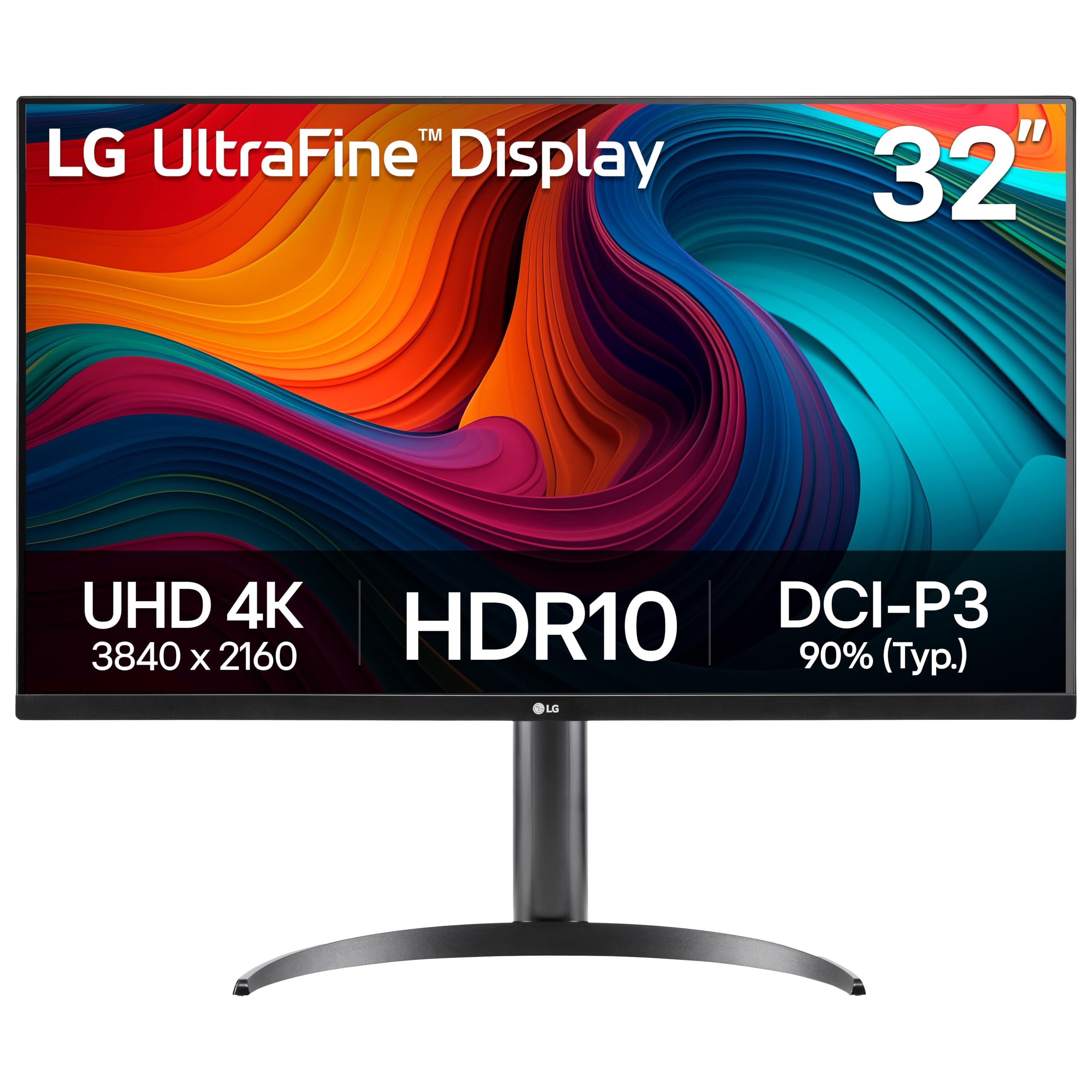
The LG 32UR550K-B UltraFine is the most budget-conscious entry in this lineup, designed to bring 4K resolution to your gaming setup without the cost of a high-refresh-rate panel. It features a 32-inch VA panel with a 3000:1 contrast ratio, delivering rich blacks and solid image quality that surpasses most cheap IPS monitors. This is the perfect monitor for a secondary display or for a gamer who prioritizes visual fidelity over competitive frame rates.
It supports HDR10 and covers 90% of the DCI-P3 color space, offering vibrant and lifelike colors for its price tier. The stand offers full ergonomic adjustment with height, tilt, swivel, and pivot, which is a rare and welcome feature at this price point. It also includes Dynamic Action Sync and Black Stabilizer features to help reduce input lag and improve visibility in dark scenes.
The major caveat is the 60Hz refresh rate, which will feel sluggish to anyone accustomed to a gaming monitor with a 120Hz or higher refresh rate. It also lacks built-in speakers, requiring external speakers or headphones. The brightness is rated at 250 nits, which is on the lower side and may not be sufficient for well-lit rooms or detailed HDR content.
Why it’s great
- Excellent value for entry-level 4K.
- Full ergonomic stand with height, pivot, and swivel.
- Good contrast ratio from the VA panel.
Good to know
- 60Hz refresh rate is not for competitive gaming.
- No built-in speakers.
- Lower peak brightness of 250 nits.
FAQ
Is 60Hz enough for 4K gaming?
What is FreeSync Premium Pro?
Why do some 4K monitors still use DisplayPort 1.4?
Final Thoughts: The Verdict
For most users, the absolute best overall cheap 4k monitor for gaming is the Dell 32 Plus S3225QS because it provides a large, high-contrast 4K screen at 120Hz with great built-in speakers and a comfortable viewing experience at a price that doesn’t break the bank. If you want the highest possible refresh rate for a mid-range price, grab the CRUA 32” Curved Gaming Monitor. And for the ultimate competitive edge in a 27-inch package, nothing beats the dual-mode flexibility of the Samsung Odyssey G7 G70F.

Mo Maruf
I created WellFizz to bridge the gap between vague wellness advice and actionable solutions. My mission is simple: to decode the research and give you practical tools you can actually use.
Beyond the data, I am a passionate traveler. I believe that stepping away from the screen to explore new environments is essential for mental clarity and physical vitality.