Our readers keep the lights on and my smoothie glass nicely filled. As an Amazon Associate, I earn from qualifying purchases.
Nothing stops a project faster than a damaged screw thread or a sharp burr left on a freshly cut metal rod. A dedicated chamfer and deburring tool turns that frustration into a smooth, safe edge in seconds, saving you time, skin, and ruined hardware.
I’m Mohammad Maruf — the founder and writer behind WellFizz. I’ve spent countless hours analyzing the construction, blade materials, and real-world performance specs of these tools to separate the ones that deliver consistent clean cuts from those that disappoint.
This guide breaks down the five best contenders to help you pick the right chamfer and deburring tool for your shop, from budget-friendly kits to premium carbide options.
How To Choose The Best Chamfer And Deburring Tool
A good chamfer tool is defined by three things: the blade’s material, the working size range it covers, and how securely it mounts to your drill. Focus on these specs to avoid buying a tool that wobbles, dulls fast, or can’t handle your most common hardware sizes.
Blade Material and Durability
Tungsten carbide (YG8 or C2 grade) blades hold an edge far longer than standard high-speed steel. If you regularly work with hardened steel or stainless steel, carbide is non-negotiable. For occasional use on softer metals, brass, or plastic, high-speed steel can suffice but will require more frequent replacement.
Size Range and Compatibility
Most external chamfer tools cover a range like 1/8″ to 3/4″ or 1/8″ up to 1-3/8″. Check that the tool’s working diameter matches the bolts, threaded rods, or pipes you handle most. The larger the range, the fewer tools you need in your drawer, but larger tools may feel bulkier on small-diameter hardware.
Mounting System and Runout
A hex shank (1/4″ or 3/8″) is standard for quick drill changes. Some tools use a threaded adapter instead of a solid shank, which can introduce wobble at higher speeds. For precision chamfering on small bolts, a rigid one-piece shank with low runout is ideal. Clamping chucks offer better stability than quick-release chucks for this application.
Quick Comparison
On smaller screens, swipe sideways to see the full table.
| Model | Category | Best For | Key Spec | Amazon |
|---|---|---|---|---|
| Luckyway 2-Piece Set | External Chamfer | General repair and bolt cleanup | YG8 Carbide Blades, 1/8″-1-3/8″ | Amazon |
| Acrux7 Hand Deburring Kit | Rotary / Hand | Edge finishing on holes and sheet metal | 10 HSS Blades + Countersink Blade | Amazon |
| Noga DB1000 | Sheet Metal | Fast sheet metal edge deburring | N80 Blade, 0-12mm Range | Amazon |
| THORVALD External Chamfer | External Chamfer | Precision screw thread repair | Tungsten Carbide Blade, 1/8″-3/4″ | Amazon |
| COMOWARE Threaded Rod Tool | External / Internal | Heavy-duty rod and pipe finishing | 5 C2 Carbide Tips, 1/8″-1-3/8″ | Amazon |
In‑Depth Reviews
1. Luckyway 2-Piece Deburring External Chamfer Tool Set
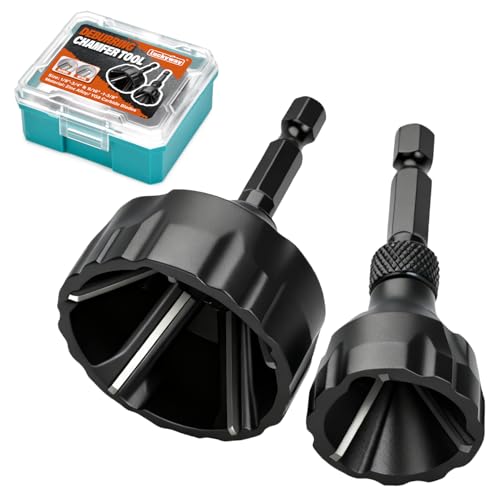
The Luckyway set covers a wide 1/8″ to 1-3/8″ range with two dedicated tools, each using YG8 tungsten carbide blades. This material choice delivers significantly better edge retention compared to high-speed steel, making the set suitable for hardened steel, mild steel, brass, copper, and even wood and fiberglass. The hex shank quick-release design fits standard 3/8″ and 1/4″ drill chucks securely, minimizing runout during use.
Users consistently report clean cuts on threaded rod, bolts, and damaged screw threads. The larger extension rod adds rigidity, allowing the tool to handle greater pressure without deflection. The two-piece sizing means you get a smaller tool for delicate work on 1/8″ hardware and a larger one for heavy bolts up to 1-3/8″, offering excellent versatility without a single oversized handle.
The instruction to operate at 0-400 RPM with light pressure is critical — forcing the tool at high speed or in impact mode will dull the carbide quickly. For home shop and general repair, this set provides the broadest coverage at a mid-range price point, making it the default recommendation for most users.
Why it’s great
- Two tools cover nearly all common bolt sizes
- YG8 carbide blades last longer than HSS alternatives
- Hex shank fits securely in standard drills
Good to know
- Not intended for impact drivers or high RPM
- Some users note the housing is cast, not machined
2. Acrux7 Hand Deburring Tool Kit

This kit differs from the others because it is a hand-operated rotary deburring system, not a drill-mounted chamfer tool. It includes ten high-speed steel blades, a metal countersink blade, an aluminum alloy handle, and a silicone handle. The rotary blade design allows 360-degree rotation and is ideal for deburring the inside edges of drilled holes and cleaning up sheet metal edges without a power tool.
The aluminum handle is pen-shaped with a hex profile, offering good grip and control for detailed work. The silicone handle reduces hand fatigue during longer sessions. Users note the blades are effective on soft metals like copper, aluminum, and mild steel, but the HSS material limits performance on hardened steel. The included countersink blade adds utility for creating chamfered entry points on holes up to roughly 1/2 inch.
This is a specialized solution for finishing work rather than heavy thread repair. The blade change mechanism is straightforward — compress the mounting head to swap blades. It is compact enough for a tool pouch, making it a solid companion for field work or benchtop finishing. The trade-off is that it offers no power assistance and requires manual skill to produce consistent chamfers.
Why it’s great
- Excellent for hole deburring and sheet metal edges
- Two comfortable handle options reduce fatigue
- Includes countersink blade for added versatility
Good to know
- HSS blades struggle with hardened or stainless steel
- Manual operation requires practice for consistent chamfer depth
3. Noga DB1000 Sheet Metal Deburring Tool
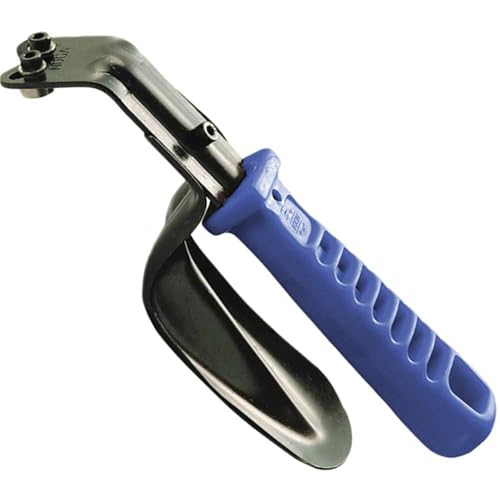
The Noga DB1000 is a dedicated hand deburring tool designed specifically for sheet metal edges. Its defining feature is the adjustable gap between two cutting blades — once set correctly, you can drag the tool along a raw sheet edge and it removes the burr on both the top and bottom simultaneously. The N80 blade handles material thickness up to roughly 12mm, and the tool body is shaped for comfortable, repetitive passes across long edges.
Users highlight the hand protection integrated into the design — the tool body shields your fingers from the sharp sheet edge during use. This makes it noticeably safer than using a file or utility knife on large metal sheets. The blade adjustment is simple: loosen the set screw, position the gap to match material thickness, and lock it in place. The tool produces a clean, slightly rounded edge that is safe to handle and ready for welding or painting.
The DB1000 is not designed for threaded rods, bolts, or hole deburring. It is a single-purpose tool for a specific task it performs exceptionally well. If your primary work involves finishing raw sheet metal — aluminum, steel, or stainless steel — this is the fastest manual method available. For users focused on bolt repair or rod chamfering, a drill-mounted tool will be more efficient.
Why it’s great
- Deburrs both top and bottom sheet edges in one pass
- Adjustable gap fits different material thicknesses
- Integrated hand protection improves safety
Good to know
- Limited to sheet metal edges only
- Not suitable for threads, holes, or rods
4. THORVALD Deburring External Chamfer Tool
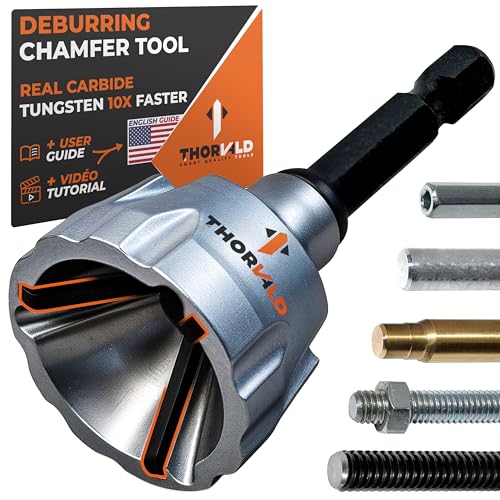
The THORVALD tool uses a genuine tungsten carbide blade housed in a zinc alloy body that resists corrosion. It covers a 1/8″ to 3/4″ diameter range, making it ideal for common bolt and threaded rod sizes. The blade is angled for an aggressive cut, allowing users to repair damaged threads efficiently — one reviewer successfully chamfered half-inch Grade 8 U-bolt ends after cutting with a grinder, and the nuts started easily afterward.
The tool comes with a storage box, a user guide, and a video tutorial, which is a welcome addition for first-time users. The carbide blade cuts through stainless steel, hardened steel, aluminum, and even wood and PVC. Users report that this tool outperforms cheaper alternatives that broke on the first day, emphasizing the build quality and blade longevity. For best results, use at medium speed with lubricant — the company recommends oil for optimal finish and blade life.
The threaded adapter connecting the blade holder to the shank is a potential weak point. Some users note that the tool can wobble in a quick-release chuck, and they recommend using a clamping chuck for stability, especially on small bolts under 1/4 inch. The limited size range (3/4″ max) means you will need a separate tool for larger hardware. For precision thread repair on standard fasteners, this is a top-tier choice.
Why it’s great
- Carbide blade easily cuts hardened steel and stainless
- Includes tutorial and storage box
- Compact size works well on common bolt diameters
Good to know
- Threaded adapter can cause wobble in quick-release chucks
- Maximum size limited to 3/4-inch diameter
5. COMOWARE Threaded Rod Deburring Tool
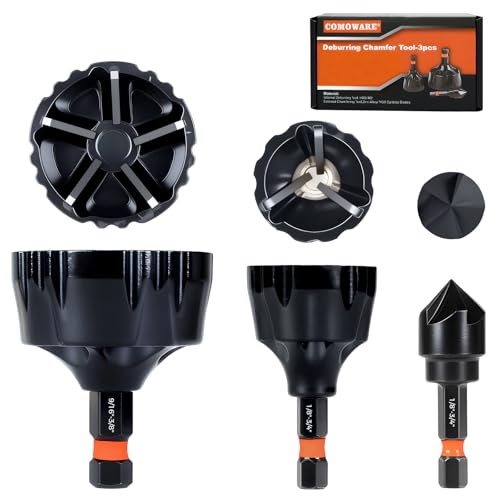
The COMOWARE tool stands out by including both an external chamfer head and an internal countersink, making it a complete solution for rod and hole finishing. The external chamfer uses five C2-grade carbide tips for smooth and efficient cutting, while an M2 steel internal countersink handles inner hole deburring. The size range is the broadest in this group, covering 1/8″ to 1-3/8″ outer diameters, which accommodates almost all common threaded rod and pipe sizes.
Users report clean cuts on PVC pipe, threaded rod, bolts, and various metals. The zinc alloy heads are corrosion-resistant, and the tool arrives in a foam-lined storage box that protects the carbide tips during transport. The hex shank works with standard drills, and the company recommends low RPM (0-400) with light pressure and lubricant for optimal results. The hardened steel internal countersink adds genuine value if you frequently need to chamfer the inside of holes.
The five carbide tips are replaceable, which extends the tool’s lifespan significantly compared to units with fixed blades. However, some users note that performance on extremely hard stainless steel is merely good rather than excellent, and the tool requires careful alignment to avoid chatter. For a hobbyist garage or light commercial use, this kit offers the best combination of range, blade quality, and dual-purpose functionality.
Why it’s great
- Includes both external chamfer and internal countersink
- Five C2 carbide tips for long blade life
- Broadest size range at 1/8″ to 1-3/8″
Good to know
- Performance on very hard stainless steel is only average
- Requires careful alignment to prevent chatter
FAQ
Can I use a chamfer tool on stainless steel threaded rod?
What is the difference between a chamfer tool and a deburring tool?
Why does my chamfer tool wobble in the drill chuck?
Final Thoughts: The Verdict
For most users, the chamfer and deburring tool winner is the Luckyway 2-Piece Set because it offers the broadest size coverage with durable YG8 carbide blades at a mid-range investment. If you need a precision thread repair tool for standard bolts, grab the THORVALD External Chamfer Tool. And for sheet metal edge finishing, nothing beats the Noga DB1000 for speed and hand safety.

Mo Maruf
I created WellFizz to bridge the gap between vague wellness advice and actionable solutions. My mission is simple: to decode the research and give you practical tools you can actually use.
Beyond the data, I am a passionate traveler. I believe that stepping away from the screen to explore new environments is essential for mental clarity and physical vitality.