Our readers keep the lights on and my smoothie glass nicely filled. As an Amazon Associate, I earn from qualifying purchases.
Sitting down should not leave your upper traps in a knot. Yet most office chairs offer generous lumbar padding and utterly neglect the thoracic spine — that zone between your shoulder blades where tension gathers during long typing sessions, phone calls, or deep-focus work. The right chair changes that, delivering a backrest contour that meets the mid-back and a headrest that stops forward head posture before it starts.
I’m Mohammad Maruf — the founder and writer behind WellFizz. I’ve spent countless hours analyzing backrest geometries, mesh tension ratings, lumbar adjustability ranges, and seat depth mechanisms across the most popular ergonomic chairs to find the models that actually address upper back discomfort rather than ignoring it.
Whether you work from home, manage a team in an office, or game for hours, finding the right chair for upper back pain involves matching a supportive backrest with your body’s natural spinal curve.
How To Choose The Best Chair For Upper Back Pain
Upper back pain is often the result of poor thoracic support and a forward head posture that strains the trapezius and rhomboid muscles. The right chair reverses that by giving the entire spine — not just the lower curve — a structure to rest against. Here are the specific features to prioritize.
Backrest Height and Thoracic Contour
A low back chair leaves the mid-back unsupported, forcing your spinal erectors to work overtime. Look for a high-back chair with a contour that follows the thoracic spine’s natural kyphotic curve. Some chairs also offer a narrower backrest width or wing-like support to keep the shoulder blades in a neutral position, reducing muscle fatigue.
Adjustable Lumbar with Vertical Range
Not all lumbar supports are effective for the upper back. The key is a lumbar mechanism that moves up and down — at least three inches of vertical travel — so you can align the support pad with the base of your thoracic spine. A lumbar that sits too low pushes the mid-back forward, aggravating the very pain you want to solve.
Seat Depth and Thigh Support
When the seat pan is too short, your thighs lack support, causing you to slouch backward. When it is too long, the front edge presses on the backs of your knees, forcing you to sit too far back and hunch. A sliding seat depth — rare in budget options — is critical for allowing 5’4” and 6’0” users to maintain a neutral pelvis and an aligned upper spine.
Headrest Adjustability
A headrest that supports the C1-C3 vertebrae directly reduces forward head posture, which is a primary driver of upper back tension. The best designs adjust in height, angle, and depth to cradle the back of the skull without pushing the head forward. Fixed or non-adjustable headrests can do more harm than good.
Quick Comparison
On smaller screens, swipe sideways to see the full table.
| Model | Category | Best For | Key Spec | Amazon |
|---|---|---|---|---|
| ELABEST Mesh Chair | Mid-Range | Thoracic-focused support | Golden Triangle backrest | Amazon |
| Branch Ergonomic Chair | Premium | Petite to average users | 8 points of adjustment | Amazon |
| TRALT Ergonomic Office Chair | Premium | Long hours in comfort | 3.5-inch high-density foam | Amazon |
| ProtoArc EC200 | Mid-Range | Adjustable seat depth | 5-position sliding seat | Amazon |
| GABRYLLY Ergonomic Chair | Mid-Range | Reclining with footrest | 135° recline with footrest | Amazon |
| MOLENTS Desk Chair | Mid-Range | Full mesh breathability | 3D adjustable armrests | Amazon |
| CASASIO Ergonomic Chair | Mid-Range | All-day virgin foam seat | 3D headrest adjustment | Amazon |
| Logicfox Ergonomic Chair | Budget | Budget with double lumbar | 400-lbs capacity | Amazon |
| Amazon Basics Executive Chair | Budget | Simple high-back value | 275-lbs weight capacity | Amazon |
In‑Depth Reviews
1. ELABEST Ergonomic Mesh Office Chair

The ELABEST is one of the few chairs in this class that specifically addresses upper back fatigue through its “Golden Triangle” back structure, which provides stable, targeted support for the shoulders and mid-back. The synchro-tilt mechanism with three lockable positions and adjustable tension allows you to maintain thoracic alignment even when leaning back. The ultra-breathable mesh seat prevents heat buildup, which is critical for staying comfortable during eight-plus-hour shifts.
The 3D adjustable armrests let you set height, width, and angle to keep your shoulders relaxed rather than hunched. With a seat height range of 19.6 to 23.6 inches and a depth of 17.7 inches, the chair fits users between roughly 5’5” and 5’10” best. The waterfall seat edge helps circulation, and the mesh back promotes airflow. Build quality meets BIFMA 5.1 commercial standards, ensuring the mechanism holds up to daily multi-shift use.
Some users report the armrests feel too wide for smaller frames, and the adjustable lumbar, while present, is not as vertically generous as on some competitors. The mesh seat is firm, which is great for support but may feel stiff initially. For those specifically battling upper back strain, the shoulder-oriented backrest alone makes this a standout option.
Why it’s great
- Golden Triangle design specifically targets upper back and shoulder tension
- BIFMA 5.1 commercial-grade durability ensures long-term reliability
- Breathable full-mesh seat prevents heat and pressure buildup
Good to know
- Armrests may feel too wide for users with narrow shoulders
- Lumbar vertical range could be longer for taller users
- Mesh seat is firm and may require a short break-in period
2. Branch Ergonomic Chair
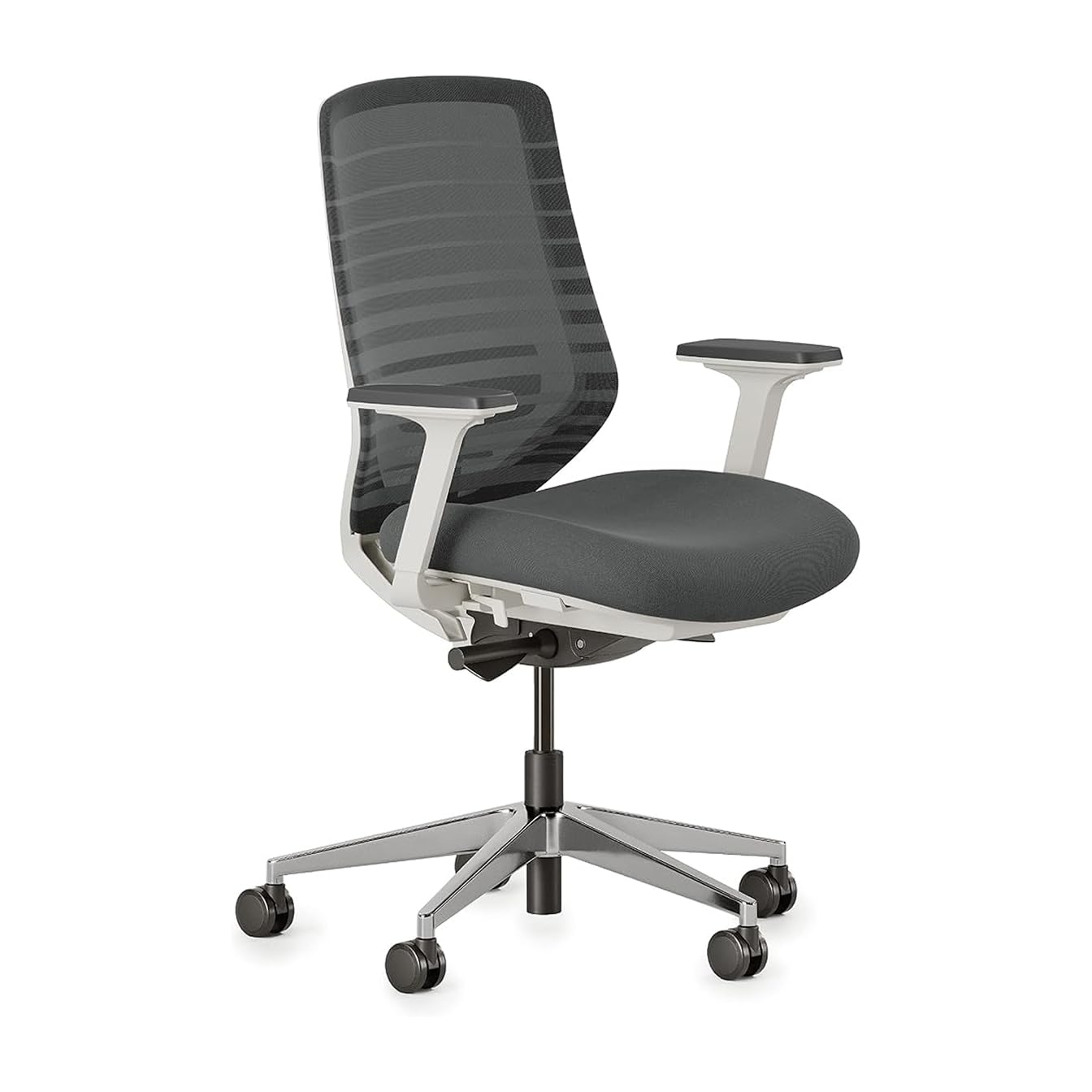
Branch is a direct-to-consumer brand that brings a refined, minimalist design to the ergonomic market without sacrificing adjustability. The Ergonomic Chair offers eight points of adjustment, including independent seat depth and backrest tilt, which allows you to dial in a position that keeps the thoracic spine from collapsing forward. The breathable mesh backrest maintains airflow while providing firm, even support across the mid-back.
The contoured cushioning on the seat is supportive without being too firm, and the adjustable lumbar support moves vertically to match the lower to mid-spine transition. The chair’s wheels roll smoothly on hard floors and carpet, and the sleek graphite and white finish fits modern workspaces. Assembly is straightforward, with many users reporting a 30-minute build time.
The primary limitation is the armrests, which slide forward a bit too easily under pressure, and the lack of a seat tilt function. The chair also fits petite users very well — the lowest seat height of around 16 inches is rare at this price point. For anyone smaller than 5’8” looking for upper back support in a clean, durable package, the Branch is a top contender.
Why it’s great
- Eight adjustment points, including seat depth for proper thigh support
- Breathable mesh back prevents mid-back heat buildup
- Excellent fit for petite users with low minimum seat height
Good to know
- Armrests slide forward too easily with pressure
- No seat tilt function available
- Wheels can be slippery on some hard floors
3. TRALT Ergonomic Office Chair
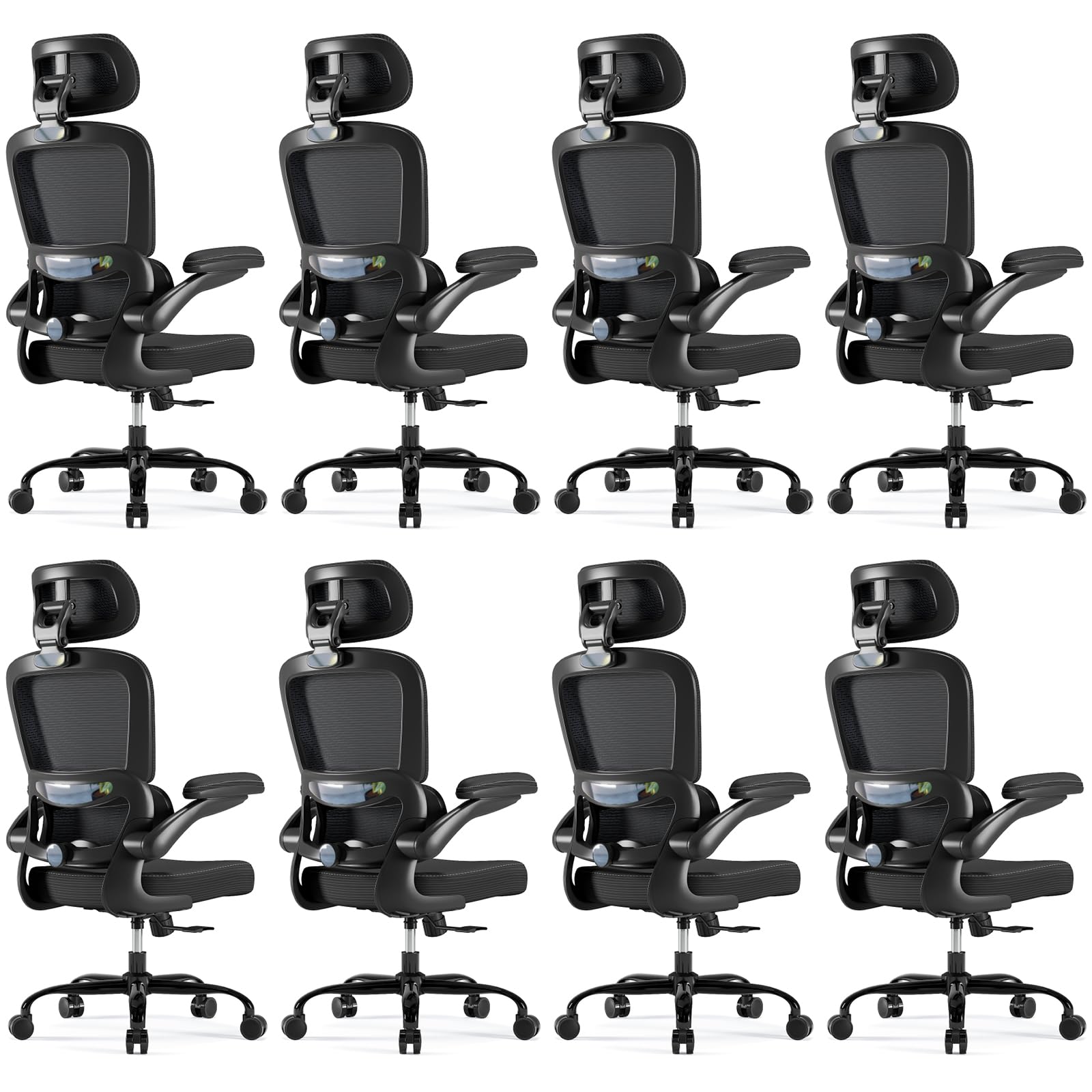
The TRALT chair bridges the gap between plush comfort and structured support with its 3.5-inch high-density sponge cushion that resists sagging even after extended sitting. The mesh back allows airflow while the adjustable lumbar support and headrest work together to reduce forward head posture — a primary cause of upper back strain. The seat width of 20 inches provides generous space for larger users, and the flip-up armrests make it easy to tuck under a desk when not in use.
The chair supports up to 330 lbs and features a metal base and Class-3 gas lift, ensuring stable height adjustments. Assembly is well documented with clear instructions and an installation video, taking most users about 25-30 minutes. The breathable mesh back is paired with a leather seat cushion that is easy to clean, which is a practical advantage for daily use.
The flip-up armrests are less stable when fully extended, especially for heavier leaning during reclined positions. The chair does not offer 3D armrest adjustment like some competitors, so shoulder positioning is less customizable. Still, for users who prioritize a balanced cushion-mesh combo with strong build quality, the TRALT delivers consistent upper back relief.
Why it’s great
- 3.5-inch high-density foam resists sagging for long-term comfort
- Breathable mesh back plus leather seat offers airflow and easy cleaning
- Adjustable headrest and lumbar reduce forward head posture
Good to know
- Flip-up armrests lack stability for heavy leaning
- No 3D armrest adjustment for precise shoulder support
- Casters may need replacement for some floor types
4. ProtoArc EC200 Ergonomic Office Chair
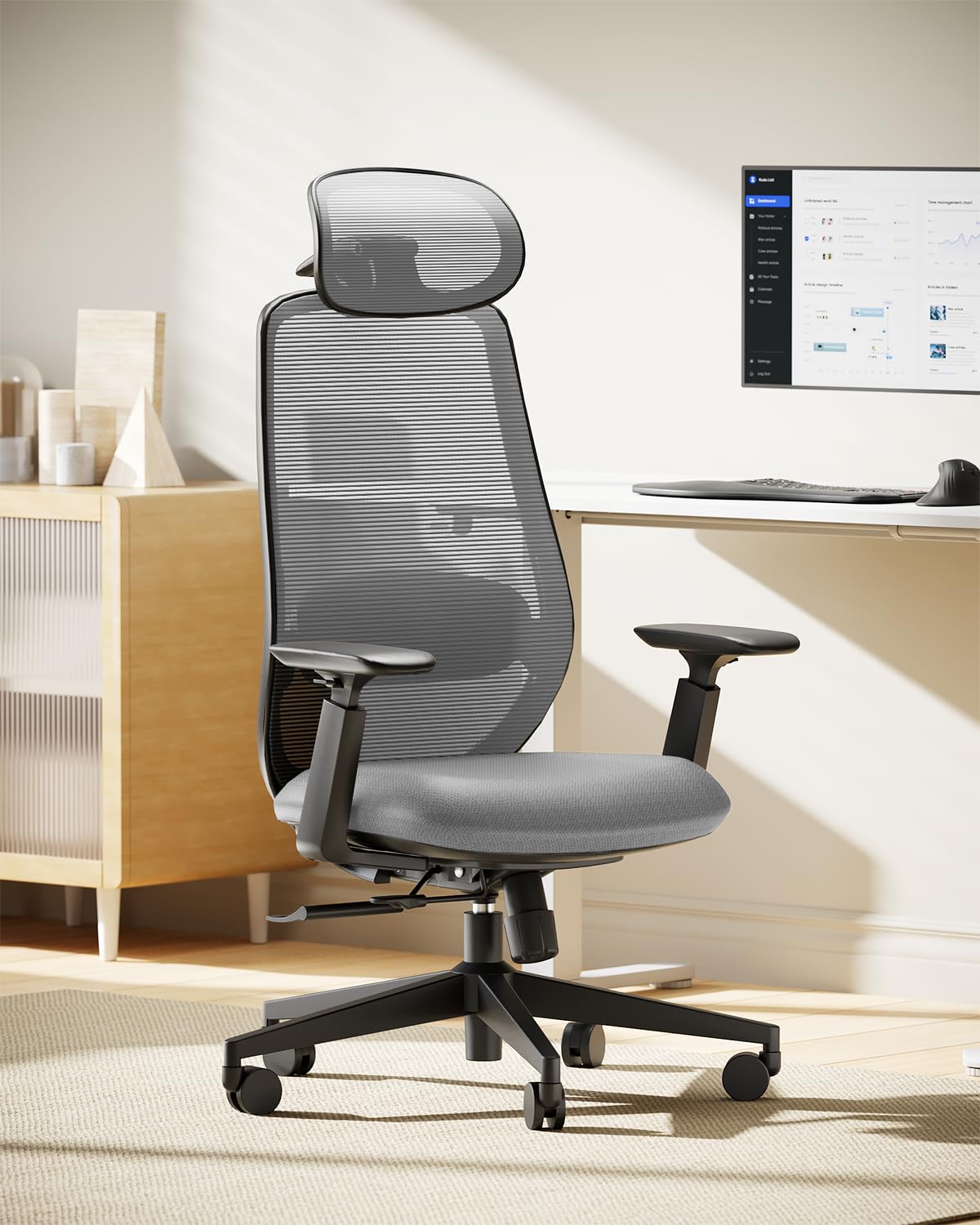
The ProtoArc EC200 delivers a feature rarely found at its price point: a 5-position sliding seat depth with 2 inches of travel that locks instantly. This adjustability allows users from 5’4” to 6’0” to rest the entire thigh on the cushion, eliminating the dangling-leg slouch that pulls the thoracic spine out of alignment. The 55D high-density foam seat core is deliberately firm — it resists the rapid breakdown that softer cushions suffer, maintaining posture support over months.
The 3-point ergonomic support aligns the head, back, and lumbar through independent adjustments. The lumbar pad moves vertically 2.36 inches and 0.8 inches in depth, while the 3D wider headrest offers 3.94 inches of vertical travel, 2.76 inches of depth, 75 degrees of pivot, and 35 degrees of rotation. This range makes it possible to lock the cervical spine in neutral, directly reducing upper trapezius strain.
The chair does require users to stay under 220 lbs, which limits its audience. The wheels also sit a bit too far forward, meaning very short users may find their feet hitting the wheel arms. The assembly packaging receives consistent praise for being frustration-free. For remote workers and programmers who demand seat depth tuning, the EC200 is exceptional.
Why it’s great
- 5-position sliding seat depth accommodates varied leg lengths
- 55D high-density foam resists collapse for years of support
- Extensive headrest adjustability reduces forward head posture
Good to know
- Weight limit of 220 lbs excludes larger users
- Wheel arms may contact short users’ feet
- Lumbar depth adjustment range is modest at 0.8 inches
5. GABRYLLY Ergonomic Office Chair with Footrest
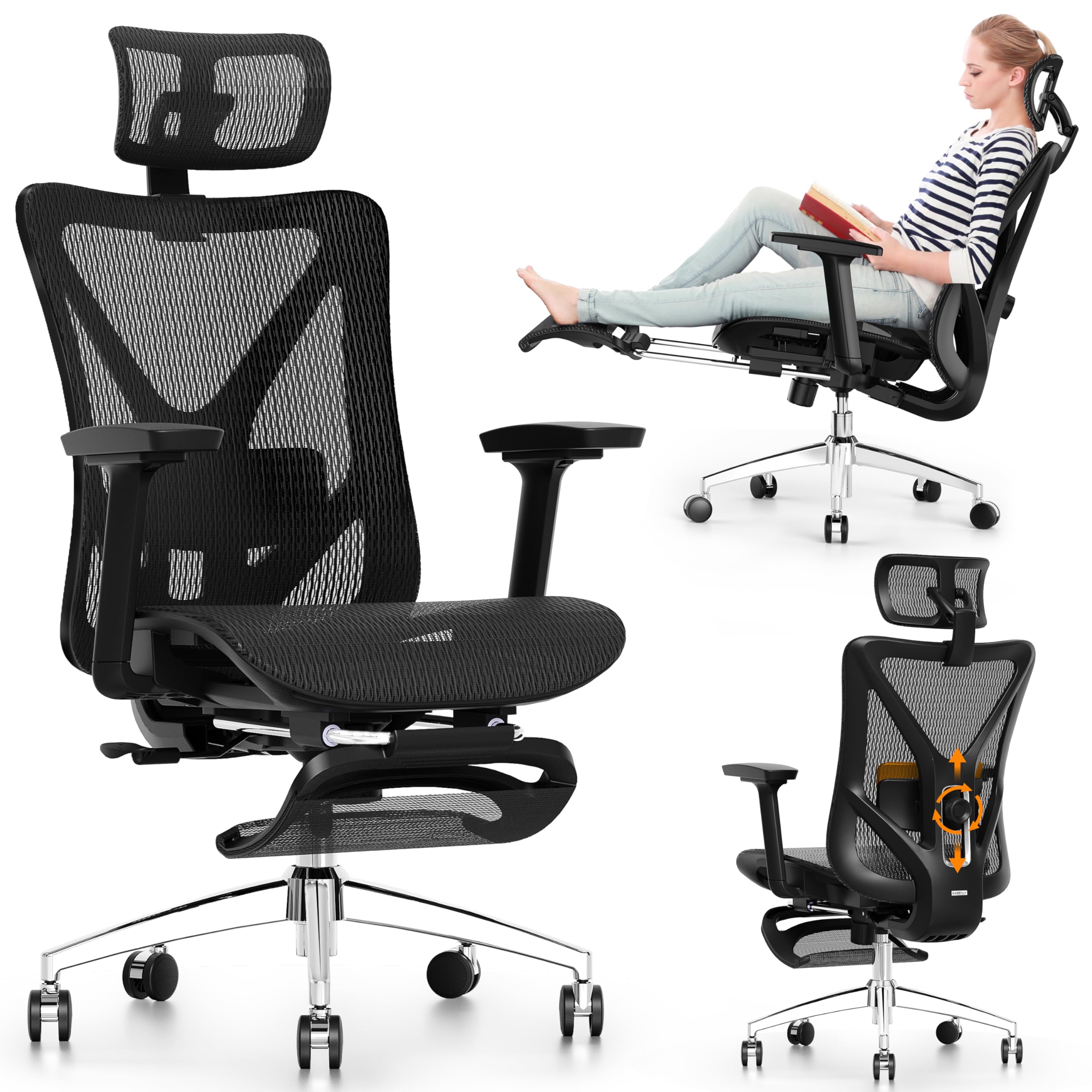
GABRYLLY’s chair combines a three-position reclining backrest (90/110/135 degrees) with a retractable steel footrest that extends 18.1 inches, making it one of the most versatile options for breaking up long sitting sessions. The 2-way adjustable lumbar support (3 inches vertical, 1.6 inches horizontal) conforms dynamically to the lower-to-mid back transition, and the large mesh headrest adjusts in height, angle, and bracket to support the neck and upper traps.
The 3D armrests allow up/down, front/back, and in/out adjustments, which helps keep the shoulders open and relaxed. The chair is built on a 27.5-inch large-diameter steel base with silent wheels, providing stability even when the footrest is deployed. With support for up to 300 lbs, it accommodates a wide range of body types. Assembly takes 15-25 minutes with included tools.
The lumbar support mechanism, while adjustable, can be difficult to reposition once the chair is assembled. The armrests also pivot unintentionally under lateral pressure — a common complaint. The mesh material, while breathable, is slightly less taut than premium competitors, which may reduce long-term support. For buyers who want a reclining workstation that doubles as a nap station, the GABRYLLY is a compelling pick.
Why it’s great
- 135-degree recline with lockable positions for work and rest
- Retractable steel footrest extends 18.1 inches for full leg support
- 2-way lumbar adjustment targets mid-back transition zone
Good to know
- Lumbar adjustment mechanism is difficult to change while seated
- Armrests can pivot unintentionally under pressure
- Mesh is less taut than premium options may cause gradual sag
6. MOLENTS Desk Chair

The MOLENTS chair features a full-mesh design on both back and seat, making it one of the most breathable options for warm climates or long coding sessions. The adjustable lumbar support moves both vertically and in depth — a dual-axis design that lets you target the base of the thoracic spine. The 3D armrests adjust in height, width, and rotation, allowing you to fine-tune shoulder position and reduce trap tension.
The backrest reclines between 90 and 120 degrees across three positions, and the tilt tension adjusts to your weight. At 18.9 inches of seat depth, it accommodates taller users better than many mid-range chairs, and the seat width of 19.8 inches provides ample room. Assembly is consistently reported as straightforward, with labeled parts taking about 15 minutes. The brand also sends proactive follow-up emails to confirm warranty and offer accessories.
The armrest panels slide forward and backward or rotate left and right — a flexibility some users find excessive, causing instability during movement. The wheels are designed for hard floors but can be stiff on carpet unless replaced. The seat mesh is firm and may not suit those who prefer a plush feel. For users who prioritize airflow and mid-back adjustability, the MOLENTS is a strong entry.
Why it’s great
- Full-mesh seat and back provide maximum breathability
- Dual-axis lumbar adjustability for targeting mid-back support
- Proactive customer service with free accessory offers
Good to know
- Armrest panels can slide unintentionally during use
- Wheels are stiff on carpet, may need aftermarket replacements
- Mesh seat is firm and may not suit those wanting a soft cushion
7. CASASIO Ergonomic Office Chair
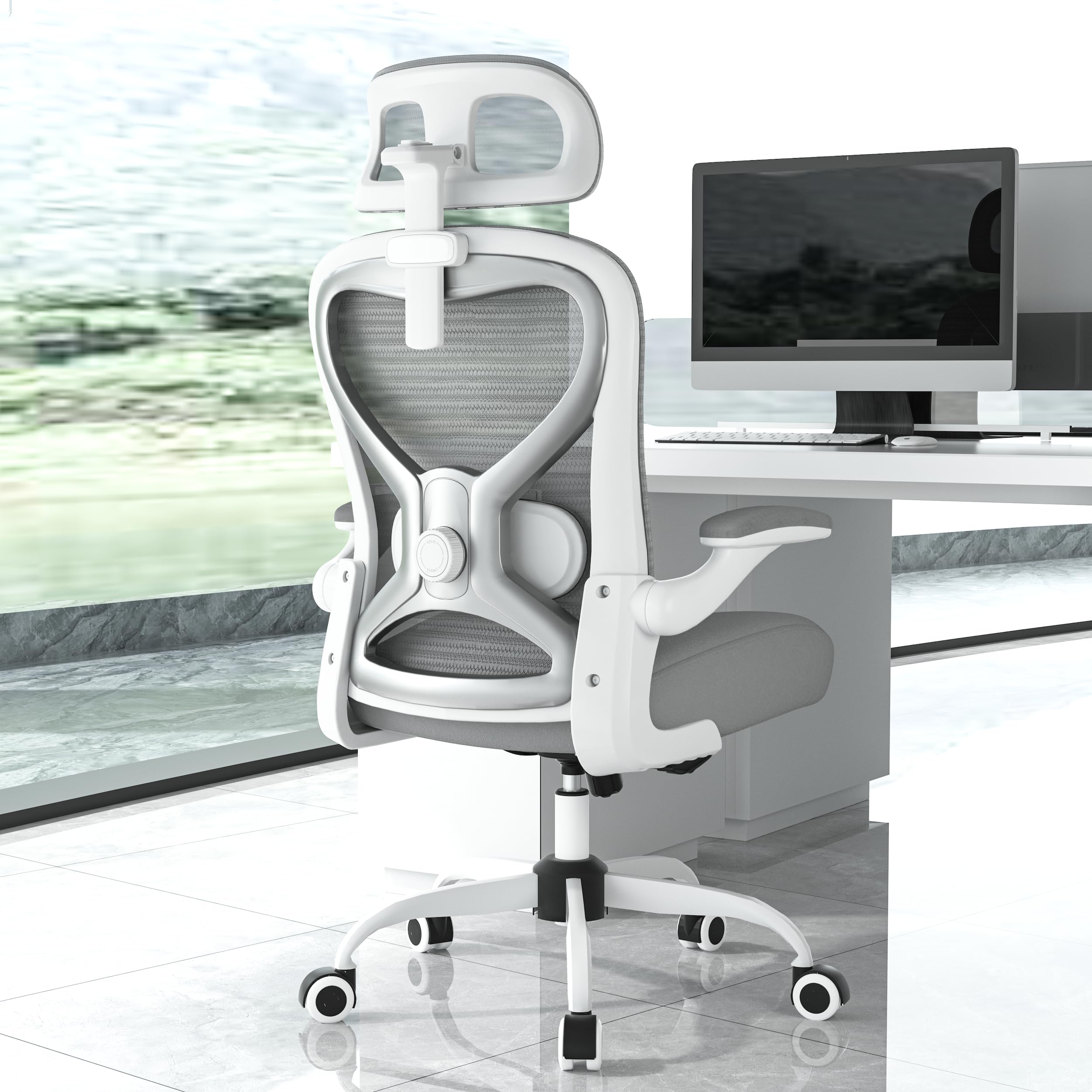
The CASASIO chair sets itself apart with a 3.5-inch virgin foam seat that distributes weight evenly and maintains resilience beyond eight hours — a critical factor when hip sag leads to pelvic tilt and compensatory upper back rounding. The contoured mesh back aligns with the spine’s natural curve, and the dual-direction adjustable lumbar cushion lets you dial in the exact pressure point for the lower-to-mid back junction.
The 3D adjustable headrest (height, depth, angle) cradles the neck and head without pushing it forward, directly addressing forward head carriage. The tilt-and-rock feature with adjustable tension allows gentle movement that relieves spinal disc pressure during long sits. Flip-up armrests make it easy to push the chair under a desk, and the reinforced nylon base supports up to 300 lbs.
Assembly takes about 15-20 minutes, but the chair requires a clearance of roughly 19 inches behind the desk for the recline motion. The armrests are not depth-adjustable, which limits shoulder positioning for some users. The virgin foam, while comfortable, may feel too soft for those who prefer a firm orthopedic seat. For users who want a premium foam feel with adjustable head and lumbar support, the CASASIO delivers consistent relief.
Why it’s great
- 3.5-inch virgin foam seat resists sagging and distributes weight evenly
- 3D headrest adjustability reduces forward head posture
- Tilt-and-rock feature promotes spinal movement during long sits
Good to know
- Armrests lack depth adjustment for shoulder positioning
- Requires clearance space behind desk for recline motion
- Foam seat may be too soft for users wanting firm orthopedic support
8. Logicfox Ergonomic Office Chair
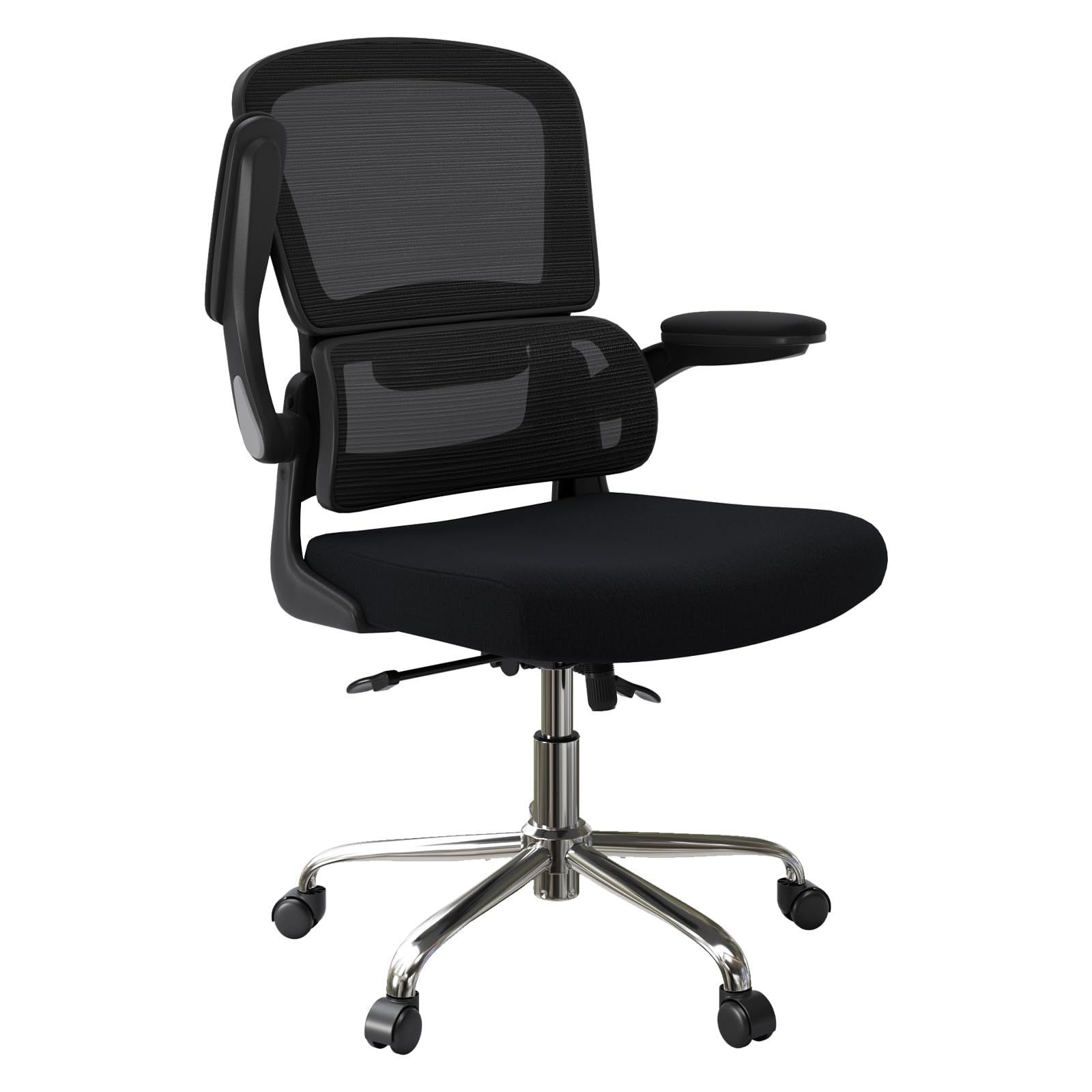
The Logicfox chair brings adaptive 2D lumbar support — a dual backrest design that cradles the spine’s curve — to a budget-friendly price point. The double backrest automatically follows spinal movement, providing continuous pressure relief to the mid and lower back. The seat cushion uses high-resiliency sponge that minimizes pressure on hips and thighs, reducing the pelvic tilt that aggravates upper back strain.
The flip-up armrests rotate 180 degrees, allowing the chair to slide fully under a standard desk for space efficiency. The smooth recline mechanism offers lockable positions between 90 and 130 degrees, plus a 40-degree seat tilt for shifting positions. The full-mesh back encourages airflow, and the premium skin-friendly fabric on the armrests adds a soft touch point. The chair supports up to 400 lbs and includes a 3-year warranty.
A notable design flaw is the gap between the upper and lower back panels, which can catch long hair and pull it during movement. The armrest padding, while soft, lacks 3D adjustability for precise shoulder support. The seat cushion, though resilient, is thinner than foam options and may wear faster under heavy use. For buyers on a strict budget needing high weight capacity, the Logicfox is a practical value.
Why it’s great
- Adaptive 2D double backrest follows spinal movement continuously
- Generous 400-lbs capacity and 3-year warranty
- Full-mesh back promotes airflow and reduces heat buildup
Good to know
- Gap between back panels catches and pulls long hair
- Armrests lack 3D adjustability for shoulder positioning
- Seat cushion may wear faster than thicker foam options
9. Amazon Basics Executive High Back Office Chair

The Amazon Basics Executive Chair is the simplest entry point for high-back support without complex adjustments. The bonded leather upholstery is easy to clean and presents a professional aesthetic, while the air-pressurized seat height adjustment and tilt-tension control provide basic ergonomic functionality. The contoured padded backrest and armrests offer moderate support for standard 8-hour use, and the durable casters roll smoothly on most surfaces.
The chair supports up to 275 lbs and is certified to BIFMA standards, ensuring it meets baseline durability requirements for office environments. Assembly is straightforward with included instructions, and the FSC-certified plywood adds an environmental credential. Users between 5’6” and 6’6” report comfortable fits, though the seat depth and lack of lumbar adjustment limit upper back alignment for longer torsos.
The bonded leather can peel after extended use — some reviews note deterioration after 20-plus years, but that is an outlier. The seat height floor of about 19 inches is too high for shorter users under 5’6” without a footstool. The armrests are narrow, which can cause shoulder pinching for broad-shouldered individuals. For a budget high-back chair that offers a simple, no-fuss design, the Amazon Basics works as a secondary or guest chair.
Why it’s great
- Easy-to-clean bonded leather with professional aesthetic
- BIFMA certified for baseline commercial durability
- Simple assembly with clear instructions and included hardware
Good to know
- Fixed backrest offers no lumbar adjustment for upper back targeting
- Seat height is too high for users under 5’6” without a footstool
- Armrests are narrow and may pinch broad shoulders
FAQ
Can a chair alone fix my upper back pain?
Should I choose a chair with a headrest for upper back pain?
Is mesh back better than padded back for thoracic support?
How important is seat depth for upper back alignment?
Final Thoughts: The Verdict
For most users, the chair for upper back pain winner is the ELABEST Ergonomic Mesh Office Chair because its Golden Triangle backrest specifically targets the shoulder and mid-back area where tension concentrates. If you want adjustable seat depth to dial in leg and pelvic support, grab the ProtoArc EC200. And for those who need a reclining workstation with a footrest to break up long sitting sessions, nothing beats the GABRYLLY Ergonomic Office Chair.

Mo Maruf
I created WellFizz to bridge the gap between vague wellness advice and actionable solutions. My mission is simple: to decode the research and give you practical tools you can actually use.
Beyond the data, I am a passionate traveler. I believe that stepping away from the screen to explore new environments is essential for mental clarity and physical vitality.