Our readers keep the lights on and my smoothie glass nicely filled. As an Amazon Associate, I earn from qualifying purchases.
The lower back starts to ache after the first hour, and by hour three, the hips feel stiff and the shoulders knot up. That is the reality of using the wrong chair at a sewing machine. Unlike a desk job where you lean forward to type, sewing demands a fixed forward lean, extended footwork on a pedal, and minimal lateral movement — a combination that punishes chairs built for generic office work.
I’m Mohammad Maruf — the founder and writer behind WellFizz. This guide comes from cross-referencing hundreds of customer reviews on stitch-specific ergonomic needs — seat depth, lumbar placement, foot ring design, and hydraulic stability — to isolate the models that genuinely support eight-hour sewing sessions.
Whether you quilt, embroider, or do production sewing, the wrong chair accelerates fatigue. These selections focus on targeted lumbar support, stable non-slip bases, and adjustable height ranges that match standard sewing tables, making this the definitive chair for sewing long hours.
How To Choose The Best Chair For Sewing Long Hours
Choosing a sewing chair is different from picking a general office chair. The sewing forward lean, the pedal position, and the fixed table height change every ergonomic requirement. Focus on these four factors before any other feature.
Lumbar Placement for Forward-Lean Posture
Standard office chairs support a neutral upright spine. Sewing positions tilt the torso forward by 10 to 15 degrees. A lumbar support that sits too high or too low will dig into the shoulder blades or miss the lower curve entirely. Look for chairs with adjustable lumbar height or a contoured backrest that follows the natural curve of the spine when leaning forward.
Seat Depth and Thigh Clearance
Sewing requires your feet to be flat on the floor or on a foot ring so you can operate the pedal without lifting your heels. If the seat pan is too deep — anything beyond 18 inches — the edge hits behind the knee, restricting circulation and causing numbness. A 16- to 17-inch seat depth is ideal for most sewers, especially those under 5 feet 6 inches.
Stable Base and Pedal Compatibility
Wheels are convenient for moving between cutting tables and ironing boards, but they can cause the chair to drift when you press the sewing pedal. Many dedicated sewing chairs use non-slip glides instead of casters. If you prefer casters, look for locking casters or a five-star base with a wider footprint to prevent rocking during rapid foot motion.
Height Range and Table Fit
Sewing tables are typically lower than standard desks — 26 to 30 inches tall. A chair that adjusts down to 18 inches at the seat is necessary for most home sewing tables. Chairs with a minimum seat height of 19 inches or higher may force you to hunch or raise the machine, defeating the ergonomic purpose. Always check the seat height range against your table height before purchasing.
Quick Comparison
On smaller screens, swipe sideways to see the full table.
| Model | Category | Best For | Key Spec | Amazon |
|---|---|---|---|---|
| Reliable SewErgo 200SE | Sewing Specific | Dedicated sewers who need non-slip glides | Adjustable back angle + glides | Amazon |
| Pink Power Sewing Chair | Sewing Specific | Hobbyists who want seat storage | 300-lb capacity, hidden storage | Amazon |
| Arrow Sewing H8123 | Sewing Specific | Small-framed sewers (4’11” and up) | 18-22 inch height range | Amazon |
| ELABEST T96 | Ergonomic Mesh | All-day mesh comfort with 3D arms | BIFMA certified, mesh seat | Amazon |
| BOLISS Drafting Chair | Standing Desk | Tall tables or standing desks | 23.6-31.5 inch seat height | Amazon |
| HON Volt | Ergonomic Task | Taller sewers (over 5’10”) | 20-inch seat depth | Amazon |
| BERYTH Home Office Chair | Mid-Back PU | Small spaces and short sewers | Armless, rocking function | Amazon |
| Primy Tall Desk Chair | Mesh Drafting | Standing desk sewers needing foot ring | Adjustable foot ring, mesh back | Amazon |
| Synorla Ergonomic Chair | Budget Mesh | Entry-level comfort with flip arms | 330-lb capacity, flip armrests | Amazon |
In‑Depth Reviews
1. Reliable SewErgo 200SE

The Reliable 200SE is designed specifically for sewers, and that focus shows in every detail. The seat and backrest tilt independently, letting you dial in a forward lean that matches the reach to your sewing machine without collapsing your lumbar curve. The upholstered back is wide enough to support the full spinal column, and the seat cushion uses dense polyester foam that resists bottoming out after years of daily use.
Instead of wheels, the 200SE uses non-slip glides that keep the chair planted when you press the sewing pedal. This eliminates the constant micro-adjustments that happen with rolling chairs. Made in Canada with recycled materials, the build quality exceeds most mid-range office chairs in its segment. The seat height adjusts from approximately 18 to 22 inches, fitting the majority of home sewing tables.
The glides reduce mobility on thick carpet. Users on laminate or hardwood floors find the chair stays put perfectly. The back angle adjustment knob sits behind the seat and requires reaching back to operate — a minor inconvenience that becomes second nature after a few uses.
Why it’s great
- Independent seat and back tilt for custom forward-lean posture
- Non-slip glides keep the chair stable during pedal work
- Dense foam cushion does not sag over time
Good to know
- Requires adding aftermarket wheels if you need floor mobility
- Back adjustment knob is awkward to reach while seated
2. Pink Power Sewing Chair with Wheels

Pink Power brings a combination rarely seen in sewing chairs: a 300-pound weight capacity, a hidden compartment under the seat, and a backrest that adjusts from 9 to 13 inches in height. The lumbar pad is removable and repositionable, which is crucial for sewers who shift between machine work and hand-finishing at the same table.
The five-star swivel base uses heavy-duty casters that roll smoothly across laminate and hardwood without marking the floor. The seat cushion uses high-resilience foam that provides enough give for long sessions without collapsing into a hammock shape. The height range of 19 to 23 inches works best with standard sewing tables in the 28- to 30-inch range.
The wheels require significant force to install — several users noted the snap-in mechanism is stiff. The assembly instructions lack step-by-step visuals, which may slow down first-time builders. However, the customer service team responds quickly to clarify assembly steps.
Why it’s great
- Removable lumbar pad targets lower back for forward-lean posture
- Under-seat storage keeps scissors, bobbins, and manuals at hand
- High weight capacity suits a wide range of body types
Good to know
- Wheels are difficult to snap into the base
- Instructions lack visual clarity for assembly
3. Arrow Sewing H8123 Hydraulic Sewing Chair

The Arrow H8123 solves a problem that most sewing chairs ignore: accommodating shorter sewers. With a minimum seat height of 18 inches, it fits under low sewing tables and allows a 4-foot-11-inch user to keep both feet flat on the floor — a requirement for pedal control. The seat depth is kept short enough to avoid contact with the back of the knees when leaning forward.
The hydraulic lift is smooth and holds position reliably, even after repeated adjustments between users. The five-star base uses heavy-duty casters that glide between the sewing machine and the ironing board without marking the floor. The upholstered foam seat is firm, which prevents the hips from sinking into an uneven position that can cause sciatic irritation over a four-hour session.
The concealed storage compartment is shallow — large enough for a manual and a few small notions but not big enough for a full sewing kit. The backrest has an open-back design that provides lumbar support without trapping heat. Users above 5 feet 6 inches may find the seat depth and back height too limiting.
Why it’s great
- Lowest seat height of any model in this guide (18 inches)
- Firm foam cushion prevents hip sinking during extended sits
- Smooth-rolling casters for easy movement between stations
Good to know
- Storage compartment is shallow
- Upper back support is minimal for taller sewers
4. ELABEST Ergonomic Mesh Office Chair T96

The ELABEST T96 is built for people who spend eight continuous hours in a chair. The full mesh seat is more breathable than any foam cushion, preventing the heat buildup that can make long sewing sessions uncomfortable. The bionic-curve backrest follows the spine’s natural shape, and the adjustable lumbar support moves independently from the backrest, letting you dial in the exact height that contacts your lower back during a forward lean.
The 3D adjustable armrests are a standout feature for sewers who alternate between machine work and cutting or pressing tasks. The armrests adjust up and down, side to side, and angle front to back, allowing you to tuck the chair completely under the table when you need to lean into the machine. The synchro-tilt mechanism locks in three positions, so you can recline briefly between tasks without losing your setup.
The mesh seat is not for everyone — some users prefer a softer padded surface. The armrests may feel wide for smaller frames, though the lateral adjustment helps compensate. The chair is best suited for users between 5 feet 5 inches and 5 feet 10 inches.
Why it’s great
- Mesh seat stays cool during all-day use
- 3D armrests adjust to fit under any table height
- BIFMA commercial-grade frame resists wobble
Good to know
- Mesh seat may feel too firm for users who prefer plush cushions
- Armrests can feel wide for petite frames
5. BOLISS 400Lbs Mid Back Mesh Drafting Chair

For sewers who work at elevated cutting tables or standing-desk setups, the BOLISS drafting chair provides a wide seat platform with a seat height that adjusts from 23.6 to 31.5 inches. The wide seat cushion — 20.5 inches across — distributes body weight evenly across the hips, reducing pressure points that develop during long cutting or quilting sessions. The foot ring is larger than most (24 inches), giving your feet a stable platform even when you shift weight to work the pedal.
The mid-back mesh design uses high-density molded foam in the seat and a mesh backrest that prevents sweat accumulation during warm workshops. The 5-level height-adjustable armrests let you support your elbows at the same height as the work surface, which reduces shoulder strain when guiding fabric through the machine.
The foot ring has a tendency to drift downward over time despite the locking knob. Some users fixed this with a hose clamp modification. The ring diameter, while large, may still feel narrow for users with wider leg stances. The casters roll smoothly on carpet but can slide slightly on hard floors.
Why it’s great
- Wide seat and large foot ring for stable leg positioning
- High minimum seat height suits elevated cutting tables
- Height-adjustable armrests support elbows at table level
Good to know
- Foot ring may slip down over time
- Foot ring diameter still tight for some leg positions
6. HON Volt Ergonomic Office Chair
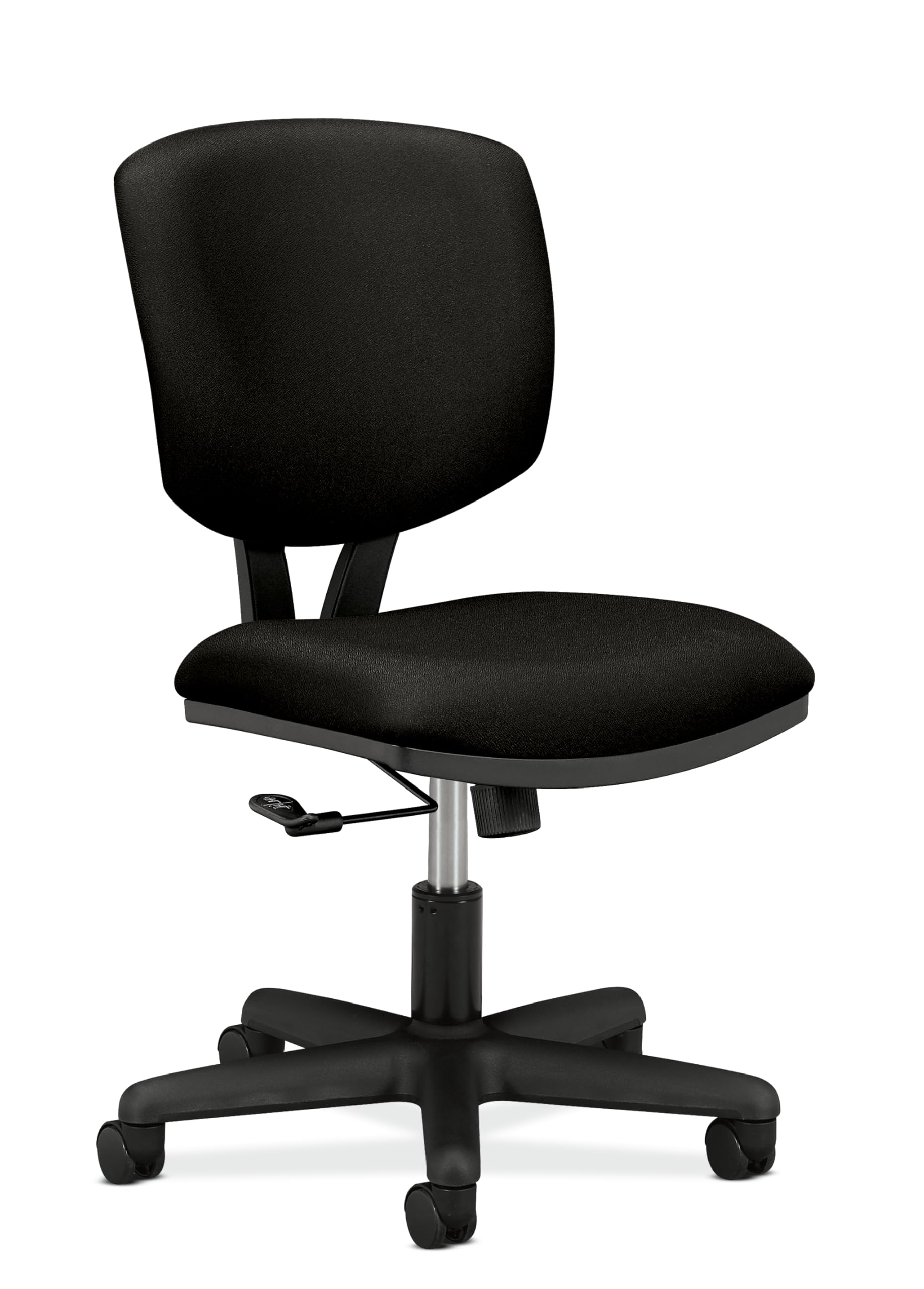
The HON Volt is an armless task chair designed for unrestricted movement, which suits sewers who need to reach across a wide cutting table or swivel between multiple machines. The seat is 20 inches deep and 19 inches wide, making it one of the largest platforms in this guide. Taller sewers — above 5 feet 10 inches — benefit from the extra thigh support, while the contoured back provides a subtle hug that keeps the pelvis aligned during forward leans.
The center-tilt recline mechanism uses adjustable tension, letting you rock back slightly during hand stitching without the chair locking into a permanent recline. The foam cushion is dense and firmer than most budget chairs, which prevents the common “bottoming out” feeling after a few hours. The durable casters roll smoothly across commercial-grade carpet and hard floors.
The generous seat depth is a problem for shorter sewers. Users under 5 feet 5 inches may find the front edge pressing against the back of the knees, restricting circulation. The backrest is sculpted but does not offer adjustable lumbar height — taller users may find the lumbar curve sits too low.
Why it’s great
- Extra-large seat platform supports taller frames
- Center-tilt recline allows natural movement without locking
- Armless design maximizes elbow room for wide tasks
Good to know
- Seat too deep for petite sewers
- No adjustable lumbar support
7. BERYTH Home Office Chair – Armless PU Leather
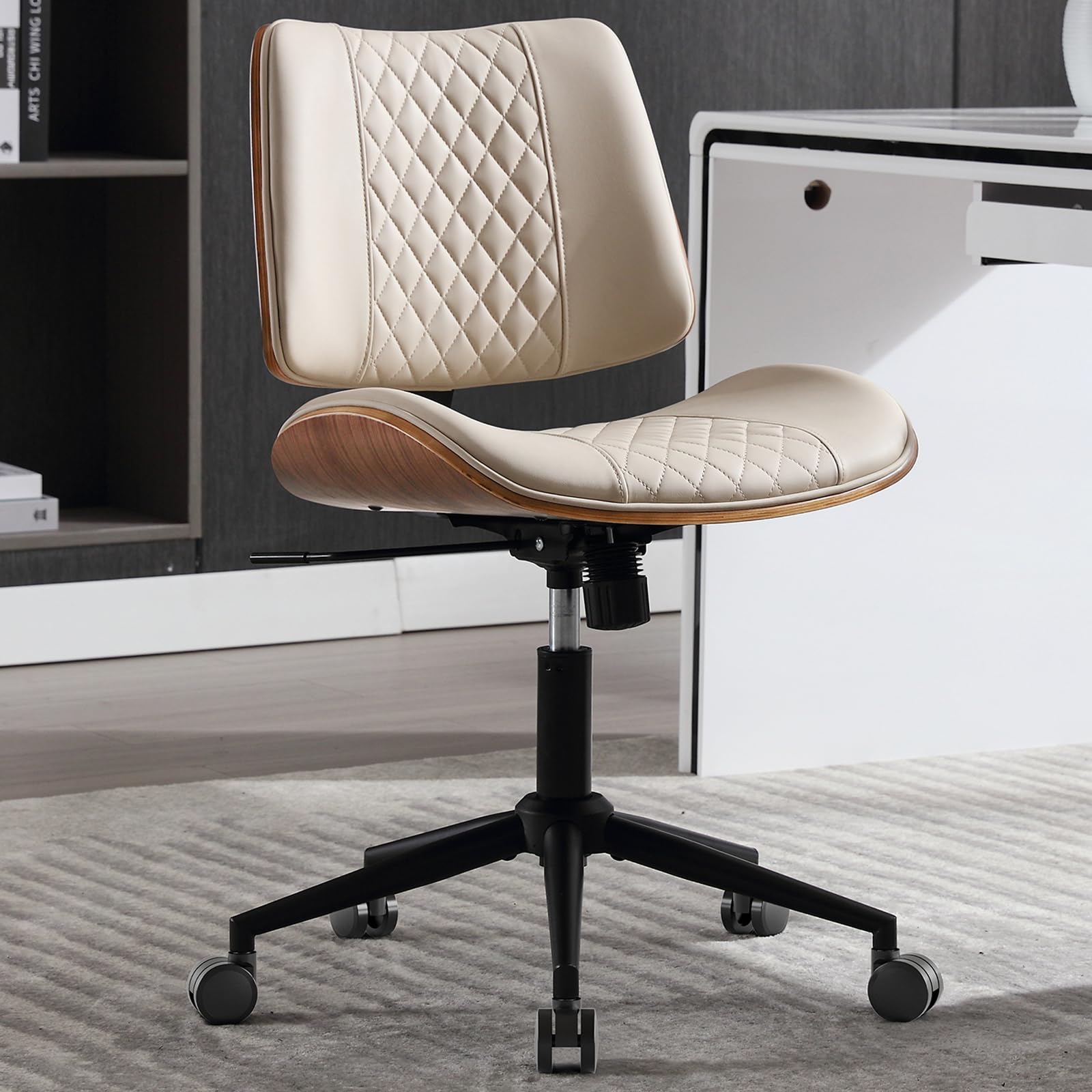
The BERYTH chair brings a compact armless frame with a rocking function that sewers can use to shift weight and relieve lower back pressure between tasks. The seat height range of 19.3 to 23.3 inches fits standard sewing tables, and the walnut-style back adds rigidity that prevents flexing during active sewing. The PU leather upholstery is water-resistant and easy to wipe clean after fabric dust and thread accumulate on the surface.
The 3.9-inch height adjustment range is generous for a mid-back chair, and the rocking tension control knob lets you set how easily the chair tilts. The 360-degree swivel base uses silent casters that do not squeak during fabric guiding motions. Users consistently report that this chair eliminated back and leg pain that they previously experienced on dining chairs or cheap office chairs.
The 15.2-inch seat depth is relatively short — sewers over 5 feet 6 inches may find the seat pan restrictive. The chair has a 250-pound weight capacity, so heavier users may notice the cushion compressing over time. The PU leather can feel warm during long sessions in rooms without air conditioning.
Why it’s great
- Rocking function relieves lower back pressure between tasks
- PU leather is easy to clean after fabric dust accumulation
- Silent casters do not disrupt quiet sewing rooms
Good to know
- Short seat depth limits comfort for taller sewers
- PU leather can retain heat in warm environments
8. Primy Armless Tall Desk Chair

The Primy drafting chair is designed for standing-desk setups, but its adjustable foot ring and tall height range make it useful for sewers who work at elevated cutting tables or prefer to perch rather than sit deep. The C-shaped mesh backrest wraps around the lower back, fitting the curve of the spine without hard pressure points. The seat cushion uses high-elasticity sponge that returns to shape quickly after each session.
The foot ring adjusts up and down independently of the seat height, letting you set the pedal position exactly where your feet naturally rest. The 250-pound base is built with a three-stage air rod that provides stable lift without wobble. The armless side cutouts make it easy to slide the chair close to the table, minimizing the forward reach required to handle fabric.
The plastic backrest frame flexes more than metal alternatives, which some users find less supportive for aggressive reclining. The sharp underside edges of the metal foot ring require filing to avoid snagging socks. The mesh back restricts airflow well, but the seat cushion is narrower than standard sewing chairs.
Why it’s great
- Adjustable foot ring lets you dial in pedal leg position
- C-shaped mesh back supports lower back without digging
- Tall height range works with elevated cutting surfaces
Good to know
- Plastic back flexes more than metal-frame chairs
- Foot ring edges are sharp and may need filing
9. Synorla Ergonomic Desk Chair

The Synorla chair offers a high-back design with flip-up armrests at a budget-friendly price point. The 3-inch thick high-density foam seat provides immediate cushioning, and the breathable mesh back promotes airflow during extended use. The adjustable lumbar support moves to three height levels, accommodating different spine lengths when the user leans forward over the sewing table.
The 330-pound weight capacity makes this one of the most robust budget options. The chair tilts up to 135 degrees but does not lock in the reclined position — it returns upright automatically. The 4-inch seat height adjustment gives flexibility for tables of varying height. Users at 5 feet 9 inches to 6 feet 2 inches report that the seat depth and back height provide good coverage.
The armrests are padded with high-density foam but do not adjust laterally or in depth. Several users noted that the armrests can create pressure points on the forearms after a few hours. The lumbar adjuster feels plastic and may not hold position as securely as metal mechanisms. The casters are basic and may struggle on thick carpet.
Why it’s great
- High weight capacity at a competitive price point
- Flip-up armrests allow close-in sewing access
- Thick foam seat cushions the hips for short-to-medium sessions
Good to know
- Armrests can cause forearm pressure during sewing reach
- Lumbar adjuster feels less durable than premium designs
FAQ
What is the ideal seat height for a sewing chair?
Should I choose a sewing chair with casters or glides?
Why do armless chairs work better for sewing than chairs with armrests?
How firm should the seat cushion be for all-day sewing?
Can I use a regular office chair for sewing?
What weight capacity should I look for in a sewing chair?
Final Thoughts: The Verdict
For most users, the chair for sewing long hours winner is the Reliable SewErgo 200SE because it combines the forward-tilt adjustability, dense foam cushion, and non-slip glides that sewers specifically need to stay comfortable and stable through eight-hour sessions. If you want concealed storage and a removable lumbar pad, grab the Pink Power Sewing Chair. And for short-statured sewers who need a chair that reaches down to 18 inches without sacrificing lumbar support, nothing beats the Arrow Sewing H8123.

Mo Maruf
I created WellFizz to bridge the gap between vague wellness advice and actionable solutions. My mission is simple: to decode the research and give you practical tools you can actually use.
Beyond the data, I am a passionate traveler. I believe that stepping away from the screen to explore new environments is essential for mental clarity and physical vitality.