Our readers keep the lights on and my smoothie glass nicely filled. As an Amazon Associate, I earn from qualifying purchases.
Finding a chair that supports a curved spine without creating pressure points is a different challenge than picking a standard office chair. Most seats are designed for a symmetrical body, leaving those with scoliosis struggling with uneven support, hip tilt, and lower back fatigue after just an hour of sitting.
I’m Mohammad Maruf — the founder and writer behind WellFizz. My research involved diving deep into ergonomic specifications, studying biomechanical support systems, and analyzing hundreds of customer reviews to find which chairs actually accommodate postural asymmetry rather than just claiming to.
After weeks of comparison, I’ve narrowed down the field to the nine best models that offer real adjustability and targeted lumbar support, giving you a clear path to the best chair for scoliosis that matches your body’s unique needs.
How To Choose The Best Chair For Scoliosis
Choosing a chair for scoliosis means prioritizing features that allow you to dial in support exactly where your spine needs it. Unlike general ergonomic chairs, you need independent adjustability in the lumbar region, seat pan, and armrests to compensate for the rotational and lateral curves common in scoliosis.
Lumbar Adjustability (Vertical and Depth)
A fixed lumbar pad won’t work if your curve creates a gap between your lower back and the chair. Look for lumbar support that moves up and down as well as forward and backward. A lumbar system that can protrude into the curve on one side while staying flat on the other is ideal for accommodating asymmetrical spinal structures.
Seat Depth and Pan Tilt
Leg length discrepancy often accompanies scoliosis, which makes seat depth critical. A seat pan that slides forward or backward ensures your thighs are fully supported without pressure behind the knees. Some mid-range and premium chairs also offer a seat pan tilt, which can help level your pelvis if one hip sits higher than the other.
Armrest Range of Motion
Armrests that only move up and down aren’t enough. You need 3D or 4D armrests that adjust in height, width, depth, and angle. This lets you position each arm independently to offload the shoulders and prevent upper back strain — a common pain point when one shoulder blade protrudes more than the other.
Quick Comparison
On smaller screens, swipe sideways to see the full table.
| Model | Category | Best For | Key Spec | Amazon |
|---|---|---|---|---|
| ProtoArc EC200 | Mid-Range | Adjustable seat depth for leg length discrepancy | 5-position sliding seat (1.97″ travel) | Amazon |
| FLEXISPOT ErgoX-PRO | Premium | Full postural customization with 5D lumbar | 5D fully extendable lumbar support | Amazon |
| SIHOO Doro S300 | Premium | Dynamic lumbar that adapts to movement | 6D auto-deforming lumbar mechanism | Amazon |
| ELABEST Mesh Office Chair | Mid-Range | Shoulder reinforcement for upper curve support | “Golden Triangle” back structure | Amazon |
| MOLENTS Ergonomic Chair | Mid-Range | Budget-friendly with dual lumbar adjustment | Lumbar adjustable up/down and forward/back | Amazon |
| COLAMY Executive Chair | Entry-Level | Plush cushioning for hip pressure relief | 6.7″ thick high-density foam cushion | Amazon |
| FLEXISPOT ErgoX | Mid-Range | Dynamic lumbar with built-in footrest | 5-level adjustable back support | Amazon |
| Steelcase Leap | Premium | Customizable lower back firmness dial | Natural Glide System seat motion | Amazon |
| Hbada X7 Smart | Premium | Auto-adjusting lumbar tracking technology | 3D gravity-sensing auto lumbar | Amazon |
In‑Depth Reviews
1. ProtoArc EC200 Ergonomic Office Chair
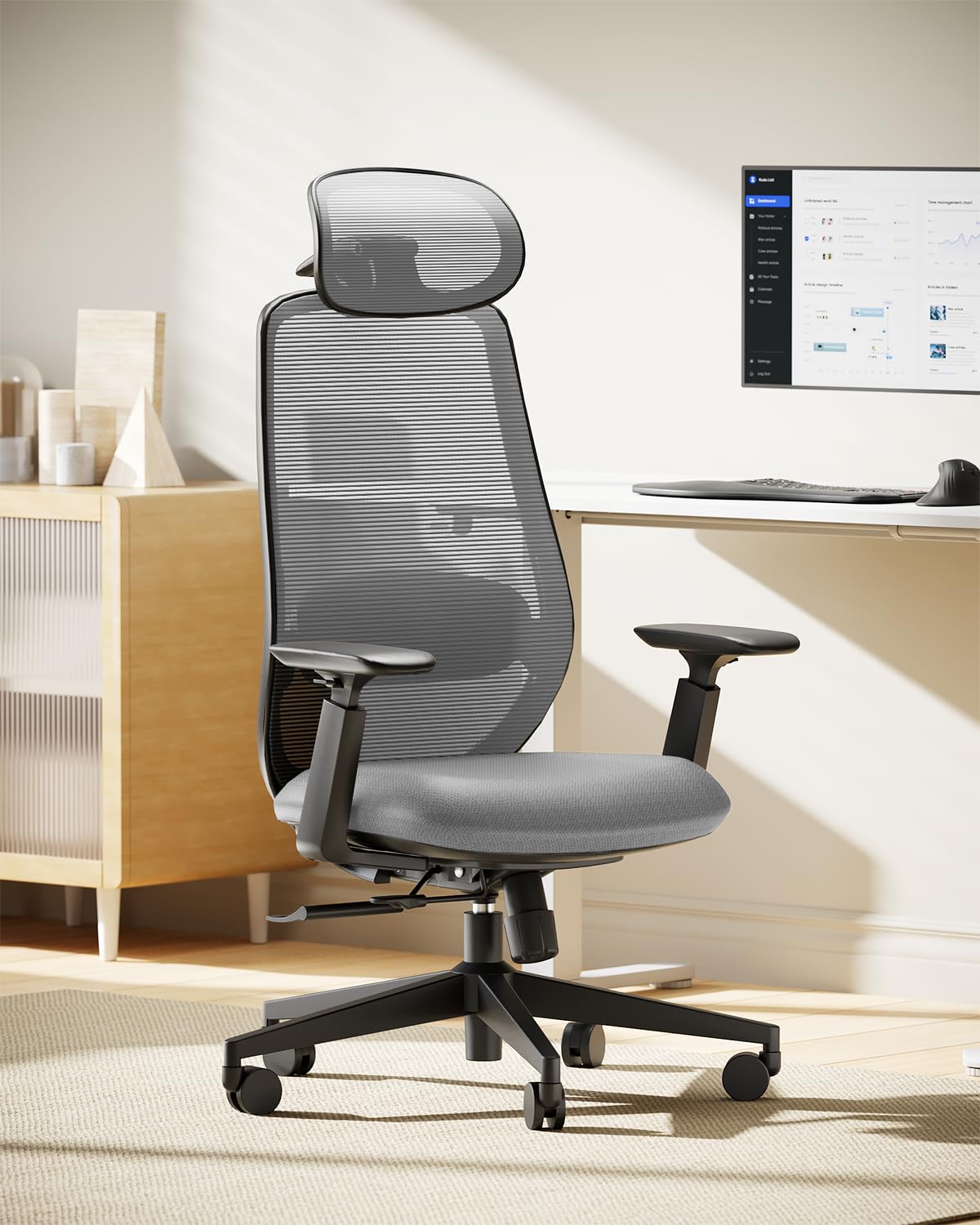
The ProtoArc EC200 stands out for scoliosis because it offers a 5-position sliding seat with 1.97 inches of travel — a feature rarely found at this price tier. This seat depth adjustment is crucial for accommodating leg length discrepancies, allowing you to rest your entire thigh on the cushion and eliminate the pelvic tilt that often aggravates spinal curvature.
The lumbar support moves 2.36 inches vertically and 0.8 inches in depth, giving you enough range to fill the gap created by a lumbar curve. The 3D headrest cradles the cervical spine without pushing your head forward, which matters when an upper thoracic curve changes your neutral head position. Designed for users between 5’4″ and 6’0″ and up to 220 pounds, the mesh back keeps you cool during long sessions.
The 55D high-density foam seat resists collapse better than softer cushions that sag within months. The 4-stage recline (90°, 105°, 120°, 130°) lets you shift posture throughout the day without losing support. Assembly takes about 20 minutes with clearly labeled parts.
Why it’s great
- Adjustable seat depth helps balance pelvis position
- Lumbar adjusts both vertically and in depth for targeted curve support
- Breathable mesh back prevents heat buildup
Good to know
- Best suited for users up to 220 pounds
- Armrests are 2D, not full 3D adjustment
2. FLEXISPOT ErgoX-PRO Ergonomic Office Chair
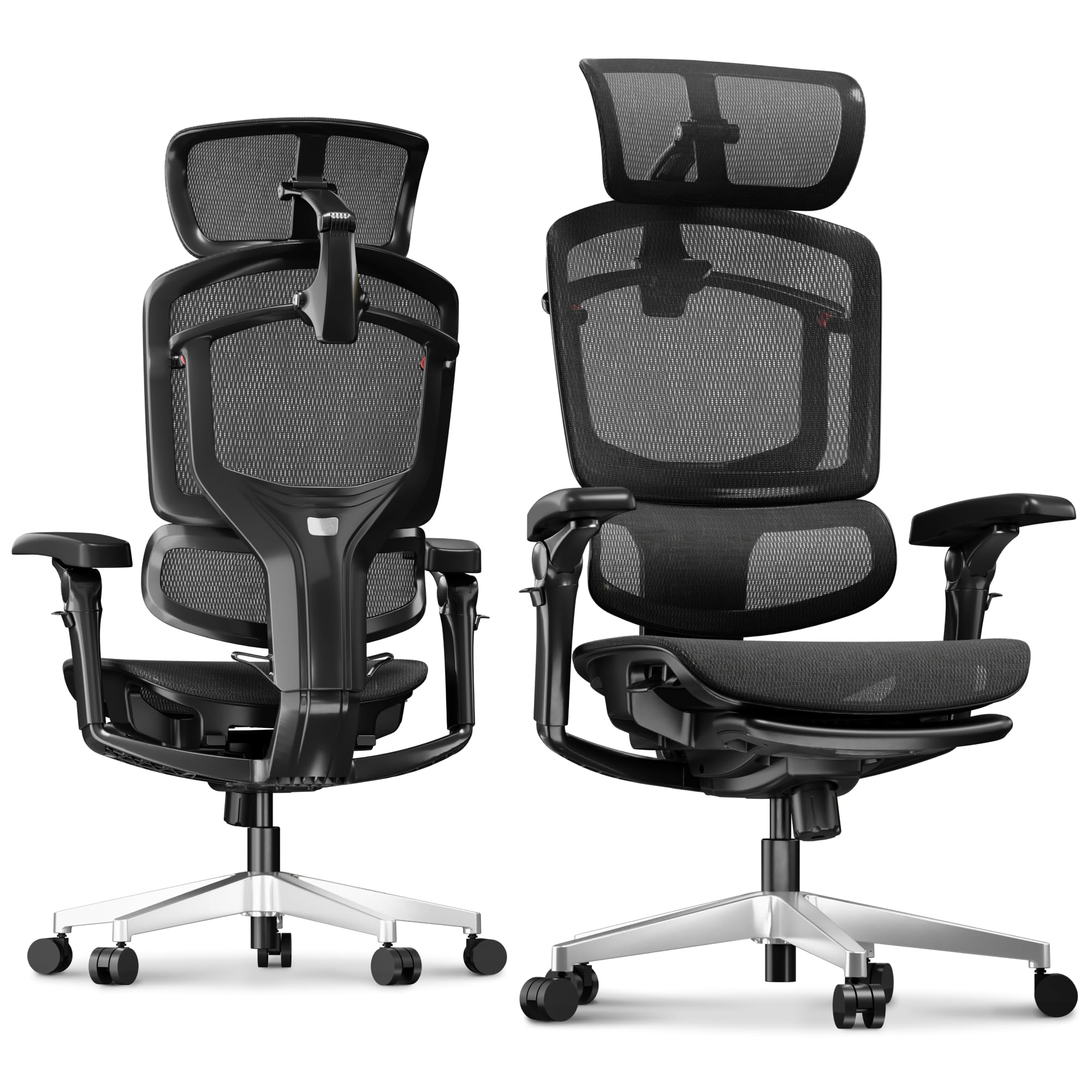
The ErgoX-PRO takes adjustability to the next level with its 5D fully extendable lumbar support that adapts to your posture as you move — a real advantage when scoliosis means your spinal curve shifts slightly as you change positions. The 4D headrest doubles as a head cradle for tall users or a back cushion for compact setups, giving you flexibility in how you support your upper spine.
The 7D linkage armrests move with your body in full motion, which is critical for reducing shoulder strain when one scapula sits higher or more forward than the other. The chair offers a 12-level fine-tuned backrest with spring cushioning, paired with a 3-position tilt base at 90°, 115°, and 135°. The reinforced nylon and fiberglass frame supports up to 551 pounds, making it one of the most robust options available.
You can choose between a Cloudtech foam cushion or the AeroWeave 5.0 mesh seat. For scoliosis users who experience hip pressure from uneven weight distribution, the mesh seat offers better airflow and pressure distribution. An optional retractable footrest adds relaxation during breaks.
Why it’s great
- 5D lumbar adapts dynamically to changing posture
- 7D armrests reduce shoulder strain from asymmetry
- 551-pound weight capacity with durable frame
Good to know
- Premium price point reflects advanced adjustability
- Armrest adjustability is extensive but takes time to dial in
3. SIHOO Doro S300 Ergonomic Office Chair
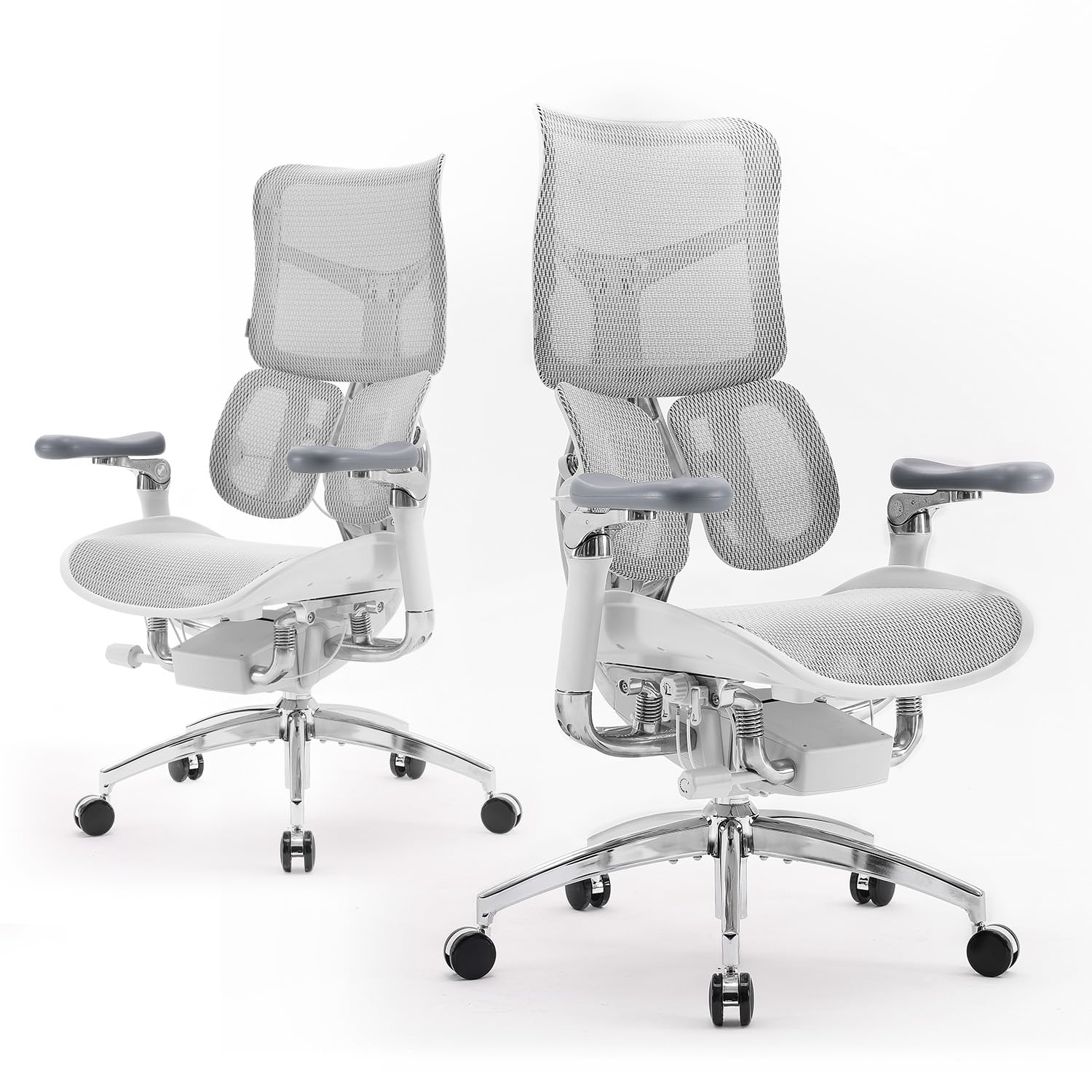
The SIHOO Doro S300 introduces a bionic dynamic lumbar support system that replicates the curve of the human lumbar region using 6D automatic deformation. Instead of a static pad that presses into one spot, this mechanism wraps around the lumbar area and adjusts as you shift — especially useful for scoliosis where the curve shape changes between sitting upright and leaning back.
The four-axis linkage system distributes pressure evenly from hips to back during recline, reducing the risk of one side bearing more weight. The shock-absorbing suspension system provides a soft-ground sensation that automatically balances support according to body position changes. The 6D coordinated armrests offer six directions of movement, which helps position each arm independently to offload the upper back.
The aerospace-grade elastic plates in the recline mechanism allow fine-tuned tension adjustment based on your body weight. The chair meets BIFMA and SGS certification standards. Some taller users at 6’1″ report excellent lumbar wrap-around, while users under 5’7″ may find the lumbar too prominent.
Why it’s great
- Dynamic lumbar deforms automatically to match spine shape
- Four-axis linkage prevents uneven hip pressure during recline
- 6D armrests allow independent arm positioning
Good to know
- Lumbar may feel too stiff for shorter users
- Armrests lack locking mechanism, can shift unintentionally
4. ELABEST Ergonomic Mesh Office Chair

The ELABEST chair targets a specific pain point for scoliosis sufferers: upper back and shoulder fatigue. Its “Golden Triangle” back structure provides stable, targeted support for the shoulders and upper back — areas that often bear extra tension when the thoracic spine curves laterally. The bionic-curve backrest mimics the spine’s natural S-shape rather than just a flat lumbar curve.
The lumbar support is adjustable and works with a synchro-tilt mechanism that has 3 lockable positions and adjustable tension. The 3D armrests adjust in height, width, and angle, giving you room to find a position that doesn’t hike one shoulder. The full-mesh seat actively prevents heat buildup, which helps during long sessions when you can’t shift weight as freely.
BIFMA 5.1 certified, the chair supports a seat height range of 19.6 to 23.6 inches and a seat depth of 17.7 inches. The waterfall seat edge promotes blood circulation in the legs. Designed best for users between 5’5″ and 5’10”, the chair offers a firm, durable mesh that doesn’t stretch out over time.
Why it’s great
- Shoulder reinforcement reduces upper back fatigue from thoracic curves
- Full-mesh seat stays cool and prevents pressure points
- Waterfall seat edge aids leg circulation
Good to know
- Armrests may be too wide for smaller frames
- Ideal height range is 5’5″ to 5’10”
5. MOLENTS Ergonomic Office Chair

The MOLENTS chair delivers surprisingly strong adjustability at a budget-friendly price point. Its lumbar support adjusts both up and down as well as forward and backward — a dual-axis system usually reserved for chairs costing twice as much. This range lets you dial in the exact protrusion needed to fill the gap created by a lumbar curve.
The 3D armrests adjust in height, width, and angle, allowing you to match each arm position independently. The backrest reclines through three positions from 90° to 120°, and the tilt tension is strong and controlled, providing consistent resistance even for users around 200 pounds. The seat width of 19.8 inches offers generous space for shifting weight.
Assembly is straightforward at around 15 minutes, and the breathable mesh seat prevents heat buildup. Customer reviews highlight that the chair eliminated lower back pain within days for some users. The brand also offers proactive customer service, following up to confirm satisfaction and offering free accessories like foam seat covers.
Why it’s great
- Lumbar adjusts in two axes for precise curve support
- 3D armrests allow independent positioning for each arm
- Quick 15-minute assembly with labeled parts
Good to know
- Armrest panels can slide; may need fixing if preferred
- Wheels may be less smooth on thick carpet without a mat
6. COLAMY Office Ergonomic Desk High Back Executive Chair

The COLAMY chair prioritizes cushion comfort with a 6.7-inch thick high-density foam seat that provides a plush landing for hips — useful when scoliosis causes uneven weight distribution and one sit bone presses harder into the seat. The pop-out lumbar support is activated with a button, allowing you to bring support forward when needed and retract it when you want a flatter back.
The chair features an adjustable headrest and flip-up armrests that save space when not in use. The heavy-duty metal base supports up to 300 pounds, and the upgraded casters roll silently on hard floors. The selected leather upholstery is easy to clean and adds a polished look to a home office.
Assembly takes about 20 minutes. Some users over 5’6″ have noted the headrest button can be defective and that the lumbar pad is flat without contour. The lift range is limited to under 3 inches, and the armrests may sit too low for some desk heights. This chair works best for shorter users who prioritize cushion depth over advanced ergonomic articulation.
Why it’s great
- Extra-thick cushion reduces hip pressure from uneven weight bearing
- Pop-out lumbar offers on-demand support adjustment
- Smooth-rolling casters protect floor surfaces
Good to know
- Lumbar pad is flat, not contoured for spinal curves
- Limited lift range and low armrests may not suit taller users
7. FLEXISPOT ErgoX Premium Ergonomic Office Chair
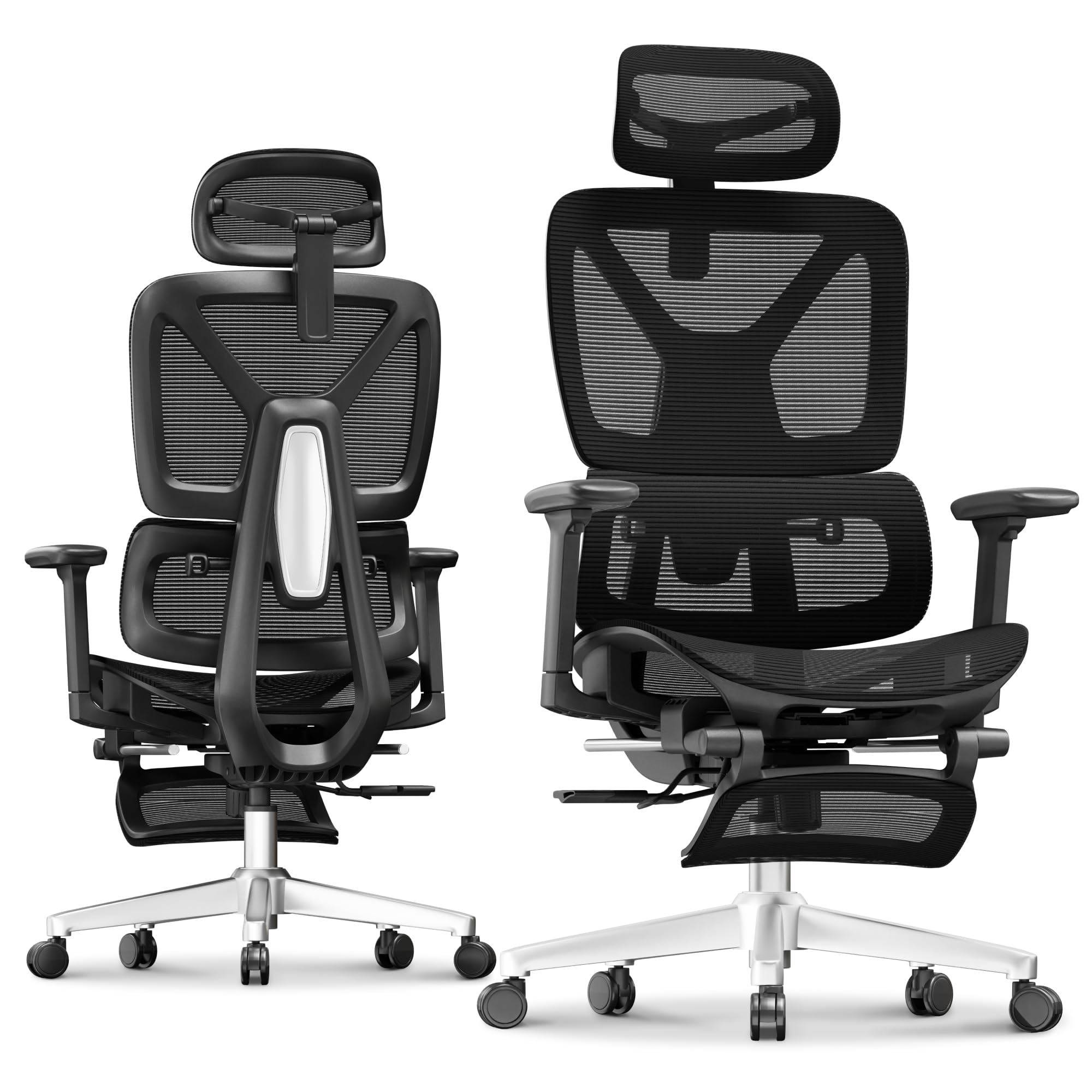
The ErgoX offers a strong middle ground with dynamic lumbar support that adapts as you move, plus a 5-level adjustable back that lets you fine-tune how much support hits the middle and upper back. The adjustable seat depth ranges from 17 to 20 inches, giving you room to position your thighs for better pelvic alignment — critical for compensating for leg length differences.
The 3D armrests adjust in height, forward/back, and swivel, and the 3D headrest provides neck relief during breaks. The recline function spans a wide range with a tilt tension knob to adjust resistance. You can choose between a mesh seat (AeroWeave) for breathability or a Cloudtech foam cushion for plush support.
The chair supports users between 5’1″ and 6’2″ with a maximum weight of 400 pounds. The built-in footrest adds a relaxation option for mid-day breaks. Some users note the leg rest can feel too high to use effectively while reclining, and the arms could benefit from more adjustment axes.
Why it’s great
- Dynamic lumbar adjusts naturally with posture shifts
- Adjustable seat depth aids pelvic leveling
- 400-pound capacity with durable construction
Good to know
- Footrest may be too high for comfortable reclining
- Armrests are 3D, not full 4D or 7D
8. Steelcase Leap Office Chair

The Steelcase Leap is a benchmark in ergonomic seating, built on decades of research. Its 3D LiveBack technology mimics the natural shape of your spine, allowing the chair back to contour to your curve regardless of your seating position. The lower back firmness dial lets you adjust lumbar pressure precisely — a feature that directly addresses the need for variable support on different sides of the spine.
The Natural Glide System allows the seat to glide forward and backward as you recline, keeping you close to your work surface and maintaining consistent posture throughout the motion. The 4D adjustable arms move in height, width, depth, and angle, giving you the independent arm positioning needed to balance shoulder load.
The Leap comes pre-assembled, saving you setup time. It is best suited for users who need deep customization and have the budget to invest in long-term spinal health. Some users report the seat padding feels thin initially, and the lumbar support may feel minimal until the firmness dial is adjusted properly. Refurbished units are widely available as a more accessible option.
Why it’s great
- 3D LiveBack contours to individual spine shape
- Lower back firmness dial gives precise lumbar pressure control
- Natural Glide System maintains posture during recline
Good to know
- Premium price may be prohibitive for some budgets
- Seat padding may feel thin to heavier users
9. Hbada X7 Smart Ergonomic Chair
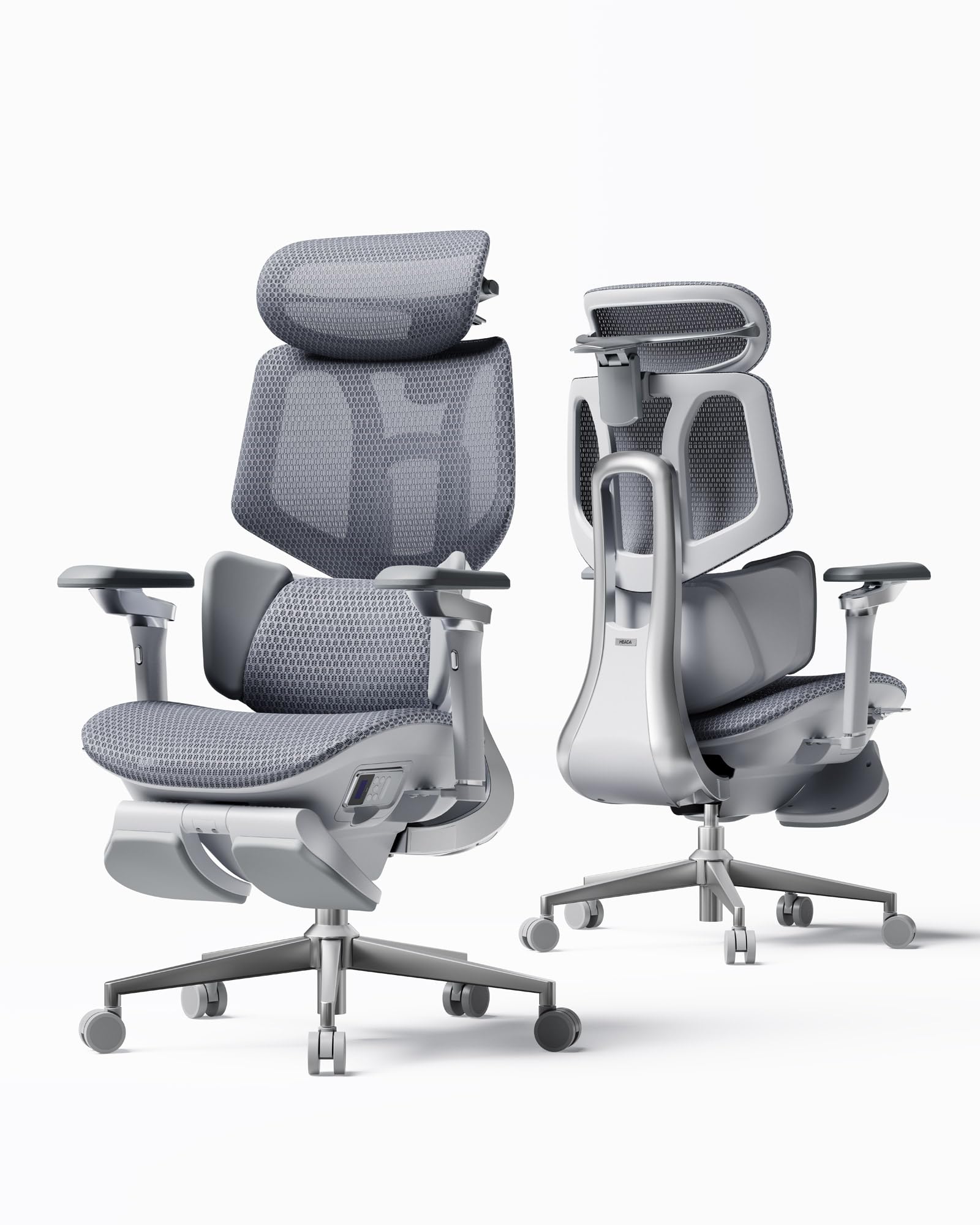
The Hbada X7 uses gravity-sensing technology to automatically adjust lumbar support intensity based on how you sit. A 6D adjustable waist pillow aligns with the spine’s curves, and the chair also includes 8D massage rollers with three levels of heating (40-50°C) to relieve muscle fatigue — a unique feature for users whose scoliosis causes chronic muscle tension on one side of the back.
The chair integrates a dual-fan cooling system into the 3D high-resilience mesh seat, offering silent, balanced, and turbo airflow modes for 65% enhanced breathability. The 4D headrest rotates 70°, slides 55mm, adjusts 45mm in height, and flips 70° to maintain natural neck alignment. The 720° omnidirectional armrests rotate 360° and extend 110mm, syncing with the 140° recline angle.
The aircraft-grade aluminum frame and 5-star nylon base support up to 330 pounds. The chair arrives pre-assembled, ready to use out of the box. Some taller users above 6 feet note the included gas cylinder may not provide enough height range for optimal ergonomic positioning. Customer service is reportedly responsive, offering replacements for any defective components.
Why it’s great
- Auto-adjusting lumbar responds to sitting posture in real time
- Massage and heat features relieve chronic muscle tension
- Dual-fan cooling seat prevents heat buildup
Good to know
- Auto-lumbar may not suit users who prefer manual control
- Tall users may need to replace the gas cylinder
FAQ
Can a chair correct scoliosis or just manage symptoms?
Should I choose a mesh back or a cushioned back for scoliosis?
Are armrests really that important for scoliosis?
Is a seat wedge cushion better than a chair with adjustable seat depth?
What recline angle is best for scoliosis?
Final Thoughts: The Verdict
For most users, the best chair for scoliosis winner is the ProtoArc EC200 because it combines seat depth adjustment, dual-axis lumbar support, and breathable mesh at a price that doesn’t sacrifice key ergonomic features. If you want fully customizable lumbar tracking and 7D armrests, grab the FLEXISPOT ErgoX-PRO. And for budget-conscious buyers who still need lumbar adjustability and 3D armrests, the MOLENTS chair delivers excellent value without cutting corners on the features that matter most for spinal curve accommodation.

Mo Maruf
I created WellFizz to bridge the gap between vague wellness advice and actionable solutions. My mission is simple: to decode the research and give you practical tools you can actually use.
Beyond the data, I am a passionate traveler. I believe that stepping away from the screen to explore new environments is essential for mental clarity and physical vitality.