Our readers keep the lights on and my smoothie glass nicely filled. As an Amazon Associate, I earn from qualifying purchases.
A chair for sciatica isn’t about plush padding or a high back; it’s about precise lumbar architecture that relieves pressure on the sciatic nerve by maintaining the spine’s natural curve. Poor seating choices compress the lower back, aggravating nerve pain and turning work hours into a source of discomfort. The right ergonomic seat actively redistributes weight and supports the pelvis, reducing the chances of flare-ups and allowing you to sit without the constant distraction of pain.
I’m Mohammad Maruf — the founder and writer behind WellFizz. After spending countless hours analyzing lumbar support mechanisms, seat foam densities, and customer experiences across dozens of models, this guide presents only the options that genuinely address the mechanics of sciatic nerve relief.
This buying guide breaks down the best ergonomic seating solutions to help you stay productive without aggravating your condition. Here is everything you need to know before buying the best chair for sciatica for your home or office.
How To Choose The Best Chair For Sciatica
Selecting a chair for sciatica requires focusing on features that directly influence nerve compression and pelvic alignment. General comfort features are secondary to targeted support mechanisms. Here are the critical factors to prioritize.
Adjustable Lumbar Support
Sciatica originates from compression of the sciatic nerve in the lower back. A chair with an adjustable lumbar support allows you to dial in the exact curve needed to maintain the natural lordotic arch of your spine. Fixed lumbar pads rarely fit different body types correctly, so look for supports that move vertically and in depth to match your specific spinal shape.
Seat Depth and Waterfall Edge
A seat that is too deep forces your knees to bend improperly and can cut off circulation behind the thighs, aggravating nerve pain. Look for a seat depth between 16 and 19 inches. A waterfall edge — where the front of the seat curves downward — reduces pressure on the back of the thighs and promotes healthy blood flow to the legs.
Seat Cushion Density and Material
Foam that is too soft allows your pelvis to tilt backward, flattening the lower back and increasing sciatic pressure. High-density foam or virgin foam cushions offer the resilience needed to keep hips level and evenly distribute weight. Mesh seats provide excellent airflow and can contour without sagging over time.
Recline and Tilt Mechanism
A chair that allows you to recline slightly reduces the load on spinal discs and shifts pressure away from the lower back. Look for a tilt mechanism with tension adjustment and lockable positions. Some chairs also offer a rocking motion that encourages micro-movements, which helps prevent stiffness and nerve impingement.
Quick Comparison
On smaller screens, swipe sideways to see the full table.
| Model | Category | Best For | Key Spec | Amazon |
|---|---|---|---|---|
| Newtral Ergonomic Chair | Premium | Adaptive lumbar tracking | Auto-following lumbar support | Amazon |
| FLEXISPOT ErgoX-PRO | Premium | Fully adjustable ergonomics | 5D lumbar + 7D armrests | Amazon |
| Branch Ergonomic Chair | Premium | Refined design and adjustability | Adjustable seat depth | Amazon |
| GABRYLLY Ergonomic Chair | Mid-Range | Reclining and footrest | 135° recline with footrest | Amazon |
| ELABEST Ergonomic Mesh Chair | Mid-Range | Commercial-grade mesh build | BIFMA 5.1 certified | Amazon |
| MOLENTS Ergonomic Chair | Mid-Range | Full mesh for airflow | Full mesh seat and back | Amazon |
| COLAMY Executive Chair | Mid-Range | Thick cushion comfort | 6.7″ thick foam seat | Amazon |
| CASASIO Ergonomic Chair | Mid-Range | Virgin foam seating | Virgin foam seat cushion | Amazon |
| TRALT Ergonomic Chair | Budget | Entry-level lumbar support | 3.5″ high-density sponge | Amazon |
In‑Depth Reviews
1. Newtral Ergonomic Home Office Chair

The Newtral chair distinguishes itself with an automatic lumbar tracking system that follows the movement of your spine. Unlike static lumbar pads that only work at one angle, this mechanism actively adjusts as you shift positions, providing continuous support that helps keep the sciatic nerve free from compression. The back also offers three height settings and tilts from 96 to 126 degrees with lockable positions.
Its seat cushion uses a 7 cm high-density foam core wrapped in waterproof, flame-retardant fabric. The seat depth is adjustable forward and backward, allowing you to set the correct thigh support length. The 3D armrests adjust in height, width, and angle, and the headrest moves for both height and angle. The Korean KGS Class 4 gas lift and BIFMA certification add a layer of reliability for daily use.
Some users note that the seat cushion can feel warm during extended sessions, and the adaptive lumbar spring may produce a slight noise when moving. The armrests are firm and covered with a plastic coating rather than plush padding. Overall, this chair offers top-tier adjustability and a truly unique lumbar mechanism that directly addresses sciatica concerns.
Why it’s great
- Auto-following lumbar support adapts to your spine throughout the day
- Adjustable seat depth accommodates different leg lengths
- High-density foam cushion resists sagging over time
Good to know
- Seat cushion can trap heat during long sessions
- Armrests have a firm plastic feel rather than soft padding
- Lumbar mechanism may produce a slight creaking sound
2. FLEXISPOT ErgoX-PRO Ergonomic Office Chair
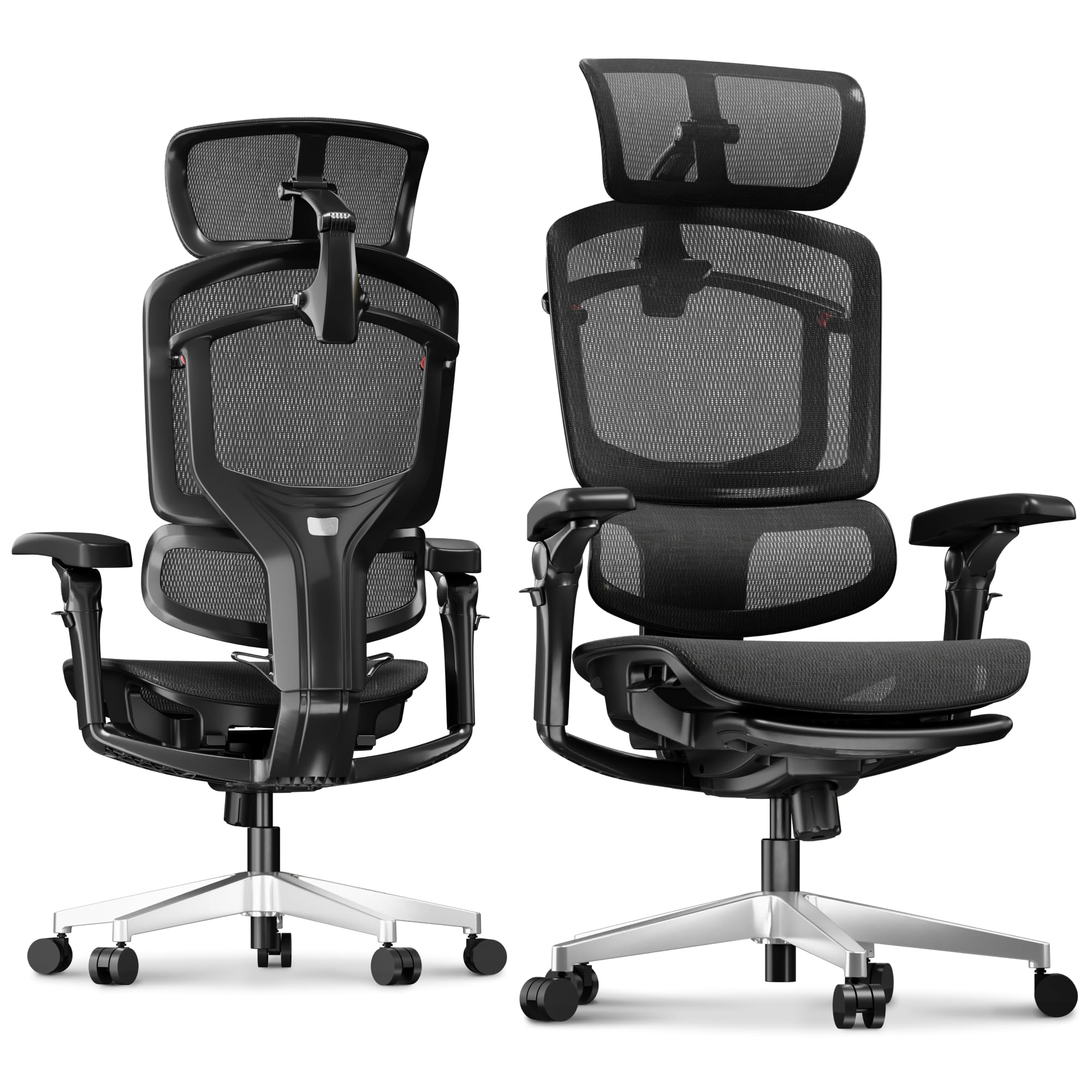
The FLEXISPOT ErgoX-PRO is built around a 5D extendable lumbar support system that adapts to your posture whether you are typing upright or reclining. This dynamic lumbar moves as you shift, maintaining contact with your lower back to prevent the slouching that often triggers sciatica. The 4D headrest doubles as a back cushion for compact setups, and the 7D linkage armrests move with your body during typing, gaming, or leaning back.
You can choose between AeroWeave 5.0 mesh seating for maximum airflow or a Cloudtech cushion for plush comfort. The backrest features 12-level fine-tuned spring cushioning, and the tilt base offers three lockable positions at 90, 115, and 135 degrees. The reinforced nylon frame and aluminum base support up to 551 pounds, making it one of the most robust options available for heavier users.
The leg rest is padded and comfortable but may feel too high for shorter users when fully extended. Armrest adjustability is extensive, though some users found the range slightly limited for extreme postures. Assembly takes about 30 minutes, and the build quality, including spare fasteners, reflects a premium approach to manufacturing.
Why it’s great
- 5D lumbar support dynamically follows your posture changes
- High 551-pound weight capacity for larger users
- Choice of mesh or padded seat for climate preference
Good to know
- Footrest may sit too high for shorter users during recline
- Armrest adjustability is excellent but has minor limitations
- Firm cushion feel may not suit users who prefer soft seats
3. Branch Ergonomic Chair
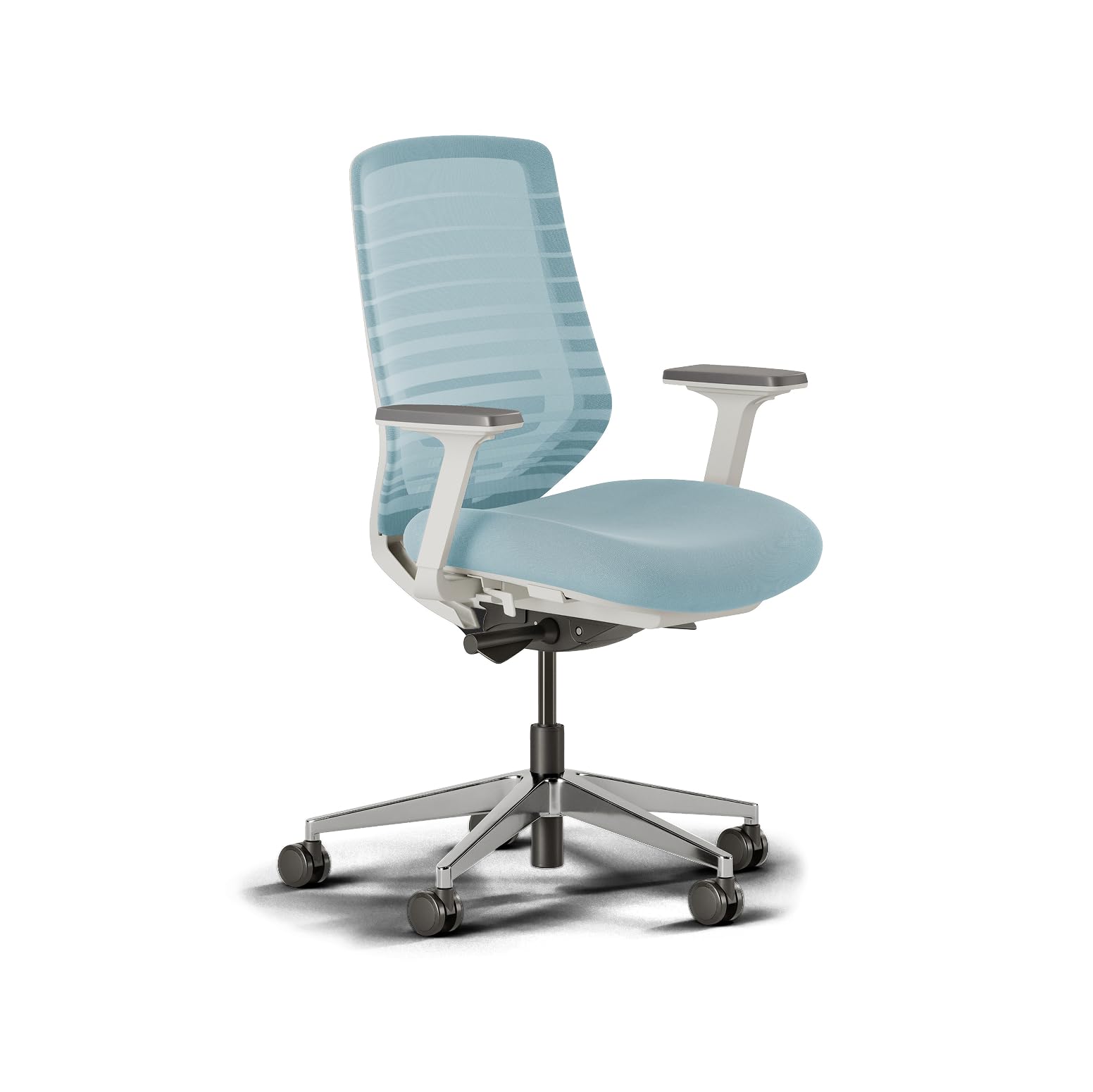
The Branch Ergonomic Chair offers a refined approach to sciatica-friendly seating with eight points of adjustment, including seat height, seat depth, backrest, and armrests. The ability to adjust seat depth is particularly valuable for sciatica sufferers because it ensures the edge of the seat does not press against the back of the knees, which can restrict circulation and aggravate nerve pain. The breathable mesh backrest keeps your spine cool during long days.
The seat cushion uses high-density foam that provides firm support without bottoming out. The aluminum frame and powder-coated finish give the chair a clean, modern look that blends into any office environment. The smooth-rolling casters work well on hard floors, and many users opt to swap them for rollerblade-style wheels for even quieter movement. Assembly is straightforward, though having a second person helps with the backrest attachment.
The armrests can slide forward and backward, but some users report they feel slightly loose even after tightening. The chair lacks a seat tilt function, which means you cannot lock the seat angle independently of the backrest. For petite users under five feet, the lowest seat height setting works well, while taller users appreciate the generous adjustment range.
Why it’s great
- Adjustable seat depth prevents pressure behind the knees
- Breathable mesh back keeps the spine ventilated
- Sleek minimalist design fits professional workspaces
Good to know
- No independent seat tilt function available
- Armrests can feel loose even after proper tightening
- Better suited for users under six feet tall
4. GABRYLLY Ergonomic Office Chair with Footrest
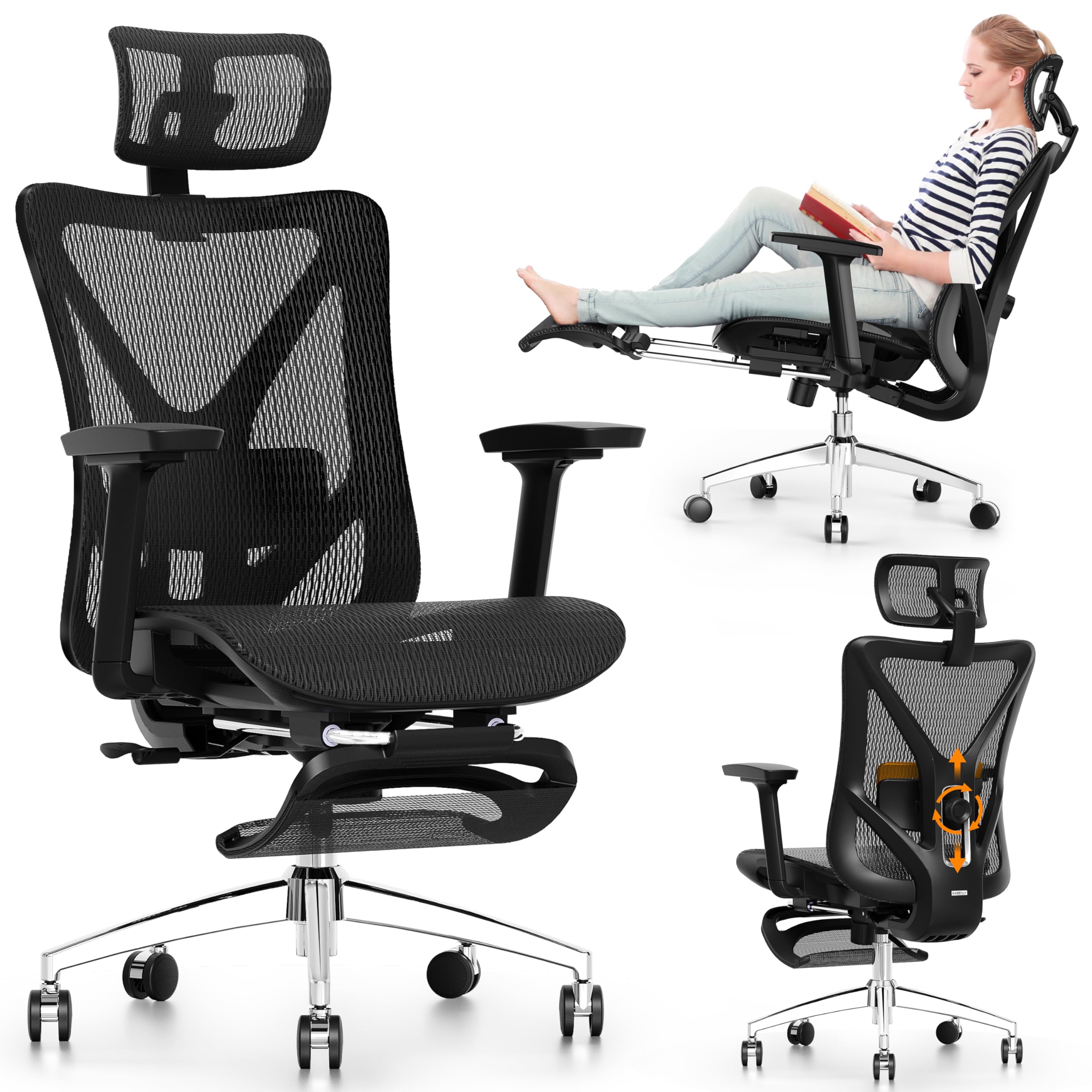
The GABRYLLY chair combines a 135-degree recline with a retractable steel footrest, making it a strong option for sciatica sufferers who need periodic pressure relief through position changes. The 2-way adjustable lumbar support moves 3 inches vertically and 1.6 inches horizontally, allowing you to dial in the exact point of contact for your lower back. This support is critical for maintaining proper pelvic alignment that reduces nerve impingement.
The all-mesh back provides excellent airflow, and the large mesh headrest adjusts in height, angle, and bracket position for personalized neck support. The 3D armrests move up/down, forward/back, and in/out, helping you find a comfortable arm position that reduces shoulder strain. The steel base measures 27.5 inches in diameter for stability, and the silent casters roll smoothly without scratching floors.
Assembly is straightforward, taking 15 to 25 minutes with the included tools. Some users report that the armrests shift unintentionally under pressure and produce a clicking sound. The mesh quality is good but may feel less premium compared to higher-end models. For users who want the ability to fully recline and stretch out their legs periodically, this chair delivers solid value.
Why it’s great
- 135-degree recline with footrest allows pressure-relieving breaks
- 2-way adjustable lumbar hits the exact lower back area
- Sturdy steel base provides stability during recline
Good to know
- Armrests may shift unintentionally during use
- Mesh quality is good but not top-tier
- Armrests cannot be folded up for desk tucking
5. ELABEST Ergonomic Mesh Office Chair

The ELABEST chair is built to BIFMA 5.1 commercial-grade standards, meaning it has undergone rigorous testing for durability and safety. Its bionic-curve backrest mimics the natural shape of the spine, and the adjustable lumbar support helps maintain the lordotic curve that keeps the sciatic nerve free from compression. The synchro-tilt mechanism offers three lockable positions with adjustable tension, supporting healthy posture even during marathon work sessions.
The full-mesh seat and back enhance breathability, preventing heat buildup that can lead to restlessness and poor posture. The waterfall seat edge reduces pressure on the thighs, promoting better blood circulation to the lower legs. The 3D armrests adjust in height, width, and angle, allowing you to reduce shoulder and neck strain. The heavy-duty base and smooth casters ensure stability on any floor surface.
Some users with smaller frames find the armrests too wide even at the narrowest setting, though the company has offered replacement parts to address this. The mesh is firm and supportive, which users coming from plush cushioned chairs may need time to adjust to. Designed primarily for users between 5’5″ and 5’10”, taller individuals may find the seat depth slightly short for full thigh support.
Why it’s great
- BIFMA 5.1 certified for commercial durability
- Bionic-curve backrest supports natural spinal alignment
- Waterfall seat edge promotes leg circulation
Good to know
- Armrests may be too wide for smaller body frames
- Firm mesh seat requires an adjustment period
- Less suited for users over 5’10”
6. MOLENTS Ergonomic Office Chair

The MOLENTS chair features a full mesh seat and back constructed from skin-friendly, high-elastic mesh material that maximizes airflow. For sciatica sufferers, the full mesh design offers two key benefits: it keeps the body cool during extended sitting, and it provides a firm, supportive surface that contours without creating pressure points. The lumbar support adjusts both up/down and forward/backward, offering targeted relief exactly where the lower back needs it most.
The 3D armrests allow height, width, and angle adjustments to support your arms during typing or reading. The backrest tilts between 90 and 120 degrees with three lockable positions, letting you switch between focused work and relaxed sitting. Assembly is streamlined, with labeled parts and clear instructions that allow one person to complete it in about 15 minutes. The customer service team is responsive, with many users noting follow-up emails to ensure satisfaction.
The armrest panels slide forward and backward and rotate left and right, but users who prefer a fixed panel can request a non-sliding version. On carpeted floors, the standard wheels may not roll as smoothly, and a floor mat is recommended. The seat height range suits users from about 5’2″ to 6’0″, making it a versatile mid-range pick for sciatica relief.
Why it’s great
- Full mesh construction prevents heat buildup and pressure points
- Lumbar support adjusts bidirectionally for precise positioning
- Quick assembly with labeled parts and excellent customer follow-up
Good to know
- Wheels may struggle on thick carpet without a mat
- Armrest panels slide by design, which some users find loose
- Armrests may feel short for users with broader shoulders
7. COLAMY Office Ergonomic Executive Chair

The COLAMY chair offers a distinctly different approach with its 6.7-inch thick high-density foam seat cushion. For sciatica sufferers who find mesh seats too firm, this plush cushion provides substantial padding while maintaining support through dense foam that resists sagging. The pop-out lumbar support activates with a push-button mechanism, allowing you to decide exactly when and how much lower back reinforcement you need.
The chair is upholstered in selected leather with a glossy finish that is easy to clean and adds a professional look to any office. The waterfall seat edge helps reduce thigh pressure, improving circulation during long sitting sessions. Adjustable features include seat height, headrest position, and flip-up arms that tuck under the desk for space saving. The upgraded casters are large-diameter and silent, rolling smoothly on hard floors.
Some taller users report that the headrest drops to its lowest position due to a button defect, and the lumbar support feels flat rather than contoured. The seat cushion, while thick, is firmer than expected based on its appearance. The lift range is under 3 inches, which may limit customization for very tall or short users. For those who prioritize a thick, supportive seat cushion and leather upholstery, this chair provides a unique combination.
Why it’s great
- Extremely thick 6.7-inch seat cushion for pressure relief
- Pop-out lumbar support offers on-demand lower back support
- Upgraded silent casters protect floors and roll smoothly
Good to know
- Headrest button may fail on some units, dropping it too low
- Lumbar support is flat and padded, not deeply contoured
- Limited height adjustment range of under 3 inches
8. CASASIO Ergonomic Office Chair
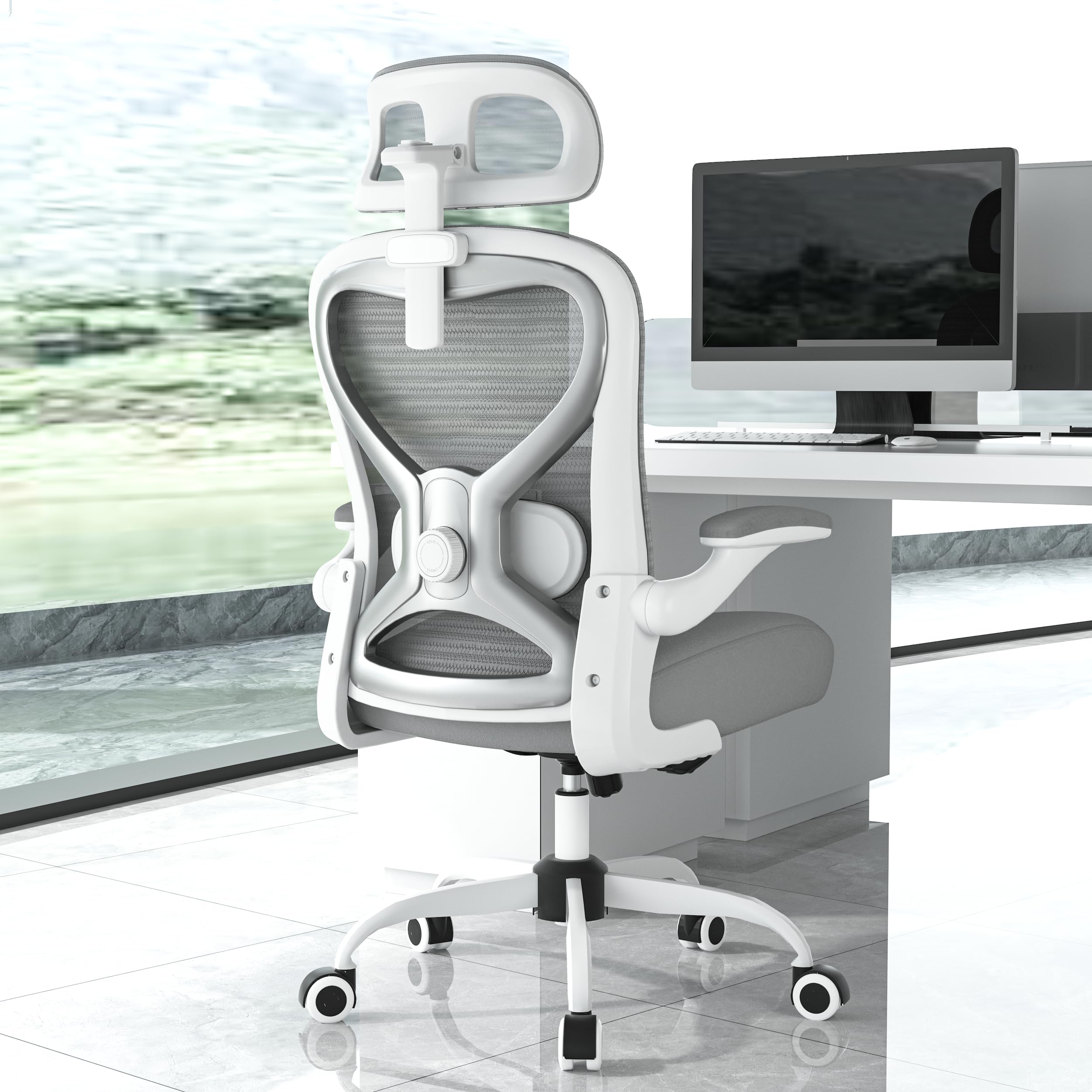
The CASASIO chair uses virgin foam for its seat cushion — a material that offers superior resilience compared to standard polyurethane foam. Virgin foam retains its shape over time, providing consistent support that prevents the pelvis from tilting backward, a common trigger for sciatic nerve compression. The contoured mesh back aligns with the spine, and the 2D adjustable lumbar cushion moves in two directions for precise lower back customization.
The 3D headrest adjusts in height, depth, and angle, cradling the neck and head during focused work or relaxation. The flip-up armrests allow the chair to be tucked neatly under a desk when not in use. The tilt and rock feature moves with your body, relieving tension and encouraging micro-movements that prevent stiffness. The reinforced nylon base supports up to 300 pounds, and the premium casters roll quietly on most surfaces.
The tilt tension is well-controlled, and the recline mechanism feels smooth and sturdy. Some users noted that the chair requires about 15 to 20 minutes for assembly and that the seat cushion may feel warm in hot weather due to the foam construction. The overall design is attractive with a gray and silver color scheme that appeals to modern home offices. This chair delivers strong ergonomic fundamentals at a competitive price point.
Why it’s great
- Virgin foam seat provides long-lasting resilience without sagging
- 3D adjustable headrest supports neck and head in multiple positions
- Tilt and rock feature encourages beneficial micro-movements
Good to know
- Foam cushion can feel warm during extended summer use
- Assembly required with clear but detailed instructions
- Not designed for users over 300 pounds
9. TRALT Ergonomic Office Chair
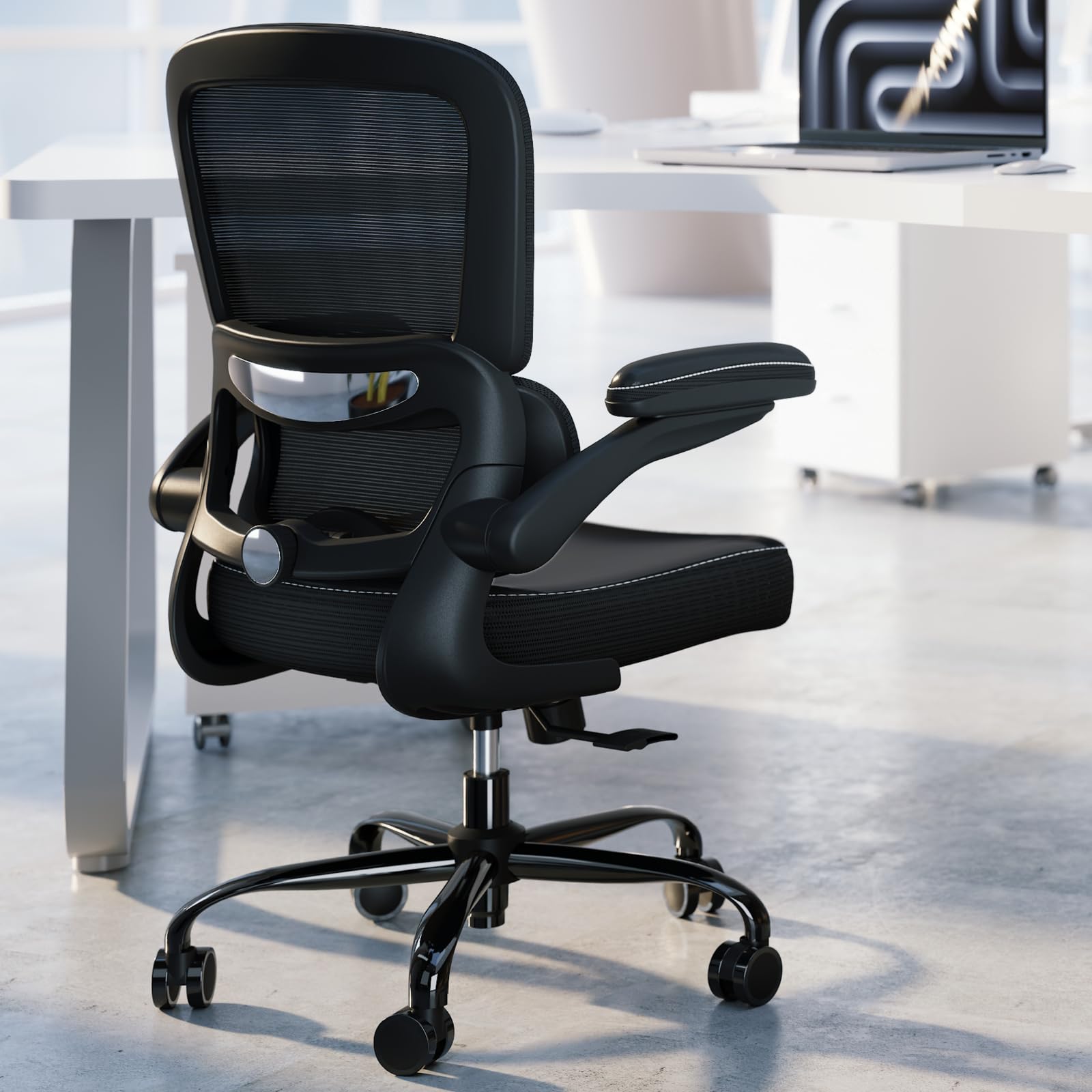
The TRALT chair brings ergonomic features to an accessible price point without sacrificing build quality. Its 3.5-inch high-density sponge cushion provides a balance of softness and support, and the leather seat cover is easy to clean. The adjustable lumbar support helps maintain lower back posture, and the wider seat — measuring 20 inches across — helps distribute weight evenly, reducing pressure on the hips and sciatic nerve area.
The breathable mesh back accelerates air circulation, keeping your back cool and reducing sweat buildup. The chair supports up to 330 pounds with its metal base and Class 3 gas lift, making it a durable option for heavier users. Flip-up armrests allow the chair to fit into smaller spaces or under desks. Assembly takes about 25 to 30 minutes, and the company provides a responsive customer service line for support.
The lumbar support, while helpful, is not as deep or customizable as higher-end models, and users with specific lower back curvature needs may want additional cushioning. The leather seat can feel warm in hot climates compared to pure mesh alternatives. For those entering the world of ergonomic seating on a tighter budget, this chair offers a solid foundation of features that support better posture and reduced sciatic pressure.
Why it’s great
- Wide 20-inch seat distributes weight evenly across the hips
- High weight capacity of 330 pounds supports larger users
- Breathable mesh back reduces stuffiness during long sits
Good to know
- Lumbar support lacks the depth of more adjustable systems
- Leather seat cover can trap heat in warmer conditions
- Assembly required with multiple steps
FAQ
Can a chair alone fix my sciatica pain?
Should I choose a mesh seat or a foam cushion for sciatica?
Is a desk chair with a footrest better for sciatica?
How much should I spend on a chair for sciatica relief?
Final Thoughts: The Verdict
For most users, the best chair for sciatica winner is the Newtral Ergonomic Chair because its auto-following lumbar support actively tracks your spine throughout the day, providing consistent relief that static supports cannot match. If you want maximum adjustability with a choice of mesh or padded seating, grab the FLEXISPOT ErgoX-PRO. And for a sleek, well-balanced design with adjustable seat depth, nothing beats the Branch Ergonomic Chair.

Mo Maruf
I created WellFizz to bridge the gap between vague wellness advice and actionable solutions. My mission is simple: to decode the research and give you practical tools you can actually use.
Beyond the data, I am a passionate traveler. I believe that stepping away from the screen to explore new environments is essential for mental clarity and physical vitality.