Our readers keep the lights on and my smoothie glass nicely filled. As an Amazon Associate, I earn from qualifying purchases.
Sitting eight hours a day in a chair that lets your pelvis tuck under and your shoulders round forward is a direct path to chronic back pain. The right chair works as a passive corrective device — it holds your hips in a neutral tilt, supports the natural S-curve of your spine, and keeps your ears, shoulders, and hips stacked in vertical alignment. That is the difference between a chair that just holds you up and one that actively reinforces good posture.
I’m Mohammad Maruf — the founder and writer behind WellFizz. I’ve spent hundreds of hours breaking down lumbar mechanisms, foam densities, recline kinematics, and material breathability across ergonomic chairs to find the models that actually deliver on their postural promises.
The real test of any chair for posture is how well it maintains spinal alignment during the fifth consecutive hour of sitting. In this guide, I analyze nine models to identify the best chair for posture across different body types, budgets, and workspace needs.
How To Choose The Best Chair For Posture
A chair for posture is not just about looks or brand name. You need to match the chair’s adjustability range to your body dimensions and sitting habits. Focus on the four mechanical features that directly control spinal alignment.
Lumbar Support: Height vs. Depth Adjustment
Many chairs offer height-adjustable lumbar support that moves up and down to hit the small of your back. Chairs that also allow depth adjustment — forward and backward — let you dial in the exact pressure needed to prevent your lower back from rounding. This dual-axis lumbar control is the single biggest predictor of whether a chair actually improves posture.
Seat Depth and Foam Density
Seat depth should leave roughly two to three finger-widths of space between the back of your knee and the front edge of the cushion. A seat too long forces your pelvis into posterior tilt, collapsing the lumbar curve. High-density foam in the seat cushion resists sagging over time, maintaining even weight distribution across the ischial tuberosities (sit bones).
Recline and Tilt Tension
A synchronized recline mechanism lets your backrest move independently of the seat pan, allowing your hips to remain open while your upper body tilts back. This keeps your spine in a neutral position even when leaning back. Lockable recline positions give you a stable angle for focused work, while tilt tension adjustment allows you to control how much force is needed to recline.
Headrest and Armrest Adjustability
A headrest that can be adjusted in height, angle, and rotation supports your neck in a neutral position when leaning back, reducing forward head posture. Armrests that adjust in height, width, depth, and rotation allow you to keep your elbows at a 90-degree angle with shoulders relaxed, preventing upper trap tension.
Quick Comparison
On smaller screens, swipe sideways to see the full table.
| Model | Category | Best For | Key Spec | Amazon |
|---|---|---|---|---|
| Ergohuman Eurotech ME7ERG GEN2 | Premium Mesh | All-day posture correction | 8-way adjustability + synchro tilt | Amazon |
| FLEXISPOT ErgoX Premium | Premium Ergonomic | Dynamic lumbar + footrest | 5-level adjustable back + dynamic lumbar | Amazon |
| Branch Ergonomic Chair | Mid-Range Ergonomic | Petite to average frames | 8 points of adjustment + seat depth | Amazon |
| ELABEST T23 Ergonomic Mesh | Premium Mesh | Dual-Move lumbar support | 3″ vertical + 1.6″ depth lumbar adjustment | Amazon |
| GABRYLLY Ergonomic Big & Tall | Premium Wide | Larger frames with 5D arms | 5D flip-up armrests, 400 lbs capacity | Amazon |
| ELABEST Ergonomic Mesh T96 | Mid-Range Ergonomic | Synchro-tilt posture support | BIFMA 5.1 certified + Golden Triangle back | Amazon |
| GABRYLLY Ergonomic Office with Footrest | Mid-Range Recliner | 135° recline with leg support | 2-way lumbar + retractable steel footrest | Amazon |
| BOLISS Drafting Chair | Mid-Range Drafting | Standing desk users | 23.6″-31.5″ seat height range | Amazon |
| YFO Home Office Desk Chair | Budget Leather | Budget-conscious buyers | Spring bag seat cushion + rubber casters | Amazon |
In‑Depth Reviews
1. Ergohuman Eurotech ME7ERG GEN2 High Back Mesh Office Chair

The Ergohuman ME7ERG GEN2 is the gold standard for posture because of its eight independent ergonomic adjustments — headrest height and angle, back height, back angle, seat depth, seat height, arm height, synchro tilt, and tilt lock. The dynamic lumbar support flexes with every shift in your sitting position, so the support never walks away from your lower back.
The synchro-tilt mechanism keeps the seat pan from lifting your thighs when you recline, maintaining an open hip angle that preserves the natural curve of your lumbar spine. The US-manufactured mesh back is noticeably sturdier than imports, and the tilt tension control lets you dial in resistance based on your body weight. The seat depth adjustment prevents the knee-gap problem that forces pelvic posterior tilt in taller users.
Assembly takes roughly 15 minutes, and the chair comes with a limited lifetime warranty. Replacement parts, including gas cylinders and seat mechanisms, are available years after purchase — a sign that Ergohuman supports the product for the long haul rather than treating it as disposable.
Why it’s great
- Eight-way adjustment covers every body dimension
- Dynamic lumbar adapts to real-time posture changes
- Synchro-tilt keeps hips open during recline
- Limited lifetime warranty + proven 10+ year durability
Good to know
- Plastic casters could be upgraded to PU for hard floors
- Armrest pads lack forward-depth support for some users
- Mesh can feel slightly firm on the first few uses
2. FLEXISPOT ErgoX Premium Ergonomic Office Chair
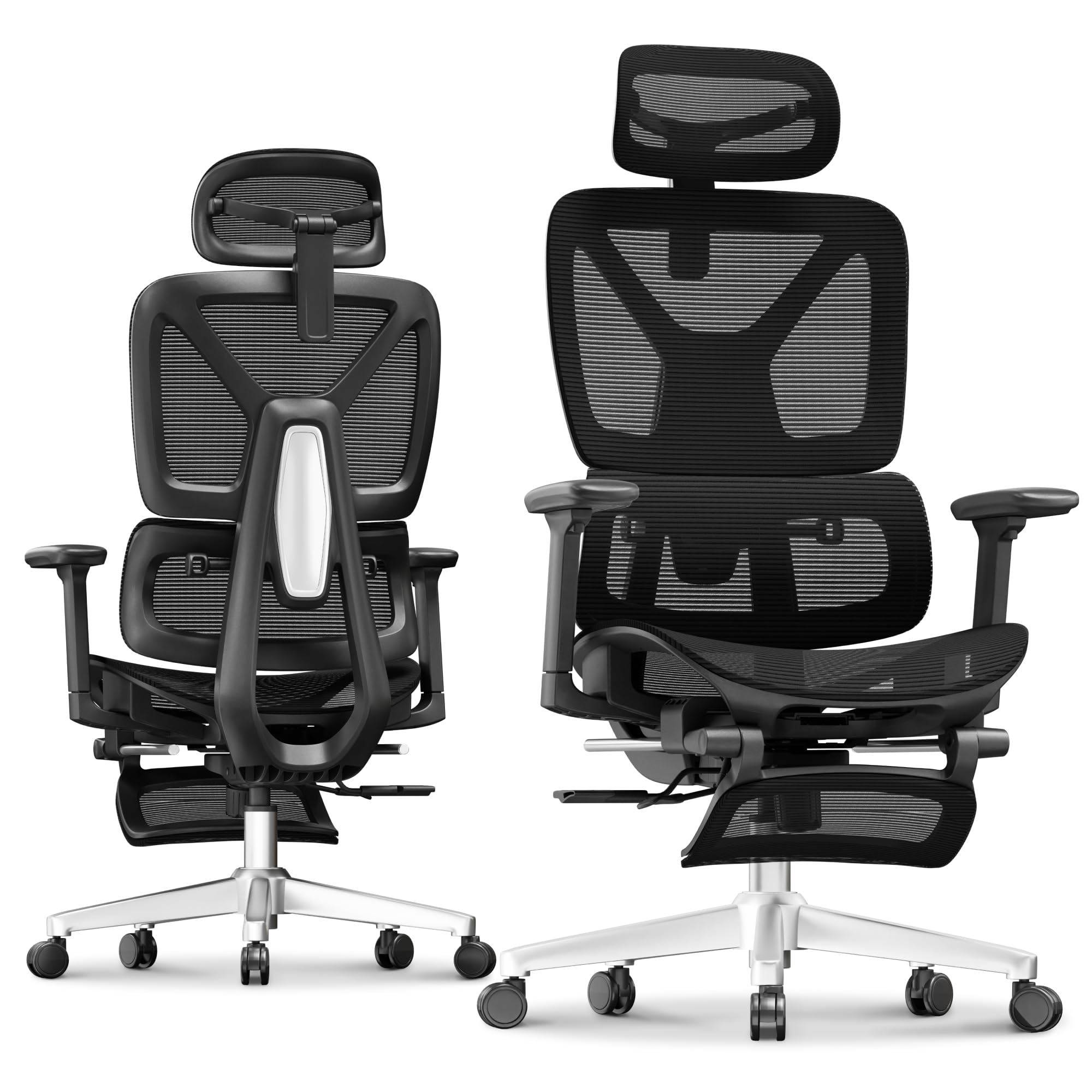
The FLEXISPOT ErgoX stands out for its five-level adjustable backrest that lets you set the height of the entire back support independent of the seat pan. This is critical for matching the lumbar curve to your specific torso length — something fixed-back chairs cannot do. The dynamic lumbar support moves with your body rather than holding a static position, which encourages active sitting without letting your posture collapse.
The seat depth adjusts between 17 and 20 inches, accommodating femurs from 5’1” to 6’2” users. The retractable footrest is padded and extends far enough to provide real leg support during recline breaks, which reduces hip flexor tightness that pulls your pelvis into anterior tilt. The 3D armrests adjust in height, forward/backward, and swivel to keep your elbows at 90 degrees with shoulders relaxed.
Users in the 5’2” range find the chair comfortable out of the box, and the AeroWeave mesh seat option provides cooling airflow during extended sit sessions. The chair supports up to 400 pounds, and the class-4 gas lift is built for heavy daily use. Assembly takes about 30 minutes with clear instructions.
Why it’s great
- 5-level adjustable backrest fits varying torso lengths
- Dynamic lumbar support moves with posture shifts
- Padded retractable footrest reduces hip flexor strain
- Class-4 gas lift supports heavy daily use
Good to know
- Armrests lack adjustment for those with broad shoulders
- Headrest angle needs manual tweaking for optimal neck position
- Footrest may be short for users over 6 feet
3. Branch Ergonomic Chair
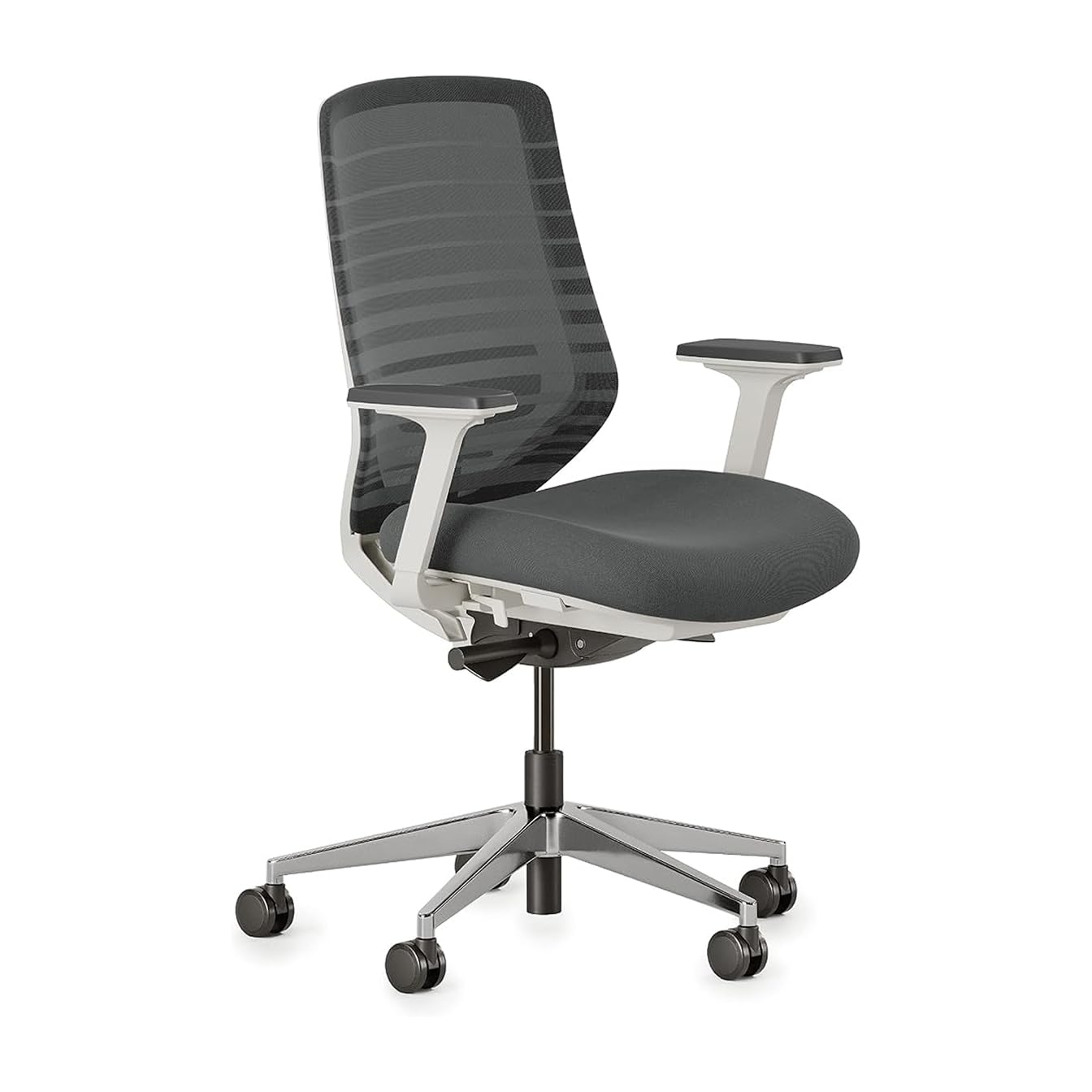
The Branch Ergonomic Chair delivers a sleek, minimalist design with eight points of adjustment that prioritize posture alignment. The adjustable seat depth is a standout feature — it allows users with shorter femurs to slide the seat pan forward so the back of the knee clears the cushion by two finger-widths, preventing the pelvic posterior tilt that rounds the lower back. The breathable mesh backrest keeps your core cool, and the contoured cushioning is firm enough to support your sit bones without bottoming out.
Petite users, including those at 5’0”, report that the chair’s lowest seat height setting fits their frame perfectly — a rare find in ergonomic chairs that often start too tall for shorter people. The armrests adjust in height and width, and the backrest provides enough lumbar prominence to maintain the natural S-curve without requiring an additional lumbar pillow. The smooth-rolling wheels are designed for hard floors but also perform decently on low-pile carpet.
Assembly takes about 30 minutes, with one tricky step connecting the seatback to the seat pan. The metal frame under the plastic shell gives it a solid feel, and the chair weighs significantly less than mesh competitors, making it easy to move around the workspace. Users upgrading from any cheap chair report an immediate improvement in seated comfort.
Why it’s great
- Adjustable seat depth prevents pelvic posterior tilt
- Lowest seat height fits petite users (5’0″)
- Breathable mesh back keeps core cool
- Metal frame under plastic shell provides solid feel
Good to know
- Armrests slide forward too easily under pressure
- Lumbar support is not independently adjustable in depth
- Headrest not included in standard model
4. ELABEST T23 Ergonomic Mesh Office Chair
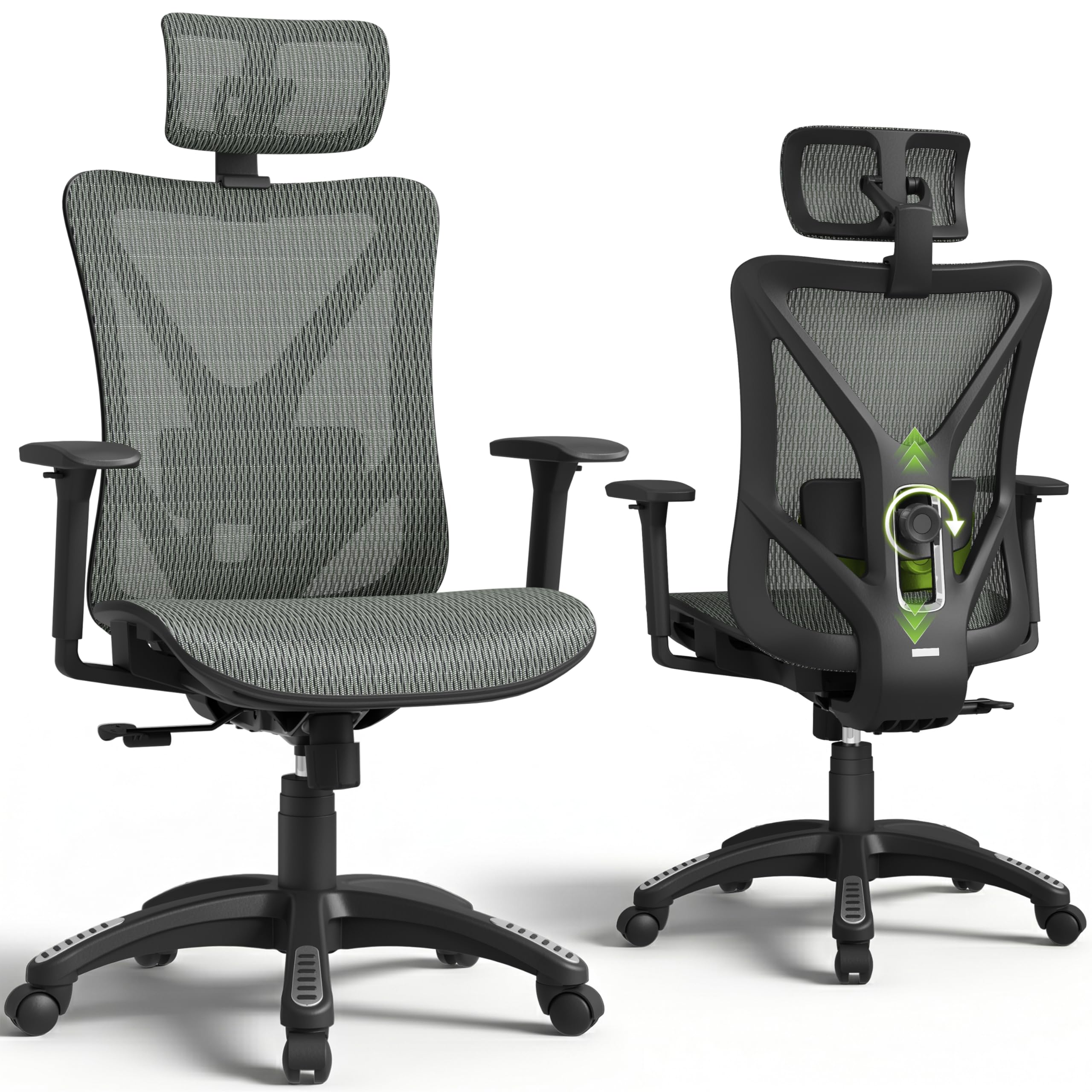
The ELABEST T23 differentiates itself with a Dual-Move lumbar support that offers 3 inches of vertical adjustment and 1.6 inches of forward/backward depth adjustment. This dual-axis control is exactly what you need to dial in the precise curve that keeps your lower back from flattening — depth adjustment especially is rare at this level and allows you to set the lumbar prominence to match your specific spinal curvature.
The Dual-Stripe AirMesh backrest improves airflow by 38 percent compared to standard mesh, which reduces sweat buildup during long sessions — important because overheating can cause fidgeting that disrupts neutral posture. The 3D headrest rotates 90 degrees, flips 100 degrees, and moves 2.5 inches vertically, giving you multiple angles to support your neck in a neutral position when leaning back.
The chair uses a 3-position tilt lock that lets you lock the recline at 90 degrees for focused typing, 110 degrees for reading, or 135 degrees for full recline. The heavy-duty 27.5-inch star base provides stability for users up to 300 pounds. Assembly takes about 20 minutes, and the PU hooded casters glide silently on hardwood and carpet without scratching.
Why it’s great
- Dual-Move lumbar with depth adjustment matches spinal curve
- 38% better airflow than standard mesh
- 3D headrest with 90° rotation and 2.5″ travel
- PU casters glide silently without scratching floors
Good to know
- Armrests may be too wide for narrow-shouldered users
- Mesh firmness may feel taut for the first week
- Seat depth is not adjustable
5. GABRYLLY Ergonomic Office Chair Big & Tall

The GABRYLLY Big & Tall chair addresses the challenge of maintaining posture on a wider frame with a 20-inch wide seat and 20.5-inch seat depth, both upholstered in 5 inches of high-density foam over built-in springs. The foam density resists the sink-and-sag that collapses your pelvis into posterior tilt, a common failure point on cheaper XL chairs. The 5D armrests adjust in height, slide, rotation, and flip up vertically, allowing you to tuck the chair under the desk and sit cross-legged without armrest obstruction.
The 3D dynamic lumbar support lets you adjust both height and depth to match your lower back curvature. The 2D version provides 2 inches of vertical travel and 1.6 inches of front-back depth, giving you the ability to increase lumbar pressure for deep-focus work or dial it back for lighter tasks. The 3-position recline locks at 90, 120, and 135 degrees, and the tilt tension is adjustable for heavier users.
The high-back design supports the head, neck, waist, back, and hips, and the 3D headrest adjusts to align your neck in a neutral position. The mesh back promotes airflow to keep you cool during long sessions. Users report that the chair supports 240 pounds with excellent stability, and the footrest adds a relaxing break option that reduces hip flexor tightness.
Why it’s great
- 5″ high-density foam seat resists sagging for pelvic support
- 5D flip-up armrests allow cross-legged sitting
- Adjustable lumbar depth matches spinal curve
- 400 lbs capacity with sturdy steel base
Good to know
- Mesh can feel tight for longer sit sessions
- Armrests shift with slight pressure, creating clicking sounds
- Lumbar adjustment mechanism is difficult to reach while seated
6. ELABEST Ergonomic Mesh Office Chair T96

The ELABEST T96 uses a synchro-tilt mechanism with three lockable positions and adjustable tension to keep your spine neutral as you recline. The bionic-curve backrest mimics your spine’s natural S-shape, and the Golden Triangle back structure provides targeted support for the shoulders and upper back — areas often neglected by chairs that only focus on lumbar support. The adjustable lumbar support moves up and down to hit the correct spinal segment for your torso length.
The full-mesh seat eliminates the heat buildup and sagging common with foam cushions. The waterfall edge at the front of the seat reduces pressure behind the knees, promoting blood flow to your legs — essential for maintaining circulation during long sits that otherwise encourage fidgeting and posture collapse. The 3D armrests adjust in height, width, and angle to support your arms in a neutral position that prevents shoulder elevation.
BIFMA 5.1 certification means the chair has passed rigorous durability and stability testing for commercial use. The heavy-duty base and smooth casters provide stable mobility on carpet and hard floors. Users upgrading from budget chairs note that the T96 feels closer to Herman Miller quality at a fraction of the investment.
Why it’s great
- Synchro-tilt keeps spine neutral during recline
- Golden Triangle back supports upper back and shoulders
- Full-mesh seat eliminates sagging and heat buildup
- BIFMA 5.1 certified for commercial-grade durability
Good to know
- Armrests may be too wide for users with narrow shoulders
- Best suited for users 5’5″ to 5’10” under 200 lbs
- Lumbar support lacks independent depth adjustment
7. GABRYLLY Ergonomic Office Chair with Footrest
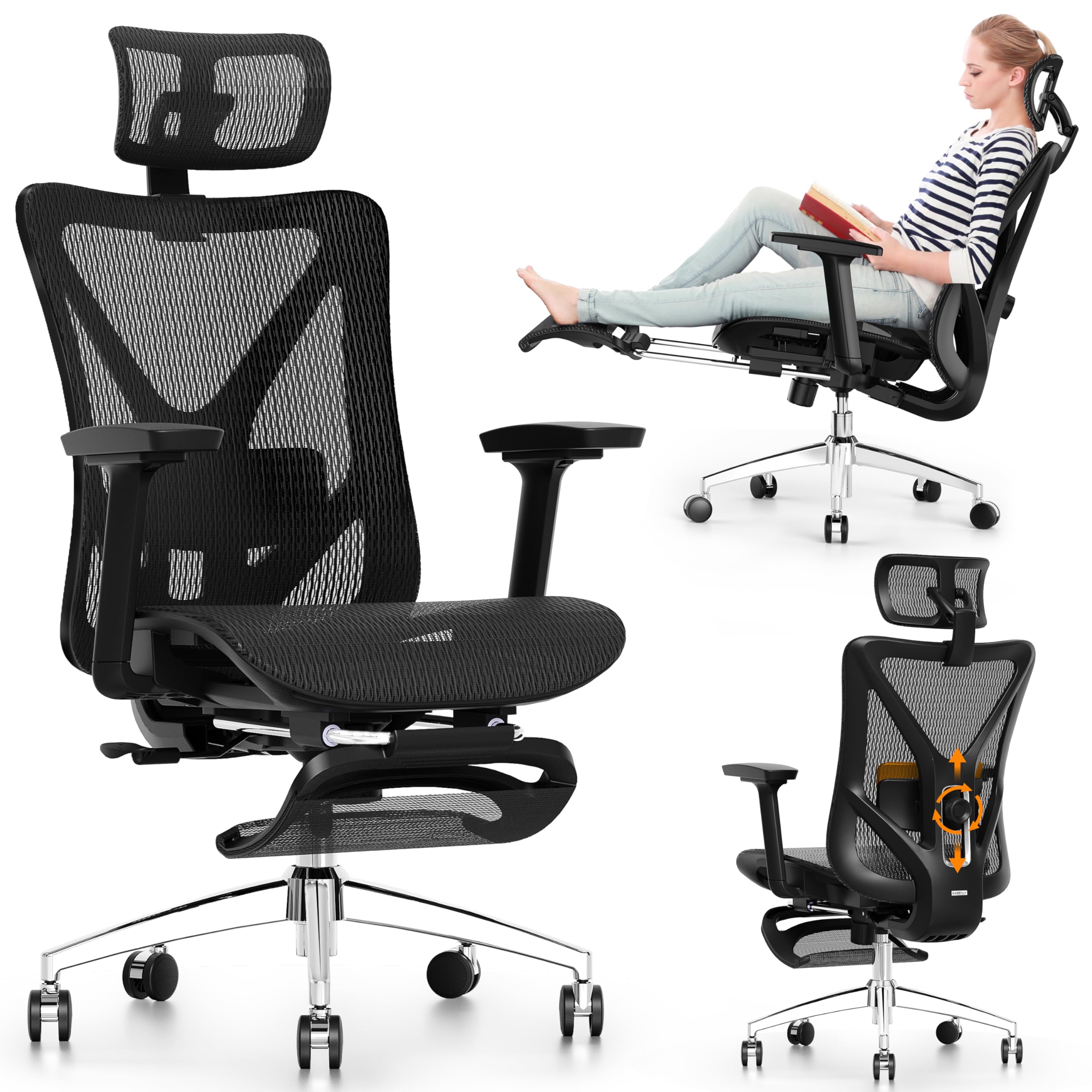
The GABRYLLY with footrest offers 2-way adjustable lumbar support that moves 3 inches vertically and 1.6 inches forward/backward, giving you control over both the position and the depth of lower back support. The 135-degree recline with three lockable positions (90, 110, and 135 degrees) lets you shift between focused work and relaxed breaks without losing spinal alignment. The retractable steel footrest extends 18.1 inches to support your legs during recline, reducing hip flexor tightness that destabilizes your pelvis.
The mesh back and seat promote airflow to prevent overheating. The large mesh headrest adjusts in height, angle, and bracket position to support your neck in a neutral position when reclining. The 3D armrests adjust up/down, front/back, and in/out to keep your elbows at a 90-degree angle with shoulders relaxed.
The steel base with 27.5-inch diameter legs provides stability even during recline or footrest use. The chair supports up to 300 pounds and is tested to BIFMA and SGS standards for safety. Users between 5’3” and 6’0” report a good fit, and the assembly takes 15 to 25 minutes with the included Allen wrench.
Why it’s great
- 2-way lumbar with depth adjustment for spinal curve
- 135° recline with 3 lockable positions
- Retractable steel footrest reduces hip flexor strain
- BIFMA and SGS certified for safety
Good to know
- Armrests shift with slight pressure, causing clicking noises
- Mesh fabric may feel taut for longer sit sessions
- Lumbar adjustment knob is hard to reach while seated
8. BOLISS 400lbs Mid Back Mesh Ergonomic Drafting Chair

The BOLISS drafting chair addresses the unique posture challenges of standing desk users. With a seat height range of 23.6 to 31.5 inches, it brings your hips to the correct angle relative to a raised work surface — something standard office chairs cannot do. The wide seat cushion uses high-density molded foam that contours to your body without sagging, distributing weight evenly across the sit bones to maintain pelvic neutral.
The oversize foot ring measures 24 inches across, giving you a stable platform for your feet that keeps your knees at a 90-degree angle. Without the foot ring engaged, your legs would dangle and pull your pelvis into a tilted position that rounds the lower back. The mid back mesh backrest provides continuous lumbar support while allowing airflow to keep your back dry during long drafting or design sessions.
The 5-height adjustable armrests let you position your elbows at 90 degrees relative to your raised desk surface. The chair supports up to 400 pounds and uses a sturdy plastic and wood frame. Some users report that the foot ring drift down over time, but a simple hose clamp or PVC spacer solves the issue permanently. Assembly is straightforward, and the chair delivers comfort far beyond typical drafting stools.
Why it’s great
- 23.6″-31.5″ seat height fits standing desks perfectly
- High-density molded foam resists sagging
- Oversize 24″ foot ring keeps knees at 90 degrees
- Supports up to 400 lbs for larger users
Good to know
- Foot ring may drift down without aftermarket fix
- Foot ring diameter is smaller than ideal for tall users
- No headrest included for neck support
9. YFO Home Office Desk Chair

The YFO chair uses a spring bag seat cushion construction — a wooden board base layer topped with soft sponge and elastic spring packs — that provides more bounce and support than solid foam blocks found in other budget chairs. The increased sponge density on the backrest panel gives the lumbar area more structure than you would expect at this level, though the support is passive rather than adjustable. The 22-inch wide seat accommodates a range of hip widths without pressure on the greater trochanters.
The rubber casters are designed for hardwood, carpet, and marble floors, rolling smoothly and quietly without marking surfaces. The chair offers adjustable seat height and a recline function, though the back angle is not lockable in multiple positions. The faux leather upholstery resembles Naugahyde in durability, similar to what you might find on marine-grade seating, and users report it feels like a chair worth twice the investment.
The 2-in-1 design allows you to install the chair with or without armrests. Removing the armrests converts it into a cross-legged desk chair, which can help some users maintain a more open hip angle. Assembly takes about 30 minutes with clear pictorial instructions. The YFO is entry-level focused, so the lumbar support is fixed rather than adjustable, but the generous cushioning provides enough passive support for users on a tighter budget.
Why it’s great
- Spring bag cushion provides resilient support
- Rubber casters roll smoothly on all floor types
- 2-in-1 armrest design allows cross-legged sitting
- Faux leather is durable and easy to clean
Good to know
- Lumbar support is fixed, not adjustable
- Lacks adjustable armrests for elbow positioning
- Backrest height is mid-back, not full spine support
FAQ
Should I get a chair with a headrest for better posture?
Is mesh or foam better for maintaining posture?
Does seat width affect posture?
Do armrests help or hurt posture?
Final Thoughts: The Verdict
For most users, the best chair for posture winner is the Ergohuman Eurotech ME7ERG GEN2 because its eight-way adjustability ensures your spine stays in a neutral position regardless of your height, weight, or sitting habits. If you need dynamic lumbar support that adapts to your shifting postures, grab the FLEXISPOT ErgoX Premium. And for taller or heavier users requiring a wider seat platform with flip-up armrests, nothing beats the GABRYLLY Big & Tall Ergonomic Chair.

Mo Maruf
I created WellFizz to bridge the gap between vague wellness advice and actionable solutions. My mission is simple: to decode the research and give you practical tools you can actually use.
Beyond the data, I am a passionate traveler. I believe that stepping away from the screen to explore new environments is essential for mental clarity and physical vitality.