Our readers keep the lights on and my smoothie glass nicely filled. As an Amazon Associate, I earn from qualifying purchases.
A desk chair that forces your head forward is not a workstation—it is a prescription for cervical strain. The right seat cradles the cervical curve, keeps the ears aligned over the shoulders, and prevents the forward-head posture that triggers tension headaches and chronic neck pain. Every adjustment point matters when the upper trapezius and levator scapulae muscles are already tight.
I’m Mohammad Maruf — the founder and writer behind WellFizz. I’ve spent hundreds of hours analyzing ergonomic specification sheets, customer feedback on lumbar-headrest interaction, and the biomechanics of seated cervical support to build this guide around measurable headrest adjustability and lumbar-neck compensation.
This guide ranks nine seats by their ability to stabilize the cervical spine during prolonged sitting, helping you select a chair for neck pain that actually keeps your head in neutral alignment rather than letting it drift forward into the screen.
How To Choose The Best Chair For Neck Pain
The chair market is flooded with generic headrests that push the head forward rather than supporting the natural lordotic curve of the cervical spine. Buyers who skip the specs often end up with a seat that aggravates the very pain it was supposed to solve.
Headrest Articulation — Height, Depth, and Tilt
A fixed neck pillow is useless if it hits the back of your skull instead of the curve below the occiput. Look for a 3D or 4D headrest that adjusts vertically (to match your torso length), horizontally (to maintain ear-shoulder alignment as you lean forward or recline), and through tilt (to cradle the sub-occipital region). The more axes of motion, the better the chance of neutralizing forward-head drift over an eight-hour workday.
The Lumbar-Neck Connection
When the lumbar spine loses its natural curve, the thoracic spine rounds, and the head automatically pitches forward to maintain horizontal gaze. A chair with robust 2D or 4D lumbar support — vertical height plus depth projection — keeps the pelvis stable and the upper spine stacked, which in turn allows the headrest to function correctly. Ignore lumbar adjustability and you will fight neck pain from the foundation up.
Recline Range and Tension Control
Static upright seating compresses the cervical discs over time. A chair that allows a 120° to 140° recline opens the disc space and shifts load from the neck to the backrest. The tension mechanism must lock reliably at the chosen angle so the headrest stays engaged. Seats without lockable recline or with weak tilt tension will let your head wander forward the moment you relax.
Quick Comparison
On smaller screens, swipe sideways to see the full table.
| Model | Category | Best For | Key Spec | Amazon |
|---|---|---|---|---|
| FLEXISPOT ErgoX Max | Premium | Full spinal alignment with 4D lumbar | 4D headrest · 661 lb capacity | Amazon |
| Hbada X7 Smart | Premium | Automated lumbar tracking + neck massage | 4D headrest · 140° recline | Amazon |
| FLEXISPOT ErgoX | Mid-Range | Adjustable seat depth + 3D headrest | 3D headrest · 17″–20″ seat depth | Amazon |
| GABRYLLY Ergonomic | Mid-Range | Neck support during reclined breaks | 135° recline · retractable footrest | Amazon |
| LarkLeaves Office Chair | Mid-Range | Big-and-tall with 3D headrest | 3D headrest · 3D armrests | Amazon |
| Zeonsit Ergonomic | Mid-Range | Memory foam + 330 lb capacity | Adjustable headrest · memory foam seat | Amazon |
| CASASIO Ergonomic Gray | Budget-Friendly | Virgin foam + 3D headrest on a budget | 3D headrest · virgin foam seat | Amazon |
| CASASIO Home Office | Budget-Friendly | Budget-friendly neck support with flip arms | 3D headrest · 350 lb capacity | Amazon |
| Steelcase Leap | Premium | Classic ergonomics with live back tech | Natural Glide System · lower back dial | Amazon |
In‑Depth Reviews
1. FLEXISPOT ErgoX Max Ergonomic Office Chair
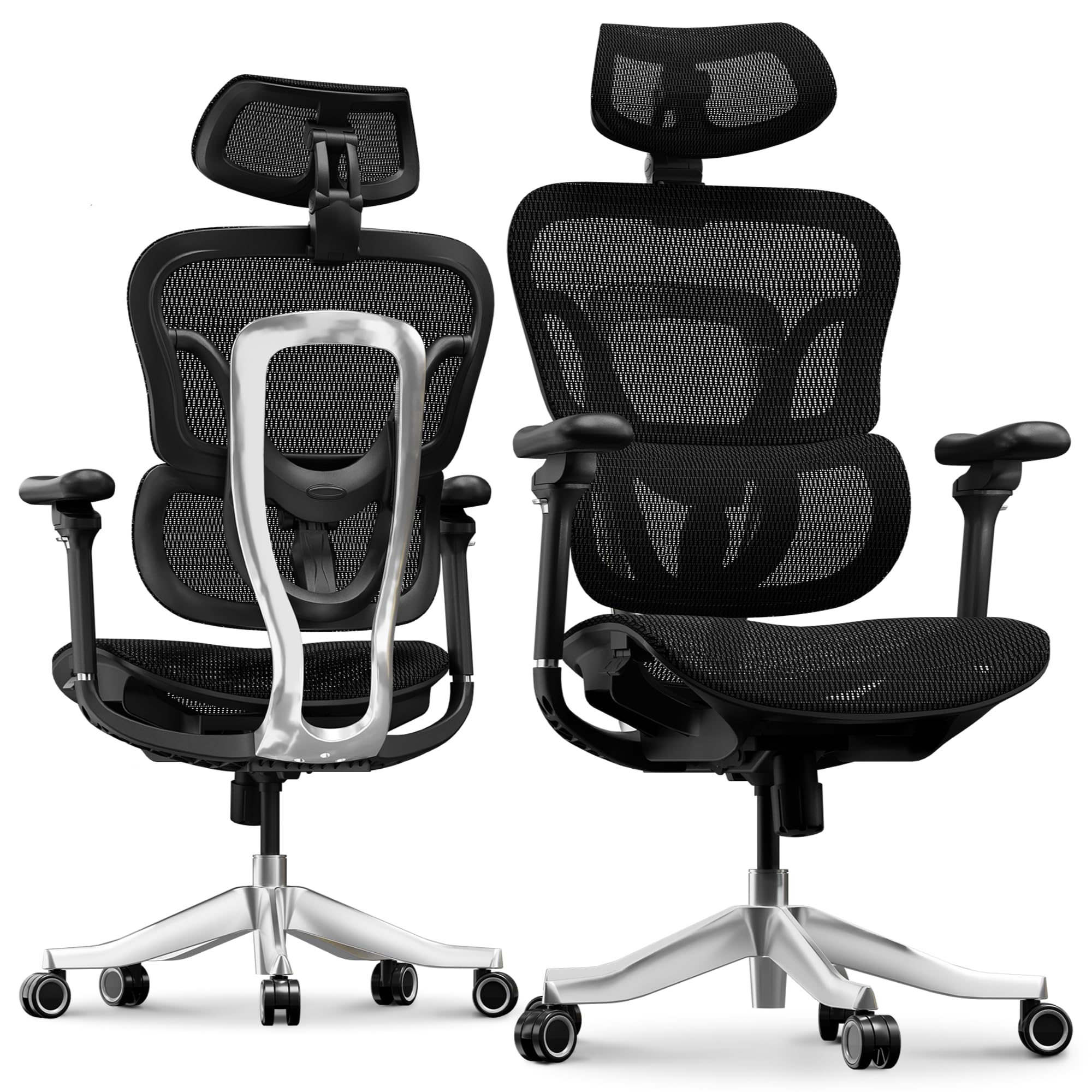
The FLEXISPOT ErgoX Max is built around a full aluminum alloy back frame and base, giving it a weight capacity that no other chair on this list touches. The 4D headrest moves through height, depth, angle, and rotation, which means it can follow your cervical curve whether you are typing upright or reclining into a 135° position. The 4D adaptive lumbar support automatically responds to shifts in your sitting posture, keeping the thoracic spine stacked so the headrest can do its job effectively.
The 5D armrests adjust in height, width, depth, pivot, and rotation, allowing you to keep the shoulders relaxed and the neck free of compensatory tension. The electroplated chrome casters roll silently on hardwood or carpet, and the mesh back provides continuous airflow to prevent heat buildup during long sessions. Assembly is straightforward, and the optional retractable footrest adds a nap-level relaxation mode.
For neck pain sufferers who need the highest degree of cervical adjustability combined with a frame that will not flex under load, the ErgoX Max is the clear top pick. The 4D headrest alone justifies the premium tier, as it is one of the few designs that can shift forward enough to support a tall user who leans back without losing contact.
Why it’s great
- 4D headrest with full cervical articulation
- Aluminum frame supports up to 661 lb
- 4D adaptive lumbar tracks movement automatically
Good to know
- Premium pricing reflects heavy-duty construction
- Headrest may need readjustment when switching between recline angles
2. Hbada X7 Smart Ergonomic Chair
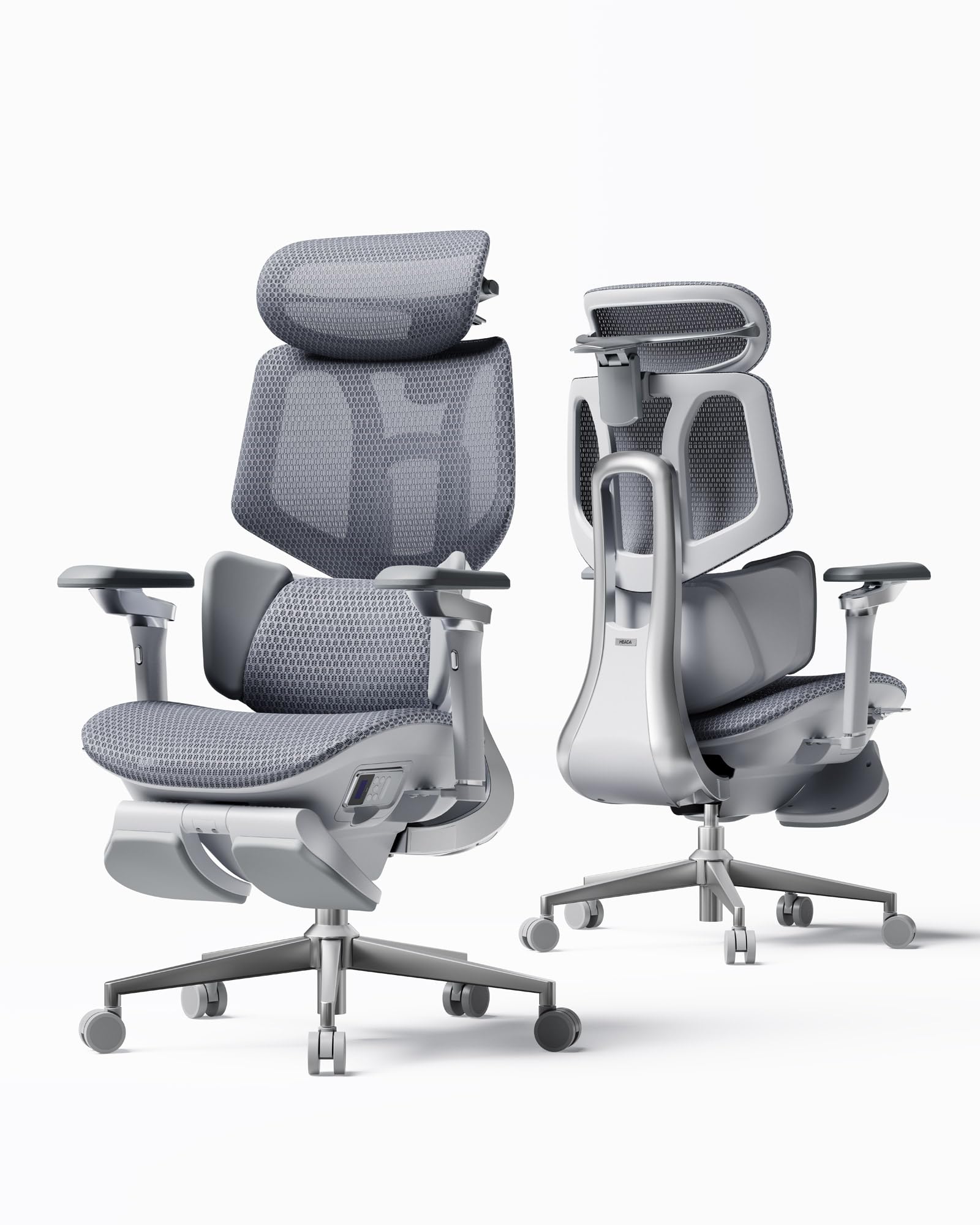
The Hbada X7 is the most technologically advanced option in this roundup, featuring a gravity-sensing base that auto-adjusts lumbar support intensity without manual input. The 4D ergonomic headrest offers 70° of rotation, 55 mm of sliding depth, and 45 mm of height adjustment, making it one of the most versatile neck support systems available. For users who also suffer from upper back tightness, the built-in 8D massage rollers with three-level heating (40-50°C) provide direct myofascial relief to the trapezius and rhomboid muscles.
The dual-fan cooling system built into the 3D high-resilience mesh seat delivers three-speed airflow adjustment, which is a genuine advantage for anyone who sweats under pressure. The 720° omnidirectional armrests rotate a full 360° and extend 110 mm, allowing you to position your forearms in any posture without pulling the shoulders upward toward the ears. The 140° recline synchronizes with the armrests so they stay at the correct height even in full recline.
Tall users above six feet should note that the included gas cylinder may not provide enough seat height range for optimal ergonomics, and some have replaced the cylinder to achieve a proper thigh angle. The pre-assembled delivery reduces setup time dramatically, and the aircraft-grade aluminum frame keeps the total weight manageable despite the heavy feature set.
Why it’s great
- Gravity-sensing lumbar auto-adjusts in real time
- 4D headrest with 70° rotation cradles any neck angle
- Heated massage rollers target upper back tension
Good to know
- Tall users over 6 ft may need a taller gas cylinder
- Smart features add complexity and potential electronic points of failure
3. FLEXISPOT ErgoX Premium Ergonomic Office Chair
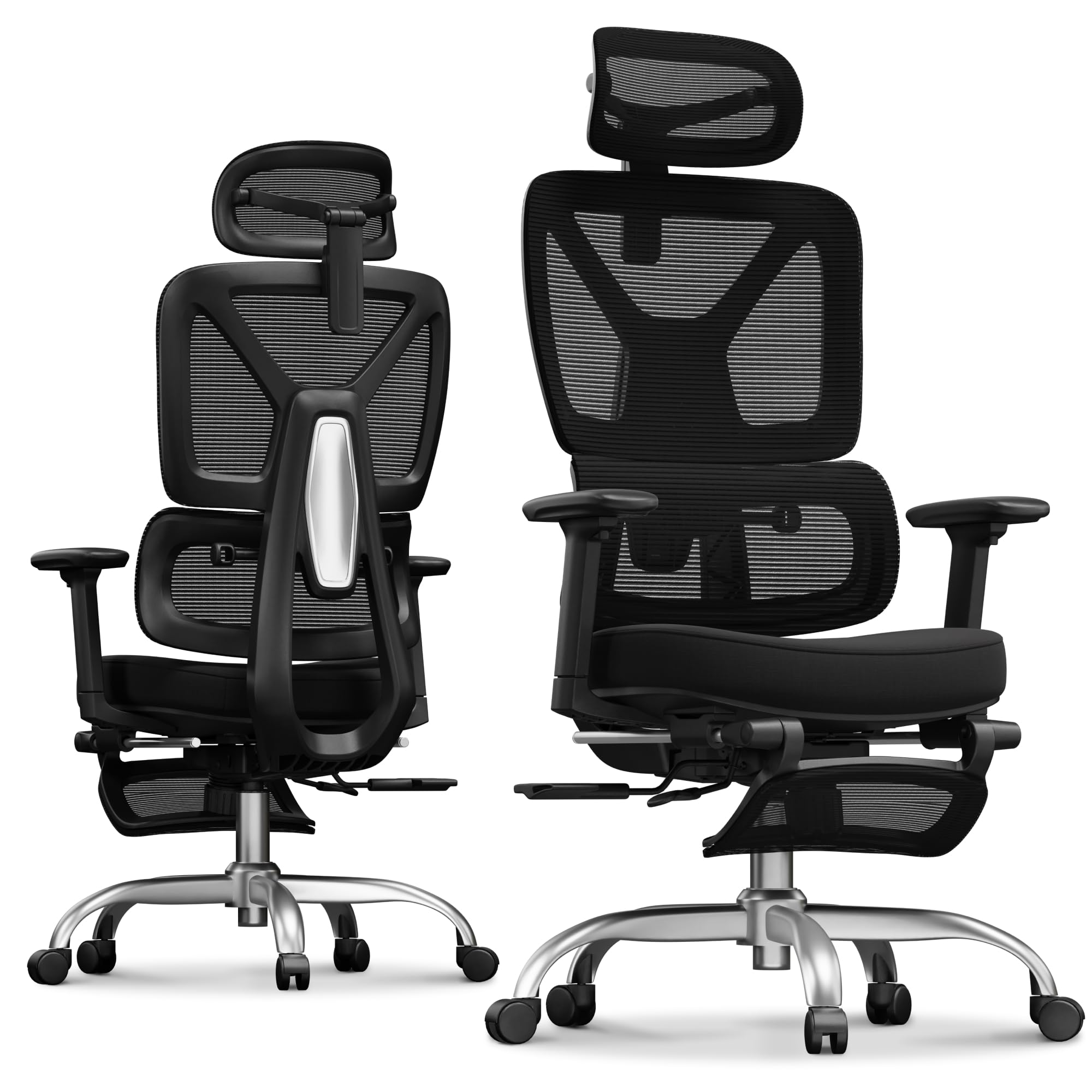
The FLEXISPOT ErgoX is a mid-range chair that punches above its weight class with adjustable seat depth spanning 17 to 20 inches. This feature is critical for neck pain because a seat pan that is too deep forces the pelvis to rotate posteriorly, which rounds the lower back and pitches the head forward. Being able to dial in the exact seat depth keeps the ischial tuberosities properly supported and the lumbar curve intact, allowing the 3D headrest to engage the neck at the correct angle.
The dynamic lumbar support adjusts through five levels, and the 3D headrest moves in height, depth, and tilt — a combination rarely found at this price point. The cloudtech black mesh keeps the back cool, and the class 4 gas lift provides smooth height adjustment. The retractable footrest is a welcome addition for breaks, allowing you to recline and fully unload the cervical spine.
Where the ErgoX shines is its ability to fit a wide range of body sizes (5’1″ to 6’2″) without requiring expensive aftermarket modifications. The 3D armrests adjust in height, forward/back, and swivel, so the shoulders stay open and the neck does not have to compensate for arm position asymmetry. For neck pain sufferers who want premium adjustability without the premium price tag, this chair delivers the best value.
Why it’s great
- Adjustable seat depth prevents pelvic tilt and forward head drift
- 3D headrest with height, depth, and tilt
- Retractable footrest for cervical unloading during recline
Good to know
- Footrest is padded but may feel short for users over 6 ft
- Plastic frame components rather than aluminum
4. GABRYLLY Ergonomic Office Chair
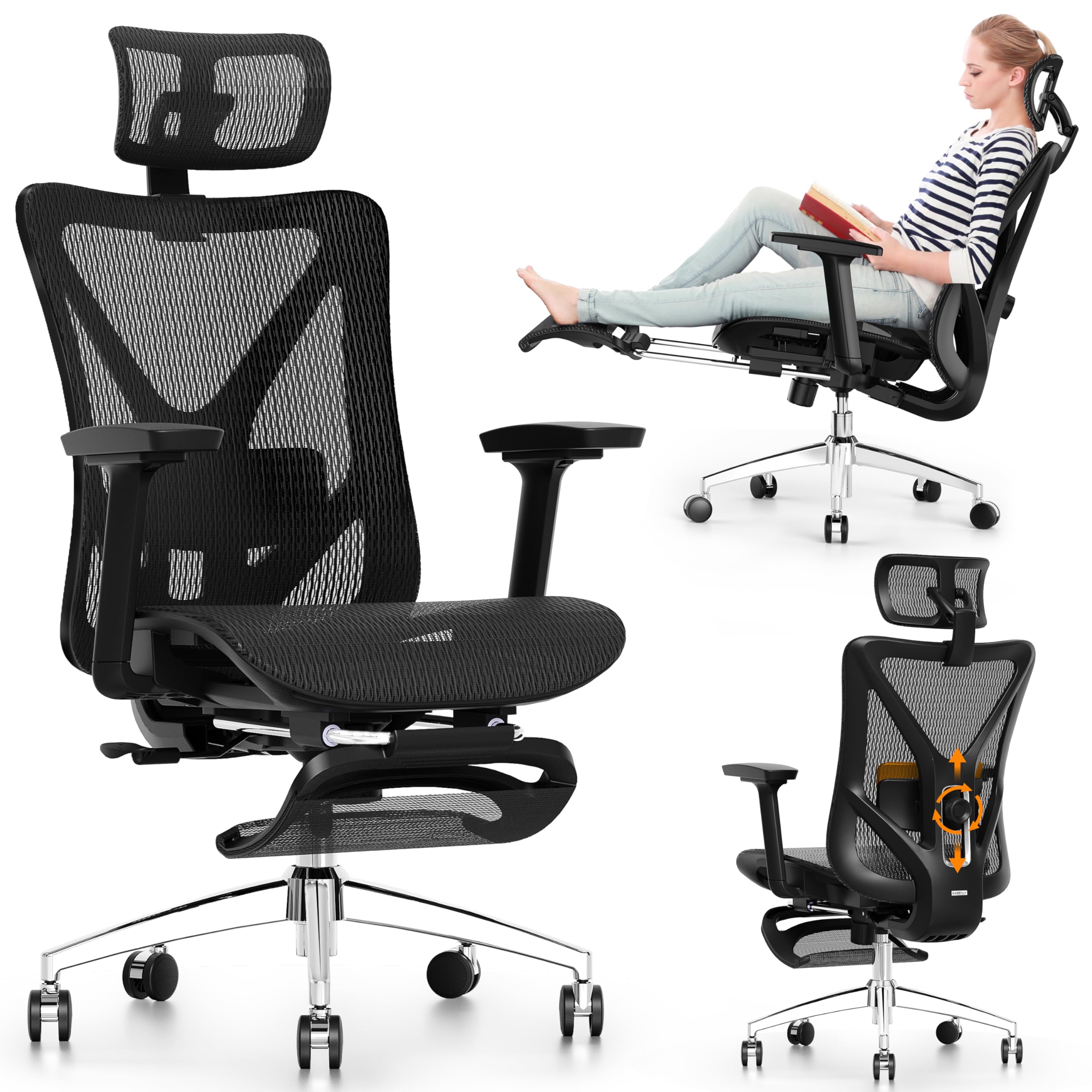
The GABRYLLY Ergonomic Chair is designed for users who need to alternate between upright work and deep recline throughout the day. The 135° recline locks into three positions (90°/110°/135°), and the retractable steel footrest extends up to 18.1 inches, creating a stable platform that keeps the legs elevated and the lumbar spine supported. This position directly reduces cervical disc pressure by shifting the head’s weight back into the headrest rather than letting it hang forward.
The large mesh headrest adjusts through height, angle, and bracket position, giving it a 3D range that pairs well with the 2-way lumbar support (3 inches vertical, 1.6 inches horizontal). The 27.5-inch steel base with silent inline-skate wheels provides exceptional stability, even when the footrest is fully extended and the chair is at full recline. The all-mesh back keeps airflow high, which is especially valuable for longer sitting sessions in warmer climates.
The primary complaint from users is that the 3D armrests shift under pressure, clicking loudly when leaned on. For neck pain prevention, this is a secondary concern, but it does affect the overall feeling of build quality. The chair supports up to 300 lb and accommodates users between 5’3″ and 6′, making it a solid mid-range pick for anyone who prioritizes the ability to recline deeply and rest the neck fully.
Why it’s great
- 135° recline with lockable positions for cervical pressure relief
- Steel base provides stability during footrest use
- Large mesh back promotes airflow during long recline sessions
Good to know
- Armrests shift under elbow pressure and may click
- Mesh can feel less plush against the back over 10+ hours
5. LarkLeaves Office Chair with Footrest
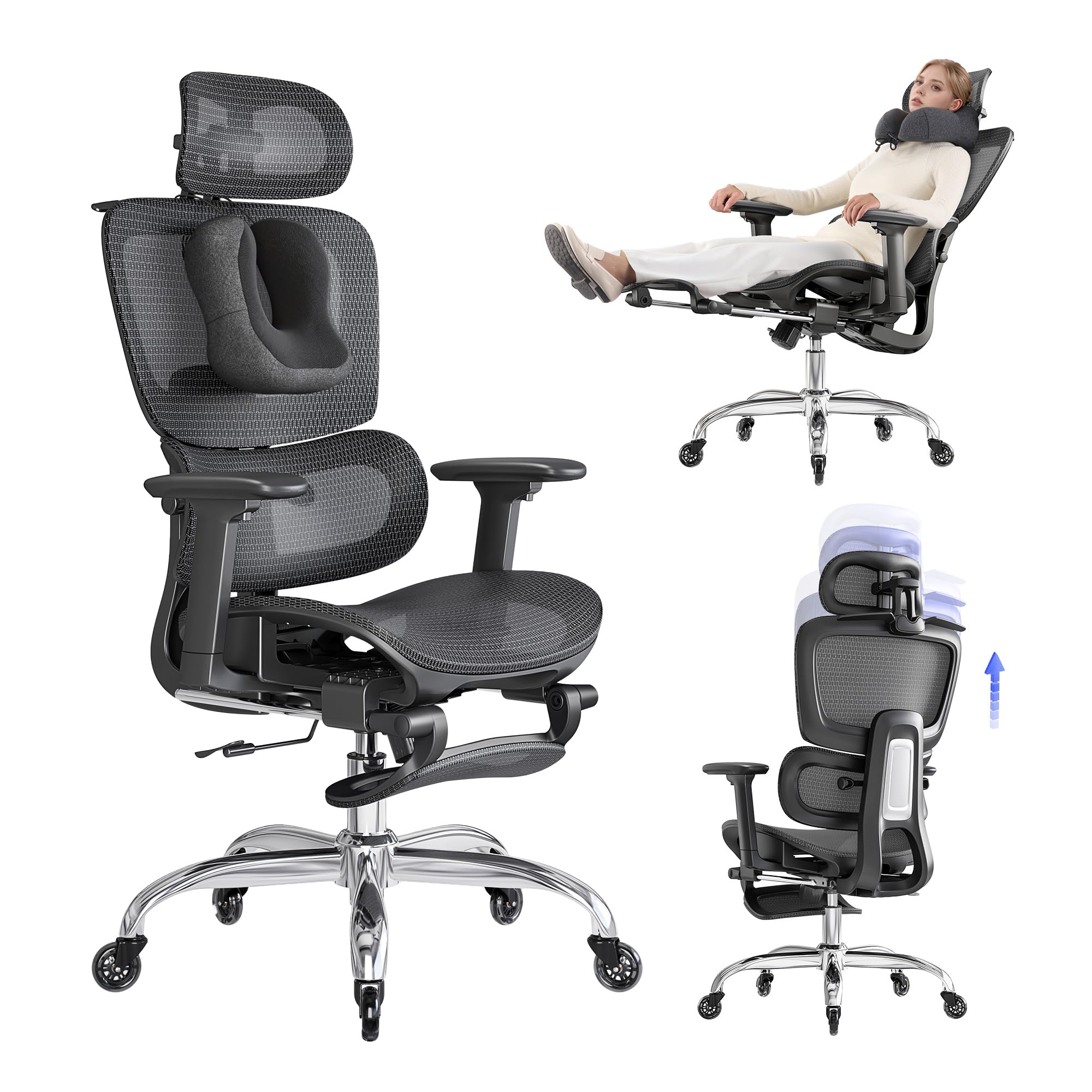
The LarkLeaves chair is built for big-and-tall users who need a wider seat pan and a higher weight rating without sacrificing headrest adjustability. The 3D headrest, 3D armrests, and 2D adaptive lumbar support combine to give six separate adjustment points that can be tuned for larger frames. The 5-level height-adjustable backrest allows the lumbar support to align with the natural curve of a taller torso, which is the first step in preventing the thoracic rounding that leads to forward head posture.
The breathable mesh back and contoured seat cushion balance cooling with pressure distribution, and the rubber inline-skate wheels roll silently on hardwood floors. The built-in coat hanger is a minor but practical addition for keeping a jacket within reach without clutter. The total weight of the chair at roughly 42 lb gives it a solid feel that does not shift when you lean back to engage the headrest.
The footrest is the weakest component — users report it feels somewhat cheap and unbalanced when weight is applied. If you plan to use the footrest regularly, consider it a light-duty feature for occasional leg elevation rather than a primary relaxation tool. The assembly takes around 45 minutes, and the 3-year warranty provides peace of mind for a chair that will see heavy daily use.
Why it’s great
- 3D headrest and 5-level backrest accommodate taller torsos
- Heavy-duty build at 42 lb offers stable platform for headrest engagement
- Silent rubber wheels protect hardwood floors
Good to know
- Footrest feels unbalanced under load
- Assembly requires ~45 minutes and two people
6. Zeonsit Ergonomic Office Chair
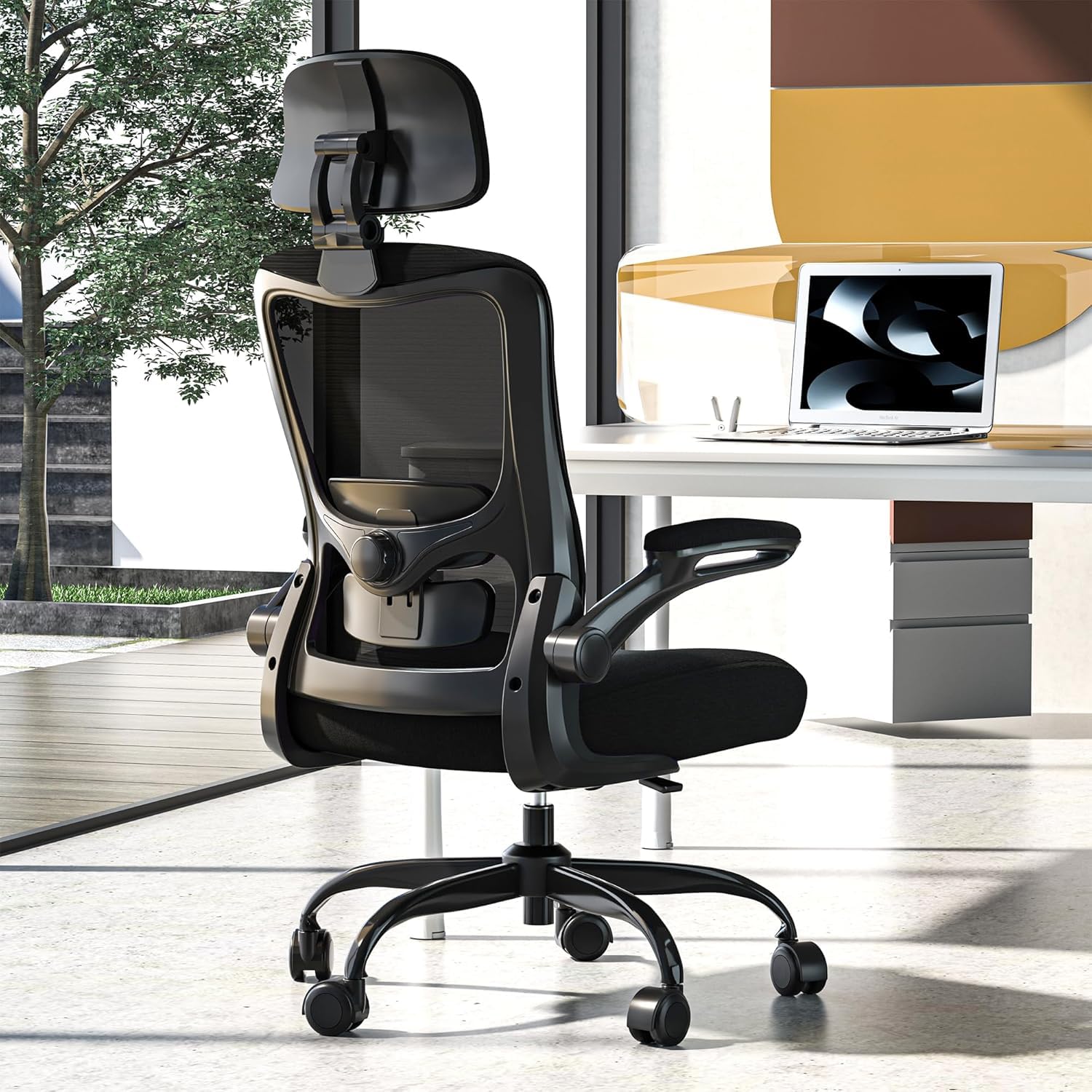
The Zeonsit chair uses a memory foam fill material in the seat cushion, which is a departure from the standard foam found in most mid-range models. Memory foam conforms to the ischial tuberosities and reduces peak pressure on the hips, which helps maintain pelvic alignment — a necessary condition for keeping the cervical spine in neutral. The adjustable headrest provides targeted support for the head, neck, and shoulders, and the breathable mesh back prevents the heat buildup that can make long sessions uncomfortable.
The chair supports up to 330 lb with an SGS-certified gas lift and BIFMA-tested components, and the 5-year warranty is one of the longest in this roundup. The flip-up armrests allow the chair to slide fully under a desk, which is a space-saving benefit for smaller home offices. The assembly is straightforward with labeled parts, and the mesh back offers a consistent cooling airflow.
The trade-off for memory foam is that it retains heat more than open-cell foam or mesh seats, particularly in warmer indoor environments. The headrest adjustment is less articulated than the 4D systems found on premium models — users report it covers the basics but does not allow for fine-tuning the forward depth needed for deep recline positions. For neck pain relief in a straight-upright typing posture, the Zeonsit works well; for reclined reading or screen use, you may find the headrest range limited.
Why it’s great
- Memory foam seat conforms to pelvis for improved spinal alignment
- SGS-certified gas lift and 5-year warranty
- Flip-up armrests save desk space
Good to know
- Memory foam retains heat in warm rooms
- Headrest depth range is limited for reclined postures
7. CASASIO Ergonomic Office Chair Gray/Silver
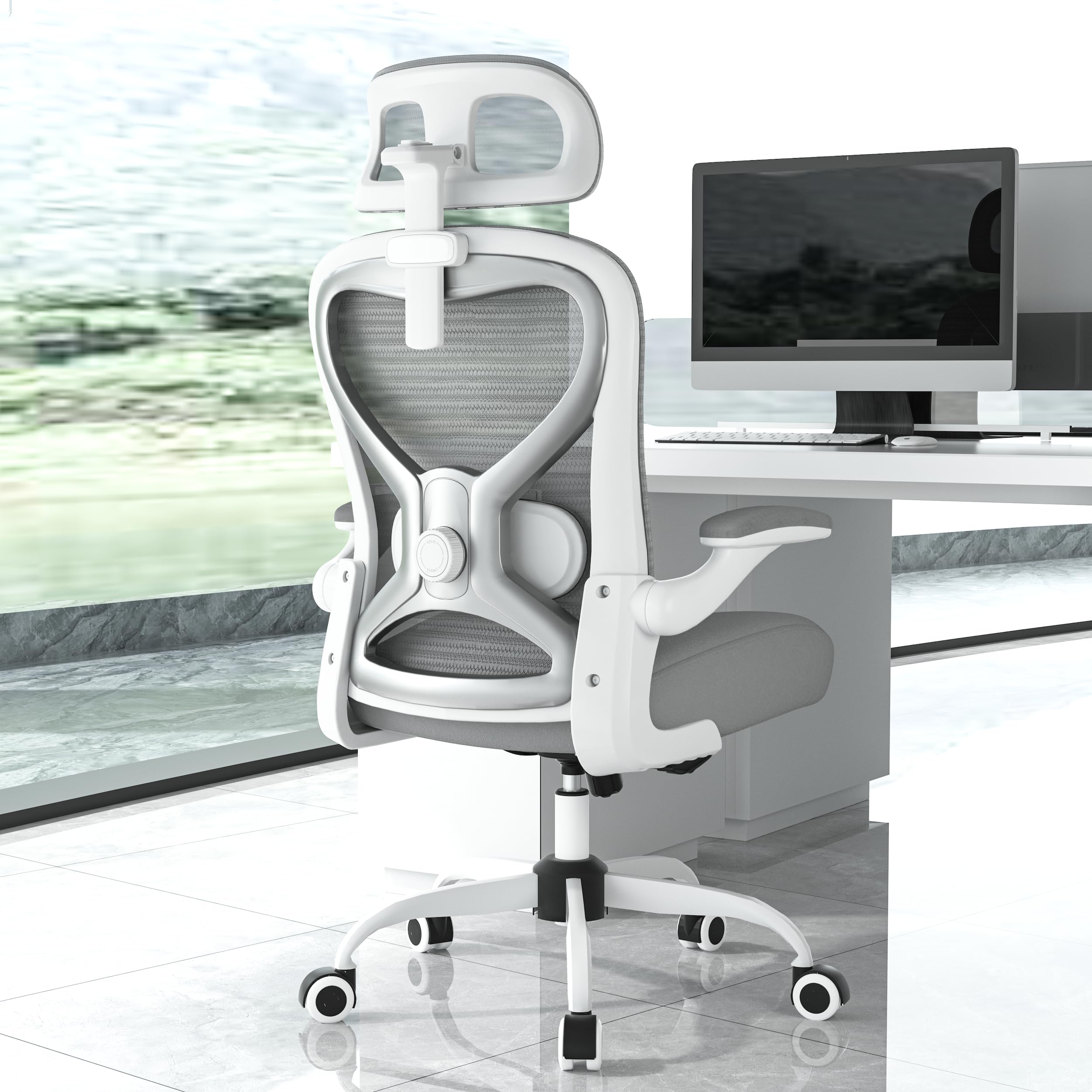
The CASASIO Ergonomic Chair in Gray/Silver features a 3.5-inch virgin foam seat that distributes weight evenly across the thighs and hips, reducing the localized pressure that can cause pelvic tilt. The 3D adjustable headrest (height, depth, angle) cradles the sub-occipital region, and the dual-direction adjustable lumbar cushion gives two axes of customization to dial in the lower back curve. When the lumbar curve is properly supported, the thoracic spine can stack naturally, allowing the headrest to make full contact rather than hovering behind the neck.
The flip-up armrests are ideal for multi-use desks where you need to slide the chair out of the way between tasks. The tilt-and-rock mechanism with adjustable tension allows you to set the rocking resistance to match your body weight, making micro-movements throughout the day that keep the cervical discs hydrated. The reinforced metal base supports up to 300 lb, and the assembly includes labeled parts and gloves for a clean 15-20 minute setup.
The mesh back is breathable but offers less contouring than the solid back designs found on higher-end chairs. Users between 5’2″ and 5’8″ report the best headrest fit, while taller users may find the maximum height insufficient for full cervical support. For the price point, the 3D headrest and virgin foam seat make this one of the strongest budget-friendly options for neck pain relief.
Why it’s great
- 3.5-inch virgin foam seat prevents pelvic pressure and tilt
- 3D headrest with height, depth, and angle
- Flip-up armrests for compact desk storage
Good to know
- Headrest height may fall short for users over 5’9″
- Mesh back provides airflow but limited spinal contouring
8. CASASIO Home Office Desk Chair Black/Silver
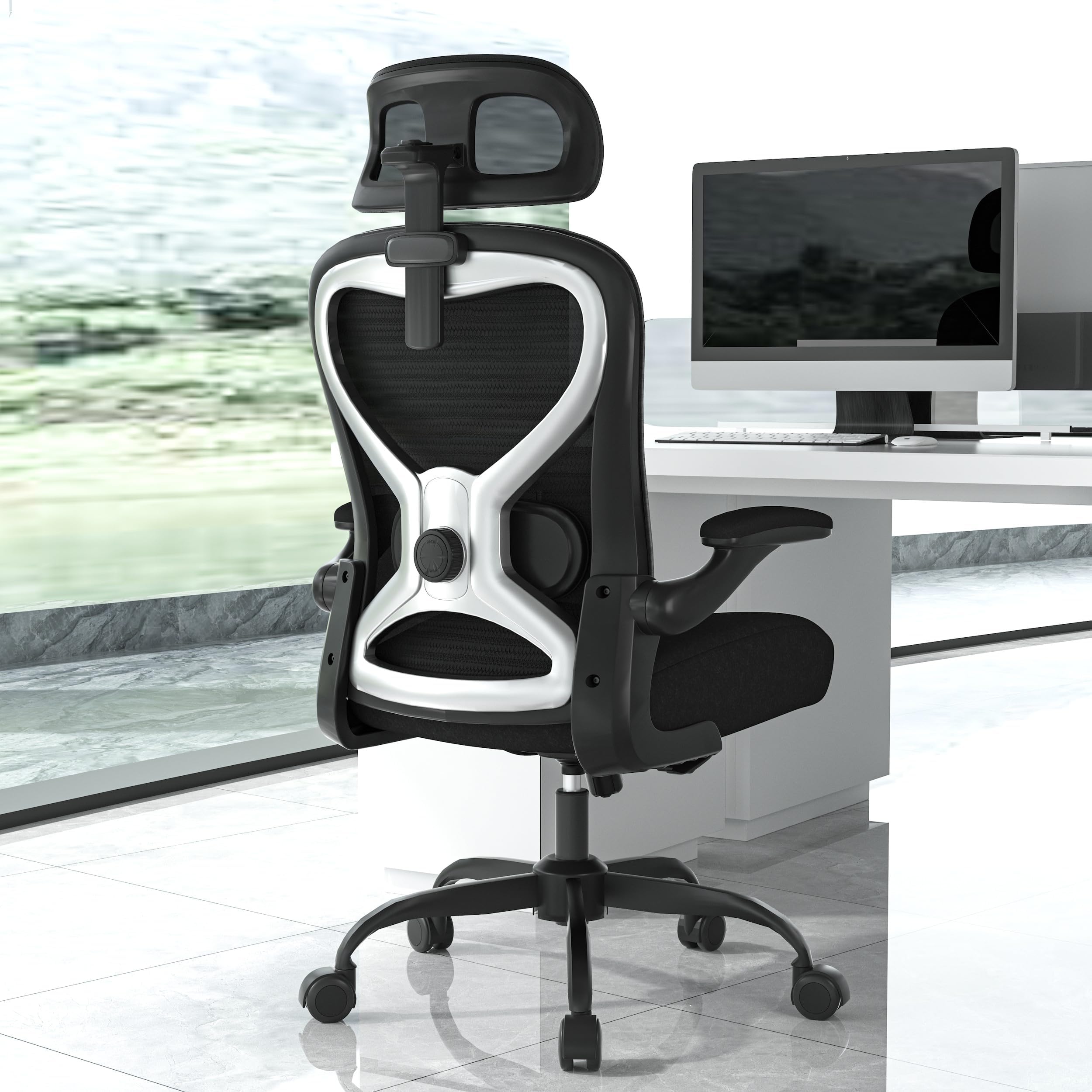
The CASASIO Home Office Desk Chair shares the same 3D adjustable headrest and virgin foam seat platform as its gray sibling but adds a higher weight capacity of 350 lb. The 3D headrest adjusts in height, depth, and angle, providing the same cervical cradle necessary for preventing forward-head posture. The dual-direction adjustable lumbar cushion allows both vertical positioning and depth projection, which is essential for matching the natural lordosis of the lower back — the foundation of neck alignment.
The flip-up armrests, tilt-and-rock mechanism, and reinforced metal base mirror the features of the gray model, and the mesh back maintains the same breathable profile. The black/silver color scheme is slightly more traditional and may blend better with darker office furniture. Assembly is quick at 15-20 minutes with included gloves and labeled hardware.
Like the gray version, the headrest is best suited for users under 5’9″, and the mesh back provides airflow at the cost of contouring. The higher weight capacity (350 lb vs 300 lb) comes from the same base platform, so the additional 50 lb headroom is a spec-sheet advantage rather than a structural redesign. For budget-conscious shoppers who need a 3D headrest and a supportive foam seat, this chair delivers the essential neck-pain features at an entry-level price.
Why it’s great
- 3D headrest with full articulation supports cervical curve
- Virgin foam seat prevents pelvic tilt that triggers forward head drift
- 350 lb capacity accommodates a wide range of body types
Good to know
- Headrest range is limited for users over 5’9″
- Mesh back offers airflow but less spinal contour support
9. Steelcase Leap Office Chair

The Steelcase Leap is the benchmark against which many ergonomic chairs are measured, and its 3D LiveBack technology is designed to mimic the natural motion of the spine rather than forcing the user into a single fixed posture. The lower back firmness dial allows micro-adjustments to lumbar resistance, which is critical for neck pain because a properly supported lumbar curve prevents the cascade of thoracic rounding and forward head pitch. The Natural Glide System lets the seat pan slide forward as the back reclines, keeping the user’s eye-to-screen distance consistent and reducing the tendency to crane the neck forward to maintain focus.
The 4D adjustable arms move in height, width, depth, and pivot, allowing the shoulders to stay relaxed and the neck to remain free of tension. The chair arrives fully assembled, which eliminates the guesswork of torque settings and alignment. The upholstered foam seat with a waterfall edge reduces pressure behind the knees, helping maintain pelvic neutrality that supports the upper spine.
Some users report that the Leap feels smaller than typical high-back chairs, particularly around the shoulder area, which can limit upper-back support for broader frames. The lumbar support, while adjustable, is not as aggressive as the dedicated lumbar systems found on the FLEXISPOT or Hbada models — some users find it subtle to the point of being insufficient for existing lower back conditions. The Steelcase Leap excels for users who want a proven, long-lasting platform with exceptional build quality, but it requires a careful fit check to ensure the backrest height and lumbar projection match the user’s specific spinal geometry.
Why it’s great
- LiveBack technology mimics natural spinal motion
- Natural Glide System keeps eye distance consistent, preventing neck craning
- 4D armrests keep shoulders relaxed and neck free
Good to know
- Backrest may feel narrow for broad-shouldered users
- Lumbar support is subtle and may not satisfy those needing aggressive correction
FAQ
Can a chair really fix neck pain caused by sitting?
Is a high back or mid back better for neck pain?
Why does lumbar support matter for neck pain?
Final Thoughts: The Verdict
For most users, the chair for neck pain winner is the FLEXISPOT ErgoX Max because its 4D headrest and 4D adaptive lumbar provide the most comprehensive cervical-to-lumbar support chain in the mid-premium range, with an aluminum frame that ensures stability at any recline angle. If you want automated lumbar tracking and heated massage for the upper back, grab the Hbada X7 Smart. And for a budget-friendly entry point with a genuine 3D headrest and thick virgin foam seat, nothing beats the CASASIO Home Office Desk Chair.

Mo Maruf
I created WellFizz to bridge the gap between vague wellness advice and actionable solutions. My mission is simple: to decode the research and give you practical tools you can actually use.
Beyond the data, I am a passionate traveler. I believe that stepping away from the screen to explore new environments is essential for mental clarity and physical vitality.