Our readers keep the lights on and my smoothie glass nicely filled. As an Amazon Associate, I earn from qualifying purchases.
The wrong chair at home can turn a simple workday into a constant battle with your lower back. You shift positions, grab a cushion, lean forward — nothing truly stops the dull ache that builds after an hour of sitting. The market is flooded with options, but the real differentiator lies in adjustable lumbar architecture, seat foam density, and recline engineering that actually tracks your spine’s natural curve.
I’m Mohammad Maruf — the founder and writer behind WellFizz. I’ve spent hundreds of hours cross-referencing BIFMA certifications, lumbar adjustability ranges, foam compression ratings, and real-user feedback to separate marketing claims from genuine lower back relief.
This guide breaks down the measurable specs and design choices that matter most when choosing a chair for lower back pain at home, so you can invest in a seat built for all-day spinal support, not just a padded surface.
How To Choose The Best Chair For Lower Back Pain At Home
Not every ergonomic chair actually delivers on its lumbar promise. The key is to look past the marketing and focus on mechanical adjustability, foam quality, and recline engineering — three factors that directly determine whether a chair supports your lower back or lets it sag.
Adjustable Lumbar Support — Depth Matters More Than Height
Many chairs claim lumbar support but only offer a fixed bump or a simple height-adjustable pad. For lower back pain relief, you need a lumbar mechanism that moves both up/down AND forward/backward. The ability to dial in the exact depth of support against your lumbar curve is what separates a chair that helps from one that just looks supportive. Look for terms like “4D lumbar” or “adaptive lumbar” that indicate fore-aft adjustment.
Seat Foam Density and Mesh Tension
The seat directly absorbs your body weight and transfers it to your hips and lower spine. A foam cushion that is too soft will bottom out within weeks, leaving your tailbone to bear the load. High-density foam (usually around 50-55 lbs/ft³) retains its shape and distributes pressure evenly. Alternatively, a taut mesh seat offers superior breathability and prevents pressure points, but only if the mesh has high elastic tension and a supportive frame. Avoid seats that feel like marshmallows on the first sit — they will degrade quickly.
Recline Angle and Tilt Lock Mechanism
Sitting in a single upright angle for hours compresses spinal discs and fatigues your lower back. A chair with a multi-angle recline (at least 120–135 degrees) lets you shift positions throughout the day, reducing static pressure on your lumbar spine. The tilt lock is equally important — you need the ability to lock the backrest at your preferred angle so the chair doesn’t wobble when you lean back slightly. A synchro-tilt mechanism that coordinates seat tilt with backrest recline is ideal for maintaining posture throughout the range of motion.
Armrest Dimensionality and Ergonomic Fit
Armrests that only adjust in height are common but next to useless for lower back pain. When your elbows are not properly supported, your shoulders hunch forward, which rounds your mid-back and increases pressure on your lower spine. Look for 3D, 4D, or 5D armrests that allow height, depth, width, and angle adjustments. This lets you position your arms so your shoulders stay relaxed and your torso remains upright — directly reducing the load on your lumbar region.
Quick Comparison
On smaller screens, swipe sideways to see the full table.
| Model | Category | Best For | Key Spec | Amazon |
|---|---|---|---|---|
| FLEXISPOT ErgoX Max | Premium Adjustable | All-day ergonomic support | 661 lb capacity, aluminum frame | Amazon |
| Steelcase Leap | Premium Commercial | Customizable lumbar firmness | Lower back firmness dial | Amazon |
| Hbada X7 Smart | High-Tech Premium | Automated lumbar tracking | 3D adaptive lumbar + massage | Amazon |
| AutoFull M6 | Gaming + Massage | Heated/cooled seat + massage | 3rd-gen dynamic lumbar support | Amazon |
| GABRYLLY Big & Tall | Heavy-Duty | Users up to 400 lbs | 2-mode lumbar, 5″ foam seat | Amazon |
| SmartSeat Ergonomic | Mid-Range Mesh | Balanced comfort and cooling | 135° recline, 330 lb support | Amazon |
| ELABEST Mesh Chair | BIFMA Certified | Commercial-grade durability | Bionic-curve back, 3D arms | Amazon |
| MOLENTS Ergonomic | Mid-Range Full Mesh | Breathability + adjustability | 4-way lumbar, full mesh seat | Amazon |
| TRALT Ergonomic | Plush Comfort | Soft foam seat + flip arms | 3.5″ high-density foam cushion | Amazon |
In‑Depth Reviews
1. FLEXISPOT ErgoX Max Ergonomic Office Chair
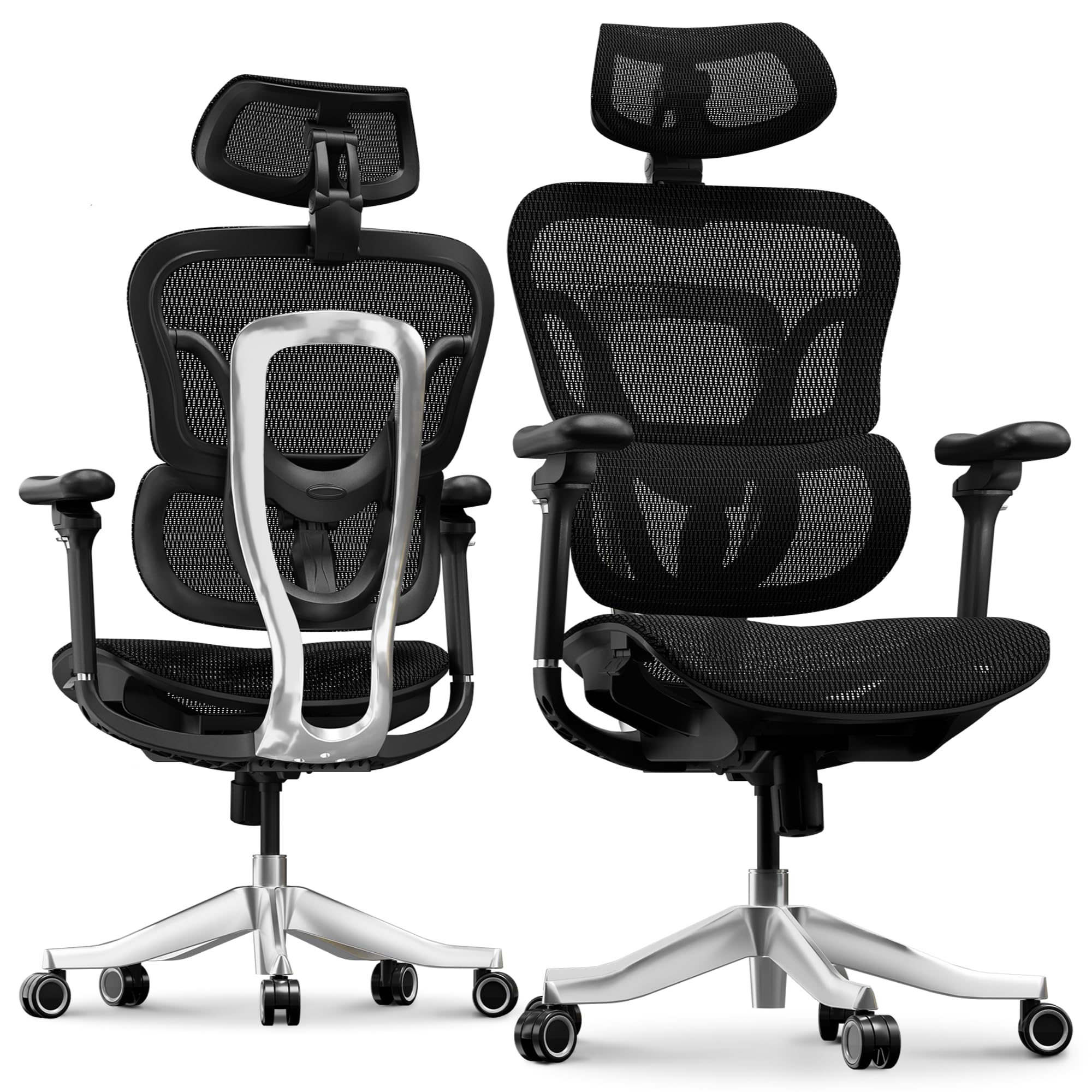
The ErgoX Max stands out for its full aluminum alloy back frame and base — a structural choice that eliminates the flex and creaking common in nylon-framed chairs. The 4D adaptive lumbar support automatically follows your posture changes, providing dynamic feedback against your lower back rather than a static bump. Combined with 5D adjustable armrests and a 5-level back height adjustment, this chair accommodates a wide range of body types without compromising spinal alignment.
The 661-pound weight capacity is not just a marketing number; it reflects the reinforced frame, heavy-duty gas lift, and electroplated chrome casters that roll smoothly under significant load. The seat cushion uses high-density foam wrapped in breathable mesh, which resists sagging and maintains even pressure distribution across your hips — critical for preventing the tailbone pain that exacerbates lower back issues.
In practice, the 3 reclining angles (with tilt lock) let you shift from upright typing to a relaxed recline without losing lumbar contact. The optional retractable footrest adds a reclining dimension for short breaks, though the chair’s real strength remains its core ergonomic adjustability. Users consistently report reduced lower back fatigue during 40-hour work weeks, making this a serious contender for anyone needing all-day relief.
Why it’s great
- Full aluminum frame eliminates flex and provides premium stability
- 4D adaptive lumbar automatically adjusts to posture changes
- 5D armrests allow precise elbow positioning to reduce shoulder tension
- High weight capacity without sacrificing build quality or comfort
Good to know
- Retractable footrest is a secondary feature — not for heavy recline use
- Assembly requires about 30 minutes due to the robust frame
- Seat mesh may feel taut for users under 150 lbs initially
2. Steelcase Leap Office Chair

The Steelcase Leap is a research-backed classic that prioritizes spinal tracking through its 3D LiveBack technology. Instead of a fixed lumbar pad, the backrest actually mimics the natural curvature of your spine as you move, providing support that changes with your posture. The lower back firmness dial lets you increase or decrease the amount of resistance the lumbar region offers — a level of granular control rarely found outside commercial-grade seating.
The Natural Glide System allows the seat to slide forward and backward independently as you recline, keeping your eyes at the correct distance from your monitor and preventing the shirt-pulling sensation typical of cheaper chairs. The seat depth adjustment is also critical for lower back health: a seat that is too long forces your pelvis to tilt backward, flattening the lumbar curve and increasing disc pressure. The Leap accommodates shorter and longer femurs without compromise.
At 70 years of research backing this design, the Leap’s foam cushion uses a waterfall front edge to reduce pressure behind the knees, which indirectly supports better lumbar posture by preventing you from sliding forward. Users consistently note that the chair feels mid-grade initially but “breaks in” over several weeks to match their body. It arrives fully assembled, and the build quality — reinforced steel frame, polished finish — justifies its position as a long-term investment for chronic lower back pain sufferers who need precise adjustability at every contact point.
Why it’s great
- 3D LiveBack mimics natural spine movement for dynamic lumbar support
- Lower back firmness dial lets you dial in exact pressure level
- Natural Glide System maintains optimal viewing distance while reclining
- Adjustable seat depth prevents posterior pelvic tilt and lumbar flattening
Good to know
- Premium-tier pricing reflects commercial-grade construction
- Backrest is shorter than some high-back chairs — best for users under 6’2″
- Initial comfort may feel moderate before the foam breaks in over weeks
3. Hbada X7 Smart Ergonomic Chair
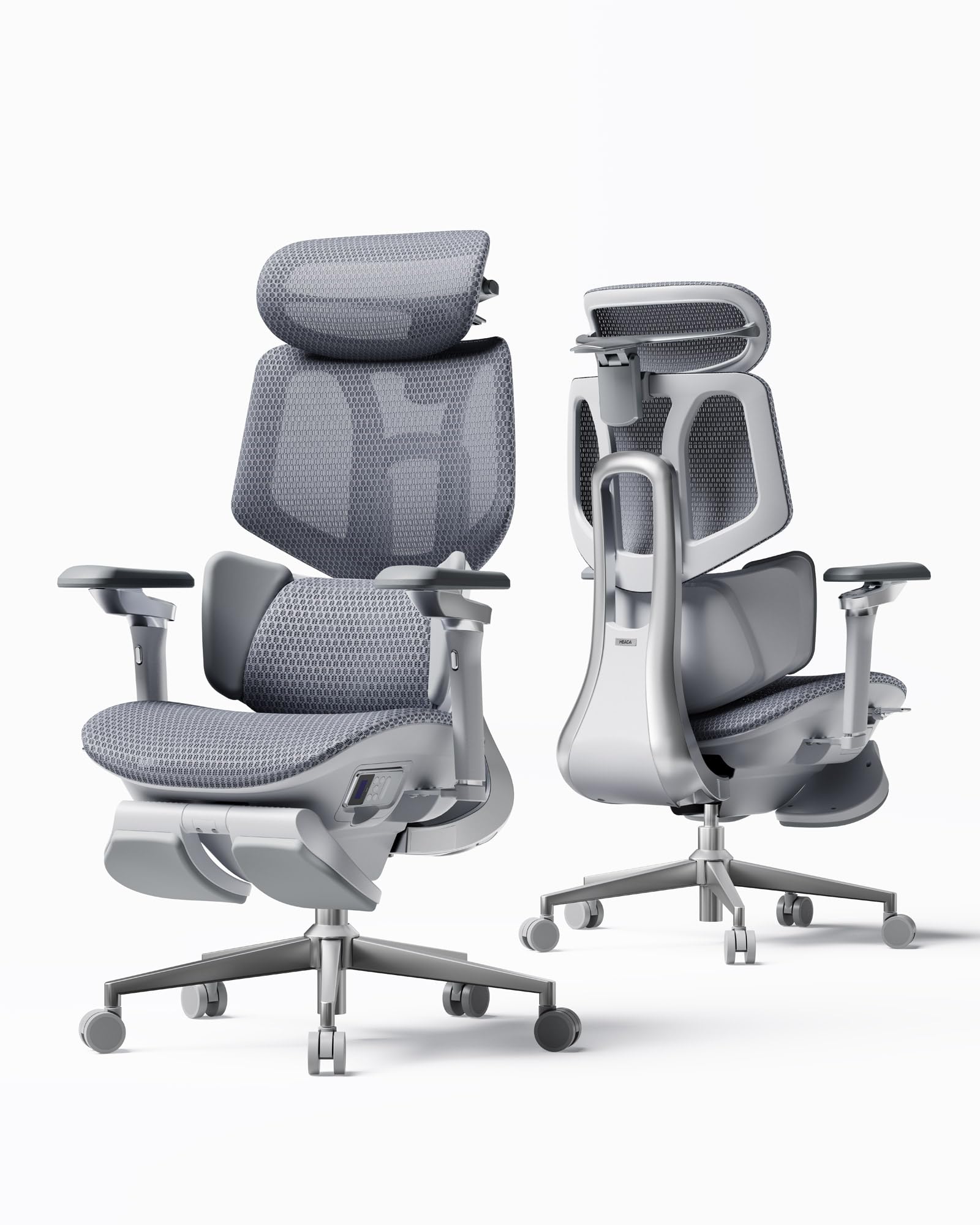
The Hbada X7 brings automated lumbar tracking to the home office — a gravity-sensing base that adjusts support intensity in real time based on how you shift in the seat. The 6D adjustable waist pillow works alongside the automated system to align with individual spinal curves, while 8D massage rollers with three-level heating (40–50°C) target the specific muscles that stiffen during long seated sessions. For lower back pain, the combination of passive support and active massage is genuinely unique.
The dual-fan cooling system integrated into the 3D high-resilience mesh seat is not a gimmick; it actively moves air through the cushion, preventing the heat buildup that makes your glutes and lower back sweat and shift uncomfortably. With three fan speeds — Silent, Balanced, and Turbo — you can match airflow to your room temperature. The 140° recline with 720° omnidirectional armrests (360° rotation plus extension) means your elbows stay supported even when you lean far back, maintaining shoulder relaxation and preventing the upper-body tension that radiates down to your lower back.
The aircraft-grade aluminum frame and 5-star nylon base support up to 330 lbs, and the chair ships pre-assembled in key sections for quick setup. Taller users (6ft+) have noted that the standard gas cylinder may limit optimal leg positioning, but a replacement cylinder solves this. The automated lumbar tracking is genuinely responsive, adapting support as you lean forward to type or recline to read — making this the most technologically advanced option on this list for those who want a chair that actively works with their spine rather than just holding it.
Why it’s great
- Gravity-sensing automated lumbar adjusts support in real time
- 8D massage with 3-level heat directly targets lower back muscles
- Dual-fan ventilated seat prevents heat buildup during long sessions
- 720° armrests maintain elbow support across all recline angles
Good to know
- Taller users (6ft+) may need a replacement gas cylinder for optimal leg clearance
- Heating and massage functions require USB power connection
- Mesh seat tension may feel firm for lighter users initially
4. AutoFull M6 Ergonomic Gaming Chair
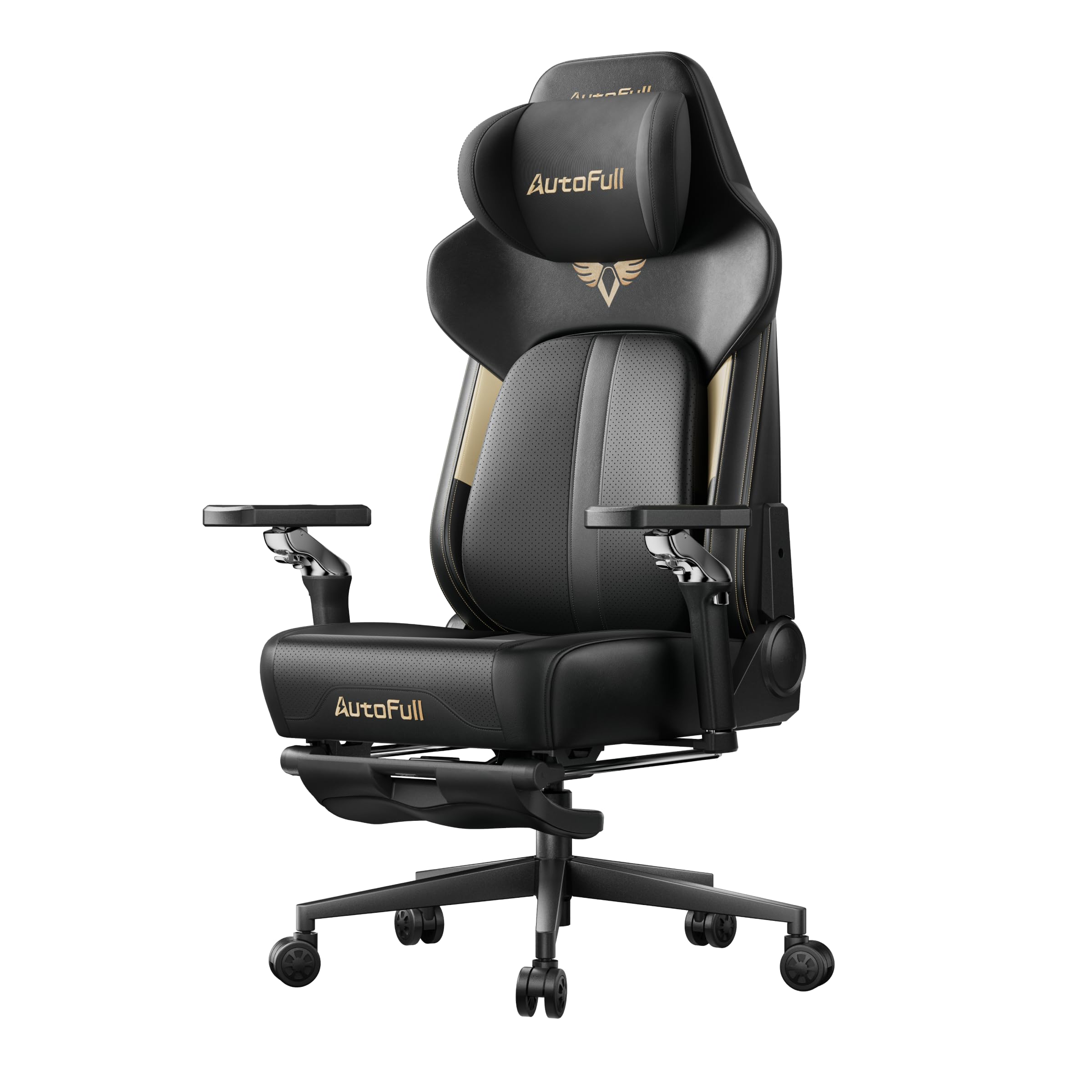
The AutoFull M6 is built around its 3rd-Gen Dynamic Lumbar Support, which moves fore-aft by 6cm and height-adjusts by 5cm with 5 auto-swivel positions that follow your body as you shift. Unlike passive lumbar pads, this mechanism actively tracks your movements to maintain constant lower back contact — a critical feature for preventing the gap that forms between your spine and the backrest when you lean sideways or forward during gaming or deep work sessions.
The ventilated and heated seat is a genuine differentiator: a built-in cooling fan lowers seat temperature for sweat-free comfort, while graphite heating provides three adjustable warmth levels for cold days. For individuals whose lower back pain is aggravated by muscle tension from cold environments, the heating element offers direct therapeutic relief. The lumbar and thigh vibration massage system adds another layer — it helps release muscle knots that build up during static sitting, improving blood circulation and reducing stiffness that contributes to lower back ache.
The 360° mechanical armrests with five-way adjustment (height, fore-aft, pad rotation, arm body rotation, and 4-stage tilt) are among the most adjustable on the market. Combined with the retractable footrest and a multi-tilt mechanism that locks at any angle, the M6 supports nearly every sitting posture. Users at 200 lbs report the chair remains quiet and creak-free, though some taller users (6’1″) find the cushion bottoms out after a few hours. The aggressively protruding lumbar can be an issue for those with tailbone sensitivity, but the armrest adjustability and climate control features are unmatched in this price tier.
Why it’s great
- 3rd-gen dynamic lumbar support tracks body movements for constant contact
- Built-in seat heating and cooling — direct therapeutic benefit for lower back
- Lumbar and leg massage reduces muscle tension during breaks
- 360° 5-way armrests provide elite adjustability for any seated task
Good to know
- Lumbar support is aggressively protruding — may irritate tailbone-sensitive users
- Seat cushion can feel firm and bottom out for taller users over 6′
- Cooling fans under the seat create a firm cushion surface that reduces plushness
5. GABRYLLY Big and Tall Ergonomic Mesh Chair

The GABRYLLY is engineered specifically for larger body frames with a 400-pound capacity and a wide 20″ x 20.5″ seat cushion. The 2-mode lumbar support allows you to adjust both height (2 inches of travel) and depth (1.6 inches of fore-aft movement) — meaning you can dial in the exact pressure intensity against your lower back, from a gentle reminder to a firm push that prevents slouching. This dual-axis adjustability is rare at this price tier and directly addresses the root cause of lower back pain: poor spinal alignment caused by inadequate lumbar support.
The 5-inch thick high-density foam seat with built-in springs mimics a sofa’s bounce, distributing weight evenly and preventing the hard-bottom feeling that causes tailbone pain. The “banded clouds” mesh back promotes airflow that keeps you 15° cooler than leather chairs — a meaningful difference for long wear. The 5D flip-up armrests (height, slide, rotation, lift-up) are practical for cross-legged sitting and allow the chair to slide fully under the desk when not in use, saving floor space in a home office setup.
The 135° recline with three preset angles (90° focus, 120° break, 135° deep recline) is tested by ergonomic experts to improve blood circulation by 25% — a measurable benefit for lower back health, since poor circulation allows muscle stiffness to accumulate. Assembly is straightforward with clear instructions, and the included 3-year warranty backs the BIFMA x5.1 and SGS-class gas lift. Users consistently praise the stability and ease of adjustment, though the mesh seat can feel taut for smaller users. The armrests shift unintentionally under sustained elbow pressure, which is the primary build compromise at this price point.
Why it’s great
- 2-mode lumbar adjusts both height and depth for precise spinal alignment
- 5″ thick high-density foam seat prevents bottoming out for heavier users
- 5D flip-up armrests save space and support varied sitting positions
- Breathable mesh back keeps the lumbar region cool during extended use
Good to know
- Armrests can shift unintentionally under sustained elbow pressure
- Mesh seat may feel taut for users under 150 lbs
- Lumbar adjustment mechanism requires some force to change positions
6. SmartSeat Ergonomic Office Chair Comfy
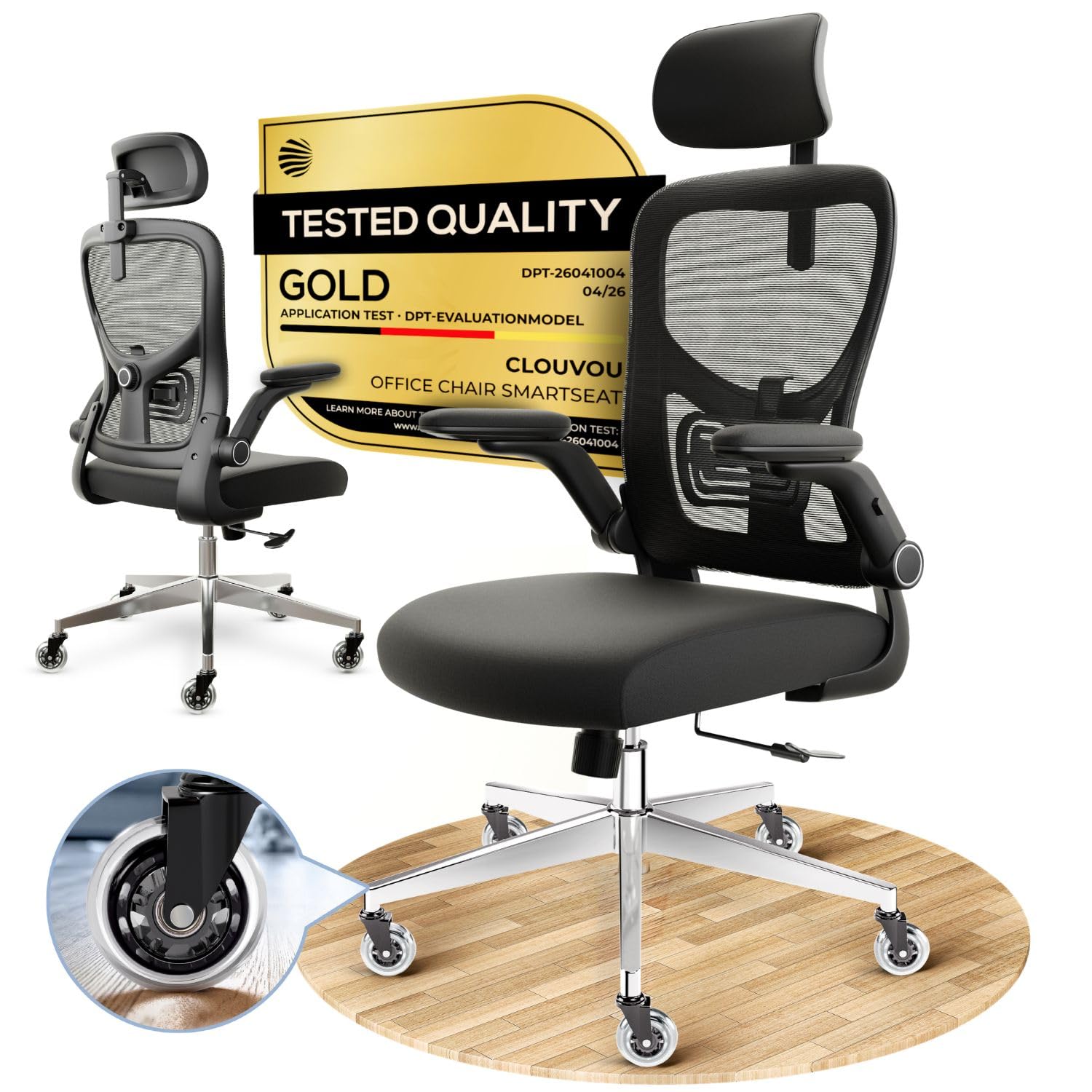
The SmartSeat delivers a clean, streamlined design with a breathable elastic nylon mesh back and a 135° recline that offers three position tilt locks. The lumbar support is integrated into the backrest contour rather than a separate adjustable pad — a simpler approach that works well for users who need consistent, moderate support without the complexity of multi-axis adjustments. The 3D PU leather headrest adds neck support that helps maintain an upright posture, which indirectly reduces lower back strain by preventing the forward head slump that rounds the entire spine.
The ultra-quiet blade wheels are a standout practical feature: they roll silently and smoothly across hard floors without leaving marks, making this chair ideal for home offices with delicate flooring. The 330-pound weight capacity and stable polymer frame reinforce a sturdy feel without excessive bulk. Users consistently report that the chair eliminates lower back discomfort within days, largely due to the firm yet forgiving mesh tension and the seat cushion’s ergonomic shape that prevents pressure buildup under the sit bones.
Assembly is straightforward, with all hardware labeled and clear instructions. The 2D flip-up armrests are basic — height-adjustable and foldable — sufficient for most users but lacking the fore-aft and swivel range of higher-end models. The mesh material resists sagging and is easy to clean with a lint roller. For someone seeking a clean, functional chair with solid lumbar relief at a mid-range investment, the SmartSeat offers one of the best balanced packages without overwhelming complexity.
Why it’s great
- Ultra-quiet blade wheels roll smoothly without marking floors
- Breathable nylon mesh keeps the back cool and maintains firm tension
- 135° recline with three lockable positions supports posture shifting
- Sturdy build supports 330 lbs without creaking or wobbling
Good to know
- Armrests are 2D only — no fore-aft or swivel adjustment
- Lumbar support is integrated into backrest, not separately adjustable
- Headrest has PU leather surface that may show wear over time
7. ELABEST Ergonomic Mesh Office Chair

The ELABEST chair sets itself apart with a bionic-curve backrest that mimics the spine’s natural shape, combined with an adjustable lumbar support that moves independently. This is not a fixed bump — the lumbar pad can be positioned at the exact height and depth that matches your lumbar curve, and the synchro-tilt mechanism offers three lockable positions with adjustable tension. The result is continuous lower back contact whether you are sitting upright or reclining, preventing the gap that causes the spine to collapse into a C-shape.
The “Golden Triangle” back structure provides targeted support for the shoulders and upper back, which may sound like an upper-body feature, but actually plays a key role in lower back health. When your shoulders are properly supported, your upper body stays aligned, and the load on your lumbar discs decreases. The 3D adjustable armrests (height, width, angle) further reduce neck and shoulder strain, allowing your trapezius muscles to relax rather than tense up — a tension that often radiates down to the lower back after hours of poor posture.
The full-mesh seat eliminates heat buildup entirely and uses a high-grade, stretch-resistant mesh that maintains its tension over time. The waterfall seat edge improves circulation behind the knees, encouraging better pelvic alignment. BIFMA 5.1 certification ensures this chair meets commercial standards for durability and stability, meaning it can withstand daily multi-shift use without degrading. Users consistently praise the build quality compared to lower-priced mesh chairs, noting that the materials feel closer to a Herman Miller aesthetic without the premium price tag. However, the design best suits users between 5’5″ and 5’10” and under 200 lbs — larger frames may find the seat width limiting.
Why it’s great
- Bionic-curve backrest with independent lumbar pad for precise alignment
- BIFMA 5.1 certified — meets commercial-grade durability standards
- Full-mesh seat with waterfall edge prevents heat buildup and aids circulation
- Synchro-tilt with adjustable tension maintains lumbar contact through all positions
Good to know
- Best suited for users between 5’5″ and 5’10” — not ideal for taller frames
- Seat width of 20″ may feel narrow for larger body types
- Armrests are 3D — no rotation adjustment found on premium models
8. MOLENTS Ergonomic Mesh Chair

The MOLENTS chair delivers a four-way adjustable lumbar support (height and depth independently) at a price point where most competitors only offer height adjustment. This fore-aft capability is the single most important mechanical feature for lower back relief, as it lets you dial the lumbar pad to either gently support your curve or firmly push your spine into better alignment. The 3D armrests (height, width, angle) add another layer of ergonomic precision that directly reduces shoulder tension and its downstream effects on the lumbar spine.
The full-mesh seat is crafted from skin-friendly premium mesh with high elasticity, preventing the sogginess that traps heat and forces you to shift constantly. The seat dimensions (19.8″ wide x 18.9″ deep) hit a middle ground that works for most body types, and the shaped sponge fill under the mesh provides enough give to avoid hard-surface pressure. The backrest reclines from 90° to 120° with three lockable positions, allowing you to switch between focused work and relaxed reading without losing lower back contact.
Users consistently report that this chair eliminated their lower back pain within three days of use, which speaks to the combination of targeted lumbar adjustability and the breathable seat surface. The tilt tension is strong and controlled, preventing the chair from flopping back unexpectedly. Assembly takes about 15 minutes with labeled parts and clear instructions. The main limitations are the hard wheels on carpet (a floor mat is recommended) and the armrest panels that slide forward/backward — some users prefer a fixed panel, but the manufacturer offers a replacement upon request.
Why it’s great
- 4-way lumbar adjustment (height + depth) provides genuine spine alignment
- Full-mesh seat with shaped sponge prevents heat buildup and pressure points
- Easy 15-minute assembly with all parts labeled and clear instructions
- Excellent customer service with proactive follow-up and warranty support
Good to know
- Wheels are hard plastic — not ideal for carpet without a floor mat
- Armrest panels slide forward/backward — some users prefer fixed panels
- Seat depth of 18.9″ may be short for users with longer femurs
9. TRALT Ergonomic Office Chair
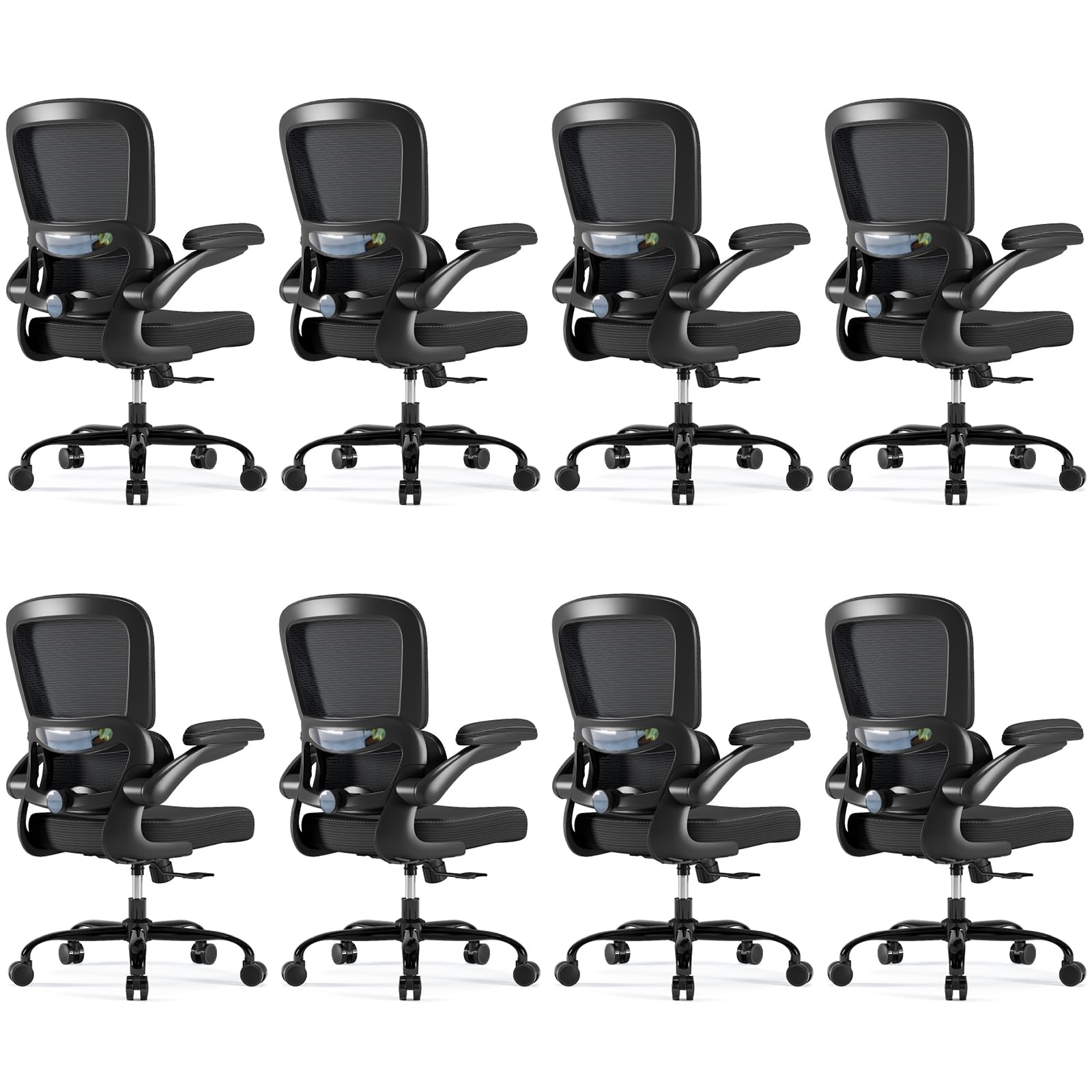
The TRALT chair takes a different approach from the full-mesh competition by using a 3.5-inch high-density sponge cushion wrapped in a leather-like surface. The foam is dense enough to resist sagging over months of daily use while providing a softer initial sit than mesh — a preference for users who find mesh seats too firm or who need cushioning for tailbone sensitivity that exacerbates lower back pain. The leather surface is skin-friendly and easy to clean, making it practical for home offices where spills or pet hair are concerns.
The backrest uses a mesh design that accelerates air circulation to prevent upper back sweat, while the adjustable lumbar support provides height-only adjustment — simpler than the 4-way systems above, but effective for users who know exactly where their lumbar curve falls. The flip-up armrests are a practical space-saving feature: they allow the chair to slide completely under a desk when not in use, which opens up floor space in smaller home offices. The armrests themselves are not height-adjustable, which may be a limitation for users who need elbow support at a specific height to prevent shoulder hunching.
The 360° swivel is smooth and quiet, and the Class-3 gas lift provides stable height adjustments without wobbling. The metal base and high-quality frame support up to 330 lbs, and users praise the chair’s modern aesthetic that blends discreetly into any room. Assembly takes about 25-30 minutes with a helpful installation video available. The primary trade-off is the foam seat: while plush, the leather surface can feel warm during extended use compared to all-mesh alternatives. For someone who prioritizes initial plushness and a clean look over maximum breathability, the TRALT delivers solid value with a 5-year warranty backing its build.
Why it’s great
- 3.5″ high-density foam provides plush initial comfort without sagging
- Flip-up armrests allow the chair to slide fully under the desk
- Mesh back maintains breathability while foam seat offers cushioning
- Sturdy metal base and Class-3 gas lift provide stable, wobble-free support
Good to know
- Leather seat surface can feel warm during extended use in warm rooms
- Lumbar support is height-only — no depth adjustment for fine-tuning
- Armrests are not height-adjustable — limited for precise elbow positioning
FAQ
How much do I need to spend on a chair that actually helps lower back pain?
Is mesh or foam better for lower back pain?
Can a gaming chair help with lower back pain?
What is BIFMA certification and why does it matter for lower back pain?
Does a higher weight capacity mean better lower back support?
Final Thoughts: The Verdict
For most users, the chair for lower back pain at home winner is the FLEXISPOT ErgoX Max because its 4D adaptive lumbar, full aluminum frame, and 5D armrests deliver the most complete package of adjustability, durability, and lumbar tracking without unnecessary complexity. If you want dynamic lumbar that actively follows your movement, grab the Hbada X7 Smart. And for a budget-friendly option that still offers genuine fore-aft lumbar adjustment, nothing beats the MOLENTS Ergonomic Mesh Chair.

Mo Maruf
I created WellFizz to bridge the gap between vague wellness advice and actionable solutions. My mission is simple: to decode the research and give you practical tools you can actually use.
Beyond the data, I am a passionate traveler. I believe that stepping away from the screen to explore new environments is essential for mental clarity and physical vitality.