Our readers keep the lights on and my smoothie glass nicely filled. As an Amazon Associate, I earn from qualifying purchases.
For millions dealing with bursitis, arthritis, or sciatica, the wrong chair turns every hour of sitting into a grind against your hip joint. The real challenge isn’t just finding a cushion—it’s finding a seat platform, lumbar curve, and adjustability range that offloads pressure from the acetabulum and keeps your pelvis in neutral alignment.
I’m Mohammad Maruf — the founder and writer behind WellFizz. I’ve spent hundreds of hours analyzing biomechanical seating research and cross-referencing specification data like seat depth ranges, foam density, lumbar travel, and weight capacity to separate chairs that merely feel soft from those that actually support the hip complex.
This guide ranks the most effective models on the market, distilling dozens of specs and user experiences into a clear verdict on the best chair for hip pain.
How To Choose The Best Chair For Hip Pain
Hip pain while sitting is rarely a cushion problem alone—it’s usually a chain reaction starting with a tilted pelvis, insufficient thigh support, or an armrest that forces you to slouch. The right chair breaks that chain with four specific design traits.
Seat Depth and Waterfall Edge
A seat that is too deep forces your sacrum to rotate backward, flattening the lumbar curve and jamming the hip joint into a closed position. Look for a seat depth between 16 and 20 inches and a waterfall front edge that curves downward, which relieves pressure behind the knees and lets your femurs rest naturally.
Adjustable Lumbar Support
Lumbar support isn’t just for the lower back—it controls pelvic tilt. When the lumbar spine maintains its natural curve, the pelvis stays neutral and the hip sockets remain open. Prioritize chairs with height-adjustable lumbar that travels at least 3 inches vertically, ideally combined with depth adjustment to match your specific lordosis.
Armrest Range of Motion
Fixed armrests force your shoulders to elevate or your torso to lean, transferring weight through the arms directly to the hips. Four-dimensional armrests (height, width, depth, and pivot) allow you to keep your elbows at 90 degrees and your shoulders relaxed, reducing load on the sitting bones and hip capsules.
Cushion Density Over Thickness
A thick pillow that sinks too fast causes the bony prominences of the ischium to bottom out on the seat pan, irritating the hip bursa. High-density cold-cure foam or a taut mesh seat distributes weight across a larger surface area, preventing pressure points without sacrificing stability.
Quick Comparison
On smaller screens, swipe sideways to see the full table.
| Model | Category | Best For | Key Spec | Amazon |
|---|---|---|---|---|
| Steelcase Leap | Premium | All-day office seating | Lower back firmness dial | Amazon |
| Hbada X7 Smart | Premium | Automated lumbar tracking | Auto-adjusting 3D lumbar | Amazon |
| AutoFull M6 | Premium | Heated/cooled massage seat | Ventilated & heated cushion | Amazon |
| WorkPro Quantum 9000 | Mid-Range | 8-10 hour mesh seating | Ratcheting back height | Amazon |
| FLEXISPOT ErgoX | Mid-Range | Dynamic lumbar + footrest | Seat depth 17-20 inches | Amazon |
| TRALT Ergonomic | Mid-Range | Heavy users up to 330 lbs | 20-inch wide seat | Amazon |
| MOLENTS Mesh | Mid-Range | Breathable lumbar support | 2-way adjustable lumbar | Amazon |
| COLAMY Executive | Mid-Range | Plush cushion with pop-out lumbar | 6.7-inch thick foam seat | Amazon |
| GABRYLLY Ergonomic | Budget | Footrest and deep recline | 135° recline with footrest | Amazon |
In‑Depth Reviews
1. Steelcase Leap Office Chair

The Steelcase Leap uses its 3D LiveBack technology to mimic the natural movement of your spine, keeping the pelvis from tilting posteriorly—a common cause of hip impingement. Its lower back firmness dial lets you dial in exactly how much lumbar pressure you need, while the Natural Glide System slides the seat forward as you recline, preventing shear force on the sacrum and hip joints.
Seven points of adjustability including 4D arms and seat depth mean you can dial in a fit that offloads the ischial tuberosities precisely. Multiple users report that after a break-in period of a few weeks, the chair eliminated chronic hip and lower back pain that cheaper chairs could not touch.
The upholstery uses a polyester fabric that breathes well, but users above 6 feet may find the back height slightly shorter than traditional high-backs. It arrives fully assembled, and while the initial cost is significant, the build quality and 12-year warranty make it a long-term investment in hip health.
Why it’s great
- Adjustable lumbar firmness dial targets pelvic tilt directly
- Seat depth and 4D arms prevent hip joint compression
- No assembly required; built to last over a decade
Good to know
- Back height may feel short for taller users
- Fabric padding is firm and requires a break-in period
2. Hbada X7 Smart Ergonomic Chair
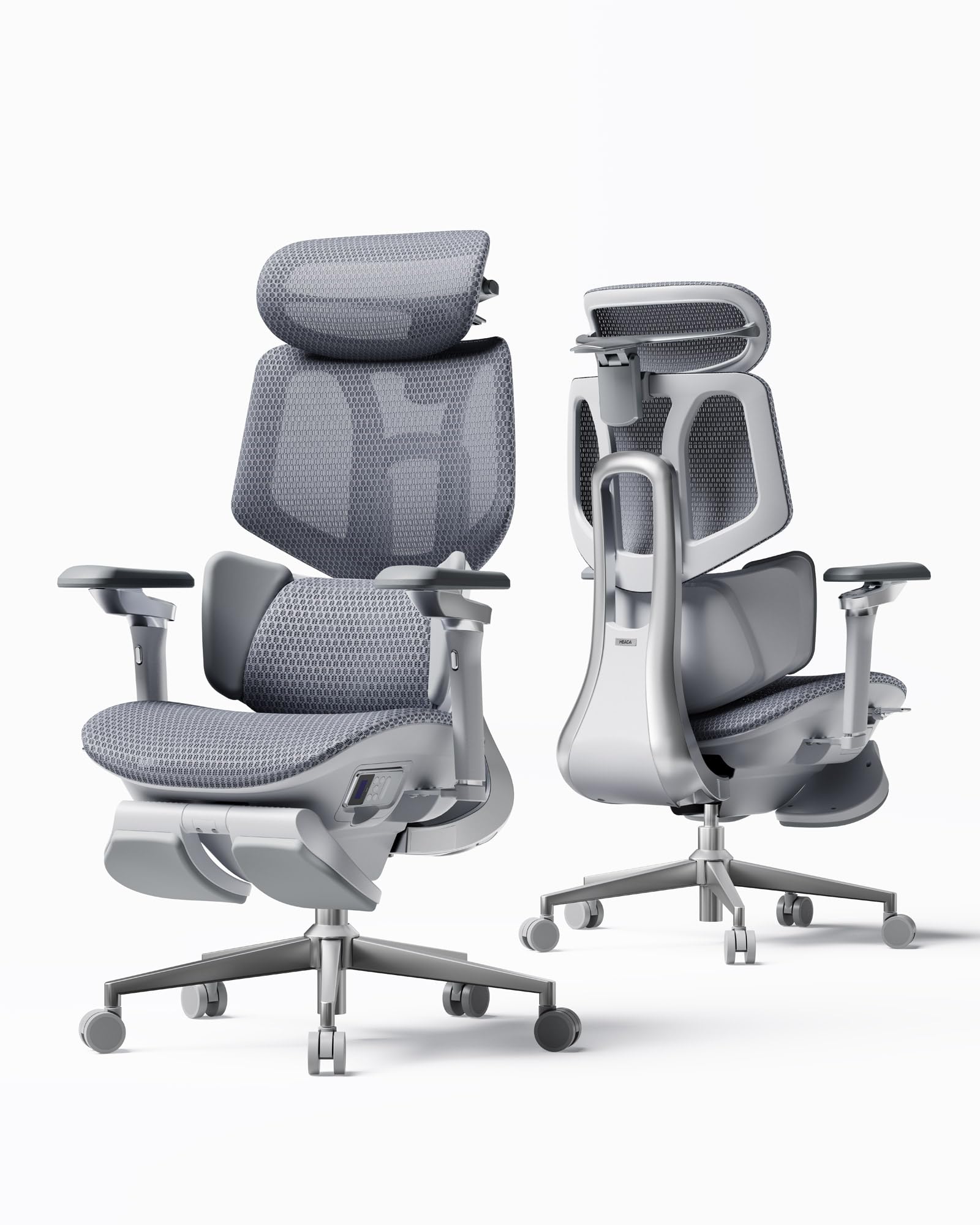
The Hbada X7 incorporates gravity-sensing auto-adjusting lumbar support that adapts the amount of pressure to your movement—a smart system that keeps the pelvis neutral without manual tuning. Its 720° adjustable armrests and 4D headrest allow near-limitless positioning to keep the upper body weight off the hip sockets.
The seat base integrates dual fans for active ventilation, which prevents the heat buildup that can aggravate inflamed hip bursae during long sits. Combined with the 140° recline and aircraft-grade aluminum frame, the X7 delivers a premium experience that feels rock-solid even at the maximum recline.
One caveat: users over 6 feet may find the stock gas cylinder limits optimal leg extension, though a replacement cylinder is a simple fix. The 8D massage rollers with 3-level heating add an extra layer of relief for surrounding hip muscles.
Why it’s great
- Auto-adjusting lumbar tracks pelvic position in real time
- Ventilated seat prevents heat-related hip discomfort
- 720° armrests offload upper body weight from hips
Good to know
- Stock cylinder may be too short for users 6 feet and taller
- Massage feature adds complexity to an already premium chair
3. AutoFull M6 Gaming Chair
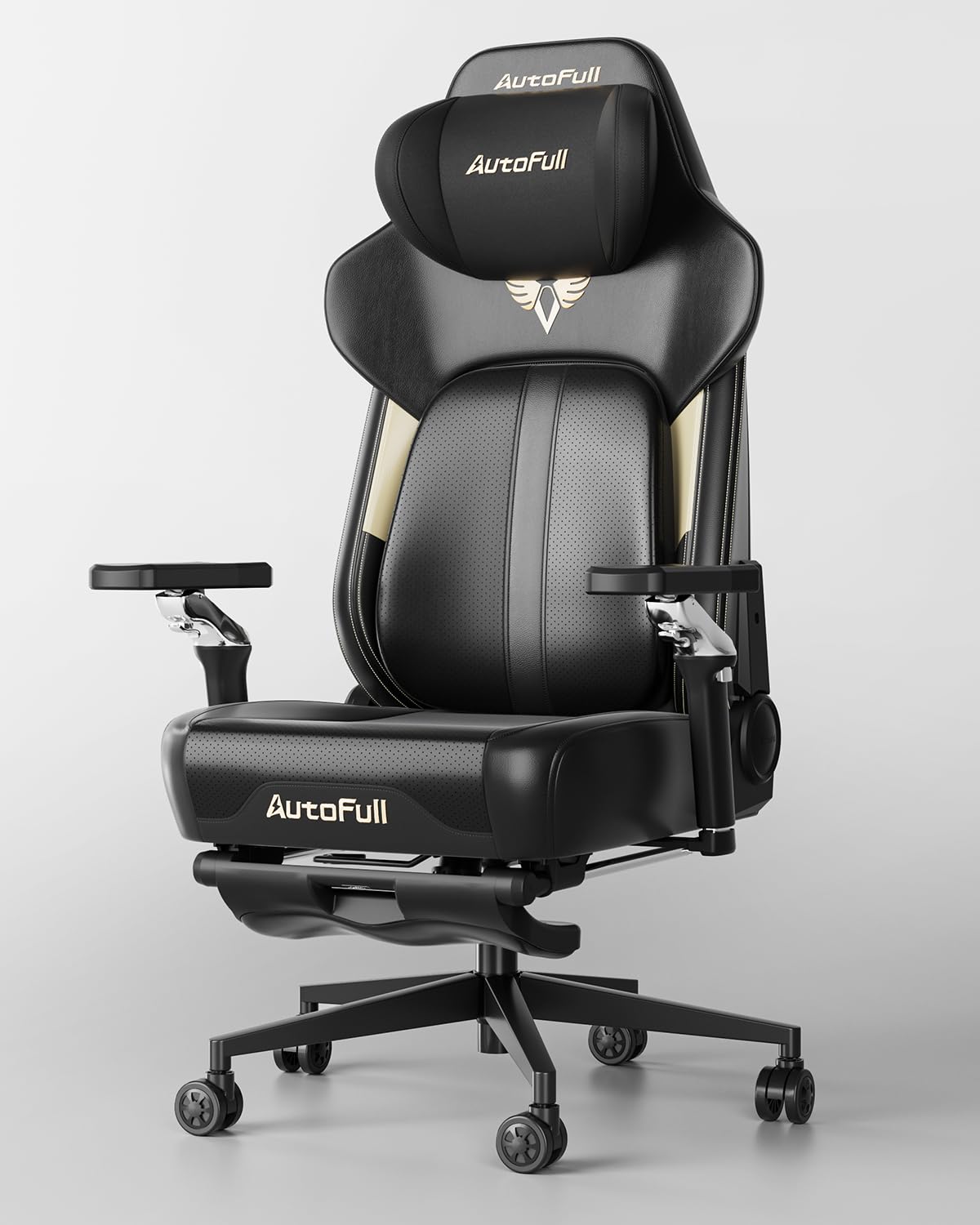
The AutoFull M6 stands apart with its active climate control—two fans cool the seat while integrated graphite heating warms it, directly addressing the temperature sensitivity that often accompanies hip bursitis. Its 3rd-generation active lumbar support moves 6 cm fore-aft and 5 cm vertically, with a 5° auto-swivel that follows your postural shifts.
The 360° mechanical armrests offer five adjustment dimensions, allowing you to float your arms and minimize downward force through the pelvis. Users report that the combination of lumbar massage and thigh vibration massage significantly reduces the stiffness that builds up around the hip joint after extended sessions.
Assembly instructions are dense and the black-on-black diagrams can be confusing—some users reported taking two days to put it together. But once assembled, the 75-pound chair feels monumentally sturdy, with no squeaking even during aggressive recline.
Why it’s great
- Active heating/cooling reduces hip bursa inflammation triggers
- Active lumbar swivel adapts to micro-movements
- Lumbar and thigh massage relieves surrounding muscle tension
Good to know
- Assembly instructions are poorly illustrated
- Racing-style bucket sides may feel restrictive for wide hips
4. WorkPro Quantum 9000

The WorkPro Quantum 9000 mimics the adjustability of chairs costing three times as much, with a ratcheting back height, seat depth adjustment, and a waterfall front edge that reduces pressure behind the knees—critical for keeping the pelvis from rotating posteriorly. The tension-adjustable tilt lock lets you recline without losing lumbar contact.
Its mesh seat and back promote airflow that keeps the hip region dry and cool, and the weight capacity of 275 pounds ensures the foam seat pan won’t bottom out. Long-term users report the chair holds up for 6+ years with only minor wear to the armrest pads, making it one of the most durable options at its price tier.
The front knee pad can feel stiff during the first few weeks, but users note it breaks in after about three weeks of daily use. The armrests pivot easily without a lock, which some users find frustrating when moving from keyboard to mouse.
Why it’s great
- Ratcheting back height suits different torso lengths
- Waterfall edge relieves hamstring and hip flexor tension
- Proven durability over 6+ years of daily use
Good to know
- Front knee pad needs a 3-week break-in period
- Armrests pivot freely with no lock position
5. FLEXISPOT ErgoX Premium
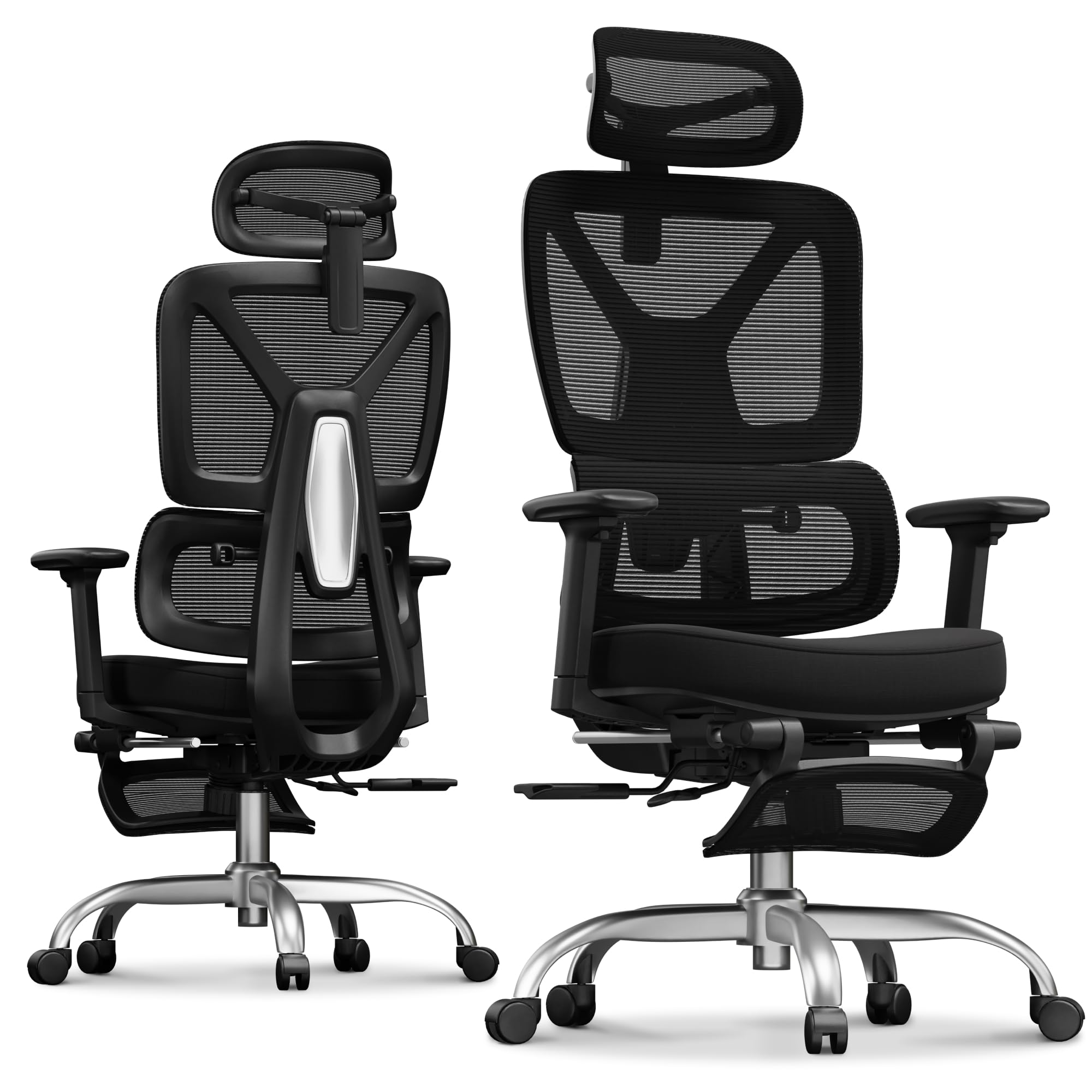
The FLEXISPOT ErgoX distinguishes itself with a seat depth range of 17 to 20 inches—one of the widest spans available—allowing users with shorter femurs or longer legs to find a depth that prevents sacral sitting. Its dynamic lumbar support changes shape as you recline, maintaining contact with the lower back and preventing the pelvis from tucking under.
The 3D adjustable armrests and 5-level back angle adjustment give you fine control over upper body weight distribution. The optional retractable footrest adds an extra way to shift hip angle throughout the day, which is especially beneficial for users with arthritis who need to vary joint positions.
The mesh seat option maximizes breathability, while the foam version offers more pressure distribution for heavier users. Assembly is straightforward, and the brand’s customer service is noted as proactive, following up to ensure fit satisfaction. The headrest may need frequent readjustment for optimal neck alignment.
Why it’s great
- Broad seat depth range fits diverse femur lengths
- Dynamic lumbar adapts to recline angle
- Retractable footrest relieves hip flexion during breaks
Good to know
- Headrest requires frequent positional tweaks
- Plastic build feels less premium than aluminum-framed chairs
6. TRALT Ergonomic Office Chair
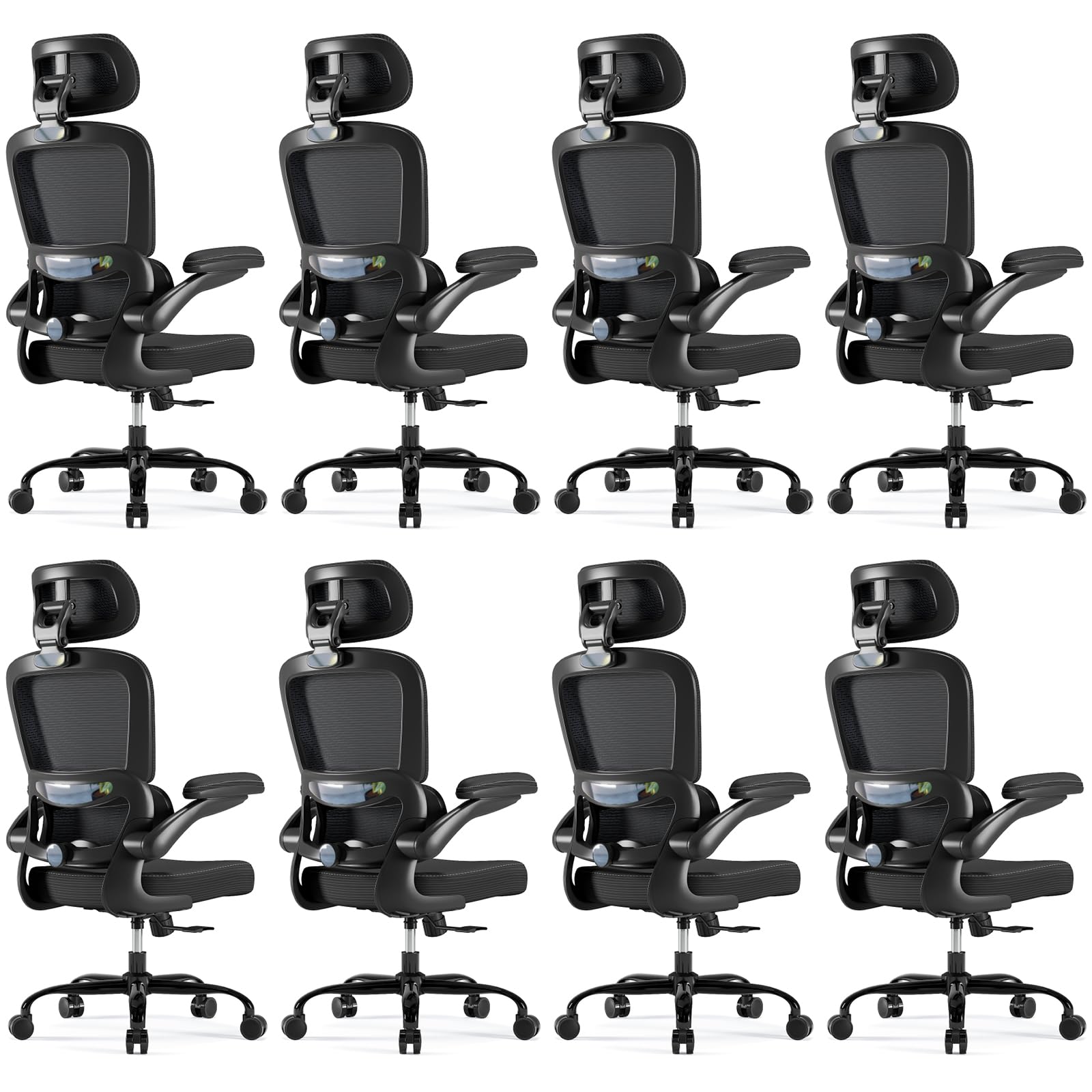
The TRALT chair offers a 20-inch wide seat and a weight capacity of 330 pounds, making it one of the most accommodating options for larger body types who often struggle to find chairs that properly distribute hip pressure. The 3.5-inch high-density sponge cushion resists sagging, preventing the ischial tuberosities from contacting the seat pan.
The adjustable lumbar support and headrest can be fine-tuned to match your spinal curve, while the flip-up armrests provide flexibility for sliding the chair under a desk or changing arm positions throughout the day. The mesh back accelerates airflow, reducing sweat buildup that can worsen skin sensitivity around the hip area.
Assembly is straightforward at 25-30 minutes, with clear instructions and an installation video available. The flip-up arms feel less stable for users who lean heavily on them, and some users chose to replace the stock casters for smoother rolling on thick carpet.
Why it’s great
- 20-inch wide seat accommodates larger hip spans
- 330 lbs capacity prevents cushion bottoming out
- High-density foam resists sagging over time
Good to know
- Flip-up armrests lack stability for heavy leaning
- Stock casters may not glide well on thick carpet
7. MOLENTS Ergonomic Mesh Chair

The MOLENTS chair provides 2-way adjustable lumbar support (up/down and forward/backward) that lets you dial in the exact pressure needed to maintain a neutral pelvis. The full mesh construction—both back and seat—maximizes air circulation, which helps prevent the heat and moisture that can aggravate sensitive hip tissues during long workdays.
The 3D armrests adjust in height, depth, and rotation, allowing you to support your arms without transferring excess weight to the hip joint. The seat depth of 18.9 inches works well for users between 5’4″ and 6 feet, though taller users may wish for deeper pan travel.
Assembly takes about 15 minutes with labeled parts, and customer service is notably proactive—several users reported follow-up emails from the manufacturer to confirm satisfaction. The armrest panels slide forward/backward and rotate, which some users find unstable if they prefer a fixed panel.
Why it’s great
- 2-way lumbar allows precise pelvic tilt control
- Full mesh seat prevents heat buildup around hips
- Quick 15-minute assembly with excellent customer follow-up
Good to know
- Armrest panels slide freely, which some find destabilizing
- Maximum seat depth may be insufficient for users over 6 feet
8. COLAMY Executive High Back Chair

The COLAMY chair prioritizes pressure distribution with a 6.7-inch thick high-density foam cushion and a waterfall seat edge designed to reduce thigh pressure and improve circulation—both critical factors for managing hip pain. The pop-out lumbar support engages with a button push, offering a pronounced curve that can help users with a flattened lumbar spine re-establish neutral pelvic alignment.
The flip-up armrests save space and allow the chair to slide completely under a desk, though they lack the depth and width adjustments of premium chairs. The upgraded casters roll silently on hard floors without scratching, and the selected leather upholstery is easy to clean and adds a professional aesthetic.
Assembly takes about 20 minutes, and the chair supports up to 300 pounds. Some taller users report that the seat height range is limited and the armrests feel too low for proper desk alignment, which can negate some of the hip relief benefits if your workstation isn’t adjusted accordingly.
Why it’s great
- Ultra-thick foam cushion prevents ischial bottoming
- Pop-out lumbar adds aggressive support for flat backs
- Waterfall edge improves thigh and hip circulation
Good to know
- Seat height range is limited for taller users
- Armrests may sit too low for proper elbow angle at standard desks
9. GABRYLLY Ergonomic Office Chair
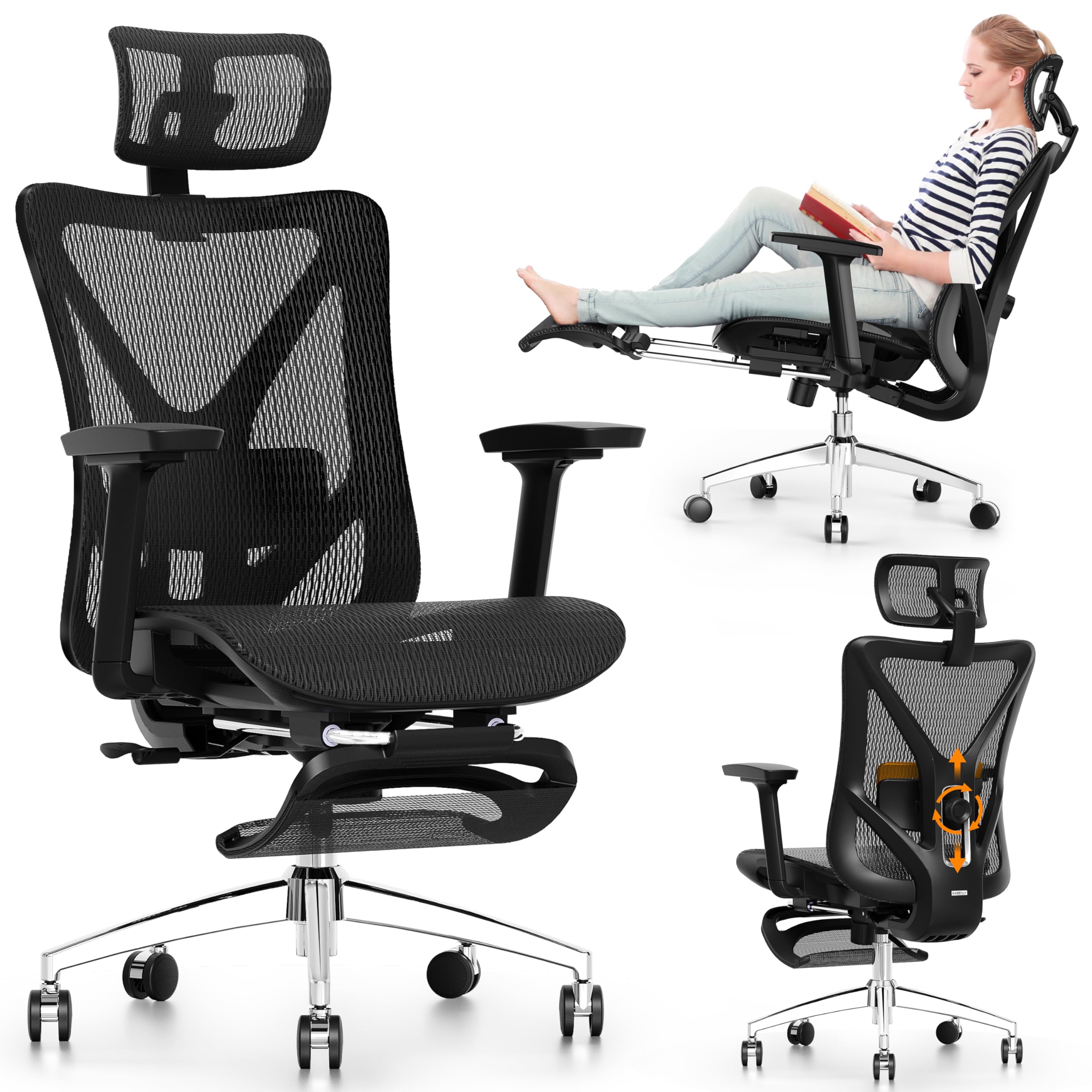
The GABRYLLY chair brings hip-friendly adjustability to a budget tier, featuring 2-way adjustable lumbar support (3 inches vertical, 1.6 inches horizontal) and a 135° recline that allows you to shift hip angles throughout the day. The retractable steel footrest extends to 18.1 inches, letting you elevate your legs and open the hip joint angle during breaks.
Its all-mesh design promotes airflow, while the 3D adjustable armrests and large mesh headrest provide positioning options that reduce upper body load on the hips. The heavy-duty steel base and 300-pound weight capacity ensure the chair remains stable even during full recline with the footrest deployed.
Assembly is straightforward at 15-25 minutes, and the chair comes with a 3-year warranty. The armrests shift under pressure and click loudly, which can be distracting, and some users find the mesh quality less premium than higher-end options, potentially causing discomfort for very long sessions.
Why it’s great
- Footrest and recline let you vary hip angle frequently
- 2-way lumbar support targets pelvic tilt at a low price point
- Steel base provides stability during full recline
Good to know
- Armrests shift under pressure and produce audible clicks
- Mesh quality is less durable for all-day professional use
FAQ
Will a cushioned seat pad solve my hip pain or do I need a whole new chair?
Should I choose mesh or foam seat for hip arthritis?
How much lumbar support is too much for hip pain?
Final Thoughts: The Verdict
For most users, the best chair for hip pain winner is the Steelcase Leap because its combination of adjustable lumbar firmness, seat depth range, and 4D arms directly addresses the pelvic alignment issues that trigger hip pain. If you want automated lumbar tracking that adapts to your every movement, grab the Hbada X7 Smart. And for an entry-level option with a footrest and deep recline to vary hip angles, nothing beats the GABRYLLY Ergonomic Chair.

Mo Maruf
I created WellFizz to bridge the gap between vague wellness advice and actionable solutions. My mission is simple: to decode the research and give you practical tools you can actually use.
Beyond the data, I am a passionate traveler. I believe that stepping away from the screen to explore new environments is essential for mental clarity and physical vitality.