Our readers keep the lights on and my smoothie glass nicely filled. As an Amazon Associate, I earn from qualifying purchases.
Sitting down should not feel like a medical event, yet for anyone living with coccyx pain, every single chair becomes a potential source of sharp, stabbing discomfort. The tailbone is notoriously sensitive to pressure points, and standard flat seat pans with hard foam or mesh are the exact geometry that aggravates it. Whether you are recovering from an injury, managing a chronic condition, or simply trying to get through a workday without shifting weight every ten seconds, the right seat is your single most effective intervention — and that seat is a specific design, not just any padded chair.
I’m Mohammad Maruf — the founder and writer behind WellFizz. I have spent countless hours analyzing seat geometry, foam density ratings, lumbar architecture, and real-user feedback to separate the few chairs that genuinely offload the coccyx from the many that look comfortable on paper but still transfer pressure straight to the bone.
This guide filters through the muddle of marketing claims to deliver the only best chair for coccyx pain picks that actually shift pressure away from your tailbone and let you sit in peace.
How To Choose The Best Chair For Coccyx Pain
Not every ergonomic chair is built to handle tailbone sensitivity. Most chairs are designed to cradle the lower back, but the seat pan itself is often a flat slab of foam or mesh that presses directly into the coccyx. You need a chair with specific geometry and material choices that actively offload the tailbone.
Coccyx Cutout: The Non-Negotiable Feature
A contoured seat with a center channel, cutout, or relief slot is the defining feature of a coccyx-friendly chair. This gap removes any material from directly under the tailbone so the bone hangs free instead of being compressed. Some chairs use a “waterfall” front edge combined with a deep rear cutout — verify the actual depth of the gap in side-profile images before buying.
Seat Foam Density and Thickness
Coccyx pain demands foam that is soft enough to allow your sit bones to sink in slightly, but dense enough to prevent you from hitting the hard plywood base. Look for high-density foam — measured in PCF (pounds per cubic foot) or simply described as “high-resilience” — and a minimum thickness of 3.5 inches. Thinner foam “bottoms out” quickly, transferring weight straight to the tailbone.
Reclining Mechanism and Seat Angle
When you recline, a portion of your upper body weight transfers from the seat to the backrest, directly reducing pressure on the coccyx. A chair with a lockable recline between 120 and 135 degrees and adjustable tilt tension lets you fine-tune how much weight rests on your seat. Chairs with a fixed upright posture apply maximum pressure to the tailbone.
Quick Comparison
On smaller screens, swipe sideways to see the full table.
| Model | Category | Best For | Key Spec | Amazon |
|---|---|---|---|---|
| GABRYLLY Ergonomic Office Chair | Mesh Premium | All-day work plus coccyx relief | 20″W x 20.5″D seat, 5″ thick foam | Amazon |
| BESTFAIR Executive Leather Chair | Leather Mid-Range | Targeted lumbar support with tilt | 3D dynamic lumbar, 120° recline | Amazon |
| Varier ThatSit Balans | Kneeling Ergonomic | Chronic tailbone and hip pain | Adjustable kneeling pad, backrest | Amazon |
| TRALT Ergonomic Office Chair | Leather Value | Wider seat for weight distribution | 20″W x 17.3″D seat, 330 lbs | Amazon |
| EMIAH Office Chair with Foot Rest | Recliner Budget | Napping between work sessions | 155° recline, retractable footrest | Amazon |
| Sytas Executive Leather Desk Chair | Leather Heavy-Duty | Big and tall users needing support | 400 lbs capacity, 135° tilt | Amazon |
| Sleekform Ergonomic Kneeling Chair | Kneeling Stool | Active sitting and posture fix | Adjustable seat angle/height, wheels | Amazon |
In‑Depth Reviews
1. GABRYLLY Ergonomic Office Chair

The GABRYLLY chair stands out for coccyx relief because its seat cushion is a full 5 inches thick with a 20-inch width and 20.5-inch depth, allowing the sit bones to sink into high-density foam without hitting a hard base. The generous proportions also mean you can sit with your legs slightly wider, reducing pressure on the tailbone naturally. The 2-mode adjustable lumbar support lets you shift weight away from the coccyx by fine-tuning back support height and depth.
The mesh back is highly breathable and keeps you cool during long sits, and the 135-degree lockable recline with three preset angles lets you transfer upper-body weight to the backrest instantly. Users report that the chair accommodates body types up to 400 pounds without sagging or squeaking, and the 5D adjustable armrests flip up to create more seat space for variable sitting positions.
Assembly takes about 20 minutes with the included Allen wrench, and GABRYLLY backs it with a 3-year warranty. The only trade-off is that the mesh, while cool, does not provide the same plush initial feel as a padded leather seat — but the support under the coccyx is superior because the foam is thick enough to prevent bottoming out.
Why it’s great
- 5-inch thick foam prevents tailbone contact with seat base
- 135-degree recline shifts weight off coccyx instantly
- Wide 20.5-inch seat depth reduces thigh pressure
Good to know
- Mesh seat is firmer than plush leather initially
- 5D armrests can shift unintentionally during use
2. BESTFAIR Executive Leather Chair
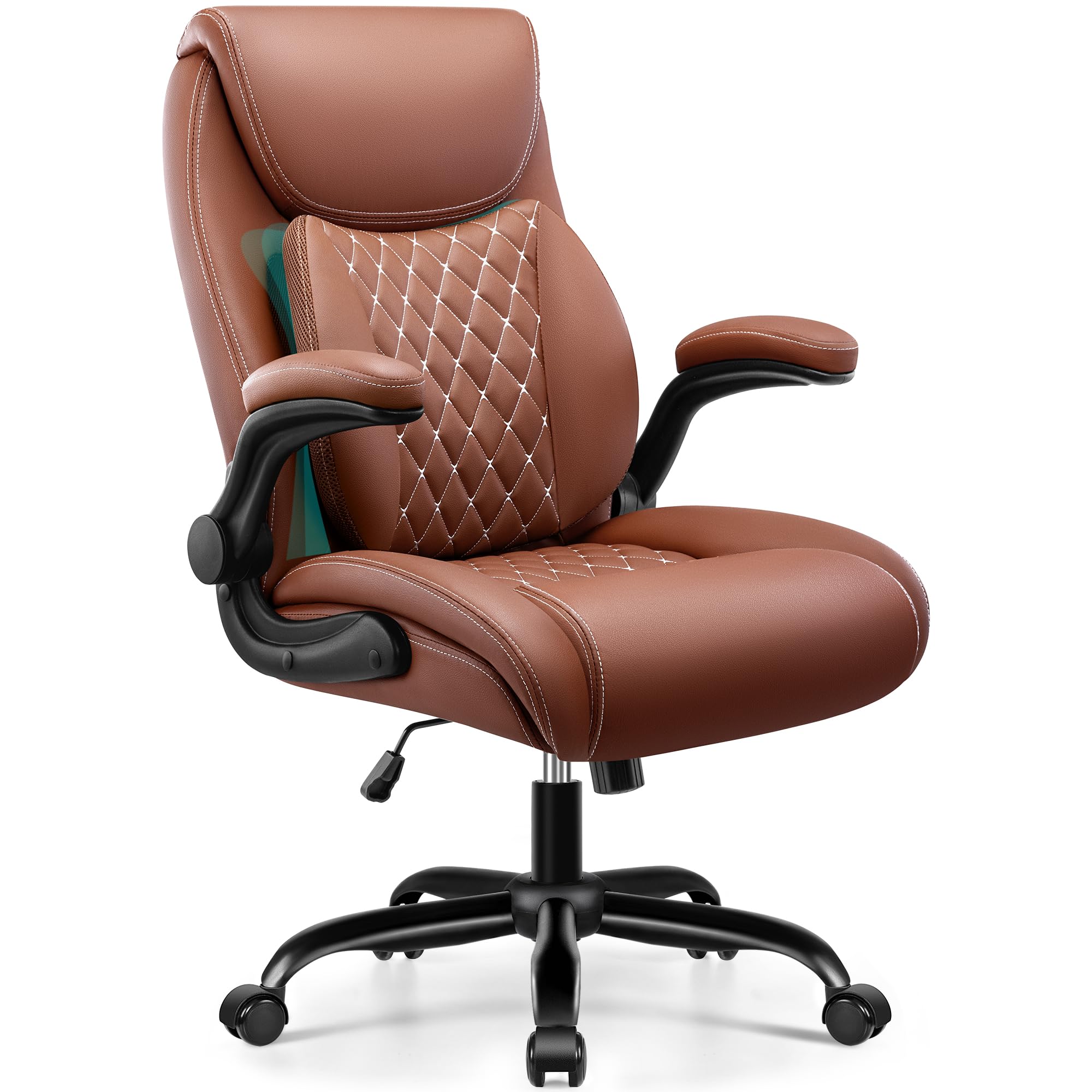
The BESTFAIR chair uses a 3D dynamic dual-layer lumbar support system that actively conforms to your lower back curve, which is critical for coccyx pain because a well-supported lumbar spine naturally tilts the pelvis forward and lifts pressure off the tailbone. The seat cushion is thick and uses high-quality foam that users describe as “cushiony” without being too soft — exactly the balance needed to prevent the coccyx from striking the base.
The chair features a responsive 120-degree rocking function with adjustable tension, so you can lean back and let the backrest carry more of your weight. The brown PU leather finish is stain-resistant and easy to clean, and the flip-up armrests allow you to sit cross-legged or in alternative positions that further offload the tailbone. The weight capacity is rated at 350 pounds, and the metal base feels extremely sturdy.
A few users noted that the recline tension is very stiff out of the box and that the headrest is too low for people taller than 5-foot-10. Still, for coccyx relief, the lumbar-first design and the ability to recline and lock make this a strong mid-range contender that delivers genuine pressure redistribution.
Why it’s great
- 3D lumbar support tilts pelvis forward, lifting coccyx
- Thick foam seat prevents bottoming out
- Lifetime warranty on parts
Good to know
- Headrest is low for taller users
- Recline tension is very stiff initially
3. Varier ThatSit Balans Adjustable Kneeling Chair
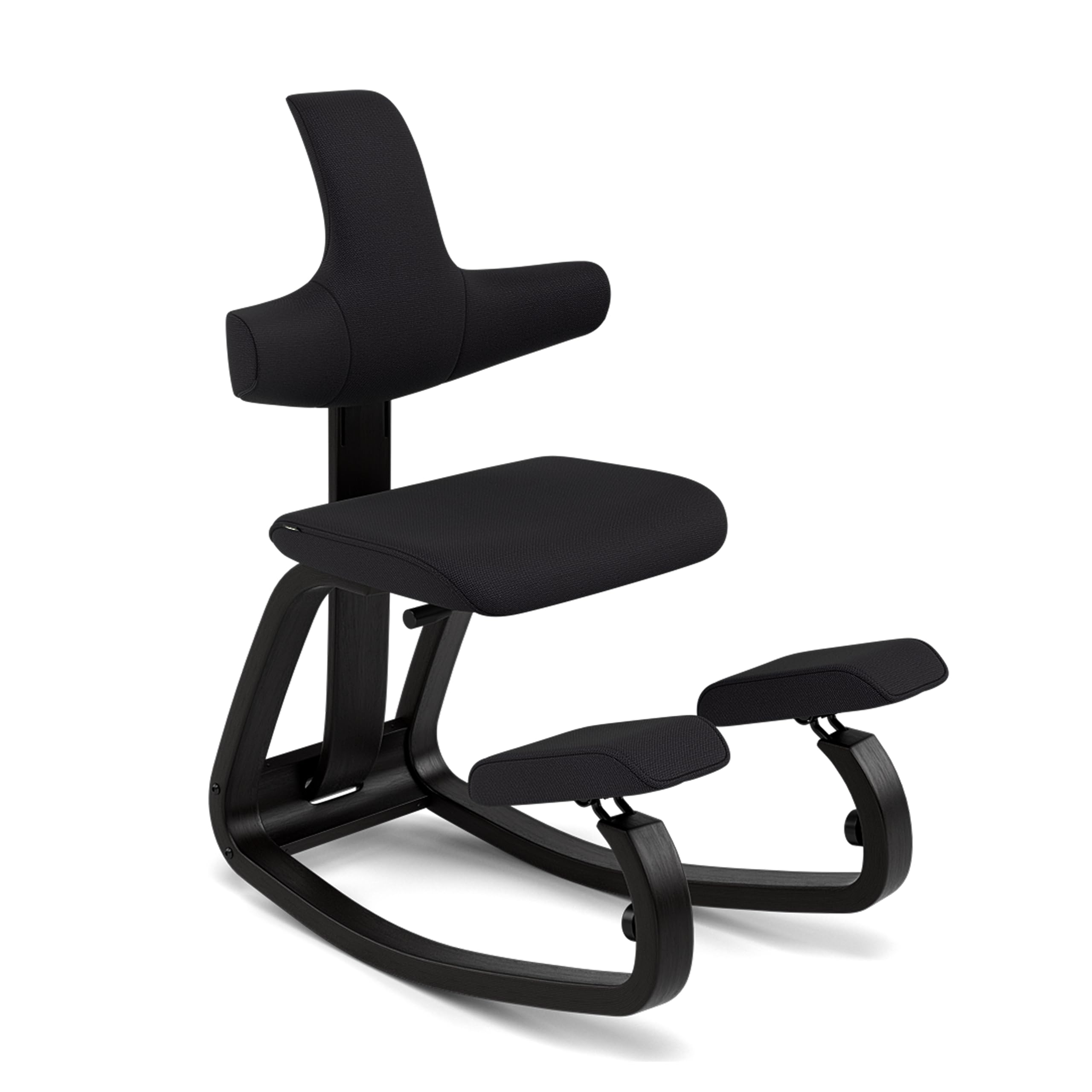
The Varier ThatSit Balans fundamentally changes the sitting geometry: instead of a 90-degree hip angle that compresses the tailbone, this kneeling chair opens the hip angle to roughly 135 degrees, transferring your body weight from the ischial tuberosities (sit bones) to the shins and knees. The curved plywood runners allow gentle rocking, which keeps the spine in motion and prevents the static pressure that aggravates coccyx pain. The backrest provides support for the lower back without pushing the pelvis into a posterior tilt.
Designed by Peter Opsvik, this chair has been on the market for decades and is backed by a 10-year limited warranty. The cushions are firm but supportive, and the lacquered ash plywood frame is lightweight enough to move between rooms. Users with chronic lower back and hip pain consistently report that this chair eliminates tailbone discomfort entirely because the coccyx never touches a surface.
The main barrier is the price point, which is considerably higher than any other chair in this guide. Assembly is also more difficult than expected, with reviewers noting that the hardware can be finicky. But for anyone whose coccyx pain has not responded to conventional cushioned chairs, this design approach is the most biomechanically sound alternative available.
Why it’s great
- Opens hip angle, zero pressure on tailbone
- Curved runners encourage gentle movement
- 10-year limited warranty
Good to know
- Very expensive compared to standard chairs
- Assembly instructions could be clearer
4. TRALT Ergonomic Office Chair

The TRALT chair uses a 3.5-inch high-density sponge cushion that reviewers consistently describe as “soft but firm” — exactly the right density for coccyx relief because it allows the sit bones to sink slightly without the tailbone hitting a hard pan. The seat is 20 inches wide and 17.3 inches deep, providing enough surface area to shift weight from side to side, which naturally reduces prolonged pressure on any single point. The leather cover is skin-friendly and easy to clean, which matters if you spend long hours in the chair.
The adjustable lumbar support and headrest help you dial in a position that tilts your pelvis forward, and the flip-up armrests give you the option to sit cross-legged or with your arms wide — both positions that offload the coccyx. The chair supports up to 330 pounds, and the metal base feels solid. Assembly takes roughly 20 minutes, and the instructions are clear.
The main limitation is that the seat does not have a dedicated coccyx cutout — the relief comes purely from the wide surface and dense foam. Users who need a deep center channel for severe tailbone pain may find that this chair works better with an additional coccyx cushion. Still, for the price and the quality of foam, it is a strong entry-level option.
Why it’s great
- 3.5-inch foam prevents tailbone from hitting base
- 20-inch wide seat allows weight shifting
- Quick 20-minute assembly
Good to know
- No dedicated coccyx cutout in the seat
- Flip-up armrests feel slightly unstable under heavy leaning
5. EMIAH Office Chair with Foot Rest
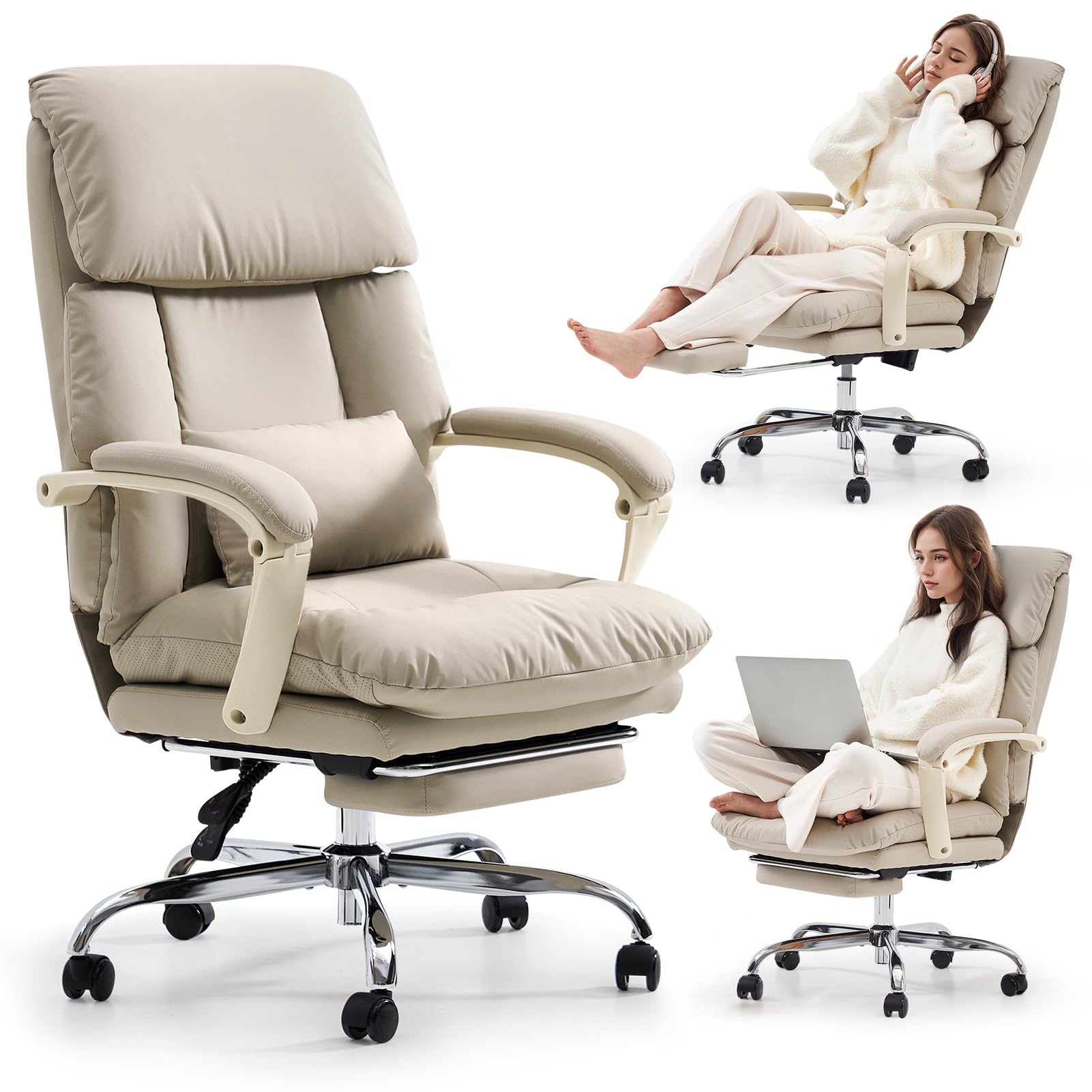
The EMIAH chair attacks coccyx pain through aggressive recline capability — it tilts back to 155 degrees, which is far more than most office chairs. When fully reclined, almost all upper body weight is transferred to the backrest, leaving the coccyx with near-zero load. The retractable footrest extends the leg support, so you can lie nearly flat without your legs dangling, which further reduces pelvic pressure. The PU leather upholstery is soft, stain-resistant, and easy to clean.
The chair includes a lumbar support pillow, and the seat cushion uses cotton and sponge fill that users describe as comfortable for extended sitting. The SGS-certified gas lift and BIFMA-certified base support up to 300 pounds, and the mute nylon casters roll smoothly on hard floors. Assembly takes under an hour, and EMIAH provides a one-year after-sales support guarantee.
The seat itself does not have a coccyx cutout, so the relief is almost entirely dependent on using the recline function. Also, several users mention that the footrest feels awkward — it does not bend to let your feet angle down naturally. If you are willing to recline frequently throughout the day, this chair can be very effective, but if you need to sit upright most of the time, the coccyx support is limited.
Why it’s great
- 155-degree recline removes weight from coccyx
- Retractable footrest for full-leg support
- Soft PU leather and easy assembly
Good to know
- No coccyx cutout in upright position
- Footrest does not adjust for foot angle
6. Sytas Executive Leather Desk Chair
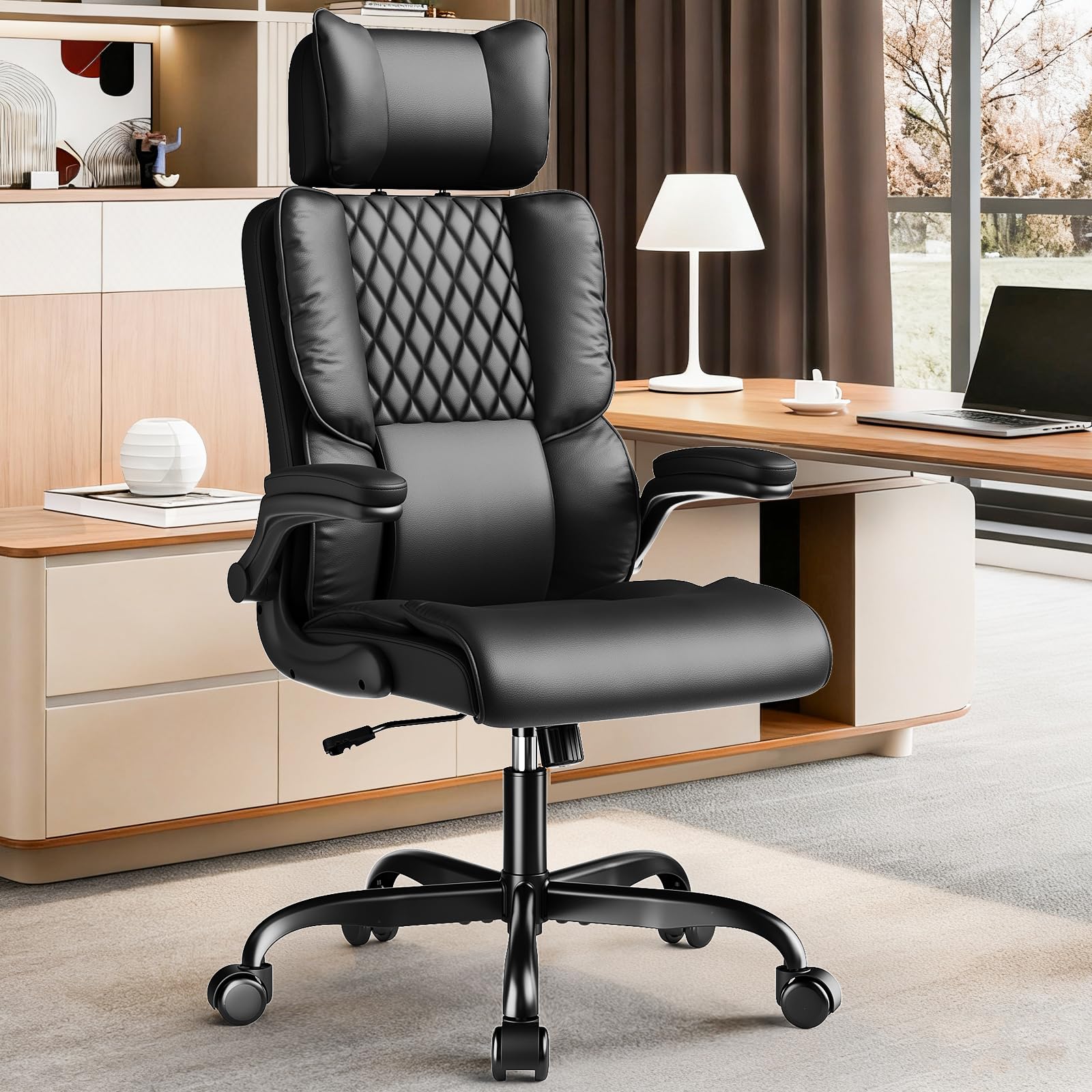
The Sytas chair is engineered for heavier body types, supporting up to 400 pounds on a metal frame, which means the seat pan is built to resist sagging and maintain its shape under significant load. The dual-layer high-resilience PP cotton and memory foam cushion is thick enough to prevent the coccyx from contacting the plywood base, and the upgraded thickened lumbar cushion actively supports the lower back to tilt the pelvis forward. The 135-degree tilt rocking function with 3-level adjustable headrest lets you find a comfortable reclined position.
The breathable PU leather is designed to resist wear and pet scratches, and the flip-up 90-degree armrests allow you to slide the chair under your desk or sit in alternative postures. The rubber casters are silent and do not mark floors. Assembly is advertised at 20 minutes with tool-free instructions, and the brand provides responsive customer service for replacement parts.
Some users report that the back support is too firm and uncomfortable except at the lowest setting — the same stiffness that supports larger users can feel punishing for smaller frames. The seat does not have a coccyx cutout, so the relief is indirect. This chair works best for users who need heavy-duty construction and can pair it with a separate coccyx cushion for targeted relief.
Why it’s great
- 400-pound capacity ensures foam stays thick under load
- Thickened lumbar support tilts pelvis forward
- Tool-free assembly in under 20 minutes
Good to know
- Back support is very firm, may require break-in
- No coccyx cutout in seat pan
7. Sleekform Ergonomic Kneeling Chair
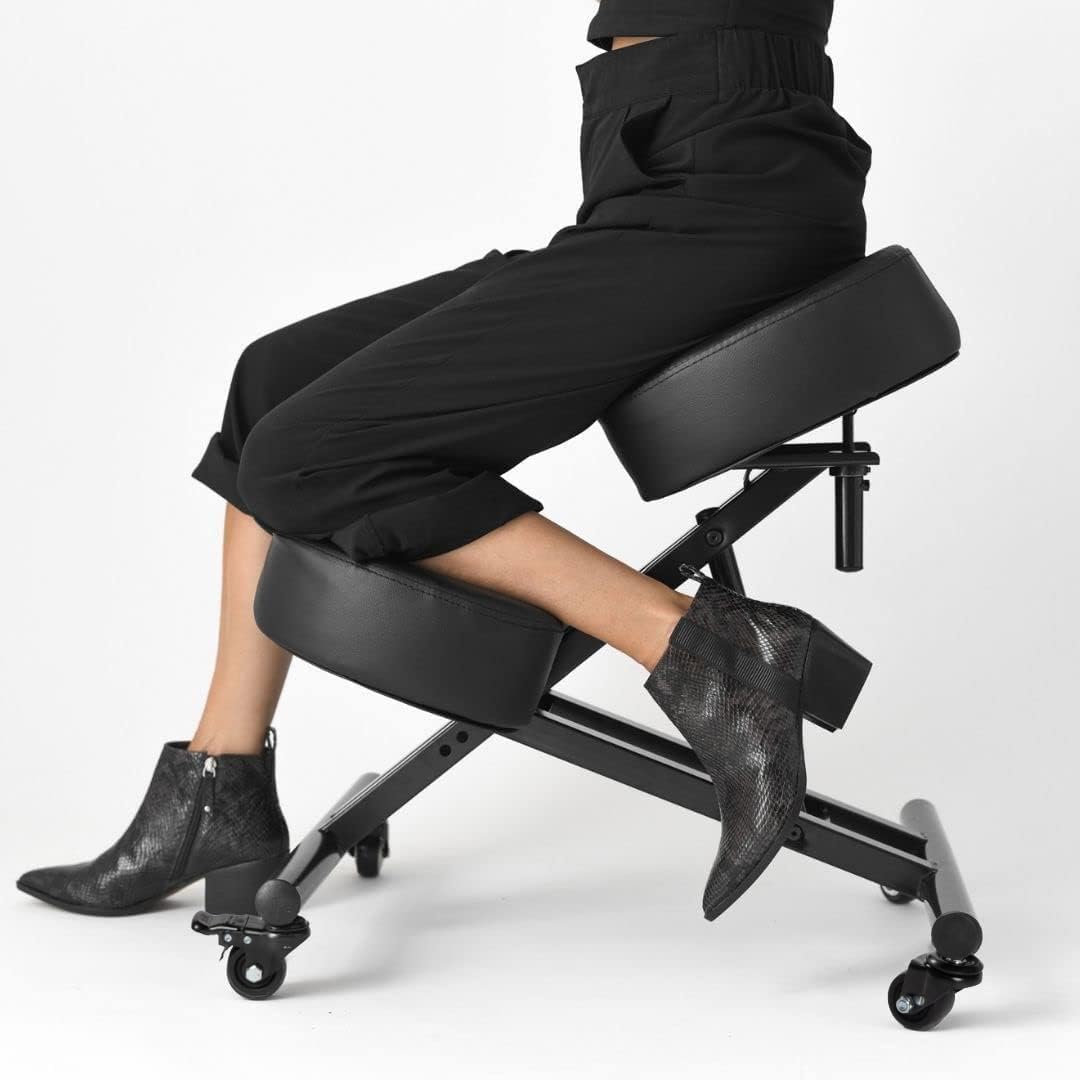
The Sleekform kneeling chair follows the same biomechanical principle as the Varier but at a significantly lower price point. By opening the hip angle and transferring weight to the shins, it removes direct pressure from the coccyx entirely — your tailbone simply does not touch anything. The seat angle and height are both adjustable, allowing you to fine-tune the angle of your pelvis. The 100% recycled foam cushions are thick and plush, designed to keep the shins comfortable during extended sessions.
The chair rolls on smooth wheels that protect hardwood floors, and the alloy steel frame feels sturdy. Users report that it encourages upright posture naturally and reduces lower back stress. It is also lightweight and easy to move between rooms.
The main complaints are that the knee pad can feel too thin for some users and that assembly can be tricky — some bolts are difficult to thread, and the seat screw may not sit flush. Additionally, a few users experienced squeaking wheels due to misaligned pre-threaded holes. For coccyx pain, this design is biomechanically effective, but the build quality and comfort of the knee pad may not suit everyone for full-time use.
Why it’s great
- Zero tailbone pressure through open hip angle
- Adjustable seat angle and height for pelvic tilt
- Smooth-rolling wheels protect floors
Good to know
- Knee pad may be too thin for some users
- Assembly can have fitment issues
FAQ
Is a coccyx cutout the same as a lumbar support channel?
Can a kneeling chair help coccyx pain if I have knee problems?
Should I add a separate coccyx cushion to an already good chair?
Final Thoughts: The Verdict
For most users, the chair for coccyx pain winner is the GABRYLLY Ergonomic Office Chair because its 5-inch thick high-density foam seat and 135-degree recline provide the most reliable coccyx offloading for all-day use without breaking the bank. If you want targeted lumbar support that tilts the pelvis forward and lifts the tailbone, grab the BESTFAIR Executive Leather Chair. And for chronic tailbone pain that has not responded to conventional seating, nothing beats the Varier ThatSit Balans — its open-hip-angle design eliminates coccyx contact entirely.

Mo Maruf
I created WellFizz to bridge the gap between vague wellness advice and actionable solutions. My mission is simple: to decode the research and give you practical tools you can actually use.
Beyond the data, I am a passionate traveler. I believe that stepping away from the screen to explore new environments is essential for mental clarity and physical vitality.