Our readers keep the lights on and my smoothie glass nicely filled. As an Amazon Associate, I earn from qualifying purchases.
For the millions of professionals locked into eight-hour desk shifts, chronic lower back pain isn’t just an inconvenience — it’s a productivity saboteur that deepens with every passing week. The right ergonomic chair changes that trajectory by actively supporting the spine’s natural S-curve rather than forcing it into a flat, strained position. This guide cuts through the marketing foam to identify which chairs actually deliver measurable relief for your lumbar, thoracic, and cervical zones during extended sitting sessions.
I’m Mohammad Maruf — the founder and writer behind WellFizz. After analyzing hundreds of ergonomic specifications, customer stress tests, and real-world durability reports, this guide focuses on the mechanical details that separate a genuine back-pain solution from an overpriced perch. Every recommendation here is grounded in specific adjustability ranges and material science, not vague promises.
If you’ve been searching for a solution that stops the ache without breaking your workflow, this deep dive into the chair for back pain office market will arm you with the exact specs and construction details that matter most.
How To Choose The Best Chair For Back Pain Office
Selecting a chair for back-pain relief is a mechanical decision, not an aesthetic one. Three structural elements determine whether a chair helps or hurts your spine: the adjustability range of the lumbar support, the seat depth mechanism, and the recline system’s ability to distribute pressure. Ignore marketing terms like “ergonomic design” and verify concrete numbers for each of these specs.
Lumbar Support Travel and Depth
The most critical factor is a lumbar support that moves both vertically and horizontally. Vertical adjustment (at least 2 inches of travel) lets you align the pad with your belt line, while horizontal depth adjustment (0.5 to 1 inch) fills the gap between your lower back and the chair back. Without depth variability, the support is either too shallow (no actual contact) or too aggressive, pushing your pelvis into anterior tilt.
Seat Depth and Cushion Density
A seat pan that slides forward and backward by at least 2 inches ensures your knees stay at a 90-degree angle without the front edge cutting into your thighs. For cushioning, look for high-density foam rated at 50 PCF or above — these resist bottoming out after six months. Full-mesh seats avoid pressure-point issues entirely but require a firm enough tension to prevent hammock-like sagging.
Armrest and Recline Synchronization
Fixed armrests force your shoulders into elevation, creating upper-back tension that compounds lower back pain. Choose 3D or 4D armrests that adjust height, width, and angle. For recline, a synchronized tilt mechanism that keeps the seat pan and backrest moving together prevents shirt ride-up and maintains lumbar contact throughout the recline range.
Quick Comparison
On smaller screens, swipe sideways to see the full table.
| Model | Category | Best For | Key Spec | Amazon |
|---|---|---|---|---|
| Staples Dexley | Mid-Range | Budget-friendly mesh ergonomics | Full-mesh back and seat, 3D armrests | Amazon |
| HESL Massage Chair | Mid-Range | Heat and vibration muscle relief | 6-point vibration with 5 modes, 120°F heat | Amazon |
| CLOUVOU SmartSeat | Mid-Range | Ultra-quiet glide in shared spaces | Blade wheels, 135° recline, 330 lb capacity | Amazon |
| ProtoArc EC200 | Mid-Range | Adjustable seat depth for leg support | 5-position seat slide, 55D foam, 3D headrest | Amazon |
| ELABEST Mesh Chair | Mid-Range | Shoulder and upper back reinforcement | Bionic-curve back, 3D armrests, BIFMA 5.1 | Amazon |
| MOLENTS Mesh Chair | Premium | Tailored lumbar depth with responsive support | 2D lumbar adjustment, 3D armrests, full mesh | Amazon |
| HOMRELEXA Big and Tall | Premium | Cross-legged sitting and pet-friendly design | Flip armrests expand seat to 38.6″, 400 lb cap | Amazon |
| WorkPro Quantum 9000 | Premium | Professional-grade all-day mesh seating | Ratchet back height, seat depth, 275 lb tested | Amazon |
| Hbada X7 Smart | Premium | Motorized auto-tracking lumbar and cooling fan | Auto lumbar tracking, 8D massage, dual fan seat | Amazon |
In‑Depth Reviews
1. ProtoArc EC200 Ergonomic Office Chair
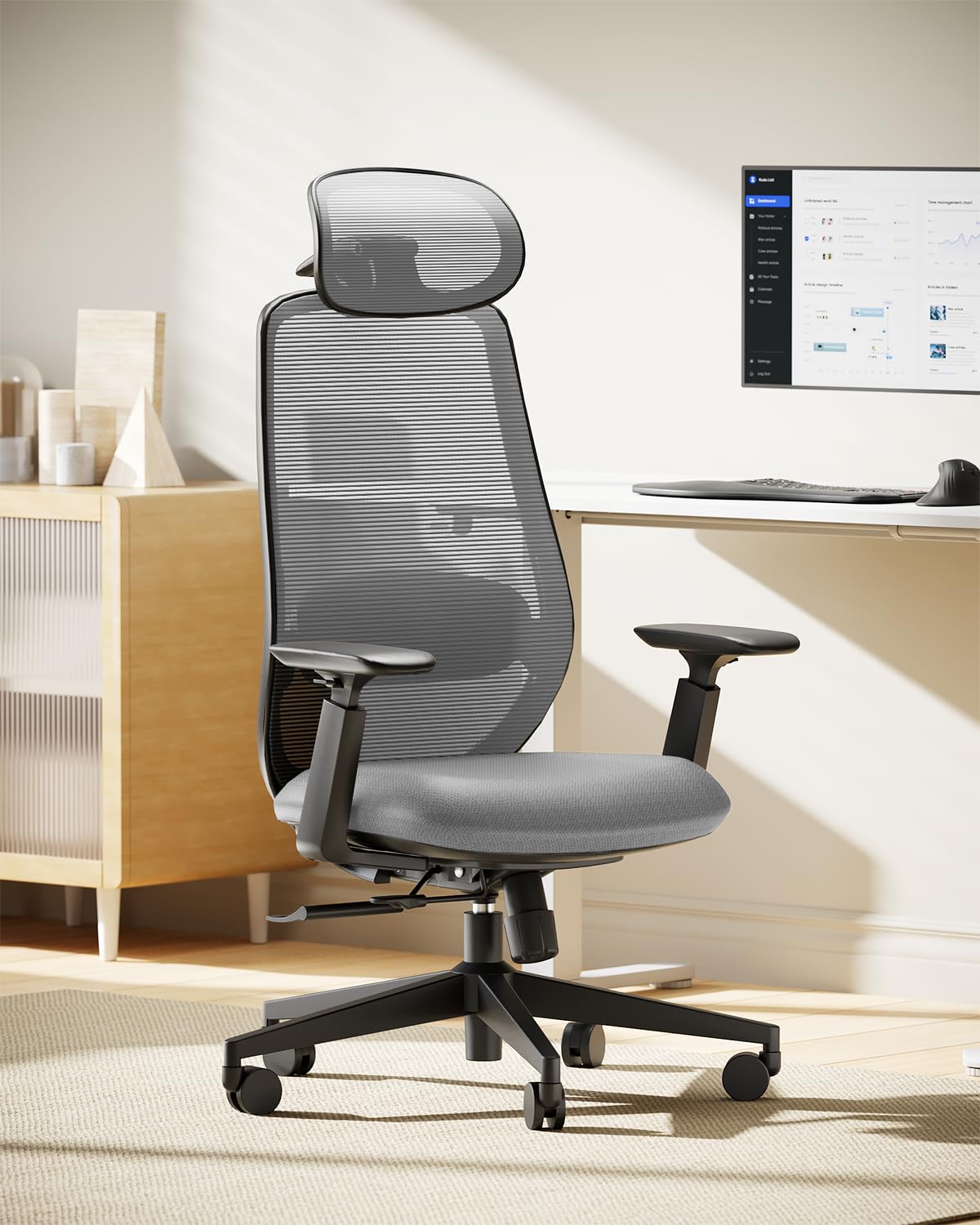
The ProtoArc EC200 earns the top spot because it addresses the three core back-pain mechanics — lumbar depth, seat depth, and headrest articulation — with rare precision in this price tier. The lumbar support moves 2.36 inches vertically and 0.8 inches depthward, giving you enough range to fill the natural lordotic curve without creating a pressure point. The 5-position sliding seat pan extends 1.97 inches, allowing short and tall users alike to sit with a full thigh supported, which directly reduces sciatic tension during marathon coding or remote-work sessions.
Mesh construction across the back and seat keeps airflow active, but the seat cushion uses 55D high-density foam that resists the sagging common in cheaper mesh chairs after six months of daily use. The 3D headrest offers 3.94 inches of vertical range plus in-and-out and pivot adjustments, cradling the cervical spine without pushing the head forward into text-neck posture. Build quality is backed by TÜV-tested Class 4 gas lift and BIFMA X5.1 certification, ensuring the mechanism stays reliable under 8-plus-hour daily loads.
Assembly takes roughly 20 minutes with sequentially labeled hardware bags, and the chair accommodates users from 5’4” to 6’0” comfortably. The 4-level recline (90° to 130°) includes tilt tension adjustment, letting you dial in resistance without feeling unstable during micro-movements. For the price, this is the most complete ergonomic package for lower, mid, and upper back pain sufferers.
Why it’s great
- Adjustable seat depth prevents thigh pressure and sciatic pain
- Dual-axis lumbar moves vertically and horizontally for custom fit
- 55D high-density foam resists collapse longer than standard cushions
Good to know
- Optimal fit range is 5’4″ to 6’0″, shorter users may need a footrest
- Armrests are 2D (height and width) rather than full 3D
2. WorkPro Quantum 9000 Series Mesh Chair

The WorkPro Quantum 9000 is a no-nonsense commercial-grade chair designed for 8 to 10 hours of daily professional use, with a ratcheting back height system that lets you lock the lumbar support at the exact vertical point that matches your spine. Unlike screw-based adjustments that can slip over time, the ratchet mechanism provides positive engagement at every step, ensuring the lumbar pad stays stable through thousands of recline cycles. The seat depth also slides forward and backward, accommodating femur lengths from short to above-average without the edge digging into the backs of your knees.
Mesh fabric covers both the back and seat, promoting continuous airflow, while the waterfall seat front reduces pressure behind the knees — a common contributor to leg numbness during long sits. The tilt mechanism locks in multiple positions and includes adjustable tension, allowing you to recline without the chair suddenly snapping back. The five-star base is wide and stable, rolling smoothly on hardwood with no wobble, even during active shifting. The frame uses a mix of metal and high-quality plastic that has held up for years in real-world office environments.
One unique design feature is the integrated seat-and-back tilt, where the seat pan moves in sync with the backrest rather than pivoting independently. This prevents your shirt from riding up and maintains continuous lumbar contact throughout the recline arc. The armrests adjust in multiple dimensions but do not lock firmly, which may allow slight movement during typing. For a chair that hits all the key mechanical adjustments at a mid-premium price, the Quantum 9000 is a longstanding reference point in the ergonomic seating world.
Why it’s great
- Ratchet-style back height adjustment won’t slip over long-term use
- Synchronized tilt keeps lumbar support engaged through recline
- Commercial-grade construction tested at 275 pounds daily
Good to know
- Armrests adjust but lack a locking mechanism, can shift unintentionally
- Front seat edge may feel stiff during the first few weeks of use
3. CLOUVOU SmartSeat Ergonomic Chair
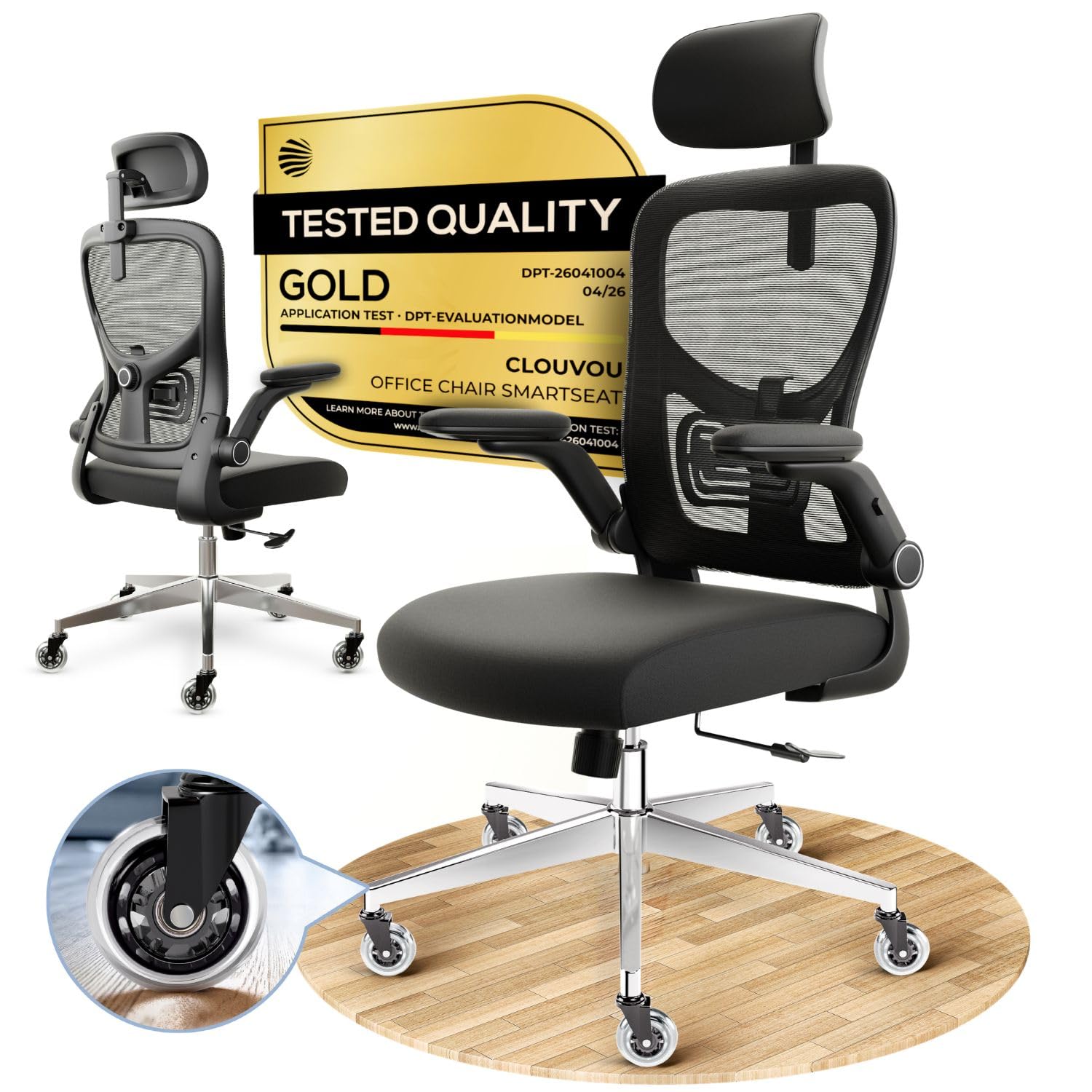
The SmartSeat from CLOUVOU differentiates itself through its ultra-quiet Blade Wheels, which roll with near-silent precision across both carpet and hard flooring — a specific advantage for shared workspaces or home offices where noise carries. The chair uses premium breathable nylon mesh across the backrest with an elastic tension that responds to movement without sagging, and the 3D PU leather headrest provides a softer surface for cervical support than full mesh alternatives. With support up to 330 pounds and a 135-degree recline range, it accommodates a wide variety of body types while maintaining stability.
The 3-position backrest tilt lets you lock into work mode at 90 degrees, lean back for calls, or relax further, though the recline resistance is not adjustable. The 2D flip-up armrests can be folded out of the way when you need to slide the chair under a desk or prefer arm-free typing. The seat cushion uses shaped foam with a medium-firm feel that suits all-day use without bottoming out, though heavier users may notice the foam compressing more noticeably after consecutive eight-hour days.
Assembly is straightforward with labeled parts, and the chair strikes a clean modern aesthetic that blends into both home and office environments. Customer feedback consistently praises the quiet rolling mechanism and the absence of squeaks or creaks in the frame. The main trade-off is that the armrest adjustment is limited to height and flip-up only, lacking the width and angle tweaks found on more expensive chairs. For someone who prioritizes silence and a balanced feel over maximum adjustability, the SmartSeat delivers reliable back support without the racket.
Why it’s great
- Blade wheels are exceptionally quiet and smooth on all floor types
- Breathable nylon elastic mesh prevents heat build-up during long sits
- Flip-up armrests free up desk space and allow easy storage
Good to know
- Armrest height adjustment only, no width or angle customization
- Recline tension is fixed and may feel loose or tight depending on user weight
4. ELABEST Ergonomic Mesh Office Chair (T96)

The ELABEST T96 targets users who experience upper back and shoulder fatigue alongside lower back pain, using a bionic-curve backrest and a “Golden Triangle” structural design that spreads support across the shoulder blades. Where many ergonomic chairs focus exclusively on lumbar support, the T96’s back profile is contoured to follow the thoracic spine as well, making it particularly useful for programmers and writers who lean forward and then need to sink back into their chair. The adjustable lumbar support modifies position vertically, though it lacks the depth adjustment found on premium models.
The 3D armrests — height, width, and angle — allow you to dial in arm positioning that keeps your shoulders relaxed rather than elevated, reducing trapezius strain that often radiates down into the lower back. The full-mesh seat incorporates a bionic curve and high-grade stretch-resistant material that prevents heat entrapment and distributes weight evenly, eliminating the pressure points that foam seats create. The synchronized tilt mechanism locks into three positions with adjustable tension, giving you control over how much resistance you feel when reclining.
BIFMA 5.1 certification confirms commercial-grade durability, and customer reports after several months of use show no degradation in mesh tension or foam integrity. The assembly process takes about 30 minutes, helped by clearly labeled hardware bags with spare parts included. One common note from shorter users is that the armrests, while adjustable, default to a wide stance that may not suit narrow frames. For the price, the ELABEST delivers a level of upper-body reinforcement that is uncommon in its segment, making it a strong value choice for full-spine support.
Why it’s great
- Golden Triangle back design supports shoulders and upper back proactively
- Full-mesh seat with bionic curve prevents heat and pressure build-up
- 3D armrests allow precise positioning to reduce neck and shoulder strain
Good to know
- Lumbar support adjusts vertically only, lacks horizontal depth travel
- Armrests may be set too wide for users with narrow shoulders
5. MOLENTS Ergonomic Mesh Office Chair

The MOLENTS chair delivers a surprisingly premium-feeling lumbar system with 2D adjustment — both up-down and forward-backward — allowing you to fine-tune the pressure against your lower back without using additional cushions or pillows. This dual-axis movement is critical for users whose lumbar curve sits deeper than average, as it fills the gap between the chair back and the spine rather than just raising or lowering a bump. The full-mesh back and seat use a skin-friendly premium mesh that stays cool even without active ventilation, and the shaped sponge cushion adds a thin layer of comfort without allowing sink-in sagging.
The 3D armrests allow independent height, width, and angle adjustments, making it easy to support your forearms at desk height without scrunching your shoulders. The tilt function locks at three positions between 90 and 120 degrees, while the tilt tension knob lets you dial in the resistance so the chair doesn’t feel too stiff or too loose during micro-movements. The nylon base is wide and sturdy, with smooth-rolling casters that work well on both hard floors and low-pile carpet. Assembly takes roughly 15 to 20 minutes with clear instructions, and the packaging protects components well during shipping.
Customer feedback highlights the proactive support from the manufacturer, who follows up after purchase and offers replacement parts or even free accessories like foam seat covers. The chair fits users from about 5’4” to 5’10” best, with shorter individuals finding the armrests slightly short in height range. For someone whose back-pain profile requires a lumbar support they can push forward into the curve, the MOLENTS offers a rare combination of depth adjustability and responsive mesh tension at a price that undercuts many competitors with similar features.
Why it’s great
- Dual-axis lumbar adjustment (height and depth) fills spinal curve gaps effectively
- 3D armrests reduce upper-body strain during long typing sessions
- Responsive customer service with proactive follow-up and parts support
Good to know
- Armrest height may be insufficient for very tall users above 6 feet
- Wheels are less effective on thick, plush carpets
6. HESL Massage Office Chair with Foot Rest

If muscle tension is a major component of your back pain, the HESL massage chair offers an integrated solution with six vibration motors distributed across the back, lumbar, and seat zones, plus a back heating function that maintains a cozy 120°F. The five massage modes and two intensity levels allow you to target specific areas without the chair feeling like a novelty — the vibrations are strong enough to loosen tight rhomboids and lower back muscles after extended desk sessions. The high-frequency vibration penetrates surface tension rather than just rattling the frame.
Beyond the therapeutic features, the chair is built with a heavy-duty 400-pound capacity frame, an SGS-certified gas lift, and a reclining range from 90 to 160 degrees. The retractable footrest extends when you tilt back, allowing full-body relaxation during breaks that helps reset spinal alignment. The high-density foam seat cushion is upholstered in soft, breathable PU leather that resists cracking and odors, with generous dimensions that accommodate larger body types without feeling cramped. The caster wheels are smooth and near-silent, gliding easily across hard floors.
While the vibration function provides meaningful muscle relief, it is distinct from the deep-kneading action of a dedicated massage device — this is vibration therapy, not a percussive massage. The footrest, when extended, doesn’t retract fully flush against the frame, which some users note as a minor cosmetic issue. Assembly takes about 15 minutes for one person, and the 30-day return policy with 365-day parts replacement provides solid after-purchase peace of mind. For those whose back pain includes muscular stiffness, the HESL combines support and active relief in one unit.
Why it’s great
- 6-point vibration plus 120°F heat target muscle tension directly
- 160-degree recline with retractable footrest for full spinal rest
- 400-pound weight capacity with heavy-duty frame and gas lift
Good to know
- Vibration is rhythmic shaking, not a percussive massage
- Footrest doesn’t retract fully flush against the chair base
7. HOMRELEXA Big and Tall Office Chair
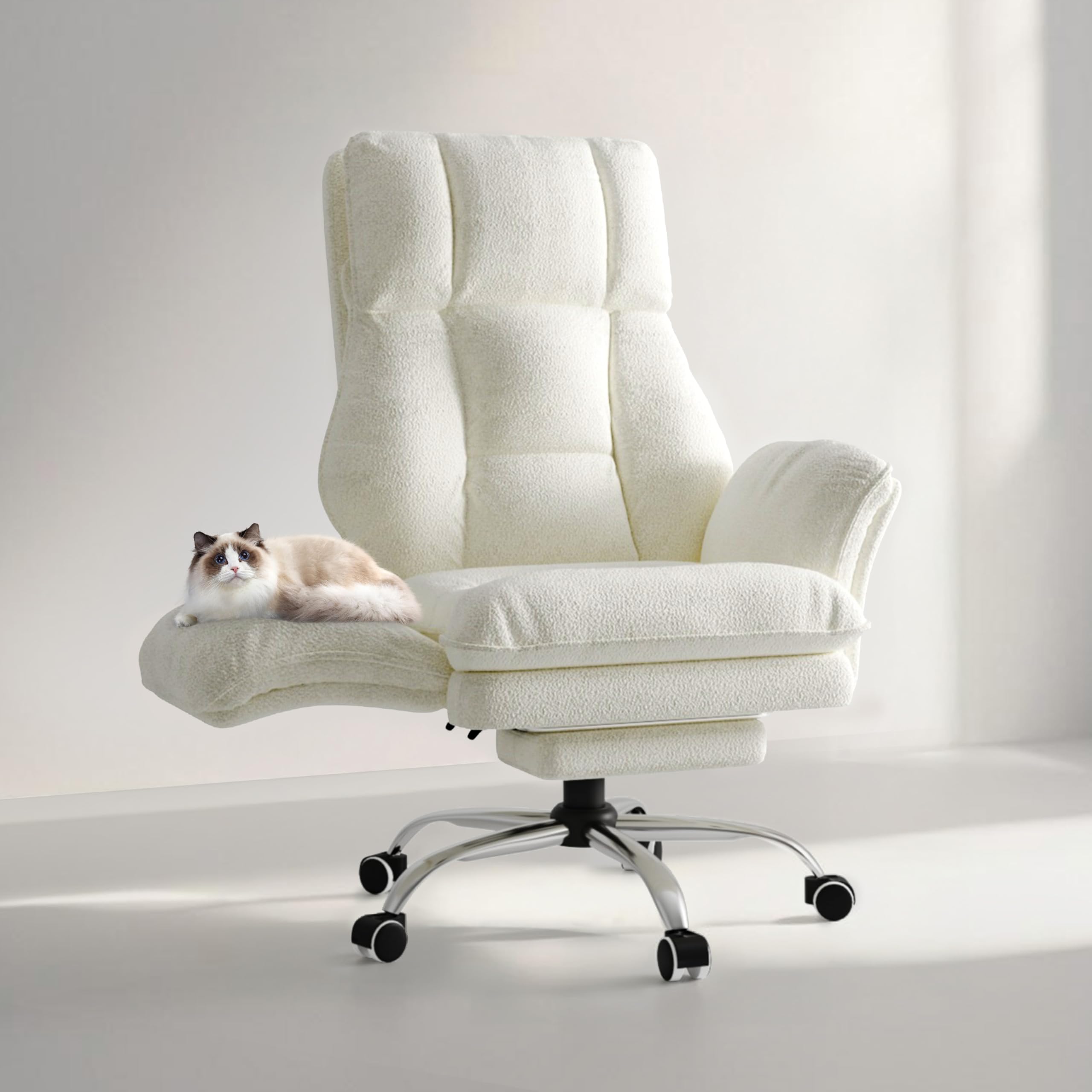
The HOMRELEXA chair solves a specific back-pain problem that standard ergonomic chairs ignore: the inability to change leg positions. With flip-up armrests that expand the seat width from 22.8 inches to 38.6 inches, users can sit cross-legged, tuck one foot under, or share the seat with a pet — all positions that reduce static loading on the lumbar spine by redistributing weight across the pelvis. The plush teddy fleece upholstery (or distressed tech fabric option) adds a soft, breathable surface that encourages comfort-driven micro-movements throughout the day.
Underneath the cloud-soft exterior, the chair uses an extra-thick coil comfort layer with high-resilience foam that distributes body weight evenly without the sinking feeling that compromises spinal alignment. The BIFMA-approved metal base and SGS-certified gas lift support up to 400 pounds, and the reclining mechanism with footrest lets you fully extend for a nap position that decompresses the discs. The high backrest and wide seat accommodate users from 5’5” to 6’5”, making it one of the most inclusive size ranges in this guide.
The armrest flip mechanism uses a ratcheting action that can be loud when adjusting — a minor annoyance in quiet office environments. The assembly instructions are sparse, requiring some intuition, though the build is simple enough that most users complete it within 30 to 60 minutes. For back-pain sufferers who need the freedom to shift positions regularly — especially those with ADHD or restless leg tendencies — the HOMRELEXA turns the chair from a restraint into a flexible support system.
Why it’s great
- Flip armrests expand seat width for cross-legged and pet-friendly sitting
- Extra-thick coil and foam layer distributes weight without sagging
- Accommodates users from 5’5″ to 6’5″ with high weight capacity
Good to know
- Armrest ratcheting mechanism is loud when adjusting up or down
- Assembly instructions are minimal and require some guesswork
8. Hbada X7 Smart Ergonomic Chair
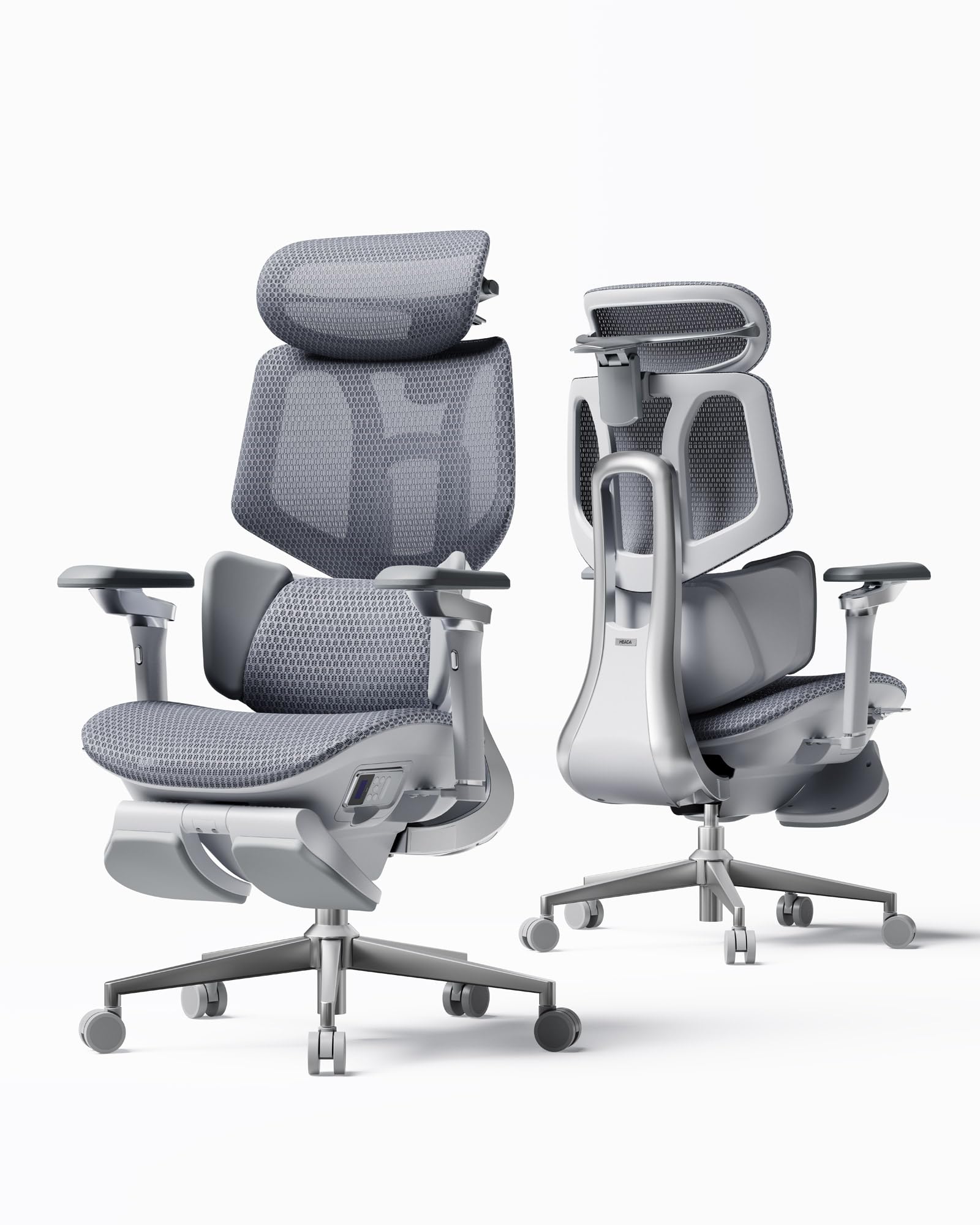
The Hbada X7 represents the cutting edge of automated lumbar support, using a gravity-sensing base that adjusts the intensity of the lumbar tracking continuously as you shift positions. The 6D adjustable waist pillow follows the spine’s curves, and the 8D massage rollers with three-level heating (40-50°C) provide active muscle relief that goes beyond simple vibration. The massage function uses rolling motion rather than shaking, targeting deeper muscle layers in the lower and mid-back for users whose pain includes trigger points or chronic tightness.
The dual-fan cooling system embedded in the 3D high-resilience mesh seat offers three speeds — Silent, Balanced, and Turbo — improving breathability by 65 percent compared to standard mesh. This makes long summer work sessions bearable without a separate cooling pad. The 4D headrest rotates 70 degrees, slides 55mm, adjusts height 45mm, and flips an additional 70 degrees, providing the most comprehensive cervical support of any chair in this roundup. The 720-degree omnidirectional armrests rotate a full circle, extend 110mm outward, and lift 50mm, synchronizing with the 140-degree recline so your arms stay supported even when leaning back.
Built on an aircraft-grade aluminum frame with a five-star nylon base rated for 330 pounds, the X7 feels solid without excessive weight. The quiet-roll casters move smoothly on any floor surface. Assembly is notably simple for a chair with this many features, taking roughly 30 minutes. The main caveat is that users over 6 feet may find the stock gas cylinder insufficient for achieving an ideal seated eye level, though a replacement cylinder can solve this. For those willing to invest in active automated support, the Hbada X7 is the most technologically advanced option for back-pain office seating.
Why it’s great
- Auto-tracking lumbar adapts support intensity to your movement in real time
- Dual-fan seat ventilation significantly reduces sweat during extended use
- 720-degree armrests sync with 140-degree recline for continuous arm support
Good to know
- Stock gas cylinder may be too short for users over 6 feet tall
- Massage rollers are active relief, not a substitute for proper lumbar alignment
9. Staples Dexley Ergonomic Task Chair

The Dexley from Staples is the most accessible entry point into full-mesh ergonomic seating, offering a contoured high-back frame with adjustable lumbar support and 3D armrests at a price that won’t strain your budget. The breathable mesh back and seat provide superior airflow compared to budget foam chairs, reducing the swampy feeling that sets in after a few hours of sitting. The adjustable lumbar support can be moved vertically to align with your belt line, and while it lacks depth adjustment, the shape of the lumbar pad is gently curved enough to offer support without being overly aggressive.
The chair includes seat height adjustment, tilt tension control, tilt lock, and a recline function, plus a headrest that adjusts in height and angle. The 3D armrests allow you to set the height, width, and depth, giving you decent flexibility for keeping your shoulders relaxed. The five-star base rolls smoothly on standard office flooring, and the gas cylinder provides a generous height range from 16.6 to 20.3 inches. Assembly is straightforward with clearly labeled parts and a single Phillips screwdriver required for most steps.
Some users find the stock lumbar support too pronounced and choose to remove it entirely, while shorter users often need a footrest to maintain proper leg angle. The headrest may push the head slightly forward for some body types, which can exacerbate upper back tension rather than relieve it. For the price, the Dexley provides solid foundational ergonomics — mesh ventilation, multiple adjustments, and a stable frame — but requires some personal tuning and potentially a few modifications to suit specific spine shapes. It remains the best choice if your budget is tight but you still want a mesh back and seat.
Why it’s great
- Full-mesh construction prevents heat build-up at an entry-level price
- 3D armrests allow height, width, and depth adjustments for shoulder relief
- Easy assembly with clearly labeled parts
Good to know
- Fixed lumbar pad may feel too aggressive for some users; removable
- Headrest can push the head forward, potentially straining the neck
FAQ
Is mesh or foam better for lower back pain during long office hours?
How important are 3D or 4D armrests for reducing back pain?
What recline angle range is best for back pain relief?
Can an office chair alone fix my back pain without other changes?
Final Thoughts: The Verdict
For most users, the chair for back pain office winner is the ProtoArc EC200 because it delivers adjustable lumbar depth, seat depth, and a 3D headrest at a mid-range price without sacrificing build quality. If you need professional-grade durability and ratchet-style precision, grab the WorkPro Quantum 9000. And for flexible seating positions including cross-legged and pet-friendly use while accommodating larger body types, nothing beats the HOMRELEXA Big and Tall.

Mo Maruf
I created WellFizz to bridge the gap between vague wellness advice and actionable solutions. My mission is simple: to decode the research and give you practical tools you can actually use.
Beyond the data, I am a passionate traveler. I believe that stepping away from the screen to explore new environments is essential for mental clarity and physical vitality.