Our readers keep the lights on and my smoothie glass nicely filled. As an Amazon Associate, I earn from qualifying purchases.
Finding a seat that helps an autistic child feel calm, focused, and secure often means looking beyond standard furniture. The right chair provides gentle vestibular input, deep pressure, or a safe rocking motion that can prevent meltdowns and support self-regulation.
I’m Mohammad Maruf — the founder and writer behind WellFizz. I’ve spent hundreds of hours analyzing sensory furniture specs, comparing safety certifications, and cross-referencing parent and therapist feedback to identify the seating options that genuinely make a difference.
Every child has unique sensory needs, so this guide covers compression chairs, spinning seats, and rocking designs to help you find the ideal chair for autistic child in your home.
How To Choose The Best Chair For Autistic Child
Sensory seating isn’t one-size-fits-all. Some children crave rhythmic movement, others need firm compression, and many benefit from a combination of both. Understanding the core sensory mechanism each chair type offers is the first step toward a purchase that actually works.
Type of Sensory Input
Rocking chairs provide calming vestibular stimulation through repetitive forward-and-back motion. Spinning chairs deliver intense rotary input that satisfies sensory-seeking behaviors. Compression chairs use snug foam or inflatable walls to deliver deep pressure, which can lower cortisol levels and help a dysregulated child return to calm. Choose based on whether your child is a sensory seeker (needs more input) or a sensory avoider (needs gentle, predictable input).
Weight Capacity and Floor Stability
Children grow quickly, and sensory chairs are often used vigorously. A chair rated for 220 pounds or more will accommodate a wide age range and withstand active spinning or rocking without tipping. Look for wide, non-slip bases on swivel chairs and curved, floor-hugging runners on rockers. A stable chair prevents accidents that could erode a child’s trust in the seat.
Material and Cleanability
Vinyl, foam with washable covers, and powder-coated metal are the most practical materials for sensory seating. Removable, machine-washable covers make it easy to keep the chair fresh after spills or sensory play. Inflatable models should have reinforced seams to prevent leaks, and foam models should be dense enough to hold their shape during repeated compression.
Quick Comparison
On smaller screens, swipe sideways to see the full table.
| Model | Category | Best For | Key Spec | Amazon |
|---|---|---|---|---|
| TED KANGAROO Sensory Soft Squeeze Seat | Compression | Deep pressure calming | Memory foam with washable cover | Amazon |
| KidBloom Spinning Chair | Swivel | Vestibular sensory seeking | 220 lbs weight capacity | Amazon |
| BABAMU Spinning Chair | Swivel | Balance & motion sickness relief | 220 lbs weight capacity | Amazon |
| ROBUD Kids Sensory Swivel Chair | Swivel | No-assembly spinning play | 220 lbs weight capacity | Amazon |
| ODOXIA Kids Sensory Rocking Chair | Rocker | Gentle rocking & motor skills | 39.37 inch depth rocker | Amazon |
| PLATPORTS Kids Indoor Rocking Seesaw | Rocker | Outdoor/indoor rocking play | 77 lbs per child | Amazon |
| TED KANGAROO Inflatable Peapod | Inflatable | Portable compression cocoon | Three-chamber adjustable air | Amazon |
In‑Depth Reviews
1. TED KANGAROO Sensory Soft Squeeze Seat
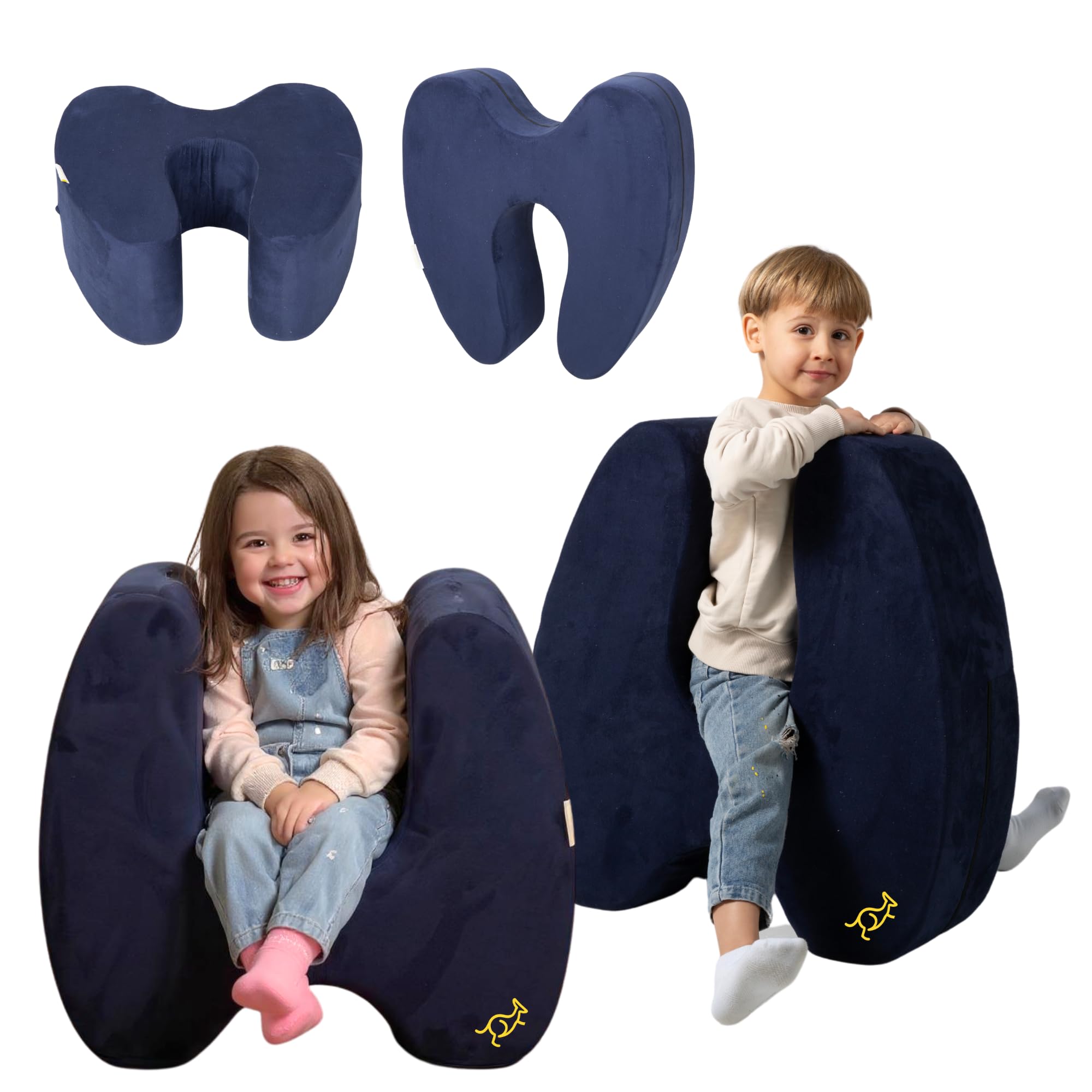
The Ted Kangaroo Soft Squeeze Seat delivers a full-body compression hug that many autistic children find instantly regulating. The firm memory foam walls apply consistent deep pressure, and the removable cotton cover is machine washable — a practical detail for daily use at home or in a therapy room.
Children can sit across it like a rocking horse, generating gentle back-and-forth motion that pairs vestibular input with the compression effect. Special education teachers and occupational therapists have reported that students who seek pressure use the seat correctly and voluntarily return to it when feeling overwhelmed.
The seat arrives vacuum-sealed and takes a few hours to fully puff up. Some users noted that the zipper on the cover can break after washing, but the overall durability of the foam and vinyl has held up well in classroom environments.
Why it’s great
- Provides calming sensory “hug” for emotional regulation
- Removable, machine-washable cotton cover
- Firm foam holds shape during wiggly moments
Good to know
- Zipper on cover may break after repeated washing
- Arrives vacuum-sealed; needs time to fully expand
2. KidBloom Spinning Chair for Autistic Kids
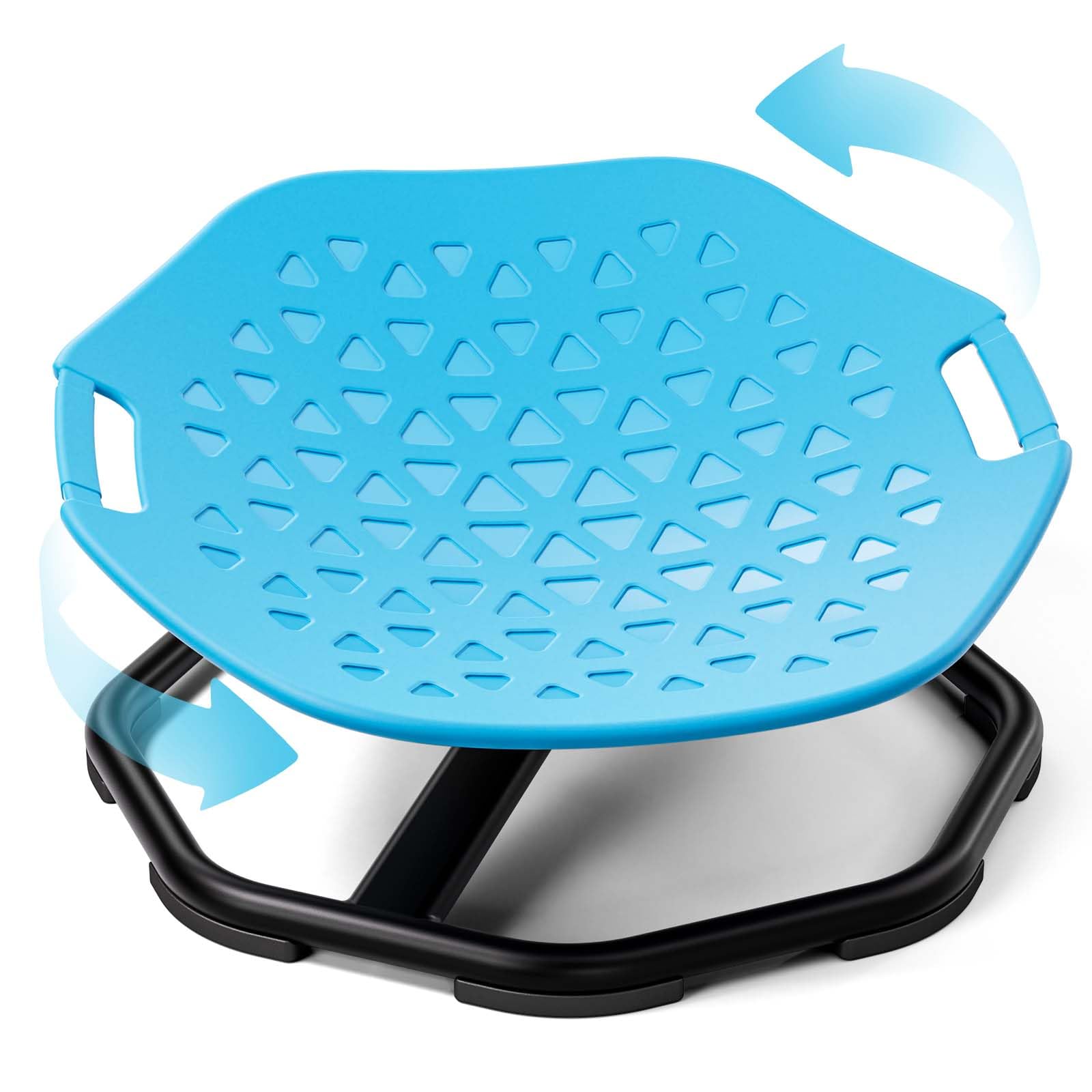
The KidBloom spinner is purpose-built for sensory-seeking children who crave intense vestibular input. The octagonal diamond-patterned panel reflects light and provides tactile variation, while the newly added dual handles offer a stable grip that builds confidence during fast spins.
A 220-pound weight capacity and a metal anti-slip base keep the chair steady even during vigorous use. The 360-degree silent swivel mechanism allows smooth, noise-free rotation — a critical feature for classroom or therapy settings where excessive sound could overstimulate other children.
Users report that the chair helps their autistic children ask for verbal requests (like “spin”) and builds coordination through sitting, kneeling, and lying positions. The only caution involves younger children: supervision is recommended because the chair can spin very fast and may become tipsy without a cushioned mat underneath.
Why it’s great
- Dual handles improve grip stability and safety
- Silent swivel mechanism for noise-sensitive environments
- Supports multiple positions: sitting, kneeling, lying
Good to know
- Can be tipsy on hard floors without a mat
- Spin speed may be too fast for very young or cautious children
3. BABAMU Spinning Chair for Autistic Kids
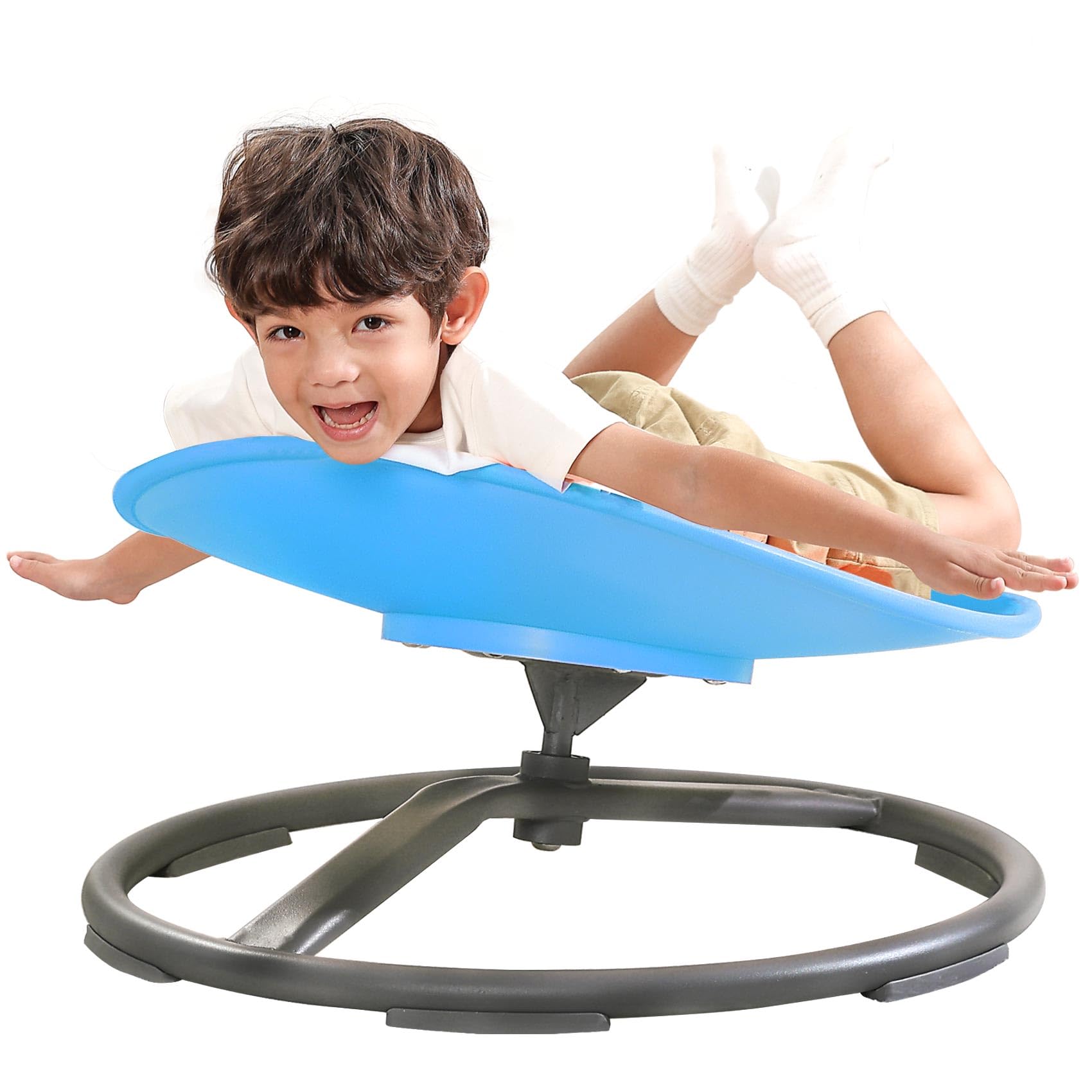
The BABAMU spinning chair differentiates itself by targeting motion sickness relief alongside sensory stimulation. The focused rotational engagement helps recalibrate the body’s balance perception, making it useful for children who struggle with carsickness or airsickness.
Its stainless steel frame and powder-coated finish resist chipping and rust, while the anti-slip base ensures stability during fast spinning. Parents describe it as a favorite sensory item that blends into family life rather than looking clinical.
The chair is compact enough to move between rooms easily, and assembly requires only basic tools. One user noted that a screw-related issue was due to their own error, and the included spare parts and tools made the process straightforward.
Why it’s great
- Helps reduce motion sickness through sensory recalibration
- Sturdy stainless steel frame with anti-slip base
- Portable and compact for room-to-room use
Good to know
- Open back design offers less postural support
- Floor protection mat recommended for tile or hardwood
4. ROBUD Kids Sensory Swivel Chair

The ROBUD swivel chair arrives fully assembled, letting children start spinning immediately. Its flower-shaped design with raised petal edges provides natural handholds that help kids maintain balance, and the non-slip metal base supports up to 220 pounds.
Children can spin while sitting, kneeling, or lying across the padded surface, making it highly versatile for sensory seekers. The lightweight construction allows caregivers to move it between rooms or take it outdoors without strain.
Parents report that even toddlers find the chair easy to use, and the sturdy base prevents tipping during normal play. The chrome-finished frame resists rust, but using it on soft grass or uneven surfaces may reduce stability compared to indoor use on a flat floor.
Why it’s great
- No assembly required — ready to use out of the box
- Raised petal edges provide secure handholds
- Lightweight and portable for multiple rooms
Good to know
- Not recommended for outdoor use on uneven ground
- Flower design may be less appealing to older children
5. ODOXIA Kids Sensory Rocking Chair
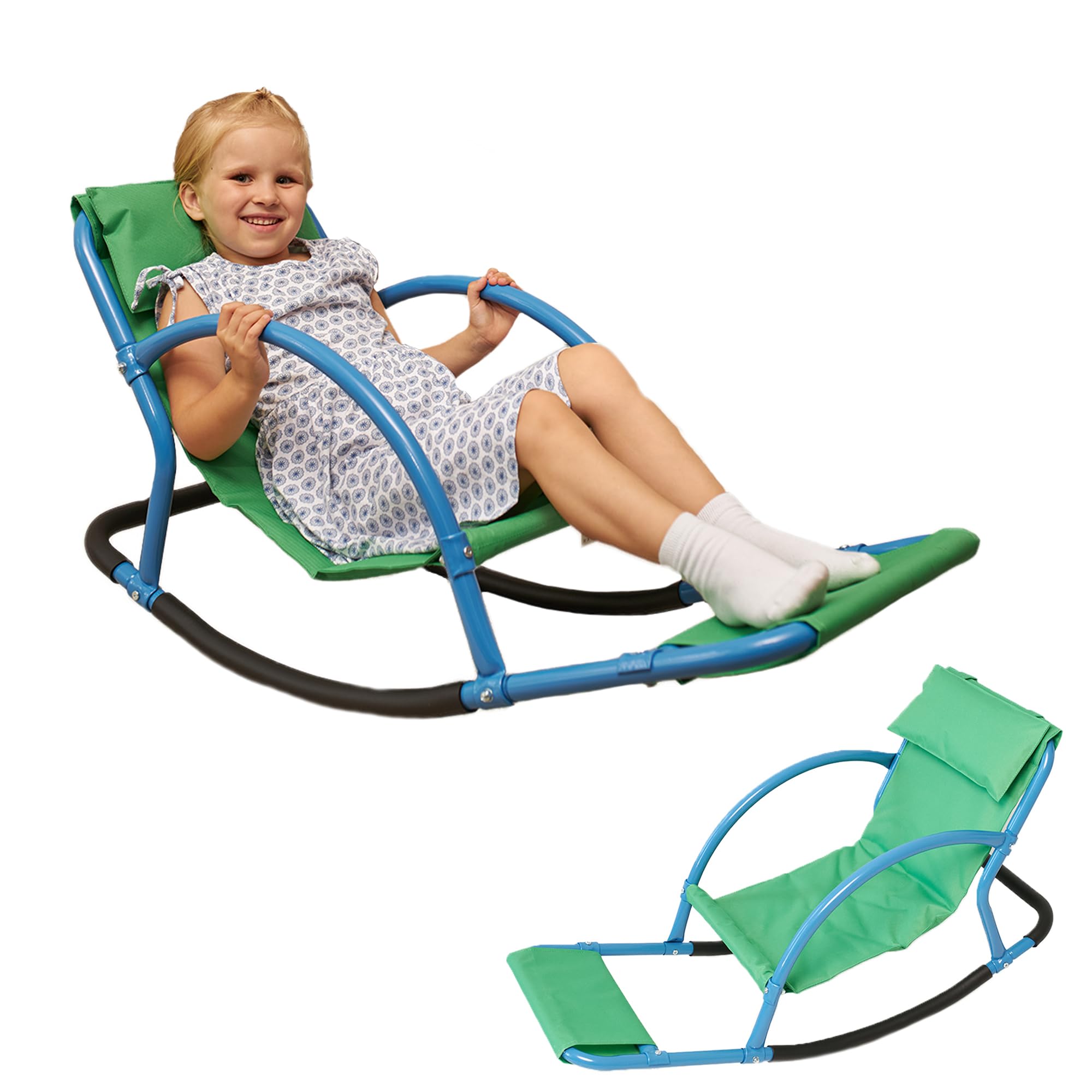
The ODOXIA rocking chair combines a gentle seesaw motion with a curved leg design that fits both indoor playrooms and outdoor patios. Its wide, 39-inch depth allows children to stretch out while rocking, offering a soothing rhythm that helps with sensory regulation and motor skill development.
The sturdy frame handles active use, and the armless, solid-back construction gives kids freedom to lean or recline as they play. Parents report that the repetitive rocking motion helps their autistic children self-soothe during screen time or after a meltdown.
Assembly requires more effort than many competitors, and some users found the instructions confusing. The head pillow uses Velcro fasteners that shift during use. For older or larger children, the rocking motion requires more active effort from the arms and core.
Why it’s great
- Indoor/outdoor versatility for year-round use
- Gentle rocking motion soothes and builds coordination
- Wide frame accommodates various sitting positions
Good to know
- Assembly is confusing and may require two people
- Head pillow Velcro shifts and doesn’t stay in place
6. PLATPORTS Kids Indoor Single Rocking Seesaw

The PLATPORTS Rocking Seesaw combines the motion of a rocking horse with the up-and-down feel of a seesaw, creating a rhythmic sensory experience that appeals to young children. The powder-coated steel frame resists rust, and the molded plastic seats feature smooth edges for safe play.
Parents of autistic children report that the repetitive rocking motion helps calm their sons and daughters during meltdowns, and the compact size fits easily into a corner of the living room or on a patio. Assembly takes about 30 minutes with two screwdrivers.
The 77-pound weight limit and small seat dimensions make this best suited for children ages 2.5 to 5 years. Some reviewers noted that a 4-year-old fits perfectly, but a taller or heavier child may outgrow it within a year. The low profile encourages independent mounting and dismounting.
Why it’s great
- Combination rocking and seesaw motion for varied input
- Rust-resistant frame suitable for outdoor use
- Low profile allows easy independent access
Good to know
- Best for children up to age 5 due to seat size
- 77-pound capacity limits use by larger kids
7. TED KANGAROO Inflatable Peapod Sensory Chair

The Ted Kangaroo Peapod offers a fully customizable compression experience through three independent air chambers. Caregivers can adjust each chamber to deliver a tight squeeze, a gentle hug, or a looser sit — allowing the chair to adapt as the child’s sensory needs change throughout the day.
Its inflatable vinyl construction makes it the most portable option in this guide: deflate it, pack the included electric pump, and bring it to school, therapy, or on road trips. The double-layered handles and reinforced seams add durability, though some users reported seam leaks after extended use.
Children enjoy rocking, bouncing, and snuggling inside the pod, and several parents noted that it replaced the need for their child to wedge themselves under furniture for compression. The smooth vinyl surface is easy to wipe clean.
Why it’s great
- Three adjustable chambers for customizable compression
- Highly portable with electric pump included
- Easy to clean vinyl surface
Good to know
- Seam durability can be a concern with heavy daily use
- Inflatable design may not suit children who mouth or bite objects
FAQ
How does a compression chair help an autistic child?
Should I choose a rocking chair or a spinning chair?
Final Thoughts: The Verdict
For most users, the chair for autistic child winner is the TED KANGAROO Sensory Soft Squeeze Seat because it combines deep pressure compression with gentle rocking motion, works across a wide age range, and has a machine-washable cover that keeps maintenance low. If you need intense vestibular input for a sensory seeker, grab the KidBloom Spinning Chair with its dual handles and silent swivel. And for a portable option that travels to school or therapy sessions, nothing beats the TED KANGAROO Inflatable Peapod.

Mo Maruf
I created WellFizz to bridge the gap between vague wellness advice and actionable solutions. My mission is simple: to decode the research and give you practical tools you can actually use.
Beyond the data, I am a passionate traveler. I believe that stepping away from the screen to explore new environments is essential for mental clarity and physical vitality.