Our readers keep the lights on and my smoothie glass nicely filled. As an Amazon Associate, I earn from qualifying purchases.
When your pelvis tilts forward while seated, it flattens the natural curve of your lower back, forcing your spine into a position that strains muscles and compresses discs. A standard desk chair does nothing to stop this—it often makes the problem worse by letting you sink into a slouch. The solution is a seat engineered to stabilize the pelvis and maintain the lumbar curve throughout long work sessions.
I’m Mohammad Maruf — the founder and writer behind WellFizz. My research process for this guide involved cross-referencing lumbar adjustability ranges, seat-depth mechanisms, tilting kinematics, and foam density specifications across nine models to identify which designs actively correct the tilt rather than just padding the symptoms.
This guide breaks down the specific adjustments and ergonomic strategies that make the difference between a chair that accommodates your bad posture and one that fixes it. Read on for the definitive review of the best chair for anterior pelvic tilt and what each model does right for this exact condition.
How To Choose The Best Chair For Anterior Pelvic Tilt
Anterior pelvic tilt is not a condition you can sit your way out of with soft padding. You need a chair that physically blocks the forward rotation of the pelvis while keeping your spine in its neutral S-curve. Every adjustment mentioned below directly counteracts the specific mechanical failure that causes the tilt.
Lumbar Support Must Be Height-Adjustable
A fixed lumbar bump often lands too high or too low, pushing into your rib cage or sacrum. Look for vertical adjustment of at least 2 inches so the lumbar contact point matches the natural curve of your lower back. Depth adjustment (forward/backward) is a bonus that lets you increase pressure exactly where your lumbar spine needs it.
Seat Depth Controls Pelvis Rotation
When the seat pan is too long, it presses against the back of your calves and forces you to slide forward, tilting your pelvis posteriorly—or if you fight it, anteriorly. A seat with 5 positions of depth adjustment lets you leave 2 to 3 finger widths of space behind your knees, keeping your pelvis neutral.
Active Tilting Mechanism Encourages Movement
Sitting static in any position for hours causes muscle fatigue that pulls the pelvis forward. A chair with a dynamic tilt or rocking motion (usually with adjustable tension) lets you shift weight periodically, which activates the glutes and core to maintain pelvic alignment. Locking the recline at 90 degrees is the worst thing you can do.
Quick Comparison
On smaller screens, swipe sideways to see the full table.
| Model | Category | Best For | Key Spec | Amazon |
|---|---|---|---|---|
| Vari CoreChair | Active Sitting | Core engagement & pelvic stability | 17–21.5 in seat height | Amazon |
| ProtoArc EC200 | Ergonomic Mesh | Lumbar depth & seat depth adjustment | 5-position seat depth lock | Amazon |
| GABRYLLY Mesh Chair | High-Back Recliner | 135° recline with footrest | 3″ vertical lumbar adjust | Amazon |
| MOLENTS Mesh Chair | Full Mesh Executive | Breathability & precise lumbar | 3 recline positions 90°–120° | Amazon |
| NYPOT Kneeling Chair | Kneeling/Active | Postural correction via shin support | 250 lb capacity wood frame | Amazon |
| Petheivun Big & Tall | Heavy Duty | Larger users needing wide seat | 600 lb capacity metal base | Amazon |
| CASASIO Desk Chair | Budget Ergonomic | Entry-level lumbar & 3D headrest | 350 lb reinforced base | Amazon |
| Synorla Office Chair | Mid-Range Mesh | General lumbar support with tilt | 330 lb nylon frame | Amazon |
| Leader Cattle Cross Legged | Flexible Sitting | Fidgeters & alternative postures | 300 lb memory foam seat | Amazon |
In‑Depth Reviews
1. Vari CoreChair
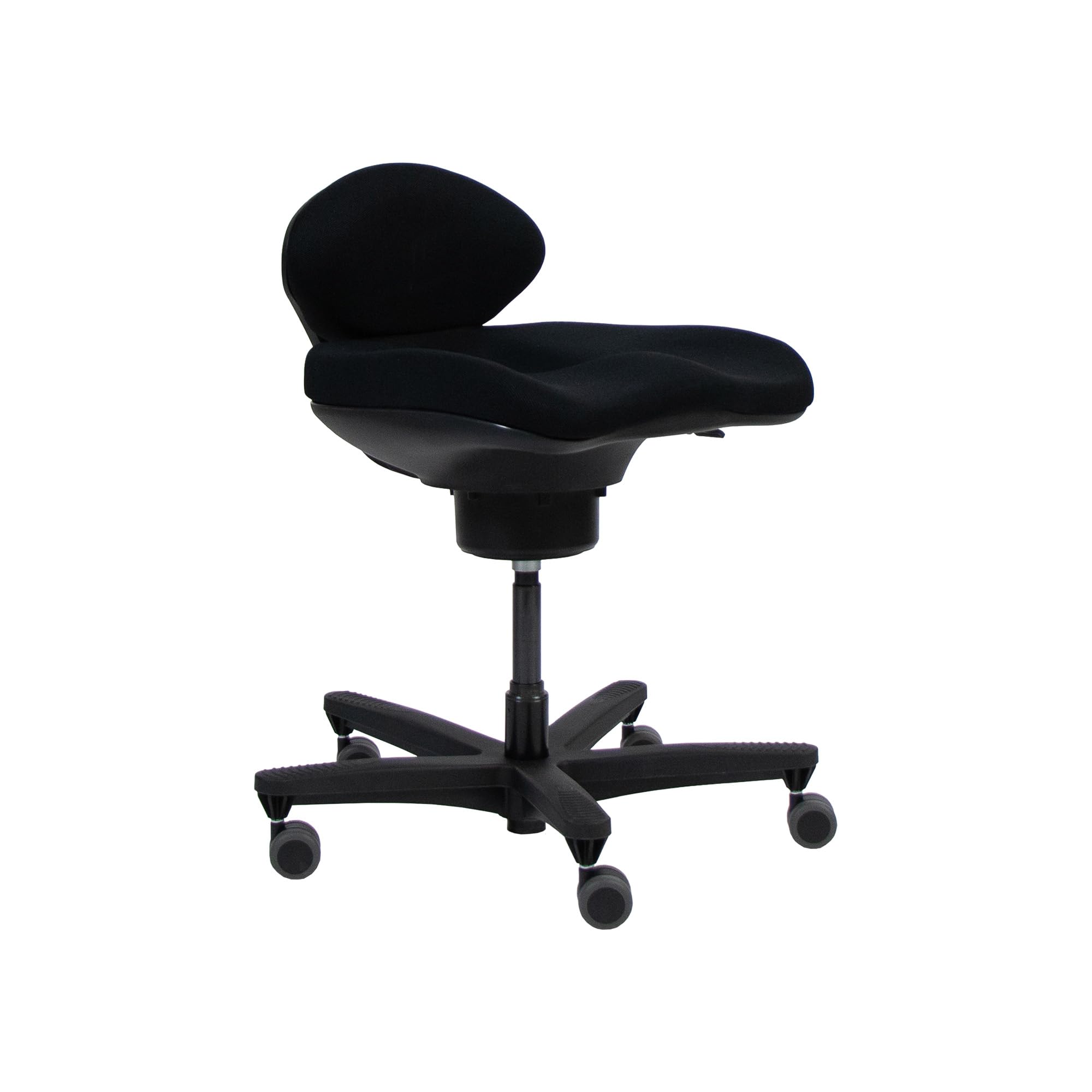
The Vari CoreChair is the only model in this lineup that uses a patented tilting mechanism to force core engagement during every seated moment. Its sculpted seat and contoured backrest are engineered to stabilize the pelvis and prevent the forward roll that causes anterior pelvic tilt. The armless, compact frame slides under any desk, and the seat height adjusts from 17 to 21.5 inches with depth ranging from 16.75 to 18.33 inches.
The foam is intentionally firm—this is not a lounging chair. Users describe it as “uncomfortable” at first because it trains your body to stay active. The 360-degree rocking motion encourages micro-movements that keep the glutes and lower back engaged. The BIFMA-certified build and 3-year warranty back the premium construction.
This chair works best for standing-desk users, people with mild to moderate pelvic tilt, and those willing to adapt over a few weeks. It does not have traditional lumbar pads or armrests, so anyone needing heavy padding or arm support should look elsewhere. For active correction, nothing here competes.
Why it’s great
- Purpose-built active tilt mechanism engages core and stabilizes pelvis
- Adjustable seat depth and height for personalized fit
- Compact armless design fits shallow desks and tight spaces
Good to know
- Firm foam is uncomfortable during initial break-in period
- No armrests means zero arm support during typing
- Premium pricing targets serious posture correction buyers only
2. ProtoArc EC200
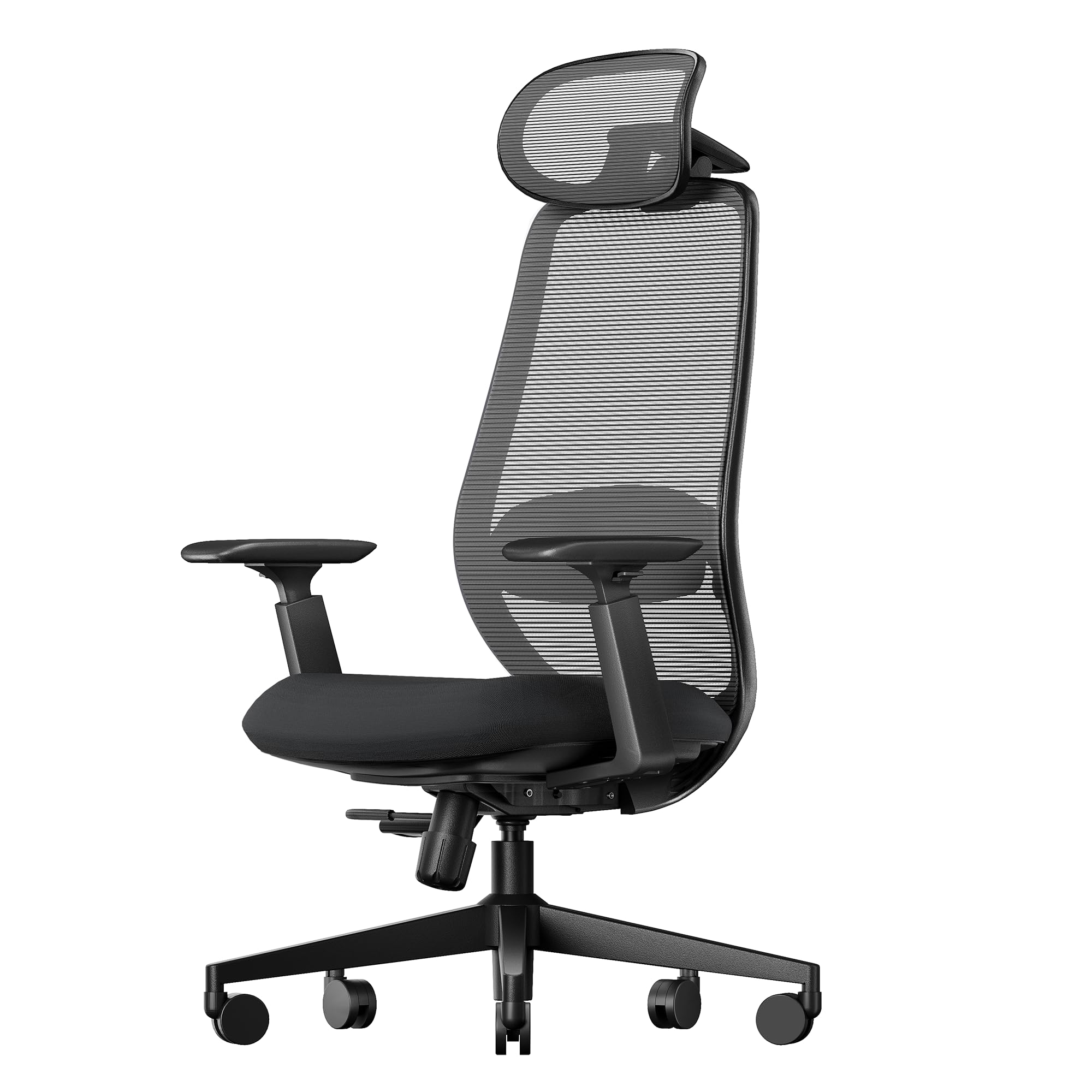
The ProtoArc EC200 delivers four separate lumbar adjustment dimensions: height (2.36 inches), depth (0.8 inches), plus the ability to tilt the backrest across four angles from 90 to 130 degrees. Its 5-position sliding seat depth with instant lock prevents thigh pressure from rotating the pelvis, making it a strong contender for anterior pelvic tilt correction.
The 55-density high-resiliency foam seat is deliberately firm—soft cushions collapse and allow the pelvis to sink into anterior tilt. The mesh back keeps air moving during long sessions. The 3D dual-axis headrest cradles the neck, and the TÜV-tested Class 4 gas lift adds stability. Assembly takes around 20 minutes with labeled parts.
Users report excellent back support once the lumbar is dialed in, though some find the lumbar too aggressive if set to maximum depth. The armrests adjust up/down only, so arm position is less customizable than higher-tier options. For the combination of seat depth and lumbar depth adjustability, this is a top performer.
Why it’s great
- Four-direction lumbar adjustment targets lower back curve precisely
- 5-position seat depth lock prevents pelvis rotation from long seat pan
- 55-density foam resists sagging and maintains neutral alignment
Good to know
- Armrests are height-only, limiting elbow and shoulder customization
- Optimal for users 5’4″ to 6’0″ and under 220 lbs
3. GABRYLLY Ergonomic Mesh Chair
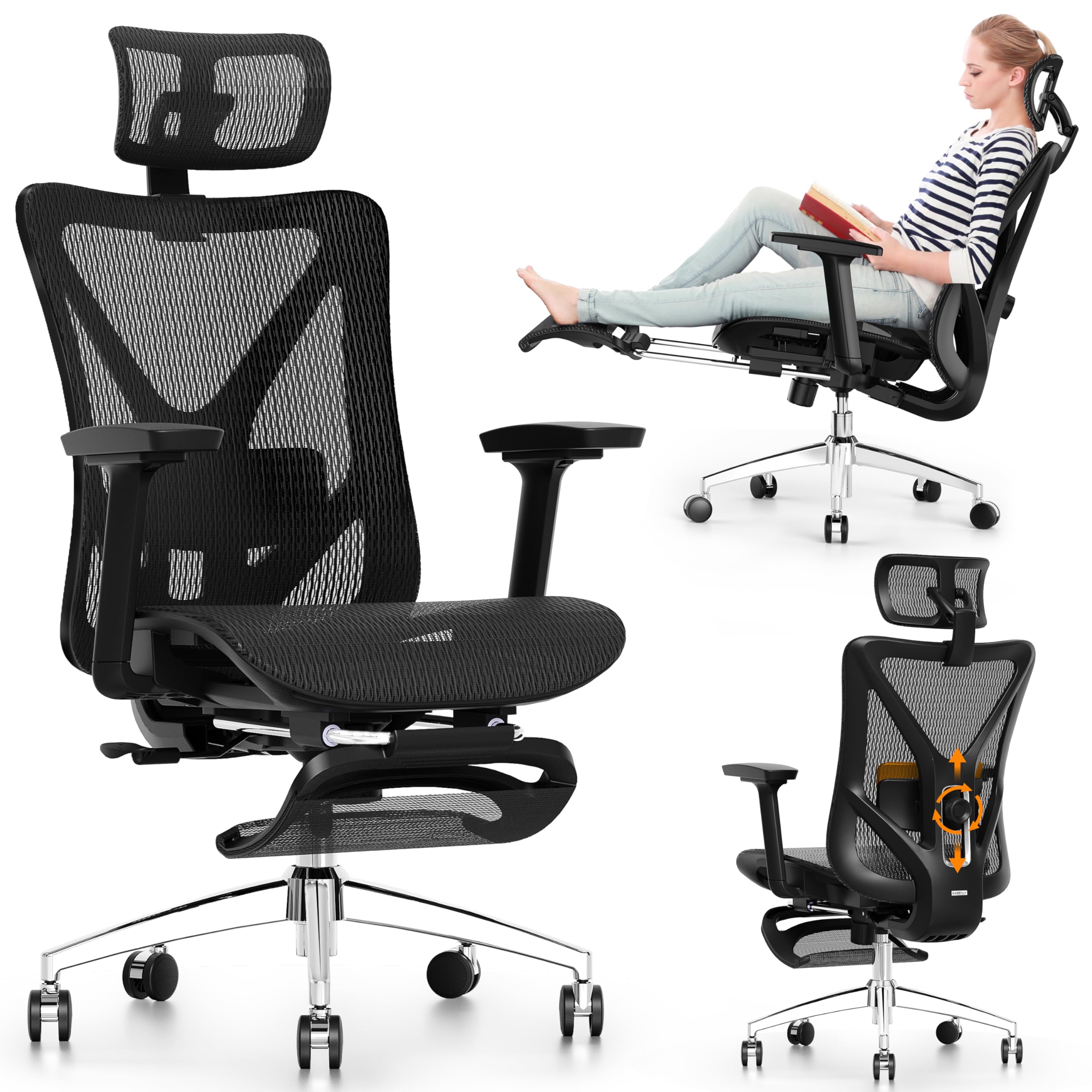
The GABRYLLY combines a 135-degree reclining backrest with a retractable steel footrest, letting you alternate between upright work posture and full recline to relieve pressure on the lumbar spine. Its 2-way lumbar support moves 3 inches vertically and 1.6 inches horizontally, giving you a wide window to target the exact spot that counteracts your pelvic tilt.
The 3D armrests adjust up/down, front/back, and in/out, which helps keep shoulders relaxed and reduces compensatory hunching. The steel base supports up to 300 pounds, and the 27.5-inch leg span provides stability during recline. Users note the mesh is taut and breathable, though some find it less forgiving for long sedentary stretches.
The footrest extends 18.1 inches and supports your legs when reclined, which can help reset pelvic position after extended sitting. The main drawback is that the armrests shift under pressure with a loud click—not ideal if you lean on them frequently. For users who need to alternate between active work and restorative breaks, this is a solid mid-range pick.
Why it’s great
- Vertical and horizontal lumbar adjustment matches varied spine curves
- Retractable footrest allows full-body recline to decompress lumbar discs
- Steel base and 300 lb capacity offer exceptional stability
Good to know
- Armrests shift unintentionally under arm pressure
- Taut mesh can feel uncomfortable for users who prefer softer back support
4. MOLENTS Full Mesh Executive Chair

The MOLENTS chair uses a full mesh seat and back with a shaped sponge fill that balances airflow with moderate cushioning. Its adjustable lumbar support moves up/down and forward/backward, and the backrest reclines from 90 to 120 degrees across three lockable positions. The 3D armrests adjust in height, width, and rotation to accommodate different desk setups.
The mesh is skin-friendly and breathable, which helps prevent heat buildup during long sits. Users report that the lumbar support eliminated lower back pain within days once properly adjusted. The 19.8-inch seat width accommodates average to slightly wider frames, and the tilt tension control lets you dial in rocking resistance.
Assembly is straightforward, and the included tools and labeled parts reduce friction. The armrest panels slide forward/backward or rotate left/right, but some users prefer a fixed panel—the manufacturer offers a free replacement if you contact them. This is a well-rounded mid-range option for those who prioritize breathability and detailed adjustability.
Why it’s great
- Full mesh seat and back provide continuous airflow for long sessions
- Lumbar adjusts in two axes for precise lower back targeting
- 3D armrests offer wide customization for arm and shoulder position
Good to know
- Armrest panel sliding may feel loose to some users
- Wheels can be hard on carpet; replacement casters may help
5. NYPOT Ergonomic Kneeling Chair
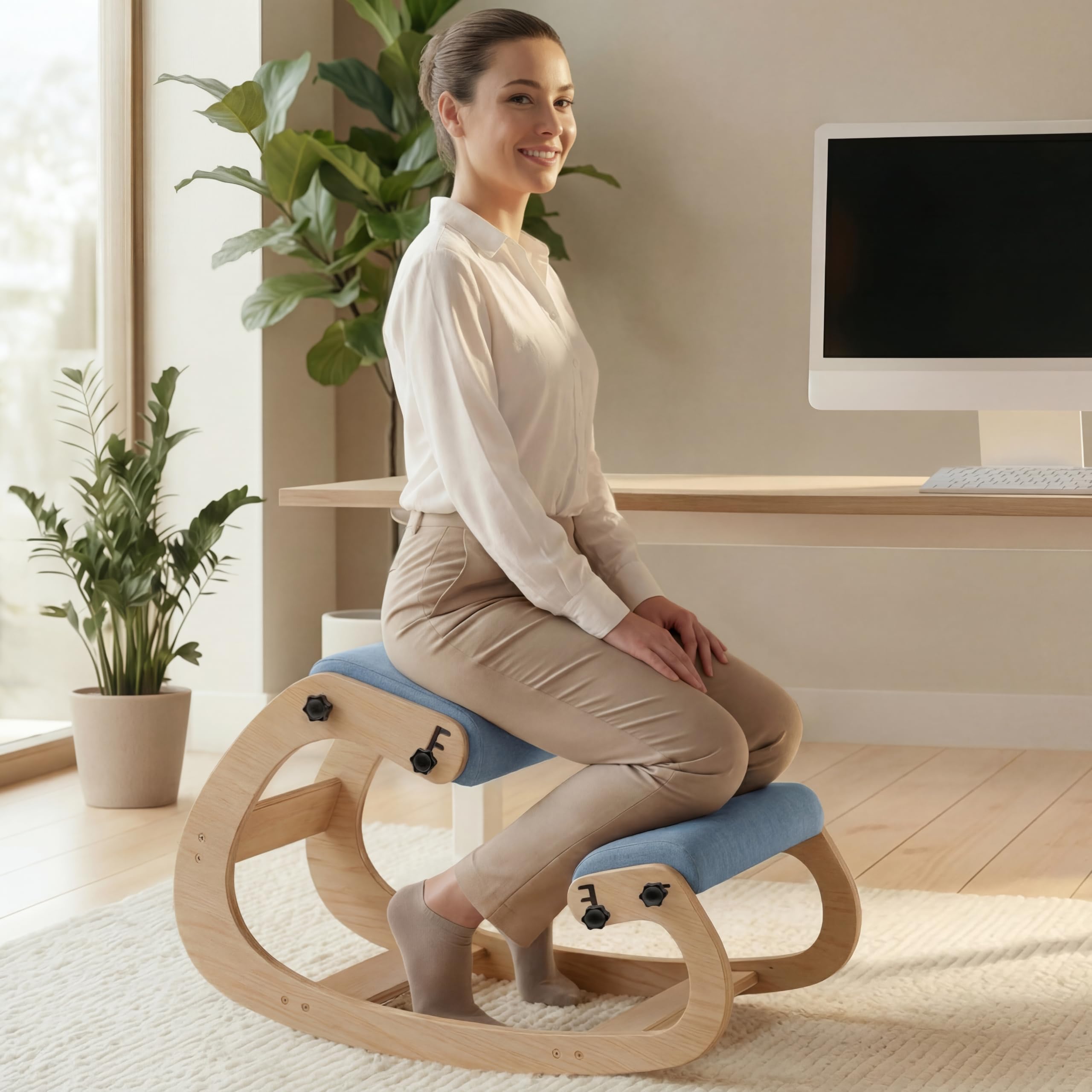
The NYPOT kneeling chair shifts your body weight from the pelvis to the shins, which naturally tilts the pelvis forward into a neutral or slightly posterior position—the direct opposite of anterior pelvic tilt. Its adjustable seat and knee pads let you customize the angle, and the gentle rocking motion encourages dynamic sitting that prevents stiffness.
The wood frame supports up to 250 pounds, and the high-density sponge cushions aim to provide comfort during extended sits. Users report significant relief from back and hip pain when used in alternating rotation with a standing desk or standard chair. The 5-year warranty adds confidence for a long-term purchase.
The main trade-off is adaptation time. Multiple users note shin soreness and bruising after 30 minutes because the knee cushions are relatively thin. This chair is best used for 1–2 hour intervals rather than full workdays. For targeted pelvic tilt correction during focused work blocks, it is highly effective.
Why it’s great
- Kneeling posture directly reverses anterior pelvic tilt by shifting weight to shins
- Adjustable seat tilt and height for customized correction angle
- 5-year warranty protects against long-term structural issues
Good to know
- Thin knee cushions cause shin pain during sits over 30 minutes
- Requires alternating with a standard chair or standing desk
6. Petheivun Big & Tall Office Chair
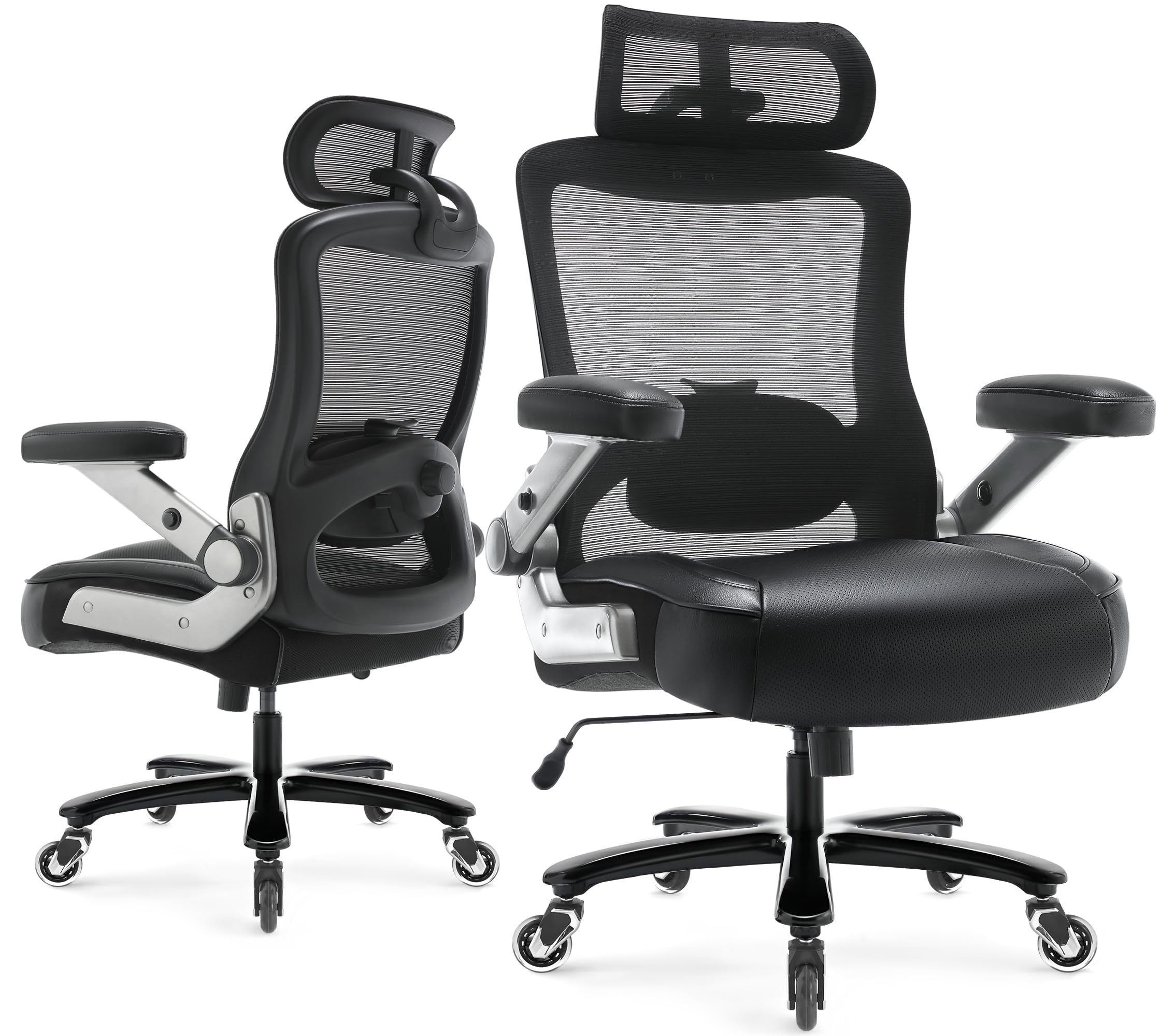
Built for larger frames, the Petheivun chair supports up to 600 pounds with an oversized seat (26 inches wide, 22.4 inches deep) and a 35-inch high backrest. Its combination of mesh back and thick leather seat cushion provides both ventilation and firm under-thigh support. The adjustable lumbar support targets the lower back, and the 3D flip-up armrests let you adjust height, width, and angle.
The heavy-duty metal base and SGS Class 4 gas lift provide stable height adjustment. Users weighing 260 to 385 pounds report effective lumbar relief and no thigh pressure due to the generous seat dimensions. The waterfall-edge cushion design reduces pressure behind the knees, which helps keep the pelvis from rotating forward.
The main issue is that the armrests protrude and can limit how close you can pull the chair to the desk. Some users also note the lower lumbar support feels plastic-like and recommend adding a small cushion for extended comfort. For big and tall users specifically, this chair offers the widest seat and highest weight capacity in the lineup.
Why it’s great
- 600 lb weight capacity and extra-wide seat for larger users
- Flip-up 3D armrests save space and adapt to various desk heights
- Waterfall-edge cushion prevents thigh pressure that causes pelvic tilt
Good to know
- Armrests protrude, limiting desk proximity for some users
- Lumbar support pad feels plastic and may need supplemental cushion
7. CASASIO Desk Chair
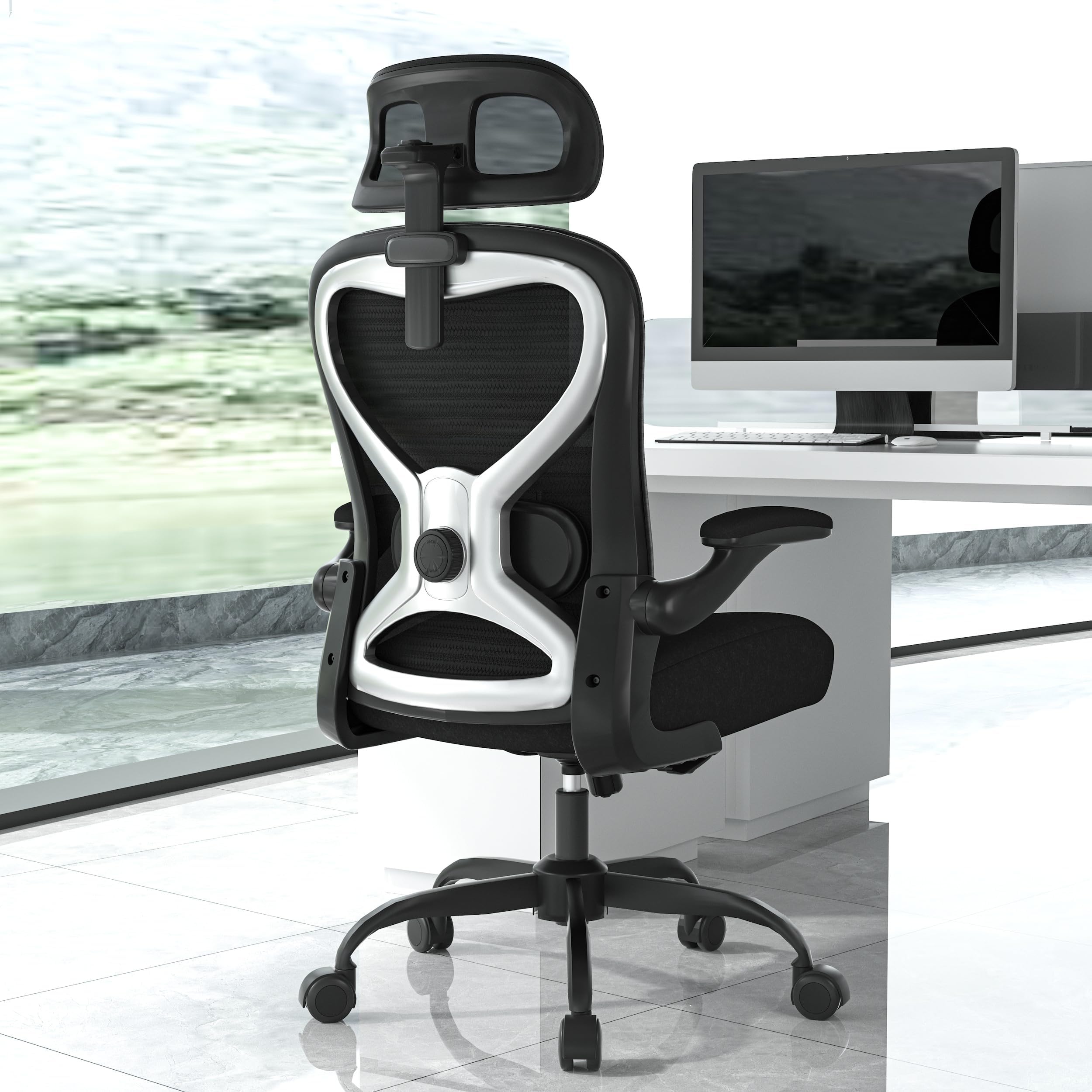
The CASASIO chair uses virgin foam in the seat to distribute weight evenly and prevent soreness after 8-plus-hour shifts. Its contoured mesh back aligns with the natural spine curve, and the dual-direction adjustable lumbar cushion lets you dial in lower back support. The tilt-and-rock feature with adjustable tension promotes micro-movement, which can reduce the static load that aggravates anterior pelvic tilt.
The 3D headrest adjusts in height, depth, and angle, and the flip-up armrests allow the chair to slide under shallow desks. The reinforced metal base supports up to 350 pounds, and users report easy assembly in 15 to 20 minutes. Multiple reviews highlight that the chair eliminated lower back pain after a few days of adjustment.
The seat cushion is moderately firm—users describe it as “soft yet firm”—which helps maintain pelvic alignment without sinking. The mesh back is breathable, though some taller users above 6 feet find the backrest a bit short. For the price point, the combination of adjustable lumbar, tilt rocking, and a high-density foam seat makes this a strong entry-level option.
Why it’s great
- Virgin foam seat resists sagging and maintains neutral pelvis position
- Tilt-and-rock mechanism encourages dynamic sitting to reduce static load
- 3D headrest and flip-up armrests provide flexible adjustment options
Good to know
- Backrest may feel short for users over 6 feet tall
- Requires clearance behind desk for tilt function to work fully
8. Synorla High-Back Mesh Chair

The Synorla chair features an S-shaped backrest designed to follow the natural spine curve, with adjustable headrest, lumbar pad, seat height, and a backrest that tilts from 90 to 135 degrees. The 3.1-inch thick cushion offers a spacious 20.5 by 20.5-inch seating area, and the nylon frame supports up to 330 pounds. It is a budget-friendly entry that covers the basic ergonomic adjustments needed for anterior pelvic tilt support.
The mesh back is breathable, and the high-elastic sponge cushion offers moderate firmness. Users averaging 5 feet 6 inches find the lumbar support effective, while taller users above 6 feet report the headrest and lumbar pad can shift out of position. The 135-degree recline lock lets you alternate between upright work and relaxed sitting.
Assembly is straightforward with included tools and detailed instructions. The chair rolls well on both carpet and hard floors. Durability concerns appear in extended use—some users report the lumbar pad detaching and the upright lock failing after several weeks. For short-term budget use or lighter schedules, it provides adequate pelvic tilt support.
Why it’s great
- S-shaped backrest follows natural spine curve for basic pelvic support
- 135-degree recline allows posture variety throughout the day
- Breathable mesh back and thick cushion for comfort during moderate use
Good to know
- Lumbar pad and headrest may shift or detach with extended use
- Best suited for users up to 5 feet 6 inches for proper alignment
9. Leader Cattle Cross Legged Chair

The Leader Cattle chair breaks the standard seating mold by allowing cross-legged, squatting, kneeling, and traditional sitting positions. Its 4.2-inch high-resilience foam topped with 1.2 inches of memory foam provides a deeply cushioned seat, while the crescent-shaped backrest offers lumbar support. The 360-degree swivel footstool adds leg support for varied postures.
This chair is designed for fidgety sitters and those who cannot stay in one position for long. The wide 17.5-inch seat accommodates plus sizes, and the 300-pound weight limit covers most body types. Users find the memory foam comfortable for 4-hour sessions, and the ability to change positions helps prevent the static loading that contributes to anterior pelvic tilt.
The main limitation is that it does not provide the structured lumbar depth adjustment that a traditional ergonomic chair offers. The crescent backrest supports the lower back but is not customizable. For users who want to break free from fixed sitting and explore postures that naturally tilt the pelvis posteriorly, this is a unique and effective option.
Why it’s great
- Multiple sitting positions allow you to find a pelvis-neutral posture naturally
- Thick memory foam seat cushions hips and thighs during extended sits
- Crescent backrest provides stable lumbar support across varied positions
Good to know
- No adjustable lumbar depth for precise lower back targeting
- Requires assembly and takes up to an hour for first-time builders
FAQ
Does a kneeling chair actually fix anterior pelvic tilt?
How much seat depth adjustment do I need to correct pelvic tilt?
Can a chair with fixed lumbar support help anterior pelvic tilt?
Is a mesh seat better than a foam seat for pelvic tilt?
Should I use a footrest with my chair for anterior pelvic tilt?
Final Thoughts: The Verdict
For most users, the best chair for anterior pelvic tilt is the Vari CoreChair because its patented tilting mechanism actively engages the core and stabilizes the pelvis, directly counteracting the forward roll that defines the condition. If you prefer adjustable seat depth and four-way lumbar control, grab the ProtoArc EC200. And for users who need a heavy-duty build with a wide seat and 600-pound capacity, nothing beats the Petheivun Big & Tall.

Mo Maruf
I created WellFizz to bridge the gap between vague wellness advice and actionable solutions. My mission is simple: to decode the research and give you practical tools you can actually use.
Beyond the data, I am a passionate traveler. I believe that stepping away from the screen to explore new environments is essential for mental clarity and physical vitality.