Our readers keep the lights on and my smoothie glass nicely filled. As an Amazon Associate, I earn from qualifying purchases.
A wrong chair after spinal surgery doesn’t just feel uncomfortable — it actively works against your healing, loading your fused or repaired vertebrae with every shift of weight. The right chair absorbs shock where you need it most, holds your lumbar curve in a neutral position, and lets you rise without twisting or straining your core.
I’m Mohammad Maruf — the founder and writer behind WellFizz. I’ve spent hundreds of hours cross-referencing orthopedic rehab protocols with real-world user data to isolate the specific seat geometries and support mechanisms that actually protect a post-surgical spine during the critical recovery window.
Whether you need a tall seat to reduce hip flexion, a footrest to keep your knees below your hips, or a dynamic lumbar that tracks your movement, this guide to the best chair after spinal surgery breaks down exactly which models deliver measurable support where it matters most.
How To Choose The Best Chair After Spinal Surgery
Post-surgical seating isn’t about luxury — it’s about preventing re-injury. Every adjustment, from lumbar height to armrest width, either protects your incision site and spinal hardware or forces compensatory movements that stall recovery. Focus on these three factors before anything else.
Dynamic vs Static Lumbar Support
A fixed pillow or a non-adjustable lumbar bump pushes into one spot of your back and ignores how your spine changes shape as you recline or lean forward. After spinal surgery, you need either a pop-out lumbar that you can position vertically and adjust in depth, or an auto-following mechanism that tracks your lumbar as you shift. Static lumbar supports often create pressure points exactly where you don’t want them.
Seat Height, Depth & Edge Design
A shallow seat depth forces your knees higher than your hips, increasing flexion load on your lumbar discs. A waterfall front edge reduces pressure behind your knees and keeps blood circulating. Seat height matters equally — too low, and you’ll pull yourself up using your arms and core, straining your surgical site. Look for a seat pan that you can adjust forward or backward and a height range that lets your feet rest flat with your knees at or slightly below hip level.
Armrests That Support Standing
After spinal surgery, standing up from a seated position is often the most painful movement of the day. Fixed armrests force you to lean forward and push from your lower back. Fully adjustable 3D or 4D armrests let you position the pad at the exact height and angle you need to lever yourself upright without twisting your spine. Flip-up arms can also help if you need to slide in from a walker or wheelchair.
Quick Comparison
On smaller screens, swipe sideways to see the full table.
| Model | Category | Best For | Key Spec | Amazon |
|---|---|---|---|---|
| GABRYLLY Mesh Chair | Mid-Range | All-day seated comfort with footrest | 2-way lumbar + 135° recline | Amazon |
| COLAMY High-Back | Mid-Range | Plush cushion with pop-out lumbar | Pop-out lumbar + 6.7″ cushion | Amazon |
| CabeVibe C3 | Mid-Range | Tall users and zero-gap lumbar wrap | Dual-panel 17.5″ auto lumbar | Amazon |
| SUNNOW Ergonomic | Premium | Advanced adjustability with 3D lumbar | 3D dynamic lumbar + 4-gear recline | Amazon |
| Lumex Everyday Hip Chair | Premium | Hip-sparing tall seat for sit-to-stand | Tall 27″ seat + adjustable footrest | Amazon |
| Newtral Auto-Follow Lumbar | Premium | Auto-tracking lumbar for shifting postures | Auto-follow lumbar + 4D armrests | Amazon |
| Drive Medical Geri Chair | Premium | Full recline with tray for limited mobility | 3-position recline + lockable casters | Amazon |
| HBUI Power Lift Recliner | Premium | Power lift with massage for elderly recover | Power lift + 8 massage points | Amazon |
| iComfort i6000 | Premium | Big & tall with triple-action foam | PostureSync lumbar + 400 lb capacity | Amazon |
In‑Depth Reviews
1. GABRYLLY Ergonomic Office Chair with Footrest
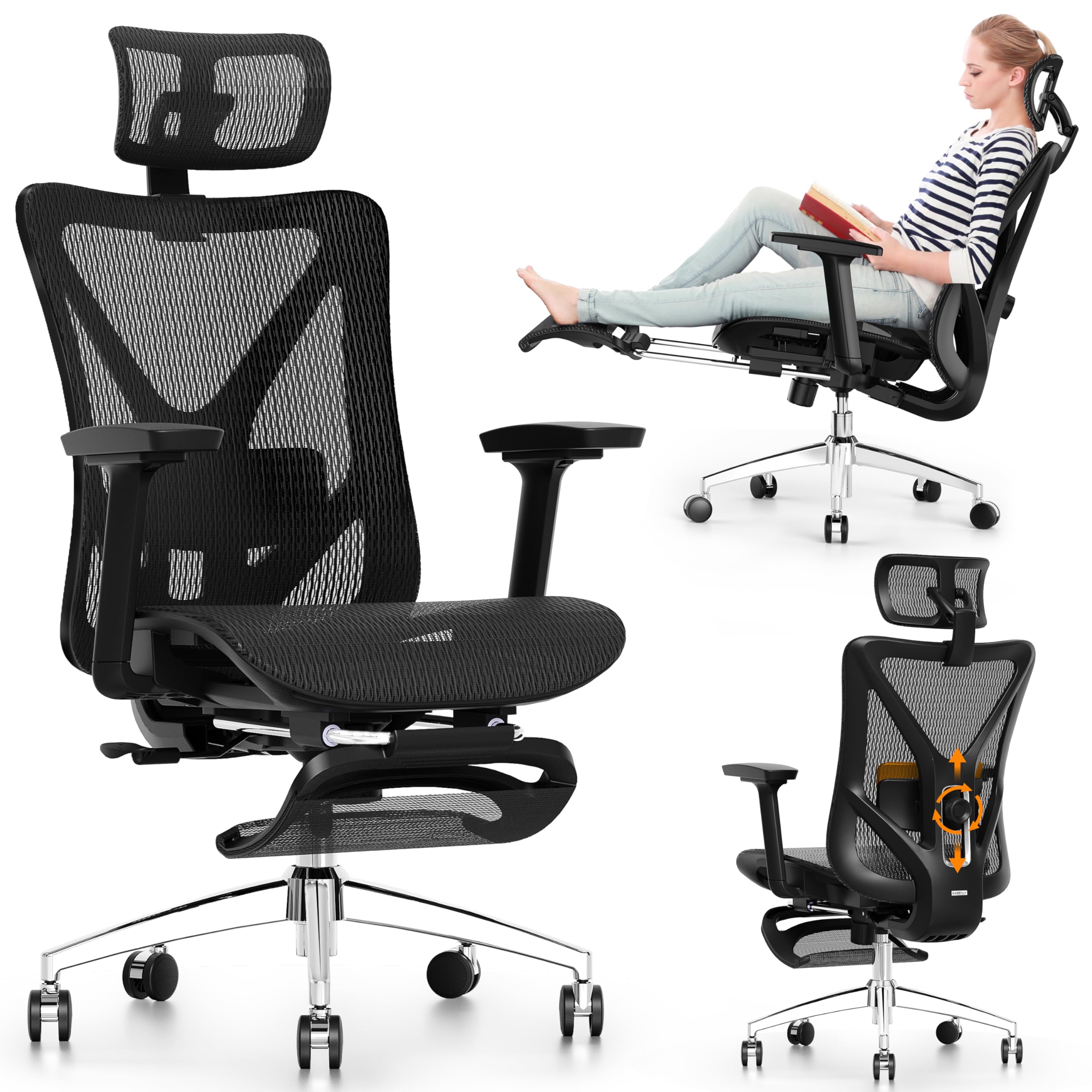
The GABRYLLY strikes a rare balance for post-surgical sitting: its 2-way adjustable lumbar provides 3 inches of vertical travel and 1.6 inches of depth adjustment, letting you dial in exactly where your lower back needs support without relying on a generic curve. The mesh back breathes well, which matters when you spend extended periods in one position, and the steel base rated to 300 pounds eliminates the wobble that can jolt a healing spine.
The retractable steel footrest extends 18.1 inches and pairs with a 135-degree recline that locks at 90, 110, or 135 degrees. This means you can shift from upright working posture to a semi-reclined rest position without losing spinal alignment. The 3D armrests adjust up/down, front/back, and in/out, giving you the leverage you need to push yourself up without twisting your torso.
Users report that the mesh is comfortable for long sits, though a few note that the lumbar adjustment mechanism requires some firm pressure to click into place. The armrests shift slightly under heavy pressure during standing, but the leg rest and overall build quality earn high marks for the price range. Assembly takes 15 to 25 minutes with included tools.
Why it’s great
- 2-way lumbar adjusts vertically and in depth for precise spinal support
- Retractable steel footrest and 135° recline allow position changes without losing back alignment
- 3D armrests provide stable leverage for standing up safely
Good to know
- Lumbar adjustment requires firm pressure to engage
- Armrests can shift unintentionally when leaning heavily on one side
2. COLAMY Office Ergonomic Desk High Back Executive Chair

The COLAMY uses a pop-out lumbar support that deploys with a push button, letting you add lower back reinforcement only when you need it. This is useful in early recovery when your spine needs constant support, but less helpful once you can vary your sitting posture. The 6.7-inch thick high-density foam seat cushion is significantly thicker than most task chairs, reducing the pressure on your tailbone and sacrum during long sits.
Flip-up armrests are a standout feature for spinal surgery patients who need to slide the chair under a desk or approach it from a walker. The padded armrests also give you a stable surface to push off from when standing. Upgraded silent casters roll smoothly across hardwood and tile without the squeaking that can disturb a quiet recovery space.
Some users report that the headrest buttons can fail, causing the headrest to drop to its lowest position and contact the upper thoracic spine instead of the neck. The leather upholstery is easy to wipe clean, but the seat cushion may feel firmer than expected for those accustomed to plush recliners. Assembly is straightforward at roughly 20 minutes.
Why it’s great
- Pop-out lumbar deploys on demand for targeted lower back support
- Extra-thick 6.7-inch cushion relieves tailbone and sacral pressure
- Flip-up arms make it easier to approach from a mobility aid
Good to know
- Some units have headrest height adjustment failures
- Seat cushion is firm, which may not suit users wanting a plush feel
3. CabeVibe C3 Ergonomic Office Chair
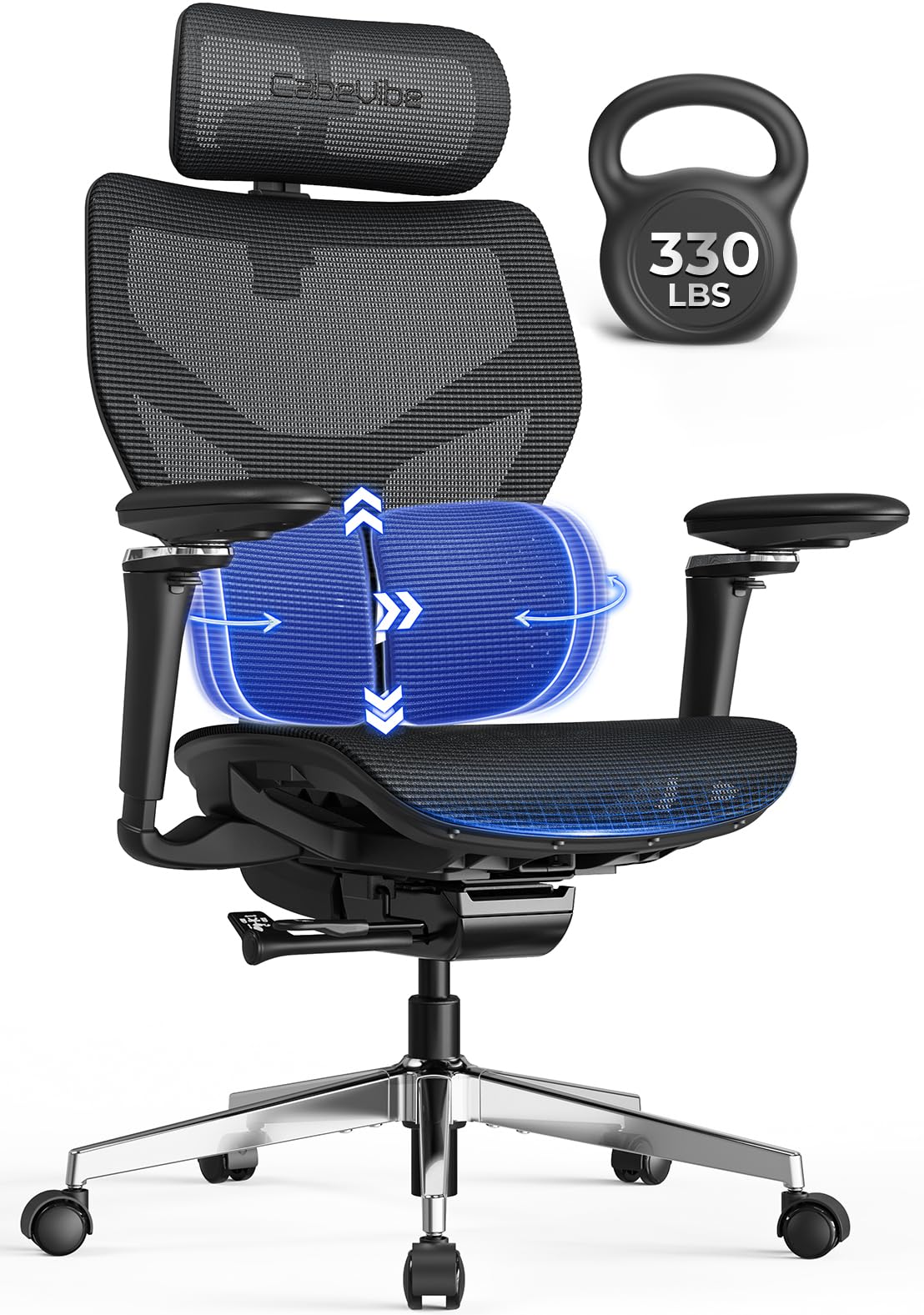
The CabeVibe C3 sets itself apart with a 17.5-by-8.5-inch dual-panel lumbar system that provides roughly double the surface area of typical lumbar supports. Instead of a single point of pressure, two independently moving wings cradle your lower back as you shift, which matters enormously when your surgical site is sensitive to uneven force. The lumbar adjusts 3.5 inches vertically and 1 inch in depth, accommodating both manual fine-tuning and automatic response.
Its seat depth adjusts 2.36 inches forward or back — a rare feature in mid-range chairs — letting you position your thighs so that your knees stay at or below hip level, minimizing flexion stress on your lumbar spine. The 630-degree mechanical armrests rotate and slide in nearly every direction, so you can find a stable push-off point regardless of your body angle. The mesh seat uses over 5,000 micro-perforations to keep you cool and uses a waterfall front edge to reduce thigh pressure.
The chair supports users up to 6 feet 5 inches and 330 pounds, making it one of the few options that properly fits taller individuals during recovery. Wheels are on the small side and struggle on thick carpet, and the headrest may sit too far back for some users. Assembly takes under 30 minutes, and the 24-month warranty covers parts.
Why it’s great
- Dual-wing lumbar wraps the lower back with 17.5″ of adjustable surface area
- Seat depth adjustment keeps knees at proper hip height for spinal unloading
- 630° armrest range provides stable standing leverage in any recline angle
Good to know
- Small wheels do not roll well on thick carpet or floor mats
- Headrest may sit too far back for some users to achieve neck contact
4. SUNNOW Ergonomic Office Chair with Footrest
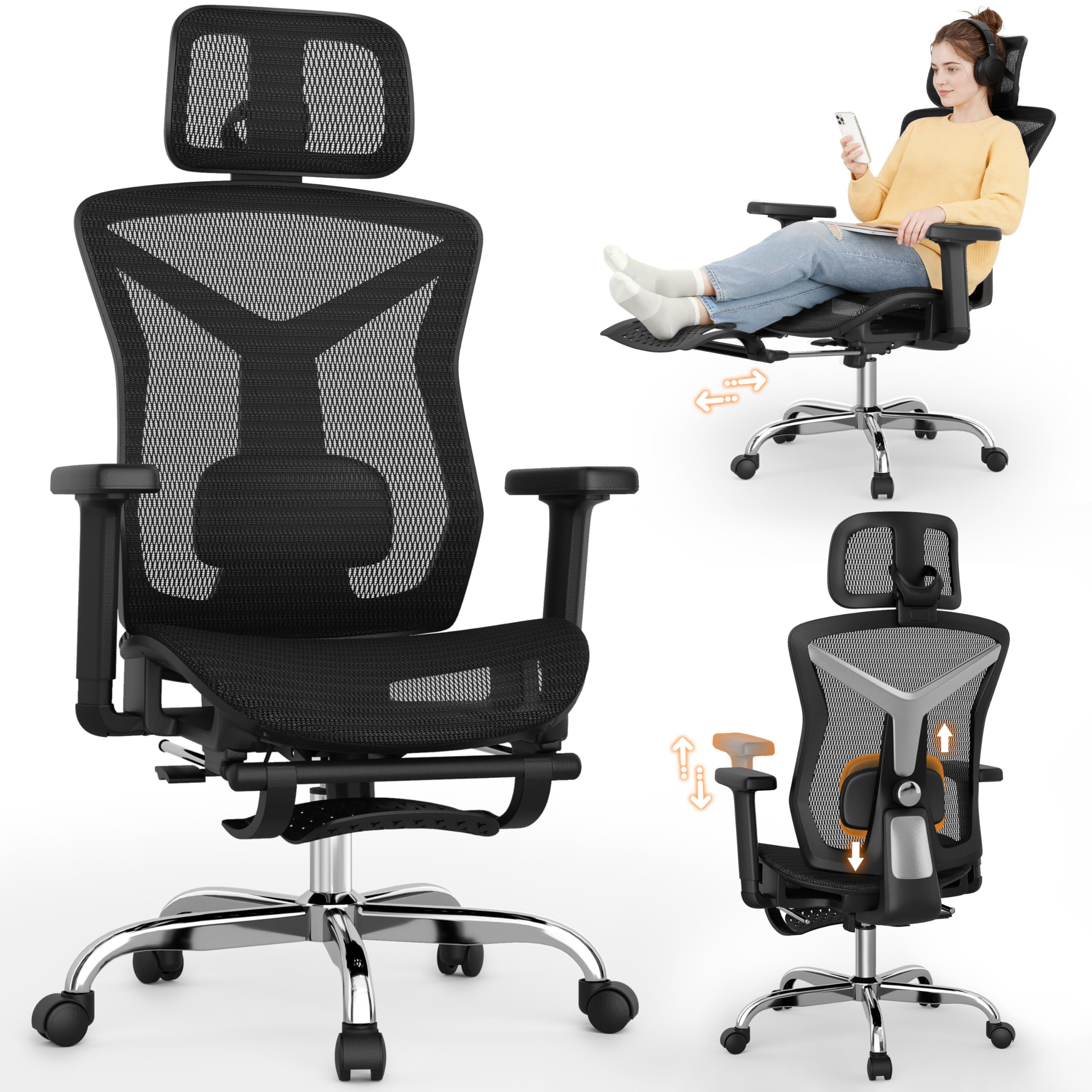
The SUNNOW distinguishes itself with a 3D dynamic lumbar system that adjusts in height, depth, and pressure. This gives you more granular control than simple pop-out or spring-based designs, which is critical when your spine’s tolerance changes week by week during recovery. The embedded lumbar avoids the overly stiff feel of a protruding pad while still providing enough structure to prevent your lower back from collapsing into the mesh.
The 4-gear recline locks at 90, 110, 120, and 135 degrees, and the retractable footrest allows full leg support when you recline. This combination lets you rotate between upright therapeutic posture and a zero-gravity-adjacent position that offloads your lumbar discs. A wide breathable mesh seat and 3D adjustable headrest complete the package, with the headrest covering all neck stress points whether you sit upright or recline.
User feedback highlights the easy 10-to-20-minute assembly and the inclusion of both standard casters and rollerblade-style wheels for smooth movement on tile. Some buyers experienced initial defects with armrest stability, but the manufacturer resolved issues quickly with replacement parts. The footrest is sturdy enough to support leg weight during reclining but may feel firm for users accustomed to padded calf rests.
Why it’s great
- 3D lumbar adjusts height, depth, and pressure for precise post-surgical positioning
- 4-gear recline plus footrest allows spine-offloading rest positions
- Includes both standard and rollerblade wheels for floor-type adaptability
Good to know
- Footrest lacks padding and may feel firm for extended leg support
- A few units arrived with minor armrest assembly defects
5. Lumex Everyday Hip Chair with Adjustable Footrest
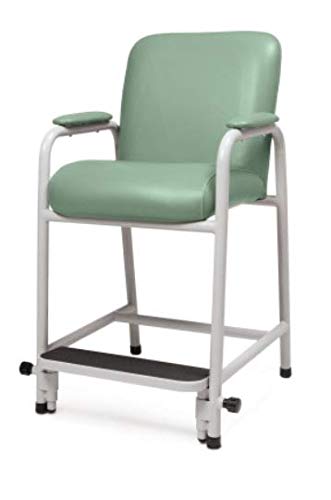
The Lumex Hip Chair is purpose-built for the specific biomechanics of post-surgical sitting: a 27-inch seat height reduces hip flexion, meaning your knees stay below your hips, which directly offloads the lower lumbar vertebrae. This is the same position physical therapists teach after lumbar fusion or microdiscectomy. The high-density foam padding provides enough cushion for extended daily use without bottoming out.
Full-length padded armrests give you a stable surface to push off from when standing, reducing the need to engage your core or twist your spine. The height-adjustable footrest includes a textured anti-slip strip to keep your feet positioned, which also helps maintain proper hip-to-knee-to-ankle alignment. The reinforced metal frame supports users up to 300 pounds without flex.
Some users report that the seat depth is shallow — designed intentionally to enforce a 90-90-90 sitting angle — which may feel restrictive for taller individuals or those who prefer to recline. Assembly takes about 20 minutes, and the chair weighs enough that moving it requires effort. A few buyers noted paint scuffs on arrival, but overall construction quality is rated highly.
Why it’s great
- Tall 27″ seat reduces hip flexion, directly unloading lower lumbar pressure
- Padded full-length armrests provide stable standing leverage without twisting
- Adjustable footrest with anti-slip strip supports proper seated posture
Good to know
- Shallow seat depth may feel restrictive for taller users or those wanting to recline
- Heavy build makes it difficult to reposition once assembled
6. Newtral Office Chair Ergonomic with Auto-Following Lumbar

The Newtral introduces automatic lumbar tracking — a mechanism that physically follows your lumbar spine as you lean forward or recline. Endorsed by ergonomist Iris Sokol, this system ensures you never lose lower back support during movement, which is particularly valuable when shifting positions to relieve pressure after surgery. The lumbar force is also adjustable so you can reduce or increase pressure as your healing progresses.
The seat depth and height both adjust independently, letting you optimize the femur-to-torso angle for your specific surgical level. The 4D armrests move up, down, in, out, forward, backward, and rotate, giving you a wide range of stable push-off points. The recliner form factor supports up to 125 degrees of recline with a synchro-tilt mechanism that keeps your feet planted.
Users praise the lumbar support and seat depth adjustability, but some note that the included footrest feels more like a flimsy calf rest than a true leg support. The headrest can sit too far back for some users even after adjustment, and one review reported tailbone pain from the seat cushion. Customer service is responsive according to several reviews, and assembly is manageable for one person.
Why it’s great
- Auto-follow lumbar maintains support during every posture shift
- Independent seat depth and height adjustments optimize spinal angle
- 4D armrests offer maximum standing leverage positions
Good to know
- Footrest is thin and not suited for substantial leg support
- Some users report headrest sits too far back for comfortable neck contact
7. Drive Medical 3 Position Geri Chair Recliner
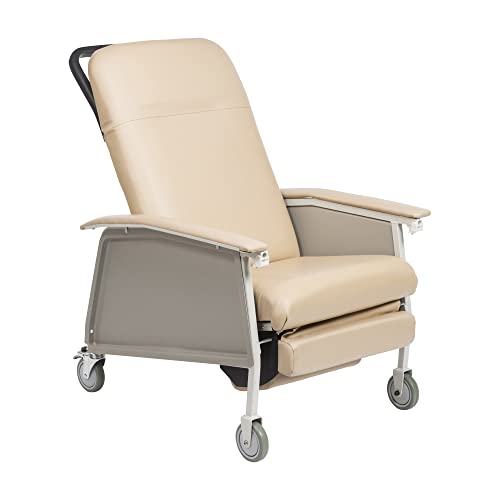
The Drive Medical Geri Chair is built around three locked positions — upright, deep recline, and elevated leg rest — using a retractable lock bar that eliminates drift during use. This matters for post-surgical patients who cannot tolerate sudden position changes. A self-adjusting suspension in the seat prevents bottoming out, and the moisture barrier protects the foam from spills during recovery periods when mobility is limited.
Wide armrests are angled to provide support in any reclined position, and the built-in headrest follows the recline angle so your neck stays supported. Five-inch casters with two locking wheels let you position the chair and then lock it in place. The included tray provides a stable surface for meals or reading, reducing the need to reach or twist for items on a side table.
Assembly is more involved than a standard office chair, requiring multiple steps and clear instructions. Some users note that only two of the four wheels lock, which can allow slight rocking. The seat is designed for users around 5 feet 2 inches to 5 feet 8 inches — larger users report the chair feels snug. The cushions are firm out of the box and may need a break-in period or additional padding overlay.
Why it’s great
- Lock-bar recline eliminates accidental position changes during healing
- Wide armrests offer stable support in any recline angle
- Built-in tray reduces need for reaching and twisting
Good to know
- Only two of four wheels lock, allowing some chair rocking
- Seat may feel snug for users over 5’8″ or 180 lbs
8. HBUI Power Lift Recliner Chair
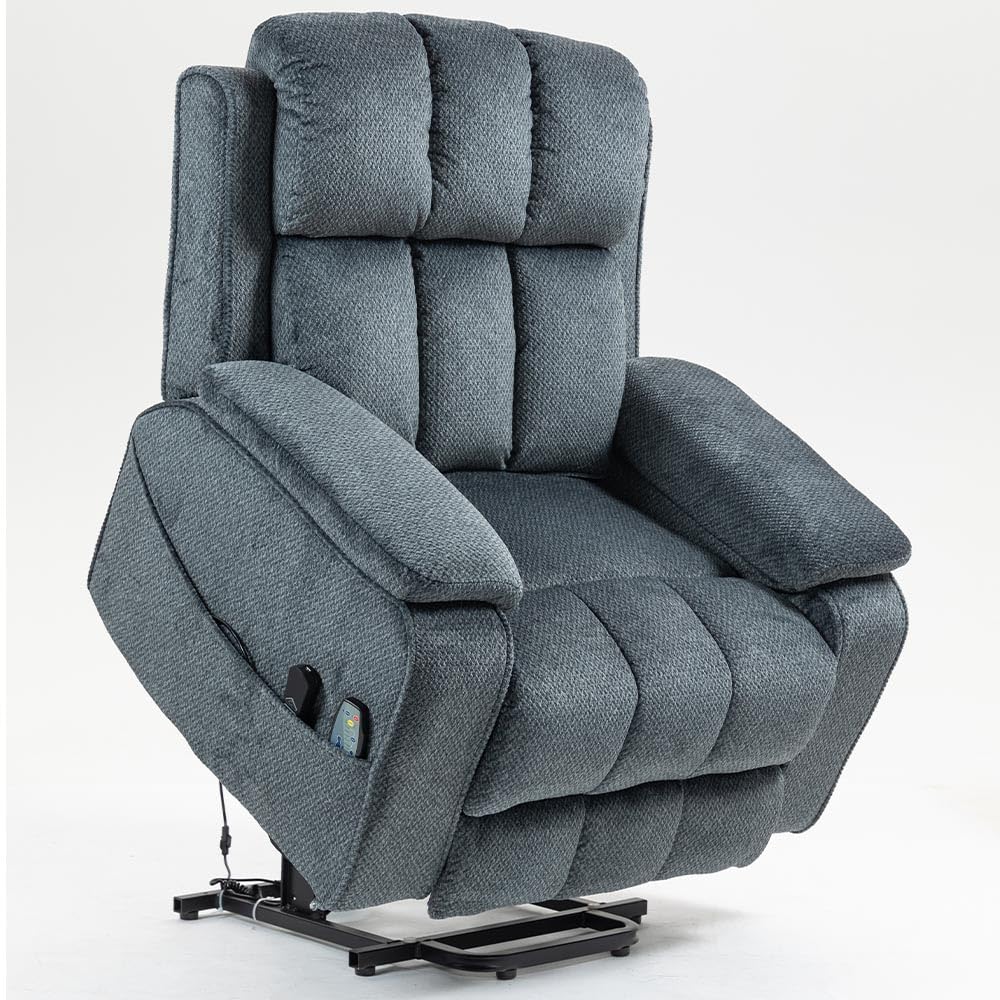
The HBUI Power Lift Recliner solves the single hardest movement after spinal surgery: standing up. Its electric lift mechanism tilts the entire chair forward, bringing you to a near-standing position so you don’t have to push through your arms or use your core. This is a game-changer for lumbar fusion and disc replacement patients who are under strict orders not to twist or lift during the first weeks of recovery.
Eight built-in massage points with five modes and three intensities help reduce muscle tension that builds from forced inactivity. The heating function adds gentle warmth to the lumbar region, which can ease the stiffness that sets in during long sits. The high-density sponge cushion and independent unit springs prevent the seat from collapsing, and the OKIN alloy steel bracket supports up to 350 pounds without shaking during the lift cycle.
The velvet upholstery is soft and anti-pilling but may be harder to clean than leather or bonded leather. The massage function is gentle — it won’t replace a deep tissue session, but it helps with circulation during immobility. Assembly uses a quick-plug design with no tools and takes about 10 minutes. Some users report that after a week of use, the lift mechanism can fail, so check warranty coverage before purchase.
Why it’s great
- Power lift assist eliminates core and arm strain during standing
- Massage and heat help manage post-surgical muscle stiffness
- Sturdy OKIN steel bracket supports heavy users without wobble
Good to know
- Velvet upholstery is harder to clean than leather alternatives
- A small number of users report lift mechanism failure within weeks
9. iComfort i6000 Series Big & Tall Executive Chair

The iComfort i6000 is built for larger body types, supporting up to 400 pounds with a reinforced nylon base and a wide seat that accommodates broader hips without pinching. Its PostureSync lumbar system moves with you as you lean forward or recline, maintaining continuous contact with your lower back rather than dropping away at certain angles. The triple-action foam technology — which cradles, supports, and cools — reduces the pressure point formation that often leads to shifting and spine-jarring movements.
The bonded leather upholstery with deep body pillows adds a layer of comfort that helps distribute weight evenly across the seat and backrest. Arm controls give you easy access to seat height and tilt lockout, and the arched nylon base provides stability on any floor surface. The chair arrives mostly assembled — you attach the base and headrest, making it one of the quickest setups in this category.
Users note that the tilt range is relatively shallow — only a few inches of recline — and the lumbar support reduces as you tip back, which can feel odd if you rely on it during reclining. The seat depth is shorter than typical, landing at mid-thigh rather than two-thirds, which may not suit all leg lengths. Armrests lack height adjustment, so taller users may find them too low for comfortable standing leverage.
Why it’s great
- 400 lb capacity and wide seat accommodate larger body types safely
- PostureSync lumbar tracks forward and backward movement continuously
- Triple-action foam reduces pressure points that cause shifting
Good to know
- Shallow recline range limits posture variety during recovery
- Armrests lack height adjustment, reducing standing leverage for taller users
FAQ
Can I use a standard recliner after spinal fusion surgery?
How high should the armrests be for post-surgery standing?
Is a mesh or padded seat better after spinal surgery?
What is the ideal recline angle for a healing spine?
Final Thoughts: The Verdict
For most users, the chair after spinal surgery winner is the GABRYLLY Ergonomic Chair because it combines 2-way adjustable lumbar, a retractable footrest, 3D armrests that support standing, and a 300-pound steel base at a price that doesn’t force compromises. If you need automatic lumbar tracking that follows your every shift, grab the Newtral. And for users who cannot safely push themselves to stand, nothing beats the HBUI Power Lift Recliner which does the standing work for you.

Mo Maruf
I created WellFizz to bridge the gap between vague wellness advice and actionable solutions. My mission is simple: to decode the research and give you practical tools you can actually use.
Beyond the data, I am a passionate traveler. I believe that stepping away from the screen to explore new environments is essential for mental clarity and physical vitality.