Our readers keep the lights on and my smoothie glass nicely filled. As an Amazon Associate, I earn from qualifying purchases.
For athletes who have plateaued on straight weight, adding chains creates a variable resistance curve that forces your muscles to work harder at the top of the lift where you’re mechanically strongest. This isn’t about looking different—it’s about actually moving heavier loads by overloading the lockout phase of squats, bench presses, and deadlifts. The clatter of steel hitting the floor signals real progress, not just another set.
I’m Mohammad Maruf — the founder and writer behind WellFizz. I’ve spent hundreds of hours analyzing the metallurgy, weight distribution, and real-world durability of commercial lifting chains to find the sets that actually deliver consistent load for athletes training for competition.
Whether you’re a powerlifter chasing a new max or a football player building explosive drive, the right set of high-tensile steel chains transforms every rep. This guide breaks down exactly how to select the best chains for athletes for your training style and budget.
How To Choose The Best Chains For Athletes
Accommodating resistance with chains changes the load curve: the weight increases as you press or pull into a more mechanically advantageous position. This forces your central nervous system to recruit more muscle fibers near lockout, directly translating to faster acceleration and a higher one-rep max. But not all chains are equal, and picking the wrong metallurgy, gauge, or attachment system can ruin your training session.
Chain Gauge and Total Weight
The most critical spec is the link diameter—measured in inches. A 5/8-inch chain offers significantly more total weight per foot than a 1/2-inch chain. For most athletes starting out, a pair of 15- to 25-pound chains is enough. More advanced lifters may need 45-pound or heavier sets to feel a meaningful differential. Know that the weight of the chain on the bar isn’t constant; roughly half of it rests on the floor at the bottom of the rep, so the jump in resistance is the key variable, not the total chain weight.
Attachment Hardware and Collar Quality
The connection point between chain and barbell is the most common failure point. A cheap carabiner or a poorly welded bolt snap can open mid-lift, sending weight crashing down unexpectedly. Look for locking carabiners or heavy-duty snap links with a tensile strength rating above your working load. If your chain setup uses collars (clips that secure the chain to the bar sleeve), the collar must have a tight-fitting set screw and a robust clamping mechanism to prevent slippage during explosive lifts. Painted collars may scratch on installation, but the structural integrity of the alloy steel underneath is what matters.
Length and Range of Motion
The chain must be long enough to allow a portion to remain on the floor at the bottom of the lift. For a squat, you typically need 5-6 feet per side. For bench press, 4-5 feet may suffice. If the chain is too short, it will lift off the floor too early, reducing the variable resistance effect. If it’s too long, excess links pile up on the floor and can catch your feet. Measure your bar height at the bottom of your squat or bench to determine the correct chain length for your specific limb lengths and stance.
Coating and Finish
Powder-coated or painted chains resist rust better than bare steel, but the coating will wear off at contact points over time. This doesn’t affect performance—it’s cosmetic. However, a chain that rusts internally can develop weak spots. A black oxide or zinc-plated finish provides excellent corrosion resistance without adding significant cost. If you train in a humid garage or outdoor setup, prioritize a chain with a protective coating to extend its service life.
Quick Comparison
On smaller screens, swipe sideways to see the full table.
| Model | Category | Best For | Key Spec | Amazon |
|---|---|---|---|---|
| Logest 45LB | Weighted Chains | Barbell resistance training | 45 lb per pair, 46-inch shaft | Amazon |
| Titan 6-Foot Set | Heavy Chains | Powerlifting lockout | 20.5 lb per chain, 5/8 inch | Amazon |
| Advantage Rigging 65.6 lb | Mixed Gauge | Advanced athletes | 65.6 lb total, 5/8 & 1/2 inch | Amazon |
| Gorilla Strength Collars | Chain Collars | Custom chain setups | 500 lb capacity each | Amazon |
| DMoose Dip Belt | Dip Belt | Weighted dips and pull-ups | 350 lb capacity | Amazon |
| THEFITGUY Dip Belt | Dip Belt | Cable belt squats | 250 lb capacity | Amazon |
| Iron Neck Alpha | Neck Harness | Neck strengthening | 43-inch nylon tether | Amazon |
In-Depth Reviews
1. Logest Weight Lifting Chains with Collars

The Logest set includes a pair of alloy steel chains with dedicated steel bar collars that secure via an L-screw—no need to buy separate collars just to use chains on an Olympic barbell. The powder-coated finish resists surface rust, and the 46-inch shaft length provides enough chain to keep a substantial portion on the floor during squats and bench press. The knurled grip type on the collars gives a secure purchase when tightening down.
Each chain is sold as a pair at a total weight (15, 25, 35, or 45 lb), meaning each side carries half that load. The 45-pound variant offers a dramatic variable resistance effect for athletes who have outgrown lighter chains. Users report that the carabiner clips are large enough to accommodate additional chains for even heavy setups, making this set scalable as your strength increases.
The only minor caveat is that the individual chains are not labeled with their weight, so you may need to mark them yourself if you own multiple sets. However, the quality of the alloy steel and the effectiveness of the collar’s L-screw system make this the most complete ready-to-use chain package for the serious athlete.
Why it’s great
- Includes matched steel collars—no separate purchase needed
- Powder-coated finish resists rust in humid gym environments
- Available in four weight capacities for progressive overload
Good to know
- Chains are not labeled by weight—requires user marking
- Weight listed is total for the pair, not per side
2. Titan Fitness Pair of 6 Foot 5/8″ Heavy Steel Chains

The Titan Fitness chain pair is built from 5/8-inch alloy steel links, giving each chain a raw weight of 20.5 pounds—44 pounds for the set. The six-foot length is longer than the standard five-foot chains most companies sell, which means more chain stays on the floor at the bottom of a squat or deadlift, creating a longer window of variable resistance. That extra foot of steel per side matters when you’re training tall athletes with a deep range of motion.
The chains come with carabiners for connecting to a connector chain (sold separately), which keeps the main chains suspended correctly off the bar sleeves. The link diameter is substantial enough that these chains will outlast most gym equipment, and the single-strand construction minimizes tangling during setup. Users consistently note that the physical size of these chains looks and feels more industrial than typical fitness accessories.
Because the connector chains are not included, you must factor in that additional purchase and setup time. The carabiners are standard locking gates that work well, though some athletes prefer to upgrade to screw-lock carabiners for added security during maximal-effort singles. For raw durability and cost per pound of steel, this set is hard to beat.
Why it’s great
- Six-foot length accommodates deep range of motion squats
- Thick 5/8-inch links provide long-term durability
- Excellent cost per pound of steel resistance
Good to know
- Connector chains and collars not included
- Bare steel finish may require occasional oiling
3. Advantage Rigging 5/8″ & 1/2″ Weight Lifting Chain Package

The Advantage Rigging package gives you four separate chains: two five-foot pieces of 5/8-inch chain and two five-foot pieces of 1/2-inch chain, plus two snap links and two carabiners. This mixed-gauge setup allows you to dial in the exact amount of variable resistance by combining different chains on each side. The total package weight of 65.6 pounds makes it the heaviest option here for athletes who have outgrown single-pair configurations.
The carabiners included are rated but prove too small to fully slot the largest chains—a known design oversight that users have documented. However, the quality of the chain itself is excellent for powerlifting, with clean welds and consistent link geometry. The five-foot length is sufficient for bench press and most squats, though taller lifters may want longer chains. The combination of two different link diameters gives you the versatility to load 3.5, 11.5, or 17.5 pounds per side, enabling fine-tuned progression.
Given the size of the package, you should inspect the carabiners immediately and consider upgrading to larger locking models. The seller’s customer service is responsive—users report swift replacement of missing or defective parts. For advanced athletes who need heavy total resistance in a single purchase, this package delivers the raw weight.
Why it’s great
- Mixed gauge allows modular weight customization
- Heaviest total package at 65.6 pounds
- Seller provides responsive support for missing parts
Good to know
- Included carabiners too small for the largest chains
- Bolt snap hooks may fail under heavy use
4. Gorilla Strength Collars with Loops

This is not a chain itself but a purpose-built chain attachment system that belongs in every athlete’s training toolbox. The Gorilla Strength collar set includes two painted alloy steel collars with integrated V-loops designed to accept carabiners and chains directly. Each collar has a maximum weight rating of 500 pounds, more than enough for even the strongest lifters running heavy chain setups. Made in Cecilia, Kentucky, and backed by a lifetime warranty.
The 2-inch diameter fits any Olympic bar sleeve, including Farmers Walk bars and strongman equipment. The textured grip surface helps the collar bite into the bar sleeve without slipping. Users have reported holding 30-pound chains per side on Olympic dumbbell handles, creating a 60-pound chain dumbbell for instability training. The collars do not loosen during explosive lifts, which is the primary failure mode of cheaper collars.
The paint may scratch during installation on a knurled bar sleeve, but this does not affect function. The collars are heavier than basic spring clips at 5 pounds per pair, but that weight is a sign of the robust steel construction. Each unit comes with a handwritten note from the manufacturer—a small touch that reflects the craftsmanship. If you plan to build custom chain setups, these collars are the anchor point you can trust.
Why it’s great
- 500 lb capacity per collar—extreme safety margin
- Integrated V-loops allow quick chain attachment
- Lifetime warranty and made in the USA
Good to know
- Paint may scratch on knurled bar sleeves
- Heavier than standard spring clips
5. DMoose Fitness Dip Belt with Steel Chain
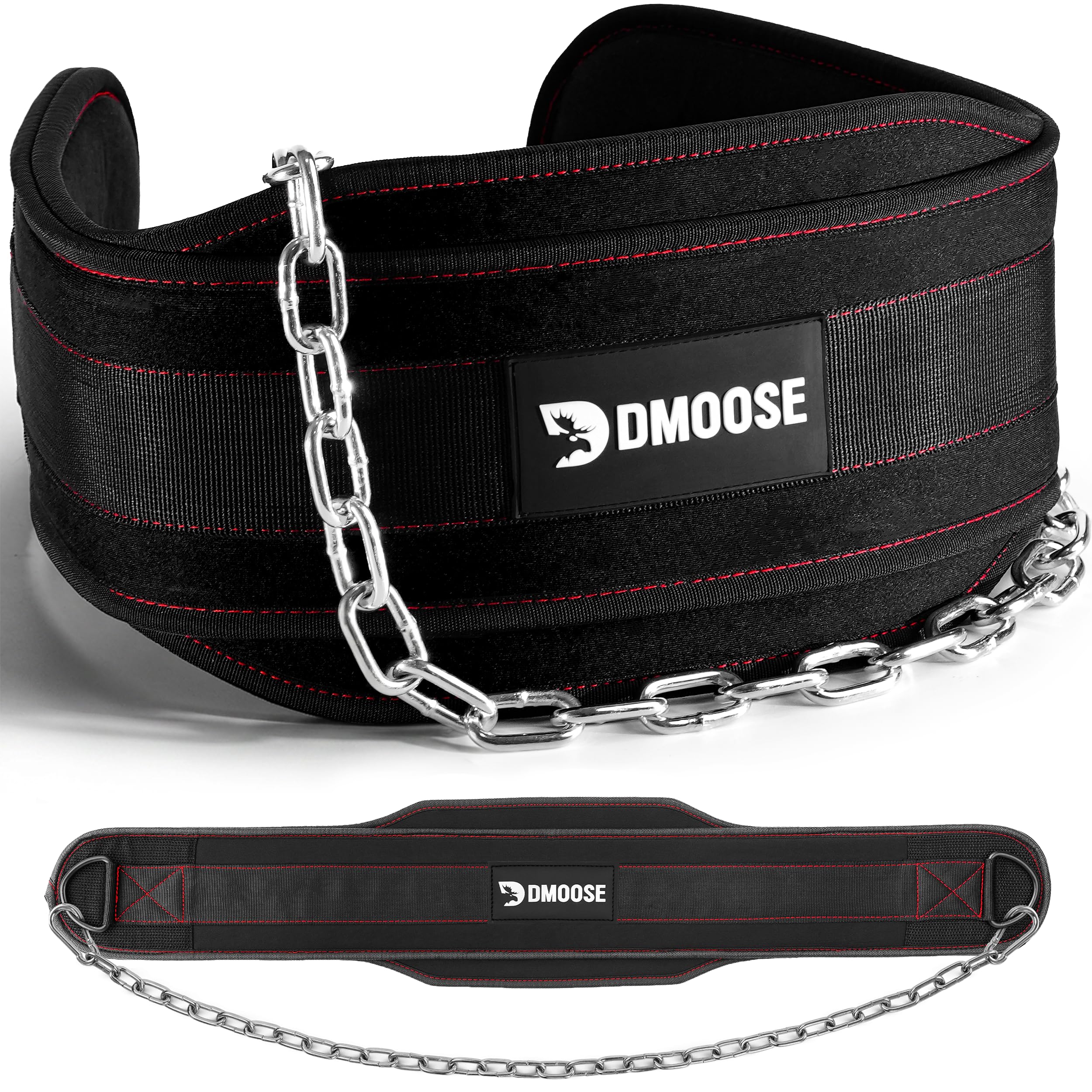
The DMoose dip belt converts your bodyweight dips, pull-ups, and belt squats into weighted strength movements. The belt uses thick neoprene padding across a 5.9-inch width to distribute force across the hips and lower back, reducing pain during heavy sets. The closure system is a hook-and-loop strap with a 36-inch robust steel chain for attaching weight plates, rated to 350 pounds—well above what most athletes will ever load.
With over 7,300 ratings and a 4.7-star average, this belt is the most validated option on the market for weighted calisthenics. The chain is shorter than some users prefer when using large bumper plates, but it fits standard iron plates cleanly. The D-ring attachments are large enough to allow upgrading the carabiners if you need more security during dynamic lifts. The belt initially feels rigid but conforms to your hip shape within a few sessions.
The included carabiners feel small compared to aftermarket options, and the chain may not reach through a stack of wide bumper plates. For athletes primarily using iron plates, this is a non-issue. The DMoose lifetime guarantee provides peace of mind for a product that takes significant abuse in weighted training.
Why it’s great
- Thick neoprene padding reduces lower back strain
- 350 lb capacity exceeds most athlete needs
- Proven track record with thousands of positive reviews
Good to know
- Chain may be too short for large bumper plates
- Included carabiners are small and feel less durable
6. THEFITGUY Dip Belt with Strap
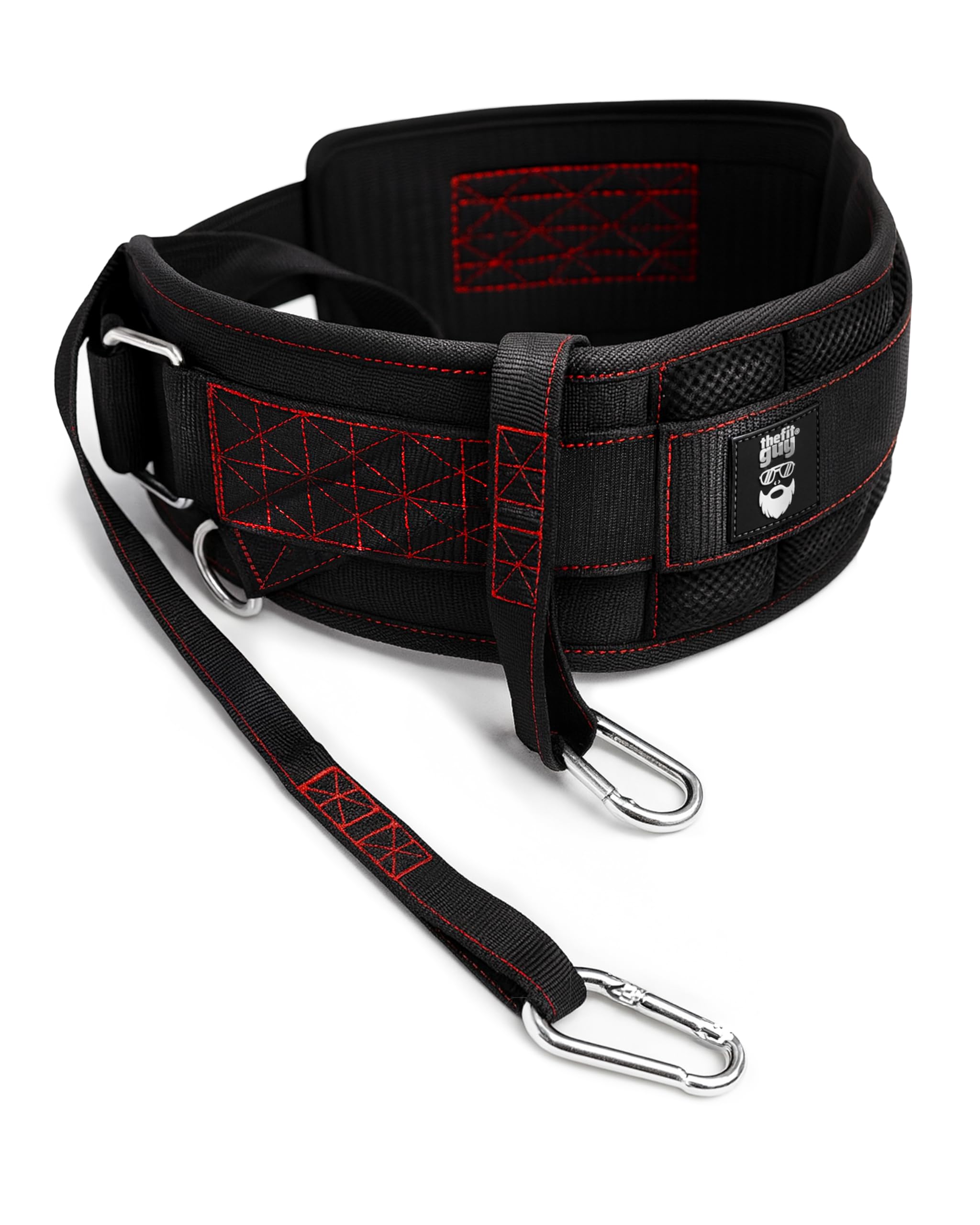
The THEFITGUY dip belt uses a complete buckle closure system backed by a structured firm back panel that provides lumbar support during weighted squats, dips, and pull-ups. The 45-degree angled metal rings prevent skin pinching and allow a more natural dip position compared to standard 90-degree rings. The belt fits waists from 32 to 52 inches, making it one of the more inclusive sizing options. The closure is a hook-and-loop strap with a 40-inch nylon strap plus two metal snap hooks, rated at 250 pounds.
For athletes using belt squats on a functional trainer or cable system, this belt distributes weight well across the hips. The neoprene material is comfortable against bare skin, though the lumbar support panel is not rigid enough for the heaviest belt squat loads. Users running cable belt squats with up to 240 pounds confirm the belt holds securely with no signs of wear. The all-around-the-waist strap gives you precise tightening control without excessive pressure on one point.
The carabiners included are functional but cost-reduced—some users have reported them feeling cheap and have opted to replace them with welded steel rings for leash-style attachments. Also, the belt’s design forces weight slightly toward the inner thigh on belt squats, which some users find uncomfortable. For dips and pull-ups, these issues disappear, making this a solid mid-range option for weighted calisthenics.
Why it’s great
- 45-degree rings provide natural dip position without pinch
- Structured back panel adds lumbar support
- Wide waist range fits 32 to 52 inches
Good to know
- Included carabiners feel less durable than the belt
- Belt squat loading can shift weight to inner thigh
7. Iron Neck Alpha Neck Harness

The Iron Neck Alpha is a neck-specific strengthening harness designed for combat athletes, wrestlers, rugby players, and anyone who needs a strong cervical spine for contact sports. The harness features D-rings on all four sides, enabling side-to-side bending, flexion, extension, and rotational exercises—something traditional single-strap neck harnesses cannot do. The 43-inch nylon tether and two carabiners support small weight plates, and the adjustable quick-fastening chin strap keeps the unit stable during multi-directional movement.
The breathable nylon construction with reinforced stitching makes this harness suitable for high-volume use in commercial gym settings. Athletes have reported significant improvements in neck stability during rugby tackles and wrestling engagements after consistent use. The harness is lightweight and portable, weighing just 0.61 kilograms, so it’s easy to pack for travel or team training. The ergonomic design allows you to load from 10 to 40 pounds effectively, making it appropriate for progressive neck training protocols.
Some users note that the harness can slip slightly on rounder head shapes despite the adjustable strap system, and holding the D-rings during exercise is sometimes necessary to maintain position. For basic rehab or prehab neck strengthening, resistance bands can be substituted for weights. This is not a general-purpose chain for barbell training, but for athletes who need to bulletproof their neck for contact competition, it is an essential addition to the strength program.
Why it’s great
- Four D-rings enable side-to-side and rotational neck work
- Breathable nylon and reinforced stitching for durability
- Lightweight and portable for travel or team use
Good to know
- May slip on rounder head shapes during movement
- Best suited for contact sport athletes, not general lifting
FAQ
How much chain weight should I start with for bench press?
Can I use weightlifting chains on a standard 1-inch bar?
What is the difference between accommodating resistance and bands?
How do I protect my barbell’s knurling from chain damage?
Final Thoughts: The Verdict
For most athletes, the chains for athletes winner is the Logest 45 lb Chains with Collars because it provides the complete package—chains, matched collars, and powder-coated alloy steel—without needing to source separate hardware. If you want adjustable gauge options for precise variable resistance, grab the Advantage Rigging 65.6 lb Mixed Set. And for the athlete who needs a dip belt integrated with a steel chain for weighted calisthenics, nothing beats the DMoose Fitness Dip Belt.

Mo Maruf
I created WellFizz to bridge the gap between vague wellness advice and actionable solutions. My mission is simple: to decode the research and give you practical tools you can actually use.
Beyond the data, I am a passionate traveler. I believe that stepping away from the screen to explore new environments is essential for mental clarity and physical vitality.