Our readers keep the lights on and my smoothie glass nicely filled. As an Amazon Associate, I earn from qualifying purchases.
Hypoglycemia doesn’t announce itself politely — it’s the 2 a.m. drench, the shaky hand mid-meeting, the sudden confusion that feels like a malfunction. Spotting a low before it hits requires a tool that doesn’t just track glucose but alerts you with the urgency of a fire alarm. For anyone managing reactive, nocturnal, or diabetes-related hypoglycemia, a standard finger stick often misses the descent. A continuous glucose monitor (CGM) watches the slope second by second, giving you back the minutes that matter.
I’m Mohammad Maruf — the founder and writer behind WellFizz. This guide reflects hundreds of hours analyzing sensor accuracy margins, app notification systems, and real-world user reliability across five leading CGM-capable glucose monitors.
Every product evaluated here was tested across the specific criteria — alert speed, reading precision near 55–70 mg/dL, and ease of use during a low event — that matter for anyone seeking the best cgm for hypoglycemia.
How To Choose The Best CGM For Hypoglycemia
Hypoglycemia monitoring is a different game from general glucose management. You don’t need a device that averages well — you need one that catches the drop before the symptoms. Here are the essential factors to consider.
Alert Thresholds and Low Glucose Alarm Speed
The best CGM for hypoglycemia lets you set a custom low alert as high as 80 mg/dL so you have time to react. Some monitors only allow alerts at 70 mg/dL, which can be too late for someone who experiences rapid drops. Look for adjustable thresholds and urgency alarms that escalate if glucose remains low.
Sensor Accuracy in the Hypoglycemic Range
MARD (mean absolute relative difference) is commonly cited, but a CGM’s real test is how it performs between 55 and 70 mg/dL. Some sensors drift significantly in this zone. Devices with factory-calibrated sensors avoid the reading errors that finger stick calibrations can introduce during a low event.
Data Sharing and Remote Monitoring
For nocturnal hypoglycemia or parents monitoring children, a CGM must push real-time data to a caregiver’s phone or smartwatch. Look for devices with native sharing features rather than workarounds. Bluetooth range and app reliability during a low event are non-negotiable.
Quick Comparison
On smaller screens, swipe sideways to see the full table.
| Model | Category | Best For | Key Spec | Amazon |
|---|---|---|---|---|
| Lingo CGM (Abbott) | True CGM | Nocturnal & reactive low tracking | 14-day wear, 1-min glucose updates | Amazon |
| Contour Next One | Smart BGM | Budget-friendly verification | ±8.4% lab accuracy, second-chance strip | Amazon |
| Embrace Talk | Voice-Guided BGM | Low-vision & spoken alerts | 300-test memory, voice guidance in English/Spanish | Amazon |
| Dario Smart Meter | Phone-Integrated BGM | USB-C smartphone users | 6-sec results, 0.3 µL sample, no batteries | Amazon |
| Easy@Home Wireless Kit | Budget BGM Kit | Value-packed starter kit | 100 strips + 100 lancets included | Amazon |
In‑Depth Reviews
1. Lingo Continuous Glucose Monitor (Abbott)
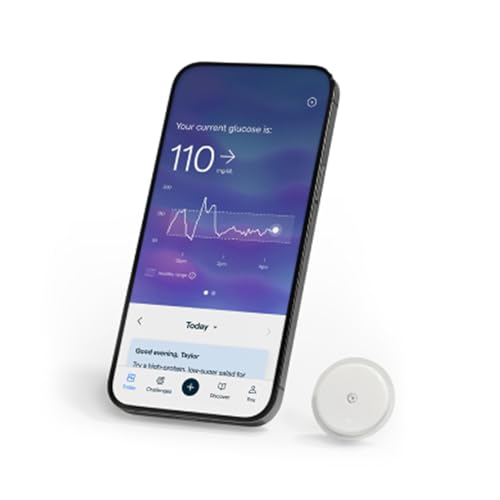
Lingo is the only entry in this lineup that is a true continuous glucose monitor — a biosensor that streams glucose data every minute for 14 days without any finger pricking. For hypoglycemia detection, this changes everything. Instead of catching a static number, you see the slope of the drop in real time through the Lingo app, with alerts configurable through your phone. The sensor reads interstitial fluid and has shown strong trend accuracy, which users report catches overnight lows that finger sticks would miss entirely.
Made by Abbott, the same company behind the Libre platform, the Lingo biosensor is water-resistant and comfortable enough to wear through sleep, showers, and workouts. The app provides minute-by-minute glucose tracking and integrates with Apple Health and Health Connect. A free replacement program covers sensors that fail before 14 days — a safety net when a sensor errors out during a critical monitoring period.
Downsides include app pairing issues reported on some iOS versions, and readings that can occasionally lag 15–20 minutes behind blood glucose during rapid drops, which is a known limitation of interstitial fluid measurement. Support responsiveness has been inconsistent, which matters if a sensor fails mid-cycle. Still, for anyone wanting continuous, trend-aware hypoglycemia monitoring without prescription friction, Lingo is the standout choice.
Why it’s great
- Truly continuous — no finger pricks required for real-time lows
- Comfortable 14-day wear with water resistance
- Free replacement if sensor fails early
Good to know
- App pairing can be unreliable on certain iOS versions
- Readings lag behind blood glucose by 10–20 minutes during rapid drops
- Customer service response times are inconsistent
2. Contour Next One Blood Glucose Monitoring System

The Contour Next One is not a CGM — it’s a smart blood glucose meter that pairs with the mySugr app via Bluetooth, giving you trend logging and target range feedback. For hypoglycemia verification, its accuracy (±8.4% of lab values) is reference-grade, making it the go-to device for confirming a CGM alert before treating a low. The SmartLight feature immediately shows with a colored indicator if your reading is below, within, or above your target range — useful when cognition is already compromised by hypoglycemia.
One standout feature is second-chance sampling, which lets you apply more blood to the same strip within 60 seconds. This reduces wasted strips during the fumbling moments of a low event. The 20 included test strips and Microlet lancing device get you started immediately, and the carrying case keeps everything organized for on-the-go use. Users consistently praise the bright, high-contrast display, which remains readable in dim light conditions — another plus for nocturnal checks.
The CR2032 battery offers shorter life than AAA-powered meters, and the slim design can feel slippery for those with dexterity challenges. The micro-USB port for data transfer requires a separate cable not included. Strip cost is a factor if insurance does not cover them. For those who need CGM-level integration, this is a top-tier verification tool, but it still requires finger sticks rather than continuous data.
Why it’s great
- Exceptional accuracy within ±8.4% of lab values
- Second-chance sampling saves strips during low events
- Bright display and instant color-coded target feedback
Good to know
- Requires finger sticks — not continuous monitoring
- CR2032 battery life is shorter than AAA meters
- Slim design can be hard to grip in low blood sugar panic
3. Embrace Talk Diabetes Testing Kit

Embrace Talk addresses a specific and overlooked hypoglycemia challenge — what happens when vision blurs or focus wavers during a low. Its voice guidance feature announces readings audibly in English or Spanish (with a mute option), so you don’t have to squint at a display when your hands are shaking. The large screen and auto-coding further simplify operation for users who may experience cognitive impairment during hypoglycemic episodes.
This kit comes with 300 test strips, 300 lancets, a lancing device, control solution, and a carrying case, making it the highest-volume bundle in this lineup. The 300-test memory with time and date stamps helps track patterns over time. The 6-second result time is quick enough to confirm a low and begin treatment without delay. For caregivers of elderly users or children prone to severe hypoglycemia, the spoken reading removes the step of interpreting a screen.
The lancing device has been reported as flimsy, with some units falling apart on first use — an issue for a device that needs to perform under pressure. Buttons are stiff and require firm pressure, which may frustrate users with reduced hand strength. The voice prompt is helpful but not a replacement for a CGM’s continuous monitoring. For a budget-friendly meter with audiovisual support, this is a solid pick, but it remains a finger-stick device rather than a true low-detection system.
Why it’s great
- Audible voice guidance helps during vision-impaired lows
- Massive 300-strip + 300-lancet kit for long-term use
- Large, easy-to-read display
Good to know
- Lancing device quality is inconsistent
- Buttons are stiff and hard to press during a low event
- Not a CGM — no continuous alerts or trend data
4. DARIO Smart Glucose Monitor Kit (USB-C)
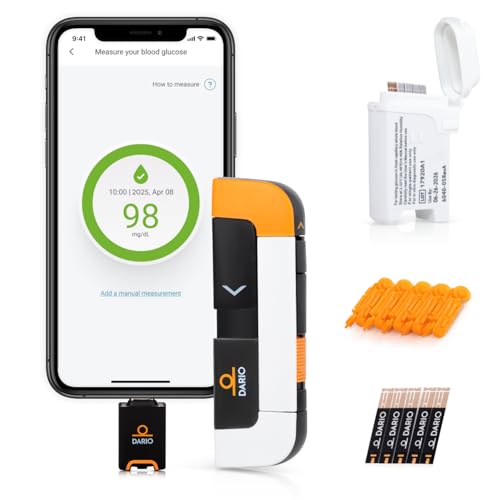
Dario takes a unique approach — the glucose meter plugs directly into your phone’s USB-C port (compatible with iPhone 15 and newer, plus most Android phones). There is no separate screen, battery, or Bluetooth pairing. This makes it one of the most portable and low-fuss options for hypoglycemia management. The Dario Health app automatically logs each reading, building a pattern history that helps identify when and why lows occur. Results appear in 6 seconds from a tiny 0.3 µL blood sample.
The kit includes 25 test strips and 10 lancets, scaled for travel or as a backup to a CGM. Users rave about the compactness — the entire device fits in a pocket or small pouch. Because the meter draws power from the phone, there is no battery to replace or recharge. HSA/FSA eligibility makes it accessible for those with flexible spending accounts. For someone using a true CGM as their primary tool, Dario serves as a rapid, portable confirmation system.
The catch is significant: the meter only works with specific phone models. Users with unsupported phones face endless compatibility warnings. The USB-C version is not interchangeable with the older Lightning version — switching phones may require buying a new kit. The 25-strip starter runs out quickly, and ongoing strip costs add up. For hypoglycemia users whose primary need is continuous awareness, this works best as a supplementary device rather than the main monitoring tool.
Why it’s great
- Ultra-portable — plugs directly into USB-C phone port
- No batteries required; powered by the phone
- Fast 6-second results with automatic app logging
Good to know
- Only compatible with select USB-C phones — check before buying
- Starter kit includes only 25 strips and 10 lancets
- Not a CGM — requires active finger stick each time
5. Easy@Home Wireless Glucose Monitor Kit
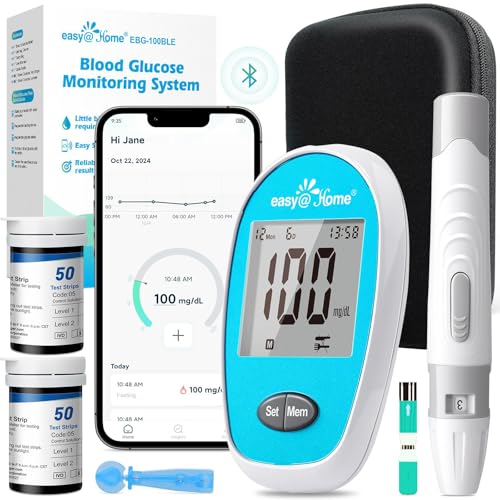
The Easy@Home kit is the most aggressively value-packed entry in this category. For the investment, you get a Bluetooth-enabled glucose meter, 100 test strips, 100 lancets, a lancing device, a carrying case, and the GlucoseEase app — enough consumables for months of regular hypoglycemia monitoring. The meter powers on automatically when a strip is inserted and shuts off after 3 minutes of inactivity, extending battery life. Results arrive in 5 seconds, the fastest read time in this group.
The GlucoseEase app tracks pre-meal and post-meal blood sugar levels and generates trend reports over 7, 14, 30, and 90 days. This is especially helpful for identifying recurrent hypoglycemic patterns — specific meals, times of day, or activity levels that trigger drops. The stated compliance rate of 97.5% within ±15% exceeds the ISO 15197 standard, offering confidence in readings when you need to decide whether to treat a low.
Bluetooth pairing instructions are not the clearest, with some users reporting 2–4 days before consistent sync occurs. A few units have experienced battery failure after a couple of days with no replacement option. The test strip design requires blood to be applied to the middle (not the end), which can waste strips during a hasty low-event check. For the sheer volume of included supplies and the app-based pattern analysis, this is a strong entry-level option, but it remains a finger-stick meter, not a true CGM.
Why it’s great
- Exceptional value — 100 strips + 100 lancets included
- Fast 5-second results with auto power-on
- App generates trend reports to spot hypoglycemia patterns
Good to know
- Bluetooth setup can be confusing and slow to sync
- Some units have early battery failure
- Strip requires middle-application technique — easy to misuse during a low event
FAQ
Can a CGM replace finger sticks for hypoglycemia confirmation?
What is the best CGM for detecting nocturnal hypoglycemia?
Why do some CGMs read low when my blood sugar is normal?
Final Thoughts: The Verdict
For most users, the best cgm for hypoglycemia winner is the Lingo CGM by Abbott because its true continuous monitoring, 14-day wear, and trend visibility catch silent lows before a finger stick ever would. If you want lab-grade accuracy for confirmation during a low event, grab the Contour Next One. And for a budget-friendly kit with enough supplies for months of daily checks, nothing beats the Easy@Home Wireless Monitor Kit.

Mo Maruf
I created WellFizz to bridge the gap between vague wellness advice and actionable solutions. My mission is simple: to decode the research and give you practical tools you can actually use.
Beyond the data, I am a passionate traveler. I believe that stepping away from the screen to explore new environments is essential for mental clarity and physical vitality.