Our readers keep the lights on and my smoothie glass nicely filled. As an Amazon Associate, I earn from qualifying purchases.
Managing your blood sugar is no longer about painful finger pricks and scattered logbooks. A new class of wearable technology—Continuous Glucose Monitors—delivers a stream of real-time data that reveals exactly how your body responds to every meal, workout, and restless night. Whether you are navigating type 2 diabetes, exploring a ketogenic lifestyle, or chasing metabolic optimization, the right CGM device can turn guesswork into a precise, actionable picture of your health.
I’m Mohammad Maruf — the founder and writer behind WellFizz. This guide distills hundreds of hours of research and spec analysis across the current CGM landscape to separate the accurate sensors from the noisy ones and the value-packed kits from the under-equipped.
From Bluetooth-enabled meters that sync directly with your smartphone to subscription-free smart rings that track glucose-related metrics overnight, this roundup of the best cgm device options covers the critical specs, real-world accuracy, and total cost of ownership for every metabolic goal.
How To Choose The Best CGM Device
Selecting a continuous glucose monitor requires matching the technology to your specific use case—whether that is daily diabetes management, metabolic tracking on a keto diet, or general wellness optimization. The three factors below define the difference between a tool you trust and one you ignore.
Sensor Type and Accuracy Standard
Traditional blood glucose meters measure capillary blood from a finger stick and are considered the clinical gold standard. Interstitial fluid-based CGMs, like those from Abbott and Dexcom, measure glucose in the fluid around your cells, which introduces a physiological lag of 5–15 minutes. Look for a MARD (Mean Absolute Relative Difference) score below 10%—the lower the number, the closer the sensor tracks to lab-grade blood draws. Some newer smart rings use PPG and bioimpedance sensors to estimate glucose trends indirectly; these are excellent for pattern recognition but should not be used for insulin dosing decisions.
Data Integration and Subscription Burden
A CGM is only as useful as its data pipeline. Devices that sync automatically via Bluetooth to a companion app (and further to Apple Health, Google Health Connect, or your doctor’s portal) eliminate manual logging. However, some premium platforms—notably Oura and WHOOP—require a monthly subscription to access full historical trends, readiness scores, and long-term insights. Others, like the RingConn Gen 3 and the Keto-Mojo GK+, offer all data analysis without recurring fees. Calculate the 12-month total cost of ownership, not just the upfront hardware price.
Sensor Lifespan and Replacement Policy
Wearable CGM patches (Lingo, Dexcom G7) last 10–14 days per sensor, after which you must apply a new one. Finger-stick meters (Accu-Chek, Keto-Mojo) use disposable test strips that cost roughly 50 cents to per test. If you test six times daily, strip costs exceed a patch-based CGM within two months. Smart rings (RingConn, Oura) have no consumables and track continuously for years, though their battery chemistry degrades over 12–18 months. Always check whether the manufacturer offers a free replacement if the sensor fails early—a critical detail that separates the customer-centric brands from the rest.
Quick Comparison
On smaller screens, swipe sideways to see the full table.
| Model | Category | Best For | Key Spec | Amazon |
|---|---|---|---|---|
| RingConn Gen 3 | Premium Smart Ring | No-subscription daily health & sleep apnea tracking | 14-day battery; 0-subscription model | Amazon |
| Oura Ring 4 | Premium Smart Ring | Detailed sleep & readiness analysis | 8-day battery; 50+ health metrics | Amazon |
| WHOOP 5.0/MG | Subscription Wearable | Athlete recovery & strain coaching | 14-day battery; on-demand ECG | Amazon |
| RingConn Gen 2 | Premium Smart Ring | Sleep apnea monitoring with real-time AHI | 12-day battery; 100m waterproof | Amazon |
| Keto-Mojo GK+ | Dual Meter Kit | Keto & glucose dual testing without sensor subscription | Bluetooth sync; 140 strips (70G + 70K) | Amazon |
| Lingo | Patch CGM | Non-prescription, beginner-friendly glucose tracking | 14-day sensor; no finger prick required | Amazon |
| Accu-Chek FastClix Kit | Finger-Stick Meter | Reliable daily diabetes management with drum lancet | Bluetooth; 6-lancet drum; 11 depth settings | Amazon |
| Accu-Chek Softclix Kit | Finger-Stick Meter | Value-packed starter bundle for new diabetics | Bluetooth; 110 lancets; 100 test strips | Amazon |
| Withings BPM Connect | Blood Pressure Monitor | Home BP tracking with Wi-Fi sync | FDA cleared; 6-month battery; USB-C | Amazon |
In‑Depth Reviews
1. RingConn Gen 3
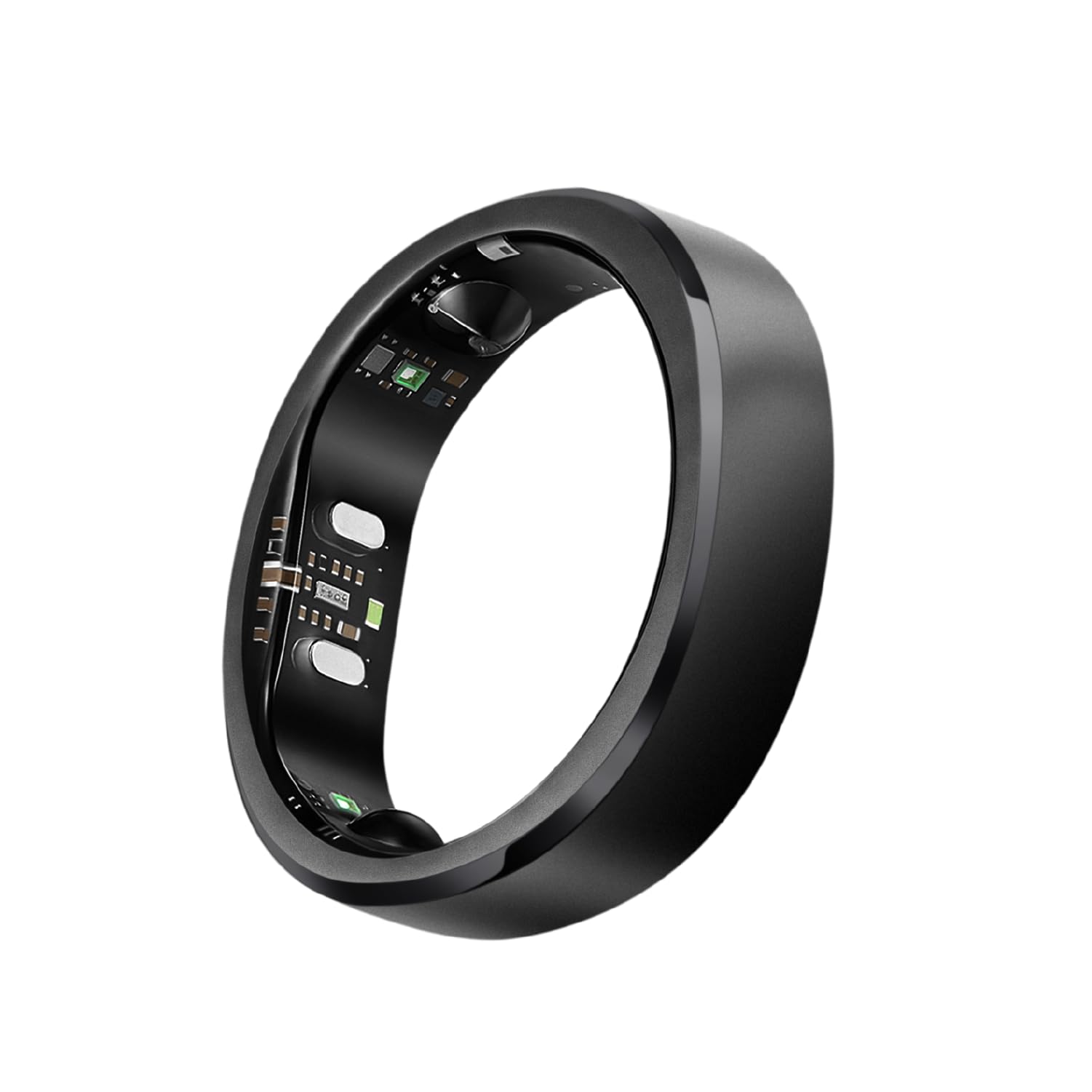
The RingConn Gen 3 redefines what a wellness wearable can achieve without a subscription lock. Its standout feature—Vascular Health Insights—requires a one-time calibration, then continuously analyzes multiple physiological signals to highlight how sleep, activity, and stress shape your vascular load over days and weeks. The titanium build is barely noticeable at just a few grams, and the EcoPower Tech 2.0 delivers up to 14 days of uninterrupted tracking, which is exceptional for a ring form factor.
Haptic vibration alerts provide discreet nudges for inactivity, low battery, or important health signals without forcing you to look at a screen. The companion app transforms raw data into trend-based insights, covering sleep stages, HRV, SpO₂, stress, and sleep apnea detection. Users report step counts within 5% of manual tallies and heart rate tracking within 1–2 bpm of dedicated chest straps, making this a credible alternative to finger-stick meters for non-insulin-dependent users.
The trade-off is the sensor dome that protrudes slightly from the inner band, which some users find pressing against the finger during heavy weightlifting. Also, the sizing kit is non-negotiable—ordering the wrong size results in inaccurate SpO₂ readings. For anyone seeking a subscription-free, 24/7 glucose-related health monitor that does not require consumables, the Gen 3 is the current class leader.
Why it’s great
- Zero subscription fees for full feature access
- Up to 14 days battery life with continuous tracking
- Haptic alerts for inactivity, health signals, and low battery
Good to know
- Inner sensor dome can be noticeable during weightlifting
- Requires precise sizing via the free sizing kit
2. Oura Ring 4

The Oura Ring 4 remains the benchmark for sleep analysis, tracking over 50 health metrics with its Smart Sensing platform that dynamically adjusts the signal path between LEDs and photodiodes to account for finger movement and skin tone. It provides deep sleep staging, HRV, respiratory rate, temperature trends, and SpO₂—all critical for understanding how nocturnal glucose fluctuations affect your recovery. The latest generation also includes an AI Advisor that contextualizes trends in plain language.
Battery life sits at roughly 8 days, and the charger brings it back to full in under an hour, which is fast enough to top up during a shower. The ring is water-resistant to 100 meters, so it survives swims and intense sessions without removal. Users report that the Smart Sensing technology significantly reduces the data dropouts that plagued earlier versions, especially during restless sleep.
The main friction is the subscription: after the first free month, the Oura Membership costs monthly to unlock detailed insights, historical trends, and the AI Advisor. Without it, the ring provides only basic daily scores. Additionally, the proprietary sizing kit is essential—a loose fit produces erratic SpO₂ and HRV readings. For users willing to pay for the deepest sleep analytics on the market, the Oura Ring 4 is unmatched.
Why it’s great
- Industry-leading sleep staging and HRV accuracy
- Smart Sensing reduces motion artifacts and dropouts
- Fast charging—full charge in under 60 minutes
Good to know
- Requires /mo subscription for full features
- Battery degradation reported around the 10-month mark
3. WHOOP 5.0/MG
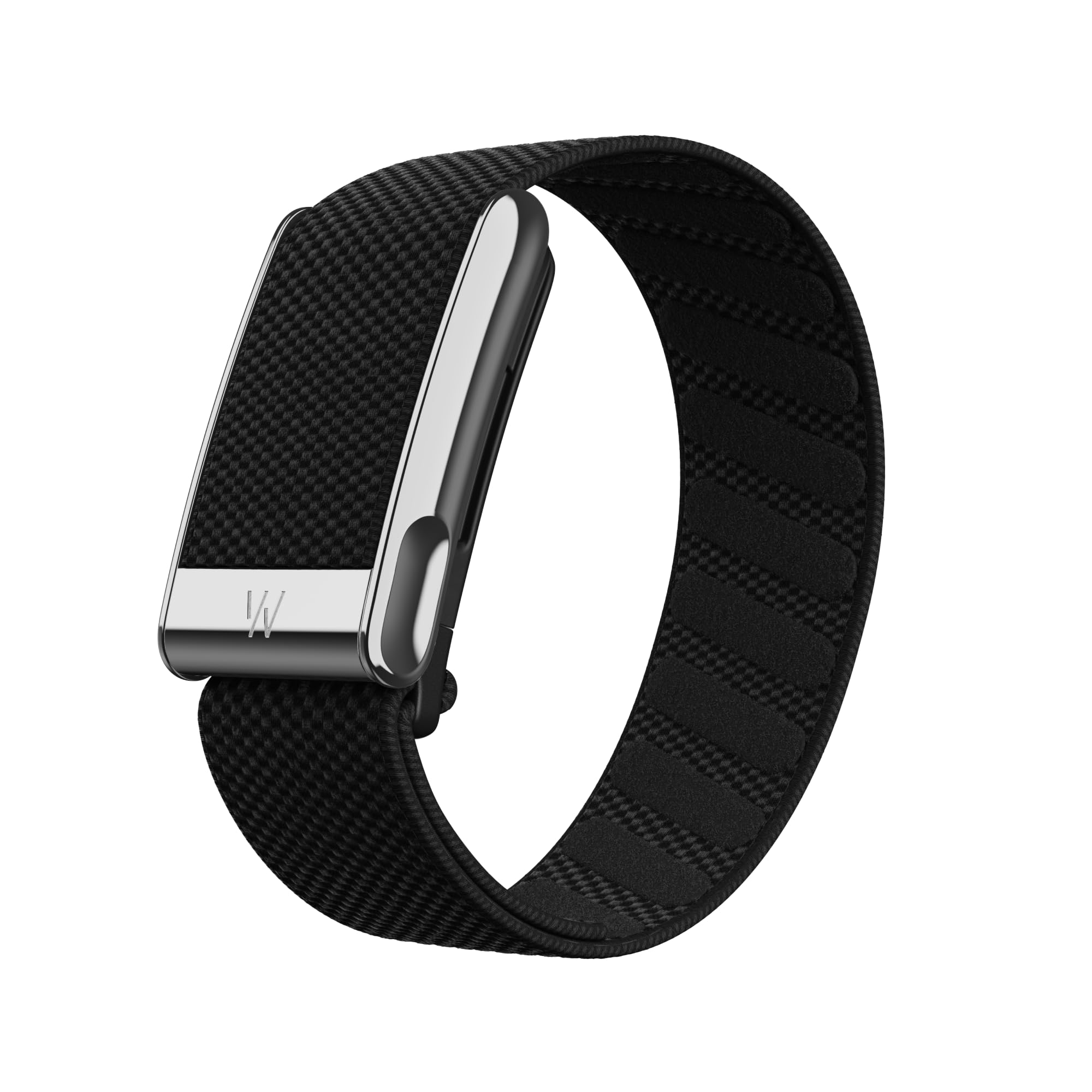
The WHOOP 5.0/MG is a screenless wristband engineered for athletes who prioritize recovery metrics and strain coaching over notifications. Its heart rate sensor operates 24/7 with second-by-second sampling, feeding into a Strain Score that quantifies cardiovascular load and a Recovery Score that guides training intensity. The on-demand ECG capability lets you check for signs of atrial fibrillation directly from your wrist, a medical-grade feature rare among general fitness wearables.
Daily blood pressure estimates are derived from overnight analysis using advanced sensor fusion, giving you trending data without a cuff. The WHOOP AI analyzes over 140 metrics to offer personalized sleep targets and strain goals that adjust as your fitness level changes. Battery life stretches beyond 14 days, and the wireless, waterproof PowerPack allows charging on the go without removing the band.
The biggest consideration is the membership model: the purchase includes a 12-month subscription upfront, after which you must renew to keep the device functional. Some users report heart rate inaccuracy during high-intensity interval training compared to chest straps, which can skew strain calculations. For athletes who already subscribe to a coaching app and want deep recovery analytics without a screen, the WHOOP ecosystem is highly effective.
Why it’s great
- On-demand ECG for AFib detection
- Daily blood pressure estimates from wrist
- Over 14 days battery; charges while worn
Good to know
- Subscription is mandatory—device stops working without membership
- HR can be inaccurate during HIIT vs. chest strap
4. RingConn Gen 2

The RingConn Gen 2 was the world’s first smart ring to offer dedicated sleep apnea monitoring, and it remains a top choice for anyone concerned about nocturnal breathing disruptions. The AI-powered algorithm, developed in partnership with university sleep labs, provides real-time AHI (Apnea-Hypopnea Index) data and blood oxygen saturation trends throughout the night. Multiple users report that the ring flagged oxygen desaturations that led to a formal sleep apnea diagnosis and CPAP prescription.
The ultra-thin design weighs just 2 grams (size-dependent) and is comfortable enough for all-night wear without sliding off. The 12-day battery life means you only charge it weekly, and the smart charging case extends total runtime past 150 days. The ring is waterproof to 100 meters, so it handles showers, swimming, and sweaty workouts without issue. Step tracking and heart rate monitoring are accurate enough for daily activity logging.
Some units have shown battery degradation after six months, dropping from 7+ days to around 3–4 days of runtime. The black matte finish is also prone to scratching if you do manual work or lift heavy weights. For users whose primary health concern is sleep apnea rather than daily glucose trends, the Gen 2 delivers hospital-grade insight without a prescription or subscription.
Why it’s great
- Real-time AHI and SpO₂ tracking for sleep apnea
- Ultra-light—weighs only 2 grams in smaller sizes
- No subscription fees for any feature
Good to know
- Battery life can degrade noticeably after 6 months
- Black finish scratches more easily than expected
5. Keto-Mojo GK+

The Keto-Mojo GK+ is the only device on this list that measures both blood glucose and blood ketones from the same meter, making it the default tool for anyone on a strict ketogenic, carnivore, or fasting protocol. The Bluetooth meter syncs automatically with the free MyMojoHealth app, which calculates your Glucose Ketone Index (GKI)—a single number that tells you whether you are in nutritional ketosis. It integrates with Apple Health, Cronometer, and Carb Manager, so your diet logging and biomarker data live in one place.
The starter bundle is generous: 70 glucose strips, 70 ketone strips, lancing device, 20 lancets, control solutions, and two AAA batteries. Each strip is foil-wrapped for sterility, and the meter is clinically validated for use in over 100 clinical trials. Users consistently report that the readings match lab results within acceptable margins, making it suitable for both diabetic management and metabolic optimization.
The ongoing cost is higher than a patch-based CGM if you test frequently—ketone strips in particular are not cheap. The device is also a traditional finger-stick meter, so you do not get the continuous trend data of a patch or ring. For those who need accurate spot-checking of both glucose and ketones with zero subscription fees, the GK+ is the most cost-effective entry point.
Why it’s great
- Measures glucose and ketones from one meter
- Free app calculates GKI and integrates with Apple Health
- Clinically validated—used in over 100 clinical trials
Good to know
- Ketone strips are expensive per test
- Finger-stick format—no continuous trend data
6. Lingo
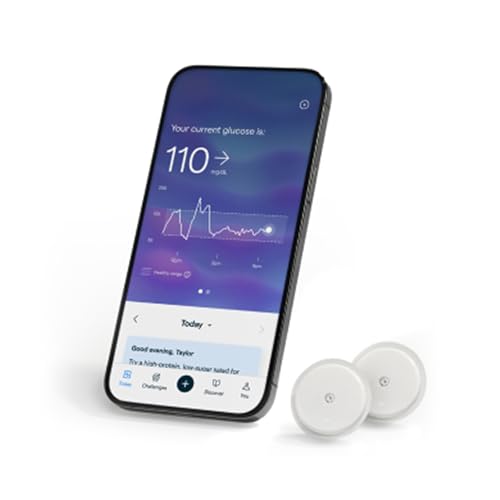
Lingo, built by Abbott, is the only non-prescription, interstitial-fluid CGM patch in this roundup. It attaches painlessly to the back of your arm and streams minute-by-minute glucose data to the Lingo app for 14 days per sensor. The app translates raw numbers into actionable insights—showing exactly which foods spike your glucose and how exercise, sleep, and stress flatten the curve. HSA/FSA eligibility and the “no prescription needed” barrier make it the easiest entry point for the metabolic-curious user.
The pack of two sensors covers a full month of continuous tracking. The app is intuitive: it logs meals, tags events, and breaks down your time in the healthy 70–140 mg/dL range. For prediabetics or anyone navigating insulin resistance, this visibility into post-meal spikes is the most valuable feature. Users report that the app gives clear feedback on which carb-heavy meals push them out of range.
Accuracy has drawn mixed reviews. Several users report readings that are 15–20 mg/dL lower than a finger-stick control, and the initial sensor pairing process can be finicky with certain iPhone models. The app also requires extensive personal information during setup, which may concern privacy-focused users. For medication-free metabolic tracking, Lingo is convenient and accessible, but you should verify critical readings with a traditional meter.
Why it’s great
- No prescription needed—available over the counter
- 14-day continuous tracking per sensor
- HSA/FSA eligible and syncs with Apple Health
Good to know
- Readings can be 15–20 mg/dL lower than finger-stick
- Sensor pairing issues reported with some iOS versions
7. Accu-Chek FastClix Kit

The Accu-Chek FastClix Kit upgrades the classic finger-stick experience with a drum-based lancet that holds six pre-loaded needles, eliminating the need to handle individual lancets. This is a significant quality-of-life improvement for anyone testing multiple times daily—you simply advance the drum for a fresh, sterile needle each time. The Guide Me meter features Bluetooth connectivity that syncs automatically with the mySugr app, logging 720 results and 30 control records without manual entry.
The fast-clix lancing device offers 11 depth settings and precision-guided technology that minimizes pain. Users report that the test strips require an exceptionally small blood sample and the easy-fill dosing area virtually eliminates failed tests. The kit includes 108 lancets, 100 test strips, control solution, and a carrying case, providing a complete starter package. The meter’s large LCD display is easy to read even without reading glasses.
The main drawback is that it remains a spot-check meter—you only capture data when you choose to test. The test strips, while reliable, are not the cheapest in the Accu-Chek lineup, and ongoing costs add up for high-frequency testers. For a proven, hospital-trusted brand with a focus on reducing the hassle of daily pricking, the FastClix is a refined choice.
Why it’s great
- 6-lancet drum eliminates handling individual needles
- Bluetooth sync with mySugr app for automatic logging
- Very small blood sample needed per test
Good to know
- Test strips are more expensive than some competitor brands
- Finger-stick format—no continuous trend data
8. Accu-Chek Softclix Kit

The Accu-Chek Softclix Kit is the most generous starter bundle in this lineup, packing 110 lancets, 100 test strips, the Guide Me Bluetooth meter, the Softclix lancing device, and control solution into a single package. It is designed for the newly diagnosed diabetic who needs a complete, reliable blood glucose monitoring system straight out of the box. The Guide Me meter stores 720 results and syncs via Bluetooth to the mySugr app, eliminating paper logbooks entirely.
The Softclix lancing device offers 11 depth settings and a precision-guided mechanism that makes the prick feel minimal. Users describe the meter as “small and auto-on with strip insertion,” and the large LCD display is a genuine help for those with vision challenges. The kit also includes a child-resistant battery door—a thoughtful safety feature for households with young children.
The lancet case does not have a dedicated compartment, so you will need a separate container for extra lancets during travel. The Softclix device uses individual lancets rather than a drum, meaning you handle and dispose of each one separately—less convenient than the FastClix. For a low-cost, no-surprises finger-stick meter with the highest-quality test strips in Accu-Chek’s lineup, this kit delivers exceptional value.
Why it’s great
- Over 200 consumables included in the box
- Bluetooth sync with mySugr app for automatic logging
- Child-resistant battery door for household safety
Good to know
- Lancet case lacks a dedicated compartment for extras
- Individual lancets must be handled and disposed of each time
9. Withings BPM Connect

The Withings BPM Connect is not a CGM, but it is the most important complementary health monitoring device for anyone tracking glucose because blood pressure and blood sugar are tightly linked in metabolic syndrome and diabetes management. This upper-arm cuff is FDA cleared and provides color-coded feedback directly on its display—green for normal, yellow for elevated, red for high—so you know your status instantly without opening an app.
The built-in Wi-Fi and Bluetooth sync data automatically to the Health Mate app, which integrates with Apple Health and allows you to email PDF reports to your doctor directly from the iOS app. The rechargeable battery lasts an exceptional six months on a single charge, and the USB-C charging is modern and fast. The cuff accommodates arms from 22 to 42 cm, covering most adult sizes.
The initial Wi-Fi setup can be frustrating, with some users reporting pairing failures that require multiple attempts. The LED display is dim in certain lighting conditions, making the numbers hard to read without squinting. More critically, a minority of users report systolic readings that differ by more than 10 mmHg from their doctor’s manual measurement, which undermines confidence. For a well-built, app-connected BP monitor that eliminates manual logging, the BPM Connect is a strong choice—but cross-check your first readings with a clinical device.
Why it’s great
- Wi-Fi sync—no need to keep phone nearby
- 6-month battery life on a single USB-C charge
- Color-coded feedback for instant reading interpretation
Good to know
- Initial Wi-Fi setup can be frustrating
- LED display is dim and hard to read in bright light
FAQ
Can I use a smart ring like RingConn or Oura to dose insulin?
How long does it take for a patch CGM to become accurate after application?
Is there a CGM that works without a smartphone?
Final Thoughts: The Verdict
For most users, the best cgm device winner is the RingConn Gen 3 because it provides continuous, subscription-free health tracking with vascular trend insights and sleep apnea detection in a comfortable ring form factor. If you want the deepest sleep analysis available, grab the Oura Ring 4. And for precise dual glucose and ketone spot-checking without sensor subscriptions, nothing beats the Keto-Mojo GK+.

Mo Maruf
I created WellFizz to bridge the gap between vague wellness advice and actionable solutions. My mission is simple: to decode the research and give you practical tools you can actually use.
Beyond the data, I am a passionate traveler. I believe that stepping away from the screen to explore new environments is essential for mental clarity and physical vitality.