Our readers keep the lights on and my smoothie glass nicely filled. As an Amazon Associate, I earn from qualifying purchases.
Nothing stops a shoot faster than a frozen buffer. You mash the shutter, the camera locks up, and that decisive moment evaporates while the card struggles to catch up. A modern CF card is the difference between waiting and creating, turning burst sequences from a gamble into a guarantee.
I’m Mohammad Maruf — the founder and writer behind WellFizz. I’ve spent hundreds of hours analyzing CompactFlash specifications, comparing controller architectures, and studying real-world performance data across legacy and modern DSLR bodies to separate real speed claims from marketing fluff.
Whether you are shooting high-bitrate 4K video or rapid-fire RAW bursts, choosing the right card directly impacts your workflow reliability. This guide breaks down the technical specs and real-world performance of the best cf card options available today.
How To Choose The Best CF Card
CompactFlash cards have been the professional standard for decades, but not all CF cards perform the same. Three critical factors—write speed, UDMA rating, and capacity—define whether a card will keep up with your camera or become a bottleneck.
Write Speed and UDMA Rating
Read speeds grab headlines, but write speed determines whether your camera’s buffer clears before the next burst. UDMA 7 cards (the fastest generation) deliver write speeds above 120MB/s, while older UDMA 6 or UDMA 5 cards often stall around 80MB/s. If you shoot 4K video or high-speed RAW sequences, UDMA 7 is non-negotiable.
Capacity and Workflow Fit
16GB cards work for casual shooting, but serious photographers need at least 64GB to avoid swapping cards in the field. A single 128GB card can hold a full wedding day or a multi-day landscape trip. However, some older camera bodies have firmware limits that prevent recognizing cards above 32GB or 128GB—check your camera’s compatibility before upgrading.
Video Performance Guarantee (VPG)
For videographers, VPG-20 or VPG-65 ratings ensure the card can sustain a minimum write speed without dropping frames. VPG-65 guarantees 65MB/s sustained writes, which is required for high-bitrate 4K and some 6K recordings. A card without a VPG rating may corrupt footage during long clips.
Quick Comparison
On smaller screens, swipe sideways to see the full table.
| Model | Category | Best For | Key Spec | Amazon |
|---|---|---|---|---|
| Sandisk Extreme Pro 128GB | Premium | Professional burst & 4K | 150MB/s Write Speed | Amazon |
| HSANYIUR 128GB | Mid-Range | High capacity on a budget | 160MB/s Read Speed | Amazon |
| SanDisk Extreme 64GB | Premium | Reliable UDMA 7 performance | 120MB/s Read Speed | Amazon |
| Cloudisk Pack of 2 64GB | Value | Two-card backup kit | 80MB/s Read Speed | Amazon |
| WQDMKE 32GB | Mid-Range | 1080p & moderate bursts | 120MB/s Read Speed | Amazon |
| HSANYIUR 16GB | Budget | Vintage camera compatibility | 50MB/s Read Speed | Amazon |
In‑Depth Reviews
1. Sandisk Extreme Pro 128GB (SDCFXPS-128G-A46)
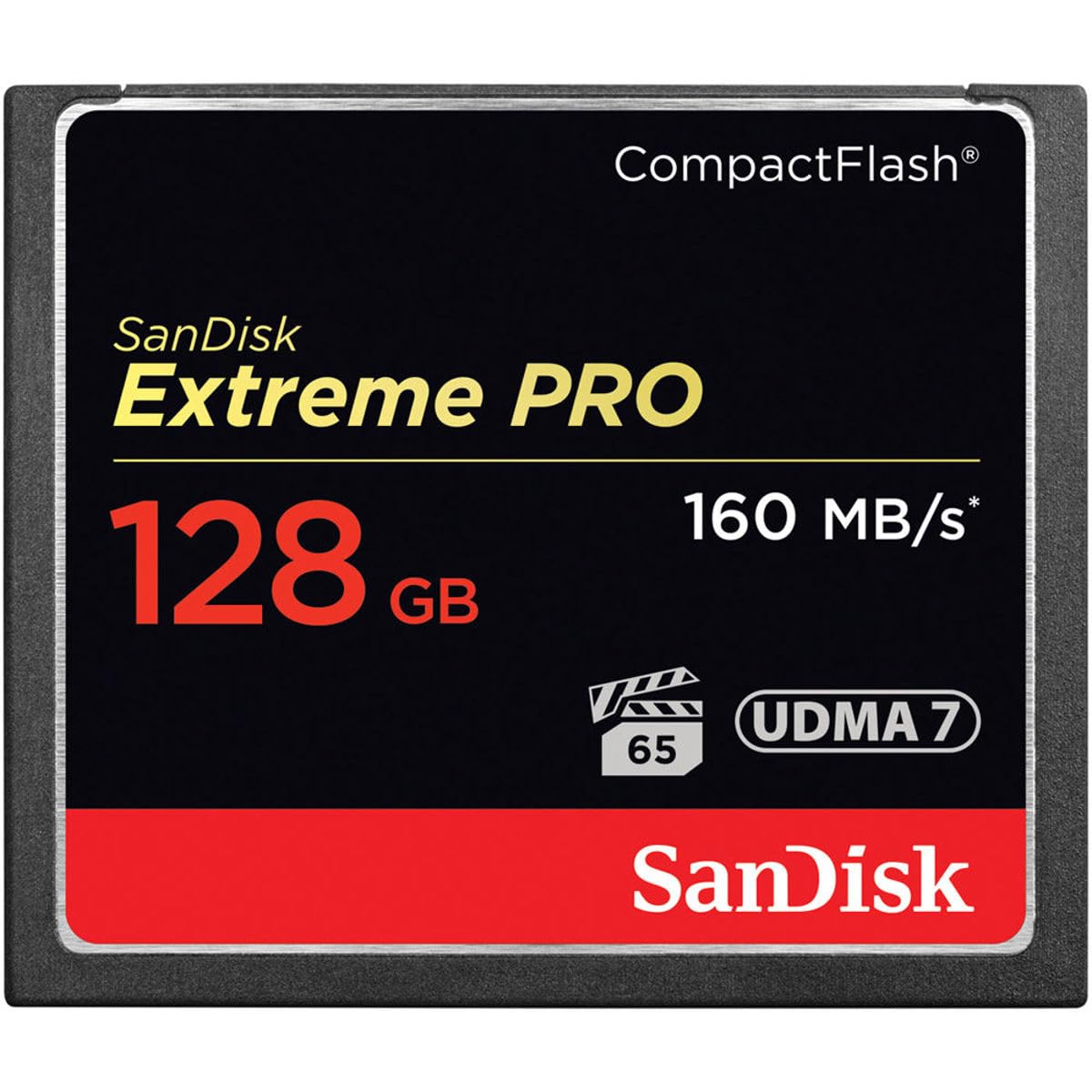
The flagship Sandisk Extreme Pro delivers 150MB/s write and 160MB/s read speeds, making it the fastest CF card in this lineup. Its UDMA 7 controller clears the buffer on demanding bodies like the Canon 1DX and Nikon D850 almost instantly, allowing uninterrupted 14-fps RAW bursts. The card operates reliably in extreme temperatures from -13°F to 185°F, so it won’t falter in a desert shoot or an alpine landscape session.
With 128GB capacity, you can store thousands of RAW files or hours of high-bitrate video on a single card. The rugged design has been tested against shock, vibration, and drops, and the RTV silicone coating provides additional internal protection against physical stress. Users report that the card handles seamlessly across Canon and Nikon bodies with zero compatibility hiccups.
The one drawback is that some photographers find 128GB fills quickly when shooting RAW in high-volume environments like sports events. Additionally, the write speed, while excellent for most users, may still be the bottleneck on the very latest ultra-high-speed bodies. For the vast majority of professional workflows, however, this card is the benchmark.
Why it’s great
- 150MB/s sustained write speed clears buffer near-instantly
- Extreme temperature tolerance for field use
- 128GB capacity suits all-day shoots
Good to know
- Premium investment compared to mid-range alternatives
- Buffer speed saturates only on the fastest pro bodies
2. HSANYIUR 128GB UDMA CF Card
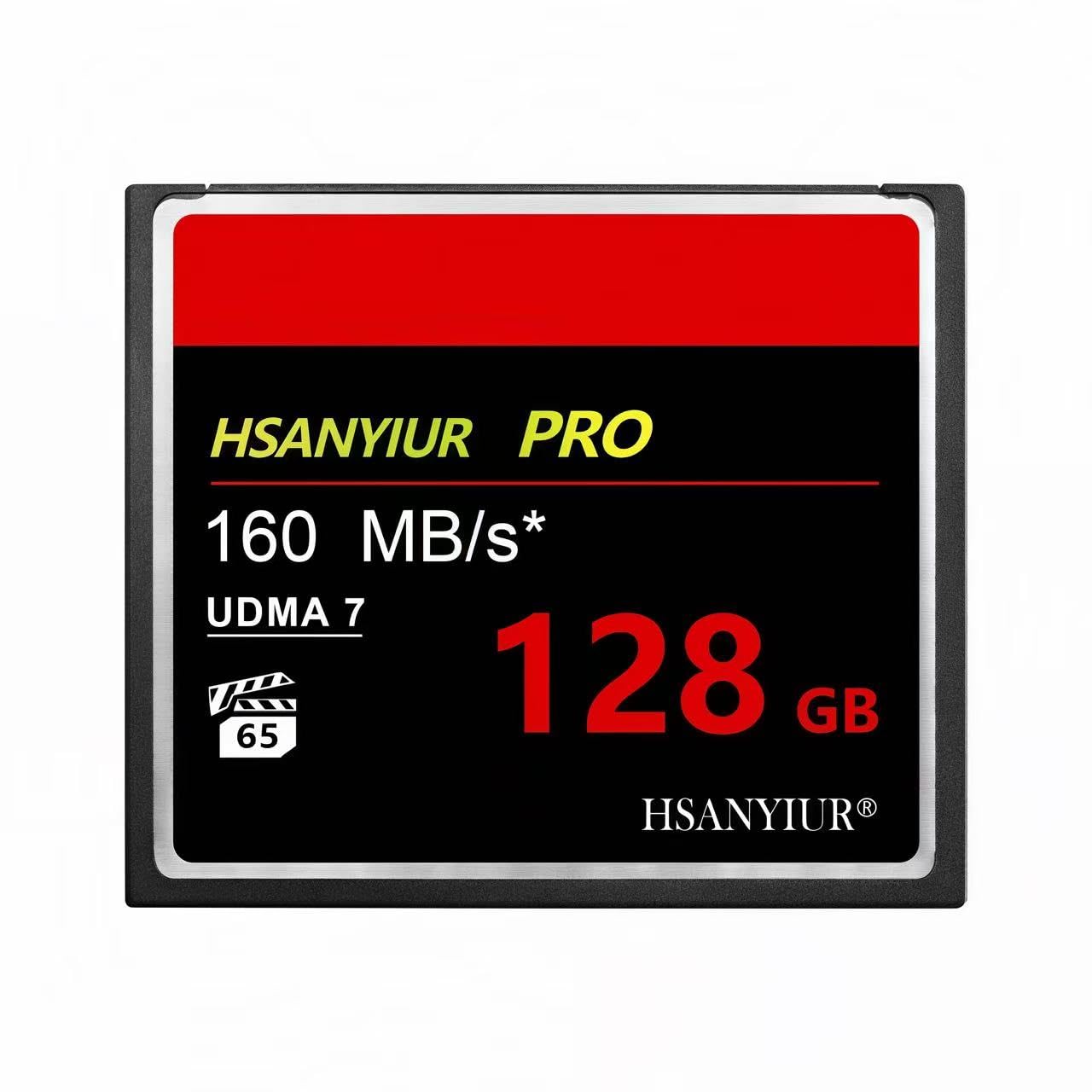
This HSANYIUR card matches the 128GB capacity of the Sandisk Extreme Pro but at a significantly more accessible price point. Its read speed reaches 160MB/s, which accelerates file transfer to your computer after the shoot. The write performance is compliant with VPG standards, meaning it maintains consistent speed during 4K video recording without frame drops or corruption.
The rugged construction includes waterproofing, shockproofing, and extreme temperature resistance, so it stands up to rain, drops, and freezing conditions equally well. Users have praised its fit in both Canon and Nikon DSLRs, and the compatibility extends to older bodies like the 5D Mark II and Nikon D700. The card comes pre-formatted and requires no special drivers.
Some users have noted that while the card works great for most scenarios, the advertised write speed may not match the fastest UDMA 7 cards from premium brands. For hybrid shooters balancing 4K video and moderate burst photography, this card delivers excellent value without sacrificing reliability.
Why it’s great
- Large 128GB capacity for extended shoots
- 160MB/s read speeds speed up file transfers
- Rugged build survives field conditions
Good to know
- Write speed may trail premium UDMA 7 cards
- Some older camera bodies may have capacity limits
3. SanDisk Extreme 64GB UDMA 7 (SDCFXSB-064G-G46)

The SanDisk Extreme 64GB brings UDMA 7 performance to a more manageable capacity. It delivers 120MB/s read and 85MB/s write speeds, which is sufficient for high-resolution RAW bursts and 4K video on most mid-range to high-end DSLRs. The VPG-20 certification ensures smooth video capture at bitrates that require at least 20MB/s sustained write.
Durability is a hallmark — the card is shockproof, drop-proof, and x-ray proof. The RTV silicone coating protects the internal components against vibration, making this a reliable choice for action and sports photographers. Users have reported zero corruption issues even after years of heavy use in demanding conditions.
The main trade-off is the 64GB capacity, which may feel limiting if you shoot RAW all day without offloading. Some users also note that the write speed, while solid, is not the fastest available. This card is an ideal balance for photographers who want professional reliability without paying for maximum speed or excess capacity.
Why it’s great
- VPG-20 ensures stable 4K video recording
- RTV silicone coating protects against vibration
- UDMA 7 speed class handles burst shooting well
Good to know
- 64GB may fill quickly during full-day RAW shoots
- Write speed is slower than premium 150MB/s options
4. Cloudisk Pack of 2 64GB CF Cards
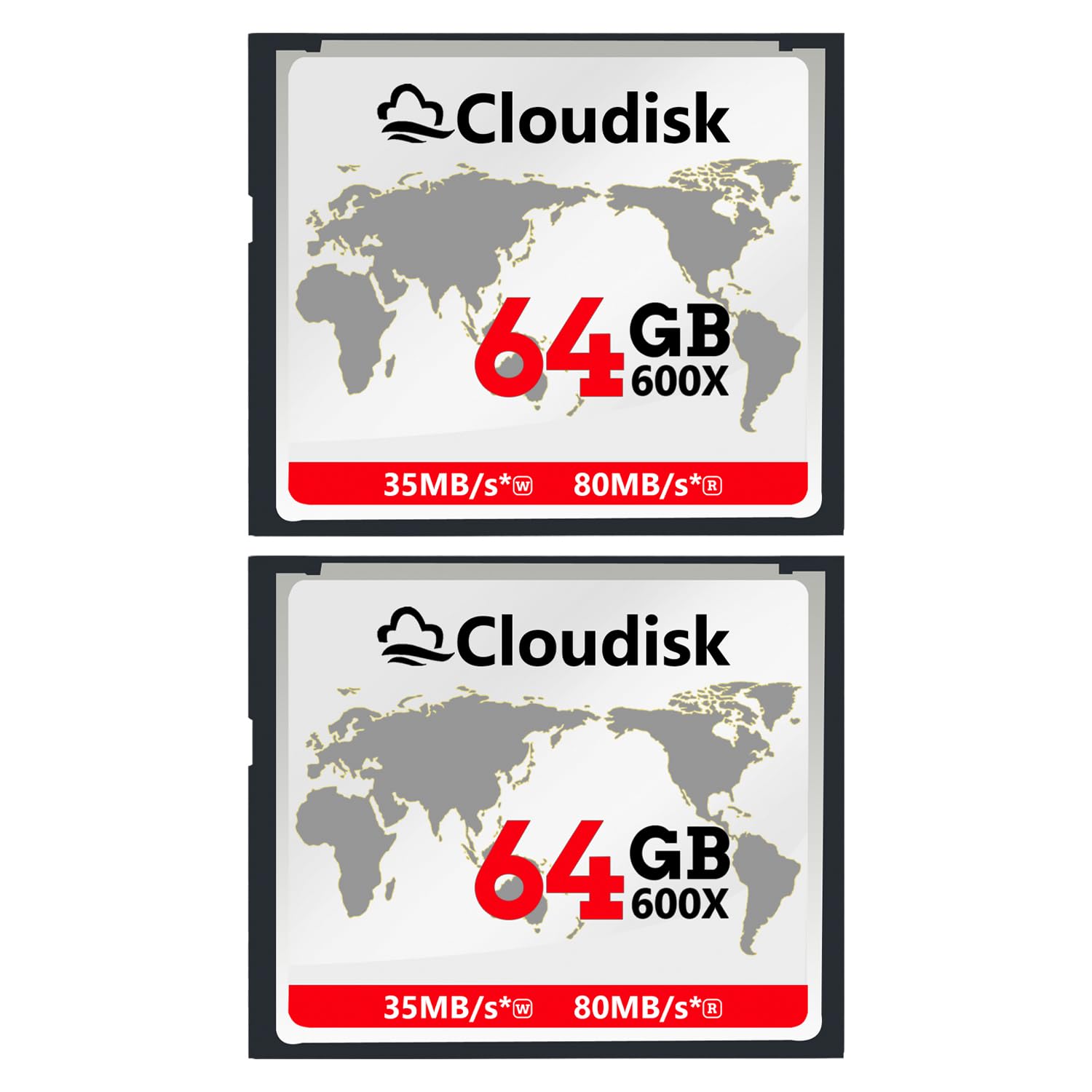
The Cloudisk two-pack delivers exceptional value by giving you two 64GB cards for roughly the price of a single premium 64GB card. Each card offers 80MB/s read speeds, which is sufficient for transferring large RAW libraries in a reasonable time. The pack is ideal for wedding shooters or event photographers who need a primary and backup card without doubling their budget.
These cards have obtained FCC, CE, and RoHS certifications, indicating stable build quality and regulatory compliance. The RTV silicone coating found in premium cards is absent here, but the cards are still backed by stress, shock, and vibration testing. Users report that they perform well in older DSLR bodies like the Canon 5D Mark II and Nikon D300.
The main sacrifice is write speed — some users describe the write performance as noticeably slower than SanDisk or Lexar cards, especially during continuous burst shooting. For casual to moderate shooting and general data storage, the value proposition is strong. For heavy burst shooters, a faster single card may be preferable.
Why it’s great
- Two cards in one package for backup convenience
- Certified build quality with FCC and CE marks
- Compatible with a wide range of older DSLRs
Good to know
- Write speeds slower than premium UDMA 7 alternatives
- No VPG rating for high-bitrate video assurance
5. WQDMKE 32GB UDMA CF Card
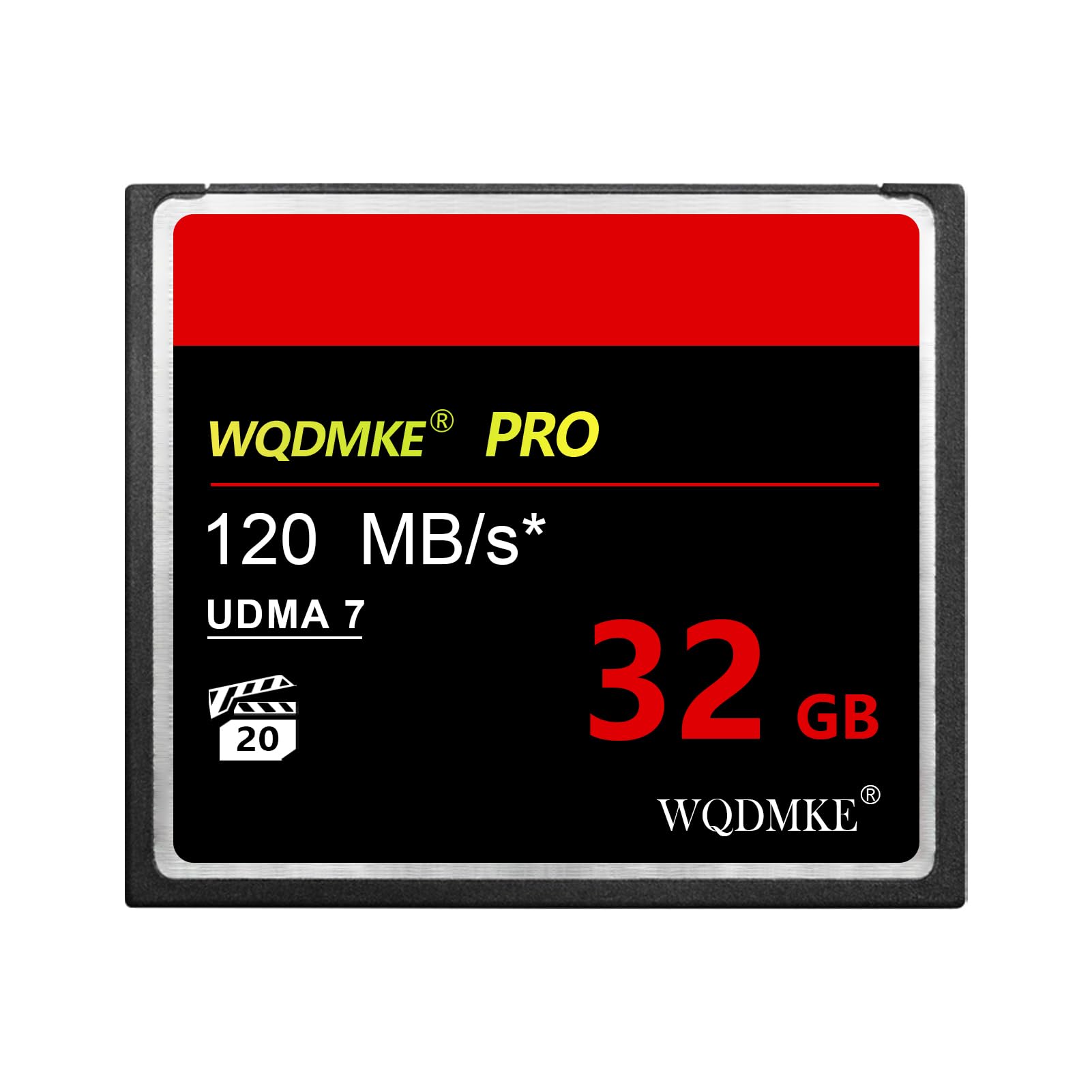
The WQDMKE 32GB card offers read speeds up to 120MB/s and write speeds up to 85MB/s, placing it in the same performance tier as the SanDisk Extreme but at a lower price. It supports VPG-65, which guarantees a sustained write speed of 65MB/s — enough for smooth 4K video recording without dropped frames even at higher bitrates.
Built to withstand extreme temperatures, the card operates from -25°C to 85°C and stores safely from -40°C to 85°C. Users on the Canon EOS 7D report fast RAW writes with no freezing or buffer slowdowns during burst sequences. The card is also compatible with HD camcorders and 3D cameras, broadening its use cases beyond still photography.
The 32GB capacity is the limiting factor here — for heavy shooters, it may require mid-session card swaps. Some users note that despite the advertised UDMA rating, actual speeds may not reach the absolute ceiling of UDMA 7 cards. It remains a strong mid-range choice for 1080p and moderate 4K shooting.
Why it’s great
- VPG-65 certification for high-bitrate 4K capture
- Wide temperature tolerance for harsh environments
- Excellent compatibility with Canon pro bodies
Good to know
- 32GB capacity may fill quickly during long shoots
- Actual speeds may not match top UDMA 7 spec
6. SanDisk Ultra 64GB SDXC UHS-I

While this is technically an SD card rather than a CF card, it deserves mention as an alternative for cameras that accept both formats. The SanDisk Ultra 64GB delivers 80MB/s read speeds and a Class 10 rating, which supports Full HD video recording without stutter. It is waterproof, temperature-proof, x-ray proof, magnet-proof, and shockproof, matching the ruggedness of CF options.
This card works well with point-and-shoot cameras, trail cameras, and camcorders that use the SDXC format. The 64GB capacity provides ample space for thousands of JPEGs or hours of 1080p video. Users consistently praise the reliability of the SanDisk brand and the fast transfer speeds for offloading files via SD card readers.
If your camera exclusively uses CF cards, this is not a direct substitute. However, for hybrid shooters with dual-slot cameras, this card serves as an excellent secondary storage option. Note that this card lacks the write speeds of dedicated UDMA 7 CF cards, making it less suited for intensive 4K video.
Why it’s great
- Durable against water, x-rays, and magnets
- Class 10 speed handles Full HD video reliably
- Trusted SanDisk performance and build quality
Good to know
- SD format, not compatible with CF-only cameras
- Write speeds not sufficient for high-bitrate 4K
7. HSANYIUR 16GB UDMA CF Card
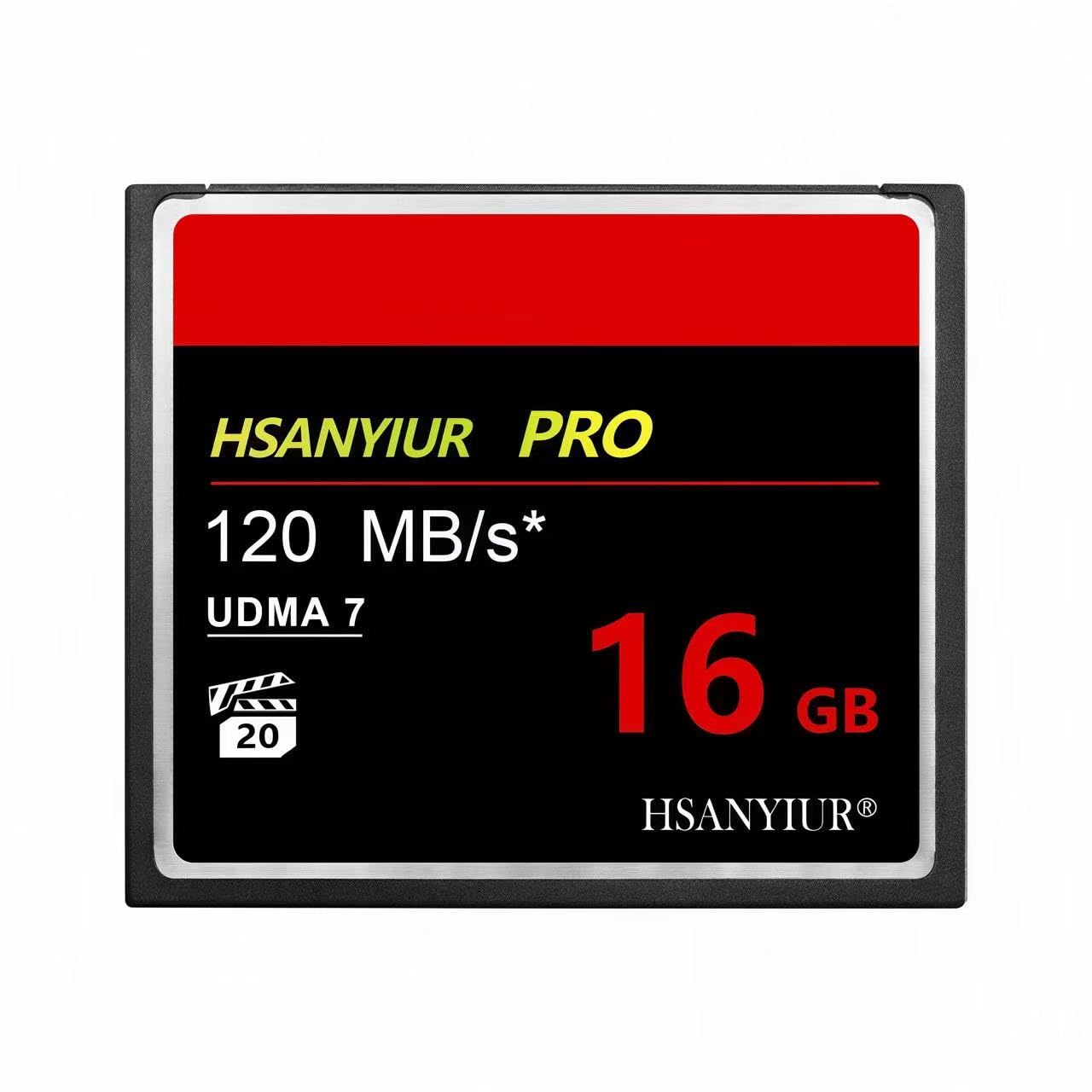
This budget-friendly HSANYIUR 16GB card is designed primarily for older DSLR cameras and industrial equipment. With 50MB/s read speed and Class 10 rating, it is capable of handling basic JPEG shooting and 1080p video recording without issues. The compact size and low weight make it easy to carry as a spare emergency card.
The card is waterproof, shockproof, and temperature-proof, so it can survive the bumps of travel and outdoor shooting. Users have reported that it works well with legacy cameras like the Canon 5D Classic, where larger capacity cards may not be recognized. It is also suitable for use in GPS systems, navigation devices, and other non-camera CF-compatible hardware.
The 16GB capacity is the primary limitation — you will need to offload files often if shooting RAW. The 50MB/s read speed means transferring files to a computer takes noticeably longer than with faster UDMA cards. This card is best for photographers running vintage gear who need a reliable, low-cost solution.
Why it’s great
- Excellent compatibility with older DSLR cameras
- Rugged build for outdoor and travel use
- Very budget-friendly entry point
Good to know
- 16GB fills quickly for RAW or video work
- 50MB/s read speed is slow by modern standards
FAQ
What does UDMA 7 mean for a CF card?
Can I use a 128GB CF card in my older camera?
Is a CF card better than SD for professional photography?
Final Thoughts: The Verdict
For most users, the best cf card winner is the Sandisk Extreme Pro 128GB because its 150MB/s write speed clears the buffer on demanding pro bodies and its rugged design survives extreme field conditions. If you want high capacity without the premium price, grab the HSANYIUR 128GB. And for a backup kit that covers two days of shooting, nothing beats the value of the Cloudisk Pack of 2 64GB.

Mo Maruf
I created WellFizz to bridge the gap between vague wellness advice and actionable solutions. My mission is simple: to decode the research and give you practical tools you can actually use.
Beyond the data, I am a passionate traveler. I believe that stepping away from the screen to explore new environments is essential for mental clarity and physical vitality.