Our readers keep the lights on and my smoothie glass nicely filled. As an Amazon Associate, I earn from qualifying purchases.
Waking up with a stiff, aching neck is a signal, not a sentence. The wrong pillow forces your cervical spine into an unnatural bend for hours, compressing nerves and straining muscles. A quality cervical traction pillow is designed to counteract that—cradling your head, supporting the natural curve of your neck, and maintaining proper spinal alignment whether you sleep on your side or back.
I’m Mohammad Maruf — the founder and writer behind WellFizz. I’ve spent hundreds of hours analyzing the foam densities, contour profiles, adjustable loft mechanisms, and breathability specs across the cervical pillow market to separate the genuinely therapeutic options from the marketing fluff.
Whether you’re dealing with chronic pain, recovering from an injury, or just tired of flipping your pillow at 3 a.m., finding the best cervical traction pillow for your sleep position and body type makes the difference between restless nights and restorative sleep.
How To Choose The Best Cervical Traction Pillow
The right cervical pillow isn’t about softness—it’s about geometry. You need a shape that matches your body’s natural curves, a foam density that won’t collapse overnight, and a loft (height) that keeps your cervical spine neutral rather than tilted up or down.
Sleep Position Determines Loft
Side sleepers need a higher neck roll—usually 4 to 5 inches—to fill the gap between the head and the mattress, keeping the spine straight. Back sleepers require a lower contour, typically 3 to 4 inches, so the head is neither pushed forward nor allowed to fall too far back. Stomach sleepers often need the thinnest profile or should avoid cervical pillows altogether.
Foam Quality and Density
High-density memory foam (3 pounds per cubic foot or more) delivers slow-responding support that conforms without sinking. Lower-density foams may feel plush initially but lose shape within months. Look for CertiPUR-US certification to ensure no harmful chemicals are present, and consider open-cell construction for better airflow and heat dissipation.
Adjustability Is a Bonus
Some cervical pillows include removable layers or interchangeable inserts that let you fine-tune the loft. This is especially useful if you switch between sleeping on your back and side, or if you’re not sure which height works best. A pillow that offers two or three height options allows you to experiment without buying a second unit.
Quick Comparison
On smaller screens, swipe sideways to see the full table.
| Model | Category | Best For | Key Spec | Amazon |
|---|---|---|---|---|
| UTTU Cervical Pillow | Premium | Adjustable loft for all sleepers | 5.2″/4.5″ adjustable loft, dynamic foam | Amazon |
| CloudCoz Ultra Pain Relief | Premium | Cooling + graphene for deep sleep | Open-cell foam with 99%+ breathability | Amazon |
| Zibroges Queen Adjustable | Mid-Range | Adjustable three-layer foam & massage bumps | 3-layer design, adjustable firmness | Amazon |
| Latree 5X Pain Relief | Mid-Range | Armrest sides & butterfly contour | 6 contour zones with arm support | Amazon |
| Missleep Cervical Neck Pillow | Mid-Range | Two-height option, OEKO-TEX certified | 24.8″ x 14.2″ medium-soft memory foam | Amazon |
| Core Products Double Core Select | Mid-Range | Interchangeable firmness rolls | 4 color-coded cervical rolls | Amazon |
| Therapeutica Lite Petite | Premium | Petite size for narrower shoulders | Medium firmness, chiropractor-designed | Amazon |
In‑Depth Reviews
1. UTTU Cervical Pillow for Neck Pain Relief

The UTTU Cervical Pillow uses a sandwich construction—two foam layers surrounding a removable middle insert—to give you four distinct loft options. At the highest setting you get 5.2 inches on the contoured side, ideal for side sleepers needing substantial neck fill, while removing the middle layer drops to 4.0 inches for back sleepers.
Its UTTU DYNAMIC FOAM is a 3-pound high-density formulation that resists temperature hardening, so the pillow stays consistently supportive regardless of season. The breathable cover (60% polyester, 40% viscose) helps wick moisture, and the pillow retains its shape well even after years of use, as reported by customers who have owned it for over five years.
Some users note the actual dimensions are more queen than king despite the listing, so measure your pillowcase before ordering. The three-piece interior also makes reinserting the foam layers after washing the cover slightly fiddly, but the adjustability and long-term durability justify the extra effort.
Why it’s great
- Fully adjustable loft via removable middle layer for all sleep positions
- High-density dynamic foam maintains firmness across seasons
- Proven long-term durability, with satisfied users spanning years
Good to know
- Three-piece foam core is tricky to reassemble after washing cover
- Sizing runs small for king cases—fits queen/standard pillowcases
2. CloudCoz Ultra Pain Relief Cervical Neck Pillow
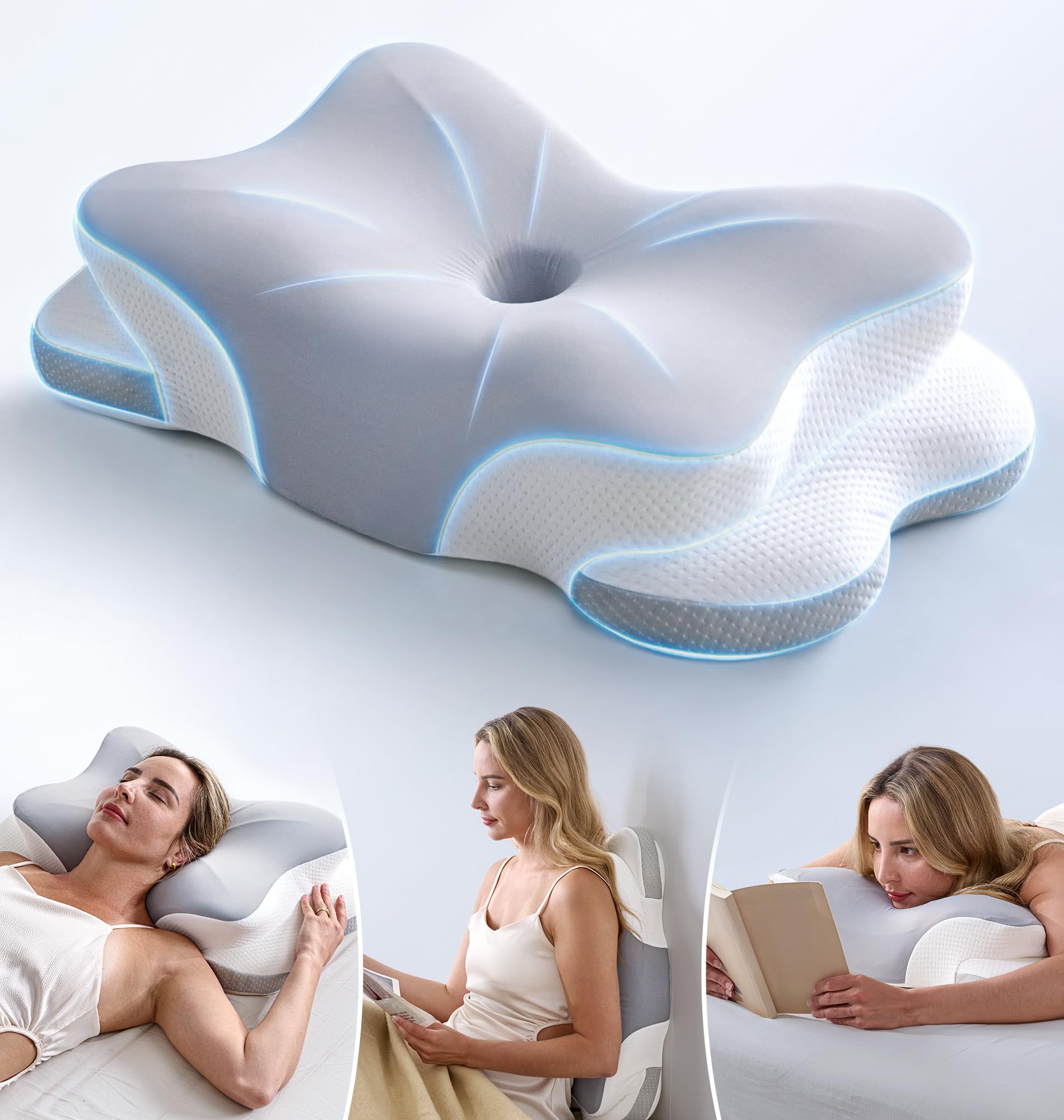
CloudCoz stands out for its open-cell memory foam core with a breathability rate exceeding 99%, paired with a milk silk and 3D mesh fiber pillowcase that actively dissipates heat. Hot sleepers who have struggled with traditional memory foam will appreciate the cool-to-the-touch surface and the lack of overnight sweating.
The butterfly-shaped contour features six distinct support zones, including an extended armrest area that gives side sleepers a place to rest their lower arm without compressing the shoulder. The graphene-infused fabric is also marketed for far-infrared emission, though the real benefit for most users will be the non-temperature-sensitive foam that holds its shape whether the room is hot or cold.
At 20% more surface area than a standard side-sleeper pillow, it offers generous coverage, and the 100-night trial and 10-year warranty provide strong risk protection. The only caveat is that the shape is less suited for strict stomach sleepers, who may find the raised side contours lift the head too high.
Why it’s great
- Ultra-breathable open-cell foam with 99%+ air permeability
- Extended armrest zone for side-sleeping shoulder comfort
- Backed by a 100-night sleep trial and 10-year manufacturer warranty
Good to know
- Butterfly contour is not designed for stomach sleepers
- Graphene far-infrared claims are secondary to foam performance
3. Zibroges Queen Adjustable Cervical Neck Pillow

The Zibroges pillow attacks cervical discomfort from two angles: adjustability and active stimulation. Its three-layer memory foam structure lets you remove the middle layer to reduce loft from roughly 5 inches down to a lower profile, accommodating both back and side sleepers in one pillow. The top surface includes molded massage bumps that align with common neck pressure points, adding a therapeutic element that standard foam contours lack.
The cover uses ice silk technology (50% nylon, 50% polyester) for a noticeably cool feel, and the outer fabric is removable and machine-washable. At 4.8 pounds, it’s heftier than most cervical pillows, which reflects the denser foam formulation. CertiPUR-US and OEKO-TEX certifications confirm it’s free from harmful substances.
Firmness is on the upper end of the scale—users who prefer very soft pillows may find it too solid. Some customers also stack two of these pillows for extra height, indicating that the adjustability may not go high enough for larger side sleepers with broad shoulders.
Why it’s great
- Adjustable 3-layer foam lets you customize loft and firmness
- Massage bumps provide additional pressure-point relief
- Ice silk cover stays cool and is fully machine-washable
Good to know
- Higher-than-average firmness may not suit those who prefer soft pillows
- Larger side sleepers might need to stack two for adequate height
4. Latree 5X Pain Relief Cervical Neck Pillow
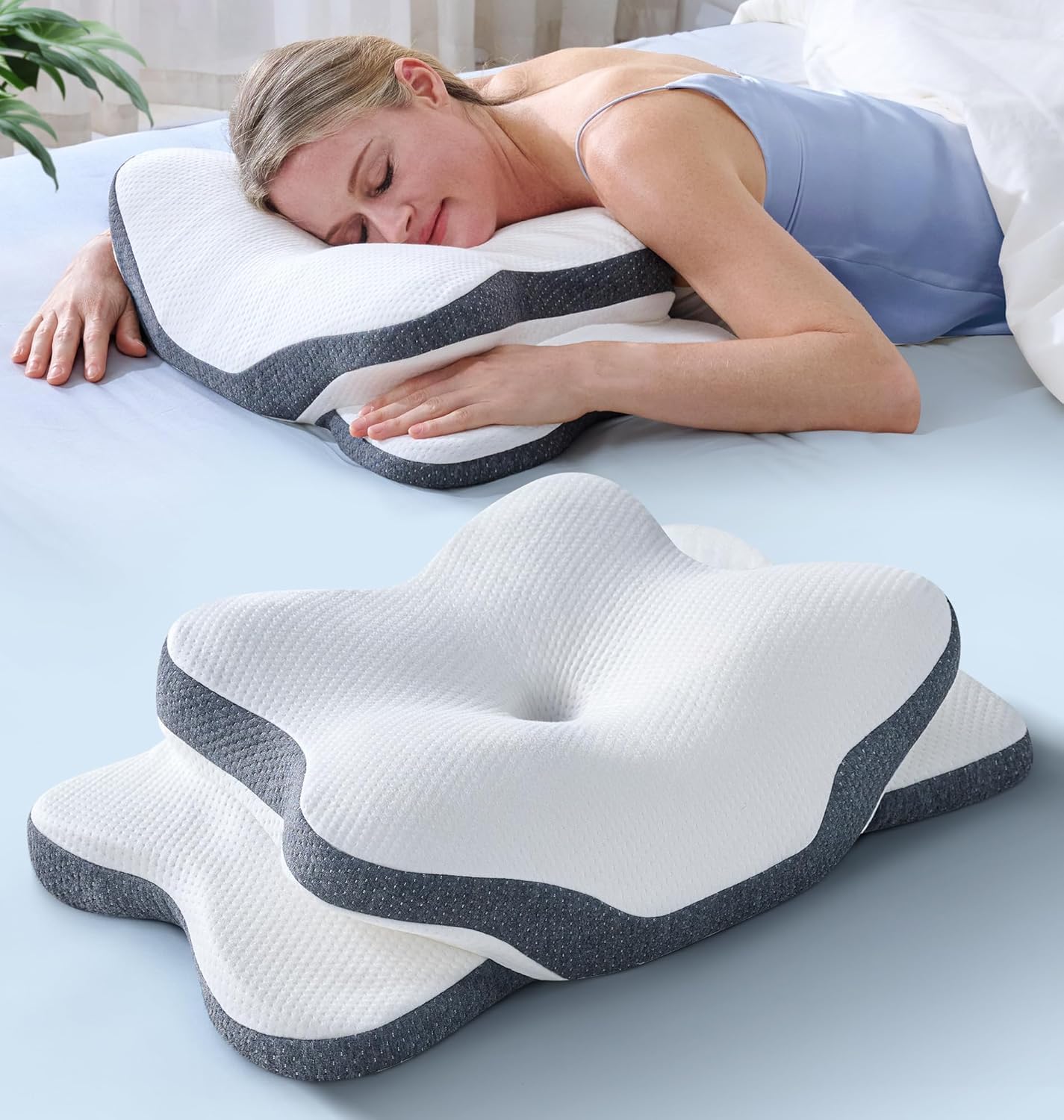
Latree packs substantial contour engineering into a mid-range price point. Its butterfly shape incorporates six distinct zones—including dedicated armrests—that support the head, neck, and shoulders simultaneously. The hollow concave center cradles the occiput, while raised side bolsters prevent the head from rotating too far in either direction during side sleeping.
The foam is 95% open-cell, which helps air circulate and keeps the pillow cooler than solid memory foam cores. The cover material is a 50/50 bamboo rayon and polyester blend that feels smooth against the skin and has a natural wicking quality. Customer feedback consistently highlights immediate relief for back and side sleepers, especially those with arthritis or post-surgical cervical needs.
Stomach sleepers will struggle with the raised side contours, and the pillow’s 22.9-inch length may feel short for users who toss and turn widely. The “5X pain relief” labeling is marketing language—the real value is in the multi-zone contour and the 100-night trial period.
Why it’s great
- Six-zone ergonomic contour with dedicated armrests for side sleepers
- 95% open-cell memory foam for superior airflow
- Includes a 100-night free trial for risk-free evaluation
Good to know
- Raised contour is unsuitable for stomach sleepers
- Length is shorter than some competing models at 22.9 inches
5. Missleep Cervical Neck Pillow
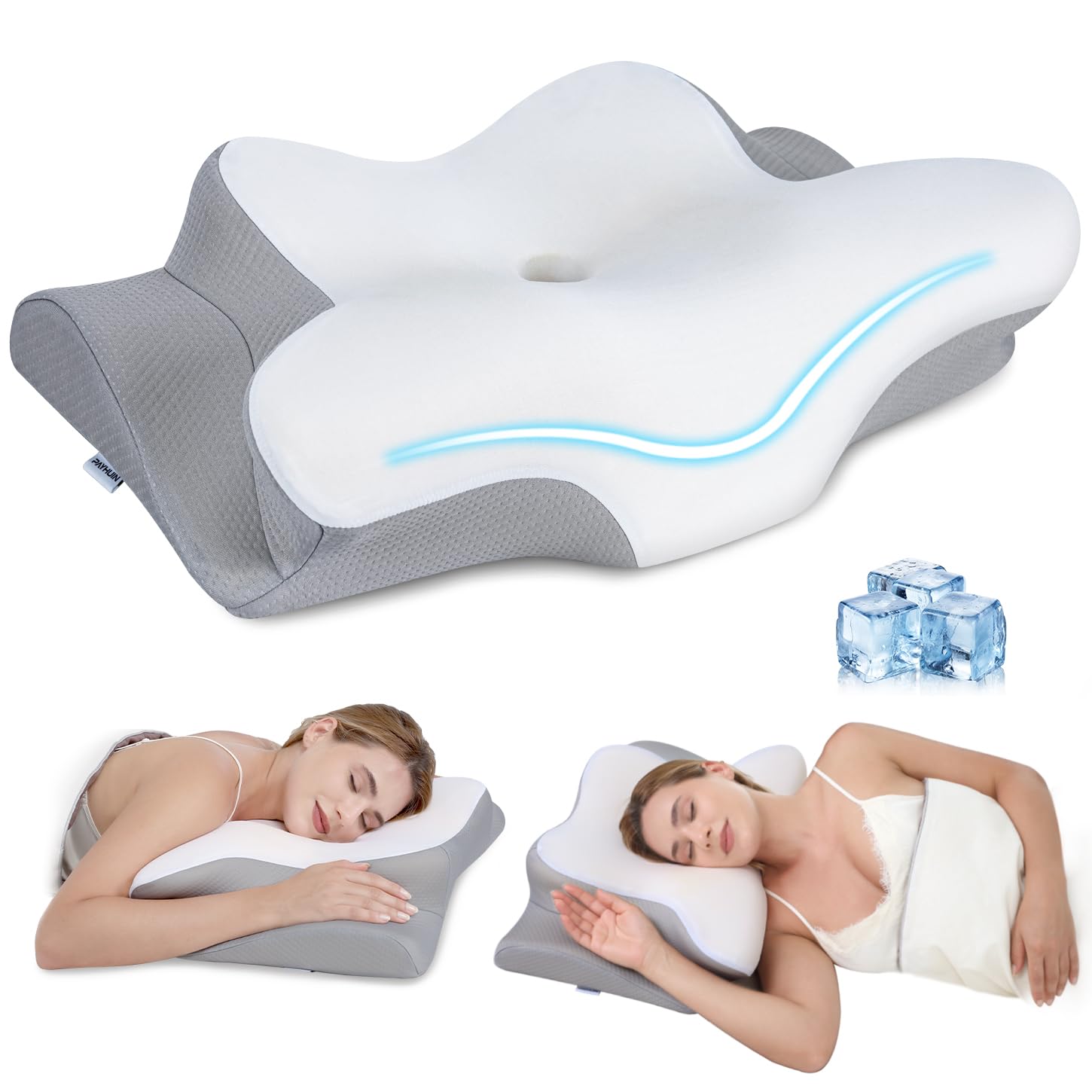
Missleep’s approach is straightforward: a contoured memory foam block with a higher and lower side, accessed by rotating the pillow 180 degrees. This gives two distinct loft options without any removable inserts, simplifying the decision for users who know whether they need more or less lift. The foam is rated medium-soft, with a slow-rebound formulation that molds gently without fully collapsing.
The pillowcase is 85% nylon and 15% spandex, giving it a stretchy ice-silk feel that runs cool. CertiPUR-US, OEKO-TEX, and ISPA certifications cover the foam, and measurements come in at 24.8 by 14.2 inches—generous enough for most standard pillowcases. Users report that the center hole also accommodates earrings for side sleepers, reducing pressure on the outer ear.
The medium-soft feel means it offers less firm structural support than denser memory foam alternatives. If you need aggressive cervical traction, the Missleep’s softer response may feel insufficient compared to firmer competitors.
Why it’s great
- Simple two-height rotation eliminates guesswork for loft selection
- Stretchy ice-silk cover provides a noticeable cooling sensation
- Center cutout reduces ear pressure for side sleepers with earrings
Good to know
- Medium-soft foam may be too plush for those needing firm cervical support
- Slow-rebound feel is not for users who prefer responsive latex-like foam
6. Core Products Double Core Select Cervical Pillow
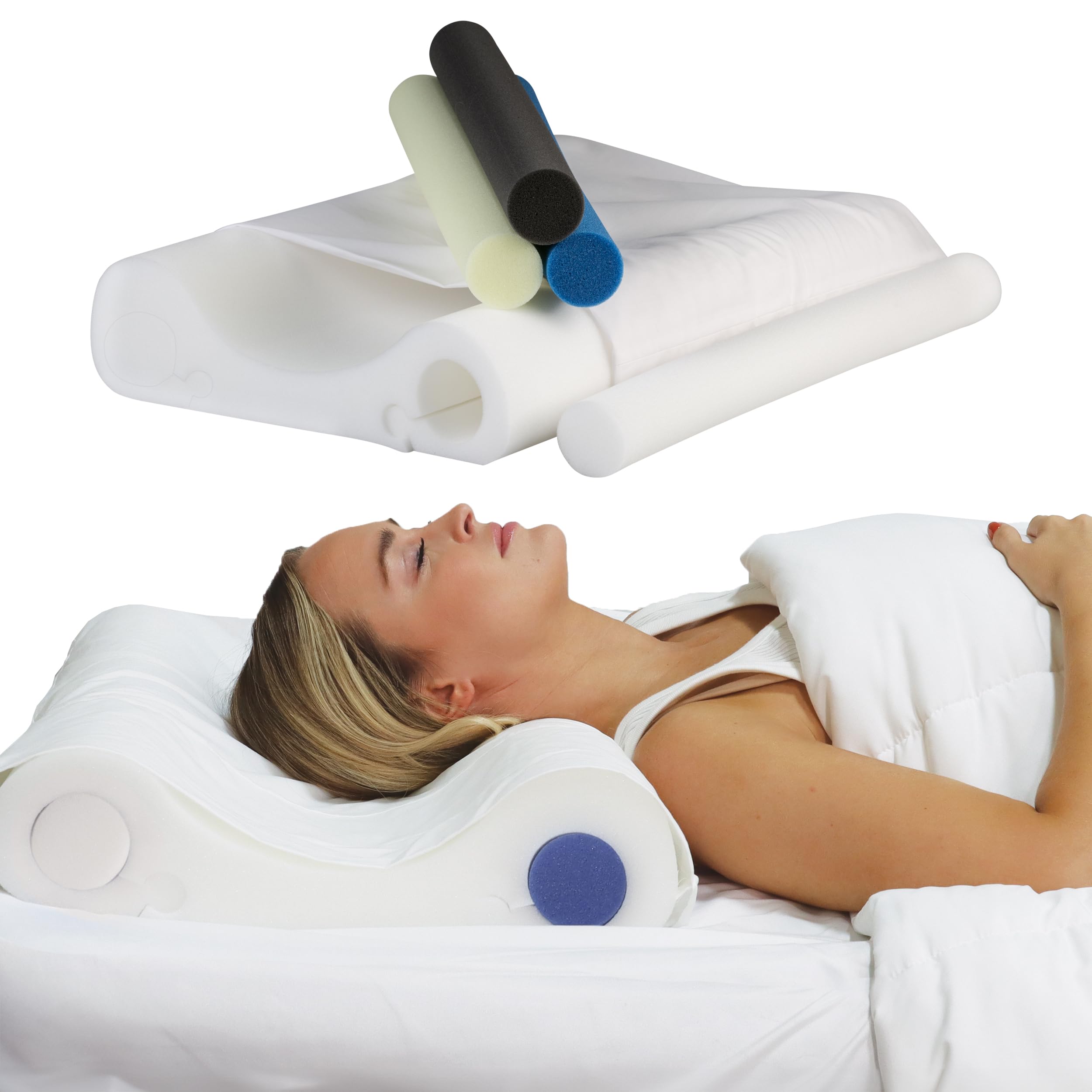
The Double Core Select is a different animal from the all-foam contour pillows above. Instead of a single molded shape, it relies on four color-coded interchangeable foam rolls (white for gentle, blue for medium, gray for firm, and gold for extra-firm) that sit inside a contoured cotton casing. You start with the softest roll and progress to firmer options as your neck adjusts, mimicking cervical traction therapy progression.
The pillow itself is cut from precision polyurethane foam with a separate head section and a built-in bolster that stays in place during sleep. It measures 22 by 16 inches, which requires a European sham or oversized pillowcase. Chiropractors commonly recommend this system for chronic neck pain, tension headaches, and forward head posture correction.
Some users report the foam softens and the inserts lose shape after roughly six months of nightly use, and the manufacturer does not sell replacement inserts separately. The initial unpacking may also produce a chemical odor that needs airing out, though customer reports on this are mixed.
Why it’s great
- Four firmness levels let you gradually progress cervical support
- Chiropractor-recommended design for posture correction
- Separate head and neck sections prevent roll migration
Good to know
- Foam and inserts may soften after 6 months with no replacement parts
- Requires a European sham or oversized pillowcase for proper fit
7. Therapeutica Lite Cervical Orthopedic Foam Pillow

Therapeutica’s Lite model is designed by a chiropractor and built specifically for petite body types—shoulder measurements of 4.25 to 5.25 inches. The molded polyurethane foam is medium-firm, with two distinct sleeping surfaces: side wings that fill the head-to-mattress gap when side sleeping, and a lower back-sleeping contour that supports the curve of the cervical spine.
At just over a pound, it’s lighter than most cervical pillows, but the foam density is high enough to retain shape over time. The zippered cotton cover is removable and machine-washable, and the pillow arrives compressed in packaging, requiring up to a week to fully expand to its final shape. FSA/HSA eligibility makes it accessible for those with medical spending accounts.
The petite sizing limits the audience—anyone with broader shoulders will need the average or large size, which is sold separately. The firm feel also requires an adjustment period of several nights, and some users with acute neck pain found it too hard despite the therapeutic intent.
Why it’s great
- Engineered by a chiropractor specifically for petite frame dimensions
- FSA/HSA eligible for medical spending account holders
- Molded foam design retains structural support over extended use
Good to know
- Petite size only fits individuals with 4.25–5.25 inch shoulder width
- Firm foam requires 5–7 days to fully expand after unpacking
FAQ
How long does it take to adjust to a cervical traction pillow?
Can a cervical pillow help with headaches caused by neck tension?
What’s the difference between a cervical pillow and a regular memory foam pillow?
Final Thoughts: The Verdict
For most users, the best cervical traction pillow winner is the UTTU Cervical Pillow because its adjustable loft system covers all sleep positions and maintains support over years of use. If you want the ultimate cooling experience and a generous trial period, grab the CloudCoz Ultra Pain Relief. And for petite body types needing personalized neck alignment, nothing beats the Therapeutica Lite.

Mo Maruf
I created WellFizz to bridge the gap between vague wellness advice and actionable solutions. My mission is simple: to decode the research and give you practical tools you can actually use.
Beyond the data, I am a passionate traveler. I believe that stepping away from the screen to explore new environments is essential for mental clarity and physical vitality.