Our readers keep the lights on and my smoothie glass nicely filled. As an Amazon Associate, I earn from qualifying purchases.
That persistent tightness at the base of your skull, the nagging pull after a day hunched over a screen, or the radiating tension that turns into a headache — a cervical traction device is the specific tool designed to counteract these exact problems. Unlike a standard neck pillow, these devices apply a targeted, sustained stretch to the cervical spine, decompressing the joints and taking pressure off the discs and nerves.
I’m Mohammad Maruf — the founder and writer behind WellFizz. I’ve spent countless hours analyzing the biomechanical design, material density, and traction mechanisms of these devices to separate the flimsy options from the ones that actually provide measurable relief.
This buying guide breaks down the real-world differences in construction, adjustability, and intended application so you can confidently select the best cervical traction device for your specific neck pain and daily routine.
How To Choose The Best Cervical Traction Device
Selecting the right home traction unit depends on your specific pain patterns, your tolerance for different types of stretch, and how much adjustability you need to target a particular section of your spine. Not every design works for every condition — an inflatable collar might relieve upper trap tension but won’t separate the lower cervical vertebrae the way an over-the-door system can. Here’s what to prioritize.
Match the Traction Mechanism to Your Condition
The biggest decision is whether you need a static, gravity-assisted stretch (foam-based or sling) or an active, user-controlled pull (over-the-door hammock). Foam-based devices like the Pettibon or the Core Products Apex are excellent for maintaining the natural lordotic curve and relieving general stiffness. Over-the-door slings apply precise decompression forces, making them more suitable for disc herniations, radiculopathy, and cases where a higher load is needed to open the joint space. Inflatable units sit in the middle — adjustable pressure and more forgiving for beginners, but limited in maximum traction force.
Foam Quality and Ergonomic Geometry
If you opt for a foam-based traction pillow, pay attention to the density and cut of the foam. A premium, high-density foam will hold its shape under the weight of your head without sagging, providing consistent support over months of daily use. The cervical curve should match the C‑shape of a healthy neck — a wedge that is too shallow won’t stretch, while one that is too aggressive can jam the facet joints. Soft memory foam might feel plush initially but often lacks the rigidity needed for genuine traction.
Build Quality and Safety in Over-the-Door Units
Over-the-door systems involve a mechanical load — your body weight multiplied by leverage — so the stitching, spring calibration, and pulley mechanism must be durable. Look for reinforced sling material (leather or dense velvet), a metal or high-grade plastic ratchet, and a spring that maintains accuracy over repeated use. A flimsy cord or improperly secured door bracket is not just inconvenient; it’s a fall risk. Brands using medical-grade components and offering replacement parts demonstrate a higher commitment to safety.
Quick Comparison
On smaller screens, swipe sideways to see the full table.
| Model | Category | Best For | Key Spec | Amazon |
|---|---|---|---|---|
| Upalled Heated Cervical Traction | Premium | Chronic neck pain with shiatsu & heat | 2000mAh battery / 3 heat levels | Amazon |
| Pettibon Over Door System | Premium | Full spine decompression at home | Doctor-trusted 30+ yrs / body-weight traction | Amazon |
| OPTP Mulligan Self Snag | Mid-Range | C1/C2 rotation restrictions / headaches | Easy-grip handles / 0.32 oz | Amazon |
| Core Products Apex Orthosis | Mid-Range | Restoring cervical curve / tech neck | Precision-cut firm foam / USA made | Amazon |
| Pogcay Inflatable Neck Stretcher | Mid-Range | Adjustable pressure / travel-friendly | Triple air chamber / 10.55 oz | Amazon |
| Glitz Over Door Hammock | Budget | Disc bulge & radiculopathy relief | 0–40 lb spring scale / 1.19 lbs | Amazon |
| Soulern Over Door Stretcher | Budget | Portable use / outdoor & travel | Extra outdoor strap / 14.39 oz | Amazon |
In‑Depth Reviews
1. Upalled Wireless Heated Neck Stretcher
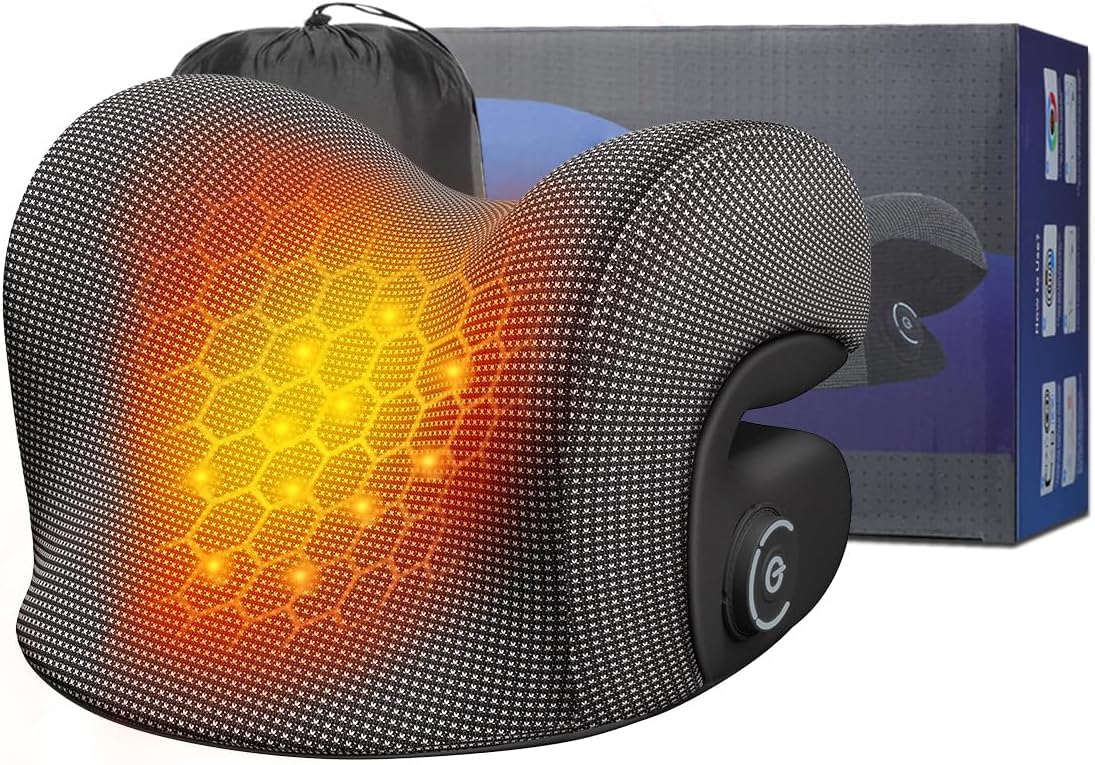
This is not a passive foam wedge — the Upalled is a cordless, rechargeable traction device that combines 2000mAh battery power with a precise cervical C‑curve form. The graphene heating pad reaches 122°F in seconds, penetrating deep into tight trapezius muscles before the traction stretch even begins.
The C‑shape geometry matches the cervical lordotic curve, and the high-density self-skinning foam resists deformation even after repeated use. A 30-minute auto‑shutoff prevents overuse, and the magnetic therapy cover adds another layer of pain management. On a full charge, you get about 2.5 hours of operation — enough for a full week of daily 10‑minute sessions without rethinking your cord management.
Where this device really stands apart is in its ability to treat somatic tinnitus and forward head posture simultaneously. Multiple users have reported that the combination of heat, shiatsu pressure, and sustained cervical traction corrected issues that soft pillows and basic collars never touched. The trade-off is that the form factor is bulkier than a simple inflatable collar, and the initial 1‑3 day adjustment period requires discipline to push through the natural discomfort of the stretch.
Why it’s great
- Graphene heat combined with controlled cervical traction for faster muscle relaxation
- Wireless portability means you can use it at the office, in bed, or on the couch
- Shiatsu nodes target specific trigger points along the cervical spine during the stretch
Good to know
- Not suitable for use as a sleep pillow due to the firm, contoured shape
- Some units experienced battery failure shortly after the return window
2. Pettibon System Portable Cervical Neck Traction
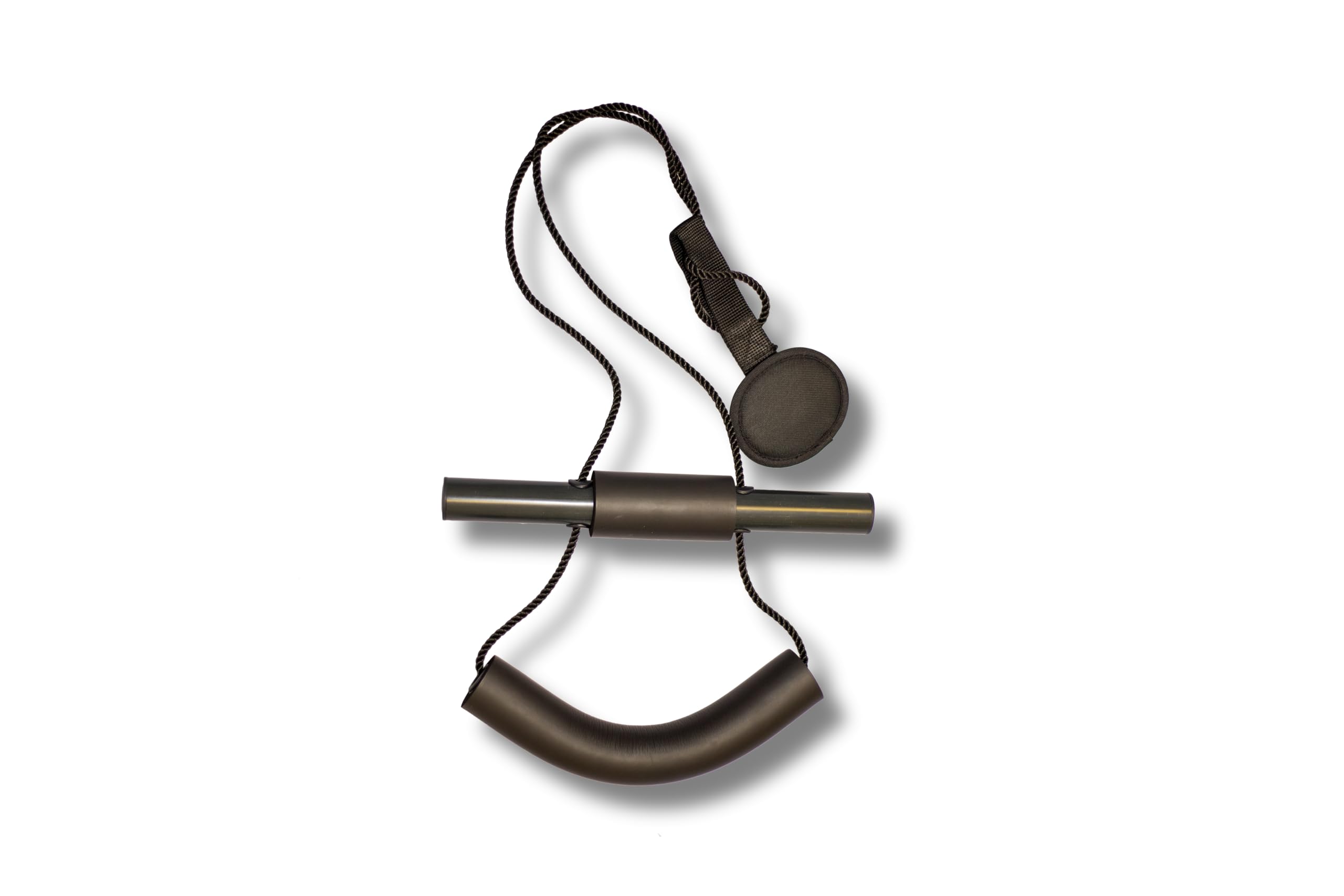
The Pettibon System has been a fixture in chiropractic clinics for over three decades because it relies on a simple but clinically validated principle: loading and unloading cycles of body-weight traction to rehydrate spinal discs and rehab the cervical ligaments. The over-the-door design uses a padded, rigid neckbar and a fabric doorstop, working with your own squat motion to control the intensity of the stretch — no springs, no gauges, just precise manual control.
This unit is height-adjustable, accommodating users from 5’0” to over 6’5” by switching door heights, and the curved neckbar is padded enough to avoid pressure on the mastoid process. Unlike budget slings that use a single strap, the Pettibon distributes the load evenly across the occiput. The 2.5-pound build is noticeably more solid than the alternatives, and the doorstop is designed to not mar paint or trim when installed correctly.
Users with chronic neck tightness, upper back spasms, and even disc bulges report significant improvement after learning the 10‑second hold, 10‑repetition protocol. The key is using gentle body weight — the device lets you control exactly how much force you apply. The main limitation is that it only works with standard-height doors (74–82 inches), and some tall users find the squatting motion less intuitive than pulling a tension cord. It is not the simplest device to master on day one, but the long-term clinical track record is unmatched in this list.
Why it’s great
- Body-weight control allows fine-tuned traction force, from gentle to deep decompression
- Padded, rigid neckbar provides stable support without slipping during use
- Doctor-tested protocol for ligament and disc rehabilitation, not just symptom masking
Good to know
- Requires a standard-height door and a clean, oil-free neck for the neckbar to grip
- Setup involves a learning curve — beginners should watch the included instructions closely
3. OPTP Mulligan Self Snag Cervical Strap

This is not a generic neck stretcher — the Mulligan SELF SNAG strap is a specific mobilization tool designed by physical therapist Brian Mulligan for treating C1/C2 rotation restrictions that cause cervicogenic headaches and neck stiffness. Its defining feature is the narrow width, which fits precisely over the transverse process of the first cervical vertebra (C1), allowing for a targeted joint glide that a wide strap or foam wedge simply cannot achieve.
The strap is made from a sturdy, non-slip woven fabric that stays in place even during active neck rotation exercises — the user pulls the integrated handles to apply an accessory glide while moving the head through its range of motion. At only 0.32 ounces and measuring 6.7 inches in length, it is the most portable and discreet device on this list. It can easily fit in a laptop bag and be used during a lunch break without any setup beyond wrapping it around your head.
Users who follow the Mulligan concept report rapid improvement in side-to-side rotation and a reduction in tension headaches within two days. The trick is learning the correct technique — the strap needs to be positioned high on the neck, just under the skull, and the pull direction must be parallel to the floor. It is less effective for general mid-cervical stiffness or disc herniations, and it requires the user to actively pull, meaning you cannot relax into it the way you can with a foam-based or sling-based device.
Why it’s great
- Clinically designed for targeted C1/C2 mobilization, not vague neck stretching
- Extremely portable and packable — no door, power source, or inflation needed
- Non-slip fabric holds position even during active range-of-motion exercises
Good to know
- Requires learning the precise positioning and pull direction to be effective
- Not suitable for passive relaxation — you must actively pull the handles
4. Core Products Apex Orthosis Cervical Traction

The Apex Orthosis from Core Products is a deceptively simple block of high-density, precision-cut foam, yet it has been a staple in chiropractic clinics for years because of how effectively it supports the cervical lordotic curve. Unlike inflatable collars or memory foam pillows, this wedge is purposely firm — when you lie down on it, the sloped geometry creates a consistent, gentle traction force that encourages your neck to resume its natural C‑shape without any active effort from you.
Measuring 8 x 4 x 4.5 inches and weighing only 2.4 ounces, it is incredibly easy to store and carry. The height is adjustable — the wedge can be used on its wide side for a deeper stretch or on its narrow side for a gentler curve. It is specifically designed to counteract the effects of forward head posture, text neck, and military neck. Chiropractors often recommend using it for 15 minutes daily with your head extending slightly off the end of the wedge to maximize the stretch on the upper thoracic spine.
Multiple reviewers report that this device eliminated chronic neck and shoulder pain that massage and acupuncture failed to touch. The key is consistency — 5 minutes twice daily is enough for most people to feel the difference. The foam does have a break-in period; some users feel an initial discomfort as the muscles begin to adapt. It is also not designed for cervical rotation — it is purely a static curve-restoring tool, so if your pain is primarily in the lower cervical segments, you may need a traction system with more vertical pull.
Why it’s great
- Firm, precision-cut foam provides consistent, passive traction without inflating or pumping
- Adjustable height allows you to dial in the intensity of the cervical curve stretch
- Lightweight and compact — easy to carry to work or store beside the bed
Good to know
- Static design only — does not address active rotation or side-bending restrictions
- Initial use may cause transient discomfort as the cervical curve begins to re-adapt
5. Pogcay Inflatable Neck Stretcher
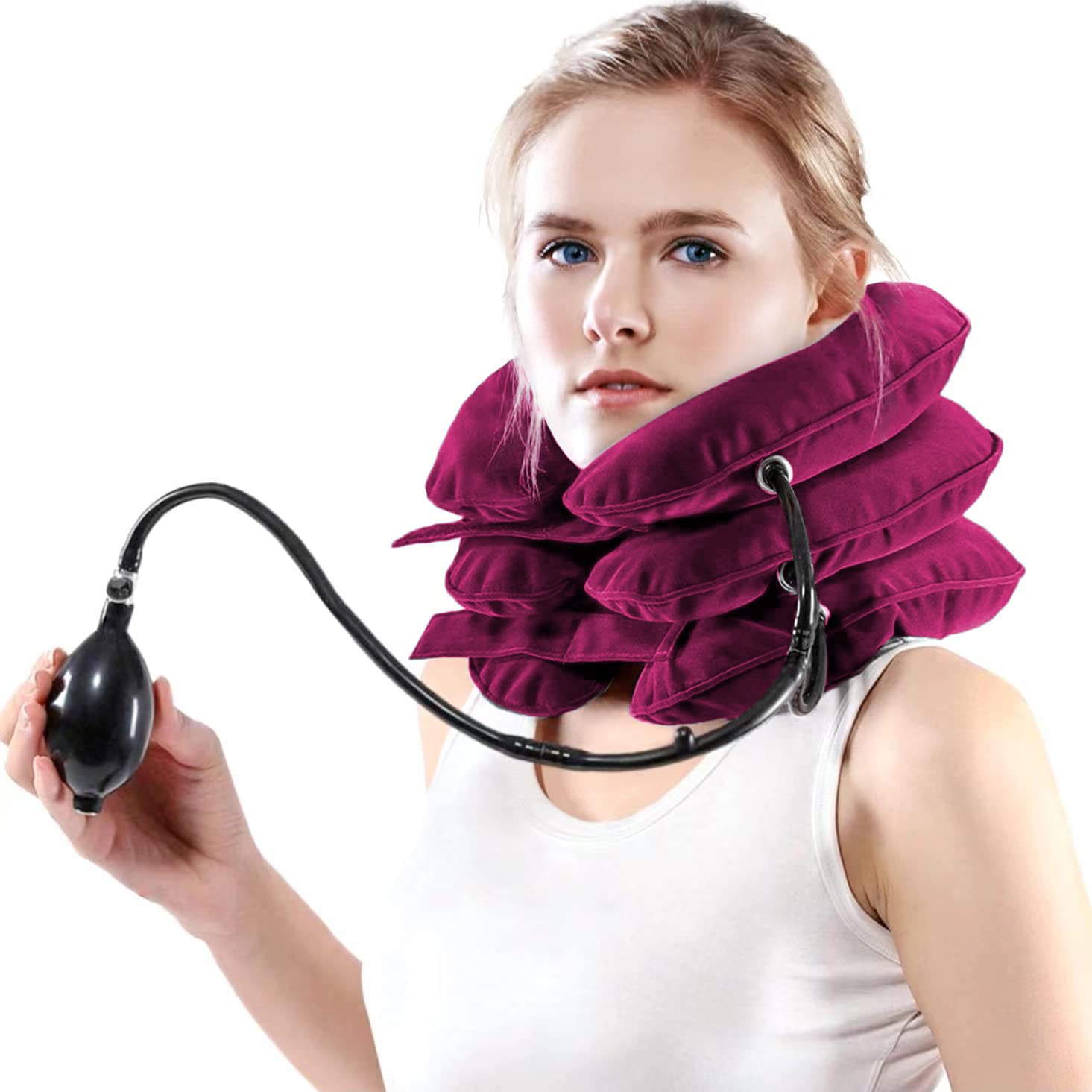
The Pogcay inflatable stretcher uses three independent air chambers that you can inflate to different heights, allowing for a truly customizable level of traction. The flocked fabric cover is soft and skin-friendly, reducing the foreign-body sensation that many users dislike with foam-based wedges. Two Velcro straps secure the device around your neck, so you can move around while wearing it — reading, watching TV, or even working at a desk.
The triple air leakage prevention design ensures the chambers hold their pressure over repeated daily use, which is a common failure point in cheaper inflatable collars. At 10.55 ounces, it is featherlight and packable — you can deflate it and toss it in a travel bag. The initial 3‑5 minute sessions are enough to feel decompression in the upper trapezius and suboccipital muscles, and many users report that it provides noticeable relief from cervicogenic headaches within a week of consistent use.
Where this device falls short is in its maximum traction force — you cannot generate the same degree of joint separation that an over-the-door sling can produce. If your issue is a significant disc bulge or cervical radiculopathy in the lower vertebrae (C5-C7), this inflatable unit may provide only partial relief. It is best suited for mild to moderate tension, tech neck stiffness, and stress-related shoulder tightness. The manual bulb pump also requires a few extra seconds of setup each time compared to a foam wedge you can just lie on.
Why it’s great
- Three independent air chambers let you fine-tune the stretch height and angle
- Soft flocking fabric and Velcro straps make it comfortable and secure for upright use
- Triple air-leak seals maintain consistent pressure over many uses
Good to know
- Limited maximum traction force — less effective for severe lower-cervical disc issues
- Requires manual inflation and strap adjustment each time you want to use it
6. Glitz Over Door Neck Traction Hammock

The Glitz over-the-door hammock uses a calibrated spring scale that lets you dial in traction force from 0 to 40 pounds, with a ratcheting mechanism that allows for fine incremental adjustments. The block-and-tackle system is designed to make heavy lifting feel easier — even a small tug on the cord translates into significant pulling force on the cervical spine. The velvet harness is wide and contoured to cradle the occiput without digging into the jaw.
Many chiropractors recommend this specific design for patients with cervical radiculopathy and disc herniations because the linear pull directly separates the vertebral bodies, taking pressure off pinched nerves. Users report that 10‑minute sessions provide immediate relief from symptoms like radiating arm pain and chronic popping in the neck. The setup is relatively intuitive — the door stopper slides into a standard door frame and requires no tools.
The durability concerns are significant. Multiple user reviews note that after roughly 20 uses, the internal pulley mechanism and rope begin to degrade, and the spring may lose accuracy. One reviewer reported a dangerous fall when the pulley failed during use. This unit is best viewed as an entry-level option to test whether over-the-door traction is effective for you before committing to a longer-lasting system. If you weigh over 200 pounds or need daily high-force traction, this unit may not hold up long enough to justify the purchase.
Why it’s great
- Calibrated spring scale provides visual feedback on exact traction force being applied
- Ratcheting block-and-tackle system allows precise incremental adjustments
- Velvet harness is comfortable and does not put pressure on the temporomandibular joint
Good to know
- Pulley and rope mechanism may degrade after 20–30 uses, presenting a fall risk
- Not built for heavy daily use — suitable for testing if over-the-door traction works for you
7. Soulern Over Door Neck Stretcher
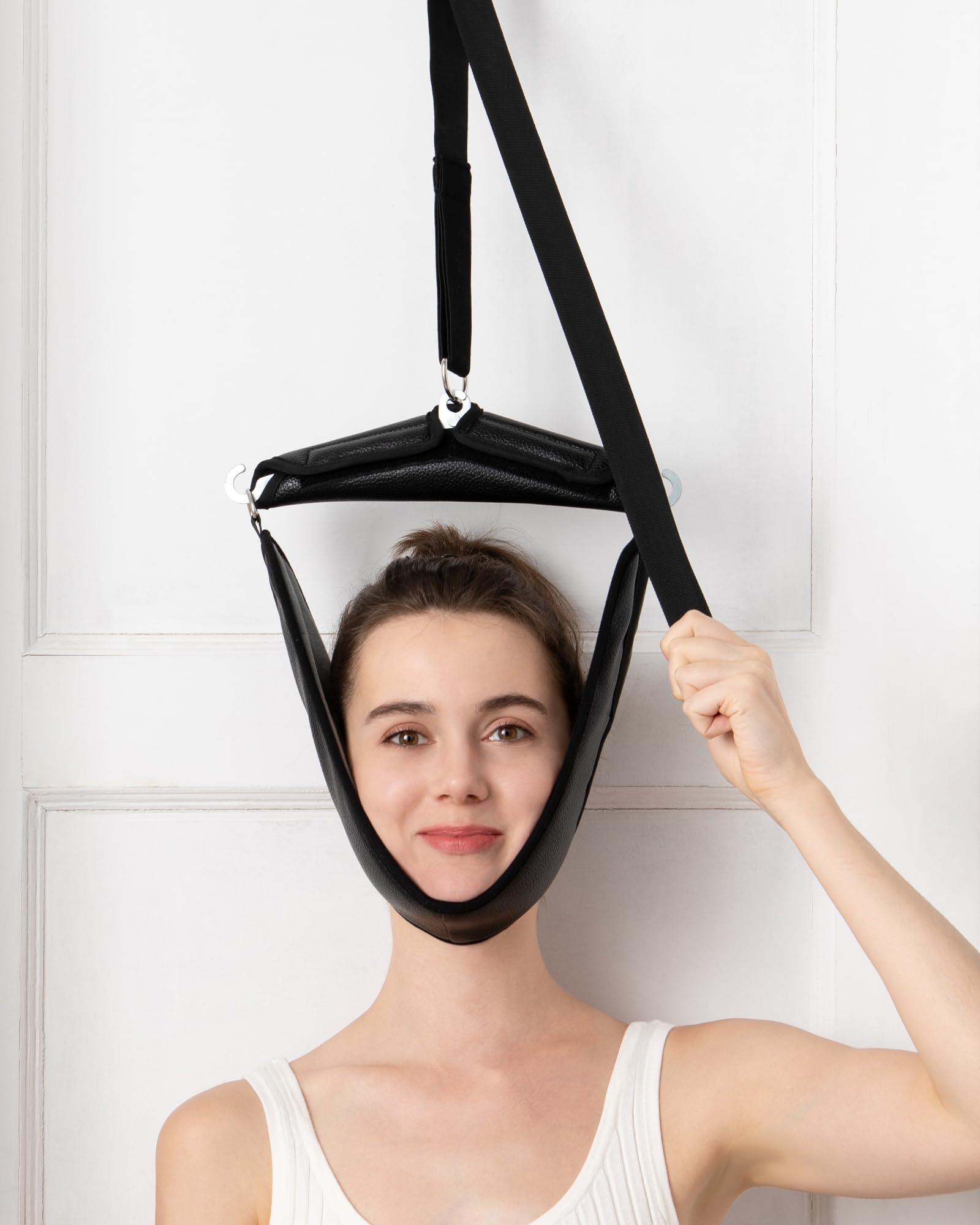
The Soulern over-the-door neck stretcher distinguishes itself by including an extra strap designed for outdoor use — you can wrap it around a roof beam, patio frame, or sturdy tree branch, making it the most versatile option for active people who want to incorporate traction into their camping, hiking, or beach routine. The chin cover combines rugged leather on the outside with skin-friendly velvet on the inside, providing a durable yet comfortable contact surface.
The system uses a simple strap-pull adjustment, which is easier to fine-tune than plastic ratchet mechanisms. A medical-grade buckle with an adjustable slider ensures the harness stays positioned correctly during use without slipping. The silicone doorstop is compatible with most standard doors and leaves no scratches or marks. For tall or large-headed users (hat size 7 5/8 and above), the harness may be slightly smaller than ideal, requiring a carabiner or extension chain to get a proper fit.
User feedback is mixed on long-term stitching — the threads begin to show signs of wear after a few months of regular use, and some units have shown early fraying at the stress points. The harness itself is comfortable enough that people report falling asleep in it, which speaks to the quality of the velour lining. At its price point, it is a decent option for light to moderate neck tension relief and for someone who wants the flexibility to use traction both indoors and outdoors. Just be aware that the stitching life may not extend past a few months with heavy daily use.
Why it’s great
- Includes outdoor strap for traction on roof beams, patio frames, or tree branches
- Rugged leather exterior with soft velvet interior offers durability and comfort
- Adjustable buckle and strap system allows fine control of tension
Good to know
- Stitching at stress points may start fraying after a few months of daily use
- Small harness size may be uncomfortable for users with a large head circumference
FAQ
How many minutes a day should I use a cervical traction device?
Is an over-the-door traction device better than an inflatable collar?
Can a cervical traction device help with cervicogenic headaches and migraines?
Final Thoughts: The Verdict
For most users, the best cervical traction device is the Upalled Wireless Heated Neck Stretcher because it combines controlled cervical C‑curve traction, therapeutic heat, and shiatsu pressure points in a wireless rechargeable form that adapts to daily life without requiring a doorframe or an inflation bulb. If you want a clinically proven traction system that targets disc hydration and ligament rehabilitation, grab the Pettibon Over Door System. And for targeted relief from C1/C2 rotation restrictions and cervicogenic headaches, nothing beats the OPTP Mulligan SELF SNAG Strap in terms of specific biomechanical action.

Mo Maruf
I created WellFizz to bridge the gap between vague wellness advice and actionable solutions. My mission is simple: to decode the research and give you practical tools you can actually use.
Beyond the data, I am a passionate traveler. I believe that stepping away from the screen to explore new environments is essential for mental clarity and physical vitality.