Our readers keep the lights on and my smoothie glass nicely filled. As an Amazon Associate, I earn from qualifying purchases.
The difference between a sweltering cabin and a genuinely comfortable drive comes down to how well your window film tackles infrared radiation. Ceramic tint uses non-conductive nanoparticles to selectively block heat without interfering with electronics, making it the preferred choice for discerning owners. Unlike dyed or metallic films, ceramic technology rejects solar energy through absorption and reflection rather than through simple shading or signal-blocking metal layers.
I’m Mohammad Maruf — the founder and writer behind WellFizz. I’ve spent countless hours parsing the specifications, reviewing measured heat rejection data, and analyzing installation feedback to separate real thermal performance from marketing claims in the ceramic tint market.
This guide breaks down the top performers based on infrared rejection ratings, visible light transmission accuracy, and real-world installation feedback so you can confidently choose the right ceramic tint for heat rejection for your car or home.
How To Choose The Best Ceramic Tint For Heat Rejection
Selecting the right ceramic tint requires looking past the shade percentage (VLT) and focusing on the metrics that measure actual thermal performance: infrared rejection (IRR) and total solar energy rejected (TSER). A film with 99% IRR will keep your cabin noticeably cooler than one with 85%, regardless of how dark it looks. Additionally, consider the film’s thickness, warranty terms, and whether the adhesive is color-stable — some budget films develop a purple or greenish hue after extended sun exposure.
Infrared Rejection (IRR) vs. Total Solar Energy Rejected (TSER)
IRR measures how much infrared heat the film blocks from a specific wavelength range. Premium ceramic films often claim 95–99% IRR. TSER includes the entire solar spectrum — UV, visible light, and infrared, providing a single comprehensive number for real-world heat rejection. A high TSER (60–70%) means the film prevents heat from entering the cabin across the full solar spectrum, making it a more useful spec for comparing overall thermal efficiency between products.
Film Thickness and 2PLY Construction
Thicker films (around 4 mil) provide greater durability and a higher perceived quality but require more skill to heat-shrink around curved rear windows. Most standard ceramic tints are 1.5 to 2 mils thick, which simplifies DIY installation. A 2PLY construction — a dyed or adhesive layer bonded to a clear PET layer — can improve scratch resistance and UV blocking without making the film excessively thick or difficult to handle.
Signal Friendliness and Color Stability
Ceramic film is naturally non-metallic, meaning it will not interfere with GPS, cellular, or radio signals. This is a major advantage over traditional metallized films. Look for films that explicitly state they are non-reflective and signal-friendly. Color stability matters because some dye-based films shift to a blue, green, or purple tint after months of sun exposure — a sign of adhesive degradation. Genuine ceramic films remain optically clear and color-stable for years.
Quick Comparison
On smaller screens, swipe sideways to see the full table.
| Model | Category | Best For | Key Spec | Amazon |
|---|---|---|---|---|
| MotoShield Pro Precut | Precut | Precision fit & lifetime warranty | 99% IRR, lifetime warranty | Amazon |
| MotoShield Pro Roll | Roll | High heat rejection & DIY | 70% TSER, 99% IRR, 2 mil | Amazon |
| United 2PLY Nano Ceramic | Roll | Clarity & balanced heat control | IR-90–95, TSER 50–60% | Amazon |
| HOHOFILM K70 | Roll | Thick protection & 70% VLT | 4 mil thickness, 99% IRR | Amazon |
| RockRose Air Nano | Roll | Haze-free clarity & large coverage | 95% IRR, 60 in x 100 ft | Amazon |
| Snapguard Solutions | Roll | Home energy savings & UV block | 95–99% IRR, 2.5 ft x 100 ft | Amazon |
| XhuangTech 70% VLT | Roll | Chameleon color & front windshield | 99% UV, 40 in x 98.5 ft | Amazon |
| SOLARCONTROL Nano | Roll | Budget-friendly ceramic entry | 95% IRR, 1.5 mil, 2PLY | Amazon |
| 2Ply Hex Autoparts | Roll | Large quantity & basic privacy | 99% UV, 40 in x 100 ft | Amazon |
In‑Depth Reviews
1. MotoShield Pro Precut Nano Ceramic Tint

This precut film eliminates the most stressful part of DIY tinting — cutting the roll to match curved windows. It arrives shaped to your vehicle’s exact dimensions, so you only need to heat-shrink the film and squeegee it into place. The manufacturer backs it with a lifetime warranty against defects and delamination, which reflects confidence in the adhesive’s long-term stability.
The film claims up to 99% infrared heat rejection and 99% UV blocking, matching the top-tier thermal performance of premium rolls. Side windows are straightforward to install, while the rear window demands patience with a heat gun and careful handling to avoid creases. Some users noted that the film may appear slightly more reflective than expected and that the included practice piece is essential for first-timers.
Be aware that a handful of early reviews reported that the film turned foggy after a few months, potentially due to adhesive curing issues. Registering the warranty immediately after purchase is critical to protect your investment.
Why it’s great
- Precision-cut for exact vehicle fit — no trimming required
- Lifetime warranty against manufacturing defects
- UV and IR rejection at 99% each
Good to know
- Rear window installation is difficult on heavily curved glass
- Some batches reported a slight foggy haze after curing
- Thicker film than budget rolls requires more heat
2. MotoShield Pro 15% VLT Nano Ceramic Roll

This roll version of MotoShield Pro is engineered with nano-ceramic particles that block up to 99% of infrared radiation. The manufacturer claims a 70% total solar energy rejection rate, which is aggressive for a non-metallized film. Owners report a measurable interior temperature drop of up to 25°F under direct sun, making it a serious contender for those living in hot climates.
At only 2 mils thick, it is relatively easy to heat-shrink around flat and moderately curved windows. The included instruction manual and video guide help beginners avoid common mistakes like reversing the adhesive side. The film is available in seven VLT levels from 5% to 75%, giving you flexibility for windshields, front sides, and rear glass.
Some installers found the film stiffer than competing brands, requiring extra care to prevent creasing on complex rear windows. A few reviews noted color inconsistency between separate orders — the second roll arrived with a bluish tint. The 3-year warranty covers manufacturing defects but does not cover installation damage.
Why it’s great
- 70% TSER delivers real cabin temperature reduction
- Thin 2-mil profile is manageable for DIY installation
- Seven VLT options from limo dark to nearly clear
Good to know
- Film is stiffer than premium brands — creases easily
- Color may vary between different production batches
- Requires precise trimming on curved automotive glass
3. United 2PLY Nano Ceramic Pro 35% VLT Roll
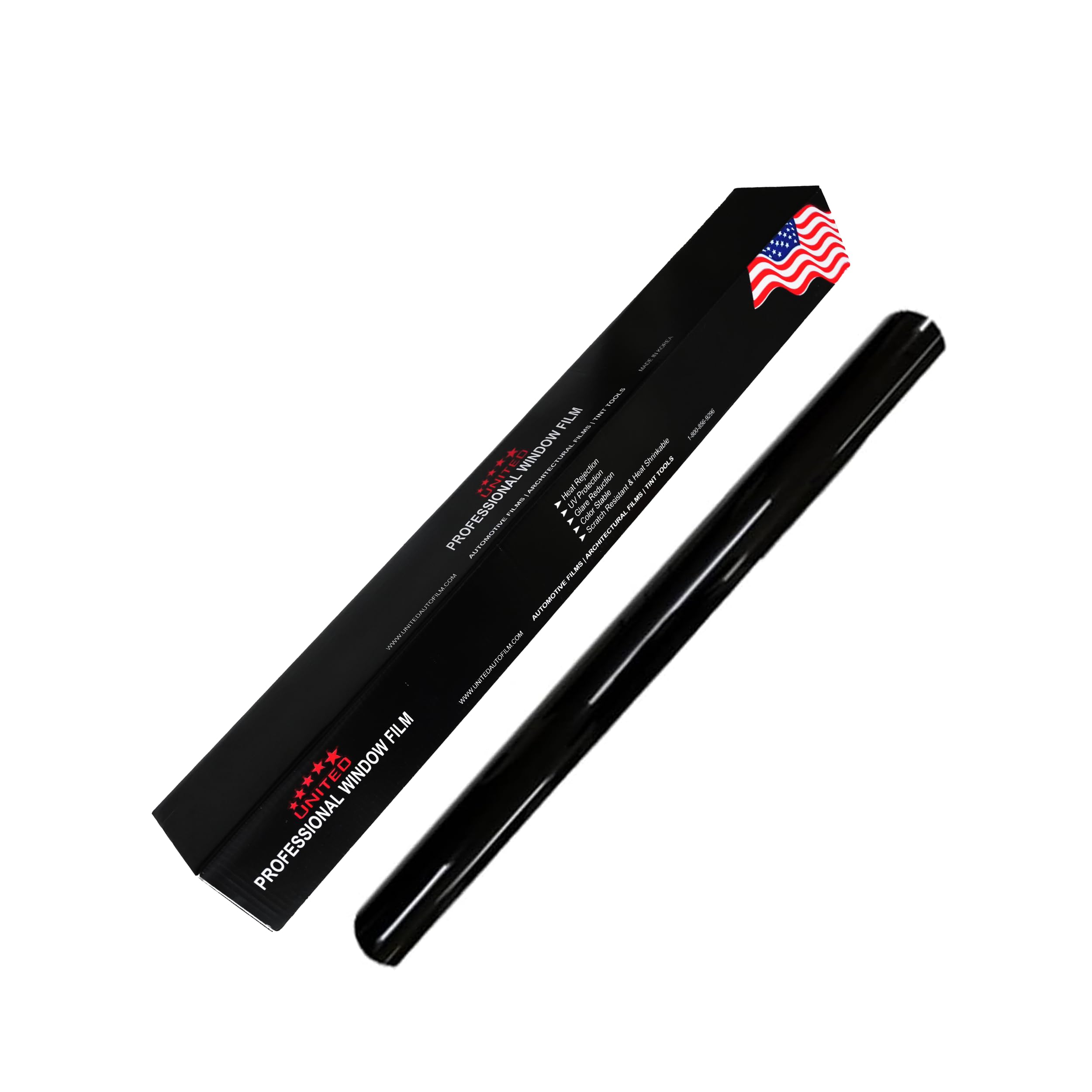
United’s ceramic film strikes a strong balance between optical clarity and heat rejection. The 2PLY construction bonds a ceramic-infused adhesive layer to a clear PET top layer, providing IR rejection in the 90–95% range and a TSER between 50 and 60%. This makes it less aggressive than the MotoShield Pro on heat control but still effective for daily commuting and residential use.
The film is designed for both wet and dry heat-shrink installation methods. At 35% VLT, it offers daytime privacy and glare reduction without making the cabin feel cave-like at night. Owners consistently praise the non-reflective appearance and the fact that it does not interfere with GPS or cellular reception — a hallmark of genuine ceramic construction.
The most common complaint is the film’s slight greenish tint under certain lighting conditions. If you prefer a neutral gray or charcoal appearance, this may not be your top choice. Additionally, some users wished the adhesive was stronger for complex curves, though standard flat windows adhere without issues.
Why it’s great
- Excellent optical clarity with non-reflective finish
- Signal-friendly — no interference with GPS or radio
- Versatile for both automotive and home window use
Good to know
- Film exhibits a greenish hue in direct sunlight
- TSER is lower than top-tier competitors
- Adhesive could be stronger for highly curved glass
4. HOHOFILM K70 Nano Ceramic 70% VLT

At 4 mils thick, the HOHOFILM K70 is the heaviest film in this lineup, offering exceptional durability and a solid feel during installation. It claims 99% infrared rejection and 99% UV blocking, which puts it in the same thermal performance tier as many premium US brands. The 70% VLT makes it ideal for windshields or front windows where legal limits require minimal shading.
The film’s thickness provides superior scratch resistance and explosion-proof qualities, but it makes heat-shrinking around compound curves extremely challenging. Professional-grade tools and experience are strongly recommended — several DIY users reported persistent bubbles and creases on rear windows. When successfully installed, the view through the film is clear and free of haze.
The main drawback is inconsistent UV rejection: one reviewer measured 90% UV A+B filtration with a meter, not the advertised 99%. There are also reports of a milky or foggy appearance developing months after installation, which suggests some batches may have adhesive curing issues. Ensure you have a return-friendly purchase avenue before committing.
Why it’s great
- 4-mil thickness provides heavy-duty protection and durability
- Excellent visible clarity with 70% VLT for legal windshield use
- 99% IRR claim matches premium tier performance
Good to know
- Too thick for easy DIY on curved glass — requires pro install
- UV rejection may measure below 99% in real-world testing
- Some units develop foggy haze after months of sun exposure
5. RockRose 70% Air Nano Ceramic 60in x 100ft

RockRose’s Air Nano Ceramic film is designed with haze-free optics in mind, using a dual-layer PET construction that maintains clarity even at wider viewing angles. The film blocks 95% of infrared heat and 99% of ultraviolet rays, making it a solid mid-premium performer. The 60-inch width is a standout feature — it covers larger home windows or oversize truck glass without requiring seams.
Installers frequently mention that this film shrinks well with a heat gun, conforming to moderate curves without excessive fingers or creases. The 70% VLT version is nearly clear, preserving the original glass aesthetics while still providing a measurable reduction in cabin heat. Owners report that the film does not turn blue or purple over time, suggesting a color-stable adhesive.
The main criticism involves the blueish tint some users observe from certain angles, which may clash with vehicles that have factory-green or bronze glass. Also, the film is priced near the high end, which may push budget-conscious buyers toward thinner alternatives. Verify the exact color tone before purchasing large quantities.
Why it’s great
- Haze-free clarity with consistent color stability
- 60-inch wide roll covers large panes without seams
- Shrinks reliably on moderate curves
Good to know
- Blueish tint may not match all factory glass colors
- Premium pricing places it above entry-level options
- Not suitable for extreme compound curves without professional skill
6. Snapguard Solutions Nano Ceramic 70% VLT

Snapguard Solutions focuses on home window applications, though the film works perfectly on vehicles. It blocks 99% of UV rays and 95–99% of infrared heat, which translates to measurable reductions in cooling costs during summer months. The 2.5-foot width by 100-foot length is designed for standard residential casement windows, reducing waste during cutting.
At 2 mils thick, it is manageable for a first-time installer. Homeowners report that following wet-install instructions — generous soapy water and a sharp squeegee — yields a near-invisible result. The 70% VLT allows natural light to enter while still blocking the bulk of solar heat, making it suitable for living rooms and home offices where privacy is not the primary goal.
The flip side is that the film’s thinness leaves little margin for error: beginners who scrape too hard or use excessive heat can melt or crease the film. Some users also noted that the “clear” finish still has a faint blueish cast, which may be noticeable on white window frames. The warranty is limited compared to automotive-specific films.
Why it’s great
- Significant cooling cost reduction for residential windows
- 2-mil thickness is reasonably DIY-friendly
- Blocks 99% UV without darkening the room
Good to know
- Thin film can melt under excessive heat gun use
- Faint blueish cast visible on white frames
- Limited warranty compared to automotive-certified films
7. XhuangTech 70% VLT Chameleon Blue Roll
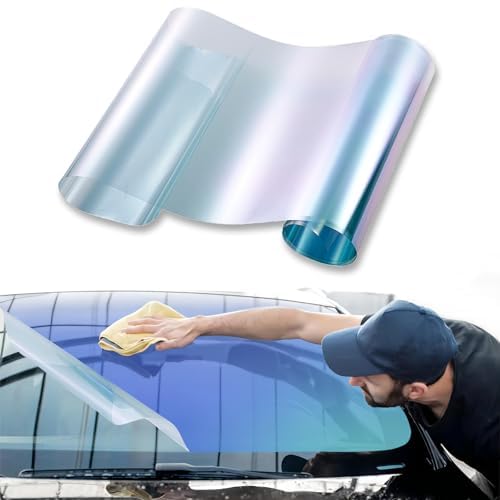
XhuangTech offers a chameleon blue finish that shifts color depending on the viewing angle, giving your vehicle a unique custom look. Beyond the aesthetic, the film blocks 99% of UV rays and provides strong glare reduction. Professional tinters in the community praise the film for its ease of shrinking and uniform adhesive quality, especially on side windows.
The peel-and-stick backing simplifies the initial application, though the 40-inch width by 98.5-foot length roll means you can cover large doors and rear hatches in a single piece. The view from inside is clear with only a slight color shift toward yellow-green, which some drivers find distracting during long trips. The film is also compatible with home windows, expanding its utility beyond the garage.
However, several buyers report micro-wrinkles appearing immediately after installation and the adhesive failing to bond on perfectly clean glass, leading to peeling after drying. The adhesive strength seems inconsistent between rolls, and the lack of a comprehensive warranty means you are taking a gamble on long-term adhesion. Verify the return policy before buying.
Why it’s great
- Unique chameleon blue color for custom looks
- Easy to shrink and install for experienced DIYers
- Blocks 99% UV with strong glare reduction
Good to know
- Inconsistent adhesive quality — some rolls peel after drying
- Micro-wrinkles reported even on carefully cleaned glass
- No robust warranty or customer support network
8. SOLARCONTROL Nano Ceramic 5% Darkest Shade

SOLARCONTROL is an entry-level ceramic tint that delivers 95% infrared rejection and 99% UV blocking at a fraction of the price of premium competitors. The 1.5-mil thickness makes it one of the thinnest films in this comparison, which helps during installation — it conforms to curves with less heat and pressure than thicker alternatives.
The 2PLY construction uses a carbon layer on top of PET to provide a matte black finish that does not reflect glare. Owners who installed it on side windows report satisfactory heat reduction and privacy, though the film’s longevity is unproven beyond a few months. The adhesive bonds well when applied with sufficient slip solution and a firm squeegee.
The trade-offs are modest. The 1.5-mil film is more prone to scratches during installation and may not withstand repeated window rolling as well as thicker films. A small number of buyers received rolls with wrinkles in the adhesive, which could not be smoothed out. Overall, it is a cost-effective way to test ceramic technology before investing in a premium brand.
Why it’s great
- Very affordable entry into ceramic tint technology
- 95% IRR and 99% UV blocking at a low cost
- Thin 1.5-mil profile simplifies curved window installation
Good to know
- 1.5-mil film is fragile and scratches easily during install
- Some rolls arrive with adhesive wrinkles
- Long-term color stability and adhesive bond are unverified
9. 2Ply Hex Autoparts 15% Shade 40in x 100ft
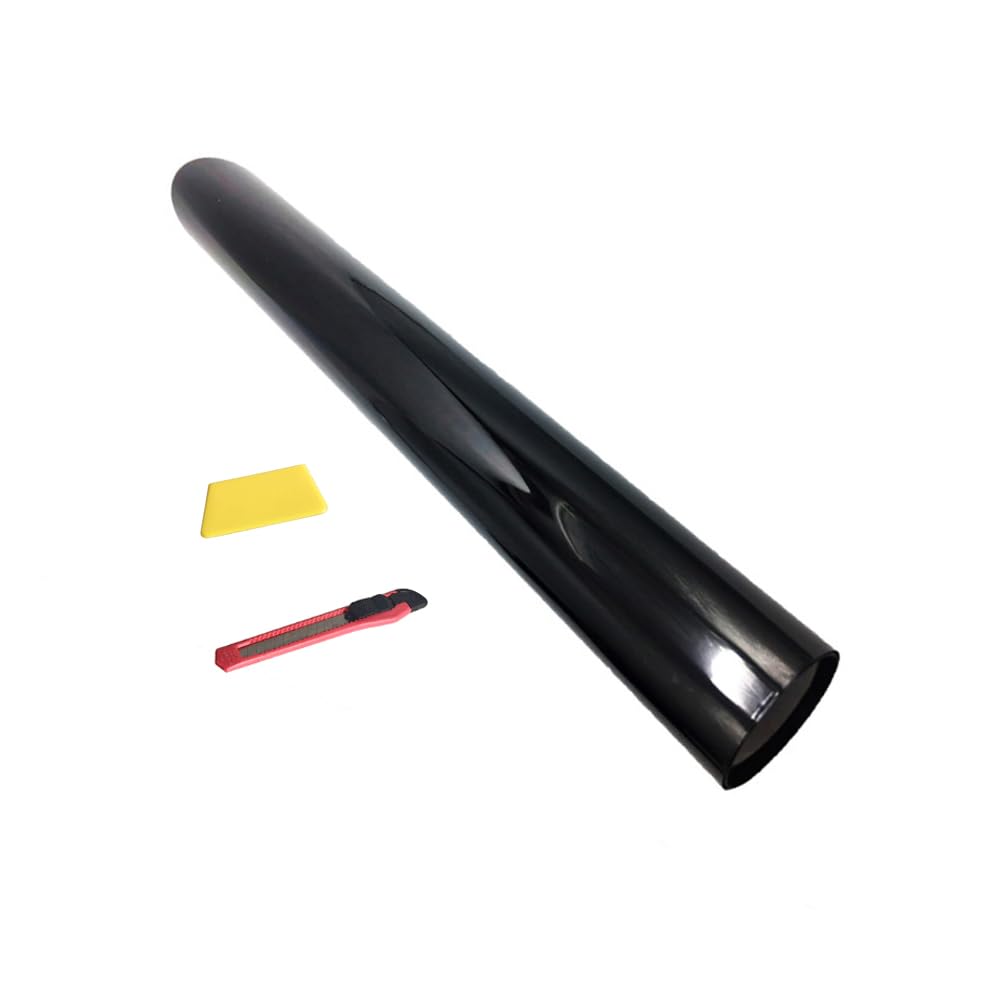
Hex Autoparts offers a massive 40-inch by 100-foot roll of 2PLY film designed for high-volume projects across cars, homes, and boats. The 1.8-mil thickness sits between budget and mid-tier films, providing decent durability while remaining shrinkable with a heat gun. It blocks 99% of UV radiation and provides basic heat insulation, though it lacks a certified IRR percentage, so its thermal performance is best described as moderate rather than top-tier.
The film is advertised as non-reflective and signal-friendly, making it suitable for vehicles with GPS and mobile devices. First-time buyers have successfully installed it on sedan side windows using basic tools like a squeegee and baby shampoo solution. The 15% VLT provides strong privacy and a dark appearance that matches the limo-tint aesthetic.
Quality control is inconsistent: some rolls arrive flat and easy to work with, while others have wrinkles embedded in the adhesive layer that cannot be removed. A few reviews mention the film feeling “cheap” compared to dedicated ceramic brands, and the claim of “ceramic” may be less about nanoparticle technology and more about the carbon/PET construction. Consider this a budget-friendly option for covering large areas where absolute heat rejection is not the priority.
Why it’s great
- Large 40-inch by 100-foot roll covers multiple vehicles or rooms
- 99% UV blocking and non-reflective finish
- Easy DIY installation on flat side windows
Good to know
- Inconsistent QC — some rolls arrive with adhesive wrinkles
- No official IRR rating — heat rejection is moderate
- May not use true nano-ceramic particle technology
FAQ
Does higher VLT mean less heat rejection?
Can ceramic tint interfere with window defroster lines?
How long should I wait before rolling down windows after installation?
Final Thoughts: The Verdict
For most users, the ceramic tint for heat rejection winner is the MotoShield Pro Precut because it eliminates the complexity of film cutting while delivering 99% infrared rejection, all backed by a lifetime warranty. If you want the maximum possible heat blocking on a roll format, grab the MotoShield Pro Roll with its 70% TSER rating. And for a high-VLT windshield or residential use where haze-free optics matter, nothing beats the RockRose Air Nano Ceramic.

Mo Maruf
I created WellFizz to bridge the gap between vague wellness advice and actionable solutions. My mission is simple: to decode the research and give you practical tools you can actually use.
Beyond the data, I am a passionate traveler. I believe that stepping away from the screen to explore new environments is essential for mental clarity and physical vitality.