Our readers keep the lights on and my smoothie glass nicely filled. As an Amazon Associate, I earn from qualifying purchases.
Water is relentless. It finds hairline cracks, seeps into porous concrete, and expands during freeze-thaw cycles, silently turning a solid driveway into a pitted, spalling mess. A quality sealant is the only defense line that stops this process cold.
I’m Mohammad Maruf — the founder and writer behind WellFizz. I’ve spent hundreds of hours analyzing concrete chemistry, contractor-grade sealant formulations, and real-world performance data to cut through the marketing noise and identify which cement sealants actually deliver lasting waterproof protection.
Whether you’re sealing a new patio or rescuing a crumbling basement wall, finding the right formula matters. This guide breaks down the best options for every surface and budget, helping you choose the best cement sealant for your specific project and climate conditions.
How To Choose The Best Cement Sealant
Choosing the wrong sealant is a costly mistake. An acrylic film on a driveway exposed to salt and freeze-thaw cycles will peel within months, while a silane-siloxane penetrant on an interior basement floor is overkill. The key is matching the chemistry to the surface location and the specific problem you are solving — waterproofing, crack repair, or general stain protection.
Penetrating Sealers vs Film-Forming Sealers
Penetrating sealers (silane, siloxane, silicone blends) react chemically with the concrete substrate, bonding inside the pores to create a hydrophobic barrier. They do not change the surface appearance, allow the concrete to breathe, and withstand UV exposure and heavy foot and vehicle traffic. Film-forming sealers (acrylics, epoxies, urethanes) sit on top of the concrete. They can offer high gloss and stain resistance but tend to peel, trap moisture, and require complete stripping before reapplication. For exterior concrete in wet climates, penetrating formulas are almost always the better long-term investment.
Crack Fillers vs Surface Sealers
A crack filler is a targeted repair material designed to fill and seal individual fissures — typically using a thicker rubberized or granular formula that expands and contracts with the concrete. A surface sealer is applied across the entire slab to provide broad waterproofing and UV protection. If you have active cracks wider than 1/8 inch, you need a dedicated crack filler first; applying a surface sealer over open cracks will lead to rapid failure as the crack moves underneath the coating.
Quick Comparison
On smaller screens, swipe sideways to see the full table.
| Model | Category | Best For | Key Spec | Amazon |
|---|---|---|---|---|
| MasonryDefender Concrete Sealer | Penetrating Sealer | Outdoor driveways & patios | Silane-siloxane, 1 gallon | Amazon |
| Black Diamond Stoneworks Sealer | Penetrating Sealer | Pavers, brick, & grout | Silicone-siloxane, 32 oz | Amazon |
| SCNK Transparent Coating | Film-Forming Acrylic | Visible, non-gloss repair | Acrylic, 1000g (35 oz) | Amazon |
| Magic Crack Filler | Granular Filler | Hairline to 1-inch cracks | Synthetic rubber powder, 2 lbs | Amazon |
| Henry Driveway Elastomeric Emulsion | Elastomeric Filler | Asphalt & concrete cracks | EPDM rubber, 8 lbs | Amazon |
In‑Depth Reviews
1. MasonryDefender Concrete Sealer
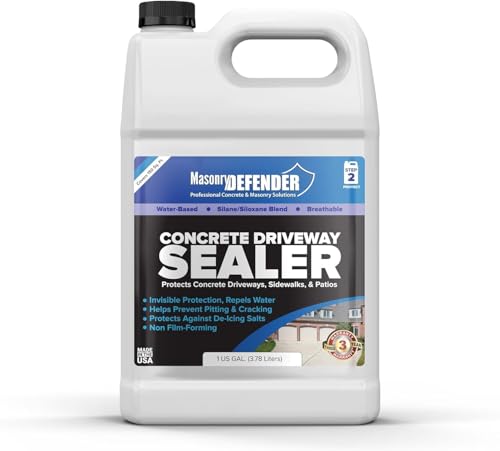
This premium silane-siloxane formula is the gold standard for exterior concrete protection. Unlike acrylic films that sit on the surface and peel, MasonryDefender penetrates deep into concrete pores, chemically bonding to create a breathable water-repellent barrier. Water beads and rolls off treated surfaces while the concrete remains vapor-permeable, preventing the internal moisture build-up that causes spalling and efflorescence. One gallon covers between 90 and 150 square feet, making it a cost-effective choice for medium-sized driveways and patios.
Users consistently report that treated areas stay visibly cleaner and whiter than untreated slabs, with beading action holding strong for multiple years. The clear formula does not alter the texture or color of the concrete — no glossy finish, no discoloration. The product applies easily with a low-pressure garden sprayer or roller, and clean-up requires only water. The great results are especially pronounced in wet, rainy climates where standing moisture is a constant issue.
Sealant longevity depends on surface cleanliness before application, so thorough pressure washing and a 24-hour dry period are essential. Overapplication can leave temporary wet-looking stains that fade as the formula cures. Overall, this is the top performer for anyone who wants invisible, long-term protection without sacrificing the natural look of their concrete.
Why it’s great
- Deep penetrating formula avoids peeling and flaking
- Water beads and rolls off for years with proper prep
- Dries clear with zero gloss or surface film
Good to know
- Must clean concrete thoroughly before application
- Overapplication can produce temporary wet stains
2. Black Diamond Stoneworks Concrete Sealer
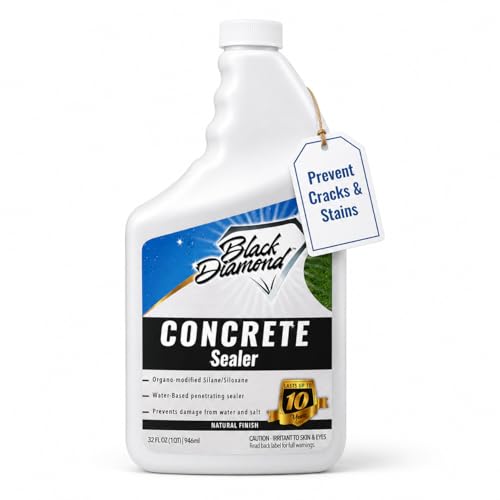
Built around a silicone-siloxane blend, this sealer delivers commercial-grade water, salt, and weather protection for a wide range of masonry surfaces — concrete, brick, pavers, stucco, grout, and natural stone. The low-odor, non-toxic formula makes it suitable for use around landscaping, pets, and plants without the overpowering chemical fumes typical of solvent-based sealers. It applies thin and watery, penetrating the surface thoroughly before curing into a durable invisible shield that does not change the look or texture of the substrate.
Users note excellent performance on outdoor ceramic planters and concrete birdbaths, where seasonal freeze-thaw cycles at altitude can be brutal. The sealer has held up over multiple winters, preventing moisture intrusion and structural breakdown. Application with a brush or sprayer is straightforward, and the product can be reapplied every five to seven years for continuous protection. The 32-ounce quart size is well-suited for small-to-medium projects like a single patio, paver pathway, or garden wall.
The formula is water-based, so proper storage is important — exposure to freezing temperatures can permanently compromise the sealant. Some users with large driveways find they need multiple quarts to achieve full coverage. However, for targeted protection on high-exposure surfaces like brick and grout lines, this is a reliable and safe choice that prioritizes ease of use and environmental safety.
Why it’s great
- Non-toxic, low-odor formula safe near plants and pets
- Works on concrete, brick, stone, and grout surfaces
- Provides up to 10 years of protection per application
Good to know
- Must be stored in temperature-controlled environment
- Quart size is best for small-to-medium projects
3. SCNK Transparent Waterproof Coating
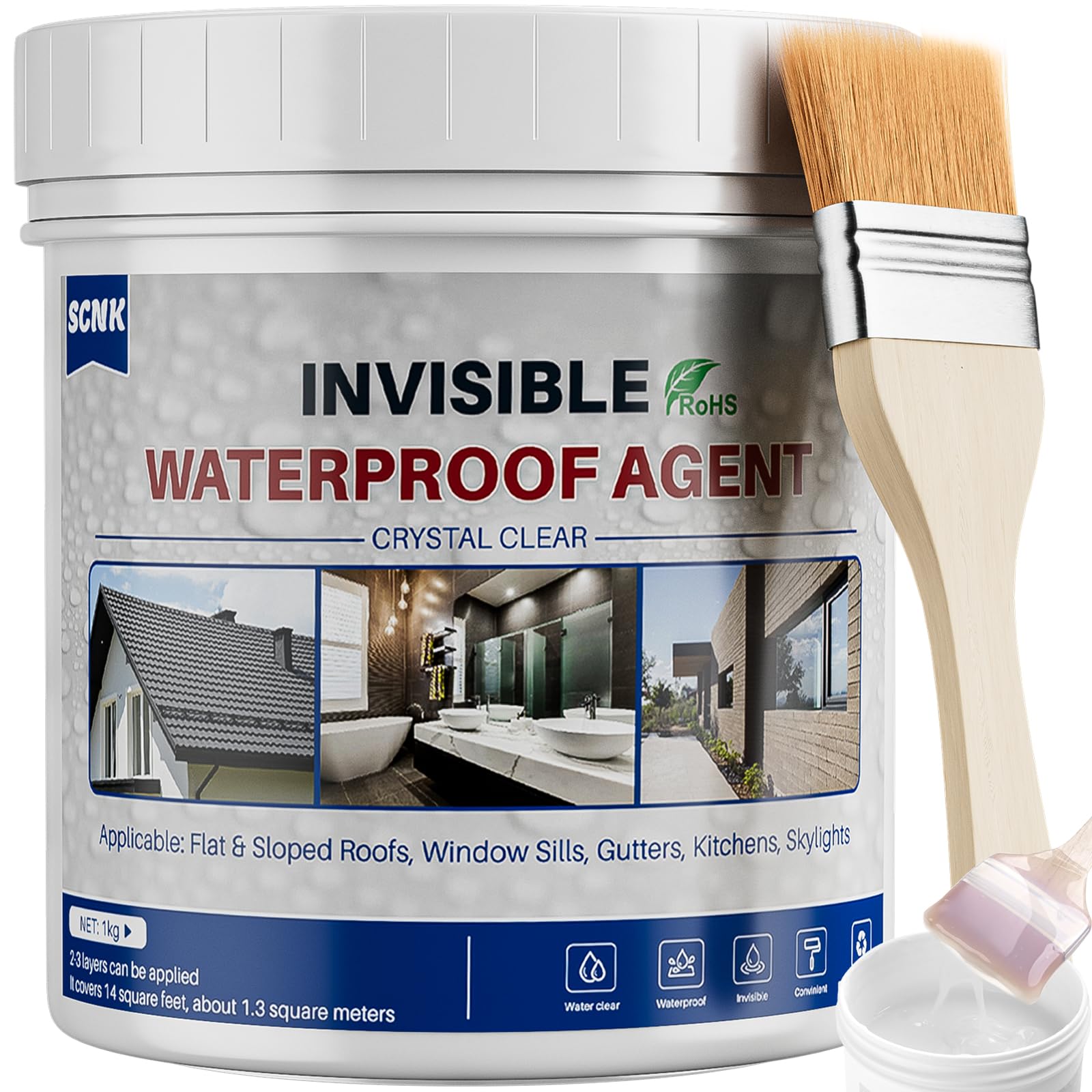
When the project demands an invisible waterproof barrier that does not alter the substrate’s appearance, this acrylic-based coating delivers. SCNK’s formula cures into a transparent film that seals roofs, walls, gutters, skylights, metal, wood, and concrete without leaving a glossy or milky finish. One kilogram covers roughly 14 square feet per coat, and overlapping multiple layers creates a dense waterproof membrane that resists air, water, and moisture intrusion. Users have successfully applied it on concrete gutters, shower walls, and window frames with strong adhesion results.
The application process is straightforward — mix the liquid well, then brush, roll, or pour it evenly over the surface. Its thin viscosity allows it to penetrate small gaps and hairline cracks before curing into a seamless repair. Multiple thin coats produce a more durable result than a single thick layer, and the product holds up well in wet conditions once fully cured. The transparency is a major advantage for aesthetically sensitive repairs where a visible sealant would be unacceptable.
The main limitation is temperature sensitivity: application below 50°F lengthens cure time and can compromise adhesion, especially if overnight temperatures drop further. The acrylic composition means it functions as a film-forming sealer rather than a deep penetrant, so it is best suited for vertical or overhead applications where a surface membrane is acceptable. For broad horizontal concrete slabs that see heavy foot or vehicle traffic, a penetrating silane-siloxane formula remains the better choice.
Why it’s great
- Dries completely clear with no texture change
- Works on concrete, metal, wood, and roofing surfaces
- Effective on small cracks and gaps with multi-coat application
Good to know
- Not recommended for heavy-traffic horizontal concrete
- Cure times increase significantly below 50°F
4. Magic Crack Filler 2.5LB Concrete Slab Gray
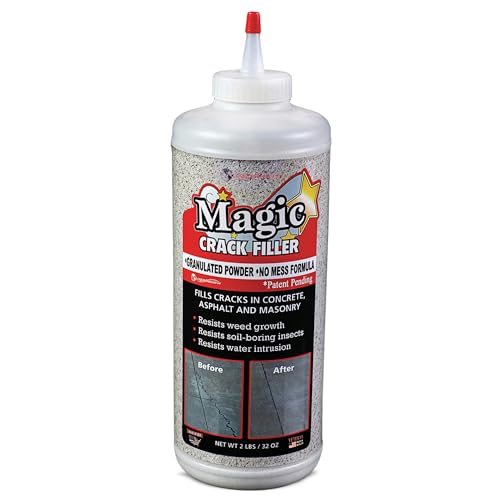
This dry granular crack filler is a DIY dream: no mixing, no messy formulas, and no buckets of mortar. The synthetic rubber powder is simply poured into the crack, leveled with a trowel or business card, and activated with a water mist. It self-levels, adheres aggressively to the crack edges, and cures into a hard gray finish that blends nearly invisibly with raw concrete. Users filling hairline cracks on driveways and garage floors report the final result is almost unnoticeable after curing overnight.
The formula excels at small to medium cracks up to about 1/4 inch wide. For larger fissures up to an inch, some users have combined the filler with a sand or foam backer rod, then topped it with the Magic powder for a cost-effective repair that avoids the expense of full concrete replacement. The product’s self-leveling nature means it naturally fills low spots and leaves a smooth, ridge-free surface. It dries rock hard and has survived thunderstorms and vehicle traffic without cracking or popping out.
The primary limitation is the color: while it generally blends well with aged gray concrete, it may not match all lighter or colored slabs perfectly. The powder form can also be messy in windy conditions. This is not a broad-area sealer — it has zero effect on the un-cracked concrete surrounding the repaired area. However, as a targeted, no-fuss repair solution for cracks, it sets a high bar for ease of use and final appearance.
Why it’s great
- No mixing required — pour, level, mist, and done
- Blends well with standard gray concrete color
- Cures hard enough to survive vehicle traffic
Good to know
- Best for cracks up to 1/4 inch without pre-filling
- Color may not match lighter or tinted concrete
5. Henry Driveway Elastomeric Emulsion Crack Filler

Henry’s Driveway Elastomeric Emulsion is a tried-and-true asphalt-concrete crack filler built around EPDM rubber, a material valued for its flexibility and weather resistance. The black liquid consistency pours thin and can be applied with a brush, cup, or squeeze bottle, flowing deep into cracks before setting into a flexible, dark black repair that seals out moisture. According to users, correct application at temperatures around 60°F produces a set time of about 15 minutes, with the filler drying hard enough to resist foot traffic within a few hours.
The rubberized chemistry allows the repair to expand and contract with the concrete during freeze-thaw cycles, reducing the chance of the filler popping out or re-cracking. Users have noted that the bond works well even on slightly dirty surfaces — a stiff broom sweep is often enough prep for small cracks. For deeper cracks, multiple applications are recommended, allowing each layer to dry before adding the next. The 8-pound container provides good value for covering multiple cracks across a standard driveway.
There are several practical constraints. The filler is black, so it is not suitable for gray concrete where a discreet repair is desired. Drying time is heavily dependent on weather: rain within 24 hours can dilute the filler, and high humidity extends the curing window. Driving or parking on the repaired area should be avoided for at least 24 hours, and full curing can take several days. Despite these limitations, for asphalt driveways and non-cosmetic concrete crack repairs, the Henry formula remains a reliable, budget-conscious option.
Why it’s great
- EPDM rubber offers excellent freeze-thaw flexibility
- Flows easily into narrow cracks without force
- Good value for large-scale crack repairs
Good to know
- Sets black — not suited for gray concrete cosmetic repair
- Needs 3-4 dry days for full cure in humid conditions
FAQ
Can I use a penetrating concrete sealer on wet or damp concrete?
How long does it take for a cement sealant to fully cure before rain exposure?
Do cement sealants work on vertical surfaces like basement walls?
Will a cement sealer change the color of my concrete?
Final Thoughts: The Verdict
For most users, the best cement sealant winner is the MasonryDefender Concrete Sealer because its silane-siloxane blend provides deep, breathable, invisible protection that withstands freeze-thaw cycles and heavy rain without peeling. If you want a versatile, low-odor penetrant suitable for brick, stone, and grout, grab the Black Diamond Stoneworks sealer. And for targeted crack repair on gray concrete slabs, nothing beats the mess-free convenience and natural blend of the Magic Crack Filler.

Mo Maruf
I created WellFizz to bridge the gap between vague wellness advice and actionable solutions. My mission is simple: to decode the research and give you practical tools you can actually use.
Beyond the data, I am a passionate traveler. I believe that stepping away from the screen to explore new environments is essential for mental clarity and physical vitality.