Our readers keep the lights on and my smoothie glass nicely filled. As an Amazon Associate, I earn from qualifying purchases.
A cement patio faces relentless assault: rain, UV rays, freeze-thaw cycles, and foot traffic that wears down porous surfaces. Without a proper sealer, you’ll battle efflorescence staining, surface spalling, and moisture damage that shortens the patio’s lifespan. The right sealer locks out water while preserving or enhancing the look of your concrete.
I’m Mohammad Maruf — the founder and writer behind WellFizz. I’ve spent hours analyzing the chemical formulations, coverage rates, and real-world durability data from hundreds of verified buyer experiences to identify the best sealers on the market.
This guide breaks down the key differences between penetrating silane-siloxane formulas and acrylic film-forming sealers so you can confidently choose the best cement patio sealer for your specific project and climate.
How To Choose The Best Cement Patio Sealer
Selecting the right sealer means matching the chemistry to your patio surface, desired finish, and local climate. Two primary categories dominate the market: penetrating sealers that bond below the surface, and film-forming acrylics that create a protective layer on top.
Penetrating vs. Film-Forming Sealers
Penetrating sealers, typically silane-siloxane formulas, soak into the concrete pores and create a chemical water barrier without changing the surface appearance. They leave a natural matte finish, reduce water absorption by up to 95 percent, and won’t peel or yellow over time. These are ideal for driveways and patios where a gloss-free look is desired. Film-forming acrylics, on the other hand, sit on top of the concrete and create a wet-look gloss or high-gloss sheen. They dramatically enhance color but require more frequent reapplication and can become slippery when wet if not mixed with an anti-slip additive.
Finish Preference: Gloss, Low-Gloss, or Matte
Your aesthetic choice directly impacts the sealer type. High-gloss acrylics deliver that “drenched in rain” look that makes paver colors pop, but they highlight surface imperfections and wear unevenly. Low-gloss satin finishes offer a happy medium with moderate color enhancement and reduced glare. Matte penetrating sealers preserve the original color and texture, letting the concrete breathe while blocking moisture. For most residential patios, a low-gloss acrylic or a penetrating silane-siloxane provides the best balance of performance and visual appeal.
Coverage Rate and Number of Coats
Sealer coverage varies by surface porosity and product viscosity. Expect 75 to 225 square feet per gallon depending on whether you are spraying a rough concrete paver or rolling a smooth slab. Budget for at least two coats on unsealed surfaces — the first coat absorbs into the substrate, and the second coat builds the protective layer. Calculate your patio’s square footage before purchasing; buying one gallon too few forces you to wait for a restock and risks lap marks.
Application Method: Sprayer vs. Roller
Airless or pump-up garden sprayers are the fastest method for large areas, but the sealer’s viscosity matters. Thinner water-based formulas flow easily through sprayers, while thicker solvent-based sealers can clog nozzles if not used immediately. Many buyers report that back-rolling after spraying ensures even coverage and eliminates puddles. A dedicated 3/8-inch or 1/2-inch nap roller is foolproof for small patios but slower for big jobs. Whichever method you choose, clean the sprayer immediately after use to prevent permanent clogging.
Quick Comparison
On smaller screens, swipe sideways to see the full table.
| Model | Category | Best For | Key Spec | Amazon |
|---|---|---|---|---|
| Armor AR350 | Solvent Acrylic | Color enhancement with low gloss | 175-225 sq ft/gal, 700 VOC | Amazon |
| Armor SX5000 WB | Water Silane | Invisible long-term waterproofing | 175-225 sq ft/gal, 0 VOC | Amazon |
| Cryli-Tek 5505 | Solvent Acrylic | High-gloss wet-look durability | Lasts 3x longer than standard | Amazon |
| MasonryDefender Gloss | Water Acrylic | Easy DIY wet-look application | 75-200 sq ft/gal, low odor | Amazon |
| MasonryDefender Penetrating | Water Siloxane | Budget-friendly invisible protection | 90-150 sq ft/gal, 2.5 gal | Amazon |
| Lithi-Tek 9500 | Water Proprietary | Densify + waterproof large areas | 1,000 sq ft/gal concentrated | Amazon |
| Armor AR500 5 Gal | Solvent Acrylic | Professional high-gloss for big patios | 875-1125 sq ft/5 gal, 700 VOC | Amazon |
In‑Depth Reviews
1. Armor AR350 Low Gloss Wet Look Concrete Sealer

This solvent-based acrylic offers a low-gloss wet look that dramatically darkens and enhances concrete colors without turning your patio into a mirror. Users report consistent results on slate, stamped concrete, and paver surfaces, with a single coat providing excellent color depth and water beading. The 700 VOC formulation is ready to use straight from the gallon and covers 175-225 square feet, making it efficient for medium patios.
The finish holds up well against foot traffic and UV exposure, resisting yellowing for years when applied correctly. Buyers in northern climates note that it survives freeze-thaw cycles and road salt exposure better than water-based alternatives. Strong chemical odor is the trade-off — a respirator is mandatory during application, and the fumes linger for about an hour after spraying.
Roller application yields the smoothest, most even finish, though a pump sprayer works if you back-roll immediately. The sealer self-primes, so recoating is simple: just clean the surface and apply a fresh layer. For homeowners who want dramatic color enhancement with a sophisticated satin sheen, this is the most versatile mid-range option.
Why it’s great
- Dramatic color enhancement with a low-gloss wet look
- Self-priming for easy recoating
- Resists yellowing, UV, and freeze-thaw damage
Good to know
- Strong solvent odor requires a respirator
- Coverage on rough surfaces is closer to 175 sq ft/gal
2. Armor SX5000 WB Water-Based Silane-Siloxane Sealer

For homeowners who want zero change to their patio’s appearance while getting serious water repellency, this penetrating silane-siloxane sealer is the gold standard. It chemically bonds below the concrete surface, reducing water absorption by up to 95 percent without leaving any film, gloss, or color shift. Verified buyers confirm that their pavers look and feel exactly the same after sealing — water simply beads up and rolls off.
The water-based formula has zero odor and zero VOCs, making it safe to apply in confined outdoor spaces without a respirator. Coverage reaches 175-225 square feet per gallon on clean, unsealed concrete, and it soaks in rapidly. Two coats are recommended on porous surfaces; the second coat can be applied immediately after the first absorbs. Users in Florida and the Pacific Northwest report that it virtually eliminates algae and mold growth by denying moisture a foothold.
Durability is the headline here: the chemical bond lasts 7-10 years before reapplication is needed. Because there is no surface film, there is nothing to peel, yellow, or wear away. The trade-off is that it won’t enhance color or hide stains — if you want a wet-look transformation, look elsewhere. For invisible, long-term protection, this is the premium choice.
Why it’s great
- Zero color or texture change
- Lasts 7-10 years below the surface
- No odor and zero VOCs
Good to know
- Does not enhance or darken concrete color
- Must be applied to clean, unsealed surfaces
3. Cryli-Tek 5505 Solvent Based Acrylic High Gloss Wet Look
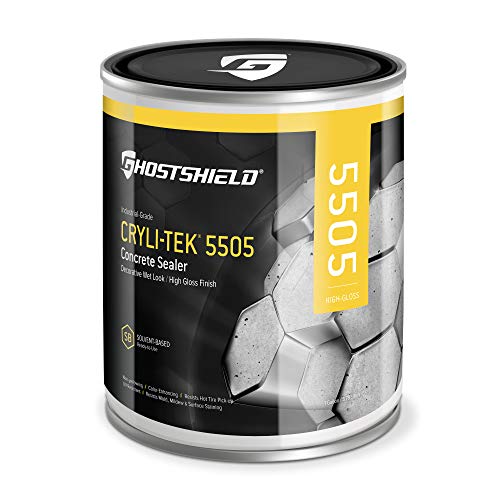
This solvent-based acrylic delivers the highest-gloss wet look in the lineup, turning dull cement into a reflective, jewel-toned surface. Its self-crosslinking UV-stable resins create a rock-hard shell that resists cracking, spalling, and staining. Multiple 5-star reviews confirm that it transforms old brick and paver patios into “like new” condition with a single clear coat.
The sealer bonds tenaciously to concrete, brick, and natural stone, including surfaces previously sealed with water-based or solvent-based acrylics. It requires no primer and can be applied directly after cleaning. Coverage is moderate — expect roughly 150-175 square feet per gallon on rough pavers. Buyers note that it dries quickly, even in cooler temperatures, and maintains its gloss and water-beading ability for two years or more before needing a recoat.
The strong solvent smell is a genuine drawback; application demands a respirator and good ventilation even outdoors. Some users report that brush application is tedious on uneven paver surfaces, and puddled product leaves dark spots. Despite these handling quirks, the visual payoff is unmatched for homeowners who want the most dramatic glossy finish.
Why it’s great
- Extremely durable high-gloss finish
- Self-crosslinking resins resist yellowing
- Bonds to previously sealed surfaces
Good to know
- Strong solvent fumes require respiratory protection
- Lower coverage on rough, porous surfaces
4. MasonryDefender Gloss Wet Look Paver Sealer

This water-based acrylic offers a clear gloss wet look with low odor and easy soap-and-water cleanup — a practical entry point for DIYers who want visual enhancement without the solvent hassle. The high-performance acrylic resin restores original material color while creating a water-repellent shield that guards against freeze-thaw damage and surface flaking.
Coverage varies widely depending on the substrate: 75-150 square feet per gallon on cement pavers with two coats, and up to 200 square feet on denser clay pavers. Application with a pump sprayer works, but several buyers report clogging issues — switching to a roller or back-rolling immediately solves the problem. The sealer dries quickly and leaves a slight sheen that multiple users describe as attractive but not overly shiny.
Some buyers in humid climates note a slight tackiness that attracts mulch and debris, though rinsing with a hose restores the surface. One reviewer found that pressure washing dislodged the joint sand but the sealer itself held up well. For its price point, this sealer punches above its weight for smaller patios.
Why it’s great
- Low odor and water cleanup
- Good color enhancement with a wet-look sheen
- Economical for small-to-medium patios
Good to know
- Sprayer clogging reported; roller recommended
- Mild tackiness can attract debris in humid weather
5. MasonryDefender Deep Penetrating Water Repellent
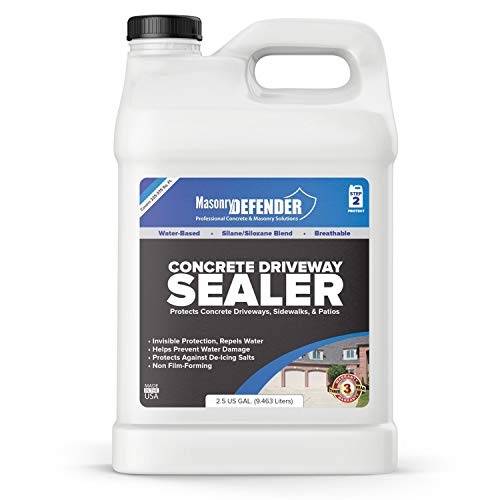
For budget-conscious homeowners who prioritize invisible protection over aesthetics, this 2.5-gallon siloxane penetrating sealer covers large patios at a low per-square-foot cost. The water-based formula bonds deep into concrete pores without forming a surface film, providing breathable water repellency that keeps pavers looking exactly as they do naturally.
Coverage is lower than solvent-based alternatives — 90-150 square feet per gallon — but the large container size compensates, allowing you to treat 225-375 square feet. Application is simple with a low-pressure garden sprayer, and the sealer dries clear with no residue or odor. Users in rainy climates like the Pacific Northwest report excellent water beading and prevention of dirt and mold buildup over multiple years.
Some buyers note that overapplication can create temporary wet-looking stains, though these dissipate as the sealer cures. The finish is completely matte, so it offers zero color enhancement or gloss. For those who simply want to stop moisture damage without changing the look of their patio, this is the most cost-effective choice in the guide.
Why it’s great
- Excellent value with 2.5 gallons included
- Invisible protection, no odor
- Effective against mold and efflorescence
Good to know
- No color enhancement or gloss
- Overapplication can cause temporary staining
6. Lithi-Tek 9500 Ultra Concentrate Penetrating Concrete Sealer

This industrial-grade penetrating sealer goes beyond waterproofing — it densifies concrete, increasing abrasion resistance by up to 50 percent while reducing moisture vapor transmission. The ultra-concentrate formula requires a 4:1 water dilution, turning one gallon into five gallons that treat up to 1,000 square feet per coat. For large patios or driveways, this delivers the lowest long-term material cost.
The proprietary water-based chemistry prevents efflorescence and reduces hydrostatic pressure, making it ideal for ground-level slabs prone to moisture wicking. Application is straightforward: mix the concentrate with water, pour it into a pump sprayer, and apply wet-on-wet in small sections. The sealer dries clear with no odor and produces excellent water beading. Users consistently report that it outperforms their previous sealers in water repellency and durability.
Surface prep is critical — the concrete must be clean, dry, and above 70 degrees Fahrenheit for proper chemical bonding. The sealer can puddle if applied too heavily, leaving temporary dark spots. Despite the extra mixing step, the combination of densification and waterproofing in a single product makes this a powerful tool for restoring older, spalled concrete.
Why it’s great
- Densifies concrete while waterproofing
- One gallon makes five gallons of sealer
- Prevents efflorescence and mold
Good to know
- Requires careful dilution and surface prep
- Not for gloss or color enhancement
7. Armor AR500 High Gloss Wet Look Sealer 5 Gallon

The AR500 is the big-ticket solution for homeowners tackling large patios, stamped concrete, or extensive paver installations. This solvent-based acrylic delivers a stunning high-gloss wet look that transforms faded concrete into a vibrant, showroom-quality surface. The five-gallon pail covers 875-1,125 square feet at roughly 175-225 square feet per gallon — enough for a major project without running out mid-job.
The formulation uses high-quality US-manufactured resins that resist yellowing, UV degradation, and damage from road salts and vehicle traffic. Buyers with 15-year-old stamped concrete report that the AR500 restored rich wet-look colors that cheaper sealers had failed to deliver. Two thin coats are recommended for maximum gloss and durability; the first coat typically absorbs into the substrate, and the second coat produces the mirror-like finish.
Solvent fumes are intense — the product requires a respirator, proper ventilation, and care around pools (drips create floating films). Coverage can feel marginal on highly porous concrete, and some users report needing a third coat on broom-finished surfaces. For homeowners who want a professional-grade high-gloss finish for a large area, the AR500 delivers unmatched results.
Why it’s great
- Stunning high-gloss wet-look finish
- Large 5-gallon pail covers up to 1,125 sq ft
- UV-stable, non-yellowing formula
Good to know
- Strong fumes require a respirator
- Coverage can vary on rough or porous concrete
FAQ
What is the difference between a penetrating sealer and a film-forming sealer?
How much cement patio sealer do I need?
Can I apply sealer over an old coat?
Final Thoughts: The Verdict
For most users, the best cement patio sealer winner is the Armor AR350 because it delivers dramatic color enhancement with a sophisticated low-gloss wet look, self-primes for easy recoating, and resists UV damage and freeze-thaw cycles better than water-based alternatives. If you want invisible, long-term protection that never needs stripping, grab the Armor SX5000 WB — its zero-odor, zero-VOC formula lasts 7-10 years below the surface. And for a major patio project where a show-stopping high-gloss finish is the goal, nothing beats the Armor AR500 5 Gallon for professional-grade results on large surfaces.

Mo Maruf
I created WellFizz to bridge the gap between vague wellness advice and actionable solutions. My mission is simple: to decode the research and give you practical tools you can actually use.
Beyond the data, I am a passionate traveler. I believe that stepping away from the screen to explore new environments is essential for mental clarity and physical vitality.