Our readers keep the lights on and my smoothie glass nicely filled. As an Amazon Associate, I earn from qualifying purchases.
Finding the right binder for a craft project means navigating a world of setting times, mixing ratios, and finished textures. Whether you are casting a delicate charm, a trinket tray, or a figurine, the material you choose determines whether your mold releases cleanly or leaves you with a pitted surface.
I’m Mohammad Maruf — the founder and writer behind WellFizz. I review category-specific hardware for home and hobby applications, focusing on measurable performance specs that separate one batch from another.
This guide narrows down the top options currently available so you can pick a formula that matches your workflow. We focus on mixing ease, demold speed, and surface quality as the key differentiators. The best cement for crafts balances a forgiving working time with a smooth, porous-free final piece.
How To Choose The Best Cement For Crafts
Not every bag of powder is interchangeable. A formula designed for thin, detailed ornaments behaves very differently from a mix meant for thick, structural pieces. Understanding a few core specs will save you from wasted material and ruined molds.
Mixing Ratio and Consistency
The powder-to-water ratio determines how the slurry flows into fine crevices. Most craft cements work best around 3:1 or 10:3 by weight. Too much water weakens the cast and causes surface pitting; too little water produces a crumbly mix that traps air. A kitchen scale is the simplest way to repeat a successful batch every time.
Demold Time vs. Full Cure
A fast demold (20–30 minutes) lets you reuse silicone molds quickly, but the piece is still fragile until the full cure cycle finishes, often spanning several hours or overnight. Rushing the demold can snap delicate edges. Slower-setting formulas give you a longer working window, which helps when pouring multiple cavities at once.
Surface Hardness and Durability
Some craft cements cure to a chalky texture that scratches easily. Others reach a stone-like hardness that resists chipping after a drop. If you plan to sand, drill, or paint the finished cast, choose a formula that sands cleanly without crumbling at the edges.
Bubble Release and Finish
A fine powder with a consistent particle size naturally releases trapped air more easily than a coarse grind. Knocking the mold lightly after the pour helps surface bubbles rise. For a glass-smooth finish, look for materials that resist clumping during the stir phase.
Quick Comparison
On smaller screens, swipe sideways to see the full table.
| Model | Category | Best For | Key Spec | Amazon |
|---|---|---|---|---|
| JDiction ResinCrete | Mid-Range Formula | Terrazzo & marble-style decor | 30-minute demold, porcelain-like finish | Amazon |
| ULTRACAL 30 Gypsum Cement | Premium Gypsum | Museum-quality detail & latex molds | Very low expansion, 15-min set | Amazon |
| Resin Casting Powder 3000g | Mid-Range Gypsum | High-volume batch casting | 3:1 ratio, 25–30 min demold | Amazon |
| OSBANG Plaster Casting Powder | Entry-Level Plaster | Family-friendly DIY & kids projects | 2-hour full cure, beginner ratio | Amazon |
| White Portland Cement (Grout 360) | Budget Portland | Colored concrete & outdoor molds | 28-day full cure, pure white base | Amazon |
In‑Depth Reviews
1. JDiction ResinCrete

JDiction ResinCrete uses a water-activated, eco-friendly mineral blend that cures to a smooth, porcelain-like surface. The 10:3 powder-to-water ratio by weight produces a yogurt-like consistency that flows into fine detail without trapping excessive air. Users consistently report minimal shrinkage and a dense final piece that takes acrylic paint well after sealing.
One standout feature is the 30-minute demold window, which is fast enough for serial casting yet forgiving enough for a beginner to work several cavities at once. The powder itself is exceptionally fine and white, which means colored mica or alcohol pigments stay vibrant without being muddied by gray undertones.
Experienced makers note that the formula shrinks to about one-third its wet volume, so mold fills must account for that reduction. Cured pieces are durable for indoor use but will shatter if dropped on concrete. Sealing with polycrylic or a wax sealer is recommended to protect the surface from moisture absorption.
Why it’s great
- Very fine white powder takes colorants cleanly
- Fast demold lets you reuse molds quickly
- Low bubble content with a smooth final surface
Good to know
- Significant wet-to-dry shrinkage requires overfilling molds
- Not waterproof — sealing is mandatory for longevity
2. ULTRACAL 30 Gypsum Cement
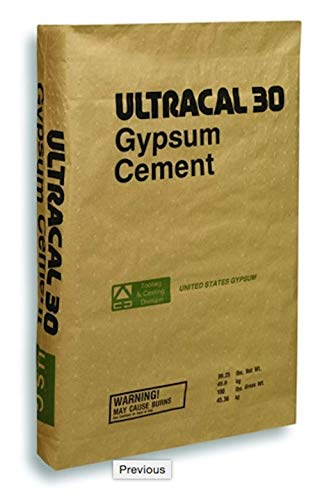
ULTRACAL 30 is a professional-grade gypsum cement formulated for latex and gelatin molds where capturing razor-sharp detail is non-negotiable. The 3:1 ratio produces a slurry that picks up every fingerprint and texture from the mold surface. The material sets hard in about 15 minutes, which is faster than most craft plasters, so you need to work efficiently.
What sets ULTRACAL apart from standard plaster is its very low expansion rate. That means your cast dimensions remain virtually identical to the mold cavity — critical for pieces that need to fit together or match a specific size spec. The cured color is a light gray rather than pure white, which matters if you plan to paint pastel or translucent colors over an unsealed surface.
Because this is a strong gypsum cement, it generates noticeable heat during the set. Pouring thick sections can produce enough exothermic warmth to soften some flexible mold materials. Users also note that the edges can chip if demolded too aggressively, so waiting the full cure cycle rather than rushing the 15-minute mark yields cleaner results.
Why it’s great
- Exceptional detail reproduction down to microscopic texture
- Very low dimensional expansion for precision casting
- Hard, durable final piece resists surface wear
Good to know
- Exothermic heat can affect thin silicone molds
- Cured color is light gray, not bright white
3. Resin Casting Powder 3000g

This gypsum-based casting powder comes in a generous 3000-gram bag that makes it a solid choice for makers producing multiple pieces in a single session. The recommended 3:1 mixing ratio by weight yields a self-leveling slurry that settles into mold cavities without excessive prodding. Users report an ultra-white finish that stays clean and cold to the touch after full cure.
Demold time sits around 25–30 minutes, and the full cure completes in roughly two hours. The fine particle size helps release bubbles naturally, though tapping the mold still helps shake out any trapped air at the bottom of deep crevices. The cured piece sands smoothly without crumbling at the edges, which is useful for sculpting details after demold.
The powder works with water-based acrylic paints, mica, glitter, and even small quartz aggregates added during the mix stage. One limitation is that the cured surface is porous and requires a sealer — varnish, acrylic sealer, or wax — before it can handle moisture or regular handling without absorbing dirt.
Why it’s great
- Large quantity supports high-volume batch work
- Ultra-white cast takes pigments vibrantly
- Self-leveling consistency reduces manual spreading
Good to know
- Porous surface must be sealed before paint or handling
- Quick set window requires efficient workflow
4. OSBANG Plaster Casting Powder
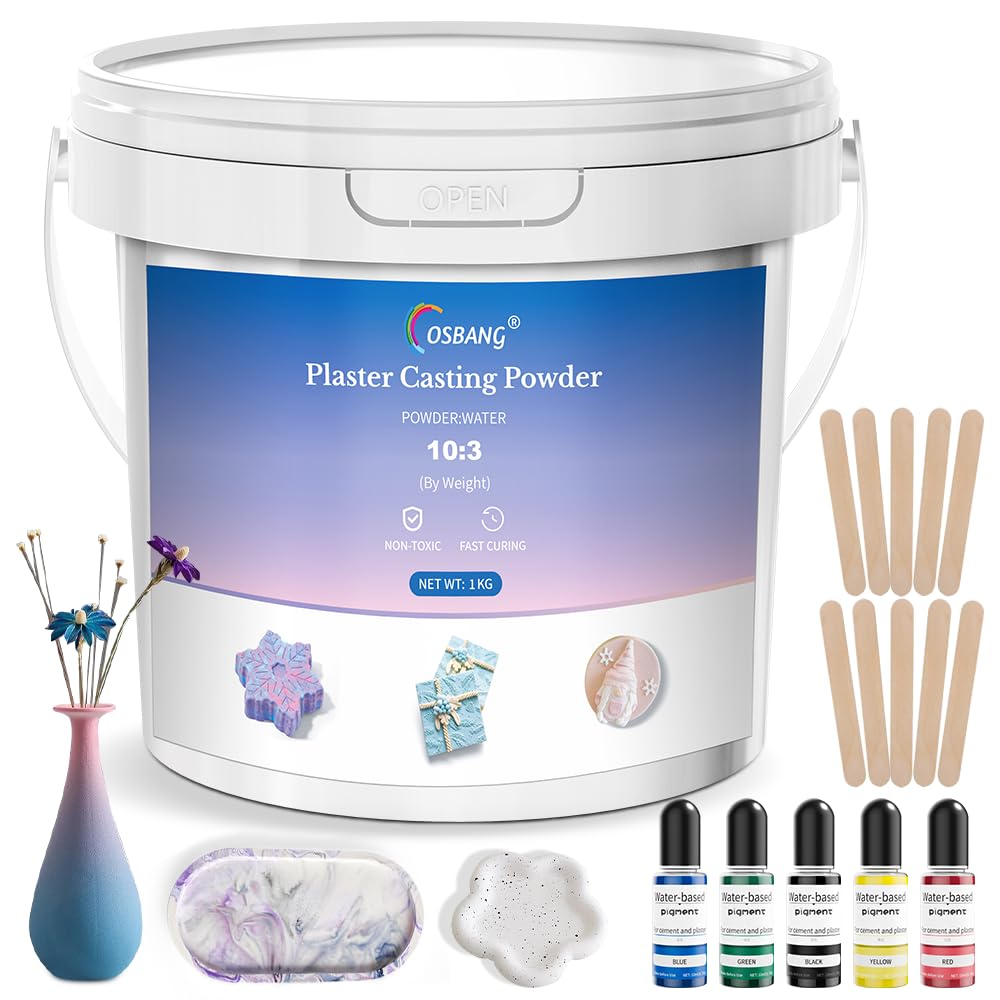
OSBANG’s plaster powder is built for accessibility — the 10:3 ratio (by weight) is simple, the material is odorless, and the non-toxic composition makes it suitable for shared spaces or family craft sessions. With a full cure time of roughly two hours, it gives beginners a generous window to pour multiple molds without the pressure of a fast-setting product.
The texture is smooth and bubble release is manageable with a light tap on the mold. The finished surface feels chalky and porous, which works well for decorative pieces that will be sealed with acrylic or wax. Several users noted that kids found the mixing process fun and the demold satisfaction high, especially for shallow trinket trays and small figurines.
One tradeoff is that the porous nature means the cast absorbs moisture easily, so sealing is a must for any piece that will be handled or displayed near humidity. The quantity — 35 ounces — is adequate for a handful of small projects, but heavy users will quickly exhaust the bag and may prefer a larger bulk option.
Why it’s great
- Non-toxic and odorless for worry-free indoor use
- Forgiving 2-hour cure suits beginners and kids
- Smooth mix with minimal clumping
Good to know
- Porous surface demands sealing before paint or handling
- Bag size runs small for regular crafters
5. White Portland Cement (Grout 360)

Grout 360’s White Portland Cement is a straight type-1 portland cement with no aggregates. That makes it a pure white binder that you can mix with sand, gravel, or colorants to create custom concrete blends for craft projects. The 5-pound bag is a convenient size for small batches of colored concrete candle holders, coasters, or outdoor molds.
Unlike gypsum-based plasters, this cement requires a 28-day full cure before it reaches maximum structural strength. While the material hardens within hours, the chemical hydration process continues for weeks. The finished color is a bright white, which takes pigment well, but the surface is rough compared to plaster and needs sanding for a smooth touch.
One major caveat: this is cement only — no sand or gravel is included. Using it alone for a structural pour risks cracking because there is no aggregate to provide internal reinforcement. It works best as a base ingredient rather than a standalone casting material. For small craft applications where you want a concrete look and feel, it is a budget-friendly starting point.
Why it’s great
- Pure white color accepts craft pigments cleanly
- Useful as a base for custom concrete blends
- Small bag suits casual experimentation
Good to know
- Requires aggregate for structural integrity
- 28-day full cure is slow compared to plaster formulas
FAQ
Can I use regular cement from a hardware store for craft molds?
Why do my plaster casts have pinholes on the surface?
How do I get a glossy finish on a cement craft piece?
Final Thoughts: The Verdict
For most users, the best cement for crafts winner is the JDiction ResinCrete because it combines a fast 30-minute demold with a porcelain-smooth finish that takes colorants beautifully. If you want museum-quality detail in latex or gelatin molds, grab the ULTRACAL 30. And for high-volume budget casting where quantity matters, nothing beats the Resin Casting Powder 3000g.

Mo Maruf
I created WellFizz to bridge the gap between vague wellness advice and actionable solutions. My mission is simple: to decode the research and give you practical tools you can actually use.
Beyond the data, I am a passionate traveler. I believe that stepping away from the screen to explore new environments is essential for mental clarity and physical vitality.