Our readers keep the lights on and my smoothie glass nicely filled. As an Amazon Associate, I earn from qualifying purchases.
That dark oil blotch on your garage floor or the dried mortar crust on your new pavers isn’t a permanent eyesore—it’s just waiting for the right chemistry. Concrete is porous, which means standard all-purpose cleaners merely push stains around, while the wrong acid-based removers can etch or discolor the surface permanently. The category requires a cleaner engineered for masonry’s unique alkalinity and pore structure, targeting petroleum, biological growth, and cured cement with distinctly different mechanisms.
I’m Mohammad Maruf — the founder and writer behind WellFizz. I’ve spent countless hours analyzing masonry cleaner formulations, studying customer test results from concrete contractors and DIY homeowners, and cross-referencing the technical specs that separate a quick fix from a surface-destroying mistake.
Whether you are tackling a grease spill in the driveway or removing hardened thinset from a trowel, this guide isolates the best active ingredients and application methods for each job. Here is our hand-picked selection for the best cement cleaner across every scenario.
How To Choose The Best Cement Cleaner
Concrete, brick, and stone all share one trait: they are highly alkaline and porous. A cleaner that works on a sealed countertop can ruin an unsealed driveway. Before you buy, match the cleaner’s chemistry to your specific stain type and surface finish.
Stain Type Dictates Chemistry
Petroleum-based stains (motor oil, grease, transmission fluid) require a powerful surfactant or solvent that can emulsify the hydrocarbon and lift it out of the pores. Bio-remediation formulas use microbes to digest the oil over days or weeks, which is safer for plants and pets but slower. For dried cement, mortar, or thinset, you need an acid-free dissolver that breaks the calcium bond without etching the underlying concrete.
Surface Porosity & Finish
Unsealed concrete, brick, and natural stone absorb liquid deeply. A cleaner that works on sealed garage floors may not penetrate unsealed pavers. Check the label for “porous masonry” compatibility. Avoid harsh acids on polished, painted, or dyed concrete—they can cause permanent white haze or discoloration.
Application & Safety
Spray-and-rinse formulas save time on vertical surfaces and large areas, but they require proper ventilation. Powder-based bio-remediation mixes are ideal for slow, deep stain removal without fumes. Always test a small, inconspicuous area first—some cleaners can lighten or darken certain stone types.
Quick Comparison
On smaller screens, swipe sideways to see the full table.
| Model | Category | Best For | Key Spec | Amazon |
|---|---|---|---|---|
| Super Concrete Dissolver 22oz | Dissolver | Cured concrete on tools & vehicles | Foam spray, 22 oz | Amazon |
| SAKRETE Concrete & Mortar Dissolver | Dissolver | Mortar on non-porous surfaces | 28 oz spray bottle | Amazon |
| FILA PS87 PRO Heavy Duty Cleaner | Degreaser | Grease on stone & ceramic tile | 32 oz concentrated | Amazon |
| ACT Concrete Cleaner (Powder) | Bio-Remediation | Deep oil stains on driveways | 8 oz dry powder | Amazon |
| Dumond Smart ‘n Easy | Degreaser | Petroleum stains on masonry | 22 oz spray | Amazon |
In‑Depth Reviews
1. Super Concrete Dissolver 22oz Foam Spray

This foam-based dissolver uses a proprietary green chemistry that turns hard, cured concrete into a mushy consistency without corrosive acids. Users report success removing year-old cement drips from car paint and glass, with many noting that a single application on smooth, non-porous surfaces delivers visible breakdown within 10–15 minutes. The foam clings vertically, which makes it exceptionally useful for cleaning tools, mixers, and truck wheel wells.
Performance varies sharply with concrete age—it excels on deposits up to 28 days old but struggles on decades-old cured layers. On thick splatter, you will need multiple applications, each kept moist for 30–45 minutes. Several reviewers mention that the bottle can leak during shipping, though enough product typically remains for a small job. The non-corrosive formulation is safe on glass and painted auto surfaces, provided you rinse immediately after the concrete softens.
For contractors and DIYers who need to salvage tools or clean construction debris off delicate surfaces, this is the most targeted dissolver in the lineup. It is not a general-purpose driveway cleaner—its strength is specifically breaking the calcium-silicate bond in cured cement, not removing oil or grease. Pair it with a stiff brush for stubborn areas, and always test on an inconspicuous spot when using on painted or coated surfaces.
Why it’s great
- Non-corrosive foam clings to vertical surfaces
- Works on cured concrete up to 28 days old
- Safe on glass, aluminum, and auto paint when rinsed
Good to know
- Multiple applications needed for thick buildup
- Bottle may leak during shipping
2. SAKRETE Concrete & Mortar Dissolver

The SAKRETE Dissolver is a non-hazardous, 100% biodegradable formula designed specifically to remove dried concrete and mortar from tools, mixers, and other non-porous surfaces. Users consistently report that it dissolves mortar splatter on silicone, stainless steel, and Trex composite decking without leaving residue or etching the base material. The spray bottle application makes it easy to target small areas, and the lack of fumes means you can use it in enclosed spaces like basements without a respirator.
The key limitation is contact time—the solution must stay wet on the stain for 20–30 minutes, and thick deposits may require three or more cycles of spray, wait, and scrape. Some users on painted surfaces found that heavy scrubbing removed the paint along with the mortar, so a gentle approach is essential. The bottle has a known tendency to leak if left on its side, and a few reviewers received units that were partially empty in transit.
For the homeowner who needs to clean up after a small masonry project or remove a cement stain from a deck, this is the most forgiving and least intimidating option. It is not designed for large driveway oil stains, but for spot-treating tool cleanup and accidental splatter on finished surfaces, it delivers exactly what the label promises.
Why it’s great
- Non-hazardous and biodegradable formula
- Safe on Trex, silicone, and stainless steel
- Easy spray-on application with no fumes
Good to know
- Requires multiple applications for thick mortar
- Bottle may leak if not stored upright
3. FILA PS87 PRO Heavy Duty Cleaner
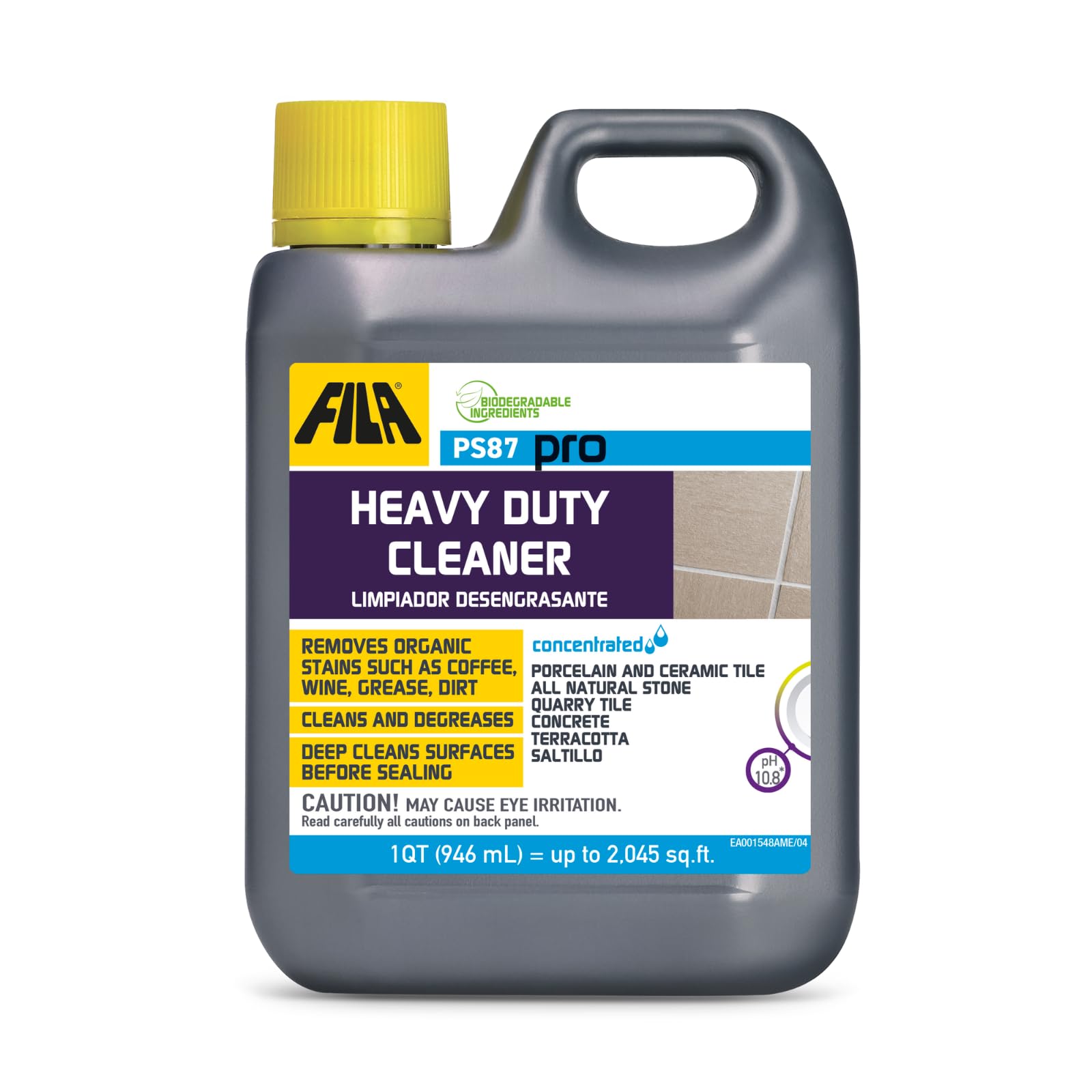
FILA PS87 PRO is a concentrated degreaser formulated for natural stone, terracotta, quarry tile, and concrete. Unlike spray-and-rinse products, this is designed to be diluted for daily maintenance or used undiluted for ground-in dirt and stubborn grease. Users on textured ceramic and matte tile report instant stain removal with minimal scrubbing, and the biodegradable composition avoids harsh chemical residue when properly rinsed.
The formula works best on oil-based and organic stains—coffee, wine, wax, and cooking grease come up easily. However, several users found it ineffective on heavy petroleum-based stains on pavers, and some noticed a white residue when the product was not rinsed thoroughly enough. The strong fumes require good ventilation, and the concentrated nature means you should mix small batches to avoid waste.
If you maintain polished stone floors or porous terracotta and want a cleaner that doubles as a water-based sealer stripper, this is the most versatile choice. It is not a concrete dissolver in the same league as the SAKRETE or Super Concrete products—keep it for grease, food stains, and general deep cleaning of hard surfaces.
Why it’s great
- Concentrated formula stretches per-use cost
- Effective on coffee, wine, wax, and cooking grease
- Biodegradable and safe on natural stone
Good to know
- Strong fumes require good ventilation
- May leave white residue if not rinsed thoroughly
4. ACT Concrete Cleaner – Bio-Remediation Powder

ACT Concrete Cleaner uses a bio-remediation formula powered by the ACT TF microbe blend. You simply sprinkle the dry powder over an oil stain, sweep to cover the area, mist with water, and let the microbes digest the hydrocarbon over 2–4 weeks. It is HOA-approved, safe around pets and plants, and works in temperatures from sub-zero to over 200°F. Users report significant stain lightening in as little as 4 hours, with complete breakdown of embedded oil occurring over days of repeated misting.
The small 8-ounce container covers roughly 100 square feet per pound, but the actual coverage per treatment is modest—one user treated a 5×3-foot basement floor twice over three weeks and saw meaningful improvement but not total removal. The up-front cost per ounce is higher than chemical degreasers, and impatient users expecting instant results will be disappointed. Some buyers received a concrete-colored residue that brushed off easily, which is simply the carrier powder that holds the microbes.
For the environmentally conscious homeowner dealing with old, deep-set oil stains on an unsealed driveway or garage floor, this is the only cleaner that eliminates the stain rather than just relocating it. It requires patience and consistent misting, but the results are permanent without any chemical runoff or surface etching.
Why it’s great
- Completely biodegradable and safe for pets/plants
- Permanently digests oil rather than just moving it
- Works in extreme temperatures and on painted surfaces
Good to know
- Takes 2–4 weeks for full stain removal
- Small container requires careful rationing for large areas
5. Dumond Smart ‘n Easy Concrete Oil & Grease Remover

The Dumond Smart ’n Easy is a 22-ounce spray that penetrates deep into porous masonry to emulsify petroleum-based stains like motor oil, brake fluid, and gasoline. Users report strong results on garage floors and patio concrete, with many noting that letting it sit for 15–30 minutes before rinsing eliminates the need for scrubbing. The formula is made in the USA and claims to work on virtually any masonry surface, including brick, limestone, and slate.
However, the reviews reveal a sharp split: some users praise its power on engine oil, while others report permanent discoloration on pavers and natural stone. The strong chemical odor can be irritating, and one reviewer experienced nasal irritation during use. The product seems to be highly effective on sealed or dense concrete but risky on unsealed, porous stone where the emulsified oil can be driven deeper into the material.
For a quick, high-impact fix on a garage floor or driveway where the concrete is already sealed or dense, this is a solid entry-level degreaser. The 22-ounce bottle is enough for a few targeted spots but not for large-area coverage. Always test on a hidden corner if you are working with brick or natural stone pavers.
Why it’s great
- Effective on motor oil, brake fluid, and gasoline stains
- Little to no scrubbing required on most surfaces
- Works on a wide range of masonry materials
Good to know
- Strong odor may irritate eyes and throat
- Risk of discoloration on unsealed pavers and stone
FAQ
Can I use a cement cleaner on sealed concrete without damaging the sealer?
Why did my concrete look worse after using a commercial degreaser?
How do I remove dried mortar from brick without damaging the brick face?
Is bio-remediation cleaner safe for vegetable gardens and lawns?
Final Thoughts: The Verdict
For most users, the best cement cleaner winner is the Super Concrete Dissolver 22oz Foam Spray because it combines the fastest dissolution of cured cement with a non-corrosive, vertical-clinging foam that protects surrounding surfaces. If you need to deep-clean old oil stains without harsh chemicals, grab the ACT Concrete Cleaner. And for precision removal of mortar splatter on finished decks and tools, nothing beats the SAKRETE Concrete & Mortar Dissolver.

Mo Maruf
I created WellFizz to bridge the gap between vague wellness advice and actionable solutions. My mission is simple: to decode the research and give you practical tools you can actually use.
Beyond the data, I am a passionate traveler. I believe that stepping away from the screen to explore new environments is essential for mental clarity and physical vitality.