Our readers keep the lights on and my smoothie glass nicely filled. As an Amazon Associate, I earn from qualifying purchases.
A weak cellular signal inside your vehicle isn’t just an inconvenience; it’s a productivity killer, a safety risk on remote roads, and a source of endless frustration during critical calls. Whether you’re navigating a canyon, parked at a job site, or living the overlanding life, the right antenna is the difference between a dead zone and a reliable data stream.
I’m Mohammad Maruf — the founder and writer behind WellFizz. My research process for this guide involved cross-referencing hundreds of real-world user reports, decoding technical specifications like gain, impedance, and MIMO configurations, and comparing build quality across seven of the most competitive models on the market.
This guide breaks down the top contenders to help you find the best cellular vehicle antenna 5g for your specific driving environment and connectivity needs.
How To Choose The Best Cellular Vehicle Antenna 5G
Selecting a cellular antenna for your vehicle involves more than just picking the model with the highest number. You need to match the antenna’s pattern, frequency range, and connector type to your specific use case, whether that’s daily commuting, long-haul trucking, or RV living.
Directional vs. Omnidirectional Patterns
A directional antenna, like a Yagi, focuses its signal in one direction. This offers higher gain (measured in dBi) and can pull in a weak signal from a distant tower, but it requires you to aim it precisely. An omnidirectional antenna receives signals from all directions equally. This is ideal for mobile use where you are constantly changing direction, making it the standard choice for vehicles on the move.
Gain (dBi) and Frequency Bands
Gain is a measure of how effectively an antenna concentrates radio frequency energy. For vehicle use, an antenna with 9-12 dBi is a sweet spot, offering a significant boost without being overly sensitive to misalignment. Critically, ensure the antenna covers the specific frequency bands used by your carrier, including the 5G NR bands (n2, n5, n12, n25, n41, n66, n71) for full next-gen performance.
MIMO Configuration
Multiple-Input Multiple-Output (MIMO) technology uses multiple antennas to send and receive more data simultaneously. A 2×2 MIMO setup, which uses two antennas, is the modern standard for achieving maximum data speeds and reliability with 4G LTE and 5G routers. Some high-end kits come with dedicated dual-antenna configurations.
Connector Types and Cable Quality
The antenna connector must match your hotspot or modem. Common types include SMA (common on Netgear Nighthawks), TS9 (common on some hotspots and MiFi devices), and N-Type (standard for high-gain outdoor antennas). The cable itself (often RG58 or low-loss alternatives) should be as short as practical to minimize signal loss, but long enough to route from the antenna mount to your device.
Quick Comparison
On smaller screens, swipe sideways to see the full table.
| Model | Category | Best For | Key Spec | Amazon |
|---|---|---|---|---|
| Waveform DualMini Kit | Premium Kit | Maximum MIMO Performance | 2×2 MIMO, 5.2 dBi | Amazon |
| Proxicast ANT-126-002 | Premium Omni | All-Direction Coverage | 10 dBi, 600-6000 MHz | Amazon |
| GAGBK 6-Band Booster | Complete System | All-in-One Boost | 65 dB Gain, 5-8 mi | Amazon |
| Proxicast ANT-128-004 | Directional | Fixed Location Boost | 9/11 dBi, 600-6000 MHz | Amazon |
| eifagur 11dBi MIMO | Value MIMO | Budget MIMO Upgrade | 11 dBi, 698-2700 MHz | Amazon |
| weBoost OTR Trucker | Heavy-Duty | Trucking/Overlanding | Omni, 7.5-40” Mast | Amazon |
| weBoost Overland | Compact | Replacement Antenna | Omni, 15 ft Cable | Amazon |
In‑Depth Reviews
1. Waveform DualMini Kit
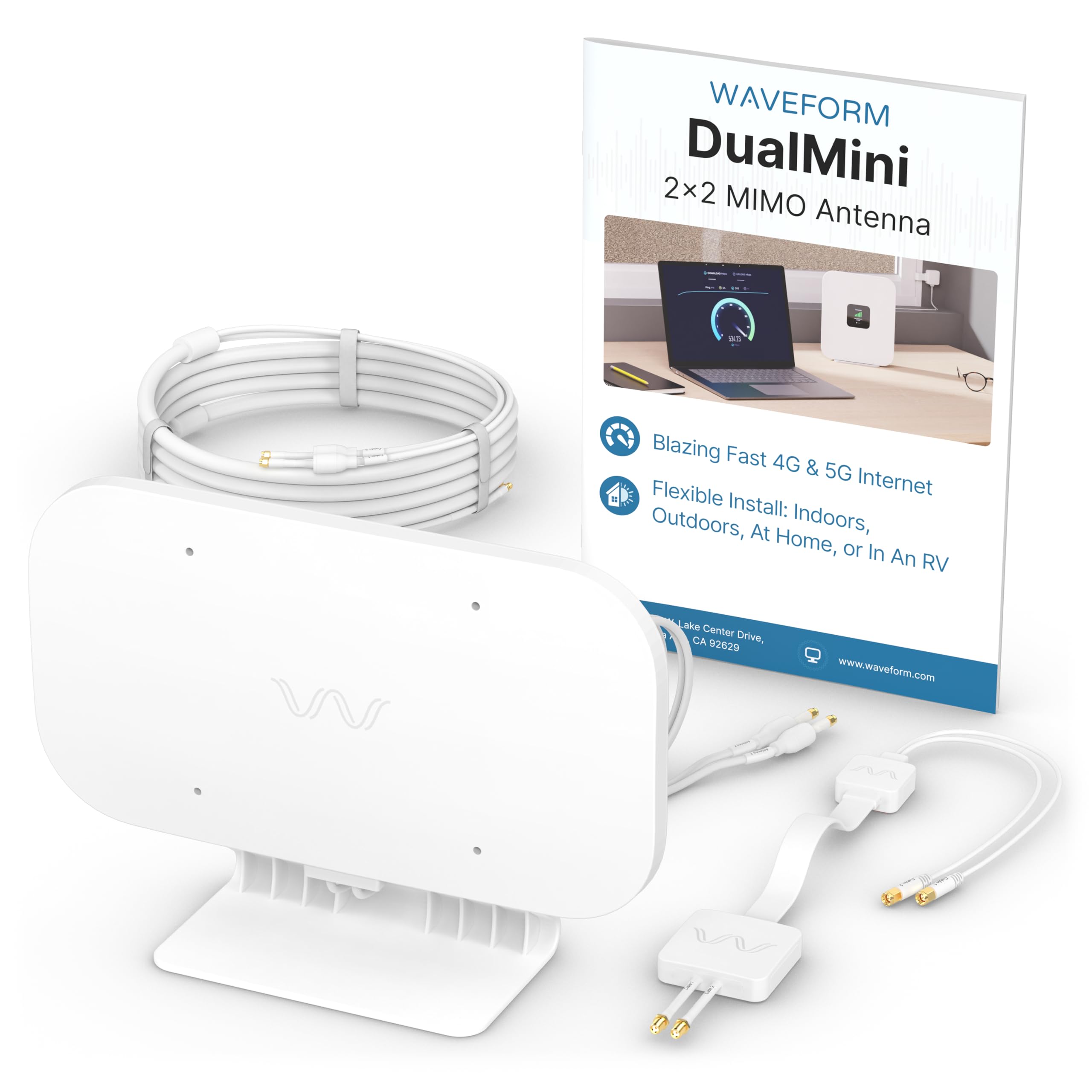
The Waveform DualMini is a complete 2×2 MIMO antenna kit designed for those who refuse to compromise on data speeds. Its low-profile, omnidirectional design eliminates aiming concerns while delivering up to 5.2 dBi of gain. The kit is meticulously engineered, including a Window Entry Cable, UltraFlex-Twin cables, and weatherproofing boots, making installation nearly foolproof for both home and vehicle use.
User reports consistently highlight dramatic performance gains. One rural remote worker saw FirstNet speeds jump from 2 Mbps to over 30 Mbps after mounting the antenna on a 12-foot pole with a clear line of sight. Another RV user in Arizona doubled their download speed from 25 to 49 Mbps. These aren’t just marginal improvements; they represent a fundamental shift in connectivity reliability.
The build quality is excellent, and the kit is backed by a 3-year warranty and exceptional U.S.-based support that customers praise for its depth of knowledge. While the price point is the highest in this guide, the DualMini delivers a plug-and-play high-performance solution that avoids the common pitfalls of DIY antenna setups.
Why it’s great
- True 2×2 MIMO for maximum throughput.
- Complete kit with high-quality cables and entry port.
- Excellent warranty and top-tier customer support.
Good to know
- Premium price point.
- Lighter gain than some directional alternatives.
- Requires two antenna ports on the hotspot.
2. Proxicast ANT-126-002 Omni-Directional

The Proxicast ANT-126-002 is a high-performance omnidirectional antenna that strikes an excellent balance between gain and coverage. With a 10 dBi rating and a wide frequency range of 600-6000 MHz, it supports all major 5G and 4G LTE bands in North America. Its sleek white radome and all-stainless-steel mounting bracket are built to withstand harsh weather, making it a favorite for marine and RV applications.
Real-world results are compelling. One user mounted it on their roof apex and saw a 10-20 dB signal improvement, jumping from 2 to 5 bars on a Netgear Nighthawk 1100, achieving consistent 25 Mbps down and 10 Mbps up. It’s also a popular replacement for those moving from directional antennas when a clear line of sight isn’t available.
The antenna requires a separate 50-ohm coaxial cable and a pigtail adapter for most hotspots, which adds slightly to the setup complexity. While it’s not a complete kit, its robust construction and reliable performance make it a top-tier choice for a long-term, fixed-mount installation on a vehicle or RV.
Why it’s great
- High 10 dBi gain with wide-band support.
- Rugged, weather-resistant build with stainless hardware.
- Sleek design suitable for marine and automotive use.
Good to know
- Does not include coaxial cable or adapters.
- Requires a modem with an N-Type connector port.
- Not a complete kit; more of a component.
3. GAGBK 6-Band Cell Booster for Car
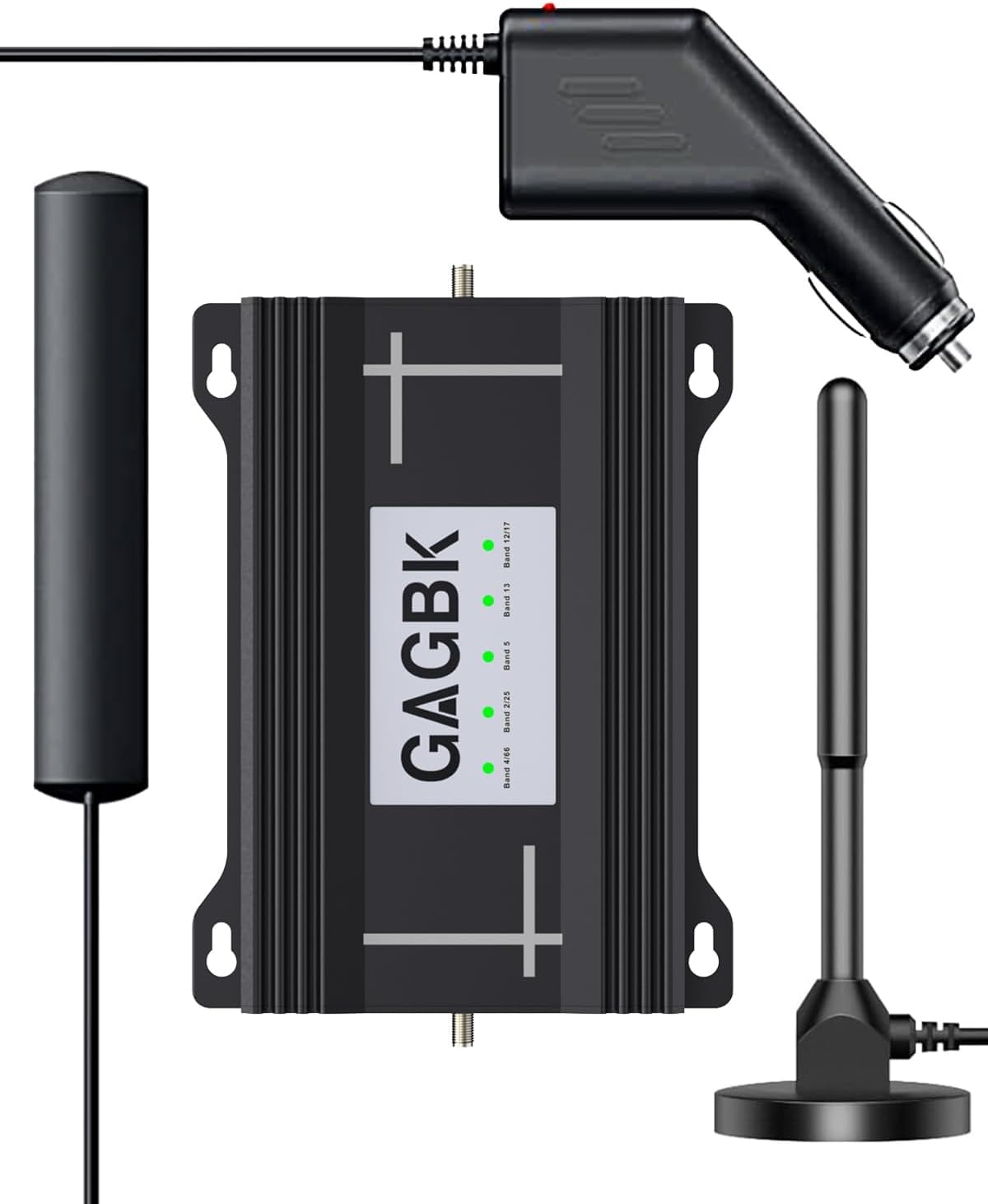
The GAGBK 6-Band Booster is a complete signal amplification system, not just an antenna. It includes an outdoor magnet-mount antenna, an indoor patch antenna, and a powerful amplifier that claims to boost 4G/5G signals up to 100X. It supports a wide array of bands (2/4/5/12/13/17/25/66) and is FCC approved, making it a legal and powerful solution for vehicles.
User experiences are mixed but highlight its potential. One reviewer successfully used it to get a signal for their Boost network inside their home after installing the outdoor antenna. The system is designed to be plug-and-play, with automatic gain control and oscillation elimination to self-adjust to changing signal conditions.
However, some users noted that to achieve maximum power, the interior antenna needs to be placed directly on the phone, which limits its convenience for in-vehicle use. The installation is straightforward, but the overall performance seems to be more about improving calls and basic data, rather than the high-throughput MIMO solutions for hotspots.
Why it’s great
- Complete system with amplifier included.
- Covers a very wide range of carrier bands.
- FCC approved and includes auto-tuning features.
Good to know
- More for general call boost than high-speed data.
- Some users found the indoor antenna placement critical.
- Performance reports are somewhat inconsistent.
4. Proxicast ANT-128-004 Yagi Directional

The Proxicast ANT-128-004 is a high-gain directional Yagi antenna designed for one job: pulling a weak signal from a distant tower. With a gain of 9/11 dBi and an ultra-wideband range of 600-6000 MHz, it’s a precision tool for marginal coverage areas. It’s deployed by businesses and enthusiasts alike for long-range cellular, CBRS, and even public safety radio systems.
User reports are overwhelmingly positive. One business purchased over a dozen units, with some in continuous field use for five years without failure. A reviewer paired it with a Netgear Nighthawk M1 and achieved 8.2 Mbps down at over 8 kilometers from the tower. This antenna excels where a direct line of sight exists but is far away.
The trade-off is that it requires precise aiming and a clear line of sight to the cell tower. The mounting hardware is not stainless steel, which can rust in harsh environments. For a fixed installation on a parked RV or a stationary work truck, this is a phenomenal performer, but it’s not suited for daily mobile driving.
Why it’s great
- Exceptional long-range directional gain.
- Ultra-wideband support for 5G, LTE, CBRS.
- Proven long-term durability in commercial use.
Good to know
- Requires precise aiming and line of sight.
- Mounting hardware can develop rust.
- Not for mobile use; best for fixed/parked vehicles.
5. eifagur 11dBi Dual MIMO Antenna

The eifagur 11dBi Dual MIMO antenna is a strong contender for budget-conscious buyers who still want the benefits of a 2×2 MIMO configuration. It comes with two 5-meter RG58 cables and dual SMA male connectors, plus adapter cables for TS9 ports, making it compatible with a wide range of hotspots like the Netgear Nighthawk M6 and M5.
User results are dramatic. One reviewer saw their internet speed jump from a frustrating 0-10 Mbps to a stable 80-100 Mbps after installing this directional antenna and enabling the antenna ports on their modem. Another expert used it to revive a Concord 4 alarm system that had been failing for months. These are significant performance leaps for a product in its price tier.
However, not all experiences are positive. One user reported that this larger antenna performed worse than their previous Waveform QuadMini, and the included mounting hardware was difficult to work with. The frequency range is limited to 698-2700 MHz, which may not cover all newer 5G bands like n71 (600 MHz).
Why it’s great
- High 11 dBi gain in a directional MIMO setup.
- Comes with dual long cables and adapters.
- Proven to deliver massive speed increases for many.
Good to know
- Limited to lower 5G bands (up to 2700 MHz).
- Mounting hardware can be finicky.
- Performance can be inconsistent between units.
6. weBoost 4G-OTR Trucker Antenna
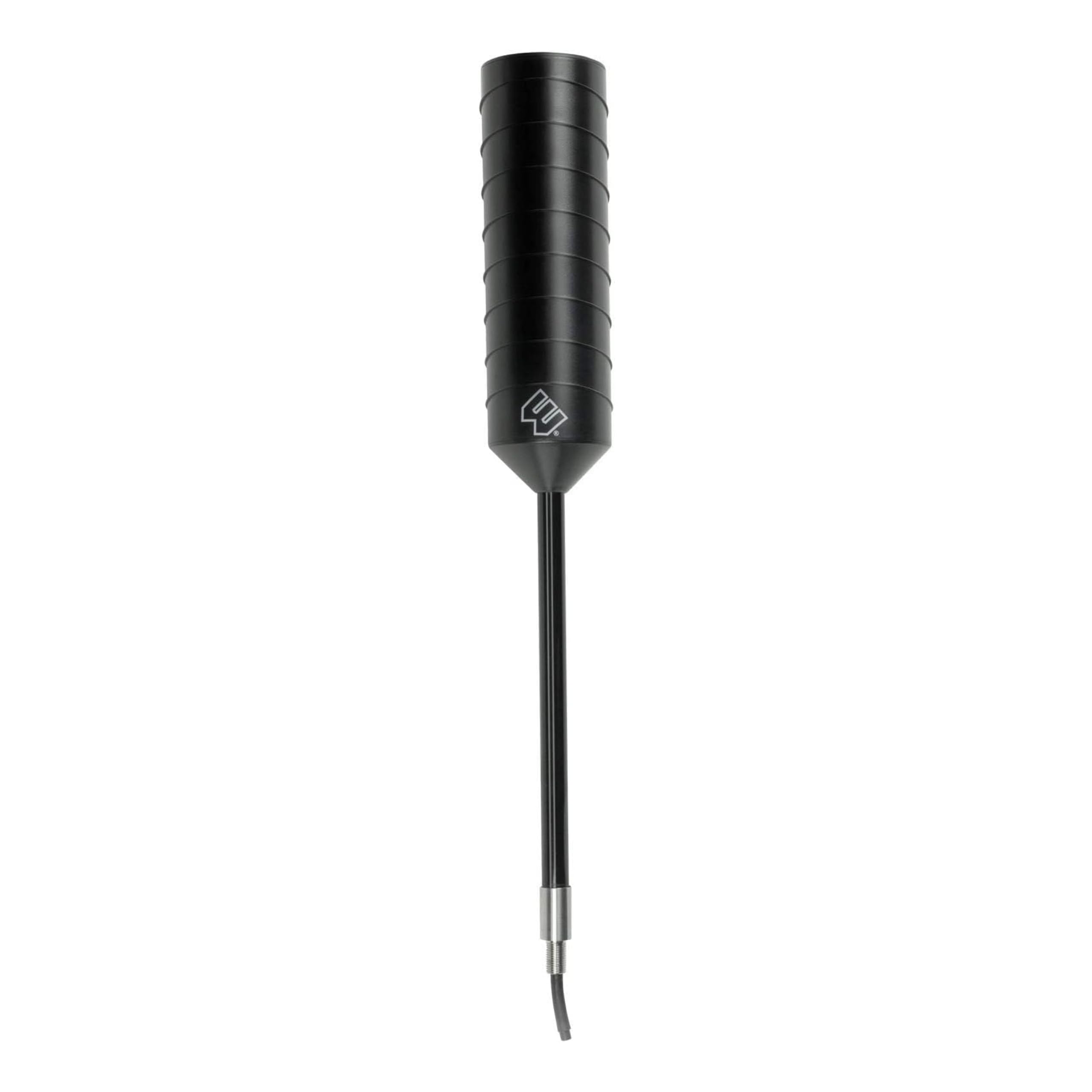
The weBoost 4G-OTR Trucker Edition antenna is the industry standard for heavy-duty mobile use. Its omnidirectional design and extendable mast (from 7.5” to 40”) allow it to reach over large obstructions, while its MIL-STD 810H and NEMA IP66 ratings certify its ability to survive the toughest environments. It’s designed specifically for semi-trucks, fleet vehicles, and hardcore overlanders.
Users praise its ability to bring signal back from the dead. One reviewer in a canyon under a redwood canopy boosted their Verizon signal from zero bars to a full, usable connection. Another long-haul trucker confirmed its reliability after a manufacturing defect caused an initial failure, but the replacement unit worked flawlessly for months.
The antenna is designed to work exclusively with weBoost Drive Reach signal boosters, not as a standalone antenna for a hotspot. While it’s built like a tank, the included “heavy-duty” spring is considered inadequate for extreme abuse, and the hardware could be more robust. It’s a dedicated component for a complete weBoost ecosystem.
Why it’s great
- Extremely durable with military-grade certification.
- Extendable mast for superior placement.
- Excellent for restoring signal in deep fringe areas.
Good to know
- Requires a weBoost Drive Reach booster to function.
- Spring base could be more robust.
- Initial manufacturing defects reported by some.
7. weBoost Overland Antenna

The weBoost Overland Antenna is a compact, 5G-compatible omnidirectional antenna designed as a high-quality replacement or upgrade for Drive Reach signal booster kits. It’s a simpler, more streamlined version of the OTR Trucker antenna, with a fixed profile that makes it easier to mount on smaller vehicles like SUVs and pickup trucks.
User feedback is solid, with many using it for T-Mobile home internet in rural desert locations for lag-free gaming and work. A full-time traveler mounted it on their pickup’s bed rail and reported never dropping below two bars of signal across the country. It’s praised as a perfect replacement for damaged original antennas, though the mount and nut from the original setup are required.
The biggest drawback is that it does not include a mounting bracket. This oversight adds an extra purchase and a fabrication step for first-time buyers. While it’s a great, durable component, its lack of a mount and its role as a subsystem component rather than a standalone solution may frustrate some DIY installers.
Why it’s great
- Compact size ideal for smaller vehicles.
- Full 5G compatibility with all US carriers.
- 2-year manufacturer warranty.
Good to know
- No mounting bracket included in the box.
- Only works with weBoost booster systems.
- Requires original mount or aftermarket purchase.
FAQ
Do I need a directional or omnidirectional antenna for my vehicle?
What does MIMO mean in a vehicle antenna?
Can I connect any antenna directly to my cell phone?
Final Thoughts: The Verdict
For most users, the best cellular vehicle antenna 5g winner is the Waveform DualMini Kit because it delivers the most complete, high-performance, and user-friendly solution for achieving maximum MIMO data speeds on the road. If you want a rugged, long-range directional antenna for a fixed setup, grab the Proxicast ANT-128-004. And for a durable, heavy-duty solution for a semi or overlander using a weBoost system, nothing beats the weBoost 4G-OTR Trucker Edition.

Mo Maruf
I created WellFizz to bridge the gap between vague wellness advice and actionable solutions. My mission is simple: to decode the research and give you practical tools you can actually use.
Beyond the data, I am a passionate traveler. I believe that stepping away from the screen to explore new environments is essential for mental clarity and physical vitality.