Our readers keep the lights on and my smoothie glass nicely filled. As an Amazon Associate, I earn from qualifying purchases.
The ceiling vent is a silent workhorse in your home’s HVAC system, responsible for directing conditioned air exactly where it needs to go. Yet most homeowners give it zero thought until a flimsy plastic fin cracks or the paint starts peeling, revealing an ugly, mismatched eyesore overhead. The moment you decide to swap it out, you discover that a ceiling vent isn’t just a cover—it’s a precision component defined by duct opening size, fin configuration, and material durability.
I’m Mohammad Maruf — the founder and writer behind WellFizz. I’ve spent countless hours analyzing hundreds of HVAC register specifications, from steel gauge and powder-coat thickness to damper mechanism designs and noise profiles.
Whether you are renovating a spare bedroom, finishing a basement, or simply replacing a rusty register, choosing the best ceiling vents means matching the exact duct opening, understanding how fin direction affects air distribution, and selecting a material that won’t warp or rattle after a single season of use.
How To Choose The Best Ceiling Vents
Selecting the right ceiling vent goes far beyond grabbing the cheapest white grille off the shelf. The wrong choice leads to whistling airflow, poor room temperature balance, or a cover that sags under its own weight. Focus on three core factors: duct opening measurement, fin configuration for air direction, and material construction that withstands temperature cycling without warping or corroding.
Measure the Duct Opening, Not the Old Cover
The most common error is ordering a vent based on the outer dimensions of your old cover. Ceiling vents are sold by the duct hole size—the actual rough opening in your drywall or ceiling tile. Use a tape measure to get the exact width and height of the hole itself. If the hole is 8 inches by 4 inches, you need an 8×4 model. The outer face of the new vent will always be larger than the duct opening, typically by about 1.75 inches on each side, so it overlaps and covers the raw edges.
One-Way, Two-Way, or Three-Way Airflow
The fin design dictates how air spreads once it leaves the duct. A 1-way vent has all fins angled in one direction, pushing air along a single path—useful for long, narrow rooms. A 2-way vent splits airflow in two opposite directions, ideal for centering the air stream toward two sides of a space. A 3-way vent creates a broader, three-directional pattern that works well in open layouts or rooms with multiple seating zones. The number of fins and their adjustability also affect static pressure and noise levels.
Material and Finish Durability
Ceiling vents are exposed to warm, humid air during heating cycles and cold, dry air during cooling. Stamped steel with a baked-on powder coat resists chipping and rust better than thin aluminum or painted plastic. Extruded aluminum is lightweight and completely rust-proof, making it ideal for bathrooms or basements where moisture is high. The finish should be a clean white that blends into standard ceiling paint without yellowing over time.
Quick Comparison
On smaller screens, swipe sideways to see the full table.
| Model | Category | Best For | Key Spec | Amazon |
|---|---|---|---|---|
| HBW 10×8 3-Way | Premium | Large duct openings, high airflow | 1/2″ fin spacing, stamped steel | Amazon |
| Howeall 10×6 | Premium | Multi-shutter damper precision | Rustproof metal, white powder finish | Amazon |
| Laminaire 4×8 1-Way | Mid-Range | Smaller ducts, quiet operation | Extruded aluminum, semi-matte finish | Amazon |
| Handua 8×4 2-Way | Budget | Standard 8×4 openings, easy DIY | Noise-free stamped steel, 2-way | Amazon |
| Handua 10×4 3-Way | Budget | Narrow rectangular ducts, 3-way spread | Lightweight steel, powder coat | Amazon |
In‑Depth Reviews
1. HBW 10×8 3-Way Stamped Face Steel Ceiling Vent
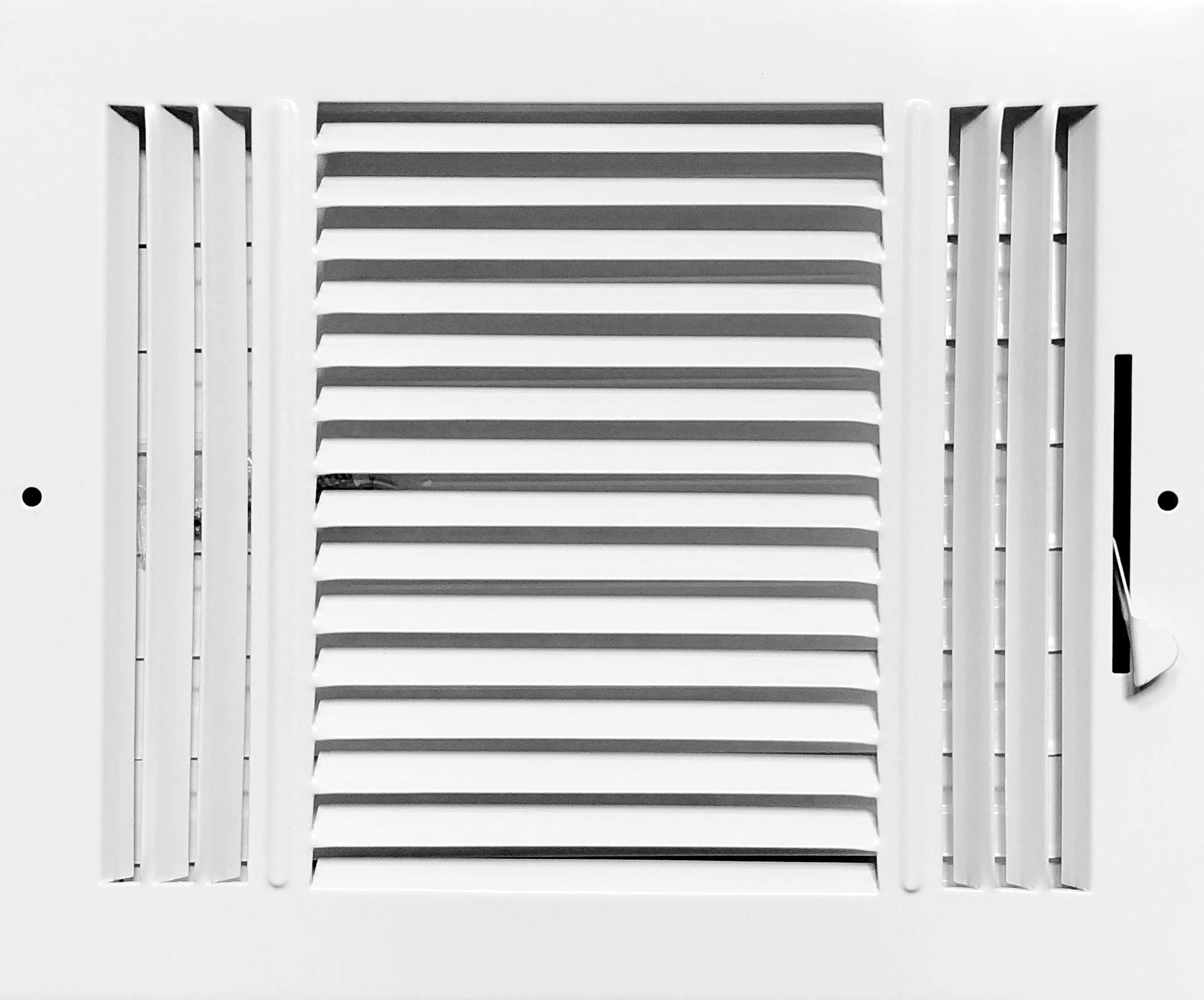
The HBW 10×8 stands out for its heavy-gauge stamped steel construction and unusually generous 1/2-inch fin spacing, which translates to noticeably higher air volume than standard registers with tighter louver gaps. This is a premium-feeling unit that doesn’t flex under pressure—customers consistently report it as sturdier than box-store alternatives, with zero rattling even under forced-air systems running at high CFM. The three-way airflow deflection design gives you solid coverage across open-concept rooms or large basements where a single-direction vent would leave cold spots.
The multi-shutter damper includes an easy-to-grip handle that lets you dial back airflow room by room without crawling into the attic to adjust manual dampers. Its actual outside dimensions measure 11.75 by 9.75 inches, providing a generous overlap that hides imperfect drywall cuts. Buyers who struggled to find this exact 10×8 opening size at local hardware retailers praise the clean white powder-coat finish that blends seamlessly into painted ceilings.
Individually shrink-wrapped with a cardboard backer, the packaging protects the edges and keeps the finish scratch-free during shipping. The only real limitation is that this model does not ship with screws, so you will need to supply your own #8 sheet metal screws for installation. For anyone dealing with a non-standard 10×8 rough opening, this is the most reliable fit on the market.
Why it’s great
- Heavy stamped steel resists warping and noise
- Wide 1/2″ fin spacing maximizes airflow volume
- Three-way deflection covers large areas evenly
Good to know
- No screws included in the package
- Only available in the 10×8 duct size
2. Howeall 10×6 Air Vent Cover with Multi-Shutter Damper

The Howeall 10×6 delivers intelligent airflow control through a multi-shutter damper system that allows you to adjust louver angles vertically and even close the vent completely when a room isn’t in use. Unlike budget vents that rely on a single flimsy flap, this unit uses interconnected shutters that move in unison, providing even resistance across the entire face. The steel core is coated with a rustproof white powder finish that handles the thermal expansion of heating cycles without cracking or peeling.
At 11.75 by 7.75 inches overall, the mounting flange provides ample coverage for the 10×6 rough opening while maintaining a low-profile look against the ceiling. The optimally sized blades are engineered to keep noise to a minimum—users report no whistling or buzzing even at higher fan speeds. This vent is equally at home in residential living rooms, commercial offices, or industrial spaces where consistent temperature distribution matters.
One practical note from buyers: the damper lever is smooth enough for users with limited hand strength to operate easily, making it a strong choice for accessible design considerations. The only minor downside is that the 10×6 size is less common than 4×10 or 8×4, so measure carefully before ordering. For those with a 10×6 duct, this is a premium upgrade that outperforms standard stamped registers.
Why it’s great
- Multi-shutter damper provides precise airflow control
- Rustproof powder finish withstands temperature swings
- Low noise operation even at high CFM
Good to know
- Limited to the 10×6 duct size only
- Slightly higher price point than basic steel vents
3. Laminaire 4×8 Aluminum 1-Way Ceiling Vent
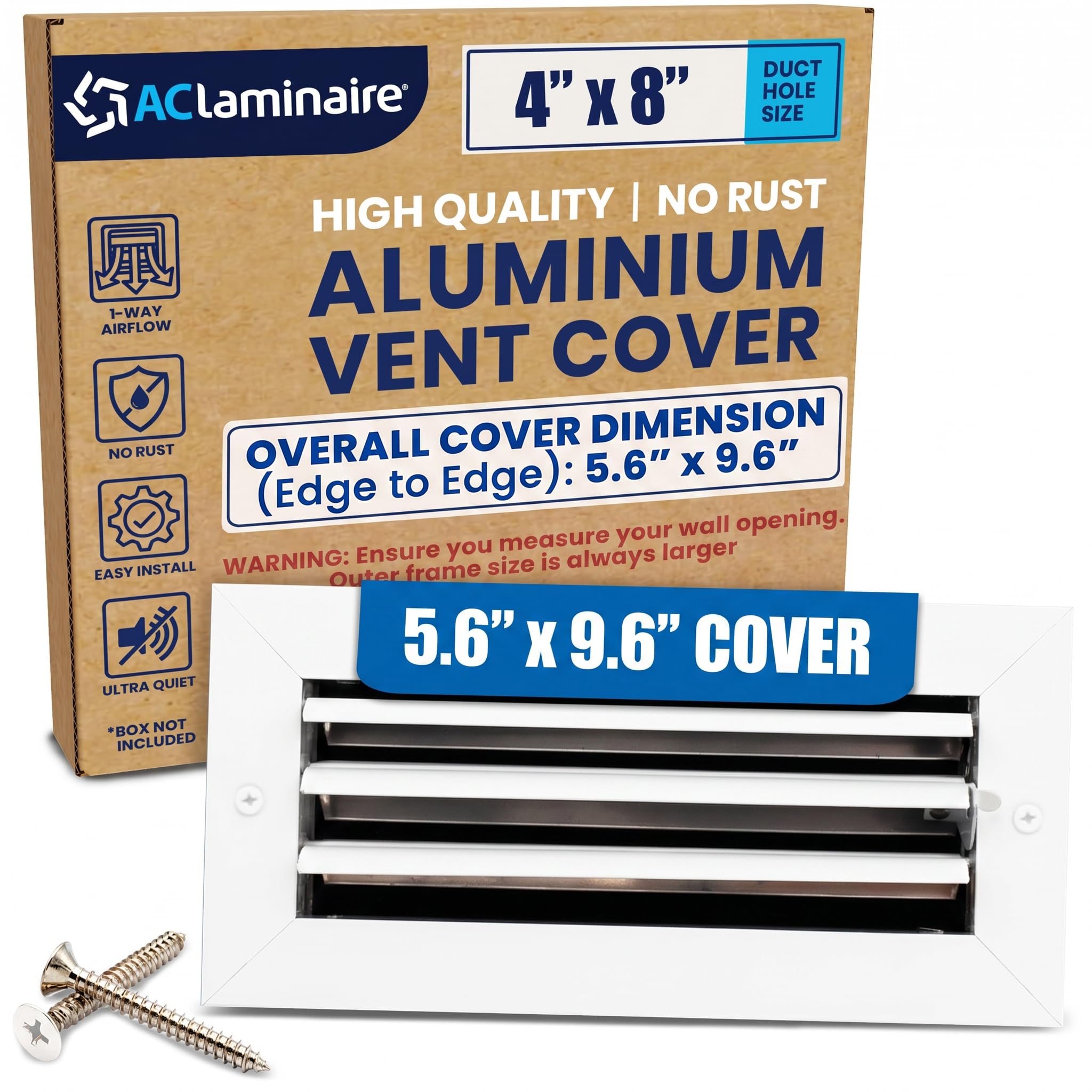
The Laminaire 4×8 is crafted from extruded aluminum, making it completely immune to rust and noticeably lighter than steel alternatives—a real advantage when installing in drop-ceiling tiles or thin drywall. The 1-way curved blade design channels airflow in a single, directed stream, which is ideal for narrow hallways, small bathrooms, or office spaces where you want conditioned air pushed toward a specific zone. The semi-matte Laminaire W finish has a soft, non-reflective appearance that integrates with modern interior palettes better than glossy white covers.
This register comes with galvanized steel screws sized at 5/32-inch diameter by 1.5-inch length, designed for wood or drywall mounting. The 4×8 duct opening yields a visible face of 5.6 by 9.6 inches, providing a clean overlap. Users upgrading from old plastic vents consistently note the premium feel of the extruded aluminum—no sharp edges, no flex, no buzzing from vibration. The integrated multi-shutter damper lets you close the vent entirely or adjust the angle, though some buyers found the lever initially stiff before breaking in.
Be aware that this model is for indoor ceiling or wall use only—it is not rated for floor installation or exterior applications. The screws, while well-made, are slightly smaller than #8 standard, meaning they may not grab existing threaded holes from your old vent. Plan to either use the included screws in fresh drywall or keep a #8 screw on hand if replacing an older register.
Why it’s great
- Rust-proof extruded aluminum ideal for humid spaces
- Curved blade directs airflow precisely down a hallway or zone
- Soft semi-matte finish blends with modern decor
Good to know
- Screws slightly undersized for existing threaded holes
- Damper lever may feel stiff initially
4. Handua 8×4 2-Way Steel Air Supply Diffuser
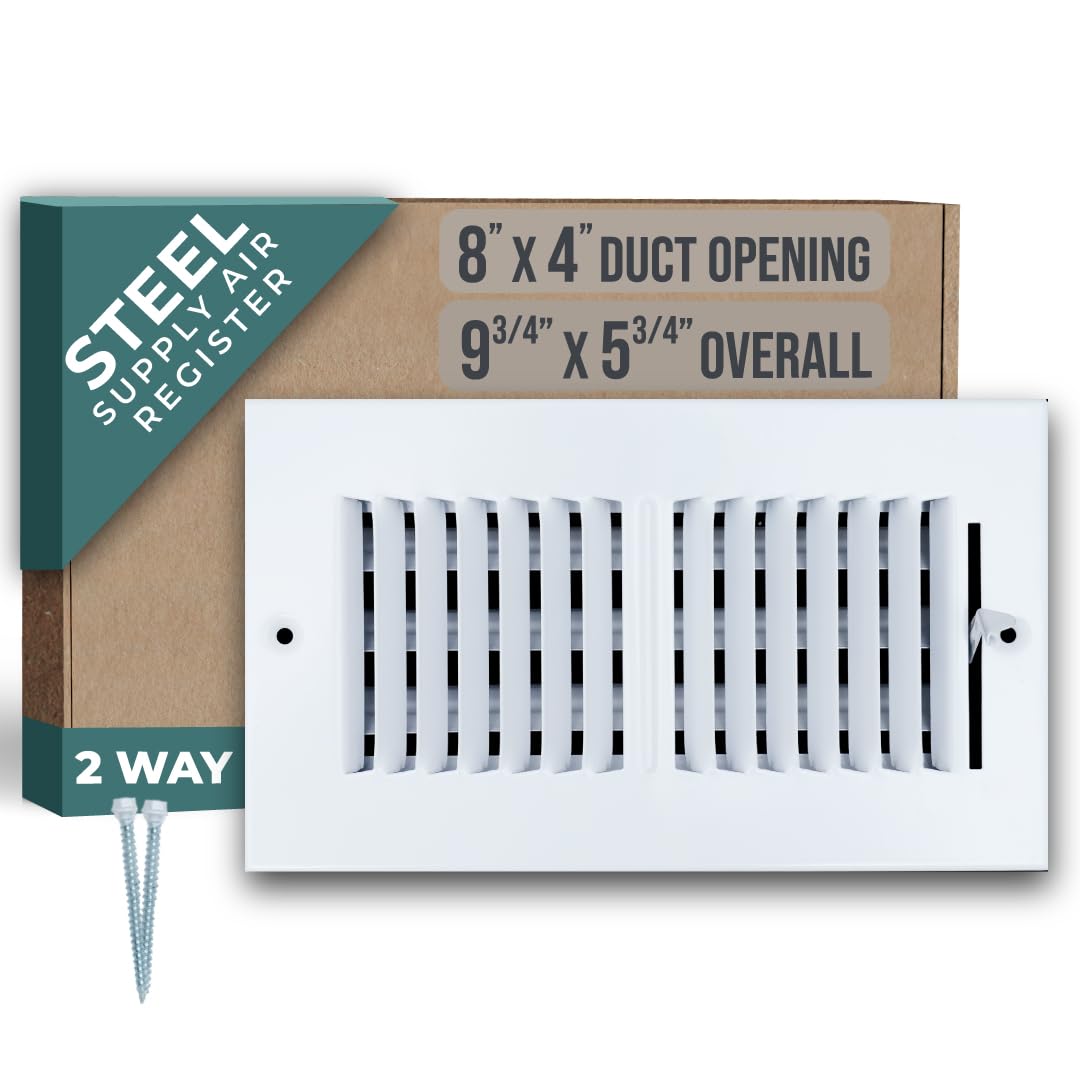
The Handua 8×4 is a compact 2-way diffuser that delivers impressive build quality for its price tier. Stamped from steel with a durable powder-coat paint, it offers the same rigidity you would expect from premium registers at a fraction of the cost. The two-way louvered fins split airflow into opposing directions, making it a natural fit for small bedrooms, bathrooms, or kitchen ceilings where you want air directed away from a central point. The outer dimensions of 9.75 by 5.75 inches provide a standard overlap that covers most residential 8×4 rough openings.
This register includes matching white screws, so there is no need for a separate hardware run. Customers describe installation as a straightforward five-minute job: remove the old cover, align the new grille, and drive the screws in. The steel stamping process eliminates sharp edges, and the back damper lets you fine-tune volume without removing the cover. Multiple verified buyers noted that the packaging was secure and the white finish arrived without scratches or dents.
While this is a ceiling or sidewall register, the 2-way pattern means it is not ideal for rooms requiring broad, three-directional coverage. The damper handle is functional but smaller than the handles on premium units, so those with larger hands may find it slightly fiddly. For anyone seeking a reliable, budget-friendly upgrade for a standard 8×4 opening, this Handua model over-delivers.
Why it’s great
- Solid stamped steel at a budget price point
- Includes color-matched screws for hassle-free install
- Quiet operation with no rattling or whistling
Good to know
- 2-way pattern may not suit open-concept rooms
- Small damper handle can be tricky to grip
5. Handua 10×4 3-Way Steel Air Supply Diffuser
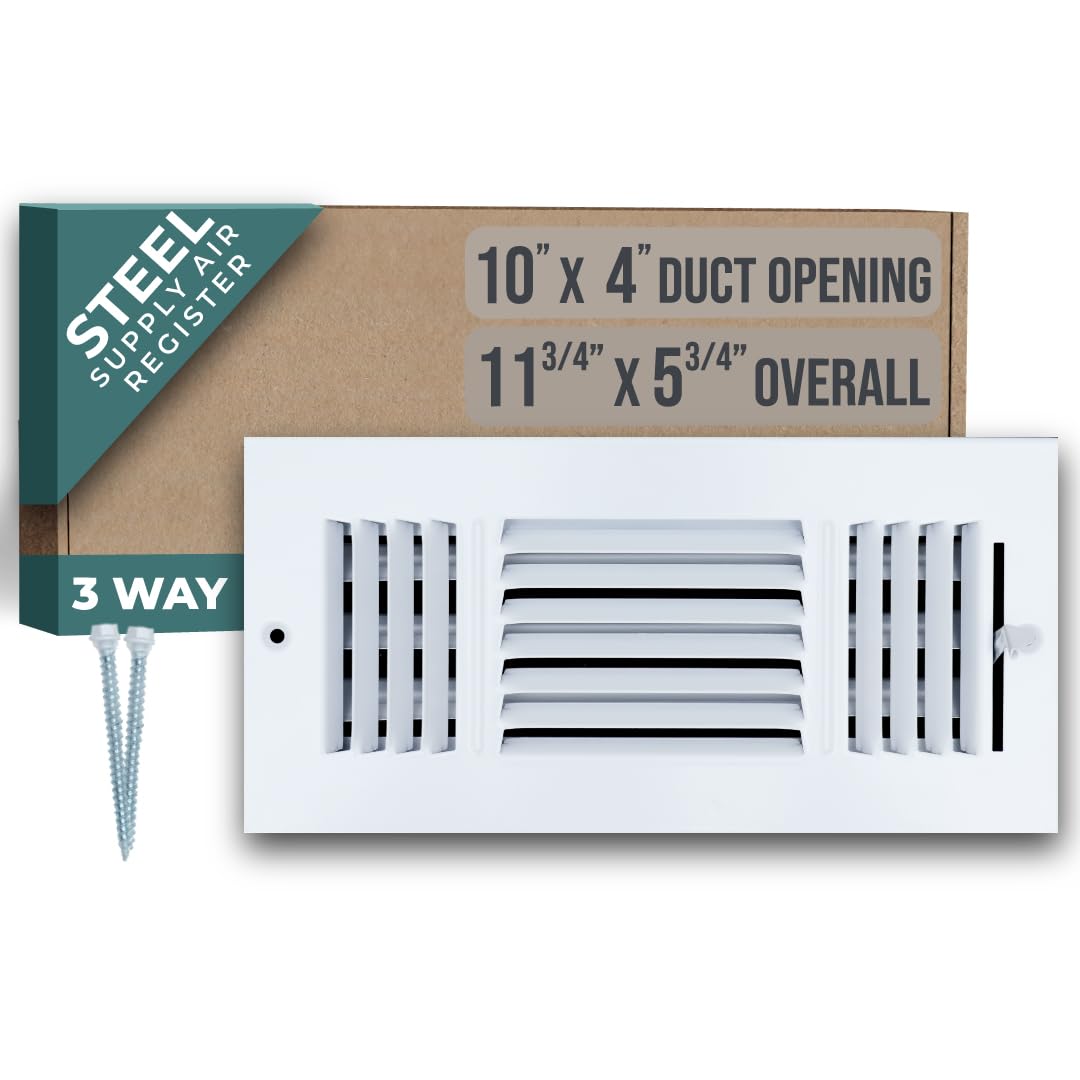
The Handua 10×4 takes the same robust steel construction and powder-coat finish as its 8×4 sibling, but scales it for longer, narrower 10×4 duct openings and upgrades to a 3-way fin configuration. This wider pattern disperses air in three directions, making it much more effective for living rooms or open-plan areas where a single or dual-direction vent would leave temperature imbalances. The outer dimensions of 11.75 by 5.75 inches create a slim, elongated profile that fits flush against ceiling drywall without protruding awkwardly.
The back damper is responsive, giving you granular control over how much air enters the room. The stamped steel construction is noise-free even under forced-air systems, a point multiple buyers highlighted in their feedback. Color-matched screws are included, simplifying the swap. At 1.1 pounds, it is notably lighter than some all-steel competitors, but it still feels solid in hand—there is no cheap plastic flex or thin-gauge vibration.
One trade-off is that the steel is slightly lighter-gauge than premium offerings like the HBW or Howeall, so it might not feel as dense when handling. It is also a budget-oriented model, meaning the finish, while uniform and white, may be more prone to minor scuffs during installation if you are not careful. For a cost-effective 3-way vent that fits a less common 10×4 opening, this Handua gets the job done without breaking the bank.
Why it’s great
- 3-way fins for broad, even air distribution
- Slim profile fits elongated 10×4 openings cleanly
- Noise-free operation with included mounting screws
Good to know
- Steel gauge feels lighter than premium options
- Powder finish can scuff during careless installation
FAQ
How do I measure my ceiling duct opening correctly?
Can I install a 2-way vent in a room that needs 3-way coverage?
What is the difference between stamped steel and extruded aluminum?
Why does my new ceiling vent whistle when the HVAC runs?
Final Thoughts: The Verdict
For most users, the best ceiling vents winner is the HBW 10×8 3-Way because it combines heavy stamped steel, wide fin spacing for maximum airflow, and robust three-way deflection that covers large rooms without cold spots. If you need precise damper control and a rustproof build for a 10×6 opening, grab the Howeall 10×6. And for a compact, rust-free aluminum option in a 4×8 duct, nothing beats the Laminaire 4×8 1-Way.

Mo Maruf
I created WellFizz to bridge the gap between vague wellness advice and actionable solutions. My mission is simple: to decode the research and give you practical tools you can actually use.
Beyond the data, I am a passionate traveler. I believe that stepping away from the screen to explore new environments is essential for mental clarity and physical vitality.