Our readers keep the lights on and my smoothie glass nicely filled. As an Amazon Associate, I earn from qualifying purchases.
Living below a noisy neighbor or struggling with reverb in a home studio makes a quiet ceiling feel like a luxury. The right acoustic treatment can cut that airborne chatter and transform a room’s sound profile without a full renovation.
I’m Mohammad Maruf — the founder and writer behind WellFizz. I’ve spent hundreds of hours cross-referencing absorption coefficients, density ratings, and real-world echo reduction results from actual buyers to separate performance from marketing noise.
This guide compares seven solutions spanning foam tiles, fiberglass panels, and wood slat systems to help you find the best ceiling soundproofing that fits your space and noise goals.
How To Choose The Best Ceiling Soundproofing
Ceiling treatment involves two distinct goals: stopping sound from entering or leaving a room (soundproofing) and reducing echo and slap within the space (acoustic treatment). Most solutions in this guide address the latter, so understanding what you actually need is step one.
Thickness versus Density
Thicker panels (2 inches versus 1 inch) absorb more low-frequency energy, which is typical of footsteps and deep bass. High-density foam or fiberglass core panels achieve a higher NRC (Noise Reduction Coefficient) per inch, meaning they soak up more sound across a wider frequency range.
Mounting Method and Ceiling Safety
Ceiling-mounted panels must stay put. Self-adhesive foam works on clean, smooth surfaces but may fail on textured ceilings. Panels with mechanical hanging brackets or screw-into-drywall systems are safer for long-term installation and prevent falling hazards in high-vibration environments like recording studios.
Aesthetic Integration
Foam wedges and fiberglass squares prioritize function over looks. Wood slat panels with felt backing blend acoustic absorption with interior design, making them ideal for living rooms, open-plan offices, or any space where the ceiling is visible and part of the decor.
Quick Comparison
On smaller screens, swipe sideways to see the full table.
| Model | Category | Best For | Key Spec | Amazon |
|---|---|---|---|---|
| UMIACOUSTICS 4 PCS | Fiberglass Panel | Low-frequency echo control | 2-inch thick fiberglass core | Amazon |
| Audimute Sheet | Absorption Sheet | Large-scale room dampening | 8′ x 4′ sheet, 85% absorption | Amazon |
| Knightsacoustic 96 Pack | Foam Wedge | Budget high-frequency dampening | 96 units, 1″ quick-recovery foam | Amazon |
| NeatiEase Wood Panels | Wood Slat | Aesthetic acoustic ceiling | 96″ x 12.6″ MDF with felt backer | Amazon |
| Avana Wood Panels | Wood Slat Premium | High-end visual finish | 93.2″ x 11.25″ Black Oak veneer | Amazon |
| 54 Pack Sound Proof Foam | Foam Wedge | Entry-level echo reduction | 54 panels, 1″ high-density foam | Amazon |
| ROOME 18 Pack | Polyester Panel | Thin-profile mid-frequency control | 0.4″ thick, 0.95 absorption rate | Amazon |
In‑Depth Reviews
1. UMIACOUSTICS 4 PCS Acoustic Panels
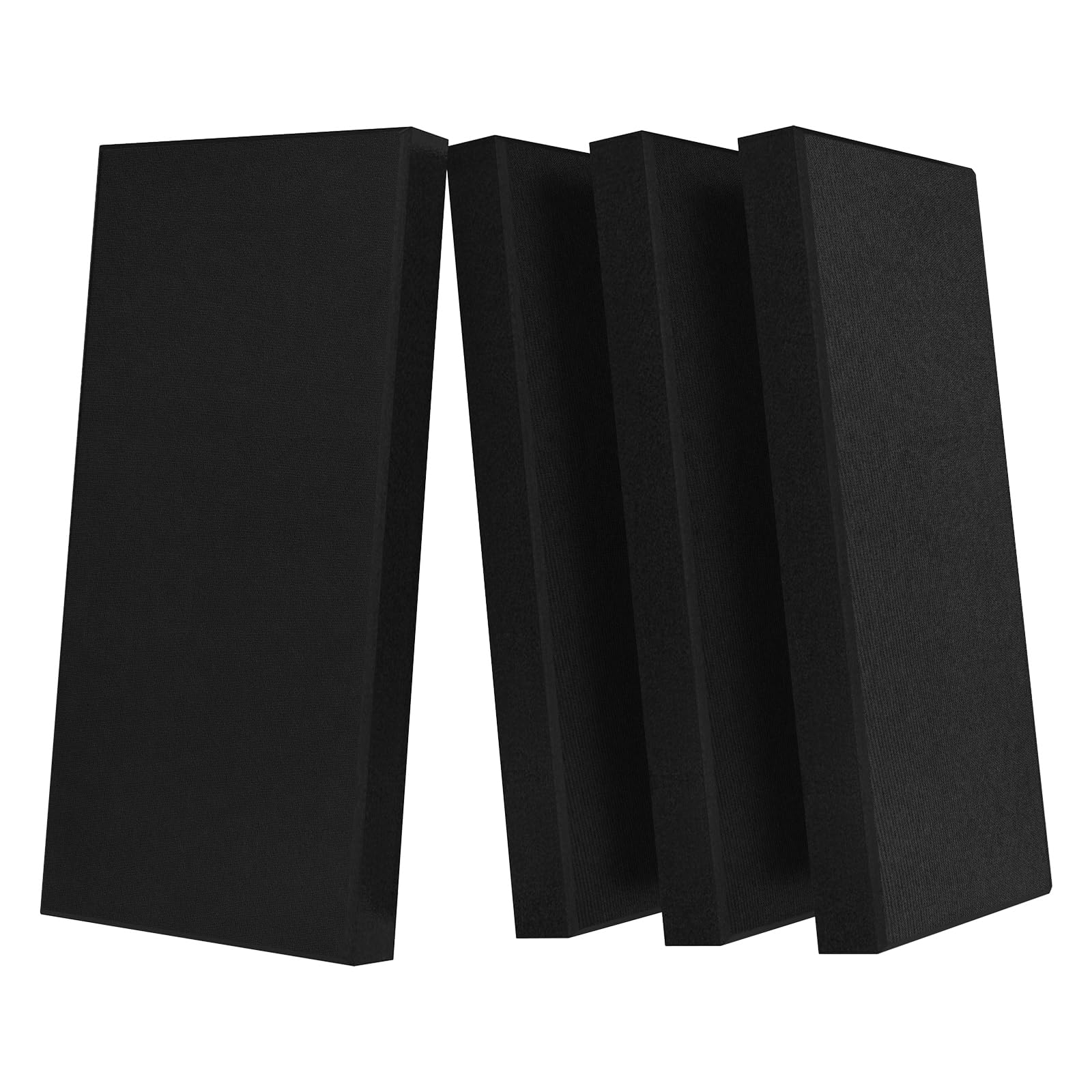
The UMIACOUSTICS panels use a 2-inch thick fiberglass core wrapped in high-density polyester fabric, giving them a meaningful advantage over thinner foam alternatives when it comes to absorbing low-end rumble and bass frequencies. The rigid metal bracket system screws securely into drywall, making them appropriate for permanent ceiling installation without risk of sagging or detachment.
Real buyers report that these panels effectively kill room echo and flutter that lesser foam panels only partially dampen. The built-in hanging template simplifies alignment, though some users noted the included drywall anchors were undersized and recommend upgrading to flanged anchors for a flush mount.
The 2-inch thickness is the standout spec here — it allows the fiberglass to trap more sound energy across a broader frequency range, particularly in the 250–500 Hz band where footfall and mechanical noise live. For anyone serious about cleaning up a recording or listening space, these deliver professional-grade absorption at a mid-range cost.
Why it’s great
- True low-frequency absorption from 2-inch fiberglass core
- Secure metal bracket install — no adhesive failure risk on ceiling
- Clean beveled edges and fabric finish look pro
Good to know
- Replace the included wall anchors with heavier-duty ones for peace of mind
- Horizontal mounting requires careful bracket positioning
- Heavier than foam — needs solid drywall anchors
2. Audimute Sound Absorption Sheet

The Audimute sheet takes a different approach to ceiling treatment — instead of individual tiles, it offers a single 8-by-4-foot blanket of proprietary eco-C-tex material that absorbs an average of 85 percent of incident sound waves. The sheet comes with grommets and hanging hardware, so you can mount it directly over a ceiling section or use it as a suspended baffle to break up vertical sound paths.
Buyers consistently say the sheet dramatically reduces echo and improves speech clarity in medium to large rooms, and several note it softened hallway noise enough to improve sleep quality. The material is non-toxic, contains no fiberglass or loose fibers, and is produced in the USA, which appeals to anyone avoiding off-gassing foam products.
One trade-off is that a single 96-inch sheet is large and requires at least two people to handle during installation on a ceiling. Some users reported minor consistency issues between batches, but the overall absorption performance is rated higher than equivalently thick foam panels.
Why it’s great
- Covers a large 32 square foot area in one piece — fewer seams
- Grommets make it easy to hang as a ceiling baffle or over a door
- Non-toxic and fiberglass-free for safe indoor air quality
Good to know
- Rigid framing may be needed for a flush flush ceiling mount
- Heavy at 10 pounds — ensure ceiling anchors can support the load
- Batch inconsistency reported; inspect upon arrival
3. Knightsacoustic 96 Pack Sound Proof Foam Panels
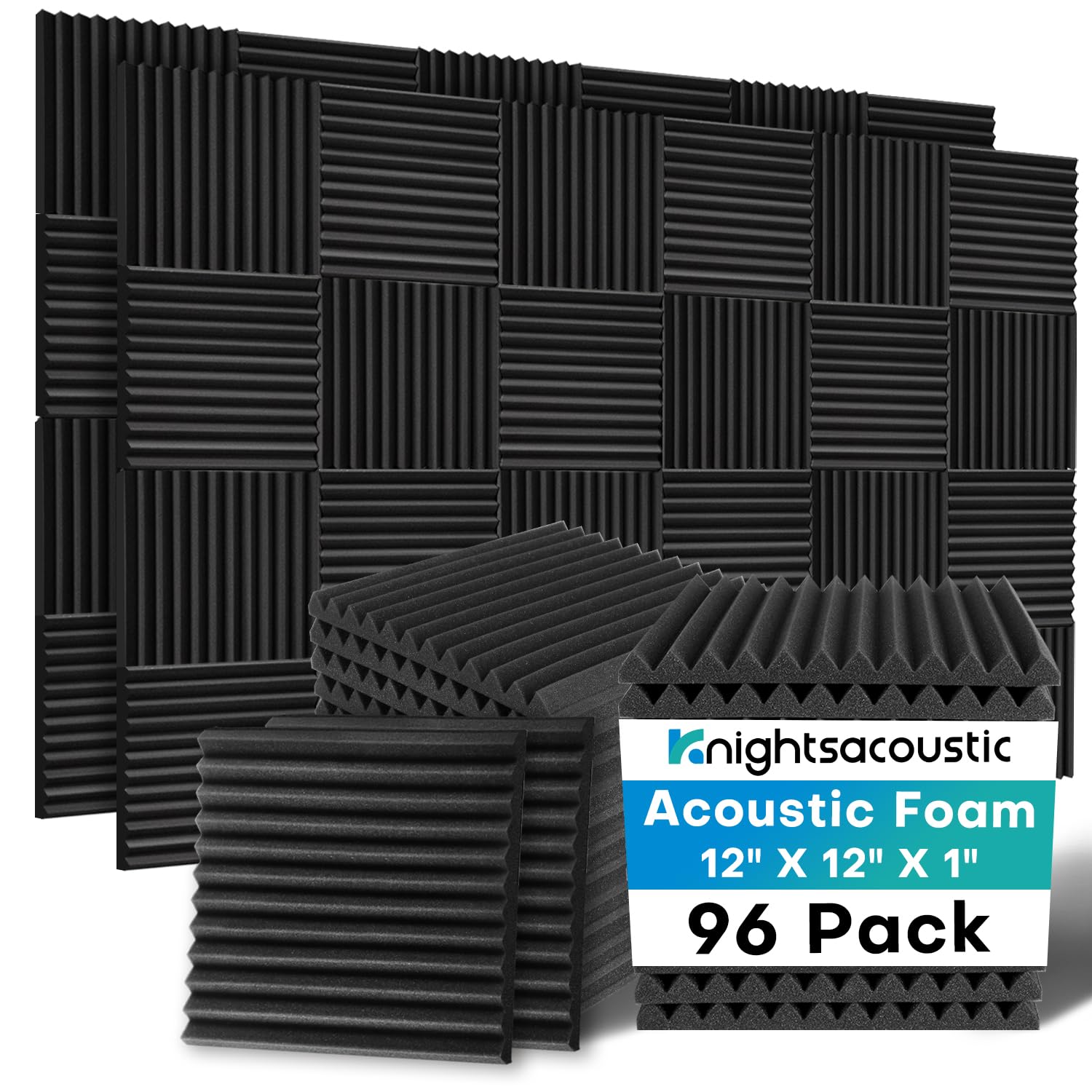
The Knightsacoustic 96-pack delivers the highest panel count in this comparison, making it a go-to for anyone who wants to cover a large ceiling area on a limited budget. Each 12×12-inch wedge is made from high-density polyurethane foam that recovers its shape after compression, though some buyers recommend a quick water soak and low-temp dry to fully restore the panels.
Real-world feedback confirms these panels excel at dampening high-frequency reflections — claps, voices, and laptop fan noise — but they do little for low-frequency thumps or footsteps. The foam has minimal odor compared to budget alternatives, and the wedge profile provides more surface area for sound wave entry than flat tiles of the same thickness.
One critical detail: the panels do not come with adhesive, so you need to budget for glue dots or spray adhesive separately. For ceiling use, mechanical fasteners through poster board backing, as suggested by several buyers, offers a safer long-term attachment than glue alone.
Why it’s great
- 96 panels provide wide coverage for whole-room treatment
- Quick-recovery foam returns to shape after unboxing
- Low odor and non-toxic for enclosed spaces
Good to know
- No adhesive included — must purchase separately
- Minimal effect on low-frequency noise like bass or footsteps
- Some panels may arrive compressed and need manual re-fluffing
4. NeatiEase Wood Panels for Wall

The NeatiEase wood slat panels combine visual warmth with functional acoustic absorption, using an MDF slat design backed by high-density polyester fiber felt. Each panel measures 96 inches long by 12.6 inches wide, covering roughly 33 square feet per four-pack. The teak finish has a warm cherry tone with realistic wood grain that works well in living spaces where bare foam would look out of place.
Buyers praise the ease of installation — the panels cut cleanly with an oscillating multi-tool through the slats and a box cutter through the felt backing. Mounting with black drywall screws through the felt into studs or drywall anchors yields a secure ceiling hold. The panels noticeably reduce room echo, though their absorption is less aggressive than thick fiberglass at low frequencies.
The acoustic performance comes from the porous felt layer, which traps mid and high-frequency reflections while the MDF slats add visual depth. This makes the NeatiEase panels ideal for open-concept living rooms, home offices, or dining areas where you want a quieter room without a studio aesthetic.
Why it’s great
- Elegant wood veneer look integrates with home decor
- Thick felt backing provides legit sound absorption
- Easy to cut, installs vertically or horizontally
Good to know
- Circular saw causes chip-out — use oscillating tool or tape
- Not as effective as 2-inch fiberglass for deep bass
- Heavy — 20 kg total for four panels, needs solid anchors
5. Avana Acoustic Wood Wall Panels
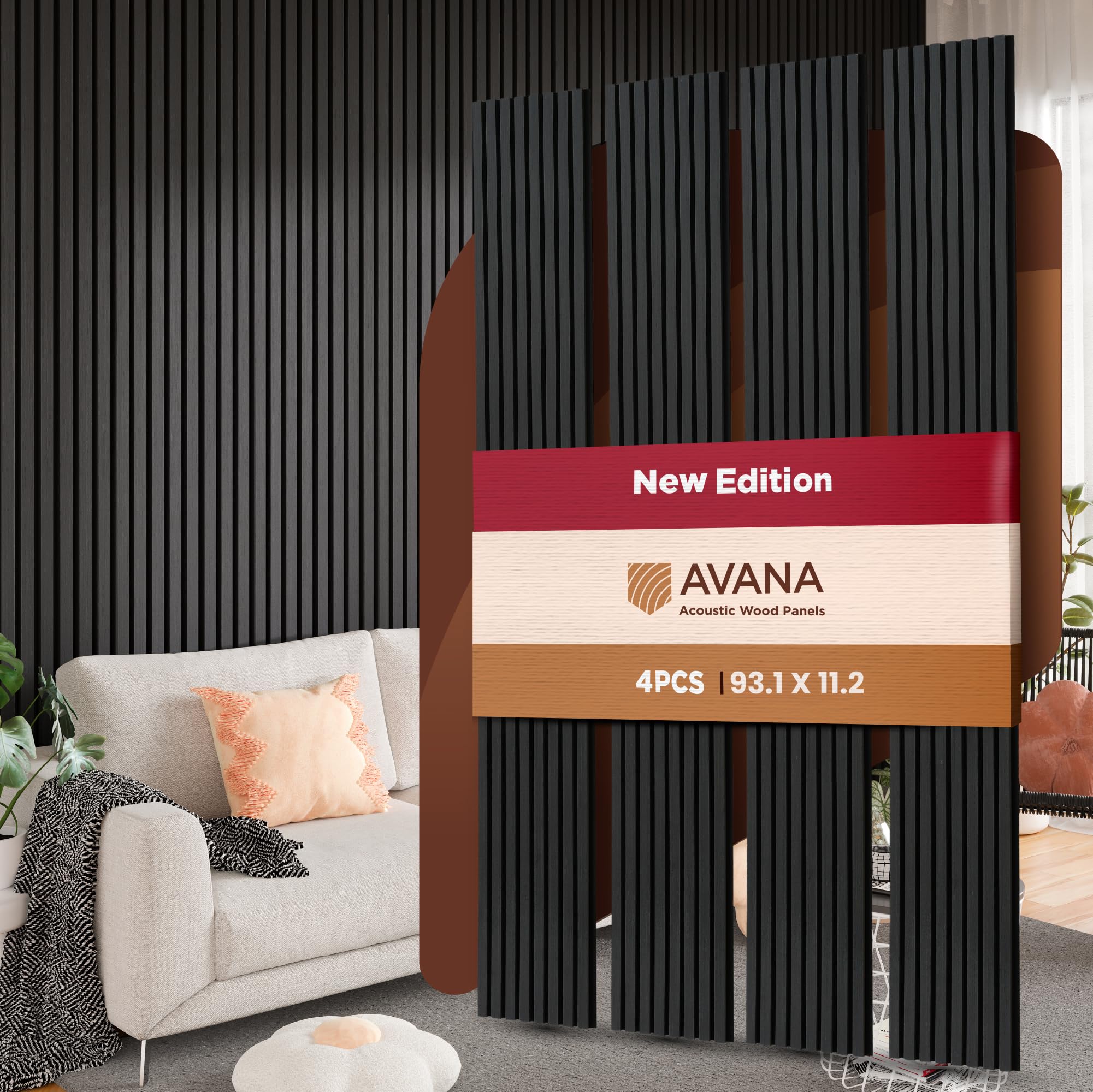
The Avana panels sit at the high end of the wood slat category, featuring a technical black oak veneer over an MDF core with a dense polyester fiber backing. Each panel is 93.2 inches long by 11.25 inches wide and 0.71 inches thick, and the four-pack is designed to lay into a 94×12-inch layout. The black oak finish is understated and modern, fitting commercial lobbies, apartment common areas, and high-end home theaters.
Real buyers note that the panels significantly cut ambient noise — estimates around 65 percent reduction in echo — while delivering a boutique-hotel finish that draws compliments. The panels cut well with a jigsaw and laminate blade, and installation with construction adhesive or screws is straightforward. Some feedback highlights shipping damage as a recurring issue, so ordering a sample pack first is wise.
The acoustic principle here is the same as the NeatiEase panels: the felt backing absorbs mid and high frequencies while the wood slats scatter and surface-diffuse remaining reflections. The Avana panels lack the 2-inch depth needed for serious bass trapping, but they outperform most foam tiles in visual integration and overall room comfort.
Why it’s great
- High-end black oak veneer elevates any room aesthetic
- Dense felt backing measurably reduces echo and reverb
- Easy to cut and install with construction adhesive
Good to know
- Fragile corners during shipping — order extra or a sample first
- Screws through felt require careful alignment to avoid damaging slats
- Limited low-frequency absorption due to 0.71-inch overall depth
6. 54 Pack Sound Proof Foam Panels
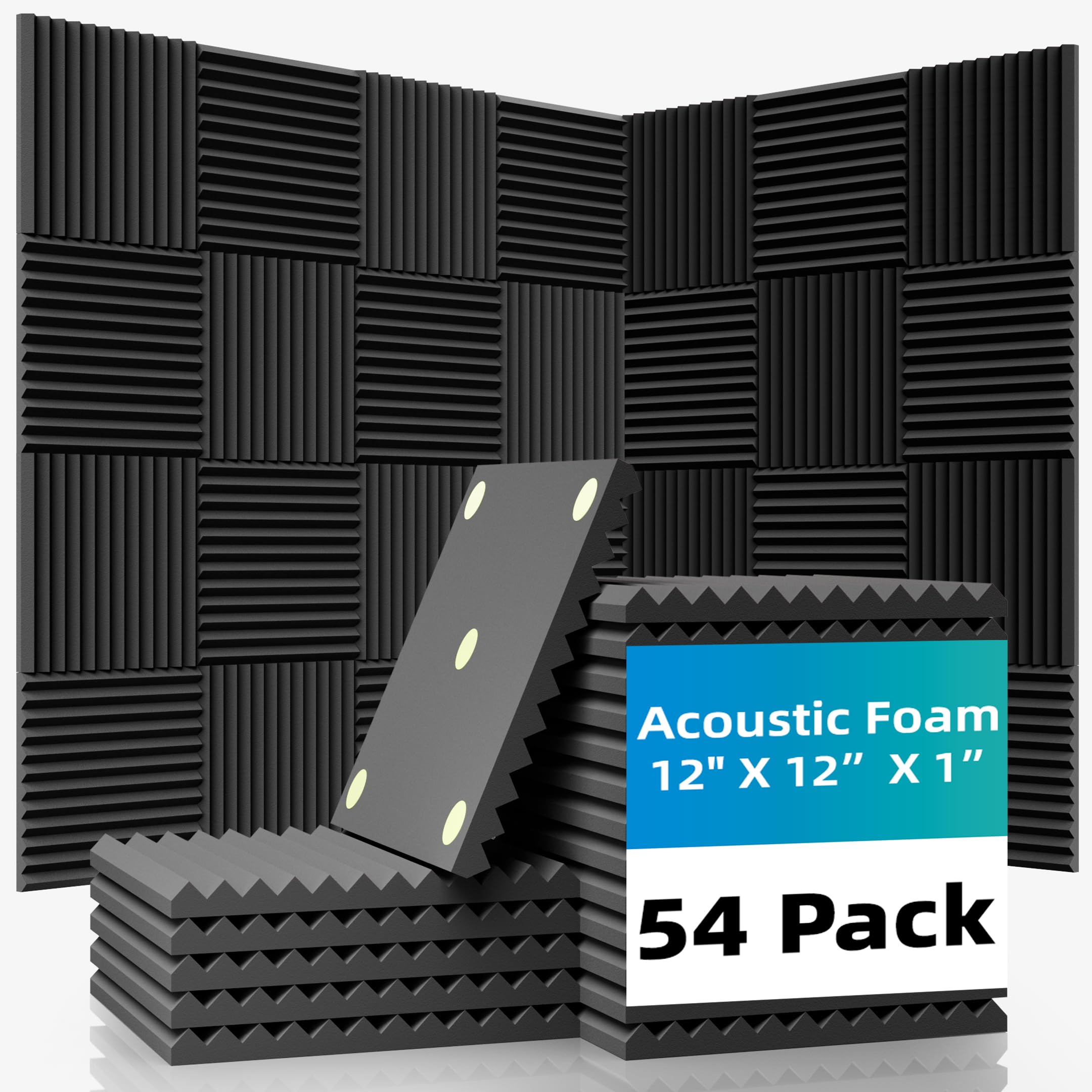
This 54-pack of 1-inch wedge foam panels is the most affordable entry point for ceiling echo treatment. The high-density polyurethane foam dampens mid and high frequencies, reducing the slap echo you hear from talking, TV audio, or video calls in a bare room. Each panel comes with adhesive stickers, so no extra purchase is needed for mounting on clean, smooth ceiling surfaces.
User feedback is mixed but instructive: many buyers report noticeable echo reduction in home studios and gaming rooms, while a minority note that 54 panels is still insufficient for serious recording spaces. The adhesive works well on painted drywall but may fail on textured or dusty ceilings, so surface prep is critical. Some quality inconsistency across batches has been flagged, particularly regarding foam density and color uniformity.
For its price point, this pack delivers the best cost-per-panel ratio in the lineup. It is best suited for renters or first-time buyers who want to test the effect of acoustic foam on a ceiling before committing to a more expensive permanent system.
Why it’s great
- Lowest per-panel cost for ceiling coverage
- Adhesive stickers included — install right out of the box
- Quick-recovery foam reduces echo in voice and TV frequencies
Good to know
- 1-inch thickness does not handle low bass or footsteps
- Quality control varies between batches
- Adhesive may release on textured or uneven ceiling surfaces
7. ROOME 18 Pack Acoustic Panels

The ROOME panels are ultra-thin (0.4 inches) and made from compressed polyester fiber, giving them a slim profile that works on ceilings where clearance is tight. The self-adhesive backing allows tool-free installation on smooth surfaces, and the beveled edge with multi-line pattern adds a decorative element that can be arranged into pinwheel or ring designs.
Buyers confirm the panels do reduce echo and reverberation — particularly in the mid-range frequencies — despite their thin build. The material is B1-class flame retardant and odor-free, making it safe for bedrooms and nurseries. Several users noted the strong adhesive bond, but removal after a month pulled paint off walls, so renters should proceed with caution on painted ceilings.
The main limitation is thickness. At 0.4 inches, the absorption is significantly less than 1-inch or 2-inch options. The ROOME panels work best as a first layer of acoustic treatment in small rooms or as a gap-filler between thicker panels, rather than as the sole ceiling treatment for a noisy environment.
Why it’s great
- Slim 0.4-inch profile fits tight ceiling clearances
- Self-adhesive back saves time and mess
- Flame retardant and odor-free for safe indoor use
Good to know
- Thin polyester limits low-frequency absorption
- Adhesive can damage ceiling paint upon removal
- 18 panels cover a small area — may need multiple packs
FAQ
Will acoustic foam panels block noise from my upstairs neighbor?
Can I mount these panels to a popcorn or textured ceiling?
How many panels do I need to treat a standard ceiling?
Final Thoughts: The Verdict
For most users, the best ceiling soundproofing winner is the UMIACOUSTICS 4 PCS because the 2-inch fiberglass core delivers real low-frequency absorption that foam alternatives miss, and the metal bracket system keeps the panels secure on the ceiling. If you want visual integration and acoustic performance in a living space, grab the NeatiEase Wood Panels. And for budget-friendly high-frequency echo control, nothing beats the coverage-per-dollar of the Knightsacoustic 96 Pack.

Mo Maruf
I created WellFizz to bridge the gap between vague wellness advice and actionable solutions. My mission is simple: to decode the research and give you practical tools you can actually use.
Beyond the data, I am a passionate traveler. I believe that stepping away from the screen to explore new environments is essential for mental clarity and physical vitality.