Our readers keep the lights on and my smoothie glass nicely filled. As an Amazon Associate, I earn from qualifying purchases.
A ceiling mounted pull up bar turns unused overhead space into the backbone of a real home gym, but only if the weld quality, steel gauge, and bolt pattern match the demands of daily use. Most doorway bars sway, scrape the frame, or limit grip positions — a properly mounted overhead bar eliminates those frustrations and lets you train with full range of motion.
I’m Mohammad Maruf — the founder and writer behind WellFizz. This guide comes from comparing steel thickness, riser clearance, and load ratings across seven ceiling-mounted designs to find the ones that stay rigid under heavy reps.
Whether you are bolting into garage rafters, basement joists, or a concrete ceiling, finding the best ceiling mounted pull up bar means matching your drop height, stud spacing, and preferred grip width to a frame that won’t flex or fatigue over time.
How To Choose The Best Ceiling Mounted Pull Up Bar
A ceiling mounted pull up bar is only as good as its anchor points. Before you look at grips or colors, you need to measure your joist spacing, ceiling height, and the distance from your knuckles to the floor at full elbow extension. Every other spec follows from those three numbers.
Joist Spacing and Mounting Plate Width
Standard residential ceilings have joists spaced 16 inches or 24 inches on center. A mounting plate that spans two joists at 24 inches will also cover three joists at 16 inches, but a plate designed for 16-inch spacing may not reach across 24-inch gaps. Check the product’s on-center measurement — the plate width — before you drill. A bar that misses a joist cannot be safely anchored.
Drop Clearance and Riser Height
The riser height between the ceiling plate and the bar determines how far the bar drops. For an 8-foot ceiling, a 14-inch riser leaves roughly 6 inches of clearance between your head and the ceiling during a dead hang. Taller users or anyone planning to use gymnastic rings should look for longer risers or wall-mount alternatives that allow full arm extension without hitting the floor with bent knees.
Steel Gauge and Weld Quality
Look for 1.5 mm to 2 mm wall thickness on the tubing and a mounting plate at least 6 mm thick. Welded risers (jig-welded or through-bolted) resist rotation better than bolted joints. A bar rated at 400 to 600 pounds static load leaves a comfortable safety margin for dynamic movements like kipping or muscle-ups.
Grip Position Variety
A straight bar works for standard pull-ups, but multi-grip bars add neutral, wide, and angled positions that target different muscle fibers and reduce wrist strain. Foam padding or knurling on the contact points prevents slipping during sweaty sessions. Some bars also include eyelets for attaching resistance bands or suspension trainers.
Quick Comparison
On smaller screens, swipe sideways to see the full table.
| Model | Category | Best For | Key Spec | Amazon |
|---|---|---|---|---|
| Ultimate Body Press Ceiling Mount 48″ | Premium Straight Bar | Standard 8-foot ceilings with 16″ or 24″ joists | 48-inch bar, 14-inch risers | Amazon |
| CFF Wall/Ceiling Mounted Bar | Commercial Grade | High-volume training and kipping | 46-inch bar, 30-inch wall clearance | Amazon |
| SELEWARE Heavy Duty Welded Bar | Multi-Grip Mid-Range | Versatile grip positions and accessory attachment | Ball finger grip, 4 height levels | Amazon |
| HWOOUSA Joist Mounted Bar | High-Capacity Value | 600-lb capacity with carabiners for bands | 5 mm thick alloy steel, 5 grips | Amazon |
| MKSY Adjustable Joist Mount Bar | Adjustable Height | Households with multiple users of different heights | 4 height settings, 35 inches wide | Amazon |
| Ultimate Body Press Joist Mount Bar | Ergonomic Mid-Range | Reducing wrist and shoulder strain | 1.25-inch tubing, 16-inch risers | Amazon |
| Cometofit Wall Mount Pull Up Bar | Budget-Friendly Entry | First-time buyers on a tight budget | 1.5 mm steel, 600-lb capacity | Amazon |
In‑Depth Reviews
1. Ultimate Body Press Ceiling Mount Pull Up Bar 48″

This bar is built around a simple geometry that works for most standard ceilings: a 48-inch mounting plate that spans two 24-inch joists or three 16-inch joists, paired with 14-inch risers that drop the bar low enough for a full dead hang on an 8-foot ceiling. The 1.25-inch diameter bar strikes a balance between grip comfort and structural rigidity — thick enough to avoid bending under dynamic load, thin enough to wrap your fingers completely around.
The 2020 revision uses through-bolted risers instead of a welded joint, which eliminates any rotational play under kipping or explosive pull-ups. At 450 pounds rated capacity, it comfortably supports most users through strict reps and controlled negatives. The straight bar design keeps the focus on form without extra grip patterns that can interfere with smooth hand transitions.
Installation requires locating the joists, drilling pilot holes, and bolting the plates directly into the wood. The hardware includes lag bolts and washers, though some users prefer replacing the included bolts with grade-8 fasteners for extra peace of mind. The white powder-coat finish blends into most ceilings, and the bar’s weight (roughly 11.5 pounds) makes it manageable for a single person to install with a ladder.
Why it’s great
- Universal 48-inch plate fits standard joist spacing
- Through-bolted risers prevent rotation under load
- Clean aesthetic that blends into ceiling lines
Good to know
- Smooth bar surface may require grip tape for sweaty hands
- Includes a cheap wrench; use your own tools for a secure installation
2. CFF Wall/Ceiling Mounted Pull Up Bar
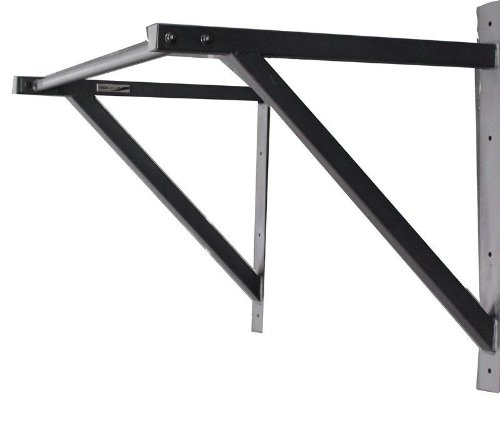
This bar comes from Christian’s Fitness Factory and is designed for users who want commercial-grade construction without a commercial price tag. The all-steel frame uses thick-wall tubing with a textured powder coat that provides natural grip without foam sleeves. The 46-inch width gives ample room for wide-grip pull-ups, and the 30-inch distance from the wall (when mounted on a wall) or the drop from the ceiling (when mounted overhead) allows full body clearance for kipping and ring dips.
The static load rating of 750 pounds with a working capacity of 300 pounds means this bar handles repeated stress without fatigue. The welds are clean and the frame shows no flex when mounted into solid studs or joists. The mounting holes are spaced for 48-inch on-center joists, which is common in garage rafters, but the design can be adapted for perpendicular mounting with additional hardware.
Installation hardware is included, though some customers report that bolts can be difficult to access at the 45-degree mounting angles. Having a helper during installation is strongly recommended. The bar is heavy enough that single-person overhead mounting is awkward, but once secured, it feels as solid as gym-rack hardware.
Why it’s great
- 750-pound static load rating for heavy dynamic work
- Textured grip surface reduces need for tape or padding
- Generous clearance for ring dips and kipping
Good to know
- Heavy frame requires a helper for overhead installation
- Mounting hole spacing may not align with all 48-inch joists without spacers
3. SELEWARE Heavy Duty Welded Pull Up Bar

The SELEWARE bar distinguishes itself with a ball finger grip attachment on each end — a training tool for climbers and martial artists who need to build crush grip strength alongside pulling power. The main bar offers five grip positions including a neutral parallel section and angled wide grips, which cover the full spectrum of lat, bicep, and rear-delt work. The frame is made from heavy-duty steel with a black electrophoretic coating that resists rust and corrosion in garage or basement environments.
Height is adjustable at four levels using safety hand screws, so different family members can set the bar at their preferred reach without tools. The 2.2-inch wide mounting base accommodates larger studs, and the 4-hole design on each bracket provides extra stability compared to standard 2-hole plates. The bar supports 400 pounds, which covers most users even during explosive movements.
Two included rings on the sides allow attachment of suspension straps, resistance bands, or yoga straps, making this bar a functional training station rather than just a pull-up point. Installation requires drilling into wood or concrete, and the hardware includes both concrete anchors and lag bolts. The foam grips on the straight sections are comfortable but may compress over time with daily use.
Why it’s great
- Ball finger grip adds climbing-specific training capability
- Tool-free height adjustment for multiple users
- Accessory rings for bands and suspension trainers
Good to know
- Bar surface is smooth on inner handles and can feel slick during heavy sweat
- Installation requires careful measurement; no drilling template included
4. HWOOUSA Joist Mounted Pull Up Bar
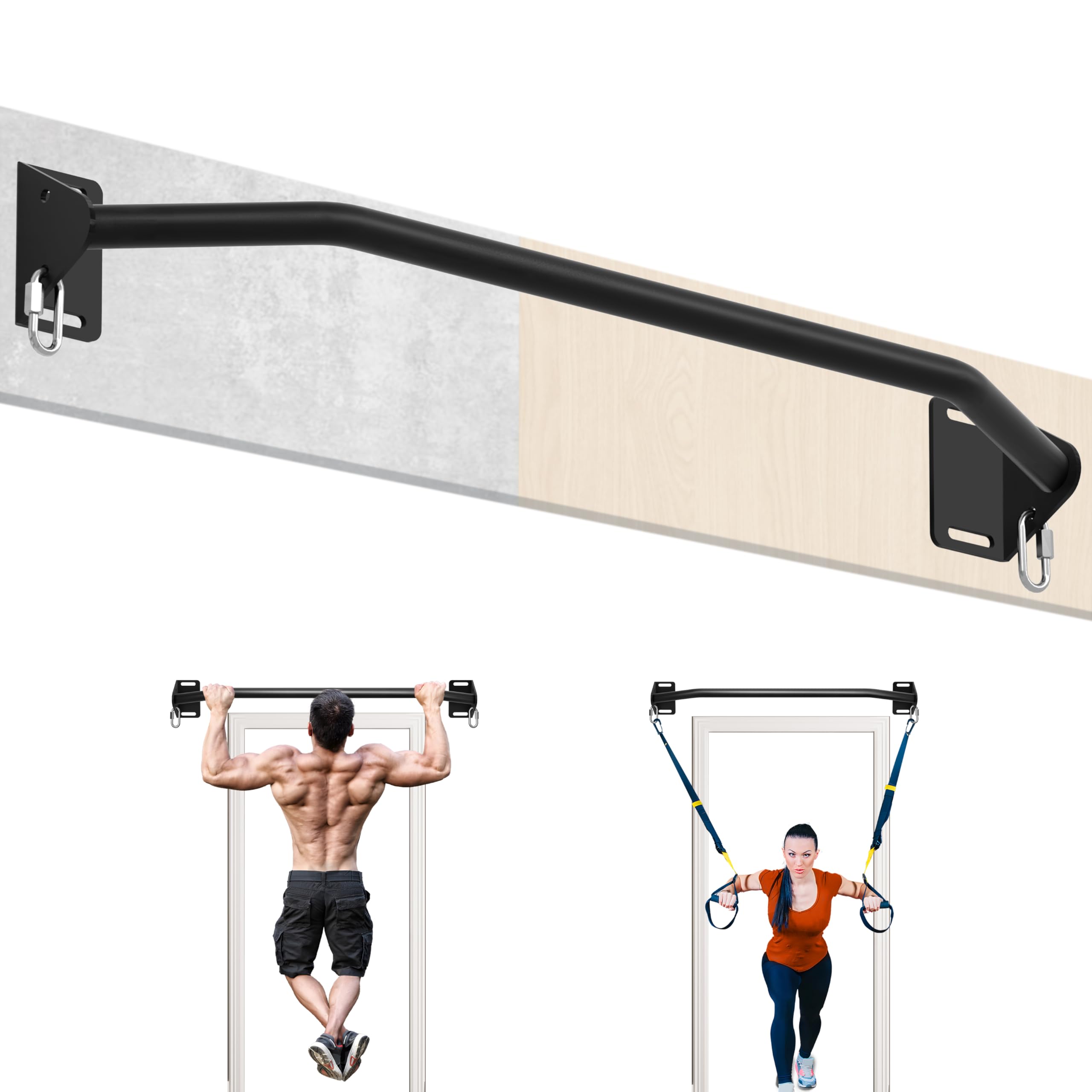
This bar uses 5 mm thick alloy steel with full-perimeter welding and a black electrophoretic coating, giving it a 600-pound load rating that exceeds most residential needs. The five grip positions — wide, narrow, neutral, and angled variations — allow you to cycle through different pull-up styles without moving your hands far from center. The bar width is 39.4 inches, which is slightly narrower than some competitors but still wide enough for comfortable wide-grip work.
Two included carabiners attach to holes on each side of the bar, enabling you to clip in resistance bands, suspension trainers, or ab straps without buying additional hardware. The mounting system works for both wood joists and concrete ceilings — the package includes pointed screws for wood and expansion anchors for concrete. The white color option helps the bar blend into light-colored ceilings and trim.
Installation is straightforward, though the instructions do not specify bolt sizes or pre-drill depths. Users report that using four extra lag bolts per bracket (beyond the included hardware) improves stability on wood mounts. The bar surface is smooth and some users add athletic tape for grip during intense sets.
Why it’s great
- 5 mm steel thickness provides exceptional rigidity
- Two carabiners included for band and strap attachments
- Works on both wood and concrete mounting surfaces
Good to know
- Smooth finish may feel slippery; athletic tape recommended
- Instructions lack pre-drill details for different bolt types
5. MKSY Adjustable Joist Mount Pull Up Bar

The MKSY bar is built for households where multiple people train at different heights. The four height settings let you shift the bar lower for shorter users or higher for taller ones without needing to re-drill new holes. The 35-inch width is compact enough for tight spaces like laundry rooms or narrow garage bays, yet still wide enough for shoulder-width and slightly wider grip positions.
The frame is made from iron with a light black powder coat that resists scratches and chips. Multiple angled grip positions — including neutral, wide, and straight sections — cover the standard pull-up variations. Two integrated rings on the sides allow attachment of resistance bands or suspension trainers, and the foam-padded handles reduce callus formation during high-rep sets.
Installation requires mounting to solid wood joists or a concrete wall. The package includes both concrete anchors and wood screws. The bar supports 440 pounds, which is adequate for strict pull-ups and controlled negatives. One limitation: the ceiling mount orientation restricts bar clearance, so full-range pull-ups require careful positioning of the bar in a spot with sufficient headroom.
Why it’s great
- Four adjustable height settings accommodate different user statures
- Foam padded handles improve comfort and reduce calluses
- Compact 35-inch width fits narrow ceiling spaces
Good to know
- Ceiling mount orientation may limit clearance for full pull-ups
- Iron construction is heavy; installation requires a ladder and helper
6. Ultimate Body Press Joist Mount Pull Up Bar
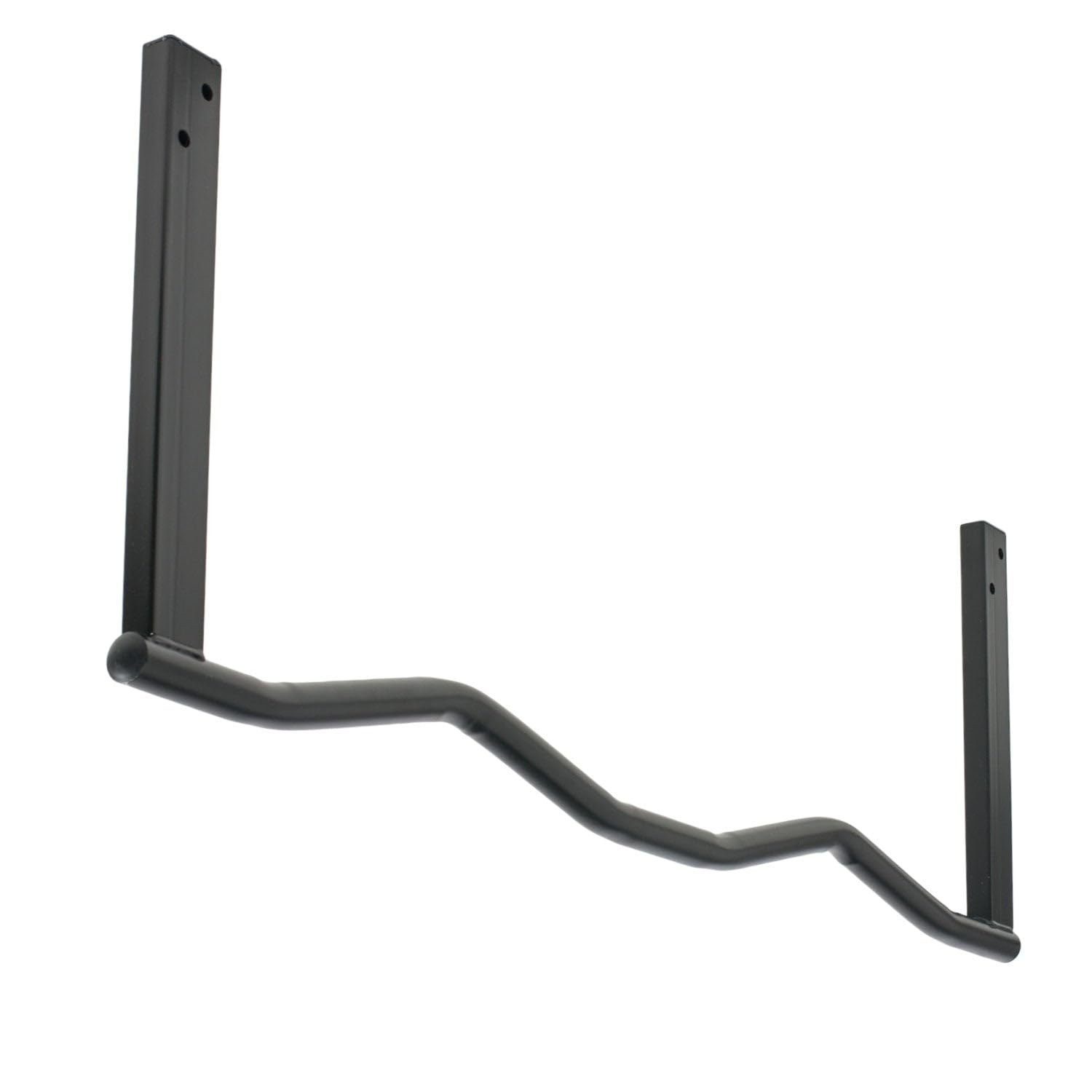
This bar from Ultimate Body Press uses an ergonomic curve that places your hands in a more natural position relative to your shoulders, reducing internal rotation at the shoulder joint and taking pressure off the wrists and elbows. The all-welded steel frame uses 1.25-inch diameter tubing with 16-inch risers, giving a drop that works well for 9-foot ceilings or lower if mounted on an exposed beam. The three grip positions — parallel, neutral, and wide — cover the fundamental pulling angles.
The bar supports 500 pounds and the rigid mount eliminates any wobble when properly secured to a wooden joist or beam. The welded construction means there are no bolted joints that can loosen over time. The frame is powder coated in a matte finish that holds up to garage humidity and temperature swings without rusting.
Installation is straightforward but demands accuracy: the 16-inch riser spacing means the mounting brackets must align with two joists exactly. Some users add wooden backer boards between the joists for extra support. The bar comes with all necessary hardware and USA-based tech support if you need help during assembly.
Why it’s great
- Ergonomic bar angle reduces shoulder and wrist strain
- All-welded frame eliminates rotational play
- Compact design fits exposed beams and narrow joist bays
Good to know
- 16-inch risers limit drop clearance for taller users
- Hollow steel tubing may collapse under bolt pressure without internal wood inserts
7. Cometofit Wall Mount Pull Up Bar with Punching Bag Hanger

The Cometofit bar is an entry-level option built from 1.5 mm thick steel pipe with a 6 mm thick mounting plate, rated at 600 pounds. Despite the budget price point, the steel quality is adequate for consistent strict pull-ups and dead hangs. The three grip positions — parallel, narrow, and wide — cover the basic muscle targets without overcomplicating the design. An integrated ring at the bottom allows hanging a punching bag or heavy bag, adding versatility for boxing and striking training in the same space.
The black powder coating prevents rust and corrosion, and the high-density foam grips on the handles provide comfort during longer sets. Assembly takes roughly five minutes once the mounting plates are secured to the wall or ceiling. The hardware includes 70 mm concrete anchors for wall mounting and 35 mm lag bolts for wood joists, but you will need a drill with a 12 mm masonry bit for concrete installs.
Some users note that the bar width could be wider for very broad-shouldered lifters, and the instructions are minimal — not ideal for beginners without DIY experience. The included foam grips are comfortable but may wear out faster than rubber or textured alternatives.
Why it’s great
- Integrated punching bag hanger adds workout variety
- 1.5 mm steel tube with 6 mm plate at a budget-friendly price
- Quick five-minute assembly after mounting plates are installed
Good to know
- Bar width may feel narrow for users with wider shoulders
- Instructions lack detail; not ideal for first-time installers
FAQ
Can I install a ceiling mounted pull up bar on drywall without hitting a joist?
What diameter bar is most comfortable for daily pull-ups?
How do I know if my garage ceiling can handle a 600-pound rated bar?
Final Thoughts: The Verdict
For most users, the best ceiling mounted pull up bar winner is the Ultimate Body Press Ceiling Mount 48″ because it combines a universal joist-spanning plate with a through-bolted, non-rotating bar at a mid-range price point that avoids both cheap hardware and unnecessary frills. If you need multiple grip positions and accessory attachment points, grab the SELEWARE Heavy Duty Welded Bar. And for high-volume training or kipping work, nothing beats the commercial-grade build of the CFF Wall/Ceiling Mounted Bar.

Mo Maruf
I created WellFizz to bridge the gap between vague wellness advice and actionable solutions. My mission is simple: to decode the research and give you practical tools you can actually use.
Beyond the data, I am a passionate traveler. I believe that stepping away from the screen to explore new environments is essential for mental clarity and physical vitality.